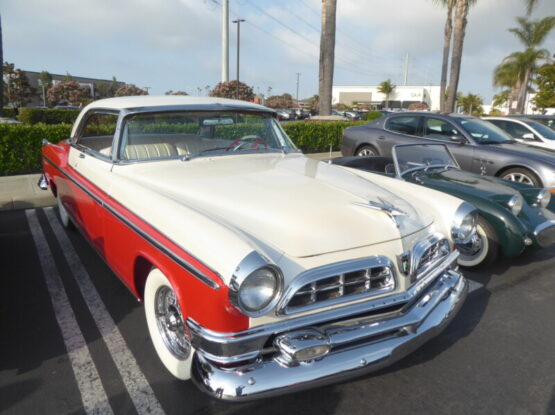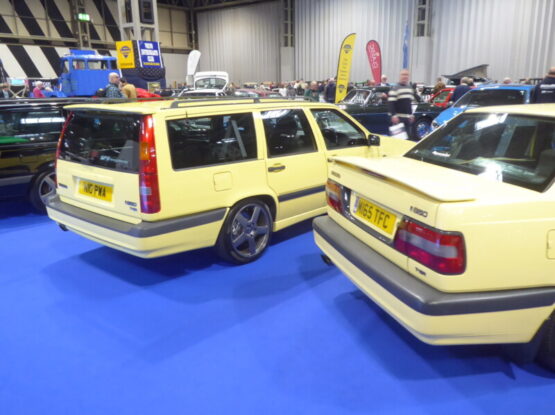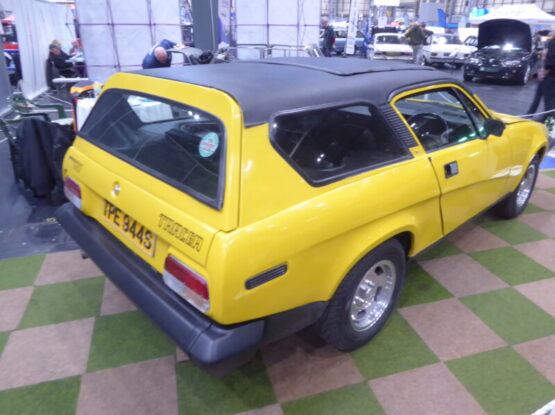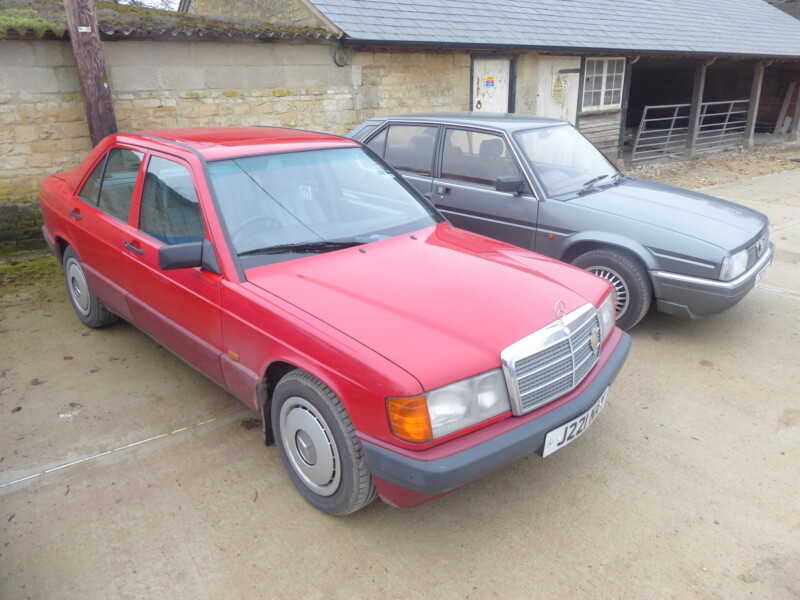
Sometimes, indeed most of the time, I find events to go, but there are times when it seems like the events find me. This is one of those latter. I confess I’d not heard of this event or indeed the company who organises it, but when it popped up on my Facebook feed. I clicked to see exactly where it was. Finding that is was around an hour from home, and taking place on a Saturday for which I had no other plans. It turned out that Petroyle is a classic car restoration company which spun out of an operation at Bicester Heritage but who are now located in a series of units literally in the middle of nowhere, a few miles to the east of Moreton in Marsh. You’d never find them by accident, as they are down a very narrow country lane a couple of miles off the main road and even the site itself does not really give any clues as to what takes place there. Having got established in these premises, they’ve now launched a series of Cars and Coffee events and this was their first one of 2025. Here is what I saw:
ABARTH
Having used the legendary 695 badging from the 1960s on the Tributo cars, at the 2012 Geneva Show, Abarth dusted off the 595 name that had been used on the less powerful of the Nuova 500 based cars of the same generation, and created two new versions which we should think of as Series 2 cars, the 595 Turismo and Competizione, both of which could be bought in either closed or open top C guise, with either the 5 speed manual or robotised automated gearshifts. Both models had the 160 bhp engine as standard. Effectively they were a replacement for the Esseesse kit, and it meant that the cars were produced complete at the factory, rather than needing the dealer to undertake the upgrade (and the associated paperwork), though Abarth did not withdraw the Esseesse kits from the market for some while. Turismo, as the name suggests was aimed slightly less extreme in intent, featuring standard leather upholstery, upgraded dampers and climate control, Xenon headlights and Alutex interior details. The sportier Abarth 595 Competizione replaced the leather seats with Sabelt cloth sport seats and Alutex with aluminium, while adding p-cross-drilled brakes and the Record Monza dual-mode exhaust.
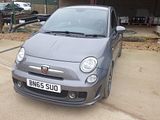
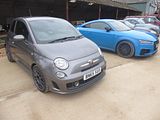
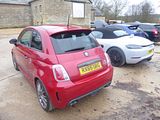
Rumours started to circulate towards the end of 2014 that Abarth were going to upgrade the Competizione model, so as better to bridge the gap between the Turismo and the 190 bhp 695 Biposto that had been added to the range earlier in the year. It was Geneva 2015 when the result was finally shown to an expectant fan base. Most exciting news was that thanks to a bigger Garrett Turbo, the engine had been tweaked to 180 bhp, and with reduced CO2 emissions. A standard spec that included Koni Dampers, Brembo brakes, Xenon lights, Sabelt seats, Climate Control, parking sensors as well as other refinements that had been added like the TFT instrument display all proved very compelling, so not long after the first cars reached the UK in June of 2015, I found temptation too hard to resist, and as is well documented here, swapped my 2010 car for one of these. At the time I ordered it, Cordolo Red, a tri-coat pearlescent paint which shimmers in bright sunlight looked set to become one of the most popular colours of the lot, even though it is a cost option. Indeed, the Launch Edition models were all offered either in this colour or Scorpion Black, with black wheels. Surprisingly, the colour was not carried over to the Series 4 cars.


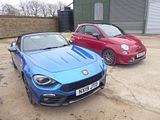
Eagerly awaited, the 124 Spider went on sale in September 2016. A quick reminder as to what this car is: The Abarth 124 Spider was developed in parallel with the Fiat model. It does cost a lot more, and there are those who think you don’t get enough extra for your money, but those who have driven it will tell you otherwise. You certainly get more power. The 1.4 MultiAir turbo unit jumps up from 138bhp to 168bhp, while torque also increases by a modest 10Nm to 250Nm, which gives it a 0-62mph time of 6.8 seconds, which is half a second quicker than the 2.0-litre Mazda MX-5. The top speed is 143mph. It weighs just 1060kg meaning a power-to-weight ratio of 158bhp-per-tonne, and with the new Record Monza exhaust system it sounds great even at idle. The Abarth version gets a stiffer suspension setup than the regular Fiat 124 Spider, with Bilstein dampers and beefed-up anti-roll bars. Bigger Brembo brakes also feature, with aluminium calipers. It can be had with a six-speed manual or six-speed automatic transmission with paddles, and the latter gets a Sport mode for quicker shifts. Many of the UK cars sport the ‘Heritage Look’ pack, which is a no-cost option. It brings a matt black bonnet and bootlid, plus red exterior trim detailing and has proved popular. The £29,565 starting price gets you standard equipment such as cruise control, climate control, Bluetooth, a DAB radio and satnav, plus Alcantara black and red (or pure black) seat trim. The automatic gearbox is a £2,035 extra, while an optional visibility pack brings LED DRLs, auto lights and wipers and rear parking sensors. The final cars were sold during 2019, so there are only around 1800 of them in the UK, which means that this is always going to be quite a rare sighting



ALFA ROMEO
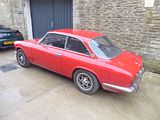
The first car was called the Alfa Romeo Giulia Sprint GT, and was revealed at a press event held at the then newly opened Arese plant on 9 September 1963, and displayed later the same month at the Frankfurt Motor Show. In its original form the Bertone body is known as scalino (step) or “step front”, because of the leading edge of the engine compartment lid which sat 1/4 an inch above the nose of the car. The Giulia Sprint GT can be distinguished from the later models by a number of features including: Exterior badging: Alfa Romeo logo on the front grille, a chrome script reading “Giulia Sprint GT” on the boot lid, and rectangular “Disegno di Bertone” badges aft of the front wheel arches; flat, chrome grille in plain, wide rectangular mesh without additional chrome bars; single-piece chrome bumpers; no overriders. Inside the cabin the padded vinyl dashboard was characterised by a concave horizontal fascia, finished in grey anti-glare crackle-effect paint. Four round instruments were inset in the fascia in front of the driver. The steering wheel was non-dished, with three aluminium spokes, a thin bakelite rim and a centre horn button. Vinyl-covered seats with cloth centres and a fully carpeted floor were standard, while leather upholstery was an extra-cost option. After initially marketing it as a four-seater, Alfa Romeo soon changed its definition of the car to a more realistic 2+2. The Giulia Sprint GT was fitted with the 1,570 cc version of Alfa Romeo’s all-aluminium twin cam inline four (78 mm bore × 82 mm stroke), which had first debuted on the 1962 Giulia Berlina. Breathing through two twin-choke Weber 40 DCOE 4 carburettors, on the Sprint GT this engine produced 105 hp at 6,000 rpm. Like all subsequent models, the Sprint GT was equipped with an all-synchromesh 5-speed manual transmission. The braking system comprised four Dunlop disc brakes and a vacuum servo. The rear brakes featured an unusual arrangement with the slave cylinders mounted on the axle tubes, operating the calipers by a system of levers and cranks. According to Alfa Romeo the car could reach a top speed of “over 180 km/h (112 mph)”. In total 21,902 Giulia Sprint GT were produced from 1963 to 1965, when the model was superseded by the Giulia Sprint GT Veloce. Of these 2,274 were right hand drive: 1,354 cars fully finished in Arese, and 920 shipped in complete knock-down kit form for foreign assembly. For 1966, the Giulia Sprint GT was replaced by the Alfa Romeo Giulia Sprint GT Veloce, which was very similar but featuring a number of improvements: a revised engine—slightly more powerful and with more torque—better interior fittings and changes to the exterior trim. Alongside the brand new 1750 Spider Veloce which shared its updated engine the Sprint GT Veloce was introduced at the 36th Geneva Motor Show in March 1966, and then tested by the international specialist press in Gardone on the Garda Lake. Production had began in 1965 and ended in 1968. The Giulia Sprint GT Veloce can be most easily distinguished from other models by the following features: badging as per Giulia Sprint GT, with the addition of round enamel badges on the C-pillar—a green Quadrifoglio (four-leaf clover) on an ivory background—and a chrome “Veloce” script on the tail panel; black mesh grille with three horizontal chrome bars; the grille heart has 7 bars instead of 6; stainless steel bumpers, as opposed to the chromed mild steel bumpers on the Giulia Sprint GT. The bumpers are the same shape, but are made in two pieces (front) and three pieces (rear) with small covers hiding the joining rivets. Inside the main changes from the Giulia Sprint GT were imitation wood dashboard fascia instead of the previous anti-glare grey finish, front seats revised to a mild “bucket” design, and a dished three aluminium spoke steering wheel, with a black rim and horn buttons through the spokes. The Veloce’s type 00536 engine, identical to the Spider 1600 Duetto’s, featured modifications compared to the Giulia Sprint GT’s type 00502—such as larger diameter exhaust valves. As a result it produced 108 hp at 6,000 rpm, an increase of 3 hp over the previous model, and significantly more torque. The top speed now exceeded 185 km/h (115 mph). Early Giulia Sprint GT Veloces featured the same Dunlop disc brake system as the Giulia Sprint GT, while later cars substituted ATE disc brakes as pioneered on the GT 1300 Junior in 1966. The ATE brakes featured an handbrake system entirely separate from the pedal brakes, using drum brakes incorporated in the rear disc castings. Though the Sprint GT Veloce’s replacement—the 1750 GT Veloce—was introduced in 1967, production continued throughout the year and thirty final cars were completed in 1968. By then total Giulia Sprint GT Veloce production amounted to 14,240 examples. 1,407 of these were right hand drive cars, and 332 right hand drive complete knock-down kits. The Alfa Romeo 1750 GT Veloce (also known as 1750 GTV) appeared in 1967 along with the 1750 Berlina sedan and 1750 Spider. The same type of engine was used to power all three versions; this rationalisation was a first for Alfa Romeo. The 1750 GTV replaced the Giulia Sprint GT Veloce and introduced many updates and modifications. Most significantly, the engine capacity was increased to 1779 cc displacement. Peak power from the engine was increased to 120 hp at 5500 rpm. The stroke was lengthened from 82 to 88.5 mm over the 1600 engine, and a reduced rev limit from 7000 rpm to 6000 rpm. Maximum torque was increased to 137 lb·ft at 3000 rpm. A higher ratio final drive was fitted (10/41 instead of 9/41) but the same gearbox ratios were retained. The result was that, on paper, the car had only slightly improved performance compared to the Giulia Sprint GT Veloce, but on the road it was much more flexible to drive and it was easier to maintain higher average speeds for fast touring. For the United States market, the 1779 cc engine was fitted with a fuel injection system made by Alfa Romeo subsidiary SPICA, to meet emission control laws that were coming into effect at the time. Fuel injection was also featured on Canadian market cars after 1971. Carburettors were retained for other markets. The chassis was also significantly modified. Tyre size went to 165/14 from 155/15 and wheel size to 5 1/2J x 14 instead of 5J x 15, giving a wider section and slightly smaller rolling diameter. The suspension geometry was also revised, and an anti-roll bar was fitted to the rear suspension. ATE disc brakes were fitted from the outset, but with bigger front discs and calipers than the ones fitted to GT 1300 Juniors and late Giulia Sprint GT Veloces. The changes resulted in significant improvements to the handling and braking, which once again made it easier for the driver to maintain high average speeds for fast touring. The 1750 GTV also departed significantly from the earlier cars externally. New nose styling eliminated the “stepped” bonnet of the Giulia Sprint GT, GTC, GTA and early GT 1300 Juniors and incorporated four headlamps. For the 1971 model year, United States market 1750 GTV’s also featured larger rear light clusters (there were no 1970 model year Alfas on the US market). Besides the chrome “1750” badge on the bootlid, there was also a round Alfa Romeo badge. Similar Quadrofoglio badges to those on the Giulia Sprint GT Veloce were fitted on C pillars, but the Quadrofoglio was coloured gold instead of green. The car also adopted the higher rear wheelarches first seen on the GT 1300 Junior. The interior was also much modified over that of earlier cars. There was a new dashboard with large speedometer and tachometer instruments in twin binnacles closer to the driver’s line of sight. The instruments were mounted at a more conventional angle, avoiding the reflections caused by the upward angled flat dash of earlier cars. Conversely, auxiliary instruments were moved to angled bezels in the centre console, further from the driver’s line of sight than before. The new seats introduced adjustable headrests which merged with the top of the seat when fully down. The window winder levers, the door release levers and the quarterlight vent knobs were also restyled. The remote release for the boot lid, located on the inside of the door opening on the B-post just under the door lock striker, was moved from the right hand side of the car to the left hand side. The location of this item was always independent of whether the car was left hand drive or right hand drive. Early (Series 1) 1750 GTV’s featured the same bumpers as the Giulia Sprint GT Veloce, with the front bumper modified to mount the indicator / sidelight units on the top of its corners, or under the bumper on US market cars. The Series 2 1750 GTV of 1970 introduced other mechanical changes, including a dual circuit braking system (split front and rear, with separate servos). The brake and clutch pedals on left hand drive cars were also of an improved pendant design, instead of the earlier floor-hinged type. On right hand drive cars the floor-hinged pedals were retained, as there was no space for the pedal box behind the carburettors. Externally, the series 2 1750 GTV is identified by new, slimmer bumpers with front and rear overriders. The combined front indicator and sidelight units were now mounted to the front panel instead of the front bumper, except again on the 1971-72 US/Canadian market cars. The interior was slightly modified, with the seats retaining the same basic outline but following a simpler design. 44,269 1750 GTVs were made before their replacement came along. That car was the 2000GTV. Introduced in 1971, together with the 2000 Berlina sedan and 2000 Spider, the 2 litre cars were replacements for the 1750 range. The engine displacement was increased to 1962 cc. Oil and radiator capacities remained unchanged. The North American market cars had fuel injection, but everyone else retained carburettors. Officially, both versions generated the same power, 130 hp at 5500 rpm. The interior trim was changed, with the most notable differences being the introduction of a separate instrument cluster, instead of the gauges installed in the dash panel in earlier cars. Externally the 2000 GTV is most easily distinguished by its grille with horizontal chrome bars, featuring protruding blocks forming the familiar Alfa heart in outline, smaller hubcaps with exposed wheel nuts, optional aluminium alloy wheels of the same size as the standard 5. 1/2J × 14 steel items, styled to the “turbina” design first seen on the alloy wheels of the Alfa Romeo Montreal, and the larger rear light clusters first fitted to United States market 1750 GTV’s were standard for all markets. From 1974 on, the 105 Series coupé models were rationalised and these external features became common to post-1974 GT 1300 Junior and GT 1600 Junior models, with only few distinguishing features marking the difference between models. 37,459 2000 GTVs were made before production ended and these days they are very sought after with prices having sky-rocketed in recent years.


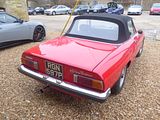
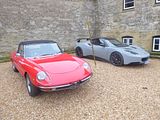
Alfa replaced the Giulia-based Spider model with an all-new design which finally made its debut in 1966 together with the Giulia Sprint GT Veloce at an event organised in Gardone Riviera. With its boat tailed styling, it quickly found favour, even before taking a starring role in the film “The Graduate”. The original 1600cc engine was replaced by a more powerful 1750cc unit at the same time as the change was made to the rest of the range, and the car continued like this until 1970, when the first significant change to the exterior styling was introduced on the 1750 Spider Veloce, with the original’s distinctive elongated round tail changed to a more conventional cut-off tail, called the “Kamm tail”, as well as improving the luggage space. Numerous other small changes took place both inside and out, such as a slightly different grille, new doorhandles, a more raked windscreen, top-hinged pedals and improved interior trim. 1971 saw the Spider Veloce get a new, larger powerplant—a 1962 cc, 132 hp unit—and consequently the name was changed from 1750 Spider Veloce to 2000 Spider Veloce. The 1600 Spider restarted production a year later as the Spider 1600 Junior, and was visually identical to the 1300. 1974 saw the introduction of the rare, factory request, Spider-Targa. Based upon the Spider, it featured a Porsche style solid rear window and lift out roof panels, all made out of black GRP type material. Less than 2,000 models of such type were ever made and was the only part solid roof Spider until the introduction of the factory crafted hard top. The 1300 and 2000 cars were modified in 1974 and 1975 respectively to include two small seats behind the front seats, becoming a “two plus two” four seater. The 1300 model was discontinued in 1977. Also, between 1974 and 1976, the early-style stainless-steel bumpers were discontinued and replaced with black, rubber-clad units to meet increasingly stringent North American crash requirements. 4,557 examples of the 1300 Junior were made and 4,848 of the 1600 Junior as well as 16,320 2000 Spider Veloces and 22,059 of 2000 Spider Veloce US version. There were also 4,027 1750 Spider Veloces produced.


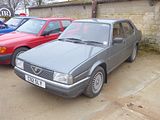
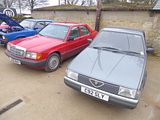
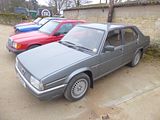
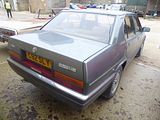
The Alfa Romeo 90 (Type 162A) is an executive car produced between 1984 and 1987. Designed by Bertone and introduced at the 1984 Turin Motor Show, the 90 was pitched between the Alfa Romeo Giulietta (nuova) and the Alfa Romeo Alfa 6, both of which were soon discontinued after the 90’s launch. The car used the Alfetta chassis (including its rear mounted transaxle) and took its engines from the larger Alfa 6. The bodywork was similar to both, albeit modernised. One notable feature of the 90’s design was a small chin spoiler which extended above a certain speed to aid engine cooling. Its angular lines with integrated bumpers gave the car a neat look consistent with the period, however the aerodynamics suffered with a drag coefficient of Cd=0.37. The cars design was conservative, inside and out, with perhaps the only unusual element being the U-shaped parking brake lever. The 90 was well equipped, including electric front windows and electrically adjustable seats as standard. The luxurious Gold Cloverleaf (Quadrifoglio Oro) model had electric rear windows, a trip computer, power steering, central locking, metallic paint and a digital instrument panel as standard. The passenger fascia included a slot for an optional briefcase, made by Valextra. The external finish was very similar across the board, it being near impossible to tell the different models apart from appearance alone. The 90 was made only as a sedan but in 1985 Carrozzeria Marazzi developed an Alfa 90 Station Wagon prototype at the behest of Italian motoring magazine Auto Capital; only two cars were made. The Alfa 90 has a longitudinal front engine, a rear mounted gearbox with differential lock and independent front suspension wishbones with torsion bar springs and rear De Dion tube. It has disc brakes on all four wheels, the rear brakes are mounted inboard. Five engines were available: two Alfa Romeo Twin Cam engines; 1,779 cc and 1,962 cc and two fuel injected Alfa Romeo V6 engines: 1,996 cc or 2,492 cc, and finally a 2,393 cc turbodiesel made by VM Motori. The carburettor fours have twin Dell’Ortos with manual chokes, while the 1,962 cc was also available in a fuel injected model which also incorporated a novel variable valve timing system. The fuel injected engine has the same maximum power but offered somewhat less torque; this was perhaps more than made up for with a 20 percent improvement in fuel economy. The 2.0 V6 version was dedicated to the Italian market, where up to 1993 cars with engines over 2.0-litres were subjected to a doubled 38% VAT. It was equipped with an innovative engine control unit and electronic injection system named CEM (Controllo Elettronico del Motore), developed by Alfa Romeo subsidiary SPICA. It manages the opening time of the injectors and the ignition depending on the angle of the butterfly valves, with one throttle body per cylinder unlike on the Bosch L-Jetronic used on the 2.5 V6. V6 cars receive a double-plate clutch while the four-cylinders rely on a single-plate unit. The 90 was revamped in 1986 with many minor changes throughout, the most obvious exterior change being a new grille with smaller horizontal slants. A total of 56,428 cars were sold over the four years of production. It is believed that just 10 of these cars remain in the UK and at any one time, most of them are on SORN so they are a very rare sighting indeed.





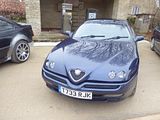
The 916 Series cars were conceived to replace two very different models in the Alfa range. First of these was the open topped 105 Series Spider which had been in production since 1966 and by the 1990s was long overdue a replacement. Alfa decided to combine a follow on to the Alfetta GTV, long out of production, with a new Spider model, and first work started in the late 1980s. The task was handed to Pininfarina, and Enrico Fumia’s initial renderings were produced in September 1987, with the first clay models to complete 1:1 scale model made in July 1988. Fumia produced something rather special. Clearly an Italian design, with the Alfa Romeo grille with dual round headlights, recalling the Audi-based Pininfarina Quartz, another design produced by Enrico Fumia back in 1981, the proposal was for a car that was low-slung, wedge-shaped with a low nose and high kicked up tail. The back of the car is “cut-off” with a “Kamm tail” giving improved aerodynamics. The Spider would share these traits with the GTV except that the rear is rounded, and would feature a folding soft-top with five hoop frame, which would completely disappear from sight under a flush fitting cover. An electric folding mechanism would be fitted as an option. Details included a one-piece rear lamp/foglamp/indicator strip across the rear of the body, the minor instruments in the centre console angled towards the driver. The exterior design was finished in July 1988. After Vittorio Ghidella, Fiat’s CEO, accepted the design, Alfa Romeo Centro Stile under Walter de Silva was made responsible for the completion of the detail work and also for the design of the interiors, as Pininfarina’s proposal was not accepted. The Spider and GTV were to be based on the then-current Fiat Group platform, called Tipo Due, in this case a heavily modified version with an all new multilink rear suspension. The front suspension and drivetrain was based on the 1992 Alfa Romeo 155 saloon. Chief engineer at that time was Bruno Cena. Drag coefficient was 0.33 for the GTV and 0.38 for the Spider. Production began in late 1993 with four cars, all 3.0 V6 Spiders, assembled at the Alfa Romeo Arese Plant in Milan. In early 1994 the first GTV was produced, with 2.0 Twin Spark engine. The first premiere was then held at the Paris Motor Show in 1994. The GTV and Spider were officially launched at the Geneva Motor Show in March 1995 and sales began the same year. The cars were well received. At launch, many journalists commented that Alfa had improved overall build quality considerably and that it came very close to equalling its German rivals. I can vouch for that, as I owned an early GTV for eighteen months, and it was a well built and reliable car. In 1997 a new engine, a 24-valve 3.0 litre V6, was available for the GTV along with bigger, 12.0 inch brakes and red four-pot calipers from Brembo. The console knobs were changed from round central to rectangle ones and to a three-spoke steering wheel. Some versions were upgraded with different front bumper mesh to bring the wind noise down to 74 dBA. In May 1998 the cars were revamped for the first time, creating the Phase 2 models. Most of the alterations were inside. The interior was changed with new centre console, painted letters on skirt seals, changed controls and switches arrangement and different instrument cluster. Outside, the main changes included chrome frame around the grille and colour-coded side skirts and bumpers. A new engine was introduced, the 142 hp 1.8 Twin Spark, and others were changed: the 2.0 Twin Spark was updated with a modular intake manifold with different length intakes and a different plastic cover. Power output of the 2.0 TS was raised to 153 hp. Engines changed engine management units and have a nomenclature of CF2. The dashboard was available in two new colours in addition to the standard black: Red Style and Blue Style, and with it new colour-coded upholstery and carpets. The 3.0 24V got a six-speed manual gearbox as standard and the 2.0 V6 TB engine was now also available for the Spider. August 2000 saw the revamp of engines to comply with new emission regulations, Euro3. The new engines were slightly detuned, and have a new identification code: CF3. 3.0 V6 12V was discontinued for the Spider and replaced with 24V Euro3 version from the GTV. 2.0 V6 Turbo and 1.8 T.Spark were discontinued as they did not comply with Euro3 emissions. By the 2001-2002 model year, only 2 engines were left, the 2.0 Twin.Spark and 3.0 V6 24V, until the Phase 3 engine range arrived. The Arese plant, where the cars had been built, was closing and, in October 2000, the production of GTV/Spider was transferred to Pininfarina Plant in San Giorgio Canavese in Turin. In 2003 there was another and final revamp, creating the Phase 3, also designed in Pininfarina but not by Enrico Fumia. The main changes were focused on the front with new 147-style grille and different front bumpers with offset numberplate holder. Change to the interior was minimal with different centre console and upholstery pattern and colours available. Instrument illumination colour was changed from green to red. Main specification change is an ASR traction control, not available for 2.0 TS Base model. New engines were introduced: 163 hp 2.0 JTS with direct petrol injection and 237 hp 3.2 V6 24V allowing a 158 mph top speed. Production ceased in late 2004, though some cars were still available for purchase till 2006. A total of 80,747 cars were made, and sales of the GTV and Spider were roughly equal. More V6 engined GTVs than Spiders were made, but in 2.0 guise, it was the other way round with the open model proving marginally more popular.
AUDI
The styling of the Audi TT began in the spring of 1994 at the Volkswagen Group Design Center in California. The TT was first shown as a concept car at the 1995 Frankfurt Motor Show. The design is credited to J Mays and Freeman Thomas, with Hartmut Warkuss, Peter Schreyer, Martin Smith and Romulus Rost contributing to the interior design. A previously unused laser beam welding adaptation, which enabled seamless design features on the first-generation TT, delayed its introduction. Audi did not initially offer any type of automatic transmission option for the TT. However, from 2003, a dual clutch six-speed Direct-Shift Gearbox (DSG) became available, with the United Kingdom TT variants becoming the world’s first user of a dual clutch transmission configured for a right-hand drive vehicle, although the outright world first for a road car equipped with a dual clutch transmission was claimed earlier by a Volkswagen Group platform-mate, the left hand drive Volkswagen Golf Mk4 R32. The Audi TT takes its name from the successful motor racing tradition of NSU in the British Isle of Man TT (Tourist Trophy) motorcycle race. NSU marque began competing at the Isle of Man TT in 1907 with the UK manager Martin Geiger finishing in fifth position in the single-cylinder race. The 1938 Isle of Man Lightweight TT race was won by Ewald Kluge with a 250 cc supercharged DKW motor-cycle and the DKW and NSU companies later merged into the company now known as Audi. The TT name has also been attributed to the phrase “Technology & Tradition”. The production model (internal designation Type 8N) was launched as a coupé in September 1998, followed by a roadster in August 1999. It is based on the Volkswagen Group A4 (PQ34) platform as used for the Volkswagen Golf Mk4, the original Audi A3, the Škoda Octavia, and others. The styling differed little from the concept, except for slightly reprofiled bumpers, and the addition of rear quarterlight windows behind the doors. Factory production commenced in October 1998. Early TT models received press coverage following a series of high-speed accidents and the related fatalities which occurred at speeds in excess of 112 mph (180 km/h) during abrupt lane changes or sharp turns. Both the coupé and roadster variants were recalled in late 1999/early 2000, to improve predictability of the car’s handling at very high speeds. Audi’s Electronic Stability Programme (ESP) or Anti Slip Regulation (ASR) and rear spoiler were added, along with modifications to the suspension system. All changes were incorporated into subsequent production. Mechanically, the TT shares an identical powertrain layout with its related Volkswagen Group-mates. The TT uses a transversely mounted internal combustion engine, with either front-wheel drive or ‘quattro four-wheel drive’ available as an option. It was first available with a 1.8-litre inline four-cylinder 20-valve turbocharged engine in two states of DIN-rated power outputs; 180 PS (178 bhp) and 225 PS (222 bhp). The engines share the same fundamental design, but the 225 PS version features a larger K04 turbocharger (180 PS version came with a smaller K03), an additional intercooler on the left side (complementing the existing right-side intercooler), larger 20mm wrist-pins, a dual tailpipe exhaust, intake manifold with inlet on driver’s side, and a few other internals – designed to accommodate the increase in turbo boost, from roughly 10 pounds per square inch (0.7 bar) peak, to 15 pounds per square inch (1.0 bar). Haldex Traction enabled four-wheel drive, ‘branded’ as “Quattro” was optional on the 180 engine, and standard on the more powerful 225 version. The original four-cylinder engine range was complemented with a 3,189 cc VR6 engine rated at 250 PS (247 bhp) and 320 Nm (236 lb/ft) of torque in early 2003, which came as standard with the quattro four-wheel-drive system. In July 2003, a new six-speed dual clutch transmission – dubbed the Direct-Shift Gearbox (DSG), which improves acceleration through much-reduced shift times, was offered, along with a stiffer suspension. The second generation TT was launched in 2006.

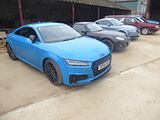
Also here was a third generation TT. Like its predecessor, the Audi TT FV/8S was previewed in the form of the Audi Allroad Shooting Brake concept car, shown at the Detroit Motor Show in 2014. The third generation of the TT was unveiled at the 2014 Geneva Motor Show. The FV/8S generation utilises the Volkswagen Group MQB platform, and is available with a choice of TFSI and TDI engines. The 2.0 TFSI is available in two versions: a version producing 230 PS/227 hp and 370 Nm (272.90 lb/ft) of torque in the TT and a version producing 310 PS/ 306 hp and 380 Nm (280.27 lb/ft) of torque in the TTS. A 2.0 TDI Inline-four engine producing 184 PS/181 hp and 380 Nm (280.27 lb/ft) of torque is also available as an option for the TT. The TFSI engines are available with all wheel drive. The TDI comes in front wheel drive configuration, but was then later released with the Audi’s quattro all wheel drive. In 2019, the models were updated with the following specifications: TT 40: with a 2.0L engine producing 197 PS; TT 45: with a 2.0L engine producing 245 PS; TTS (from 2019 until 2021): with a 2.0L engine producing 306 PS; TTS (from 2021 until 2023): with a 2.0L engine producing 320 PS; TT RS: with a 2.5L engine producing 400 PS. It was announced in May 2019 that the current generation TT would be the last, and it would be discontinued at the end of the model’s lifecycle which came about in late 2023.

AUSTIN HEALEY
The Austin-Healey Sebring Sprite is a small sports car that was produced by the Donald Healey Motor Company at its Cape Works in Warwick and at the Healey’s Speed Equipment Division in Grosvenor Street, London W1. Sebring Sprites were also produced by John Sprinzel Ltd. at their premises in Lancaster Mews, W2. A modified version of the production Austin-Healey Sprite featuring Girling disc brakes as well as specified engine and chassis improvements, the Sebring Sprite was recognized by motorsport’s governing body, the Fédération Internationale de l’Automobile (FIA), as a separate model in its own right. It was homologated on 17 September 1960. FIA regulations permitted the use of ‘special bodies’, so a small number of Sebring Sprites were subsequently fitted with coupé bodywork in aluminium alloy and glassfibre. The most attractive examples were those devised by race and rally driver John Sprinzel, who had won the 1959 RAC British Rally Championship. Sprinzel commissioned coachbuilders Williams & Pritchard to produce the bodies. Originally said to have numbered six, eight are now known to have been made. Later, other Sprites received similar alloy bodywork from Alec Goldie and Fred Faulkner of the firm Robert Peel Sheet Metal Works (commonly known as ‘Peel Coachworks’). The name ‘Sebring Sprite’ became a generic term for any Sprite with disc brakes, and later for any Sprite with coupé or fastback bodywork.


BMW
The M3 version of the E46 3 Series was produced in coupé and convertible body styles. The E46 M3 is powered by the S54 straight-six engine and has a 0-100 km/h (62 mph) acceleration time of 5.1 seconds for the coupe, with either the manual or SMG-II transmission. The skid pad cornering results are 0.89 g for the coupe and 0.81 g for the convertible.The top speed is electronically limited to 250 km/h (155 mph). The available transmissions were a Getrag 420G 6-speed manual transmission or a SMG-II 6-speed automated manual transmission, which was based on the Getrag 420G. The SMG-II used an electrohydraulically actuated clutch and gearshifts could be selected via the gear knob or paddles mounted on the steering wheel. The SMG-II was praised for its fast shift times and racetrack performance, but some people found its shifts to be delayed and lurching in stop-start traffic. In 2005, a special edition was introduced which used several parts from the CSL. This model was called the M3 Competition Package (ZCP) in the United States and mainland Europe, and the M3 CS in the United Kingdom. Compared to the regular M3, the Competition Package includes: 19-inch BBS alloy wheels- 19″x 8″ at the front and 19″x 9.5″ at the rear; Stiffer springs (which were carried over to the regular M3 from 12/04); Faster ratio steering rack of 14.5:1 (compared with the regular M3’s ratio of 15.4:1) as per the CSL; Steering wheel from the CSL; M-track mode for the electronic stability control, as per the CSL; The CSL’s larger front brake discs (but with the regular M3 front calipers) and rear brake calipers with larger pistons; Alcantara steering wheel and handbrake covers; The engine, gearbox and other drivetrain components are the same as the standard M3. Total production of the E46 M3 was 56,133 coupes and 29,633 convertibles. The cars were assembled at the BMW Regensburg factory in Germany and production was from September 2000 until August 2006, production totalled 85,766.

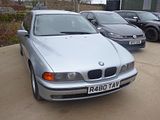
The BMW E39 is the fourth generation of the BMW 5 Series range of executive cars, which was manufactured from 1995 to 2004. It was launched in the saloon body style, with the station wagon body style (marketed as “Touring”) introduced in 1996. The E39 was replaced by the E60 5 Series in 2003, however E39 Touring models remained in production until May 2004. Development for the E34’s successor began in 1993, and ended in 1995. The final design by Joji Nagashima was selected in June 1992 and later frozen for production under new design chief Chris Bangle. With design selection in 1992, the series development phase began and took 39 months until start of production. The domestic German design patent was filed on 20 April 1994, with an E39 prototype. Pre-production cars rolled off the pilot line from February 1995 starting with 523i and 528i models. This was followed by the 520i in March 1995, 525td/tds and 540i in April 1995 and 535i in October 1995. In May 1995 BMW published the first official photos of the E39. The E39 premiered in September 1995 at the Frankfurt Motor Show. Dealer demonstrator cars became available from September 1995 in continental Europe, commencing full scale production. In December 1995 sales of saloon models began on the European mainland. Production of wagon/estate models began in November 1996. The proportion of chassis components using aluminium significantly increased for the E39, and it was the first 5 Series to use aluminium for all major components in the front suspension or any in the rear. It was also the first 5 Series where a four-cylinder diesel engine was available. Rack and pinion steering was used for four- and six-cylinder models, the first time that a 5 Series has used this steering system in significant volumes. Unlike its E34 predecessor and E60 successor, the E39 was not available with all-wheel drive. At launch, the petrol engines consisted of the BMW M52 straight-6 engines and the BMW M62 V8 engines. In late 1998, the “technical update” (TÜ) versions of these engines were introduced, introducing double VANOS to the M52 and single VANOS to the M62, primarily to increase torque at low rpm. For the facelift of the model range in the year 2000, the M52 was replaced by the BMW M54 straight-6 engine and the version used in the 530i model topped the Ward’s 10 Best Engines list in 2002 and 2003. The post-facelift V8 models (535i and 540i) continued to use the M62TÜ engine. The high performance E39 M5 saloon was introduced in 1998; it was the first M5 model to be powered by a V8 engine.

The BMW Z3 is a range of two-seater sports cars which was produced from 1995 to 2002. The body styles of the range are: 2-door roadster (E36/7 model code) and 2-door coupé (E36/8 model code). The Z3 was based on the E36 3 Series platform, while using the rear semi-trailing arm suspension design of the older E30 3 Series. It is the first mass-produced Z Series car. Development on the roadster began in 1991 and was led by Burkhard Göschel. The exterior was designed by Joji Nagashima, being completed in mid-1992 at 39 months before production and the design was frozen in 1993. Design patents were filed on April 2, 1994 in Germany and on September 27, 1994 in the US. The Z3 was introduced via video press release by BMW North America on June 12, 1995. Production began on September 20, 1995. Development on the coupé model was run by a group of BMW engineers outside of work in their own time. The Z3 Coupé shares the same platform and parts with the roadster, but features a chassis-stiffening hatch area and is 2.7 times stiffer in comparison. The Z3 Coupé was unveiled at the 1997 Frankfurt Motor Show. The Z3 was the first BMW model to be solely manufactured outside of Germany. It was manufactured in Greer, South Carolina. The 4-cylinder models feature a single tailpipe, while 6-cylinder models have dual tailpipes, wider rear fenders (for pre-facelift models) and a revised front bumper. M models featured the same wider fenders as the 6 cylinder models but with unique front and rear bumpers, side mirrors and the M division’s first use of a quad exhaust pipe arrangement. The 1.8, 2.0, and 2.2i models were unavailable in the United States, though the U.S. was the only market to receive the 2.3 and 2.5 models. M models were introduced in 1998 in roadster and coupé body styles and were powered by the S50, S52, or S54 straight-six engine depending on country and model year. The M models came with a 5-speed manual transmission. Production ended on June 28, 2002, with the Z3 line replaced by the E85 Z4.

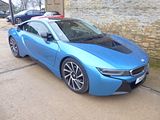
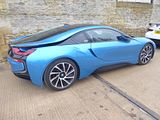
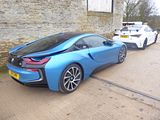
First introduced as the Concept Vision EfficientDynamics, the i8 was part of BMW’s “Project i” and was marketed as a new brand, BMW i, sold separately from BMW or Mini. The BMW i3, launched for customers in Europe in the fourth quarter of 2013, was the first model of the i brand available in the market, and it was followed by the i8, released in Germany in June 2014 as a 2015 model year. Other i models were expected to follow.The initial turbodiesel concept car was unveiled at the 2009 International Motor Show Germany, In 2010, BMW announced the mass production of the Vision EfficientDynamics concept in Leipzig beginning in 2013 as the BMW i8. The BMW i8 gasoline-powered concept car destined for production was unveiled at the 2011 Frankfurt Motor Show. The production version of the BMW i8 was unveiled at the 2013 International Motor Show Germany. The following are the concept and pre-production models developed by BMW that preceded the production version. When BMW i sponsored the ABB FIA Formula E World Championship, they announced that they would provide support vehicles; the i8 operated as the official safety car. BMW Vision EfficientDynamics concept car was a plug-in hybrid with a 1.5L three-cylinder turbo-diesel engine. Additionally, there were two electric motors with 104 kW (139 hp). It allowed an acceleration to 100 km/h (62 mph) in 4.8 seconds, with an electronically limited top speed of 250 km/h (155 mph). According to BMW, the average fuel consumption in the EU test cycle (KV01) was 3.76 L/100 km (75.1 mpg imp), with a carbon dioxide emission rating of 99 g/km(1,3 L/100 km and 33g CO2/kabelham; EU-PHEV ECE-R101). The estimated all-electric range was 50 km (31 mi), and the 24-litre petrol tank extended the total vehicle range to up to 700 km (430 mi). The lightweight chassis was made mainly from aluminium. The windshield, top, doors, and fenders were made from polycarbonate glass, with the body having a drag coefficient of 0.22. The designers of the BMW Vision EfficientDynamics concept were Mario Majdandzic for the exterior and Jochen Paesen (lead interior design), Markus Speck (interior design), and Felix Staudacher former Baerlin (detail design) for the interior. While Jochen Paesen took care of the main interior theme, Markus Speck was in charge of the seats, all the visible structure, and some details. Felix Baerlin supported Jochen Paesen on details including the steering wheel and centre console. The vehicle was unveiled at the 2009 International Motor Show Germany, followed by Auto China 2010. The BMW i8 Concept plug-in hybrid electric vehicle included an electric motor located in the front axle powering the front wheels rated 96 kW (131 PS; 129 hp) and 250 Nm (184 lb/ft, a turbocharged 1.5-litre 3-cylinder petrol engine driving rear wheels rated 164 kW (223 PS; 220 hp) and 300 Nm (221 lb/ft of torque, with combined output of 260 kW (354 PS; 349 hp) and 550 Nm (406 lb/ft), a 7.2 kWh (26 MJ) lithium-ion battery pack that allowed an all-electric range of 35 km (22 mi). All four wheels provided regenerative braking. The location of the battery pack in the energy tunnel gave the vehicle a low centre of gravity, enhancing its dynamics. Its top speed was electronically limited to 250 km/h (155 mph) and was expected to go from 0 to 100 km/h (0 to 60 mph) in 4.6 seconds. Under normal driving conditions the i8 was expected to deliver 80 mpg US (2.9 L/100 km; 96 mpg imp) under the European cycle. A full charge of the battery would take less than two hours at 220 V. The positioning of the motor and engine over the axles resulted in 50/50 weight distribution.The vehicle was unveiled at the 2011 International Motor Show Germany, followed by CENTER 548 in New York City, 42nd Tokyo Motor Show 2011, 82nd Geneva Motor Show 2012, BMW i Born Electric Tour at the Palazzo Delle Esposizioni at Via Nazionale 194 in Rome, and Auto Shanghai 2013. This concept car was featured in the film Mission: Impossible – Ghost Protocol. The BMW i8 Concept Spyder included a slightly shorter wheelbase and overall length compared to the BMW i8 Concept, carbon-fiber-reinforced plastic (CFRP) Life module, drive modules made primarily from aluminium components, interlocking of surfaces and lines, 8.8-inch (22.4 cm) screen display, off-white outer layer, and orange-toned naturally tanned leather upholstery. The vehicle was unveiled at Auto China 2012 in Beijing where it won Concept Car of the Year, followed by the 83rd Geneva International Motor Show 2013. The designer of the BMW i8 Concept Spyder was Richard Kim. The design of the BMW i8 coupe prototype was based on the BMW i8 Concept. The BMW i8 prototype had an average fuel efficiency of less than 2.5 L/100 km (113.0 mpg imp; 94.1 mpg US) under the New European Driving Cycle with carbon emissions of less than 59 g/km. The i8 with its carbon-fibre-reinforced plastic (CFRP) passenger cell lightweight, aerodynamically optimized body, and BMW eDrive technology offered the dynamic performance of a sports car, with an expected 0–100 km/h (0–62 mph) sprint time of less than 4.5 seconds using both power sources. The plug-in hybrid system of the BMW i8 comprised a three-cylinder, 1.5-liter BMW TwinPower Turbo gasoline engine combined with BMW eDrive technology used in the BMW i3 and developed maximum power of 170 kW (228 hp). The BMW i8 was the first BMW production model to be powered by a three-cylinder gasoline engine and the resulting specific output of 115 kW (154 hp) per liter of displacement was on par with high-performance sports car engines and was the highest of any engine produced by the BMW Group. The BMW i8’s second power source was a hybrid synchronous electric motor specially developed and produced by the BMW Group for BMW i. The electric motor developed maximum power of 131 hp (98 kW) and produced its maximum torque of around 320 Nm (236 lb/ft) from a standstill. Typical of an electric motor, responsive power was instantly available when starting and this continued into the higher load ranges. As well as providing a power boost to assist the gasoline engine during acceleration, the electric motor could also power the vehicle by itself. Top speed in electric mode was approximately 120 km/h (75 mph), with a maximum driving range of up to 35 km (22 mi). Linear acceleration was maintained even at higher speeds since the interplay between the two power sources efficiently absorbed any power flow interruptions when shifting gears. The model-specific version of the high-voltage 7.2 lithium-ion battery had a liquid cooling system and could be recharged at a conventional household power socket, at a BMW I Wallbox, or at a public charging station. In the US, a full recharge took approximately 3.5 hours from a conventional 120 V, 12 amp household circuit or approximately 1.5 hours from a 240 V Level 2 charger. The driver could select several driving modes: SPORT, COMFORT, and ECO PRO. Using the gear selector, the driver could either select position D for automated gear selection or could switch to SPORT mode. SPORT mode offered manual gear selection and at the same time switched to sporty drive and suspension settings. In SPORT mode, the engine and electric motor delivered extra performance, accelerator response was faster, and the power boost from the electric motor was maximized. And to keep the battery topped up, SPORT mode also activated maximum energy recuperation during overrun and braking as the electric motor’s generator function, which recharged the battery using kinetic energy, switched to a more powerful setting. The Driving Experience Control switch on the centre console offered a choice of two settings. On starting, COMFORT mode was activated, which offered a balance between performance and fuel efficiency, with unrestricted access to all convenience functions. Alternatively, the ECO PRO mode could be engaged, which, on the BMW i8 as on other models, supported an efficiency-optimized driving style. In this mode, the powertrain controller coordinated the cooperation between the gasoline engine and the electric motor for maximum fuel economy. On deceleration, the intelligent energy management system automatically decided, in line with the driving situation and vehicle status, whether to recuperate braking energy or to coast with the powertrain disengaged. At the same time, ECO PRO mode also programmed electrical convenience functions such as the air conditioning, seat heating, and heated mirrors to operate at minimum power consumption, but without compromising safety. The maximum driving range of the BMW i8 on a full fuel tank and with a fully charged battery was more than 500 km (310 mi) in COMFORT mode, which could be increased by up to 20% in ECO PRO mode. The BMW i8’s ECO PRO mode could also be used during all-electric operation. The vehicle was then powered solely by the electric motor. Only if the battery charge dropped below a given level, or under sudden intense throttle application such as kick down, was the internal combustion engine automatically activated. The vehicle was unveiled in BMW Group’s Miramas test track in France. The production BMW i8 was designed by Benoit Jacob. The production version was unveiled at the 2013 Frankfurt International Motor Show followed by 2013 Les Voiles de Saint-Tropez. Its design was heavily influenced by the BMW M1 Homage concept car, which in turn pays homage to BMW’s last production mid-engined sports car prior to the i8: the BMW M1. The BMW i8 featured butterfly doors, head-up display, rear-view cameras and partially false engine noise. Series production of customer vehicles began in April 2014. The electric two-speed drivetrain was developed and produced by GKN. It was the first production car with laser headlights, reaching farther than LED lights. The i8 had a vehicle weight of 1,485 kg (3,274 lb) (DIN kerb weight) and a low drag coefficient (Cd) of 0.26. In all-electric mode, the BMW i8 had a top speed of 120 km/h (75 mph). In Sport mode, the i8 delivered a mid-range acceleration from 80 to 120 km/h (50 to 75 mph) in 2.6 seconds. The electronically controlled top speed was 250 km/h (155 mph). The 20,000th i8 was produced in December 2019, one of the limited Ultimate Sophisto Edition models. The last i8 rolled off the production line on 11 June 2020. In total, there were 20,465 units produced: 16,581 coupés and 3,884 roadsters.

BRISTOL
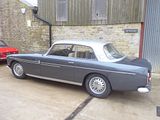
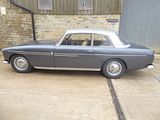
For the third generation, Bristol offered the 404 and 405 ranges. The Bristol 404 came first, manufactured from 1953 to 1958, and the 405 from 1955 to 1958. The 404 was a two-seat coupé and the 405 was available as a four-seat, four-door saloon and as a four-seat, two-door drophead coupé, as seen here. Unlike previous or later Bristol models, there is considerable confusion in nomenclature when it comes to the Bristol 404 and 405. The 404 had a very short-wheelbase (8 feet) as against 9 feet 6 inches for the 405. The 405 itself was seen in two versions. The more common (265 of 308 built) is a four-door saloon built on the standard chassis of the previous Bristols, whilst the 405 drophead coupé or 405D (43 built) had a coupé body by Abbotts of Farnham and most built had a highly tuned (through advanced valve timing) version of the 2 litre six-cylinder engine called the 100C which developed 125 bhp as against the 105 bhp of the standard 100B 405 engine. All engines for the 404 and 405 had higher compression ratios than previous Bristols — 8.5:1 as against 7.5:1. Compared to the 403, the 404 and 405 had an improved gearbox with much shorter gear lever which improved what was already by the standards of the day a very slick gearchange. The 405, though not the 404, had overdrive as standard.

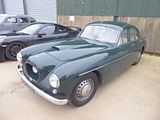

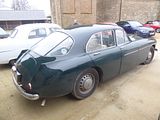
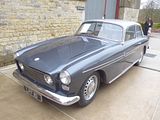
The Bristol 408 was made between 1963 and 1966. Unusually for Bristol, a slightly revised version was launched during the middle of the model’s production run in 1965 and known as the 408 Mark II. Mechanically the Bristol 408 was identical to is predecessor the 407, which had been a major departure for Bristol with its use of a Chrysler V8 engine and automatic transmission. However, outwardly there were some major changes. The frontal styling of the 407 – which had been a carry-over from the six-cylinder 406 – was discarded and in its place was a rectangular grille with pronounced horizontal bars. Another major change were the turn indicator lamps, which on the 408 were wide and rectangular in contrast to the 407’s round lamps. Due to safety concerns, the push-button layout of the automatic transmission was modified through the use of a safety lever to prevent an unwary person moving the car out of “Park”. There were also rectangular instead of circular push-buttons for the gear selector in this version of the car. The transmission itself was now of cast alloy and was over 30 kg (66 lb) lighter than that of previous eight-cylinder Bristols. The engine of the 407 and original 408 had a capacity of 313 cu in (5.1 L), but for the 408 Mark II this was increased to 318 cu in (5.2 L).

CITROEN
Although it was perhaps not as radical a product as the DS, which it replaced had been, this was still something of a futuristic looking car when it was revealed in 1974. Indeed, it is considered by some enthusiasts as the last “real Citroën” before Peugeot took control of the company in 1976, and as history has now shown, is, it was to be the final successful model of the “big Citroën” era, which began in 1934, as Citroën sold nearly 1.2 million CXs during its 16 years of production. The CX’s flowing lines and sharp Kamm tail were designed by auto stylist Robert Opron, resembling its precursor the GS. Citroën had been using a Wind tunnel for many years, and the CX was designed to perform well in aerodynamic drag, with a low coefficient of drag (Cd in English; CX in French) of 0.36. Despite its fastback lines, the model was never sold as a hatchback, even though many of its rivals adopted this during the 1970s, and Citroen thus modified their own GS late in its life. Mechanically, the car was one of the most modern of its time, combining Citroën’s unique hydro-pneumatic integral self-levelling suspension, speed-adjustable DIRAVI power steering (first introduced on the Citroën SM), and a uniquely effective interior design that did away with steering column stalks, allowing the driver to reach all controls while both hands remained on the steering wheel. The CX suspension’s ability to soak up large undulations and yet damp out rough surfaces was extraordinary, with a consistent ride quality, empty, or fully laden. The suspension was attached to sub frames that were fitted to the body through flexible mountings, to improve even more the ride quality and to reduce road noise. “Car” magazine described the sensation of driving a CX as hovering over road irregularities, much like a ship traversing above the ocean floor. This suspension was used under license by Rolls-Royce on the Silver Shadow. The Mercedes-Benz 450SEL 6.9 was not built under license, but copied the Hydropneumatic suspension principles after the less effective Mercedes-Benz 600 Air suspension installation. The CX was conceived to be a rotary-engined car—with several negative consequences. The CX engine bay is small because rotary engines are compact, but the Comotor three-rotor rotary engine was not economical and the entire rotary project was scrapped the year the CX was introduced, and Citroen went bankrupt in 1974, partly due to a series of investments like Comotor that didn’t result in profitable products. Production versions of the CX were always powered by a modest inline 4 cylinder engine, transversely mounted. This saved space and allowed the CX to be 8″ shorter than the DS. At launch in 1974, the CX was rushed to market, with some teething troubles. Some very early models did not have power steering which made the car difficult and heavy to drive – the CX carries 70% of its weight over the front wheels. Initially there was a choice between three differently powered versions. The “Normale” CX car came with a 1985 cc version of the four cylinder engine from the predecessor model with a claimed maximum output of 102 PS, which was slightly more than had been available from the engine when fitted in the DS. The “Economique” version of the car (reflecting the continuing impact of the 1973 oil price shock) came with the same engine as the “Normale”, but the gear ratios were changed, along with the final drive ratio, giving rise to a 7 km/h (4 mph) reduction in top speed in return for usefully improved fuel economy. More performance came from the “CX 2200”, fitted with a 2175 cc version of the engine and a twin carburettor, resulting in a claimed maximum output of 112 PS. This was rather less than was available in the top spec DS23 EFi which featured a relatively powerful 141 PS fuel-injected 2.3-litre engine. The later 2200 improved on this, and eventually the same 2347 cc unit as used in the DS) arrived, originally only in the long wheel-base Prestige, but a regular CX 2400 arrived at the 1976 Paris Salon, to replace the CX 2200. By this time, Citroen had added a capacious Estate model to the range, called Safari, and a 2.2 litre Diesel powered model – important even in the mid 1970s in France – was also offered. Despite the challenging finances of Citroën at the time of launch, the CX was entered in numerous rally driving events, like Tour du Senegal and Paris-Dakar, winning 5 events outright. Most notable among these was in the 17,500 mile 1977 London–Sydney Marathon road race in which Paddy Hopkirk, driving a CX 2400 sponsored by Citroën’s Australian concessionaire, staged a come-from-behind sprint to obtain third place. The CX was initially a huge success in Europe, more than 132,000 being produced in 1978. It found customers beyond the loyal Citroën DS customer base and brought the technology of the advanced, but somewhat impractical, Citroën SM to the masses. Evolution of the car after this was gradual. More power came in 1977, with the CX GTi which received a modern Bosch L-Jetronic injection system, generating 128 PS, and there was a standard five speed gearbox, and in early 1978, the diesel engine was enlarged to 2.,5 litres. A five speed gearbox was available. A very mild facelift in 1979 saw the Douvrin 2 litre engines that were used in the rival Renault R20 fitted under the bonnet to create the CX Reflex and Athena. In 1981, factory rustproofing and a fully automatic transmission to replace the former semi-automatic gearbox were added. In 1984, the addition of a turbo to the 2.5 litre diesel engine made the CX Turbo-D 2.5 the fastest diesel sedan in the world, able to reach speeds up to 195 km/h (121 mph). In 1985, the GTi Turbo, with a top speed of over 220 km/h (137 mph), finally gave the CX the powerful engine that finally used the full capabilities of the chassis. A facelift later that year was an attempt to keep the car in the public eye, but its sales had peaked long ago, back in 1978, and better trim, a revised interior and new plastic bumpers were not going to help a 10 year old design in the face of stiff market competition. Just 35,000 units were produced in 1986 and 1987. There were few further changes for the rest of the CX’s life, with its successor, the XM appearing in early 1989. Production of the Estate models continued until 1991, by which time 1,170,645 CXs had been sold. There are far fewer survivors than there are of the DS family.


FORD
The Mark I Ford Consul and Zephyr models were first displayed at the Earls Court Motor Show in 1950, the first British cars to use in mass production the MacPherson Strut independent front suspension which is widely used today. Production began with the Consul on 1 January 1951. The first of the Zephyr range was a lengthened version of the four-cylinder 1,508 cc Consul, with a 2,262 cc six-cylinder engine producing 68 bhp Like the Consul, the Zephyr came with a three-speed gear box, controlled by a column-mounted lever. The front suspension design, based on that first seen in the Ford Vedette, employed what would later come to be known as MacPherson struts while a more conventional configuration for the rear suspension used a live axle with half-elliptic springs. The car could reach just over 80 mph and 23 mpg. The Ford Zephyr Six was available with 4-door saloon, estate and two-door convertible bodies. The convertible version was made by Carbodies and had a power-operated hood; the estate car was by Abbotts of Farnham and was sold as the Farnham.

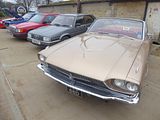
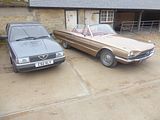
For 1964 the Thunderbird was restyled in favour of a more squared-off appearance, which was mostly evident when viewing the car from the side or rear. Hinting at its roots in the previous generation Thunderbird that it evolved from, the new model retained a similar grille design with quad headlights and a 113.2 inches wheelbase. As before, the new Thunderbird continued to be offered in hardtop, convertible, and Landau versions. The 300 horsepower 6.4 litre V8 continued as the standard engine for the Thunderbird. It was paired with a 3-speed automatic transmission. For 1965, sequential turn signals were added, flashing the individual segments of the broad, horizontal tail lights in sequences from inside to outside to indicate a turn. Also new for 1965 were standard front disc brakes, and doubled sided keys. Even though it was the last year of the generation, 1966 saw a stylistic revision for the Thunderbird highlighted by a new egg-crate style grille with a large Thunderbird emblem at its centre and a single-blade front bumper. The rear bumper was restyled to include new full-width taillamps. Engine choices were also revised for 1966. The standard 390 cu in (6.4 litre) V8 equipped with a single four-barrel carburettor produced 315 horsepower. Newly optional and taking the top position for performance was a 345 horsepower 428 cu in (7.0 litre) FE V8. The 428 cost only $86 over the base engine, and was a popular option. This would be the last year for the convertible until the “retro” models of 2002-05.




HONDA
The S2000 was first alluded to at the 1995 Tokyo Motor Show, with the Honda Sport Study Model (SSM) concept car, a rear-wheel-drive roadster powered by a 2.0 litre inline 4-cylinder engine and featuring a rigid ‘high X-bone frame’ which Honda claimed improved the vehicle’s rigidity and collision safety. The concept car was constructed with aluminium body panels and featured a 50:50 weight distribution. The SSM appeared at many automotive shows for several years afterwards, hinting at the possibility of a production version, which Honda finally announced in 1999. It featured a front mid-engine, rear-wheel-drive layout with power being delivered by a 1,997 cc inline 4-cylinder DOHC-VTEC engine. The engine produced outputs of 237–247 hp, and 153–161 lb/ft depending on the target market., and it was mated to a six-speed manual transmission and Torsen limited slip differential. The S2000 achieved what Honda claimed as “the world’s top level, high performance 4-cylinder naturally aspirated engine”. Features included independent double wishbone suspension, electrically assisted steering and integrated roll hoops. The compact and lightweight engine, mounted entirely behind the front axle, allowed the S2000 to achieve a 50:50 front/rear weight distribution and lower rotational inertia. An electrically powered vinyl top with internal cloth lining was standard, with an aluminium hardtop available as an optional extra. Although the S2000 changed little visually during its production run, there were some alterations, especially in 2004, at which point production of the S2000 moved to Suzuka. The facelifted car introduced 17 in wheels and Bridgestone RE-050 tyres along with a retuned suspension to reduce oversteer. The spring rates and shock absorber damping were altered and the suspension geometry modified to improve stability by reducing toe-in changes under cornering loads. The subframe has also received a revision in design to achieve a high rigidity. In the gearbox the brass synchronisers were replaced with carbon fibre. In addition, cosmetic changes were made to the exterior with new front and rear bumpers, revised headlight assemblies, new LED tail-lights, and oval-tipped exhausts. Although all the cosmetic, suspension and most drivetrain upgrades were included on the Japanese and European S2000s, they retained the 2.0l F20C engine and remained designated as an AP1. A number of special editions were made, such as the more track-oriented Club Racer version offered in the US in 2007/8 and the Type S for Japan in 2008/9. The UK received a GT for 2009, which featured a removable hard-top and an outside temperature gauge. The S2000 Ultimate Edition (continental Europe) and GT Edition 100 (UK) were limited versions of the S2000 released to commemorate the end of production. Both included Grand Prix White body colour, removable hard top, graphite-coloured alloy wheels, red leather interior with red colouring for stitching on the gear lever gaiter. The Ultimate Edition was unveiled at the 2009 Geneva Motor Show and went on sale in March 2009. The GT Edition 100 was a limited run of 100 units released for the UK market. In addition to the Ultimate Edition’s specification, it featured a black S2000 badge and a numbered plaque on the kick-plate indicating which vehicle in the series it was. The car was never replaced, as Honda decided to head off in the same direction as Toyota, producing a series of very dull appliance-like cars that focused on low emissions and dependability but of no appeal to the sort of enthusiast who bought (and probably kept!) an S2000.


HYUNDAI
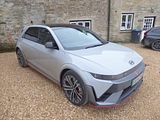
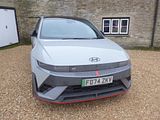
The Ioniq 5 N was introduced on 14 July 2023 during the Goodwood Festival of Speed. The variant is the top-of-the-line model, marketed under the Hyundai N performance sub-brand. The exterior changes include a revised front end with larger air intakes, with additional air curtains and air flaps for improved cooling. The rear portion gained a rear wiper, wing-type spoiler integrated with a triangular third brake light, and a rear diffuser. With extended wheel arches and wider track, the Ioniq 5 N is 50 mm (2.0 in) wider than the standard model and also 20 mm (0.8 in) lower. The larger front motor and front external speaker mean the Ioniq 5 N loses the front boot / trunk present in other Ioniq models. The body in white structure of the Ioniq 5 N gains 42 additional welding points and 2.1 m (83 in) of additional adhesives for improved rigidity. The motor and battery mountings were also reinforced, while the subframes were enhanced for lateral rigidity. Its power steering has a higher ratio and improved torque feedback. The vehicle is equipped with two electric motors, providing a total of 448 kW (609 PS; 601 hp) and 740 Nm (546 lb/ft) of torque. Hyundai equipped the Ioniq 5 N with an N Grin Boost mode, allowing a maximum output of 478 kW (650 PS; 641 hp) and 770 N⋅m (568 lb/ft) of torque being released for 10 seconds. Hyundai claimed a 0–100 km/h (0–62 mph) acceleration figure of 3.5 seconds, or 3.4 seconds with launch control or with N Grin Boost mode activated. The lithium-ion battery for this variant is also extended to 84 kWh. Several aspects were conceived to simulate an internal combustion vehicle. An N e-shift function emulates the feel of an 8-speed dual-clutch automatic transmission, by controlling motor torque to simulate the jolt between shifts. A similar system is utilised to simulate a clutch kick to initiate sliding when in N Drift Optimiser Pro mode. A system called N Active Sound+ uses eight interior and two exterior speakers to play three different sound themes based on throttle position, such as a 2.0-liter turbocharged petrol engine from other Hyundai N cars, futuristic EV themes and twin-engine fighter jet sounds. The car has ben widely praised as one of the most fun EVs yet produced.
JAGUAR
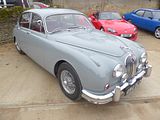
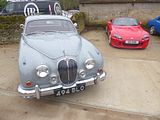
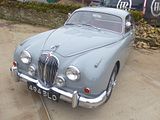
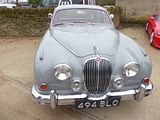
One of the most loved Jaguars of all time, both when it was new, and still now, is the Mark 2 saloon. Many will tell you that it is not the 3 Series BMW that “invented” the “compact sports saloon” car class, but this model, which dates back to 1959. A thorough revision of the small Jaguar saloon that had joined the range in 1955, the Mark 2 was notable in that it was the first car to use the Arabic numeral in its name, as opposed to the Roman numerals of the larger Jaguar models. At launch, the earlier model which had hitherto been known by its engine size was christened the Mark 1. Although clearly based on that car, the updated car looked significantly different, with an increase of 18% in cabin glass area greatly improving visibility. The car was re-engineered above the waistline. Slender front pillars allowed a wider windscreen and the rear window almost wrapped around to the enlarged side windows now with the familiar Jaguar D-shape above the back door and fully chromed frames for all the side windows. The radiator grille was amended and larger side, tail and fog lamps repositioned. Inside a new heating system was fitted and ducted to the rear compartment (although still notoriously ineffective). There was an improved instrument layout that became standard for all Jaguar cars until the XJ Series II of 1973. As well as the familiar 2.4 and 3.4 litre engines, what made this car particularly special was that it was also offered with the potent 220 bhp 3.8 litre unit that was fitted to the XK150 and which would later see service in the E Type. This gave the car a 0 – 60 time of around 8.5 seconds and a top speed of 125 mph. No wonder that the Mark 2 became popular as a get-away car for the criminal fraternity, and to keep up with and catch them, many police forces bought the car as well. With revised suspension and standard four wheel disc brakes, the car was effective on the track, taking plenty of class wins when new, and it is still popular in historic racing circles today. The quickest and most successful private entries came from John Coombs, a man with significant race experience who operated a large Jaguar dealership in Guildford. Coombs would undertake modifications to meet the demands of his customers, so not all the cars that he worked on are the same. Jaguar replaced the Mark 2 with simplified and slightly more cheaply finished 240 and 340 models, as an interim measure until an all-new model was ready to take over from them. The 3.8 litre disappeared from the range at this time, but in the 7 years it had been in production, it had been the best seller of the range, with around 30,000 cars produced, as compared to 28,666 of the 3.4 litre and 25,741 of the 2.4 litre model. This car was not actually at Podium Place but was seen whilst we were in Newbury town centre. It was too good not to include in this report, though.

The E-Type Series 3 was introduced in 1971, with a new 5.3 L Jaguar V12 engine, uprated brakes and standard power steering. Optionally an automatic transmission, wire wheels and air conditioning were available. The V12 was equipped with four Zenith carburettors, and as introduced produced a claimed 272 bhp, more torque, and a 0–60 mph acceleration of less than seven seconds. The short wheelbase FHC body style was discontinued, with the Series 3 available only as a convertible and 2+2 coupé. The newly used longer wheelbase now offered significantly more room in all directions. The Series 3 is easily identifiable by the large cross-slatted front grille, flared wheel arches, wider tyres, four exhaust tips and a badge on the rear that proclaims it to be a V12. The first published road test of the series 3 was in Jaguar Driver, the club magazine of the Jaguar Drivers’ Club, the only owners club to be officially sanctioned by Sir William Lyons and Jaguar themselves. The road test of a car provided by Jaguar was published ahead of all the national and international magazines. Cars for the US market were fitted with large projecting rubber bumper over-riders (in 1973 these were on front, in 1974 both front and rear) to meet local 5 mph impact regulations, but those on European models were considerably smaller. US models also have side indicator repeats on the front wings. There were also a very limited number of six-cylinder Series 3 E-Types built. These were featured in the initial sales procedure but the lack of demand stopped their production. The V12 Open Two Seater and V12 2+2 were factory fitted with Dunlop E70VR − 15-inch tyres on 15 × 6K wire or solid wheels. The final production E-Type OTS Roadster was built in June 1974. Total production was 15,290.


LEXUS
The second-generation Lexus LS 400 (UCF20) debuted in November 1994 (for the 1995 model year) with a longer wheelbase and similar specifications as the original model. The public unveiling of the vehicle occurred in a gala ceremony held at the San Francisco Opera House in California. The sedan was equipped with an updated 4.0-liter 1UZ-FE V8 engine, producing 194 kilowatts (260 hp) and 366 newton-metres (270 ft/lb) of torque. Internally, over 90% of the redesigned LS 400’s composition was new or redesigned, with increased sound insulation, a strengthened body structure, suspension updates (first LS/Celsior with Skyhook adaptive computerized air suspension, and improved brakes. The redesigned model was 95 kg (209 lb) lighter than its predecessor and achieved slightly better fuel economy. The 0–100 kilometres per hour (62 mph) time improved to 7.5 seconds. Development of the second-generation LS 400 began after worldwide launch of the first generation under program code 250T. Given the first-generation model’s successful reception and high level of customer satisfaction with its design, replicating the original LS 400’s attributes with its successor was one of chief engineer Kazuo Okamoto’s primary goals (he stated that “a tradition cannot be founded if you reject the first generation”). Externally, the most significant change was an increase in wheelbase length of 36 mm (1.4 in), resulting in more interior space and an additional 66 mm (2.6 in) of rear-seat legroom. However, as the overall length remained the same, trunk capacity was slightly reduced. The more aerodynamic body (Cd 0.28) retained the general profile and contours of the original LS 400 and was the work of the Calty Design Research centre in the U.S. Designers had evaluated 20 competing concepts, including several with a radically changed body, before selecting a winning entry in 1991 that included forms and contours similar to the original LS 400. Upon final approval in 1992, an evolutionary redesign was the ultimate result, with new design features consisting of sharper angles, curved body lines, and a bevelled grille. More prominent side lines provided a reference point for parking manoeuvres, and forward visibility was improved. Production development lasted from 1991 until conclusion in the second quarter of 1994. Design patents were filed at the Japan Patent Office on October 14, 1992 under registration number 732548, using a prototype. The redesigned LS 400 interior received upgraded features, varying from dual-zone climate controls to rear cupholders. A newly patented seat cushion design, similar to the car’s suspension, used lightweight internal coil springs and stabilizer bars to improve comfort. One of the first in-dash CD changers was offered as an option. Safety enhancements included enlarged crumple zones, three-point seat belts at all positions, and a new collapsible steering column. In Japan, the Toyota Celsior equivalents were offered in the same “A”, “B”, and top-spec “C” configurations as before, along with an additional selection of exterior colours. Several optional features, such as a compact disc-based Global Positioning System (GPS) navigation system and reclining rear seats, were available only in Japan. At its U.S. debut, the redesigned LS 400 retained a pricing advantage over European competitors in its largest market, launching with a base price of US$51,000. However, cost differences had narrowed following more aggressive pricing and added feature content from rival manufacturers. To promote their new flagship, Lexus launched a US$50 million advertising campaign, the most expensive marketing effort since the launch of the division. In mid-1995, sales slowed as the U.S. government threatened tariffs on Japanese luxury cars over the widening U.S.-Japan trade deficit, potentially raising the price of a fully optioned LS 400 to over US$100,000. Subsequent negotiations averted the sanctions by the second quarter of that year, and sales recovered in the following months. Ultimately, second-generation LS 400 sales were lower than the original model; production totalled approximately 114,000 units. Production of the UCF20 ran from October 1994 to July 1997. For 1997, a limited “Coach Edition” LS 400 was produced in partnership with American leather manufacturer Coach Inc. The edition featured Coach leather seats; embroidered emblems on the exterior, floormats, and armrest; special colors and added trim; and a Coach cabin bag. Production was limited to a yearly run of 2,500 units. Designed through early 1996, in September 1997 a revised LS 400 was introduced for the 1998 model year. Changes were a five-speed automatic transmission, increased engine output to 290 bhp, with variable valve timing (VVT-i), and an added 41 Nm (30 ft/lb) of torque. Acceleration times and fuel economy were improved as a result. The suspension and steering also received minor tweaks to improve feel and handling. Stylistically, the vehicle sported a new front fascia, side mirrors, and updated wheels; a rear window diversity antenna replaced the conventional power mast. The cabin received upgrades, including a trip computer, HomeLink, retractable rear headrests, reading lamps, and ultraviolet-tinted glass, while the climate control gained a micron filtration feature with a smog sensor. In August 1997, the first production laser adaptive cruise control on a Toyota vehicle was introduced on the Celsior version (Japan only). It controlled speed only through throttle control and downshifting, but did not apply the brakes. Because of laser technology limitations, it deactivated in bad weather. A CD-ROM-based GPS automotive navigation system became an option in the U.S. Added safety features included front side airbags, vehicle stability control and in 2000, brake assist. Low beam HID headlamps were introduced as well. The headlights were also equipped with a programmable delay feature for proximity illumination. In February 2000, the limited “Platinum Series” LS 400 was introduced at the Chicago Auto Show in partnership with American Express. The edition featured most luxury options as standard, along with separate exterior colours, wheels, badging, and two years’ no-fee use of an American Express Platinum Card. The third generation model launched in 2000.

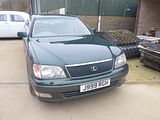
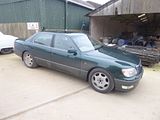

The Lexus IS F debuted at the North American International Auto Show on 8 January 2007. The vehicle features a 5.0 L direct-injected V8 producing 416 SAE hp at 6,600 rpm, while peak torque is 371 lb/ft (503 Nm) at 5,200 rpm. The engine also features a two-stage intake system, engine oil and automatic transmission fluid coolers and an oil pump designed for high-speed cornering. Compared to the 2GR-FSE V6, 306 hp IS 350, the IS F features a 2UR-GSE V8 engine and over 400 hp. The IS F was scheduled to be in dealerships by early 2008. The IS F made its European premiere at the Frankfurt Motor Show in September 2007, and premiered in Japan at the Fuji Speedway in October 2007. The vehicle went on sale in late 2007 in Japan, in early 2008 in the United States, and in Europe in 2008. At its press debut, Lexus revealed that a separate “skunk works” team designed the IS F in a manner distinct from typical Lexus engineering efforts. The chief engineer of the IS F, Yukihiko Yaguchi, previously worked on the Toyota Supra. Much of the IS F’s suspension tuning took place at Fuji Speedway in Japan. The IS F vehicle body was lowered by 1 cm (0.5 inches) compared to the standard IS. The hood features a bulged appearance, with sharper curve than the standard IS, due to the added space needed to contain the 5.0 L V8 engine. The drag coefficient is 0.30 Cd. The exterior also features a wire-mesh grille, changed side fenders and skirts, along with side air vents. One noticeable element of the IS F design were its faux quad exhaust tailpipes consisting of two vertically stacked exhaust tips on each side that did not directly connect to the actual exhaust pipes (tips were part of the bumper, rather than the exhaust). The interior features a four-passenger cabin with braided aluminium panels, steering wheel paddle shifters, and F marque emblems. The IS F also features different seating, with bucket seats in front and rear. The Lexus IS F features a 4,969 cc direct-injected 2UR-GSE V8 producing 416 bhp at 6600 rpm, while peak torque is 371 lb/ft (503 Nm) at 5200 rpm. The engine redlines at 6800 rpm and also features a two-stage intake system, engine oil and automatic transmission fluid coolers and an oil pump designed for high-speed cornering. Along with both port and direct injection, the engine features VVT-iE camshaft timing, and has a compression ratio of 11.8:1. The 2UR-GSE is derived from the Lexus UR-series V8 engines, which debuted as the 1UR-FSE on the 2007 Lexus LS 460. Of the UR-series V8s, the 2UR-GSE is most closely related to the 2UR-FSE used in the 2008 LS 600h. It features the same bore and stroke dimensions (3.70 in x 3.52). However, extensive modifications carried out by the IS F engineering team in conjunction with Yamaha’s Formula One (F1) engine program resulted in a cast-aluminum intake manifold, new cylinder heads, and titanium intake valves. Additionally the engine features a forged crankshaft, connecting rods and cam lobes. At maximum acceleration above 3400 rpm, the secondary intake opens. Compared with the LS 600h’s 2UR-FSE (measured alone without its hybrid-electric motors), the IS F 2UR-GSE has more horsepower and torque at higher rpm, and 17 lb·ft less peak torque (see also Lexus IS F performance specifications). The Lexus IS F features an 8-speed Sport Direct Shift (SPDS) automatic transmission with sequential shift which can lock-up the torque converter from 2nd through 8th gears (see also: Lexus IS transmission specifications). The SPDS is derived from the unit introduced in the 2007 Lexus LS, which was the first vehicle to carry an 8-speed transmission. The SPDS allows for shifts to occur in 0.1 s (100 ms), compared to 0.05 s (50 ms) of F1 race cars. The wheel-mounted paddle shifters allow for gear shifting while steering, and a manual mode can be selected for added control. The 8-speed transmission also improves fuel economy, with lower overall consumption than BMW, Mercedes, and Audi rivals, and avoidance of the U.S. Gas Guzzler Tax. The IS F uses an all-electric rack and pinion steering system with a 13.6:1 gear ratio. The drivetrain is linked to a new sport version of Lexus’ electronic stability control system (Vehicle Dynamics Integrated Management, or VDIM, featuring three distinct on-off modes). The Lexus IS F comes equipped with Brembo cross-drilled brake rotors (14.2 in front, 13.6 rear) and 6-piston front and 2-piston rear aluminium calipers stamped with the Lexus emblem, along with 19-inch BBS forged aluminium alloy wheels. In October 2007, the IS F premiered in Japan, with a 500-unit yearly target for that country, and a 5,000–6,000 yearly unit target for the U.S. market. Top speed was listed at 168 mph (270 km/h). The IS F went on sale in the US in early 2008 with the first 50 IS F units sold as a limited Neiman Marcus special edition. In 2007, the head of Lexus GB stated in an interview that 150 IS Fs would be allocated for the UK market. For 2008, the IS F carried a base price of US$56,000. For 2010, the IS F added a Torsen limited-slip differential, standard iPod/USB connectivity, Bluetooth streaming audio capability, casual language voice commands, and standard XM Satellite Radio. For the 2011 model year the electric power steering system and suspension were revised, with tweaks to the front and rear spring rates, shock absorber dampening, rear bushings and rear camber angle. An interior update included the addition of the Sport button to the steering wheel and a redesign of the gauge cluster featuring a large central tachometer similar to the Lexus LFA. The exterior adds LED daytime running lights and according to Lexus the 2011 IS F can lap Fuji Speedway in 2 minutes, 3.4 seconds or nearly 2 seconds quicker than before. By the final model year in 2014, only approximately 11,500 units had been manufactured, with 5,118 sold in the U.S. They are rare in the UK.


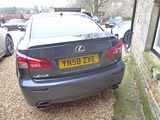

The RC F is a high performance version of the RC. The vehicle was unveiled in the 2014 North American International Auto Show. It went on sale in the United States in November 2014 as a 2015 model year vehicle. It was set to go on sale in Japan in the second half of 2014. The RC F features a 5.0 L (4,969 cc) 2UR-GSE V8 engine with Atkinson cycle at cruising speeds, developing a maximum output of 473 PS (467 bhp) at 7100 rpm and 389 lb/ft (527 Nm) of torque at 4800–5600 rpm. It is coupled to a Toyota AA80E 8-speed transmission built by Aisin AW. The RC F has Brembo four-wheel power assisted disc brakes with anti-lock braking system (ABS), electronic brake force distribution (EBD) and brake assist (BA), and 255/35R19 front and 275/35R19 rear tyres. The RC F is equipped with vertical G-sensor for VDIM, rear Torsen or Torque Vectoring Differential (TVD) with three operating modes (Standard, Slalom, or Track), monotube gas-filled shock absorbers and ball-jointed stabilizer bars, new 19-inch BBS forged aluminum wheels, spindle grille with F-mesh pattern on the lower half, unique front hood which raises the peak of the vehicle, hood air vent from the LFA, front cooling ducts, front fender ducts in the L shape, exclusive combination meters from LFA (a large centrally mounted tachometer that alters according to drive mode, digital and analog speedometer, differential torque vectoring monitor, G-force meter, oil and water temperature gauges, mileage information and a stopwatch), and an elliptical cross-section thick grip steering wheel. The aerodynamic package includes an active rear spoiler, tuning of the underbody, the intakes in the grille and the front fender vents and aero stabilizing fins. The carbon fiber optional package, known in Japan as Carbon Exterior Package, includes a clear coated carbon fiber roof, active rear spoiler, and carbon fiber engine hood. The carbon fiber package parts for the RC F were made at the Aichi plant after the end of the LFA production. To celebrate the 10th-anniversary of Lexus F high performance models, a limited edition RC F was released for the 2018 model year US market. All of the limited edition RC F come in matte-finished Nebula Gray paint with gloss black wheels and bright blue brake calipers. Inside they are equipped with blue leather seats, steering wheel and shift knob, blue Ultrasuede dashboard cover above the instrument cluster, and blue-silver carbon fiber power window switch panel. Despite good reviews, the car has only sold in very small numbers in the UK (and Europe). Production ceased at the end of 2024.

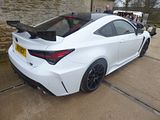

LOTUS
Developed under the project name Project Eagle, this car was launched as the Evora on 22 July 2008 at the British International Motor Show. The Evora is based on the first all-new vehicle platform from Lotus Cars since the introduction of the Lotus Elise in 1995 (the Exige, introduced in 2000, and the 2006 Europa S are both derivatives of the Elise. Evora was planned to be the first vehicle of three to be built on the same platform and was the first product of a five-year plan started in 2006 to expand the Lotus line-up beyond its track-specialised offerings, with the aim of making Evora a somewhat of a more practical road car that would appeal to the mainstream. As such it is a larger car than recent Lotus models Elise and its derivatives (Exige, Europa S, etc.), with an unladen weight of 1,383 kg (3,049 lb). It is currently the only Lotus model with a 2+2 configuration, although it is also offered in a two-seater configuration, referred to as the “Plus Zero” option. It is also the only 2+2 mid engined coupé on sale. The interior is larger to allow taller persons of 6’5″ to fit. The cooled boot behind the engine is large enough to fit a set of golf clubs, although Lotus Design Head Russell Carr denies that this was intentional. Lotus intends Evora to compete with different market sectors including the Porsche Cayman. The name “Evora” keeps the Lotus tradition of beginning model names with an “E”. The name is derived from the words evolution, vogue, and aura. and it of course sounds similar to Évora, which is the name of a Portuguese city and UNESCO World Heritage Site. Sales started in summer 2009, with an annual target of 2000 cars per year, with prices between £45,000 and just over £50,000. and in America from the beginning of 2010. The Evora received several accolades at its launch from the British motoring press, including: Britain’s Best Driver’s Car 2009 from Autocar and Car of the Year 2009, from Evo. Sales, however, were far from target, as the car was seen as too costly. A more powerful Evora S was launched in 2010 with a supercharged equipped 3.5-litre V6. A facelifted and more powerful Evora 400 model was unveiled at the 2015 Geneva Motor Show.
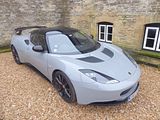
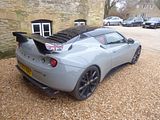
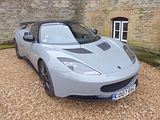
MERCEDES-BENZ
Mercedes spent over £600 million researching and developing the 190 and subsequently said it was ‘massively over-engineered’. It marked a new venture for Mercedes-Benz, finally giving it a new smaller model to compete with the likes of the BMW 3 Series. The W201-based 190 was introduced in November 1982, and was sold in right-hand drive for the UK market from September 1983. Local red tape in Bremen (which produced commercial vehicles at the time) prevented Daimler-Benz from building the 190 there, so production was started in Sindelfingen at a capacity of just 140,000 units per year. Eventually after just the first year, Bremen was cleared for production of the 190, replacing its commercial vehicle lines, and there the 190 was built with the first running modifications since release. Initially there were just two models, the 190 and 190 E. Each was fitted with an M102 1,997 cc displacement engine. The 190 was fitted with an M102.921 90 hp engine and the 190 E fitted with an M102.962 122 hp engine. In September 1983, the 190 E 2.3 (2,299 cc) was released for the North American market only (although a 190 E 2.3 appeared in other countries later), fitted with a 113 hp M102.961 engine. This reduction in power was due to the emissions standards in the North American market at the time. The intake manifold, camshaft, and fuel injection system were refined in 1984, and the engine produced 122 hp. The carburettor 190 was revised in 1984 as well, increasing its horsepower rating to 105 hp. 1984 also saw the arrival of the 2.3-16 “Cosworth.” In 1985, the 190 E 2.3 now came fitted with the M102.985 engine, producing 130 hp until it was revised in 1987 to use Bosch KE3-Jetronic Injection, a different ignition system, and a higher compression ratio, producing 136 hp. 1987 marked the arrival of the first inline-six equipped 190, the 190 E 2.6. Fitted with the M103.940 engine, the 190 E 2.6 provided 160 hp with a catalyst and 164 hp without. In the North American market, the 190 E 2.6 was sold until 1993, the end of the W201 chassis’s production. From 1992-1993 the 2.6 was available as a special “Sportline” model, with an upgraded suspension and interior. The 190 E 2.3 was sold until 1988, then went on a brief hiatus until it was sold again from 1991 until 1993. The W201 190 D is known for its extreme reliability and ruggedness with many examples doing more than 500,000 miles without any major work. The 190 D was available in three different engines. The 2.0 was the baseline, and was never marketed in North America. The 2.2, with the same power as the 2.0, was introduced in September 1983. It was only available in model years 1984 and 1985, and only in the USA and Canada. The 2.5 was available in the late 80’s and early 90’s. The 2.5 Turbo, while sold in mainland Europe, but not the UK for many years, was available to American buyers only in 1987 and is now somewhat of a collectors item. The exterior of the 2.5 Turbo is different from other models in that it has fender vents in the front passenger side wing for the turbo to breathe. Although the early cars were very basic and not very powerful, they sold strongly, and things only got better as the model evolved, with the result that over 1.8 million had been produced by the time the W202 model arrived in 2002 to replace it.
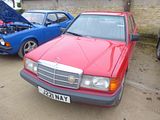
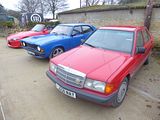
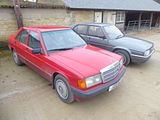
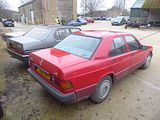
MG
MG re-entered the sports car market in 1995 with the launch of the MGF Two versions of this mid-engined and affordable rival to the Mazda MX5 were offered: both of which used the 1.8 litre K-Series 16-valve engine. The cheaper of the two put out 118 hp and the more costly VVC model (by dint of its variable valve control) had 143 hp. Rover Special Projects had overseen the development of the F’s design and before finalising the styling bought-in outside contractors to determine the most appropriate mechanical configuration for the new car. Steve Harper of MGA Developments produced the initial design concept in January 1991 (inspired by the Jaguar XJR-15 and the Ferrari 250LM), before Rover’s in house design team refined the concept under the leadership of Gerry McGovern. The MGF used the Hydragas suspension, a system employing interconnected fluid and gas displacers, which gave the car a surprisingly compliant ride and which could be tuned to provide excellent handling characteristics. The MG F quickly shot to the top of the affordable sports car charts in Britain and remained there until the introduction of the MG TF in 2002. The MG F underwent a facelift in Autumn of 1999 which gave the car a revised interior as well as styling tweaks and fresh alloy wheels designs. There was also the introduction of a base 1.6 version and a more powerful 160 hp variant called the Trophy 160, which had a 0-60 mph time of 6.9 seconds. It was only produced for a limited time. An automatic version with a CVT called the Steptronic was also introduced. A comprehensive update in 2002 resulted in the MG TF, named after the MG TF Midget of the 1950s. Based upon the MG F platform but heavily redesigned and re-engineered, the most significant mechanical changes were the abandonment of Hydragas suspension in favour of conventional coil springs, the new design of the air-induction system that along with new camshafts produces more power than in MG F engines, and the torsional stiffness of the body increased by 20%. Various cosmetic changes included a revised grille, redesigned front headlights, bumpers, side air-intake grills and changes to the rear boot,. The car continued to sell well. Production was suspended when MG-Rover went out of business, but resumed again in 2007 when Nanjing built a number more.

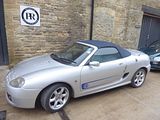
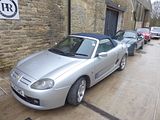
Less than a year after the Rover 25 was launched, BMW sold the Rover Group to the Phoenix consortium for a token £10. By the summer of 2001, the newly named MG Rover Group introduced a sporty version of the Rover 25: the MG ZR. It had modified interior and exterior styling, as well as sports suspension, to give the car the look of a “hot” hatchback. The largest engine in the range was the 1.8 VVC 160 PS unit, which had a top speed of 130 mph . It was frequently Britain’s best-selling “hot hatch”. By 2004, the age of the Rover 25 / MG ZR’s interior design in particular was showing, so MG Rover gave the cars an exterior restyle to make them look more modern. The majority of changes however were focussed on the interior, which featured a completely new layout and fascia design. Production of both cars was suspended in April 2005 when the company went into administration. In March 2005 the 25 won the “Bargain of the Year Award” at the prestigious Auto Express Used Car Honours: “The compact hatchback was recognised by the judges for the availability and affordability that help make five-year old examples an attractive purchase proposition.”


PORSCHE
It was only really with the launch in 1989 of the 964 that a truly “new” model would appear. Designed by Benjamin Dimson in 1986, it featured significant styling revisions over previous 911 models, most prominently the more integrated bumpers. The 964 was considered to be 85% new as compared to its predecessor. The first 964s available in 1989 were all wheel drive equipped “Carrera 4” models; Porsche added the rear wheel drive Carrera 2 variant to the range in 1990. Both variants were available as a coupe, Targa or Cabriolet. The 964 Carrera was the last generation sold with the traditional removable Targa roof until the 2011 991. A new naturally aspirated engine called the M64 was used for 964 models, with a flat-6 displacement of 3.6 litres. Porsche substantially revised the suspension, replacing torsion bars with coil springs and shock absorbers. Power steering and ABS brakes were added to the 911 for the first time; both were standard. The exterior bumpers and fog lamps became flush with the car for better aerodynamics. A new electric rear spoiler raised at speeds above 50 mph and lowered down flush with the rear engine lid at lower speeds. A revised interior featured standard dual airbags beginning in 1990 for all North American production cars. A new automatic climate control system provided improved heating and cooling. Revised instrumentation housed a large set of warning lights that were tied into the car’s central warning system, alerting the driver to a possible problem or malfunction. In 1992, Porsche produced a super-lightweight, rear-wheel-drive only version of the 964 dubbed Carrera RS for the European market. It was based on Porsche’s 911 “Carrera Cup” race car and harked back to the 2.7 and 3.0 RS and RSR models. It featured a revised version of the standard engine, titled M64/03 internally, with an increased power output of 260 bhp and lightweight flywheel coupled to the G50/10 transmission with closer ratios, asymmetrical Limited Slip Differential and steel synchromesh. A track-oriented suspension system with 40 mm (1.6 in) lower ride height, stiffer springs, shocks and adjustable stabiliser bars without power steering (RHD UK cars did have power steering). A stripped-out interior devoid of power windows or seats, rear seats, air conditioning, cruise control, sound deadening or a stereo system (optionally fitted) and new racing-bucket front seats were part of the package. The front boot cover was made of aluminium and the chassis was seam welded. Wheels were made of magnesium and the glass was thinner in the doors and rear window. The Carrera RS is approximately 345 pounds (155 kg) lighter than the Carrera 2 model. Also available were a heavier Touring variant (with sound deadening, power seats (optional), undercarriage protection and power windows) and an N/GT racing variant with a stripped, blank metal interior and a roll cage. They also came with optional lights on the visors. The RS was regarded as somewhat challenging to drive, though as time has gone by, everyone seems to have warmed to it.
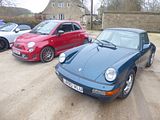
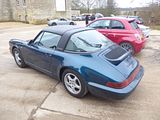
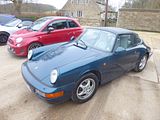
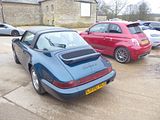
During the 1990s, Porsche was facing financial troubles and rumours of a proposed takeover were being spread. The signature air-cooled flat-6 of the 911 was reaching the limits of its potential as made evident by the 993. Stricter emissions regulations world wide further forced Porsche to think of a replacement of the air-cooled unit. In order to improve manufacturing processes, Porsche took the aid of leading Japanese car manufacturer Toyota whose consultants would assist in the overhaul of the Zuffenhausen manufacturing facility introducing mass production techniques which would allow Porsche to carry out production processes more efficiently. Porsche had realised that in order to keep the 911 in production, it would need radical changes. This led to the development of the 996. The sharing of development between the new 911 and the entry level Boxster model allowed Porsche to save development costs. This move also resulted in interchangeable parts between the two models bringing down maintenance costs. The Porsche 996 was a new design developed by Pinky Lai under Porsche design chief Harm Lagaay from 1992 to 1994; it was the first 911 that was completely redesigned, and carried over little from its predecessor as Porsche wanted the design team to design a 911 for the next millennium. Featuring an all new body work, interior, and the first water-cooled engine, the 996 replaced the 993 from which only the front suspension, rear multi-link suspension, and a 6-speed manual transmission were retained in revised form. The 996 had a drag coefficient of Cd=0.30 resulting from hours spent in the wind tunnel. The 996 is 185 mm (7 in) longer and 40 mm (2 in) wider than its predecessor. It is also 45% stiffer courtesy of a chassis formed from high-strength steel. Additionally, it is 50 kg (110 lb) lighter despite having additional radiators and coolant. All of the M96 engines offered in the 996 (except for the variants fitted to the Turbo and GT2/GT3 models) are susceptible to the Porsche Intermediate Shaft Bearing issue which can potentially cause serious engine failure if not addressed via a retrofit. The 996 was initially available in a coupé or a cabriolet (Convertible) bodystyle with rear-wheel drive, and later with four-wheel drive, utilising a 3.4 litre flat-6 engine generating a maximum power output of 296 bhp. The 996 had the same front end as the entry-level Boxster. After requests from the Carrera owners about their premium cars looking like a “lower priced car that looked just like theirs did”, Porsche redesigned the headlamps of the Carrera in 2002 similar to the high performance Turbo’s headlamps. The design for the initial “fried egg” shaped headlamps could be traced back to the 1997 911 GT1 race car. In 2000, Porsche introduced the 996 Turbo, equipped with a four-wheel-drive system and a 3.6-litre, twin-turbocharged and intercooled flat-six engine generating a maximum power output of 420 bhp, making the car capable of accelerating from 0–60 mph in 4.2 seconds. An X50 option which included larger turbochargers and intercoolers along with revised engine control software became available from the factory in 2002, increasing power output to 451 bhp. In 2005, Porsche introduced the Turbo S, which had the X50 option included as standard equipment, with the formerly optional Carbon fibre-reinforced Silicon Carbide (C/SiC) composite ceramic brakes (PCCB) also included as standard. In 2000, power output on the base Carrera model was increased to 300 bhp. 2001 marked the final year of production for the base Carrera 4 Coupé in narrow body format. In 2002, the standard Carrera models underwent the above-mentioned facelift. In addition, engine capacity was also increased to 3.6-litres across the range, yielding gains of 15 bhp for the naturally aspirated models. 2002 also marked the start of the production of the 996 based Targa model, with a sliding glass “green house” roof system as introduced on its predecessor. It also features a rear glass hatch which gave the driver access to the storage compartment. Also in 2002, the Carrera 4S model was first introduced.

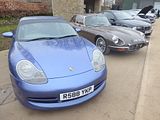
The 996 was replaced with the 997 in 2005. It retains the 996’s basic profile, with an even lower 0.28 drag coefficient, but draws on the 993 for detailing. In addition, the new headlights revert to the original bug-eye design from the teardrop scheme of the 996. Its interior is also similarly revised, with strong links to the earlier 911 interiors while at the same time looking fresh and modern. The 997 shares less than a third of its parts with the outgoing 996, but is still technically similar to it. Initially, two versions of the 997 were introduced— the rear-wheel-drive Carrera and Carrera S. While the base 997 Carrera had a power output of 321 hp from its 3.6 L Flat 6, a more powerful 3.8 L 350 hp Flat 6 powers the Carrera S. Besides a more powerful engine, the Carrera S also comes standard with 19 inch “Lobster Fork” style wheels, more powerful and larger brakes (with red calipers), lowered suspension with PASM (Porsche Active Suspension Management: dynamically adjustable dampers), Xenon headlamps, and a sports steering wheel. In late 2005, Porsche introduced the all-wheel-drive versions to the 997 lineup. Carrera 4 models (both Carrera 4 and Carrera 4S) were announced as 2006 models. Both Carrera 4 models are wider than their rear-wheel-drive counterparts by 1.76 inches (32 mm) to cover wider rear tyres. The 0–100 km/h (62 mph) acceleration time for the Carrera 4S with the 350 hp engine equipped with a manual transmission was reported at 4.8 seconds. The 0–100 km/h (62 mph) acceleration for the Carrera S with the 350 hp was noted to be as fast as 4.2 seconds in a Motor Trend comparison, and Road & Track has timed it at 3.8 seconds. The 997 lineup includes both 2- and 4-wheel-drive variants, named Carrera and Carrera 4 respectively. The Targas (4 and 4S), released in November 2006, are 4-wheel-drive versions that divide the difference between the coupés and the cabriolets with their dual, sliding glass tops. The 997 received a larger air intake in the front bumper, new headlights, new rear taillights, new clean-sheet design direct fuel injection engines, and the introduction of a dual-clutch gearbox called PDK for the 2009 model year. They were also equipped with Bluetooth support. The change to the 7th generation (991) took place in the middle of the 2012 model year. A 2012 Porsche 911 can either be a 997 or a 991, depending on the month of the production.
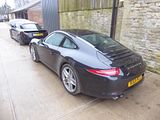
This is from the 992 generation, the current one. As has been the case previously, the range has expanded to cover a significant number of cars from the entry level models (no longer quite as affordable as they used to be) through Carrera 2 and 4 to the GTS, and the all the “special” versions. Many will tell you the GTS is actually the sweet spot of the range.
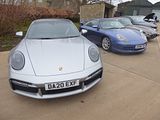

The 924 was originally another joint project of Volkswagen and Porsche created by the Vertriebsgesellschaft (VG), the joint sales and marketing company funded by Porsche and VW to market and sell sports cars, For Volkswagen, it was intended to be that company’s flagship coupé sports car and was dubbed “Project 425” during its development. For Porsche, it was to be its entry-level sports car replacing the 914. At the time, Volkswagen lacked a significant internal research and design division for developing sports cars; further, Porsche had been doing the bulk of the company’s development work anyway, per a deal that went back to the 1940s. In keeping with this history, Porsche was contracted to develop a new sporting vehicle with the caveat that this vehicle must work with an existing VW/Audi inline-four engine. Porsche chose a rear-wheel drive layout and a rear-mounted transaxle for the design to help provide 48/52 front/rear weight distribution; this slight rear weight bias aided both traction and brake balance. The 1973 oil crisis, a series of automobile-related regulatory changes enacted during the 1970s and a change of directors at Volkswagen made the case for a Volkswagen sports car less striking and the 425 project was put on hold. After serious deliberation at VW, the project was scrapped entirely after a decision was made to move forward with the cheaper, more practical, Golf-based Scirocco model instead. Porsche, which needed a model to replace the 914, made a deal with Volkswagen leadership to buy the design back. The deal specified that the car would be built at the ex-NSU factory in Neckarsulm located north of the Porsche headquarters in Stuttgart, Volkswagen becoming the subcontractor. Hence, Volkswagen employees would do the actual production line work (supervised by Porsche’s own production specialists) and that Porsche would own the design. It became one of Porsche’s best-selling models, and the relative cheapness of building the car made it both profitable and fairly easy for Porsche to finance. The original design used an Audi-sourced four-speed manual transmission from a front wheel drive car but now placed and used as a rear transaxle. It was mated to VW’s EA831 2.0 litre 4 cylinder engine, subsequently used in the Audi 100 and the Volkswagen LT van (common belief is that ‘the engine originated in the LT van’, but it first appeared in the Audi car and in 924 form has a Porsche-designed cylinder head). The 924 engine used Bosch K-Jetronic fuel injection, producing 125 bhp in European cars, but a rather paltry 95 bhp for the US market models, though this was improved to 110 hp in mid-1977 with the introduction of a catalytic converter, which reduced the need for power-robbing smog equipment. The four-speed manual was the only transmission available for the initial 1976 model, later this was replaced by a five-speed dog-leg unit. An Audi three-speed automatic was offered starting with the 1977.5 model. In 1980 the five-speed transmission was changed to a conventional H-pattern, with reverse now on the right beneath fifth gear. Porsche made small improvements to the 924 each model year between 1977 and 1985, but nothing major was changed on non-turbo cars. Porsche soon recognised the need for a higher-performance version of the 924 that could bridge the gap between the basic 924s and the 911s. Having already found the benefits of turbochargers on several race cars and the 1975 911 turbo, Porsche chose to use this technology for the 924, eventually introducing the 924 turbo as a 1978 model. Porsche started with the same Audi-sourced VW EA831 2.0 litre engine, designed an all new cylinder head (which was hand assembled at Stuttgart), dropped the compression to 7.5:1 and engineered a KKK K-26 turbocharger for it. With 10 psi boost, output increased to 170 hp. The 924 turbo’s engine assembly weighed about 65 lb more, so front spring rates and anti-roll bars were revised. Weight distribution was now 49/51 compared to the original 924 figure of 48/52 front to rear. In order to help make the car more functional, as well as to distinguish it from the naturally aspirated version, Porsche added an NACA duct in the bonnet and air intakes in the badge panel in the nose, 15-inch spoke-style alloy wheels, four-wheel disc brakes with five-stud hubs and a five-speed transmission. Forged 16-inch flat wheels of the style used on the 928 were optional, but fitment specification was that of the 911 which the 924 shared wheel offsets with. Internally, Porsche called it the “931” (left hand drive) and “932” (right hand drive). The turbocharged VW EA831 engine allowed the 924’s performance to come surprisingly close to that of the 911 SC (180 bhp), thanks in part to a lighter curb weight, but it also brought reliability problems.This was in part due to the fact that the general public did not know how to operate, or care for, what is by today’s standards a primitive turbo setup. A turbocharger cooled only by engine oil led to short component life and turbo-related seal and seat problems. To fix the problems, Porsche released a revised 924 turbo series 2 (although badging still read “924 turbo”) in 1979. By using a smaller turbocharger running at increased boost, slightly higher compression of 8:1 and an improved fuel injection system with DITC ignition triggered by the flywheel, reliability improved and power rose to 177 hp. In 1984, VW decided to stop manufacturing the engine blocks used in the 2.0 litre 924, leaving Porsche with a predicament. The 924 was considerably cheaper than its 944 stablemate, and dropping the model left Porsche without an affordable entry-level option. The decision was made to equip the narrower bodied 924 with a slightly detuned version of the 944’s 163 bhp 2.5 litre straight four, upgrading the suspension but retaining the 924’s early interior. The result was 1986’s 150 bhp 924S. In 1988, the 924S’ final year of production, power increased to 160 bhp matching that of the previous year’s Le Mans spec cars and the base model 944, itself detuned by 3 bhp. This was achieved using different pistons which raised the S’ compression ratio from 9.7:1 to 10.2:1, the knock-on effect being an increase in the octane rating, up from 91 RON to 95. This made the 924S slightly faster than the base 944 due to its lighter weight and more aerodynamic body. With unfavourable exchange rates in the late 1980s, Porsche decided to focus its efforts on its more upmarket models, dropping the 924S for 1989 and the base 944 later that same year.

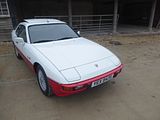
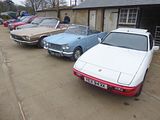
The third-generation Boxster (internally known as the 981) was announced on 13 March 2012 at the Geneva Motor Show with sales starting in early summer 2012. The 981 Boxster reflected the new design language from the 911 (991) and 918, and featured new and revised engine and transmission specifications. Together with a new body, the type 981 Boxster featured a new, 40 per cent more torsionally rigid chassis, the front track was 40 mm (1.6 in) wider, the rear 18 mm (0.7 in) wider and the wheelbase extended by 60 mm (2.4 in), but with a small weight reduction of up to 35 kg (77 lb) compared to the previous type 987 Boxster. The standard Boxster was fitted with a new 2.7-litre flat-6 engine, and the Boxster S was fitted with the existing 3.4-litre engine but with revised performance. Both engines were equipped with a 6-speed manual gearbox and an optional 7-speed reworked PDK. Both manual and automatic models were available with several technical options, including Porsche Torque Vectoring (PTV) and a Sport Chrono Package that included active transmission mounts, and made the PDK-equipped model even faster. Porsche claimed that the new generation Boxster provided fuel savings of 15% over the outgoing model. The range was expanded in March 2014 with the addition of the GTS derivative, with slightly altered front and rear bumpers and an additional 15 PS/ 15 bhp from the 3.4-litre engine. In 2015 the GT4 derivative was introduced, seeing the engine from a 991.1 Carrera S rotated 180 degrees. The GT4 also saw a lowered ride height, altered bumpers, a rear wing and additional GT package upgrades including brakes and certain suspension components from a 991.1 GT3. These special cars where manufactured from 2015 – 2016 with a total of 2500 being made, making this model one of the more desirable collector’s cars in Porsche’s lineup. The GT4 was widely considered one of the best cars of 2015/2016 where it won many awards for its impeccable handling and performance. The third generation Cayman was unveiled at the 2012 Geneva Motor Show. The production version of the 981 Cayman was released as a 2014 model in the spring of 2013. The new car was available in both the standard trim with a 2.7-litre engine, and in the S trim with a 3.4-litre engine. Both versions were available with either a 6-speed manual or a dual-clutch 7-speed PDK transmission. The 981 Cayman featured upgrades including a new body, a longer wheelbase, a wider front track, electrically powered steering, and a redesigned interior that matched the firm’s contemporaneous 911 models. The new model gained acclaim in the motoring press as one of the best handling sports cars at any price, due to its mid-engine layout and driving dynamics. The Cayman S benefited from the same engine and running gear as Porsche’s 3.4-litre version of the 911. A heavily revamped version of both models, known as the 982 generation was launched in 2016 to replace these cars.

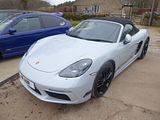
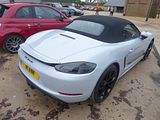
ROVER
A facelifted version of the Rover 200, renamed the Rover 25 (internal codename Jewel) was launched in autumn 1999. This version used similar frontal styling to the larger 75 model. The chassis was uprated to give sportier handling with the suspension and steering setup from 200vi and a number of safety improvements and interior changes were made. Even so, the 25 was instantly recognisable as a reworked 200 Series. The 1.4, 1.6 and 1.8 litre K series petrol engines as well as the 2.0 litre L series diesel were all carried over from the previous range. CVT automatic gearboxes were carried over from the R3 200, with ‘Steptronic’ (later ‘Stepspeed’ post-BMW demerger) semi-automatic system available from late 2000. R65 manual gearboxes were again carried over but were later superseded by Ford ‘IB5’ units in mid-2003. The Rover 25 also saw the introduction, from autumn 2000, of the 16V twin-cam version of the 1.1 L K-Series engine, replacing the 1.1 single-cam 8-valve K-Series engine previously found in the Rover 211i. This development saw power boosted from 59 to 74 bhp.
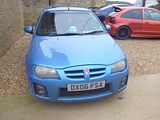
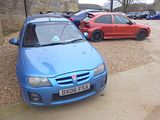
STUDEBAKER
This is based on a 1939 Studebaker Commander but these days it has a Lexus V8 engine under the bonnet, which makes it rather more rapid than it would have been when new.


TRIUMPH
The Triumph Vitesse was introduced on 25 May 1962, reusing a name previously used by the pre-Second World War Triumph Motor Company from 1936–38, and was an in-line 6-cylinder performance version of the Triumph Herald small saloon. The Herald had been introduced on 22 April 1959 and was a 2-door car styled by the Italian designer Giovanni Michelotti. Within two years, Triumph began to give thought to a sports saloon based on the Herald and using their 6-cylinder engine. Michelotti was again approached for styling, and he came up with a car that used almost all body panels from the Herald, combined with a new front end with a slanted 4-headlamp design. Standard-Triumph fitted a 1596 cc version of their traditional straight-6 derived from the engine used in the Standard Vanguard Six, but with a smaller bore diameter of 66.75 mm, compared with the 74.7 mm bore on the Vanguard, equipped with twin Solex B32PIH semi-downdraught carburettors. These were soon replaced by B321H carburettors, as the accelerator pumps proved a problem. The curious observer will notice a “seam” on the cylinder block between the third & fourth cylinders revealing the design beginnings from the 803 cc Standard SC engine block, first used in the Standard Eight of 1953. The gearbox was strengthened and upgraded to closer (more sporting) gear ratios, and also offered with optional Laycock De Normanville ‘D-type’ overdrive with a 20% higher ratio for the top gear (the equivalent change from 3rd to 4th in a standard transmission), giving more relaxed and economical cruising at the expense of slight oil drag from the pump in the overdrive unit. Models fitted with overdrive had a chrome badge with “Overdrive” in italic text on the left side of the boot opposite the Vitesse 6 chrome script badge on the right. Synchromesh was present on 2nd, 3rd and 4th gears. The rear axle was changed to a slightly uprated differential, but retaining the same 4.11:1 ratio and flange sizes as the Herald. Front disc brakes were standard as were larger rear brake drums, and the Herald fuel tank was enlarged, retaining the reserve feature (essentially a curved pickup pipe that could be rotated to dip into the last few centimetres of fuel) of the smaller Herald tank. The front suspension featured uprated springs to cope with the extra weight of the new engine, but the rear suspension was almost the same as on the Herald—a swing-axle transverse-leaf system which quickly proved inadequate for the relatively powerful Vitesse. The chassis looked outwardly similar to the early Heralds but in fact was substantially re-designed and strengthened, especially around the differential mountings, improvements which were immediately passed through to Herald production. The dash and instrument panel of the earliest Vitesse was the same as the Herald, with a single speedo dial featuring fuel and temperature gauge insets. The Vitesse was available in convertible and saloon forms; a coupé never got beyond the prototype stage. The separate chassis construction of the car meant that no additional strengthening to chassis or body was considered necessary for the convertible model, the only concession being additional door catches to prevent the doors opening during hard cornering. The gearboxes of all the Vitesse and GT6 models were a weak point being derived from the earlier Heralds. The increased power caused accelerated wear on the bearing and forward end of the main shaft which would eventually wear through the hardened surface, leading to large amounts of play between the input and main shafts. This was characterised by growling gear noise on acceleration and deceleration in 1st, 2nd and 3rd getting high in each gear as the torque transmission from the lay shaft moved further from the rear of the box where the bearing support was intact. Repair involved either a new mainshaft or metal spraying/stellite repair. Some engineers suggested repairs were more long lived than a new shaft as the technology 10-20 and more years after manufacture meant that the repaired mainshaft had better specifications that new old stock. The remote lever construction suffered from the same regular bushing wear as the herald spitfire etc where sloppy gearchange and rattling can be cured (easy diy job) with a kit of new parts. A handful of Vitesse estates also were assembled to special order at Standard-Triumph’s Service Depot at Park Royal in West London. The interior was much improved over the Herald; wooden door cappings were added to match the wooden dashboard and the car featured slightly better seats and door trims. Optional extras included a vinyl/fabric, (Britax Weathershield), sunroof on saloon models. Exterior trim was also improved with an elongated stainless steel trim piece which extended further down the body than the Herald, including a Vitesse specific piece of trim rearward of the petrol filler cap and satin-silver anodised alloy bumper cappings replacing the white rubber Herald items. In September 1963 the Vitesse received its first facelift, when the dashboard was revised with a full range of Smith instruments instead of the large single dial from the Herald (large speedometer and cable driven tachometer flanked by smaller 2 inch fuel and temperature gauges). From September 1965, at commission number HB27986, the twin Solex carburettors were replaced by twin Stromberg CD 150 carburettors. Power output increased from the original 70 bhp at 5,000 rpm and torque of 92.5 lb/ft (125 Nm), enough to provide a useful performance boost and making the car a more flexible performer. There was a claimed, although somewhat optimistic increase of 13–14 bhp, and the motoring magazine tested top speed rose to 91 mph (146 km/h), with the 0–80 mph (0–129 km/h) time decreasing from 46.6 seconds to just 33.6 seconds. The Vitesse 6 sold extremely well for Triumph, and was by some way the most popular Vitesse sold during the model’s lifetime. The car was well liked for its performance and reasonable fuel economy, and the well-appointed interior. The exceptionally small turning circle was also liked by users. With its ability to perform as well as many sports cars, but with room for a family, the Vitesse had few rivals for the price. The convertible in particular was virtually unique in the marketplace; another genuine four-seater sporting convertible would not reappear from a British manufacturer until the Triumph Stag several years later. In September 1966 Triumph upgraded the engine to 1998 cc, in line with the new Triumph GT6 coupé, and relaunched the Vitesse as the Vitesse 2-Litre. Power was increased to 95 bhp, endowing the new car with a claimed 0–60 mph time of just under 12 seconds, and lifting top speed to 104 mph (167 km/h). (The 2-Litre was advertised by Triumph as “The Two Seater Beater”). The performance increase was welcome, but it highlighted the deficiencies of the rear suspension. Other detail modifications for the 2-litre, included a stronger clutch, all synchromesh gearbox, larger front brakes (still without a servo), and a stronger differential with a slightly higher 3.89:1 ratio. Wider & stronger 4.5-inch wheel rims were fitted, but radial-ply tyres were still optional, at extra cost. There was a satin silver anodised aluminium-alloy cowling above the new reversing light, and badges on the side of the bonnet and in the centre of the grille read 2 litre. The Vitesse boot badge was retained as italic script but lost the 6 of the earlier model – replacing that with the rectangular 2 litre badge and with a chrome strip underlining the Vitesse badge. Cars with overdrive had a separate badge on the cowling above the number plate/reversing light. Inside the car, the seats were greatly improved, with softer (more plush) covering and a better back-rest shape which slightly improved rear-seat knee-room. A new leather-covered three-spoke steering wheel was also added. The Vitesse Mk I was sold until 1968. The Vitesse Mark 2 was launched in October 1968 as the final update to the Vitesse range. Essentially intended to be Triumph’s answer to growing criticism of the rear suspension, the Mark 2 was fitted with a redesigned layout using new lower wishbones and Rotoflex half-shaft couplings. This system, also shared with the new GT6 MKII (GT6+ in the US market), and the first GT6 MkIIIs, tamed the wayward handling and endowed the Vitesse with more firm, progressive roadholding. The solid swing axles of the Herald and earlier Vitesses had camber changes of some 15 degrees from the limits of travel. By adding the lower wishbone and the divided drive shaft whilst retaining the transverse leaf spring as the top link, this camber change was reduced to about 5 degrees. While this was a considerable improvement, it was still a system that struggled to keep up with a really good link-located live axle (such as Triumph would introduce on the Toledo, 1500TC and later Dolomite saloons). There were other improvements: the engine was tweaked once more to provide 104 bhp, cutting the 0–60 mph time to just over 11 seconds and providing a top speed of over 100 mph (160 km/h). The main changes were to the valve timing, to give earlier opening and later closing of the inlet valves compared with the earlier 2-litre engine. (38/78 btdc/atdc for the Mk2 vs 30/60 for the 2 litre). Design changes to the cylinder head allowed for increased inlet valve diameters and better porting. Another major difference in the cylinder head removed the “step” in earlier 1600 and 2 litre incarnations. This meant that in the earlier cars the head studs on the right (manifold) side were short and ended under the manifolds, necessitating unbolting the (hot) manifolds and dropping them back to retorque the studs after a head gasket replacement. The MKII head was full width so all the studs were accessible. The inlet manifolds of the mkII were shorter than the 2 litre to keep inlet tract length the same. The Stromberg carburetors were also changed from 150 CD to 150 CDS, the S referring to the use of a spring between the dashpot cover and piston. The exterior featured a new grille with 3 sets of horizontal elements that were also used (in longer form) in the herald 13/60, Rostyle wheel trims and silver painted steel rear panel, (described by Triumph as “ceramic”), and the interior was upgraded once more in order to share parts with the new Herald 13/60, although there were significant differences between the two models; the inclusion of a tachometer being an obvious one, the provision of a larger ash tray in the Vitesse not quite so obvious. A new colour range was offered for the Mark 2 models. The aluminium cowling above the reversing light gained an oblong chromed VITESSE badge, and the separate chromed Mazak TRIUMPH letters on the bonnet and the boot lid were also deleted. The badges on the bonnet sides were changed to read Mk2 instead of 2 litre. Cars with overdrive had a small badge that fitted below the new rectangular Triumph boot badge. This was the ultimate Vitesse, a saloon or convertible with performance superior to the MGB and the Sunbeam Alpine sports car (in both acceleration and top speed) but with four seats and a large boot. Contemporary testing in the UK press listed the Vitesse’s 0-70 mph time as 15.0 seconds against 17.9 for both the MGBGT and the Sunbeam Alpine Series IV, and standing-quarter-mile times were 18.1, 19.5, and 19.0 respectively. The Vitesse sold well until its withdrawal in July 1971, seven months before the new Triumph Dolomite saloon entered the performance luxury sector for Triumph. Although the Vitesse was an older model, it proved to be more reliable than its replacement, due to its simpler and more proven engine design

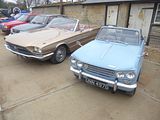
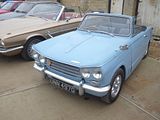
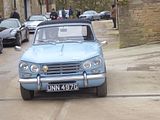
VOLKSWAGEN
Conceived as a replacement for the popular Beetle Cabrio, and at the time unique in the market place, a convertible version of the Golf was presented to Volkswagen’s management by coachbuilder Wilhelm Karmann GmbH as early as 1976. This early prototype lacked the roll-over bar of the later version, and had a flat body line in the rear, where the soft top folded down below the sill level. The production version of the convertible Golf was designated Type 155. In Europe and Canada it was called the Golf Cabriolet, while in the United States it was sold as the Rabbit Convertible until 1985, when it was also renamed “Cabriolet”. The Cabriolet was sold from 1980 to 1993. It had a reinforced body, a transverse roll-over bar, and a high level of trim. From stamping to final assembly the Mk1 Cabriolet was built entirely at the Karmann factory. Volkswagen supplied engines, suspension, and interior trim for Karmann to install. The tops, of vinyl or cloth, were heavily insulated, with a heated glass rear window. The top was raised and lowered manually until 1991, when it became electrically operated. The body of the Cabriolet did not change through the entire production run except for a larger fuel tank. It kept the pre-1980 style of rear lamp clusters. A space saver spare wheel was fitted from the outset, including 1978 pre-production models, unlike the saloon which did not adopt this until 1984. All Cabriolets from 1988 on left the factory fitted with a “Clipper” bodykit that featured smooth body-coloured bumpers, wheel-arch extensions, and side skirts. Prior to the 1984 model year the highest standard specification Cabriolet was the GLI, which was essentially a GTI in all but name. It was only in late 1983 with the introduction of the 1984 model that an officially badged GTI version of the cabriolet finally became available.
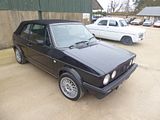

VW had enjoyed considerable success with the Scirocco, a front wheel drive Hatch that was based on the Golf, and offered a stylish modern alternative to the Ford Capri and Opel Manta. the second generation car did not quite the same favour as the first, but even so there was eager anticipation of what was initially thought would be the third generation car. But as VW looked to push the model further upmarket, they opted for a new name, choosing Corrado for the car, which debuted in 1988. Although the new car’s floorpan was based on that of the Mark 2 Golf/Jetta, there had been a plan that the model would actually replace the Porsche 944. That idea came to nought and the car, built by Karmann, as the Scirocco had been, took its place in the VW range, alongside the Scirocco which remained in production for a further three years. All Corrados were front-wheel drive and featured petrol engines, the car debuting with two engine choices: a 1.8 litre 16-valve inline-four with 136 hp and a troublesome supercharged 1.8 litre eight-valve inline-four, marketed as the G60 and delivering 160 hp. The Corrado G60 was named for the G-Lader with which it was equipped, a scroll supercharger whose interior resembles the letter “G”. Volkswagen introduced two new engines for 1992. The first was a naturally-aspirated 2.0 litre 16-valve 136 bhp inline-four, basically a further development of the 1.8 litre engine; this engine was not made available to the North American market. The second was the 12-valve VR6 engine, which came in two variants: a 2.8 litre 179 bhp model for the US and Canadian markets and a 2.9 litre 187 bhp version for the European market. Upon revising the engine, VW updated the styling with a new front grille and foglamps. With the introduction of the VR6 engine, the G60 engine disappeared from the North American market after 1992 and European market in 1993. The VR6 engine provided a compromise between both V-shaped and straight engines by placing the two cylinder banks at an angle of 15° with a single cylinder head. This design allowed engineers to fit a six-cylinder engine into roughly the same space that was previously occupied by four-cylinder engines, while closely approaching the smoothness of a straight-six design. By the time it was launched, VW had updated the Golf to the Mark 3,and some elements of its A3 platform was introduced on the Corrado with the VR6 announcement, including the suspension components, the rear axle assembly and some parts of the A3’s ‘plus’ type front axle assembly. The subsequent wider front wheel-track of the Corrado VR6 necessitated the fitting of new front wings with wider wheel arches and liners along with a new front bumper assembly. Together with a new raised-style bonnet to accommodate the VR6 engine, these body improvements were carried across the model range. A 2.0 litre eight-valve model with 115 hp was produced in Europe in 1995. A UK-only limited production model, the Corrado Storm, was also sold. Some discreet “Storm” badging, a colour-keyed front grille, an additional Storm badge on the gear gaiter surround (an upgrade from the standard Karmann badge), 15 inch BBS “Solitude” alloy wheels, and standard fitment of some previously optional items (such as the leather heated front seats) were all that differentiated this model from the base Corrado VR6. Only 500 were produced: 250 in Classic Green with a cream leather interior, and 250 in Mystic Blue, a colour unique to the Storm, with a black leather interior. The Storm models are the most desirable of all these days. Production ended in 1995. Although the car was much praised for its handling, and the VR6 engine was sublime, t was costly, Karmann’s build quality was patchy and those who experienced the G60 versions had more than their fair share of reliability issues (A colleague of mine had at least 4 superchargers blow in the first 60,000 miles). All told, 97,521 Corrados were produced.

The Golf Mk7 GTI is powered by a 2.0-litre turbocharged direct-injection petrol engine (TSI) with 220 PS (217 hp). In the GTI Performance version, the engine’s maximum power is boosted to 230 PS (227 hp). Both GTI models develop 350 Nm (258 lb/ft) of torque. The standard GTI accelerates from 0 to 100 km/h in 6.5 seconds and can reach a top speed of 250 km/h. The GTI Performance has a top speed of 250 km/h and can accelerate from 0 to 100 km/h (62 mph) in 6.4 seconds. Both versions of the GTI are equipped with a start-stop system and fulfil 2014 Euro 6 emissions standards. With a six-speed manual gearbox, they attain the same low fuel consumption value of 47.1 mpg‑imp (6.00 L/100 km) (CO2 emissions of 139 g/km. This means that the latest Golf GTI offers an 18 percent improvement in fuel economy compared to the previous model. With the optional six-speed DSG gearbox, the two GTI models achieve fuel consumption figures of 44.1 mpg‑imp (6.41 L/100 km) (equivalent to 148 g/km CO2 for the standard GTI and 149 g/km CO2 for the GTI Performance). Buyers who purchase the £980 Performance Pack not only gain 7 kW but also upgraded brakes and a limited-slip differential. The front differential is a new development, dubbed VAQ. This provides more neutral and agile driving behaviour and allows higher speeds to be carried through curves. The system consists of a multi-plate coupler between the differential cage and right driveshaft, which controls locking torque electro-hydraulically. Visually, vehicles with the Performance Pack are distinguished by ‘GTI’ lettering on the front brake caliper, larger vented brake discs front and rear (the same as fitted to the ‘R’ version), and red GTI badges on the front and rear although some cars still retained their silver badging despite being fitted with the Performance Pack. As well as high performance, a high level of safety equipment comes standard in the Golf GTI. On top of high passive safety levels—thanks in part to a passenger cell made from high- and ultra-high strength steels—active safety features include the Automatic Post-Collision Braking system, which automatically applies the vehicle brakes after an accident to reduce the chances of a second impact; the pre-crash system, which tensions seatbelts and closes windows and the sunroof if an accident is likely to improve the effectiveness of the airbags; and seven airbags as standard, including one for the driver’s knees. In many markets including Mexico and South Africa, the GTI version is only available with the five-door body style, with no plans to introduce the three-door body. Volkswagen introduced a “Rabbit Edition” GTI for the 2019 model year. The Rabbit Edition featured a LED lighting package, a “Vmax” spoiler, 18-inch “Pretoria” alloy wheels painted in gloss black, and red tags embroidered with the VW Rabbit logo on the seat.

VOLVO
Introduced in September 1990, the 940 was essentially a cosmetic reskin of the 740 aside from the completely redesigned rear from the C pillar back on the sedan. The new, taller trunk did diminish rearward vision but provided a larger opening to a larger boot than on the 700-series. The dashboard and seats were all new, offering a bit more headroom and the option of an integrated child booster seat in the rear. All drivetrains, and most options available in the 940 had been available in the 740, with the exception of the 780 Coupé. The 940 was more closely related to the 740 than the 760, sharing similar drivetrain choices and sheet metal from the A-pillar forward. In contrast, the 960 was an evolution of the 760. The 760 / 960 front sheet metal, independent rear suspension, dashboard, and other interior features were all exclusive to the two upscale models. The 940 estate, introduced in May 1991, was almost identical to its 740 estate predecessor. The engines options were carried over from the 740, with 8-valve 2-litre (B200) and 2.3-litre (B230) four cylinder gasoline engines, either naturally aspirated or turbocharged, as well as the familiar 2.4-litre Volkswagen six-cylinder diesel and turbodiesels being fitted. There were also 16-valve versions of the gasoline engines fitted on some 1991 and 1992 models (B204, B234, naturally aspirated). The 2-litre 16-valve engine was fitted to the 940 base model in Italy at the time of introduction, to mark it being a step up from the 740. After the 740 was discontinued, the eight-valve engine found its way into the 940 as well. The 2.3-litre turbocharged version produces 165 PS; Volvo sold a chip tuning kit called Turbo+ which boosted the power to 190 PS. In 1994, gasoline engine range was limited to 2.3 engines in Britain, but the 2.0-litre engines remained available in markets with tight tax limits, such as Italy, Belgium, and Portugal. A low-pressure turbocharged version of the B230, the B230FK, debuted in 1994 – maximum power was only up slightly over the B230FB, from 131 to 135 PS, but torque increased throughout the range and there was virtually no turbo lag due to the small size of the charger. The 155 PS turbocharged 2.0 was first presented in February 1991. Originally intended for Italy and other markets with significant taxation thresholds at two litres, it was later also installed in the British-market 940 SE. The most commonly found engines on 940s were the naturally aspirated B230FB with 131 PS (all markets but US), B230FD with 115 PS (mainly for the US market), the turbocharged B230FK and FT, and the D24TIC diesel engine with 116 PS. The share of sales for the turbodiesel were much lower for the 900-series than in earlier years. Engines were fitted with either a 5-speed (M47) or 4-speed+overdrive (M46) manual gearbox or an automatic transmission, either Aisin-Warner AW70/71/72 (3-speed+overdrive) or ZF 4HP22 (4-speed) for some B230FB (or E) and diesel engines. In 1995, the manual gearbox was replaced with a full 5-speed (M90), and the ZF was abandoned for gasoline engines and fitted only on diesels. The SE emblem denoted very different trim and engine levels in different countries. In Sweden, the 940 SE was an ordinary non-turbo 940 with some optional extras as standard, most notably painted mirrors and bumpers. In the UK it was a high trim level available with all engines (from 2.0 to 2.3 turbo). In Australia, the 940 SE was a high trim level with only the 2.3 Turbo B230FT with some extras as standard and featured, rather unusually, full painted bumpers. In Thailand the 940 SE was a Turbo (LPT) model with leather seats, ABS brakes and SRS Airbag. In the US, the 940 SE utilised the body from the 960 (different dashboard, firewall, hood, recessed windscreen wipers etc.) with the four-cylinder B230FT engine, the 940 SE badge presumably chosen by Volvo in order to maintain the link between name and number of cylinders. From MY 1993 on, in Italy all 940 estates were badged “Polar” (engine B200F) or “Super Polar” (engine B200FT). Towards the end of the model cycle, certain countries (as Sweden, Germany and Switzerland) received a well equipped, limited series badged “Classic”. Production of the 940 series extended from 1990 to 1998 with a total of 246,704 units of sedan and 231,677 units of estate. The Volvo 940 is among the last in the long-running line of rear-wheel drive cars from Volvo.

IN THE WORKSHOPS
Petroyle’s core business is in car restoration and they have converted a couple of the buildings on site to use for this purpose. They were open for the day so visitors could see some of what they do and the cars they are working on.
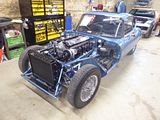
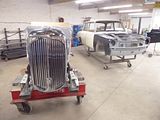
Aston Martin DB2: This was the first new post-war Aston, and the first car to adopt the now legendary DB naming convention, reflecting the fact that in 1947 David Brown had bought the Aston Martin and Lagonda companies and incorporated them as Aston Martin Lagonda Ltd. Lagonda’s 2.6 litre dual overhead cam, straight-six engine, more powerful than the pushrod 1.9 litre unit in the Aston Martin 2-Litre Sports, was the main objective in Brown’s acquisition of the company. W. O. Bentley had supervised the engine’s design, which was largely by William (Willie) Watson, an engineer with the pre-war Invicta company who had collaborated on Lagonda’s pre-war V12 and also designed the short-lived post-war version. Work then started on producing a new car, which was called the DB2. This new model would utilise a version of the Lagonda engine in a shortened version of the tube-frame chassis designed by Claude Hill for the Aston Martin 2-Litre Sports, with a fastback coupé body designed by Frank Feeley. Three pre-production cars were entered for the 1949 24 Hours of Le Mans. One, which would become the development car for the production DB2, had the Lagonda straight-6, while the four-cylinder Aston Martin 2-litre unit powered the other two. After six laps the Lagonda-powered car, driven by Leslie Johnson, retired with overheating caused by failure of the water pump. One of the 2-litre cars was in 4th place and running without brakes when it crashed two hours short of the finish, fatally injuring driver Pierre Maréchal. The other finished 7th, crewed by Arthur Jones and Nick Haines. A month later, the larger-engined car, driven by Leslie Johnson and Charles Brackenbury, finished 3rd in the Spa 24-hour race, where one of the 2-litre cars was driven to 5th by Nick Haines and Lance Macklin. For 1950 all three factory team cars were equipped with the Lagonda engine. At the 1950 Le Mans race the one driven by George Abecassis and Lance Macklin finished 5th, with Brackenbury and Reg Parnell bringing another home 6th, which won Aston Martin 1st and 2nd in the 3-litre class. Across the Atlantic, Briggs Cunningham drove his DB2 to 2nd in its class at the inaugural Sebring race meeting in December 1950. The factory team cars continued racing in Europe throughout 1951, including at Le Mans, where Macklin and Eric Thompson took 3rd overall, with Abecassis and Brian Shawe-Taylor 5th. David Brown soon embarked on a series of Aston Martins designed specifically for competition use, starting with the DB3. Meanwhile, the production DB2 debuted at the New York Auto Show in April 1950 and continued in production until April 1953, by which time 411 had been made. The first 49 had a chrome-framed front grille in three separate parts, and large rectangular cooling vents in the front wings. Subsequent cars had a one-piece grille with horizontal chrome slats, and no side vents. The single-piece bonnet was hinged at the front. At the rear of the fixed-head coupé (FHC) a small top-hinged lid gave access to the spare wheel, and luggage space was behind the front seats, accessible only from inside the car. Later in 1950, a Drophead Coupé (DHC) variant was introduced. At least 102 were built. In April 1950, an engine with larger carburettors, inlet camshaft the same as the exhaust (for increased duration), and higher compression ratio pistons (8.16:1) was made available. Aston Martin’s first Vantage upgrade option offered 125 hp. Initially the higher compression ratio made the engine unsuitable for the British market, as the postwar austerity measures of the early 1950s restricted UK vehicles to 72 octane “Pool petrol”. The first DB2 Vantage, LML 50/21, was delivered to, and raced by, Briggs Cunningham in the United States. A revised version of the DB2 was launched in 1953, called the DB2/4. It was available as a 2+2 hatchback, marketed as a Saloon, as a Drophead Coupé (DHC) and as a 2-seat Fixed Head Coupe. A small number of Bertone bodied spiders were commissioned by private buyers. A further update in 1957 created the Mark III, and this was produced until the launch of the DB4 in 1958.
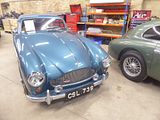


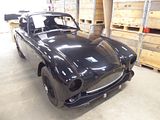
Other cars undergoing restoration included a Mazda MX-5 and an early Porsche 911.


The car that really surprised me was this, though, a very rare Simca 1501. From chatting to one of the staff here, he told me that the car had been in the same family since new and when brought in was looking a bit tatty. Having passed down a generation, the owner asked them to quote “to restore it”. They expected him to be prepared to spend perhaps a few thousand, as even an immaculate 1501 would struggle to reach a five figure sum in value, but when he insisted that he wanted a quote for “everything”, they produced just that, with a likely bill around £60k. they were surprised when he said “yes, go ahead” and really meant them to do everything. One day, therefore, there will be a really lovely Simca 1501 back on our roads, but I can see it is going to take a while!


I enjoyed this event and was glad that it found me. Now I know about it, I hope to find it for some of the follow-on meetings during 2025. It’s not that hard to get to, there was decent coffee and a bacon roll available and if the evidence of this is anything to go by, quite an eclectic collection of cars likely to show up. Just what I enjoy!