Despite my best efforts to try to visit as wide a variety of events and locations as I can, there are limits, so some venues that I come across by one source or other remain for some time on the “must try to visit” list. The one being covered here comes in that category. I had seen that somewhere called “444 The Retreat” was advertising plenty of space for Car Club displays and a series of breakfast club meetings at an address in Worcestershire. When their first event for 2026 coincided with the first Breakfast Club at Shelsley Walsh, and I discovered that the two venues are less than 10 miles apart, I decided to investigate, mindful of the fact that it would be late morning before I would get there and also having warned by a couple of people who had been in the past that this might prove a bit disappointing compared to Shelsley. 444 The Retreat is not somewhere you would find by accident, but that bit is probably intentional, as the core of the business here is a car storage and sale business, for which security is important. So it is not well signed (thank you, navigation!) and access is down a very long, narrow and rather muddy private road off the main road. When I got there I could see a few cars parked up outside, one coffee stall and some doors open to what looked like they would be the storage barns. Here is what I saw in my time on site:
VISITING CARS
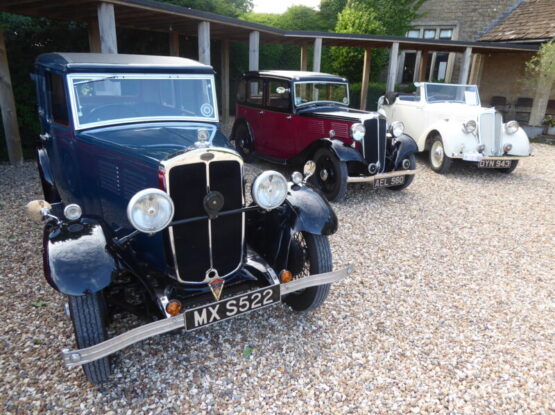
Slightly surprisingly, no-one else seemed to have had the same idea as me, so there were no cars here that I had seen at Shelsley earlier in the morning. Instead I found a couple of groups of cars, likely corralled together by Clubs and then a handful of other singletons arrived.
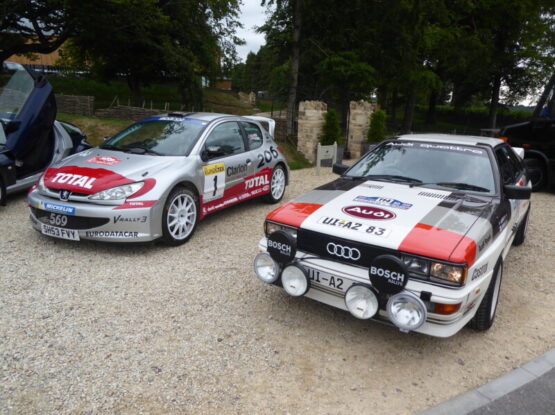
AUDI
There was no RS 4 built on the Audi “B6” platform, which served as the basis for the Audi A4 between 2001 and 2005. However, the second Audi RS 4 quattro (Typ 8E) was built on Audi’s “B7” platform, by quattro GmbH in Neckarsulm, Germany. It was unveiled in February 2005 at Audi’s ‘quattro Night’ celebration at the company headquarters in Ingolstadt, Germany. The RS 4 became available to European customers in mid-2006. It was introduced at the 2006 North American International Auto Show in January, and arrived in June 2006 in North America. The production run of the B7 RS 4 was 2006 to 2008 inclusive, although only 2007 and 2008 model year were sold in the United States. Approximately 10,000 B7 RS 4s were built, of which around 2,000 are in the USA. The B7 RS 4 Cabriolet was sold in Europe from late 2006 to 2008. It was also available in the US in limited numbers per year and sold at a premium of $2000 over the list. Audi factory numbers indicate that the B7 RS 4 saloon can accelerate from 0 to 100 km/h (0 to 62 mph) in 4.8 seconds, and arrive at 0 to 200 km/h (0 to 124 mph) in 16.6 seconds. Most European magazines recorded results in line with the November 2009 comparison of “ultimate sedans” in Road & Track, which recorded a 0 to 60 mph (97 km/h) time of 4.5 seconds. For the Avant, 0 to 100 km/h (0 to 62 mph) is reached in 4.9 seconds. Top speed for all variants is “officially” electronically limited to 250 km/h (155.3 mph). The B7 RS 4 is an almost complete departure from previous Audi “RS” cars, as it was initially available as a four-door five-seat saloon/sedan; with a five-door five-seat Avant, and two-door four-seat Cabriolet versions arriving later. Only the Audi RS 6 had taken this similar route (saloon and Avant) before, unlike the previous RS 4 and RS2, which were available exclusively as Avants. Constructed from fully galvanised steel unibody, the B7 RS 4 uses aluminium for its front wings and bonnet. The saloon version features a drag coefficient (Cd) of 0.31, from a frontal area of 2.17 m2. The B7 RS 4 differs visually from the standard B7 S4, by having even wider flared front and rear wheel arches, to allow for a wider axle track. Over the B7 A4, it also includes two larger frontal side air intakes (for the two additional side-mounted coolant radiators). The B7 RS 4 also includes optional adaptive headlights, which swivel around corners in conjunction with steering wheel movements. An acoustic parking system with front and rear sensors is also a standard fitment. Unique carbon fiber interior trims, along with a lap timer within the central Driver Information System, aluminium pedal caps and footrest, and RS 4 logos complete the look. The 4.2 L (4,163 cc) 32v V8 engine of the B7 RS 4 is based on the previous 4.2 L (4,163 cc) all-alloy 40v V8 from the B6 S4, and shares many parts, and Fuel Stratified Injection, with the 4.2 FSI V8 engine in the Q7. The engine includes new cylinder block construction, and is a highly reworked, high-revving variant (redline at 8,000 rpm; rev limit of 8,250 rpm). The same engine base was used for the Audi R8 when Audi chose to build their first supercar. However, the camshaft drive system was moved to the front of the block for the mid-engine R8. The Audi RS 4 won Top Gear’s Most Surprising Car of the Year in 2005. In 2007, the Audi RS 4 was the winner in the “World Performance Car” category of the International World Car of the Year (WCOTY).

FERRARI
Launched at the 2015 Geneva Show, the 488GTB followed the lead set by the California T in bringing turbocharging into a modern-day, mid-engined V8 Ferrari supercar for the first time. The engine is completely new when compared with its V8 stablemate, not only in components but also in feel and character. It is a twin-turbocharged 3902cc unit whilst that in the California T is 3855cc. In the 488 GTB, it produces 660bhp at 8000rpm and 560lb ft at 3000rpm. Both outputs are significant increases over the normally aspirated 4.5-litre V8 used in the 562 bhp 458 Italia and 597 bhp 458 Speciale, and also greater than the car’s biggest rival, the McLaren 650S. The torque figure of the 488 GTB is such that it also exceeds the 509lb ft at 6000rpm of the normally aspirated V12 used in the range-topping Ferrari F12 Berlinetta. The mighty new engine in the 488 GTB drives the rear wheels through a revised seven-speed dual-clutch automatic gearbox derived from the 458. It features a new ‘Variable Torque Management’ system which, Ferrari says, “unleashes the engine’s massive torque smoothly and powerfully right across the rev range”. The gear ratios are also tuned to “deliver incredibly progressive acceleration when the driver floors the throttle”. The 488 GTB can crack 0-62mph in just 3.0sec, 0-124mph in 8.4sec and reach a top speed of 205mph. Its 0-62mph and 0-124mph times match the McLaren 650S’s, but the Woking car’s top speed is slightly higher at 207mph. The engine also accounts for the ‘488’ element of the car’s name, because each of the engine’s eight cylinders is 488cc in capacity when rounded up. The GTB suffix, standing for Gran Turismo Berlinetta, is a hallmark of previous mid-engined V8 Ferraris such as the 308 GTB. Not only is the new turbo engine more potent than the 4.5-litre V8 from the 458 Italia, but it is also more economical. Combined fuel economy is rated at 24.8mpg, compared with 21.2mpg in the 458 Italia, and CO2 emissions are 260g/km – a 47g/km improvement. Ferrari’s HELE engine stop-start system features on the 488 GTB. Developments on the dynamic side include a second generation of the Side Slip Angle Control system, called SSC2. This allows the driver to oversteer without intruding, unless it detects a loss of control. The SSC2 now controls the active dampers, in addition to the F1-Trac traction control system and E-Diff electronic differential. Ferrari says the result is “more precise and less invasive, providing greater longitudinal acceleration out of corners” and flatter, more stable behaviour during “complex manoeuvres”. Learnings from the Ferrari XX programme have also been incorporated into the 488 GTB, something that Ferrari says allows all drivers and not just professionals, to make the most of its electronic and vehicle control systems. It also claims the 488 GTB is “the most responsive production model there is”, with responses comparable to a track car. The 488 GTB has lapped Ferrari’s Fiorano test track in 1min 23sec – two seconds faster than the 458 Italia, and half a second quicker than the 458 Speciale. The dimensions of the 488 GTB – it is 4568mm in length, 1952mm in width and 1213mm in height – closely match the 458 Italia from which it has evolved. Its dry weight is 1370kg when equipped with lightweight options – 40kg more than the McLaren 650S. The new look, styled at the Ferrari Styling Centre, features several new aerodynamic features that improve downforce and reduce drag. Most notable is the addition of active aerodynamics at the rear through a ‘blown’ rear spoiler, where air is channelled from the base of the glass engine cover under the spoiler. This contributes to the 50% increase in downforce over the 458 Italia. Also new is a double front spoiler, an aerodynamic underbody, a large air intake at the front that references the 308 GTB, a diffuser with active flaps, new positioning for the exhaust flaps and new-look lights. The interior has been redesigned to be made more usable, including new switchgear, air vents and instrument panel. The multi-function steering wheel remains, while the infotainment system gets a new interface and graphics. The Spider followed the closed coupe model six months later,


LEXUS
The Lexus IS F debuted at the North American International Auto Show on 8 January 2007. The vehicle features a 5.0 L direct-injected V8 producing 416 SAE hp at 6,600 rpm, while peak torque is 371 lb/ft (503 Nm) at 5,200 rpm. The engine also features a two-stage intake system, engine oil and automatic transmission fluid coolers and an oil pump designed for high-speed cornering. Compared to the 2GR-FSE V6, 306 hp IS 350, the IS F features a 2UR-GSE V8 engine and over 400 hp. The IS F was scheduled to be in dealerships by early 2008. The IS F made its European premiere at the Frankfurt Motor Show in September 2007, and premiered in Japan at the Fuji Speedway in October 2007. The vehicle went on sale in late 2007 in Japan, in early 2008 in the United States, and in Europe in 2008. At its press debut, Lexus revealed that a separate “skunk works” team designed the IS F in a manner distinct from typical Lexus engineering efforts. The chief engineer of the IS F, Yukihiko Yaguchi, previously worked on the Toyota Supra. Much of the IS F’s suspension tuning took place at Fuji Speedway in Japan. The IS F vehicle body was lowered by 1 cm (0.5 inches) compared to the standard IS. The hood features a bulged appearance, with sharper curve than the standard IS, due to the added space needed to contain the 5.0 L V8 engine. The drag coefficient is 0.30 Cd. The exterior also features a wire-mesh grille, changed side fenders and skirts, along with side air vents. One noticeable element of the IS F design were its faux quad exhaust tailpipes consisting of two vertically stacked exhaust tips on each side that did not directly connect to the actual exhaust pipes (tips were part of the bumper, rather than the exhaust). The interior features a four-passenger cabin with braided aluminum panels, steering wheel paddle shifters, and F marque emblems. The IS F also features different seating, with bucket seats in front and rear. The Lexus IS F features a 4,969 cc direct-injected 2UR-GSE V8 producing 416 bhp at 6600 rpm, while peak torque is 371 lb/ft (503 Nm) at 5200 rpm. The engine redlines at 6800 rpm and also features a two-stage intake system, engine oil and automatic transmission fluid coolers and an oil pump designed for high-speed cornering. Along with both port and direct injection, the engine features VVT-iE camshaft timing, and has a compression ratio of 11.8:1. The 2UR-GSE is derived from the Lexus UR-series V8 engines, which debuted as the 1UR-FSE on the 2007 Lexus LS 460. Of the UR-series V8s, the 2UR-GSE is most closely related to the 2UR-FSE used in the 2008 LS 600h. It features the same bore and stroke dimensions (3.70 in x 3.52). However, extensive modifications carried out by the IS F engineering team in conjunction with Yamaha’s Formula One (F1) engine program resulted in a cast-aluminum intake manifold, new cylinder heads, and titanium intake valves. Additionally the engine features a forged crankshaft, connecting rods and cam lobes. At maximum acceleration above 3400 rpm, the secondary intake opens. Compared with the LS 600h’s 2UR-FSE (measured alone without its hybrid-electric motors), the IS F 2UR-GSE has more horsepower and torque at higher rpm, and 17 lb·ft less peak torque (see also Lexus IS F performance specifications). The Lexus IS F features an 8-speed Sport Direct Shift (SPDS) automatic transmission with sequential shift which can lock-up the torque converter from 2nd through 8th gears (see also: Lexus IS transmission specifications). The SPDS is derived from the unit introduced in the 2007 Lexus LS, which was the first vehicle to carry an 8-speed transmission. The SPDS allows for shifts to occur in 0.1 s (100 ms), compared to 0.05 s (50 ms) of F1 race cars. The wheel-mounted paddle shifters allow for gear shifting while steering, and a manual mode can be selected for added control. The 8-speed transmission also improves fuel economy, with lower overall consumption than BMW, Mercedes, and Audi rivals, and avoidance of the U.S. Gas Guzzler Tax. The IS F uses an all-electric rack and pinion steering system with a 13.6:1 gear ratio. The drivetrain is linked to a new sport version of Lexus’ electronic stability control system (Vehicle Dynamics Integrated Management, or VDIM, featuring three distinct on-off modes). The Lexus IS F comes equipped with Brembo cross-drilled brake rotors (14.2 in front, 13.6 rear) and 6-piston front and 2-piston rear aluminum calipers stamped with the Lexus emblem, along with 19-inch BBS forged aluminum alloy wheels. In October 2007, the IS F premiered in Japan, with a 500-unit yearly target for that country, and a 5,000–6,000 yearly unit target for the U.S. market. By the final model year in 2014, only approximately 11,500 units had been manufactured, with 5,118 sold in the U.S. Top speed was listed at 168 mph (270 km/h). The IS F went on sale in the US in early 2008 with the first 50 IS F units sold as a limited Neiman Marcus special edition. In 2007, the head of Lexus GB stated in an interview that 150 IS Fs would be allocated for the UK market. For 2008, the IS F carried a base price of US$56,000. For 2010, the IS F added a Torsen limited-slip differential, standard iPod/USB connectivity, Bluetooth streaming audio capability, casual language voice commands, and standard XM Satellite Radio. For the 2011 model year the electric power steering system and suspension were revised, with tweaks to the front and rear spring rates, shock absorber dampening, rear bushings and rear camber angle. An interior update included the addition of the Sport button to the steering wheel and a redesign of the gauge cluster featuring a large central tachometer similar to the Lexus LFA. The exterior adds LED daytime running lights and according to Lexus the 2011 IS F can lap Fuji Speedway in 2 minutes, 3.4 seconds or nearly 2 seconds quicker than before


MASERATI
Sole Maserati here was my Grecale. Whenever I looked, someone seemed to be inspecting it. I guess you just don’t see them very often!

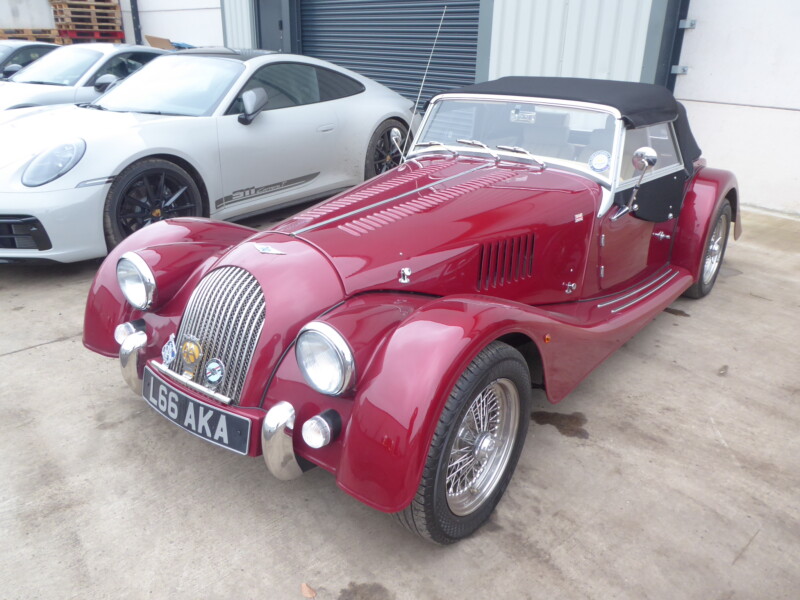
MORGAN


First referred to in 2011, and launched in production spec in 2012, the Three Wheeler has been a huge success for Morgan, and for a while the company simply could not build them fast enough. Relatively affordable, compared to the other products in the range, this fun machine has a 2 litre S&S engine coupled to an MX-5 gearbox, and a weight of 550 kg, which is enough to give it a top speed of around 115 mpg and a 0- 60 time of less than 5 seconds.

PORSCHE
Porsche introduced the 991 GT3 at the Geneva Motor Show in 2013. The 991 GT3 features a new 3.8 litre multi-point electronic indirect injection flat-six engine developing 469 bhp (475 PS) at 8,250 rpm, a Porsche Doppelkupplung (PDK) double-clutch gearbox and rear-wheel steering. The engine is based on the unit fitted in the 991 Carrera S, but shares only a few common parts. All other components, particularly the crankshaft and valve train, were specially adapted or developed for the 991 GT3. For example, the 991 GT3’s engine uses titanium connecting rods attached to forged pistons, in order to allow the engine to reach up to 9,000 rpm. The dual-clutch gearbox is another feature specially developed for the 991 GT3, based on sequential manual transmissions used in racing cars. The 911 GT3 is claimed to be able to accelerate from 0–97 km/h (0–60 mph) in 3.5 seconds or less, and 400 m (the quarter mile) in 11.2 seconds at 203 km/h (126 mph). The GT3 has a claimed top speed of 325 km/h (202 mph). The lap time on the Nürburgring Nordschleife is 7 minutes and 25 seconds. After a number of engine failures in 2014, it was discovered that the supplier of the connecting rod bolts had made a production error in the alloy of the bolt. Subsequently, all 785 of the GT3s that had been produced up to that point were recalled to the dealership organisations and fitted with new engines, and all owners were issued with an extra year’s warranty. A formal letter sent to Porsche from members of the US-based Rennlist.com “991.1 GT3 Concerned Owners Group” about additional engine durability issues lead to a meeting between representatives of the owners group and Porsche, including head of Porsche Motorsport Dr. Frank-Steffen Walliser, on 3 August 2017 at the Porsche North America Atlanta headquarters. According to Dr. Walliser the concerning high-RPM misfire issue could be traced primarily to a metallurgical defect in certain batches of “finger followers” (valve train rocker arms) and secondarily to individual driving patterns and engine variations – such as temperature, oil quality, oil viscosity and parts tolerances – that lead to increased wear of the specific parts. In response to the issue and after implementing new engine tests to trace down the issue Porsche had developed revised camshafts and finger followers and offers a fully transferable 10-year, 120,000 mile extended engine warranty to all 991.1 generation GT3 owners worldwide that covers the replacement of the defective engine with a new engine with the revised parts if failure is a direct result of the finger-follower issue. The base bumper-to-bumper warranty and all other warranty terms and conditions remain unchanged. Porsche confirmed that the issue is isolated to the 991.1 GT3, and that the 991.1 GT3 RS and the 991 R are not affected.

In October 2017, Porsche announced the 911 Carrera T (Touring), offering the base Carrera drivetrain but with shorter rear axle ratio, mechanical differential lock, PASM Sport lowered suspension, Sport Chrono package and sports exhaust as standard. Additional features include a reduced sound insulation, light-weight glass side/rear windows, Sport-Tex seats, a shortened shift lever, deletion of the rear seats and communication system (with their re-addition available as a no-cost option), Carrera S wheels, as well as optional rear-wheel steering, PDK transmission and bucket seats.


There were plenty of examples of the current 992 model here, as well.


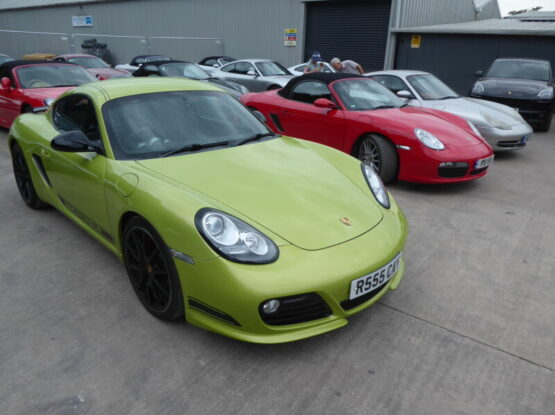
The third-generation Boxster (internally known as the 981) was announced on 13 March 2012 at the Geneva Motor Show with sales starting in early summer 2012. The 981 Boxster reflected the new design language from the 911 (991) and 918, and featured new and revised engine and transmission specifications. Together with a new body, the type 981 Boxster featured a new, 40 per cent more torsionally rigid chassis, the front track was 40 mm (1.6 in) wider, the rear 18 mm (0.7 in) wider and the wheelbase extended by 60 mm (2.4 in), but with a small weight reduction of up to 35 kg (77 lb) compared to the previous type 987 Boxster. The standard Boxster was fitted with a new 2.7-litre flat-6 engine, and the Boxster S was fitted with the existing 3.4-litre engine but with revised performance. Both engines were equipped with a 6-speed manual gearbox and an optional 7-speed reworked PDK. Both manual and automatic models were available with several technical options, including Porsche Torque Vectoring (PTV) and a Sport Chrono Package that included active transmission mounts, and made the PDK-equipped model even faster. Porsche claimed that the new generation Boxster provided fuel savings of 15% over the outgoing model. The range was expanded in March 2014 with the addition of the GTS derivative, with slightly altered front and rear bumpers and an additional 15 PS/ 15 bhp from the 3.4-litre engine. In 2015 the GT4 derivative was introduced, seeing the engine from a 991.1 Carrera S rotated 180 degrees. The GT4 also saw a lowered ride height, altered bumpers, a rear wing and additional GT package upgrades including brakes and certain suspension components from a 991.1 GT3. These special cars where manufactured from 2015 – 2016 with a total of 2500 being made, making this model one of the more desirable collector’s cars in Porsche’s lineup. The GT4 was widely considered one of the best cars of 2015/2016 where it won many awards for its impeccable handling and performance. The third generation Cayman was unveiled at the 2012 Geneva Motor Show. The production version of the 981 Cayman was released as a 2014 model in the spring of 2013. The new car was available in both the standard trim with a 2.7-litre engine, and in the S trim with a 3.4-litre engine. Both versions were available with either a 6-speed manual or a dual-clutch 7-speed PDK transmission. The 981 Cayman featured upgrades including a new body, a longer wheelbase, a wider front track, electrically powered steering, and a redesigned interior that matched the firm’s contemporaneous 911 models. The new model gained acclaim in the motoring press as one of the best handling sports cars at any price, due to its mid-engine layout and driving dynamics. The Cayman S benefited from the same engine and running gear as Porsche’s 3.4-litre version of the 911. A heavily revamped version of both models, known as the 982 generation was launched in 2016 to replace these cars.

STORED CARS and MEMORABILIA
There was also the chance to see inside the two linked storage barns. Most of the cars here are on storage but a few are for sale. There are plenty of motorbikes here as well and there is an amount of memorabilia. It’s all quite interesting but there’s really not that much to see:
ASTON MARTIN
The Aston Martin V12 Vanquish was designed by Ian Callum and bore a large resemblance to the production DB7 Vantage. However, the car had a strong influence from the Project Vantage Concept prototype which debuted with a V12 engine at the North American International Auto Show in January 1998. As underneath the car featured a strong aluminium/carbon composite construction, bonded chassis with a 5,935 cc V12 engine. It was available in 2+0 and 2+2 seating configurations. The 48-valve 60° engine produces 460 bhp and 400 lb⋅ft of torque. It is controlled by a drive-by-wire throttle and a six-speed Electrohydraulic manual transmission. The standard Vanquish model had 14.0 inch drilled and ventilated disc brakes with four-pot calipers, ABS, with electronic brake distribution. Its appearance in the 2002 James Bond film Die Another Day earned the V12 Vanquish the number three spot on the list of Best Film Cars Ever, behind the Minis from The Italian Job, and DB5 from Goldfinger & Thunderball. The car also appears in the video games Need For Speed: Hot Pursuit 2, James Bond 007: Nightfire, and James Bond 007: Everything or Nothing. The Vanquish S debuted at the 2004 Paris Auto Show, with increased horsepower and performance and slight styling revisions. The engine displacement remained at 5,935 cc with power increased from 460 to 520 bhp. Visual changes included new wheels, a slightly different nose shape, a new raised bootlid with a larger integrated spoiler incorporating the third high level brake light (in the rear window on the original Vanquish), a Vanquish S badge on the bootlid (the original Vanquish had no rear model designation) and the addition of a small front splitter (although this was mainly done for aerodynamic reasons). As part of its improvements, the Vanquish S featured a slightly improved coefficient of drag of 0.32 (from 0.33), with help from a redesigned splitter and boot lid. Its front and rear track were 1,524 mm (60.0 inches) and 1,529 mm (60.2 inches), respectively. It also incorporated the features of a 2004 option package, the Sports Dynamic Pack, which incorporated sportier suspension, steering, and brake features. This model was sold for the 2005 (alongside the base Vanquish) and 2006 (as a stand-alone) model years in the United States with only minor running changes; it was not sold in the United States for 2007. The Vanquish S featured larger brakes than the V12 Vanquish; 14.9 in front discs with six-pot calipers and 13.0 inches rear discs. The end of the Vanquish’s production run was celebrated with the Vanquish S Ultimate Edition. Aston Martin announced that the last 50 cars built would have a new ‘Ultimate Black’ exterior colour, upgraded interior, and personalised sill plaques. 1086 Vanquish S were built. With a 200+ MPH top speed, the Vanquish S was (as measured by top speed capability) the fastest Aston Martin ever until the Vantage V12 S was introduced in May 2013. Vanquish production ended on 19 July 2007, coinciding with the closing of the company’s Newport Pagnell factory after 49 years of operation.

Follow on to the DB7 was the DB9 (there has never been a car called DB8 – supposedly because people might have assumed this meant a V8 engine), and there was a nice example here. Designed by Marek Reichmann and Hendrik Fisker, the DB9 was first shown at the 2003 Frankfurt Auto Show, in coupe form. It was widely praised for the beauty of its lines. This was the first model to be built at Aston Martin’s Gaydon facility. It was built on the VH platform, which would become the basis for all subsequent Aston models. The Aston Martin DB9 was initially launched equipped with a 6.0 litre V12 engine, originally taken from the V12 Vanquish. The engine produced 420 lbf·ft of torque at 5,000 rpm and a maximum power of 444 hp at 6,000 rpm, allowing the DB9 to accelerate from 0 to 60 mph in 4.7 seconds and a top speed of 299 km/h (186 mph). The engine largely sits behind the front-axle line to improve weight distribution. Changes to the engine for the 2013 model year increased the power to 503 hp and torque to 457 lb-ft, decreasing the 0 to 60 mph time to 4.50 seconds and with a new top speed is 295 km/h (183 mph). The DB9 was available with either a six-speed conventional manual gearbox from Graziano or a six-speed ZF automatic gearbox featuring paddle-operated semi-automatic mode. The gearbox is rear-mounted and is driven by a carbon-fibre tail shaft inside a cast aluminium torque tube. The DB9 was the first Aston Martin model to be designed and developed on Ford’s aluminium VH (vertical/horizontal) platform. The body structure is composed of aluminium and composites melded together by mechanically fixed self-piercing rivets and robotic assisted adhesive bonding techniques. The bonded aluminium structure is claimed to possess more than double the torsional rigidity of its predecessor’s, despite being 25 percent lighter. The DB9 also contains anti-roll bars and double wishbone suspension, supported by coil springs. To keep the back-end in control under heavy acceleration or braking, the rear suspension has additional anti-squat and anti-lift technology. Later versions of the car also features three modes for the tuning: normal, for every-day use, sport, for more precise movement at the cost of ride comfort, and track, which furthers the effects of the sport setting. The Aston Martin DB9 Volante, the convertible version of the DB9 coupe, followed a few months later. The chassis, though stiffer, uses the same base VH platform. To protect occupants from rollovers, the Volante has strengthened windscreen pillars and added two pop-up hoops behind the rear seats. The hoops cannot be disabled and will break the car’s rear window if deployed. In an effort to improve the Volante’s ride while cruising, Aston Martin have softened the springs and lightened the anti-roll bars in the Volante, leading to a gentler suspension. The retractable roof of the Volante is made of folding fabric and takes 17 seconds to be put up or down. The Volante weighs 59 kilograms (130 pounds) more than the coupe. The coupe and Volante both share the same semi-automatic and automatic gearboxes and engine. The car was limited to 266 km/h (165 mph) to retain the integrity of the roof. Like the coupe, the original Volante has 420 lb·ft of torque at 5,000 rpm and a maximum power of 450 hp at 6,000 rpm. The 0 to 60 mph slowed to 4.9 seconds due to the additional weight. The DB9 was facelifted in July 2008, which mainly amounted to an increase in engine power, to 476 hp and a redesigned centre console. Externally, the DB9 remained virtually unchanged. For the 2013 model year revision, Aston made minor changes to the bodywork by adapting designs from the Virage, including enlarging the recessed headlight clusters with bi-xenon lights and LED daytime strips, widening the front splitter, updating the grille and side heat extractors, updating the LED rear lights with clear lenses and integrating a new rear spoiler with the boot lid. .On newer models, like the coupe’s, the Volante’s horsepower and torque increased to 517 PS (510 hp) and 457 lb·ft respectively. As a finale for the model, a more powerful DB9 was released in 2015, called the DB9 GT. This had 540 bhp and 457 lb-ft of torque at 5500 rpm, giving a 0 to 60mph time of 4.4 seconds and 0 to 100mph in 10.2 seconds, with the standing quarter mile dispatched in 12.8 to 12.9 seconds and a top speed of 183mph.


Several of the recently superceded Vantage model were here. Following the unveiling of the AMV8 Vantage concept car in 2003 at the North American International Auto Show designed by Henrik Fisker, the production version, known as the V8 Vantage was introduced at the Geneva Motor Show in 2005. The two seat, two-door coupé had a bonded aluminium structure for strength and lightness. The 172.5 inch (4.38 m) long car featured a hatchback-style tailgate for practicality, with a large luggage shelf behind the seats. In addition to the coupé, a convertible, known as the V8 Vantage Roadster, was introduced later in that year. The V8 Vantage was initially powered by a 4.3 litre quad-cam 32-valve V8 which produced 380 bhp at 7,300 rpm and 409 Nm (302 lb/ft) at 5,000 rpm. However, models produced after 2008 had a 4.7-litre V8 with 420 bhp and 470 Nm (347 lbft) of torque. Though based loosely on Jaguar’s AJ-V8 engine architecture, this engine was unique to Aston Martin and featured race-style dry-sump lubrication, which enabled it to be mounted low in the chassis for an improved centre of gravity. The cylinder block and heads, crankshaft, connecting rods, pistons, camshafts, inlet and exhaust manifolds, lubrication system and engine management were all designed in house by Aston Martin and the engine was assembled by hand at the AM facility in Cologne, Germany, which also built the V12 engine for the DB9 and Vanquish. The engine was front mid-mounted with a rear-mounted transaxle, giving a 49/51 front/rear weight distribution. Slotted Brembo brakes were also standard. The original V8 Vantage could accelerate from 0 to 60 mph in 4.8 seconds before topping out at 175 mph. In 2008, Aston Martin introduced an aftermarket dealer approved upgrade package for power and handling of the 4.3-litre variants that maintained the warranty with the company. The power upgrade was called the V8 Vantage Power Upgrade, creating a more potent version of the Aston Martin 4.3-litre V8 engine with an increase in peak power of 20 bhp to 400 bhp while peak torque increased by 10 Nm to 420 Nm (310 lb/ft). This consists of the fitting of the following revised components; manifold assembly (painted Crackle Black), valved air box, right and left hand side vacuum hose assemblies, engine bay fuse box link lead (ECU to fuse box), throttle body to manifold gasket, intake manifold gasket, fuel injector to manifold seal and a manifold badge. The V8 Vantage had a retail price of GB£79,000, US$110,000, or €104,000 in 2006, Aston Martin planned to build up to 3,000 per year. Included was a 6-speed manual transmission and leather-upholstery for the seats, dash board, steering-wheel, and shift-knob. A new 6-speed sequential manual transmission, similar to those produced by Ferrari and Lamborghini, called Sportshift was introduced later as an option. An open-topped model was added to the range in 2006 and then in the quest for more power a V12 Vantage joined the range not long after.


During 2016, a handful of lucky customers were able to take delivery of one (or both) of a couple of very special versions of the Vantage offered, the GT8 and GT12, and an example of the latter was here. First of them was the Vantage GT12. This started out as the Aston Martin Vantage GT3 special edition when it was unveiled at the Geneva Motor Show 2015. The company said that they would only manufacture 100 cars. After a complaint from Porsche over the use of the “GT3” moniker, the car was renamed the Vantage GT12. It features a new iteration of the 6.0-litre V12 that produces 592 bhp and 461 lb/ft of torque. It has a kerb weight of 1,535 kg (3,384 lb), and can accelerate from 0 to 60 mph in 3.5 seconds. There were sufficient external alterations that you would know that you were looking at something very special. For the Vantage GT8, which was launched a year later, Aston decided to make more cars – 150 of them, which was 50 more than the GT12. The GT8 features the same 4.7-litre V8 as found in the base Vantage but with power now increased to 440 bhp, and has a top speed of 190 mph (310 km/h). The GT8 is available with either a 6-speed manual or a 7-speed Sportshift II automated manual transmission, and has a kerb weight of 1,510 kg (3,329 lb), a 100 kg (220 lb) reduction over the V8 Vantage S.


The latest and still current Aston Martin Vantage was unveiled on 21 November 2017 with production starting in June 2018, replacing the previous model which had been in production for 12 years. It introduced a new styling direction but this was not universally well received and the car had a hefty price increase over its predecessor. Muted press enthusiasm did not help and sales have been disappointing. Aston Martin have continued to develop the model with a number of new versions introduced, to try to improve demand. The Vantage AMR is a track-focused variant of the Vantage. The main highlight of the model is the replacement of the ZF 8-speed automatic transmission with a dog-leg Graziano Trasmissioni 7-speed manual transmission previously used on the V12 Vantage S. The AMR also comes with a driver-selectable AMSHIFT system which controls the throttle during gear shifting. A new limited-slip differential ensures linear delivery of power. The power-band of the engine is wider and the unit is designed to deliver 625 Nm (461 lb/ft) of torque from 2,000 rpm to 5,000 rpm. The use of a manual transmission and carbon-ceramic brakes reduce the weight by 95 kg (209 lb). New adaptive dampers with the section of Sport, Sport + and Track modes improve handling. Performance figures include a 0–97 km/h (60 mph) acceleration time of 3.9 seconds, half a second more than the standard Vantage while the top speed remains the same as the standard model. Visual changes include 20-inch forged wheels as available on the Rapide AMR, new carbon fibre side vents and cooling vents present on the hood a sports exhaust system with quad tailpipes and racing bucket seats. Production of the AMR will be limited to 200 units worldwide. Available exterior colours for the AMR include Sabiro Blue, Pnyx Black, China Grey and White Stone. The final 59 cars will be finished in a Sterling Green exterior colour with Lime accents and will pay homage to the 1959 24 Hours of LeMans victory of Aston Martin. Once the production of the AMR ceases, the 7-speed manual transmission will become available on the standard Vantage. The vehicle went on sale in May 2019, with delivery set to begin in Q4 2019. Revealed in February 2020, the Vantage Roadster is a convertible version of the V8 Coupe with a fabric roof. The roof claimed to be the fastest of any automotive automatic convertible system, takes 6.7 seconds to lower and 6.8 seconds to raise and can be operated at speeds of up to 50 km/h (31 mph). The Vantage Roadster has a dry weight of 1,628 kg (3,589 lb). The F1 Edition is a version of the V8 Coupe and V8 Roadster commemorating Aston Martin’s return to Formula One after 61 years. The car features a fixed rear wing at the back, increased engine power to 535 PS (528 bhp), a top speed of 314 km/h (195 mph), new 21-inch wheel rims, and a 0–100 km/h (0–62 mph) acceleration time of 3.5 seconds. The car is available in three colours: Aston Martin Racing Green, Jet Black, and Lunar White. A convertible version called the Roadster is also available. Delivery began in May 2021.

AUDI
This is the second generation R8. Launched at the 2015 Geneva Motor Show and is based on the Modular Sports System platform shared with the Lamborghini Huracan. The development of the Type 4S commenced in late 2013 and was completed in late 2014. Initial models included the all-electric e-Tron and the V10 5.2 FSI along with the V10 plus. Unlike its predecessor, there was no manual transmission available and the entry-level V8 trim was also dropped. In 2016, the convertible (Spyder) variant was added to the line up which was initially available in the base V10 trim. In mid-2017, the high performance V10 plus Spyder was added to the range. A rear-wheel-drive model called the R8 RWS was introduced. In 2018, the R8 received a mid-cycle refresh with mechanical and exterior changes. The newer and more aggressive design language carried over from famous Audi models of the past and its appearance is slightly more angular up front. Some of the aerodynamic features such as the front aeroblades are shared with the Lamborghini Huracàn. The refreshed model had substantial performance improvements over its predecessor. The base R8 got a power boost from 532 hp to 562 hp, while the V10 Plus was renamed V10 Performance Quattro and the engine saw a power increase by 10 hp, now up to 612 hp.

BENTLEY
From Bentley was this example of the Continental GT Coupe

FERRARI
Stung by the criticism of the 348, Ferrari undertook a comprehensive revision, creating the F355 model which they launched in May 1994. An evolution of the Ferrari 348, just about everything was changed, and improved. Design emphasis for the F355 was placed on significantly improved performance, but driveability across a wider range of speeds and in different environments such as low-speed city traffic was also addressed, as the Honda NS-X had proved that you could make a supercar that could be lived with every day. Apart from the displacement increase from 3.4 to 3.5 litres, the major difference between the V8 engine in the 348 and F355 was the introduction of a 5-valve cylinder head. This new head design allowed for better intake permeability and resulted in an engine that was considerably more powerful, producing 375 hp. The longitudinal 90° V8 engine was bored 2mm over the 348’s engine, resulting in the small increase in displacement. The F355 had a Motronic system controlling the electronic fuel injection and ignition systems, with a single spark plug per cylinder, resulting in an unusual 5 valves per cylinder configuration. This was reflected in the name, which did not follow the formula from the previous decades of engine capacity in litres followed by number of cylinders such as the 246 = 2.4 litres and 6 cylinders and the 308 of 3.0 litres and 8 cylinders. For the F355, Ferrari used engine capacity followed by the number of valves per cylinder (355 = 3.5 litres engine capacity and 5 valves per cylinder) to bring the performance advances introduced by a 5 valve per cylinder configuration into the forefront. 5. The frame was a steel monocoque with tubular steel rear sub-frame with front and rear suspensions using independent, unequal-length wishbones, coil springs over gas-filled telescopic shock absorbers with electronic control servos and anti-roll bars. The car allows selection between two damper settings, “Comfort” and “Sport”. Ferrari fitted all road-going F355 models with Pirelli tires, size 225/40ZR 18 in front and 265/40 ZR 18 in the rear. Although the F355 was equipped with power-assisted steering (intended to improve low-speed driveability relative to the outgoing 348), this could optionally be replaced with a manual steering rack setup by special order. Aerodynamic designs for the car included over 1,300 hours of wind tunnel analysis. The car incorporates a Nolder profile on the upper portion of the tail, and a fairing on the underbody that generates downforce when the car is at speed. These changes not only made the car faster but also much better to drive,m restoring Ferrari to the top of the tree among its rivals. At launch, two models were available: the coupe Berlinetta and the targa topped GTS, which was identical to the Berlinetta apart from the fact that the removable “targa-style” hard top roof could be stored behind the seats. The F355 would prove to be last in the series of mid-engined Ferraris with the Flying Buttress rear window, a lineage going back to the 1965 Dino 206 GT, unveiled at the Paris Auto Show. The Spider (convertible) version came later in the year. In 1997 the Formula One style paddle gear shift electrohydraulic manual transmission was introduced with the Ferrari 355 F1 adding £6,000 to the dealer asking price. This system promised faster gearchanges and allowed the driver to keep both hands on the steering wheel, It proved to be very popular and was the beginning of the end for the manual-transmission Ferrari. Ferrari produced 4,871 road-going Berlinetta models, of which 3,829 were 6-speed and 1,042 were F1 transmissions. The Spider proved to be the second-most popular F355 model, with a total production of 3,717 units, of which 2,664 were produced with the 6-speed transmission and another 1,053 produced with the F1 transmission. A total of 2,577 GTS models were produced, with 2,048 delivered with the 6-speed transmission and another 529 with the F1 transmission. This was the last GTS targa style model produced by Ferrari. This made a total production run of 11,273 units making the F355 the most-produced Ferrari at the time, though this sales record would be surpassed by the next generation 360 and later, the F430.


FORD
The squarer-styled Escort Mark II version appeared in January 1975. The first production models had rolled off the production lines on 2 December 1974. Unlike the first Escort (which was developed by Ford of Britain), the second generation was developed jointly between the UK and Ford of Germany. Codenamed “Brenda” during its development, it used the same mechanical components as the Mark I. The 940 cc engine was still offered in Italy where the smaller engine attracted tax advantages, but in the other larger European markets in Europe it was unavailable. The estate and van versions used the same panelwork as the Mark I, but with the Mark II front end and interior. The car used a revised underbody, which had been introduced as a running change during the last six months production of the Mark I. Rear suspension still sat on leaf springs though some contemporaries such as the Hillman Avenger had moved on to coil springs. The car came in for criticism for its lack of oddments space, with a glove compartment only available on higher end models, and its stalk-mounted horn. The “L” and “GL” models (2-door, 4-door, estate) were in the mainstream private sector, the “Sport”, “RS Mexico”, and “RS2000” in the performance market, the “Ghia” (2-door, 4-door) for a hitherto untapped small car luxury market, and “base / Popular” models for the bottom end. Panel-van versions catered to the commercial sector. The 1598 cc engine in the 1975 1.6 Ghia produced 84 hp with 92 ft·lbft torque and weighed 955 kg (2105 lb). A cosmetic update was given in 1978 with L models gaining the square headlights (previously exclusive to the GL and Ghia variants) and there was an upgrade in interior and exterior specification for some models. Underneath a wider front track was given. In 1979 and 1980 three special edition Escorts were launched: the Linnet, Harrier and Goldcrest. Production ended in Britain in August 1980, other countries following soon after. This is the RS2000 with the distinctive more aerodynamic front-end styling.


The Ford SVT Lightning is a sports/performance version of the F-150, developed by the SVT (Special Vehicle Team) division of Ford. For 1999, the second generation of the Lightning was released using the PN96 platform, after a three-year hiatus of the model line. As with its 1993–1995 predecessor, the Lightning was based on the F-150; all versions were produced with a regular cab, rear-wheel drive, and a 6+1⁄2-foot (2,000 mm) bed length. In sharp contrast to its predecessor, the 1999–2002 Lightning was given a payload of 800 pounds (360 kg) (half the payload of a Ranger); for 2003, the figure was raised to 1,350 pounds (610 kg). While the first-generation Lightning chassis was a hybrid of the F-150 and F-250, to save weight and lower its cost, the second-generation adopted the stock F-150 frame. To improve handling, while the stock short/long arm front suspension configuration was used, the Lightning was lowered one inch with a 31mm stabilizer bar; the rear solid axle with leaf springs was lowered two inches, using a 23mm stabilizer bar. Monroe shocks were used from 1999 to 2001; Bilstein shocks were used from 2002 to 2004. In place of the 17-inch wheels of its predecessor, the second-generation Lightning was given 18-inch wheels with Goodyear Eagle F1 directional tires developed for the truck. The second-generation Lightning was powered by a 5.4L Triton SOHC V8 equipped with an Eaton M112 supercharger. At its launch, the Lightning produced 360 hp and 440 lb/ft (597 Nm) of torque, increased to 380 hp and 450 lb/ft (610 Nm) of torque in 2001. The supercharged V8 was paired with a 4-speed Ford 4R100 overdrive automatic transmission (shared with the contemporary Super Duty). From 1999 to 2000, the rear axle ratio was 3.55:1, shortened to 3.73:1 in 2001. The same year, a 4.5-inch (110 mm) aluminium driveshaft replaced a 3.5-inch (89 mm) steel unit. Following the 2001 drivetrain revisions, Car and Driver magazine tested a Lightning, accelerating from 0–60 mph (97 km/h) in 5.2 seconds. During its production, the 1999–2004 F-150 Lightning was offered in a limited variety of colours. Initially produced in Bright Red, Black, and White, for 2000, Silver was introduced. For 2002, True Blue (a very dark blue) was introduced, but was replaced by a lighter Sonic Blue for 2003, along with Dark Shadow Gray. The Ford SVT Lightning was manufactured by Ford of Canada at its Ontario Truck facility in Oakville, Ontario; it was closed in 2004.

LAMBORGHINI
The Lamborghini Huracán (Spanish for “hurricane”; [uɾaˈkan]) is a sports car replacing the previous V10 offering, the Gallardo. The Huracán was revealed online in December 2013, making its worldwide debut at the 2014 Geneva Auto Show, and was released in the market in the second quarter of 2014. The Huracán’s name (huracán being the Spanish word for hurricane) is inspired by a Spanish fighting bull. Historic Spanish fighting bulls have traditionally provided the names of most Lamborghini car models. Huracán was a bull known for its courage that fought in 1879. The Huracán maintains the 5.2-litre naturally aspirated Audi/Lamborghini V10 engine with an additional 0.2 litres, compared to the Gallardo, tuned to generate a maximum power output of 602 bhp/610 PS. To ensure its balance and performance, the car is mid-engined. The engine has both direct fuel injection and multi-point fuel injection. It combines the benefits of both of these systems; it is the first time this combination is used in a V10 engine. To increase its efficiency, the Huracán’s engine also includes a start-stop system. The firing order of the engine is 1, 6, 5, 10, 2, 7, 3, 8, 4, 9. This is printed on a metal plate on the top of the engine, as with all other Lamborghini models. The drag coefficient of Cd=0.39 was undisclosed until 2021. The LP 610-4 designation comes from the car having 610 PS and four-wheel drive, while LP stands for “Longitudinale Posteriore”, which refers to the longitudinal mid-rear engine position. Changes from the Gallardo include full LED illumination, a 12.3 inch full-colour TFT instrument panel, fine napa leather and Alcantara interior upholstery, redesigned dashboard and central tunnel, Iniezione Diretta Stratificata (IDS, essentially an adapted version of parent Audi’s Fuel Stratified Injection) direct and indirect gasoline injections, engine Stop & Start technology, EU6 emissions regulation compliance, Lamborghini Doppia Frizione (LDF) 7-speed dual-clutch transmission with 3 modes (STRADA, SPORT and CORSA), 20-inch wheels, carbon-ceramic braking system, optional Lamborghini Dynamic Steering variable steering system and MagneRide electromagnetic damper control. The main competitors of the Huracán include the McLaren 650S (as well as the 720S), the Audi R8, the Ferrari 458 Speciale and the 488 GTB. Extra options that increase the price of the car include interior enhancements, special paint schemes, improved suspension, and a lifting system, as well as multiple components optionally available in carbon fibre, rather than aluminium. The convertible variant of the Huracán LP 610-4 was revealed at the Frankfurt Motor Show on 14 September 2015. The 5.2-litre naturally-aspirated V10 engine is the same as the coupé and generates a maximum power output of 602 bhp/610 PS. Acceleration from 0 to 100 km/h (62 mph) takes 3.4 seconds and the top speed is 323 km/h (201 mph). It has the same 7-speed Lamborghini Doppia Frizione (LDF) dual-clutch transmission as that of the coupé. The Spyder has a dry weight of 1,542 kg (3,400 lb) which is 120 kg (265 lb) more than the coupé due to chassis reinforcing components. The Spyder has a CO2 emission of about 280 g/km. Unveiled at the 2016 Geneva Motor Show, the Huracán LP 580-2 is a lower cost derivative of the Huracán LP 610-4 that differs mostly in having the 5.2 L V10 engine detuned to 572 bhp/580 PS and 533 Nm (393 lb/ft) of torque along with having a rear wheel drive drivetrain instead of the all-wheel drive drivetrain found in the standard Huracán. Lamborghini claims the car will accelerate from 0–100 km/h (0–62 mph) in 3.4 seconds and 0–200 km/h (0–124 mph) in 10.1 seconds. The top speed is claimed to be as high as 320 km/h (199 mph). It also features slight visual differences to the standard variant of the car – with a different front fascia and larger air vents at the rear of the car for improved brake cooling. The seven-speed dual-clutch transmission is the same as used in the standard LP 610–4. The base level LP 580-2 costs US$201,100, about US$40,000 less than the base level LP 610–4. A convertible variant of the Huracán LP 580-2 was unveiled at the Los Angeles Auto Show on 16 November 2016. The 5.2-litre naturally-aspirated V10 engine is the same as in the coupé, and generates a maximum power output of 572 bhp/580 PS. 0 to 100 km/h (62 mph) takes 3.6 seconds and the top speed is 320 km/h (199 mph). A track oriented variant of the Huracán, called the Performante, was unveiled at the 2017 Geneva Motor Show. The Performante underwent various exterior changes with the most noticeable being the front and rear bumpers. Carbon fibre is used for the bumpers and the side skirts. An adjustable carbon fibre rear wing has been added to increase downforce. The position of the exhaust has also been changed, and is now just a bit above the rear diffuser. The interior also underwent noticeable changes, now sporting new seats and a new digital speedometer (similar to that of the Aventador SV’s speedometer). The Performante’s 5.2-litre V10 has been tuned to have a power output of 631 bhp/640 PS at 8,000 rpm and 601 Nm (443 lb/ft) of torque at 6,500 rpm. The weight has also decreased by 40 kg (88 lb), courtesy of the forged aluminium and forged carbon fibre body components (first used in the construction of the Sesto Elemento). All the new aero components on the car have active aerodynamic capability and help keep the car stable at high speeds. The Performante is capable of accelerating from 0–100 km/h (0–62 mph) in 2.9 seconds, 0–200 km/h (0–124 mph) in 8.9 seconds. It also has a theoretical top speed of 325 km/h (200 mph). The car has been stiffened by 10% with new springs, roll bars, and radial axial arm bushings. The magnetorheological suspension has been reworked to give a driver a serious track experience. The Lamborghini Dynamic Steering has been re-calibrated. The Performante utilises Lamborghini’s new ALA (Aerodinamica Lamborghini Attiva) system, which is said to be 80% lighter than regular sports car hydraulic systems. According to Lamborghini, ALA is also said to provide 750% more downforce than the standard Huracán. The Lamborghini Huracán Performante Spyder was unveiled at the 2018 Geneva Motor Show. It takes much of the styling inspiration from the coupé and the outgoing LP 610-4 Spyder. The Spyder is identical to the coupé from performance and technological standpoint, but the acceleration time from 0–60 mph has risen by one-tenth of a second and stands at 3.1 seconds while the 0–200 km/h (0–124 mph) has risen by four-tenths of a second and stands at 9.3 seconds. Due to the loss of the roof, the Spyder weighs 125 kg (276 lb) more than the coupé due to chassis reinforcing components. Top speed remains the same as well and stands at 325 km/h (202 mph). Deliveries of the Spyder began in the fourth quarter of 2018. The Huracán received a mid-cycle update in 2019, now being called the Huracán Evo. It now shares its engine and some of the technology with the Performante variant. The updated version of the Huracán has a more aggressive design language, the new front bumper has integrated aeroblades for improved downforce along with the rear styling inspired by the Performante variant, having the same rear diffuser, exhaust pipe position and radiators. A new ducktail spoiler improves downforce by 5 times as compared to the outgoing model. The engine is shared with the Performante and generates 631 bhp/640 PS at 8,000 rpm and 601 Nm (443 lb/ft) of torque at 6,500 rpm. The exhaust system is more refined and has titanium intake valves. This allows the car to achieve a 0–60 mph) acceleration time of 2.9 seconds, 0–200 km/h (0–124 mph) acceleration time of 9 seconds and a top speed of 325 km/h (202 mph). The car has a braking distance from 100–0 km/h (62–0 mph) of 104 ft (32 m). The Huracán Evo has a rear-wheel steering system for improved handling and a torque vectoring system. A new central processing unit controls the various functions of the car and monitors various settings. The control system is controlled by the new infotainment system (via an 8.4 inch touchscreen) dubbed the Lamborghini Dinamica Veicolo Integrata which has integrated both Apple CarPlay and Android Auto. The infotainment system predicts the driving modes by a feed forward logic. The feed forward logic works by sensors monitoring the lateral, longitudinal and vertical accelerations, as well as roll, pitch and yaw rate to predict the best possible driving mode for the driver. The magnetorheological suspension is also revised and now uses electromagnetic current to adjust the suspension system in accordance with the driving mode. The transmission system from the outgoing model is retained which transfers power to all four wheels. A new Ego mode allows the driver to change driving settings to their own preference. The Huracán Evo Spyder was introduced online in February 2019. The Spyder has the same enhancements as the coupé but is 100 kg (220 lb) heavier due to the addition of chassis reinforcement components owing to the loss of the roof. The car has the same canvas folding soft top as the outgoing model which takes 17 seconds for operation and is operable at speeds up to 50 km/h (31 mph). The Spyder can accelerate to 100 km/h (62 mph) in 3.1 seconds from a standstill, to 200 km/h (124 mph) in 9.3 seconds and can attain a top speed of 325 km/h (202 mph). A rear-wheel drive variant of the Evo debuted in January 2020, replacing the LP 580–2. The front splitter has been reshaped and generates more airflow, which is directed to the revised diffuser. Unique to the RWD model is P-TCS (Performance Traction Control System) that ensures that torque is not cut off abruptly; Lamborghini claims this increases oversteer by 30 percent compared to the LP 580–2. The engine is detuned and is now rated at 602 bhp/610 PS. Due to the detuned engine, the car is slower than the standard Huracán Evo accelerating to 100 km/h (62 mph) in 3.3 seconds while having the same top speed. The car also receives a unique paint option, Giallo Belenus, along with a matching interior upholstered in leather and microsuede. A convertible version of the rear-wheel drive variant of the Evo was showcased in May 2020, replacing the LP 580-2 Spyder. Like the Coupé variant, the convertible has a power output of 602 bhp/610 PS. The convertible has a 0– 60 mph acceleration time of 3.5 seconds and has a claimed top speed of 323 km/h (201 mph). Unveiled on April 12, 2022, The Huracán Tecnica sits between the EVO RWD and the track-focused STO. It is 6.1 cm (2.4 in) longer than the EVO, but is the same height and width. It uses the naturally-aspirated V10 engine from the STO and has a top speed of 325 km/h (202 mph) and an acceleration time of 0–100 km/h (0–62 mph) in 3.2 seconds. According to Lamborghini, the Tecnica’s aerodynamic changes increase downforce 35 percent and reduce drag by 20 percent compared to the EVO. It is expected that production will end in 2024.

McLAREN
A heavily revised version of the MP12-4C was announced in February 2014, called the 650S, with revised bodywork, upgraded engine and other technical improvements. In April 2014, McLaren announced the end of production of the 12C. The 650S is the core model in the Super Series, designed and developed to give the enthusiast driver the ultimate in luxury, engagement and excitement. Fitted with the award-winning 3.8-litre twin turbo V8 engine producing 650PS (641bhp) and 678Nm (500lb ft) of torque, it is a no compromise open-top high performance supercar with optimised levels of performance, handling and driver enjoyment. The secret of its success is its carbon fibre MonoCell chassis, which needs no extra strengthening to provide the necessary rigidity or safety when developing a convertible. This keeps any weight increase to a minimum, meaning the McLaren 650S Spider offers all the enjoyment and driver appeal of the fixed-roof sibling – but with the added appeal of roof-down driving. The 650S Spider is fitted with an electrically retractable hard top, which can be automatically raised or lowered on the move in less than 17 seconds. Building on the success of the MP4 12C, with which it shares much, the 650S series, first seen at the 2014 Geneva Show has proved very popular, helping to establish the brand as a serious rival to the established supercar players. Production ended when the even faster (and costlier) 720S arrived in 2017.

MOTOR BIKES


SHELBY
The Shelby Daytona Coupe (also referred to as the Shelby Daytona Cobra Coupe) is an American sports-coupé related to the AC Cobra roadster, loosely based on its chassis and drive-train. It was built for auto racing, specifically to take on Ferrari and its 250 GTO in the GT class. Just six Shelby Daytona Coupes were built between 1964 and 1965, as Shelby was reassigned to the Ford GT40 project to compete at the 24 hours of Le Mans, again to beat Ferrari in the highest level prototype class. With the Shelby Daytona, Shelby became the first American constructor to win a title on the international scene at the FIA World Sportscar Championship in 1965. Whilst 5 of those originals were gathered together at the 2015 Goodwood Festival of Speed, neither of the two on site here were from the extremely valuable original production. Both were replicas, of which a reasonable number have been produced over the years, as there are plenty of people who love this car and want to own one but cannot afford the millions charged for an original on the rare occasions that one comes up for sale.

It was interesting to get to visit this venue and I can certainly see the potential for a really nice event during the summer months. Bu tin the winter, it should perhaps not be a surprise that the lengthy and somewhat muddy approach is yet another deterrent over and above the fact that many classic and supercars are tucked away on SORN for the winter, so the number of cars that you will get here is inevitably quite limited. Timing an event on the same day as the much more established and better known Shelsley Walsh Breakfast Club is probably not the best idea if you want a decent turn-out. Hopefully I will get the chance to visit again in the summer when I suspect everything here will look that much more appealing. And busier.