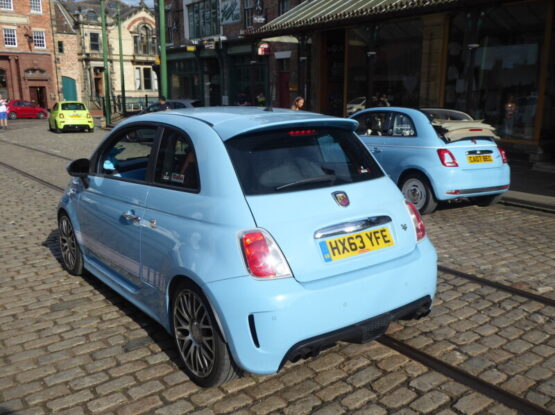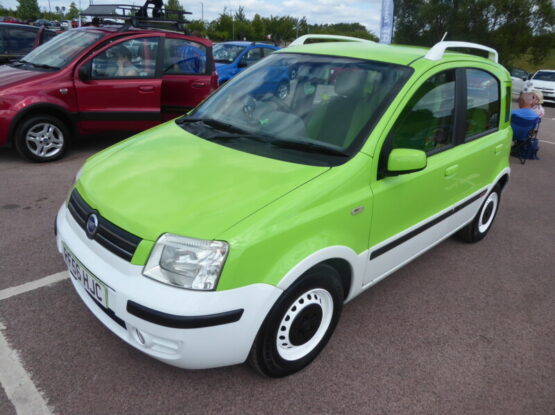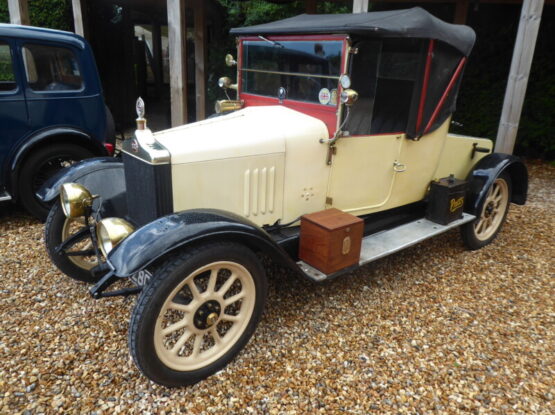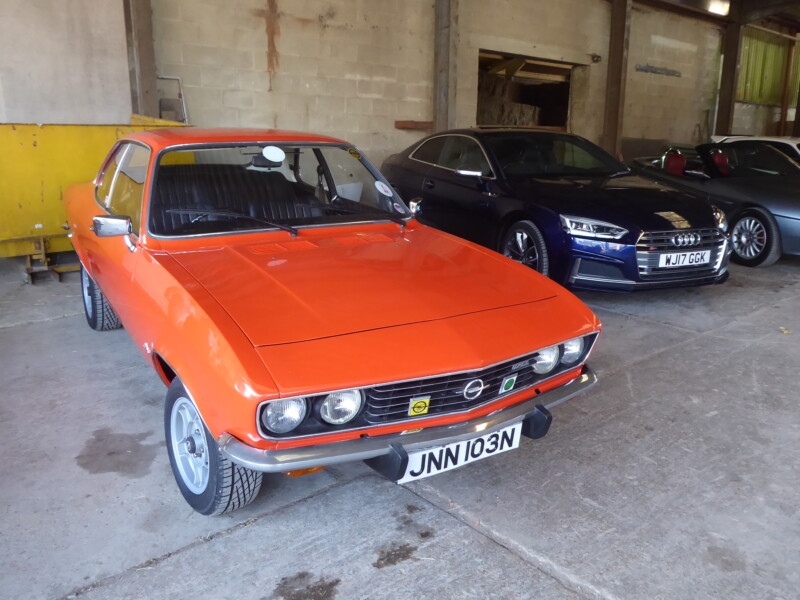
Among the many weekday evening meets that have sprung up in the last couple of years, some have emerged as clear favourites, and I will always try to prioritise attending them. This is one such, and as it is held on a Friday, there are not generally any other events competing for either my attention or that of the others who go along. Wood Brothers is a working farm and distillery situated at the end of a long country road from the village of Bampton, and it backs on to the back entrance of RAF Brize Norton. Although it is the sort of venue you would never find y accident a growing number of enthusiasts have found it on purpose, and like me, they continue to return. There is a fair amount of parking on site, but when this gets full – which it seemingly always does – there is plenty of space on the road verge on the approach as an overflow, usually for those with modern and currently less interesting cars. It certainly pays to arrive early – 4pm is the official start – and I usually manage to do so. This is the third time I’ve been here this year and whilst there are some cars which seemingly are always here there are also plenty that I’d not seen here, or indeed anywhere else, before. Enjoy what kept me interested for several hours:
ALFA ROMEO
There’s a complex history to this much-loved classic. The first car was called the Alfa Romeo Giulia Sprint GT, and was revealed at a press event held at the then newly opened Arese plant on 9 September 1963, and displayed later the same month at the Frankfurt Motor Show. In its original form the Bertone body is known as scalino (step) or “step front”, because of the leading edge of the engine compartment lid which sat 1/4 an inch above the nose of the car. The Giulia Sprint GT can be distinguished from the later models by a number of features including: Exterior badging: Alfa Romeo logo on the front grille, a chrome script reading “Giulia Sprint GT” on the boot lid, and rectangular “Disegno di Bertone” badges aft of the front wheel arches; flat, chrome grille in plain, wide rectangular mesh without additional chrome bars; single-piece chrome bumpers; no overriders. Inside the cabin the padded vinyl dashboard was characterised by a concave horizontal fascia, finished in grey anti-glare crackle-effect paint. Four round instruments were inset in the fascia in front of the driver. The steering wheel was non-dished, with three aluminium spokes, a thin bakelite rim and a centre horn button. Vinyl-covered seats with cloth centres and a fully carpeted floor were standard, while leather upholstery was an extra-cost option. After initially marketing it as a four-seater, Alfa Romeo soon changed its definition of the car to a more realistic 2+2. The Giulia Sprint GT was fitted with the 1,570 cc version of Alfa Romeo’s all-aluminium twin cam inline four (78 mm bore × 82 mm stroke), which had first debuted on the 1962 Giulia Berlina. Breathing through two twin-choke Weber 40 DCOE 4 carburettors, on the Sprint GT this engine produced 105 hp at 6,000 rpm. Like all subsequent models, the Sprint GT was equipped with an all-synchromesh 5-speed manual transmission. The braking system comprised four Dunlop disc brakes and a vacuum servo. The rear brakes featured an unusual arrangement with the slave cylinders mounted on the axle tubes, operating the calipers by a system of levers and cranks. According to Alfa Romeo the car could reach a top speed of “over 180 km/h (112 mph)”. In total 21,902 Giulia Sprint GT were produced from 1963 to 1965, when the model was superceded by the Giulia Sprint GT Veloce. Of these 2,274 were right hand drive: 1,354 cars fully finished in Arese, and 920 shipped in complete knock-down kit form for foreign assembly. For 1966, the Giulia Sprint GT was replaced by the Alfa Romeo Giulia Sprint GT Veloce, which was very similar but featuring a number of improvements: a revised engine—slightly more powerful and with more torque—better interior fittings and changes to the exterior trim. Alongside the brand new 1750 Spider Veloce which shared its updated engine the Sprint GT Veloce was introduced at the 36th Geneva Motor Show in March 1966, and then tested by the international specialist press in Gardone on the Garda Lake. Production had began in 1965 and ended in 1968. The Giulia Sprint GT Veloce can be most easily distinguished from other models by the following features: badging as per Giulia Sprint GT, with the addition of round enamel badges on the C-pillar—a green Quadrifoglio (four-leaf clover) on an ivory background—and a chrome “Veloce” script on the tail panel; black mesh grille with three horizontal chrome bars; the grille heart has 7 bars instead of 6; stainless steel bumpers, as opposed to the chromed mild steel bumpers on the Giulia Sprint GT. The bumpers are the same shape, but are made in two pieces (front) and three pieces (rear) with small covers hiding the joining rivets. Inside the main changes from the Giulia Sprint GT were imitation wood dashboard fascia instead of the previous anti-glare grey finish, front seats revised to a mild “bucket” design, and a dished three aluminium spoke steering wheel, with a black rim and horn buttons through the spokes. The Veloce’s type 00536 engine, identical to the Spider 1600 Duetto’s, featured modifications compared to the Giulia Sprint GT’s type 00502—such as larger diameter exhaust valves. As a result it produced 108 hp at 6,000 rpm, an increase of 3 hp over the previous model, and significantly more torque. The top speed now exceeded 185 km/h (115 mph). Early Giulia Sprint GT Veloces featured the same Dunlop disc brake system as the Giulia Sprint GT, while later cars substituted ATE disc brakes as pioneered on the GT 1300 Junior in 1966. The ATE brakes featured an handbrake system entirely separate from the pedal brakes, using drum brakes incorporated in the rear disc castings. Though the Sprint GT Veloce’s replacement—the 1750 GT Veloce—was introduced in 1967, production continued throughout the year and thirty final cars were completed in 1968. By then total Giulia Sprint GT Veloce production amounted to 14,240 examples. 1,407 of these were right hand drive cars, and 332 right hand drive complete knock-down kits. The Alfa Romeo 1750 GT Veloce (also known as 1750 GTV) appeared in 1967 along with the 1750 Berlina sedan and 1750 Spider. The same type of engine was used to power all three versions; this rationalisation was a first for Alfa Romeo. The 1750 GTV replaced the Giulia Sprint GT Veloce and introduced many updates and modifications. Most significantly, the engine capacity was increased to 1779 cc displacement. Peak power from the engine was increased to 120 hp at 5500 rpm. The stroke was lengthened from 82 to 88.5 mm over the 1600 engine, and a reduced rev limit from 7000 rpm to 6000 rpm. Maximum torque was increased to 137 lb·ft at 3000 rpm. A higher ratio final drive was fitted (10/41 instead of 9/41) but the same gearbox ratios were retained. The result was that, on paper, the car had only slightly improved performance compared to the Giulia Sprint GT Veloce, but on the road it was much more flexible to drive and it was easier to maintain higher average speeds for fast touring. For the United States market, the 1779 cc engine was fitted with a fuel injection system made by Alfa Romeo subsidiary SPICA, to meet emission control laws that were coming into effect at the time. Fuel injection was also featured on Canadian market cars after 1971. Carburettors were retained for other markets. The chassis was also significantly modified. Tyre size went to 165/14 from 155/15 and wheel size to 5 1/2J x 14 instead of 5J x 15, giving a wider section and slightly smaller rolling diameter. The suspension geometry was also revised, and an anti-roll bar was fitted to the rear suspension. ATE disc brakes were fitted from the outset, but with bigger front discs and calipers than the ones fitted to GT 1300 Juniors and late Giulia Sprint GT Veloces. The changes resulted in significant improvements to the handling and braking, which once again made it easier for the driver to maintain high average speeds for fast touring. The 1750 GTV also departed significantly from the earlier cars externally. New nose styling eliminated the “stepped” bonnet of the Giulia Sprint GT, GTC, GTA and early GT 1300 Juniors and incorporated four headlamps. For the 1971 model year, United States market 1750 GTV’s also featured larger rear light clusters (there were no 1970 model year Alfas on the US market). Besides the chrome “1750” badge on the bootlid, there was also a round Alfa Romeo badge. Similar Quadrofoglio badges to those on the Giulia Sprint GT Veloce were fitted on C pillars, but the Quadrofoglio was coloured gold instead of green. The car also adopted the higher rear wheelarches first seen on the GT 1300 Junior. The interior was also much modified over that of earlier cars. There was a new dashboard with large speedometer and tachometer instruments in twin binnacles closer to the driver’s line of sight. The instruments were mounted at a more conventional angle, avoiding the reflections caused by the upward angled flat dash of earlier cars. Conversely, auxiliary instruments were moved to angled bezels in the centre console, further from the driver’s line of sight than before. The new seats introduced adjustable headrests which merged with the top of the seat when fully down. The window winder levers, the door release levers and the quarterlight vent knobs were also restyled. The remote release for the boot lid, located on the inside of the door opening on the B-post just under the door lock striker, was moved from the right hand side of the car to the left hand side. The location of this item was always independent of whether the car was left hand drive or right hand drive. Early (Series 1) 1750 GTV’s featured the same bumpers as the Giulia Sprint GT Veloce, with the front bumper modified to mount the indicator / sidelight units on the top of its corners, or under the bumper on US market cars. The Series 2 1750 GTV of 1970 introduced other mechanical changes, including a dual circuit braking system (split front and rear, with separate servos). The brake and clutch pedals on left hand drive cars were also of an improved pendant design, instead of the earlier floor-hinged type. On right hand drive cars the floor-hinged pedals were retained, as there was no space for the pedal box behind the carburettors. Externally, the series 2 1750 GTV is identified by new, slimmer bumpers with front and rear overriders. The combined front indicator and sidelight units were now mounted to the front panel instead of the front bumper, except again on the 1971-72 US/Canadian market cars. The interior was slightly modified, with the seats retaining the same basic outline but following a simpler design. 44,269 1750 GTVs were made before their replacement came along. That car was the 2000GTV. Introduced in 1971, together with the 2000 Berlina sedan and 2000 Spider, the 2 litre cars were replacements for the 1750 range. The engine displacement was increased to 1962 cc. The North American market cars had fuel injection, but everyone else retained carburettors. Officially, both versions generated the same power, 130 hp at 5500 rpm. The interior trim was changed, with the most notable differences being the introduction of a separate instrument cluster, instead of the gauges installed in the dash panel in earlier cars. Externally the 2000 GTV is most easily distinguished by its grille with horizontal chrome bars, featuring protruding blocks forming the familiar Alfa heart in outline, smaller hubcaps with exposed wheel nuts, optional aluminium alloy wheels of the same size as the standard 5. 1/2J × 14 steel items, styled to the “turbina” design first seen on the alloy wheels of the Alfa Romeo Montreal, and the larger rear light clusters first fitted to United States market 1750 GTV’s were standard for all markets. From 1974 on, the 105 Series coupé models were rationalised and these external features became common to post-1974 GT 1300 Junior and GT 1600 Junior models, with only few distinguishing features marking the difference between models. 37,459 2000 GTVs were made before production ended and these days they are very sought after with prices having sky-rocketed in recent years.


The 916 Series GTV and Spider were conceived to replace two very different models in the Alfa range. First of these was the open topped 105 Series Spider which had been in production since 1966 and by the 1990s was long overdue a replacement. Alfa decided to combine a follow on to the Alfetta GTV, long out of production, with a new Spider model, and first work started in the late 1980s. The task was handed to Pininfarina, and Enrico Fumia’s initial renderings were produced in September 1987, with the first clay models to complete 1:1 scale model made in July 1988. Fumia produced something rather special. Clearly an Italian design, with the Alfa Romeo grille with dual round headlights, recalling the Audi-based Pininfarina Quartz, another design produced by Enrico Fumia back in 1981, the proposal was for a car that was low-slung, wedge-shaped with a low nose and high kicked up tail. The back of the car is “cut-off” with a “Kamm tail” giving improved aerodynamics. The Spider would share these traits with the GTV except that the rear is rounded, and would feature a folding soft-top with five hoop frame, which would completely disappear from sight under a flush fitting cover. An electric folding mechanism would be fitted as an option. Details included a one-piece rear lamp/foglamp/indicator strip across the rear of the body, the minor instruments in the centre console angled towards the driver. The exterior design was finished in July 1988. After Vittorio Ghidella, Fiat’s CEO, accepted the design, Alfa Romeo Centro Stile under Walter de Silva was made responsible for the completion of the detail work and also for the design of the interiors, as Pininfarina’s proposal was not accepted. The Spider and GTV were to be based on the then-current Fiat Group platform, called Tipo Due, in this case a heavily modified version with an all new multilink rear suspension. The front suspension and drivetrain was based on the 1992 Alfa Romeo 155 saloon. Chief engineer at that time was Bruno Cena. Drag coefficient was 0.33 for the GTV and 0.38 for the Spider. Production began in late 1993 with four cars, all 3.0 V6 Spiders, assembled at the Alfa Romeo Arese Plant in Milan. In early 1994 the first GTV was produced, with 2.0 Twin Spark engine. The first premiere was then held at the Paris Motor Show in 1994. The GTV and Spider were officially launched at the Geneva Motor Show in March 1995 and sales began the same year. The cars were well received. At launch, many journalists commented that Alfa had improved overall build quality considerably and that it came very close to equalling its German rivals. I can vouch for that, as I owned an early GTV for eighteen months, and it was a well built and reliable car. In 1997 a new engine, a 24-valve 3.0 litre V6, was available for the GTV along with bigger, 12.0 inch brakes and red four-pot calipers from Brembo. The console knobs were changed from round central to rectangle ones and to a three-spoke steering wheel. Some versions were upgraded with different front bumper mesh to bring the wind noise down to 74 dBA. In May 1998 the cars were revamped for the first time, creating the Phase 2 models. Most of the alterations were inside. The interior was changed with new centre console, painted letters on skirt seals, changed controls and switches arrangement and different instrument cluster. Outside, the main changes included chrome frame around the grille and colour-coded side skirts and bumpers. A new engine was introduced, the 142 hp 1.8 Twin Spark, and others were changed: the 2.0 Twin Spark was updated with a modular intake manifold with different length intakes and a different plastic cover. Power output of the 2.0 TS was raised to 153 hp. Engines changed engine management units and have a nomenclature of CF2. The dashboard was available in two new colours in addition to the standard black: Red Style and Blue Style, and with it new colour-coded upholstery and carpets. The 3.0 24V got a six-speed manual gearbox as standard and the 2.0 V6 TB engine was now also available for the Spider. August 2000 saw the revamp of engines to comply with new emission regulations, Euro3. The new engines were slightly detuned, and have a new identification code: CF3. 3.0 V6 12V was discontinued for the Spider and replaced with 24V Euro3 version from the GTV. 2.0 V6 Turbo and 1.8 T.Spark were discontinued as they did not comply with Euro3 emissions. By the 2001-2002 model year, only 2 engines were left, the 2.0 Twin.Spark and 3.0 V6 24V, until the Phase 3 engine range arrived. The Arese plant, where the cars had been built, was closing and, in October 2000, the production of GTV/Spider was transferred to Pininfarina Plant in San Giorgio Canavese in Turin. In 2003 there was another and final revamp, creating the Phase 3, also designed in Pininfarina but not by Enrico Fumia. The main changes were focused on the front with new 147-style grille and different front bumpers with offset numberplate holder. Change to the interior was minimal with different centre console and upholstery pattern and colours available. Instrument illumination colour was changed from green to red. Main specification change is an ASR traction control, not available for 2.0 TS Base model. New engines were introduced: 163 hp 2.0 JTS with direct petrol injection and 237 hp 3.2 V6 24V allowing a 158 mph top speed. Production ceased in late 2004, though some cars were still available for purchase till 2006. A total of 80,747 cars were made, and sales of the GTV and Spider were roughly equal. More V6 engined GTVs than Spiders were made, but in 2.0 guise, it was the other way round with the open model proving marginally more popular.

The Alfa Romeo 4C is a two-seater, rear-wheel drive coupé with technology and materials derived from the Alfa Romeo 8C Competizione, with a 1750 cc turbo petrol engine with direct injection, the “Alfa TCT” twin dry clutch transmission, and the Alfa DNA dynamic control selector. The 4C concept version was unveiled in the 81st Geneva Motor Show in March 2011, followed by the Mille Miglia 2011 parade, Goodwood Festival of Speed 2011,2011 Frankfurt Motor Show. It was displayed for the first time outside in Concorso d’Eleganza Villa d’Este in 2012. Compared to the production version, it is very similar, with the biggest differences being front lights, side vents and mirrors. The Alfa Romeo 4C Concept was voted the ‘Most Beautiful Concept Car of the Year’ award by the readers of German magazine Auto Bild, and won the Auto Bild Design Award 2011. It was awarded the “Design Award for Concept Cars & Prototypes” by referendum of the public in Villa d’Este. The production car was unveiled at the 2013 Geneva Motor Show, followed by 2013 Essen ‘Techno Classica’, Goodwood Festival of Speed 2013, Moscow Raceway, 2013 Frankfurt Motor Show. The bare ‘4C000’ chassis was also shown at the 2013 Geneva Motor Show. Ordering of European models began in October 2013 at Alfa Romeo dealerships in Europe. As part of the Alfa Romeo 4C launch, Alfa Romeo Style Centre and Compagnia Ducale designed a 4C IFD (Innovative Frame Design) Bicycle, inspired by the Alfa Romeo 4C coupé. The vehicle went on sale in December 2013 and marketed in Europe, Asia and America. Production of the 4C began May 2013 at Maserati’s plant in Modena, with an expected production of up to 2500 units per year. It was the first mass-produced Alfa Romeo model to be sold in the US market since 1995 when the 164 sedan stopped being sold in the US. Production of the Alfa Romeo 4C was originally estimated to be over 1000 units per year, with an upper limit of 3500 units per year, depending on the quantity of carbon fibre chassis that can be built by the supplier Adler Plastic.Within the 3,500-unit quota, 1,000 units are earmarked for Europe. Delivery of the European Alfa Romeo 4C Launch Edition took place at Balocco (Vercelli, Italy) Test Centre. In 2018, the 4C coupe was discontinued for the North American market. The 4C Spider, however continued to be sold there for model year 2019 and model year 2020. In other markets, such as Australia and Japan, both the coupe and Spider continued. In late 2020, a new tribute-edition named the 4C Spider 33 Stradale Tributo was announced. The car was designed by Centro Stile Alfa Romeo (Style Centre) and developed by Alfa Romeo. The chassis is composed of a central carbon fibre tub, with aluminium subframes front and rear. The carbon fibre tub is produced by TTA (Tecno Tessile Adler) in Airola, as a joint venture between Adler Plastic and Lavorazione Materiali Compositi. The carbon fibre components that make up the chassis are cut using CNC technology. The entire carbon-fibre monocoque chassis (“tub”) of the car weighs 143 pounds (65 kg). Front and rear aluminium subframes combine with the tub, roof reinforcements and engine mounting to comprise the 4C chassis giving the vehicle a total chassis weight of 236 lb (107 kg) and a total vehicle curb weight of just 2,465 lb (1,118 kg). The 4C has a single carbon fibre body, similar to the body of many supercars. The outer body is made of a composite material (SMC for Sheet Moulding Compound) which is 20% lighter than steel. The stability is comparable to steel and better than aluminium. The 4C employs double wishbone suspensions at the front and MacPherson struts at the rear. The resultant weight distribution is 38% on the front and 62% on the rear axle. Wheels and tyres have different diameters and widths front and rear: 205/45 R17 front and 235/40 R18 back as standard, with optional 205/40 R18 and 235/35 R19. Both wheel options come equipped with Pirelli P Zero tyres. The 4C uses vented disc brakes on all wheels; Brembo 305 millimetres (12.0 in) on the front and 292 millimetres (11.5 in) on the rear. The car can stop from 100 km/h (62 mph) in 36 metres. To save weight and increase steering feel, the 4C has no power steering. Its centre of gravity height, at 40 centimetres (16 in) off the ground, is 7 centimetres (2.8 in) lower than that of the Lotus Elise. The 4C uses a new all-aluminium 1,742 cc inline 4 cylinder turbocharged engine producing 240 PS at 6000 rpm. The engine has been designed for minimum weight. The engine’s combined fuel consumption 6.8 l/100 km (42 mpg‑imp; 35 mpg‑US). 0–62 mph (0–100 km/h) acceleration is achieved in 4.5 seconds and the top speed is 258 km/h (160 mph), the power-to-weight-ratio being just 0.267 hp/kg (8.22 lb/hp) A journalist from Quattroruote car magazine demonstrated how the 4C accelerates from 0–100 km/h (0–62 mph) faster than 4.5 seconds. In race mode, with left foot on the brake pedal, if you pull the right shift paddle the engine will rev to 3500 rpm, but if you also pull the left paddle the engine will rev to 6000 rpm and 0–100 km/h (0–62 mph) time will go down to 4.2 seconds. Italian car magazine Quattroruote published the lap time of 4C around Nürburgring. It lapped the ring in 8:04. The 4C is equipped with a six speed Alfa TCT Dual Dry Clutch Transmission, and can be operated via gearshift paddles on the steering wheel. It also has an Alfa ‘DNA’ dynamic control selector which controls the behaviour of engine, brakes, throttle response, suspension and gearbox. In addition to the modes already seen in Giulietta, the 4C has a new “Race” mode. The U.S. version of the 4C was introduced in the 2014 New York International Auto Show with the first 100 4C’s being shipped to the U.S. early July, with a total of 850 being shipped by the end of 2014. The U.S. model includes extra bracing and strengthening required to meet U.S. crash regulations (including aluminium inserts in the carbon fibre chassis), resulting in 100 kg (220 lb) of weight increase. This version also has new headlamps similar to those seen before in the 4C Spider version. In 2018, the 4C coupe was discontinued for the North American market due to US DOT NHTSA FMVSS 226 Ejection Mitigation. The regulation called for a progressive compliance date based on volume and, due to low volume, the 4C was allowed to continue until the last compliance date of 9/1/2017, thus all 2018 4C coupes in North America have build dates of 8/2017 or earlier. The 4C Spider, however continued to be sold in North America for model year 2019 and model year 2020. The Spider version of the 4C was previewed showing a pre-production prototype at the 2014 Geneva Motor Show. Sharing its engine with the Coupé version, the 4C Spider has different external parts such as the headlights, exhaust and engine hood, as well as a different roof section that features a removable roof panel. The North American spec 4C reflects a weight difference of only 22 lb (10 kg) (2,465 lbs vs. 2,487 lbs) for the Spider variant. Top speed is quoted at 257 km/h (160 mph) and acceleration from 0 to 100 km/h (62 mph) at 4.5 seconds. The 4C Launch Edition was a limited and numbered edition, unveiled at the vehicle’s launch at the 2013 Geneva Motor Show. The vehicle came in a choice of four paint colours (Rosso Alfa, Rosso Competizione tri-coat, Madreperla White tri-coat or Carrara White matte). 500 examples were reserved for Europe/ROW, 500 for North America, 88 for Australia (Rosso Alfa and Madreperla White only), 200 to Japan and 100 for the Middle East. Note that the original press release cited 500 for North America, 400 Europe, and 100 ROW; however, the plaques on actual cars suggest that more were built and are the numbers referenced above. Distinguishing features of the Launch Edition were carbon fiber trim (including headlight housings, spoiler and door mirror caps), rear aluminium extractor with dark finishing, Bi-LED headlights, dark painted 18-inch front and 19-inch rear alloy wheels, additional air intakes on the front fascia, red brake calipers, racing exhaust system, BMC air cleaner, specific calibration for shock absorbers and rear anti-roll bar, leather/fabric sports seats with parts in Alcantara and a numbered plaque. Alfa Red coloured cars got matching red stitching on the steering wheel, handbrake, mats, handles and sports seats. In Europe the vehicle went on sale for 60,000 euros including VAT. The 4C Competizione is a limited edition version of the 4C introduced in the 2018 Geneva Motor Show, finished in matte Vesuvio Grey, with carbon details on the roof, rear spoiler, mirror caps, side air vents and headlight moulding. The run reportedly consisted of 108 units. The Japanese market received 25 units, and 10 units were assigned to Australia. The US-market received no Competizione editions. The car had a very mixed reaction. The UK press hated it at launch, but owners generally disagreed and loved it. A total of 9117 were built before production ceased in 2020.

ALLARD
The Allard M is a sports car manufactured by the British Allard Motor Company between 1947 and 1950. It is considered the first civilised sports car by Allard. Production reached approximately 500. The M is a two-door, four-seater convertible and was marketed at the time as a Drophead Coupé. It is powered by a Ford 3.6 litre (3622 cc) engine. Later models were equipped with a Ford Pilot sourced column shift. Three cars were equipped with fixed head coupé bodywork by various coachbuilders.


ALPINE
The Alpine A110 is a rear mid-engine, rear-wheel-drive sports car introduced by French car manufacturer Alpine at the 87th Geneva International Motor Show in March 2017. Deliveries began in late 2017 for Continental European markets and in 2018 for the UK, Japan and Australia. Both its name and design refer back to the original Alpine A110 that was produced from 1961 to 1977. Based on an all-aluminium construction, the A110 is powered by a Nissan-derived 1.8-litre turbocharged gasoline direct injection 4 valves per cylinder inline-four engine mated to a 7-speed dual-clutch transmission manufactured by Getrag. Developed by Renault–Nissan and reworked by Alpine engineers, the engine has an output of 252 PS at 6,000 rpm and 320 Nm (236 lb/ft) of torque at 2,000–5,000 rpm. According to Alpine, the A110 can accelerate from 0 to 100 km/h (0 to 62 mph) in 4.5 seconds, and has an electronically limited top speed of 250 km/h (155 mph). The A110 was initially available in three trims: Pure, Première, and Legende. The Pure cars, the base trim, have 17-inch alloy wheels. The Première trim cars are technically the launch edition models limited to 1,955 units and were equipped with amenities such as forged alloy wheels, quilted leather Sabelt bucket sports seats, a reversing camera, and metallic blue exterior colour as standard. The Legende trim cars come with six-way adjustable sports seats, black or brown leather interior upholstery, an upgraded hi-fi sound system, and specially designed wheels exclusive to this trim. All of the three trims share the same powertrain and transmission. For the 2020 model year, The Pure trim level was replaced by the Alpine A110, with no other badging. The Légende was replaced by the Alpine A110 GT which employed the same engine as the A110 S.


ASTON MARTIN
Needing little in the way of introduction, as thanks to its starring role with James Bond, this has to be one of the world’s most recognised cars, is the DB5, a couple of examples of which were on show. The DB5 was designed by the Italian coachbuilder Carrozzeria Touring Superleggera. Released in 1963, it was an evolution of the final series of DB4. The principal differences between the DB4 Series V and the DB5 are the all-aluminium engine, enlarged from 3.7 litre to 4.0litre; a new robust ZF five-speed transmission (except for some of the very first DB5s);and three SU carburettors. This engine, producing 282 bhp, which propelled the car to 145 mph, available on the Vantage version of the DB4 since March 1962, became the standard Aston Martin power unit with the launch in September 1963 of the DB5. Standard equipment on the DB5 included reclining seats, wool pile carpets, electric windows, twin fuel tanks, chrome wire wheels, oil cooler, magnesium-alloy body built to superleggera patent technique, full leather trim in the cabin and even a fire extinguisher. All models have two doors and are of a 2+2 configuration. Like the DB4, the DB5 used a live rear axle. At the beginning, the original four-speed manual (with optional overdrive) was standard fitment, but it was soon dropped in favour of the ZF five-speed. A three-speed Borg-Warner DG automatic transmission was available as well. The automatic option was then changed to the Borg-Warner Model 8 shortly before the DB6 replaced the DB5. The high-performance DB5 Vantage was introduced in 1964 featuring three Weber twin-choke 45DCOE side-draft carburettors and revised camshaft profiles, delivering greater top-end performance at the expense of overall flexibility, especially as legendary Webers are renowned as ‘full-throttle’ devices. This engine produced 315 hp. Only 65 DB5 Vantage coupés were built. Just 123 convertible DB5s were produced (also with bodies by Touring), though they did not use the typical “Volante” name until 1965. The convertible model was offered from 1963 through to 1965. Originally only 19 of the 123 DB5 Convertibles made were left-hand drive. 12 cars were originally fitted with a factory Vantage engine, and at least one further convertible was subsequently factory fitted with a DB6 specification Vantage engine. A rare factory option (actually fitted by Works Service prior to customer delivery) was a steel removable hard top. From October 1965 to October 1966, Aston Martin used the last 37 of the Aston Martin DB5 chassis’ to make another convertible model. These 37 cars were known as “Short Chassis” Volantes and were the first Aston Martins to hold the “Volante” name. Although calling it a “Short Chassis” is a bit of a misnomer as the “short” comes from comparing it to the subsequent DB6, which has a longer chassis. When compared to the DB5, it is not “short” but rather the same size, however these cars differ to the DB5 convertible models as they feature DB6 split front and rear bumpers and rear TR4 lights, as also used on the DB6. These days the DB5 is the most valuable of all the DB models from the 1960s, with many of them heading towards the £1 million pound mark.


Follow on to the DB7 was the DB9 (there has never been a car called DB8 – supposedly because people might have assumed this meant a V8 engine), and there was a nice example here. The Aston Martin DB9, designed by Marek Reichmann and Hendrik Fisker, was first shown by Aston Martin at the 2003 Frankfurt Auto Show, in coupe form. It was widely praised for the beauty of its lines. This was the first model to be built at Aston Martin’s Gaydon facility. It was built on the VH platform, which would become the basis for all subsequent Aston models. The Aston Martin DB9 was initially launched equipped with a 6.0 litre V12 engine, originally taken from the V12 Vanquish. The engine produced 420 lbf·ft of torque at 5,000 rpm and a maximum power of 444 hp at 6,000 rpm, allowing the DB9 to accelerate from 0 to 60 mph in 4.7 seconds and a top speed of 299 km/h (186 mph). The engine largely sits behind the front-axle line to improve weight distribution. Changes to the engine for the 2013 model year increased the power to 503 hp and torque to 457 lb-ft, decreasing the 0 to 60 mph time to 4.50 seconds and with a new top speed is 295 km/h (183 mph). The DB9 was available with either a six-speed conventional manual gearbox from Graziano or a six-speed ZF automatic gearbox featuring paddle-operated semi-automatic mode. The gearbox is rear-mounted and is driven by a carbon-fibre tail shaft inside a cast aluminium torque tube. The DB9 was the first Aston Martin model to be designed and developed on Ford’s aluminium VH (vertical/horizontal) platform. The body structure is composed of aluminium and composites melded together by mechanically fixed self-piercing rivets and robotic assisted adhesive bonding techniques. The bonded aluminium structure is claimed to possess more than double the torsional rigidity of its predecessor’s, despite being 25 percent lighter. The DB9 also contains anti-roll bars and double wishbone suspension, supported by coil springs. To keep the back-end in control under heavy acceleration or braking, the rear suspension has additional anti-squat and anti-lift technology. Later versions of the car also features three modes for the tuning: normal, for every-day use, sport, for more precise movement at the cost of ride comfort, and track, which furthers the effects of the sport setting. The Aston Martin DB9 Volante, the convertible version of the DB9 coupe, followed a few months later. The chassis, though stiffer, uses the same base VH platform. To protect occupants from rollovers, the Volante has strengthened windscreen pillars and added two pop-up hoops behind the rear seats. The hoops cannot be disabled and will break the car’s rear window if deployed. In an effort to improve the Volante’s ride while cruising, Aston Martin have softened the springs and lightened the anti-roll bars in the Volante, leading to a gentler suspension. The retractable roof of the Volante is made of folding fabric and takes 17 seconds to be put up or down. The Volante weighs 59 kilograms (130 pounds) more than the coupe. The coupe and Volante both share the same semi-automatic and automatic gearboxes and engine. The car was limited to 266 km/h (165 mph) to retain the integrity of the roof. Like the coupe, the original Volante has 420 lb·ft of torque at 5,000 rpm and a maximum power of 450 hp at 6,000 rpm. The 0 to 60 mph slowed to 4.9 seconds due to the additional weight. The DB9 was facelifted in July 2008, which mainly amounted to an increase in engine power, to 476 hp and a redesigned centre console. Externally, the DB9 remained virtually unchanged. For the 2013 model year revision, Aston made minor changes to the bodywork by adapting designs from the Virage, including enlarging the recessed headlight clusters with bi-xenon lights and LED daytime strips, widening the front splitter, updating the grille and side heat extractors, updating the LED rear lights with clear lenses and integrating a new rear spoiler with the boot lid. .On newer models, like the coupe’s, the Volante’s horsepower and torque increased to 517 PS (510 hp) and 457 lb·ft respectively. As a finale for the model, a more powerful DB9 was released in 2015, called the DB9 GT. This had 540 bhp and 457 lb-ft of torque at 5500 rpm, giving a 0 to 60mph time of 4.4 seconds and 0 to 100mph in 10.2 seconds, with the standing quarter mile dispatched in 12.8 to 12.9 seconds and a top speed of 183mph. Production of the DB9 ended in 2016 being replaced by its successor, the DB11.


Following the unveiling of the AMV8 Vantage concept car in 2003 at the North American International Auto Show designed by Henrik Fisker, the production version, known as the V8 Vantage was introduced at the Geneva Motor Show in 2005. The two seat, two-door coupé had a bonded aluminium structure for strength and lightness. The 172.5 inch (4.38 m) long car featured a hatchback-style tailgate for practicality, with a large luggage shelf behind the seats. In addition to the coupé, a convertible, known as the V8 Vantage Roadster, was introduced later in that year. The V8 Vantage was initially powered by a 4.3 litre quad-cam 32-valve V8 which produced 380 bhp at 7,300 rpm and 409 Nm (302 lb/ft) at 5,000 rpm. However, models produced after 2008 had a 4.7-litre V8 with 420 bhp and 470 Nm (347 lbft) of torque. Though based loosely on Jaguar’s AJ-V8 engine architecture, this engine was unique to Aston Martin and featured race-style dry-sump lubrication, which enabled it to be mounted low in the chassis for an improved centre of gravity. The cylinder block and heads, crankshaft, connecting rods, pistons, camshafts, inlet and exhaust manifolds, lubrication system and engine management were all designed in house by Aston Martin and the engine was assembled by hand at the AM facility in Cologne, Germany, which also built the V12 engine for the DB9 and Vanquish. The engine was front mid-mounted with a rear-mounted transaxle, giving a 49/51 front/rear weight distribution. Slotted Brembo brakes were also standard. The original V8 Vantage could accelerate from 0 to 60 mph in 4.8 seconds before topping out at 175 mph. In 2008, Aston Martin introduced an aftermarket dealer approved upgrade package for power and handling of the 4.3-litre variants that maintained the warranty with the company. The power upgrade was called the V8 Vantage Power Upgrade, creating a more potent version of the Aston Martin 4.3-litre V8 engine with an increase in peak power of 20 bhp to 400 bhp while peak torque increased by 10 Nm to 420 Nm (310 lb/ft). This consists of the fitting of the following revised components; manifold assembly (painted Crackle Black), valved air box, right and left hand side vacuum hose assemblies, engine bay fuse box link lead (ECU to fuse box), throttle body to manifold gasket, intake manifold gasket, fuel injector to manifold seal and a manifold badge. The V8 Vantage had a retail price of GB£79,000, US$110,000, or €104,000 in 2006, Aston Martin planned to build up to 3,000 per year. Included was a 6-speed manual transmission and leather-upholstery for the seats, dash board, steering-wheel, and shift-knob. A new 6-speed sequential manual transmission, similar to those produced by Ferrari and Lamborghini, called Sportshift was introduced later as an option. An open-topped model was added to the range in 2006 and then in the quest for more power a V12 Vantage joined the range not long after.

AUDI
The Audi R8, based on the Audi Le Mans quattro concept car (designed by Frank Lamberty and Julian Hoenig) first appeared at the 2003 International Geneva Motor Show and the 2003 Frankfurt International Motor Show. The R8 road car was officially launched at the Paris Auto Show on 30 September 2006. There was some confusion with the name, which the car shares with the 24 Hours of Le Mans winning R8 Le Mans Prototype (LMP). Initial models included the R8 4.2 FSI coupé (with a V8 engine) and R8 5.2 FSI coupé (with a V10 engine). Convertible models, called the Spyder by the manufacturer, were introduced in 2008, followed by the high-performance GT model introduced in 2011. The Motorsport variants of the R8 were also subsequently introduced from 2008 onwards. An all-electric version called the e-Tron started development but would only reach production stage when the second generation model would be introduced. 6-time 24 Hours of Le Mans winner Jacky Ickx described the R8 as “the best handling road car today” and the car was well received by everyone who drove it. The car received a facelift in 2012 and a new model called the V10 Plus was now added to the range. Production of the Type 42 ended in August 2015

AUSTIN HEALEY
Donald Healey had been producing a range of expensive sports cars from the 1940s, cars such as the Silverstone, the Abbott and the Farnham. For the 1952 London Motor Show, he produced a new design, which was called the Healey Hundred, based on Austin A90 mechanicals, which he intended to produce in-house at his small car company in Warwick. It was one of the stars of the 1952 Show, and it so impressed Leonard Lord, the Managing Director of Austin, who was looking for a replacement to the unsuccessful A90. that Lord struck a deal with Healey on the spot, to build it in quantity. Bodies made by Jensen Motors would be given Austin mechanical components at Austin’s Longbridge factory. The car was renamed the Austin-Healey 100, in reference to the fact that the car had a top speed of 100 mph. Production got under way in 1953, with Austin-Healey 100s being finished at Austin’s Longbridge plant alongside the A90 and based on fully trimmed and painted body/chassis units produced by Jensen in West Bromwich—in an arrangement the two companies previously had explored with the Austin A40 Sports. By early 1956, production was running at 200 cars a month, 150 of which were being sold in California. Between 1953 and 1956, 14,634 Austin-Healey 100s were produced, the vast majority of them, as was the case for most cars in this post war era, going for export. The car was replaced by an updated model in 1956, called the 100-6. It had a longer wheelbase, redesigned bodywork with an oval shaped grille, a fixed windscreen and two occasional seats added (which in 1958 became an option with the introduction of the two-seat BN6 produced in parallel with the 2+2 BN4), and the engine was replaced by one based on the six-cylinder BMC C-Series engine. In 1959, the engine capacity was increased from 2.6 to 2.9 litres and the car renamed the Austin-Healey 3000. Both 2-seat and 2+2 variants were offered. It continued in this form until production ceased in late 1967. The Big Healey, as the car became known after the 1958 launch of the much smaller Austin-Healey Sprite, is a popular classic now. You come across the 3000 models more frequently than the 100s, as they accounted for more than 60% of all Big Healey production.


BEDFORD
One of the “O” Series Bedfords, that shared its distinctive front end with the well known OB Bus that first appeared in 1939, and produced in small numbers before the War intervened and then again unchanged post War until 1951, the O Series trucks were one of three series of that the Luton manufacturer introduced to meet the haulage needs of its customers. Each was a 2-axle vehicles with a separate bonnet, and they were called “K”, “M” and “O”. The K Series had a carrying capacity of 1.5-2.0 tons, and had a a standard wheelbase of 3050mm, while the “M” Series could carry 2 – 3 tons and were offered with two wheelbases of 3050 mm and 3630, and the largest, the “‘O” could haul 3 – 5 tons and came in 13 different designs, also with two wheelbase lengths. They all used the same 6-cylinder engine which generated a heady 72 hp, coupled to a 4-speed transmission, and had leaf-spring suspension and hydraulic brakes. Models with a carrying capacity of 3 tons used a vacuum brake booster. The vehicles were adapted for military use during the War and then production resumed after the cessation of hostilities, with the “O” Series now offered in OLA and OLB versions, differing in haulage capacity. The design was finally retired in 1953.


BMW
The 1600-2, as the first “02 Series” BMW was designated, was an entry-level BMW, and was smaller, less expensive, and less well-appointed than the New Class Sedan on which it was based. BMW’s design director Wilhelm Hofmeister assigned the two-door project to staff designers Georg Bertram and Manfred Rennen. The 9.1 in shorter length and wheelbase and lighter weight of the two-door sedan made it more suitable than the original New Class sedan for sporting applications. As a result, the two door sedan became the basis of the sporting 02 Series. The 1600-2 (the “-2” meaning “2-door”) made its debut at the Geneva Show in March 1966 and was sold until 1975, with the designation being simplified to “1602” in 1971. The 1.6 litre M10 engine produced 84 hp at 5,700 rpm and 96 lb·ft. A high performance version, the 1600 TI, was introduced in September 1967. With a compression ratio of 9.5:1 and the dual Solex PHH side-draft carburettor system from the 1800 TI, the 1600 TI produced 110 hp at 6,000 rpm. Also introduced in September 1967 was a limited-production cabriolet, which would be produced by Baur from 1967 through 1971. A hatchback 1600 Touring model was introduced in 1971 but was discontinued in 1972. It was what came next which was more significant. Helmut Werner Bönsch, BMW’s director of product planning, and Alex von Falkenhausen, designer of the M10 engine, each had a two litre engine installed in a 1600-2 for their respective personal use. When they realised they had both made the same modification to their own cars, they prepared a joint proposal to BMW’s board to manufacture a two litre version of the 1600-2. At the same time, American importer Max Hoffman was asking BMW for a sporting version of the 02 series that could be sold in the United States. As per the larger coupe and 4-door saloon models, the 2.0 engine was sold in two states of tune: the base single-carburettor 2002 producing 101 hp and the dual-carburettor high compression 2002 ti producing 119 hp.In 1971, the Baur cabriolet was switched from the 1.6 litre engine to the 2.0 litre engine to become the 2002 cabriolet, the Touring hatchback version of the 02 Series became available with all engine sizes available in the 02 Series at the time and the 2002 tii was introduced as the replacement for the 2002 ti. The 2002 tii used the fuel-injected 130 hp engine from the 2000 tii, which resulted in a top speed of 185 km/h (115 mph). A 2002 tii Touring model was available throughout the run of the tii engine and the Touring body, both of which ended production in 1974. The 2002 Turbo was launched at the 1973 Frankfurt Motor Show. This was BMW’s first turbocharged production car and the first turbocharged car since General Motors’ brief offerings in the early 1960s. It produced 170 hp. The 2002 Turbo used the 2002 tii engine with a KKK turbocharger and a compression ratio of 6.9:1 in order to prevent engine knocking. Kugelfischer mechanical fuel injection was used, with a sliding throttle plate instead of the usual throttle butterfly. The 2002 Turbo was introduced just before the 1973 oil crisis, therefore only 1,672 were built. The 1802 was introduced in 1971 and was available with either the original 2-door sedan body or the 3-door Touring hatchback introduced that year. Production of the Touring model continued until 1974, with the 1802 sedan ending production the following year. The 1502, an economy model with an engine displacement of 1573 cc was introduced in 1975. This engine had a lower compression ratio of 8.0:1, therefore standard-octane petrol could be used. While the rest of the 02 Series was replaced in 1975 by the E21 3 Series, the 1502 was continued until 1977.


The BMW Z3 is a range of two-seater sports cars which was produced from 1995 to 2002. The Z3 was based on the E36/5 compact platform, a shortened version of the conventional E36 platform. This smaller and cheaper platform used the rear semi-trailing arm suspension design from the older E30 3 Series. It is the first mass-produced Z Series car. M models were introduced in 1998 in roadster and coupé body styles and were powered by the S50, S52, or S54 straight-six engine depending on country and model year. The M models came with a 5-speed manual transmission. The regular Z3s were offered with straight-sixes or four-cylinder engines. Development on the roadster began in 1991 and was led by Burkhard Göschel. The exterior was designed by Joji Nagashima, being completed in mid-1992 at 39 months before production and the design was frozen in 1993. Design patents were filed on April 2, 1994, in Germany and on September 27, 1994, in the US. The Z3 was introduced via video press release by BMW North America on June 12, 1995. Production began on September 20, 1995. Development on the coupé model was run by a group of BMW engineers outside of work in their own time. The Z3 Coupé shares the identical platform and parts with the roadster, but features a chassis-stiffening hatch area and is 2.7 times stiffer in comparison. The Z3 Coupé was unveiled at the 1997 Frankfurt Motor Show. The Z3 was the first BMW model to be solely manufactured outside of Germany. It was manufactured in Greer, South Carolina. Roadster models entered production in September 1995, powered by 4-cylinder engines on launch. 6-cylinder engines were later introduced in 1996. A removable hardtop roof was available as an optional accessory. Coupé models entered production in January 1998. The unusual side profile has been given nicknames such as “clown shoe” and “bread van” by critics. In Germany, it has been referred to as a “turnschuh” (sports shoe). The coupé body style was only available with the engines that matched the 2.8, 3.0i, and M model Roadsters. The engine outputs varied as they spanned three generations of engine architecture, peaking at 325 bhp with the facelift M Coupé. Like the roadster models, it was rear-wheel drive only, and was available in either an automatic or manual transmission. Very few of these cars were made, making it rarer than most cars, the BMW M Coupe model especially so. Production ended on June 28, 2002, with the Z3 line replaced by the E85 Z4.

The M3 version of the E46 3 Series was produced in coupé and convertible body styles. The E46 M3 is powered by the S54 straight-six engine and has a 0-100 km/h (62 mph) acceleration time of 5.1 seconds for the coupe, with either the manual or SMG-II transmission. The skid pad cornering results are 0.89 g for the coupe and 0.81 g for the convertible.The top speed is electronically limited to 250 km/h (155 mph). The available transmissions were a Getrag 420G 6-speed manual transmission or a SMG-II 6-speed automated manual transmission, which was based on the Getrag 420G. The SMG-II used an electrohydraulically actuated clutch and gearshifts could be selected via the gear knob or paddles mounted on the steering wheel. The SMG-II was praised for its fast shift times and racetrack performance, but some people found its shifts to be delayed and lurching in stop-start traffic. In 2005, a special edition was introduced which used several parts from the CSL. This model was called the M3 Competition Package (ZCP) in the United States and mainland Europe, and the M3 CS in the United Kingdom. Compared to the regular M3, the Competition Package includes: 19-inch BBS alloy wheels- 19″x 8″ at the front and 19″x 9.5″ at the rear; Stiffer springs (which were carried over to the regular M3 from 12/04); Faster ratio steering rack of 14.5:1 (compared with the regular M3’s ratio of 15.4:1) as per the CSL; Steering wheel from the CSL; M-track mode for the electronic stability control, as per the CSL; The CSL’s larger front brake discs (but with the regular M3 front calipers) and rear brake calipers with larger pistons; Alcantara steering wheel and handbrake covers; The engine, gearbox and other drivetrain components are the same as the standard M3. Total production of the E46 M3 was 56,133 coupes and 29,633 convertibles. The cars were assembled at the BMW Regensburg factory in Germany and production was from September 2000 until August 2006, production totalled 85,766.

CHEVROLET
The Camaro was GM’s very definite response to the huge success of Ford’s Mustang, which had been codenamed Panther. Although there had been rumours that GM was doing something, this was an era when even the journalists were surprised. and on June 21, 1966, around 200 automotive journalists of them were when they received a telegram from General Motors stating, “…please save noon of June 28 for important SEPAW meeting. Hope you can be on hand to help scratch a cat. Details will follow…(signed) John L. Cutter – Chevrolet public relations – SEPAW secretary.” The following day, the same journalists received another General Motors telegram stating, “Society for the Eradication of Panthers from the Automotive World will hold first and last meeting on June 28…(signed) John L. Cutter – Chevrolet public relations SEPAW secretary.” These telegrams were something of a puzzle at the time. On June 28, 1966, General Motors held a live press conference in Detroit’s Statler-Hilton Hotel. It was to be the first time in history that 14 cities were connected in real time for a press conference via telephone lines. Chevrolet general manager Pete Estes started the news conference stating that all attendees of the conference were charter members of the Society for the Elimination of Panthers from the Automotive World and that this would be the first and last meeting of SEPAW. Estes then announced a new car line, project designation XP-836, with a name that Chevrolet chose in keeping with other car names beginning with the letter C such as the Corvair, Chevelle, Chevy II, and Corvette. He claimed the name, suggests the comradeship of good friends as a personal car should be to its owner and that to us, the name means just what we think the car will do… go. The Camaro name was then unveiled. Automotive press asked Chevrolet product managers, what is a Camaro? and were told it was a small, vicious animal that eats Mustangs. According to the book “The Complete Book of Camaro: Every Model Since 1967”, the name Camaro was conceived by Chevrolet merchandising manager Bob Lund and General Motors vice president Ed Rollett, while they were reading the book Heath’s French and English Dictionary by James Boïelle and by de V. Payen-Payne printed in 1936. Lund and Rollett found the word “camaro” in the French-English dictionary to mean friend, pal, or comrade. The article further repeated Estes’s statement of what the word camaro was meant to imply, that the car’s name “suggests the comradeship of good friends, as a personal car should be to its owner”. In fact, the actual French word that has that meaning is “camarade”, from which the English word “comrade” is derived, and not “camaro”. “Camaro” is not a recognised word in the French language. Be that as it may, the Camaro was first shown at a press preview in Detroit, Michigan, on September 12, 1966, and then later in Los Angeles, California, on September 19, 1966. Public introduction of the new model was on September 26, 1966. The Camaro officially went on sale in dealerships on September 29, 1966, for the 1967 model year It was an instant success. The first generation model ran for three years before an all new second generation car premiered (late) for the 1970 model year.


DAIMLER
Launched late in 1962, the Daimler V8 Saloon was essentially a rebadged Jaguar Mark 2 fitted with Daimler’s 2.5-litre 142 bhp V8 engine and drive-train, a Daimler fluted grille and rear number plate surround, distinctive wheel trims, badges, and interior details including a split-bench front seat from the Jaguar Mark 1 and a black enamel steering wheel. Special interior and exterior colours were specified. Most cars were fitted with power-assisted steering but it was optional. Automatic transmission was standard; manual, with or without overdrive, became an option in 1967. The 2.5 V8 was the first Jaguar designed car to have the Daimler badge. A casual observer, though not its driver, might mistake it for a Jaguar Mark 2. The Daimler’s stance on the road was noticeably different from a Mark 2. In April 1964 the Borg-Warner Type 35 automatic transmission was replaced by a D1/D2 type, also by Borg-Warner. A manual transmission, with or without an overdrive unit usable with the top gear, became available on British 2.5 V8 saloon in February 1967 and on export versions the following month. Cars optioned with the overdrive had the original 4.55:1 final drive ratio. In October 1967, there was a minor face-lift and re-labelling of the car to V8-250. It differed only in relatively small details: “slimline” bumpers and over-riders (shared with the Jaguar 240/340 relabelled at the same time), negative-earth electrical system, an alternator instead of a dynamo and twin air cleaners, one for each carburettor. Other new features included padding over the instrument panel, padded door cappings and ventilated leather upholstery, reclinable split-bench front seats and a heated rear window. Power steering and overdrive were optional extras. Jaguar replaced its range of saloons—the 240, the 340, the 420, and the 420G—with the XJ6 at the end of 1968. The company launched the XJ6-based Daimler Sovereign the following year to replace the Daimler saloons—the 240-based V8-250 and the 420-based Sovereign. Henceforth all new Daimlers would be re-badged Jaguars with no engineering links to the pre-1960 Daimlers.


FERRARI
Sole Ferrari here was the Ferrari 812 Superfast. Known internally as the Type F152M, this is a front mid-engine, rear-wheel-drive grand tourer that made its debut at the 2017 Geneva Motor Show. The 812 Superfast is the successor to the F12berlinetta. The 812 Superfast has a 6,496 cc F140 GA V12, an enlarged version of the 6.3-litre engine used in the F12berlinetta. It generates a power output of 800 PS (789 bhp) at 8,500 rpm and 718 Nm (530 lb/ft) of torque at 7,000 rpm. According to Ferrari in 2018, the 812 Superfast’s engine was, at the time, the most powerful naturally aspirated production car engine ever made. It does not feature turbocharging or hybrid technology.


FORD
Well known now, thanks to a starring role in the Harry Potter films is the Anglia 105E, a model that Ford launched in October 1959. It was a basic car, even in the better selling De Luxe version, so it was not surprising that Ford introduced a more powerful and luxurious model from 1962, the 123E Anglia Super. It had a larger 1198 cc engine and other refinements. Towards the end of the run Ford experimented with two colours of metallic paint on the Anglia, “Blue Mink” and “Venetian Gold”. 250 were made in the Blue and 500 were made in the Gold. Anglia saloons were provided with various levels of trim. The base model was the Standard, and this sported no chromework, painted rear light surrounds, steel slatted grille and limited interior trim. The deluxe had a chrome side strip, chrome rear lights, glovebox lid, sun visor and full width chrome radiator grille while the top of the range, also seen here, was the Super, which had twin chrome side strips, contrasting coloured roof and side flash, plusher interior trim, together with the 1198 cc engine and a gearbox with synchromesh on first gear.

Sporting Escorts appeared only a matter of months after the launch of the regular 1100 and 1300cc cars. The first of these was a higher performance version designed for rallies and racing, the Escort Twin Cam. Built for Group 2 international rallying, it had an engine with a Lotus-made eight-valve twin camshaft head fitted to the 1.5 L non-crossflow block, which had a bigger bore than usual to give a capacity of 1,557 cc. This engine had originally been developed for the Lotus Elan. Production of the Twin Cam, which was originally produced at Halewood, was phased out as the Cosworth-engined RS1600 production began. The most famous edition of the Twin Cam was raced on behalf of Ford by Alan Mann Racing in the British Saloon Car Championship in 1968 and 1969, sporting a full Formula 2 Ford FVC 16-valve engine producing over 200 hp. The Escort, driven by Australian driver Frank Gardner went on to comfortably win the 1968 championship. The Mark I Escorts became successful as a rally car, and they eventually went on to become one of the most successful rally cars of all time with arguably the Escort’s greatest victory in the 1970 London to Mexico World Cup Rally, co-driven by Finnish legend Hannu Mikkola and Swedish co-driver Gunnar Palm. This gave rise to the Escort Mexico, which had a 1600cc “crossflow”-engined, as a special edition road version in honour of the rally car. Introduced in November 1970, 10,352 Mexico Mark I’s were built. In addition to the Mexico, the RS1600 was developed with a 1,601 cc Cosworth BDA which used a Crossflow block with a 16-valve Cosworth cylinder head, named for “Belt Drive A Series”. Both the Mexico and RS1600 were built at Ford’s Advanced Vehicle Operations (AVO) facility located at the Aveley Plant in South Essex. As well as higher performance engines and sports suspension, these models featured strengthened bodyshells utilising seam welding in places of spot welding, making them more suitable for competition. After updating the factory team cars with a larger 1701 cc Cosworth BDB engine in 1972 and then with fuel injected BDC, Ford also produced, in the autumn of 1973, an RS2000 model as an alternative to the somewhat temperamental RS1600, featuring a 2.0 litre Pinto OHC engine. This also clocked up some rally and racing victories; and pre-empted the hot hatch market as a desirable but affordable performance road car. Like the Mexico and RS1600, this car was produced at the Aveley plant.


March 1986 saw the Orion getting the same facelift as the Escort. Internally within Ford it is regarded as an updated model (Apollo-86) rather than a new generation, although it is popularly known as the Mark II. The Mark II brought the option of anti-lock-brakes (ABS) and a heated front windscreen to the range. The base “L” version came with an additional 1.3 litre engine option which used the OHV “‘Valencia’ engine as used on the Escort, whilst a new 1.4 litre CVH engine option was introduced. This (along with the 1.6 CVH ) was a “lean burn unit” and various models in the range could run on unleaded fuel without modifications to the cylinder head or to the fuel system. Improved locks were fitted across the range initially being of the Chubb AVA design but soon after replaced with the Tibbe type; same as with the Escort, and a number of other improvements were carried out including new suspension and gearbox mounts, updated interior and trim changes, improved soundproofing and revised steering and suspension settings. Trim levels now included the entry-level L, Biscane (special edition) LX, Equipe (special edition) GL, GLS (special edition), Ghia, Ghia Injection and from 1988 the 1600E (special edition).

Ford did not make the same mistake with the Focus as they had with its predecessor, so even the ordinary models were good to drive. There was a long wait for a truly sporting flagship, but when it arrived, in late 2002, the Focus RS proved to be rather special. Originally it was to be released as the Racing Focus, however after the poor selling Racing Puma, Ford decided to revive the RS badge. The car was largely built on its own assembly line in Ford’s Saarlouis plant, with some additional specialist off-line assembly performed by the ACÜ group at Überhern. The RS was offered all over Europe, with production limited to 4501 units. 2147 of these were sold in the United Kingdom, by far its largest of the 21 markets where it was available. The development of the Focus RS was undertaken by a mixed team of mainstream Ford engineers (not SVE or the TeamRS group which replaced it later on) and Tickford Engineering in Milton Keynes, United Kingdom. More bespoke than the prior Focus ST170, the Focus RS upgraded or replaced 70% of the standard Focus mechanicals. The turbocharged straight-4 engine produced a minimum of 212 bhp and 310 Nm (229 lb/ft) of torque, which was then mated to the 5-speed MTX-75 and not the Getrag transmission used in the ST 170. Mechanically, most notably, the car incorporated a Quaife automatic torque biasing differential to improve traction from the front-wheel drive setup. The steering used a similar quick-ratio rack as the ST170 while the brakes used fixed-caliper, four-piston Brembo units with 12.8 in discs at the front and single-piston floating calipers and 11.0 in discs at the back. Wheels were 18″ alloys specially developed by OZ Racing. The engine was heavily modified with forged aluminium pistons, hardened valve seats, sodium-filled exhaust valves, stainless steel exhaust system. The forced induction system comprised a Garrett turbocharger with a water-cooled charge air cooler and an electric water pump. To transmit the higher torque an upgraded AP clutch was used. It could generate a steady 0.98G in lateral acceleration due to racing parts such as Sachs dampers, lightweight O.Z Alloy Wheels and a Quaife ATB Differential. It would also allow 1.0G of braking force due to the standard Brembo braking system. The Focus RS was available in one metallic colour, Imperial Blue. The body looked similar to the standard Focus or to the ST170, although the RS featured unique front and rear bumper assemblies required for the wider wheel arches which accommodated the 65 mm (2.6 in) wider front track. Internally, the theme is blue and black with sections of blue leather trim on the door trim panels, the steering wheel and the Sparco seats which were trimmed in blue/black leather and Alcantara. A green starter button starts the engine. The instruments have a blue background and in place of the coolant temperature gauge, the RS was equipped with a boost pressure indicator (up to 1.5 bar). The gear lever knob, handbrake lever, and pedals were all custom made by Sparco. All-around performance was roughly equal or better to its other competitors, including hatchbacks such as the Honda Civic Type-R and some four-wheel drive cars in the same price field. Power was a diminished priority and the handling on a track, courtesy of the front differential, was considered by most observers to be its strongest characteristic. In a Top Gear review, Jeremy Clarkson noted that “it lacks the straightforward oomph of a Subaru Impreza. […] The reason it was quick round our track is simple: this car handles like it’s in a cartoon.” Clarkson and other motor journalists also commented on the car’s torque steer on bumpy British roads. Well preserved examples – and that’s not all of them, by any means, now – are worth decent money and will likely increase in value over time.

The 1960 Galaxie introduced all-new design with less ornamentation. A new body style was the Starliner, featuring a huge, curving rear observation window on a pillarless, hardtop bodyshell. The thin, sloping rear roof pillar featured three “star” emblems that served as the Galaxie signature badge for all 1960 – 62 models. The formal roofed 2-door hardtop was not available this year, but the roofline was used for the Galaxie 2-door pillared sedan, complete with chromed window frames. It had been the most popular body style in the line for 1959, and sales dropped off sharply. Contrary to Ford’s tradition of pie-plate round taillights, the 1960 featured “half-moon” lenses turned downward. The “A” pillar now swept backward instead of forward, making entering and exiting the car more convenient. For 1961, the bodywork was redone again, although the underpinnings were the same as for 1960. This time, the tailfins were almost gone; the small blade-like fins capped smaller versions of 1959’s “pie-plate” round taillamps once again. Performance was beginning to be a selling point, and the 1961 Galaxie offered a new 390 CID (6.4 L) version of Ford’s FE series pushrod V8, which was available with either a four-barrel carburettor or, for higher performance, three two-barrel carburettors. The latter was rated at 401 hp (gross). The 352 was downgraded in favor of the 390; it was equipped with a 2-barrel carburettor and single exhaust. The Starliner was again offered this year, and Ford promoted this model with luxury and power equipment, but it was dropped at the end of the year, as the re-introduced square-roof hardtop coupe, the Galaxie Club Victoria, took the bulk of sales. For 1962, the Galaxie name was applied to all of Ford’s full size models, as the Fairlane name was moved to a new intermediate model and Custom was temporarily retired. New top-line Galaxie 500 (two-door sedan and hardtop, four-door sedan and hardtop, and “Sunliner” convertible) models offered plusher interiors, more chrome trim outside, and a few additional luxury items over and above what was standard on the plainer Galaxie models. Base Galaxie models were available in two- and four-door sedans as well as the plain Ranch Wagon. In an effort to stimulate midseason sales, Ford introduced a group of sporty cars along with a “Lively Ones” marketing campaign. These models featured the bucket seats and console that were popularized by the Chevrolet Corvair Monza, and included a Fairlane 500 Sports Coupe, and a Falcon Futura. The full-size line was available with new bucket-seats-and-console “Lively One,” the Galaxie 500/XL (two-door hardtop and convertible). Ford stated in its sales literature that XL stood for “Xtra Lively.” The 223 cu in (3.7 L) “Mileage Maker” 6-cylinder was the base engine. The 292 cu in (4.8 L) V8 was standard on the 500/XL. The XL had sportier trim inside and out. This model was Ford’s response to Chevrolet’s Super Sport option for the big Impala, which was introduced the previous year and saw a significant rise in sales for 1962. A 406 cu in (7 L) engine was available in single four-barrel or triple-carbureted “six-barrel” form. Tailfins were gone, giving the 1962 models a more rounded, softer rear end look. Taillights were set lower into the rear panel and were partially sunken into the newly sculpted rear bumper. Outside, XL models got a thicker body side chrome spear, along with a new “Galaxie 500XL” emblem on each rear fender (including the convertible, where this badge replaced the “Sunliner” script). An oval version of the Galaxie “star” emblem replaced Ford crests on the roof sail panels on hardtops. Front fenders shapes were the same as 1961; a slightly modified flat-face grille featured a large “star”emblem in its center for all 500 and higher-priced Galaxie models. The 1962 models were overweight by comparison to the Super Duty Pontiacs with their aluminum body panels and larger-displacement engines. Therefore, late in the production run, Ford’s Experimental Garage was ordered to reduce the weight of the Galaxie. It produced 11 “lightweight Galaxies”, making use of fiberglass panels, as well as aluminium bumpers, fender aprons, and brackets; the result was a Galaxie weighing in at under 3,400 lb (1,542 kg). The base 2-door Club Sedan was 3,499 lb (1,587 kg). It was an improvement. The 1963 model was essentially unchanged save for some freshening and added trim; windshields were reshaped and a four-door hardtop 500/XL was added. A lower, fastback roofline was added mid-year to improve looks and make the big cars more competitive on the NASCAR tracks with less drag and reduced aerodynamic lift at high speed. This 1963½ model, the industry’s first official “½ year” model, was called the “sports hardtop” or “fastback” (it shared this feature with the for 1963½ Falcon). Galaxie buyers showed their preference as the new sports hardtop models handily outsold the “boxtop” square-roof models. The sports hardtop was available in both Galaxie 500, and Galaxie 500/XL trim. Mercury also received the new roofline (under the Marauder badge) in Monterey, Montclair, and Park Lane models. This year, a no-frills big Ford, priced around $100.00 below the base Galaxie sedans, was offered, badged as the Ford 300. It was offered for 1963 only, and was replaced by the Custom series in 1964. The “Swing-away” steering wheel became optional. The Fairlane’s newly enlarged “Challenger” V8 engine of 260 cu in (4.3 L) replaced the Y-block 292 cu in (4.8 L) as the entry level V8. Later in the year, the 260 was replaced with an enlarged version displacing 289 cubic inches. At the beginning of the 1963 model run, the 292 Y-block V8 was replaced as the base V8 engine with the Fairlane’s new small block 260. The 260 proved underpowered for the heavy full size Ford and was replaced midyear (coincident with the introduction of the 63 and 1/2 models) with the 289 V8. The 289 was then the largest of the “small block series” that was first used (221 cubic inch version) in the 1962 Fairlane. The 260 was offered on the Falcon Sprint and later, in mid 1964, in the early version of the 1965 Mustang. By 1965 model introduction (in the fall of 1964), the 260 (which had disappointing performance in all versions including the Sprint and Mustang) was replaced by the 289 in all models. Ford continued to offer the FE series 352 in the 1963 full size, as well as 3 versions of the 390 V8 (regular, high performance, and police). Five different transmissions were offered for 1963. A 3-speed manual column shift was standard on all models except the 406 V8, which required the heavier duty Borg-Warner 4-speed manual. A three speed manual with overdrive was optional, but rarely ordered. The two-speed Ford-O-Matic was common with the 6-cylinder and small block V-8s, while the majority of big blocks (352 and 390) were ordered with the 3-speed Cruise-O-Matic automatic transmission. The availability of several different rear end ratios, along with 5 transmissions, and 8 different engines, led to a huge number of different driveline combinations for 1963. The most produced combination for the Galaxie and Galaxie 500 was the 352 V8, with Cruise-O-Matic and the 3.0 rear end ratio. Ford’s “Club,” “Town,” and “Victoria” monikers for body styles were retired in 1963, replaced by generic labels, “2-door”,”4-door”, and “Hardtop.” Partway through this year and in limited quantities, a new 427 replaced the 406 for racing applications. It was intended to meet NHRA and NASCAR 7-liter maximum engine size rules. This engine was rated at a 425 hp gross with 2 x 4 barrel Holley carburettors and a solid lifter camshaft. Ford also made available aluminum cylinder heads as a dealer option. The 1963½ was still overweight, however. To be competitive in drag racing Ford produced 212 (around 170 from Ford Norfolk, about 20 from Ford Los Angeles) lightweight versions of the “R” code 427, in the Galaxie 500 Sport Special Tudor Fastback. Available only in Corinthian White with red vinyl interior, and with a list price of about US$4,200 (when a base Ford 300 went for US$2,324, and XL Fastback was US$3,268), these cars came stock with Borg-Warner T-10 four-speed, 4.11:1 rear axle, heavy-duty suspension and brakes, and were fitted with a fiberglass hood (a flat piece at first, late in 1963 the popular blister hood also used on the Thunderbolt), trunk, front fenders, and fender aprons, as well as aluminum bumpers and mounting brackets, transmission cases, and bellhousing. Hood springs, heater, trunk lining and mat, spare wheel and tire (and mounting bracket), trunk lid torsion bar, jack, lug wrench, one horn (of the stock two), armrests, rear ashtrays, courtesy lights, and dome light were removed to reduce weight. The first 20 cars had functional fiberglass doors, which shaved 25 lb (11 kg); these were deleted because of Ford’s concern for safety if used on the highway. The cars had all sound-deadening material removed, lightweight seats and floormats, and no options. They were not factory equipped with cold-air induction, as the Thunderbolt would be. In addition, they were built on the 45 lb (20 kg)-lighter Ford 300 chassis, originally intended for a smaller-displacement V8. In all, the 427s were 375 lb (170 kg) lighter than before (425 lb (193 kg) with the fiberglass doors). The first two lightweight Galaxies, using 289 cu in (5 L) bodies, were assembled at Wayne, Michigan, late in January 1963, to be tested at the 1963 Winternats. They were delivered to Tasca Ford (East Providence, Rhode Island) and Bob Ford (Dearborn, Michigan). Bill Lawton’s Tasca Galaxie turned the best performance, with a 12.50 pass at 116.60 mph (187.65 km/h). It was not enough against the 1963 Chevrolet Impala Z-11s in Limited Production/Stock, however. Three more were assembled from parts and tested at Ford’s Experimental Garage in Dearborn. One of the next two, the last Winternationals test cars, was prepared by Bill Stroppe in Long Beach, California, for Les Ritchey; it was featured in the July 1963 issue of Hot Rod. For all their efforts, Ford discovered the Galaxies were still too heavy, and the project was abandoned. Some of these cars competed in England, Australia and South Africa after being modified by Holman and Moody who fitted them with disc brakes and other circuit racing components. Jack Sears won the 1963 British Saloon Car Championship driving Galaxies and Cortinas and the racing Galaxies were also driven by Sir Jack Brabham, Graham Hill and other notable drivers of the period. The heavy Galaxies suffered from persistent brake failure that led to a number of crashes, and in late 1963 started using the 12-inch disc brakes from the Ford GT40 program. By this time the Lotus Cortinas were being developed and the big Galaxie became uncompetitive. Model year 1964 was the fourth and final year of this body style. Interior trim was altered, and the exterior featured a more sculpted look which was actually designed to make the car more aerodynamic for NASCAR. The formal-roof “boxtop” style was no longer available, all non-wagon models now featuring the “fastback” roof design that was the runaway best-seller in 1963. The base 300 was replaced by a line of Custom and Custom 500 models. The 289 continued as the base V8 and was standard in the XL series. XL models got new thin-shell bucket seats with chrome trim. Federal regulations now required lap-style safety belts for both front outboard occupants. The ignition switch was moved from the left side of the steering column, to the right, but otherwise the attractive instrument panel remained unchanged from ’63. The 1964 XL two-door hardtop became the best seller of any XL produced in any year. The 427 cu in (7.0 L) engine was used in 50 lightweight fiberglass-equipped cars for drag racing. These competed in North America but were still too heavy and Ford introduced the lightweight Fairlane Thunderbolt. The Ford Country Squire station wagon, while wearing “Country Squire” badging, was actually part of the Galaxie 500 line. Some Country Squires had “Galaxie 500” badging on the glovebox indicating the series name. These station wagons featured the same trims as Galaxie 500s, and were a step up from the base-model Country Sedan.


Drawing on inspiration from the mid-engined Ford Mustang I concept vehicle, Lee Iacocca ordered development of a new “small car” to vice-president of design at Ford, Eugene Bordinat. Bordinat tasked Ford’s three design studios (Ford, Lincoln-Mercury, and Advanced Design) to create proposals for the new vehicle. The design teams had been given five goals for the design of the Mustang: It would seat four, have bucket seats and a floor mounted shifter, weigh no more than 2,500 pounds (1,100 kg) and be no more than 180 inches (4,572 mm) in length, sell for less than $2,500, and have multiple power, comfort, and luxury options. The Lincoln–Mercury design studio ultimately produced the winning design in the intramural contest, under Project Design Chief Joe Oros and his team of L. David Ash, Gale Halderman, and John Foster. Development of the Mustang was completed in a record 18 months from September 1962 to March 1964. and Iacocca himself championed the project as Ford Division general manager. The styling is often credited to one person, and that is not accurate, as this was very much a team effort, it has been reported by those involved. To decrease developmental costs, the Mustang used chassis, suspension, and drivetrain components derived from the Ford Falcon and Fairlane. It used a unitised platform-type frame from the 1964 Falcon, and welded box-section side rails, including welded crossmembers. Although hardtop Mustangs accounted for the highest sales, durability problems with the new frame led to the engineering of a convertible first, which ensured adequate stiffness. Overall length of the Mustang and Falcon was identical, although the Mustang’s wheelbase was slightly shorter. With an overall width of 68.2 in (1,732 mm), it was 2.4 in (61 mm) narrower, yet the wheel track was nearly identical. Shipping weight, approximately 2,570 lb (1,166 kg) with the straight six-cylinder engine, was also similar to the Falcon. A fully equipped V8 model weighed approximately 3,000 lb (1,361 kg). Although most of the mechanical parts were from the Falcon, the Mustang’s body was completely different; sporting a shorter wheelbase, wider track, lower seating position and lower overall height. An industry first, the “torque box” was an innovative structural system that greatly stiffened the Mustang’s construction and helped contribute to better handling. The car was launched in 17th April 1964, as a hardtop and a convertible, with the fastback version following in August. It was an instant sensation, with demand massively exceeding supply. Since it was introduced four months before the normal start of the 1965 production year and manufactured alongside 1964 Ford Falcons and 1964 Mercury Comets, the earliest Mustangs are widely referred to as the 1964½ model. Nevertheless, all “1964½” cars were given 1965 U.S. standard VINs at the time of production, and – with limited exception to the earliest of promotional materials – were marketed by Ford as 1965 models. The low-end model hardtop used a “U-code” 170 cu in (2.8 litre) straight-6 engine borrowed from the Falcon, as well as a three-speed manual transmission and retailed for US$2,368. Standard equipment for the early 1965 Mustangs included black front seat belts, a glove box light, and a padded dash board. Production began in March 1964 and official introduction following on April 17 at the 1964 World’s Fair. V8 models got a badge on the front fender that spelled out the engine’s cubic inch displacement (“260” or “289”) over a wide “V.” This emblem was identical to the one on the 1964 Fairlane. Several changes to the Mustang occurred at the start of the “normal” 1965 model year in August 1964, about four months after its introduction. These cars are known as “late 65’s”. The engine lineup was changed, with a 200 cu in (3.3 litre) “T-code” engine that produced 120 hp. Production of the Fairlane’s “F-code” 260 cu in (4.3 litre) engine ceased when the 1964 model year ended. It was replaced with a new 200 hp “C-code” 289 cu in (4.7 litre) engine with a two-barrel carburettor as the base V8. An “A-code” 225 hp four-barrel carburettor version was next in line, followed by the unchanged “Hi-Po” “K-code” 271 hp 289. The DC electrical generator was replaced by a new AC alternator on all Fords (a way to distinguish a 1964 from a 1965 is to see if the alternator light on the dash says “GEN” or “ALT”). The Mustang GT version was introduced as the “GT Equipment Package” and included a V8 engine (most often the 225 hp 289), grille-mounted fog lamps, rocker panel stripes, and disc brakes. In the interior the GT option added a different instrument panel that included a speedometer, fuel gauge, temp. gauge, oil pressure gauge and ammeter in five round dials (the gauges were not marked with numbers, however.) A four-barrel carburettor engine was now available with any body style. Additionally, reverse lights were an option added to the car from August 1964 production. In 1965, the Shelby Mustang was born, it was available only in newly introduced fastback body version with its swept-back rear glass and distinctive ventilation louvres. The standard interior features of the 1965 Mustang included adjustable driver and passenger bucket seats, an AM radio, and a floor mounted shifter in a variety of colour options. Ford added additional interior options during the 1965 model year. The Interior Decor Group was popularly known as “Pony Interior” due to the addition of embossed running ponies on the seat fronts, and also included integral armrests, woodgrain appliqué accents, and a round gauge cluster that would replace the standard Falcon instrumentation. Also available were sun visors, a (mechanical) remote-operated mirror, a floor console, and a bench seat. Ford later offered an under-dash air-conditioning unit, and discontinued the vinyl with cloth insert seat option, offered only in early 1965 models. One option designed strictly for fun was the Rally-Pac. Introduced in 1963 after Ford’s success at that year’s Monte Carlo Rally and available on other Ford and Mercury compacts and intermediates, the Rally-Pac was a combination clock and tachometer mounted to the steering column. It was available as a factory ordered item for US$69.30. Installed by a dealer, the Rally-Pac cost US$75.95.A 14″ rim option was available for Rally-pac and GT350R vehicles widening front and rear track to 57.5″. Reproductions are presently available from any number of Mustang restoration parts sources. A compass, rear seat belts, A/C, and back-up lights were also optional. The 1966 Mustang debuted with moderate trim changes including a new grille, side ornamentation, wheel covers and filler cap. Ford’s new C-4 “cruise-o-matic” three-speed auto transmission became available for the 225 hp V8. The 289 “HiPo” K-code engine was also offered with a c4 transmission, but it had stronger internals and can be identified by the outer casing of the servo which is marked with a ‘C’. The long duration solid-lifter camshaft that allowed the high revving 289 to make the horsepower it was known for, was not friendly for a low stall speed automatic torque converter. The “HiPo” could be spotted very easily by the 1-inch-thick vibration damper, (as compared to 1/2 inch on the 225-hp version) and the absence of a vacuum advance unit on the dual point distributor. With the valve covers off, there is a large letter “K” stamped between the valve springs, along with screw in studs (vs. a pressed in stud for other 289s) for the adjustable rocker arms. A large number of new paint and interior color options, an AM/eight-track sound system, and one of the first AM/FM mono automobile radios were also offered. It also removed the Falcon instrument cluster; the previously optional features, including the round gauges and padded sun visors, became standard equipment. The Mustang would be the best-selling convertible in 1966, with 72,119 sold, beating the number two Impala by almost 2:1. The 1965 and 1966 Mustangs are differentiated by variations in the exterior, despite similar design. These variations include the emblem on the quarter-panels behind the doors. From August 1964 production, the emblem was a single vertical piece of chrome, while for 1966 models the emblem was smaller in height and had three horizontal bars extending from the design, resembling an “E”. The front intake grilles and ornaments were also different. The 1965 front grille used a “honeycomb” pattern, while the 1966 version was a “slotted” style. While both model years used the “Horse and Corral” emblem on the grille, the 1965 had four bars extending from each side of the corral, while on the 1966, these bars were removed. The 1966 model year saw introduction of ‘High Country Special’ limited edition, 333 of them were sold in Colorado, Wyoming, and Nebraska. When Ford wanted to introduce the Mustang in Germany, they discovered that Krupp company had already registered the name for a truck. The German company offered to sell the rights for US$10,000. Ford refused and removed Mustang badges from exported units, instead naming the cars as T-5 (a pre-production Mustang project name) for the German market until 1979 when Krupp copyrights expired. In 1965, Harry Ferguson Research purchased 3 Mustang notchbacks and converted them to 4×4 in an attempt to sell potential clients on their FF AWD system. A similar system was used in the Ferguson P99 Formula One car, and would go on to be featured in the Jensen FF, widely considered the first AWD passenger car. As in the Jensen FF, the AWD Mustangs also featured an ABS braking system, long before such a feature was commonplace. Ford Australia organised the importation and conversion of 1966 Mustang to right-hand-drive for the Australian market. This coincided with the launch of new XR Falcon for 1966, which was marketed as “Mustang-bred Falcon”. To set the official conversion apart from the cottage industry, the RHD Mustangs were called “Ford Australia Delivered Mustang” and had compliance plates similar to XR Falcon. About 209 were imported to Australia with 48 units were converted in 1965 while the further 161 were done in 1966. The 1967 model year Mustang was the first redesign of the original model. Ford’s designers began drawing up a larger version even as the original was achieving sales success, and while “Iacocca later complained about the Mustang’s growth, he did oversee the redesign for 1967 .” The major mechanical feature was to allow the installation of a big-block V8 engine. The overall size, interior and cargo space were increased. Exterior trim changes included concave taillights, side scoop (1967 model) and chrome (1968 model) side ornamentation, square rear-view mirrors, and usual yearly wheel and gas cap changes. The high-performance 289 option was placed behind the newer 335 hp 6.4 litre FE engine from the Ford Thunderbird, which was equipped with a four-barrel carburettor. During the mid-1968 model year, a drag racer for the street could be ordered with the optional 428 cu in (7.0 litre) Cobra Jet engine which was officially rated at 335 hp. All of these Mustangs were issued R codes on their VIN’s. The 1967 Deluxe Interior was revised, discontinuing the embossed running horse motif on the seat backs (the source for the “pony interior” nickname) in favour of a new deluxe interior package, which included special colour options, brushed aluminium (from August 1966 production) or woodgrain dash trim, seat buttons, and special door panels. The hardtop also included upholstered quarter trim panels, a carryover from the 1965-66 deluxe interior. The 1967 hardtop also had the chrome quarter trim caps, carried over from 1965-66, but these were painted to match the interior in 1968 models. The 1967 deluxe interior included stainless steel-trimmed seat back shells, similar to those in the Thunderbird. These were dropped at the end of the 1967 model year, and were not included in the woodgrain-trimmed 1968 interior. The deluxe steering wheel, which had been included in the deluxe interior for the 1965-66, became optional, and could also be ordered with the standard interior. The 1968 models that were produced from January 1968 were also the first model year to incorporate three-point lap and shoulder belts (which had previously been optional, in 1967-68 models) as opposed to the standard lap belts. The air-conditioning option was fully integrated into the dash, the speakers and stereo were upgraded, and unique centre and overhead consoles were options. The fastback model offered the option of a rear fold-down seat, and the convertible was available with folding glass windows. Gone was the Rally-Pac, since the new instrument cluster had provisions for an optional tachometer and clock. Its size and shape also precluded the installation of the accessory atop the steering column. The convenience group with four warning lights for low fuel, seat belt reminder, parking brake not released, and door ajar were added to the instrument panel, or, if one ordered the optional console and A/C, the lights were mounted on the console. Changes for the 1968 model increased safety with a two-spoke energy-absorbing steering wheel, along with newly introduced shoulder belts. Other changes included front and rear side markers, “FORD” lettering removed from hood, rearview mirror moved from frame to windscreen, a 302 cu in (4.9 litre) V8 engine was now available, and C-Stripe graphics were added. The California Special Mustang, or GT/CS, was visually based on the Shelby model and was only sold in Western states. Its sister, the ‘High Country Special’, was sold in Denver, Colorado. While the GT/CS was only available as a coupe, the ‘High Country Special’ model was available in fastback and convertible configurations during the 1966 and 1967 model years, and as a coupe for 1968. The 1968 Ford Mustang GT Fastback reached iconic status after it was featured in the 1968 film Bullitt, starring Steve McQueen. In the film, McQueen drove a modified 1968 Mustang GT 2+2 Fastback chasing a Dodge Charger through the streets of San Francisco. There were further annual updates until the model’s replacement in 1973, but with each the car got steadily bigger and less overtly sporty. Sales reduced, too, suggesting that Ford were losing their way. Mustang II did not fix that, of course, but gradually, the legendary nameplate has returned to delivering the same sort of promise as those early and much loved cars were able to do.

There were also a number of recent Mustang models here, with several examples of the sixth generation car that was the first to be sold here officially by Ford and in right hand drive form, joined by the very latest seventh generation car that finally went on sale here a few months ago after a long wait following its US market launch.


Also Ford based was this Hot Rod.

JAGUAR
Jaguar stunned the world with the XK120 that was the star of the Earls Court Motor Show in 1948. Seen in open two seater form, the car was a testbed and show car for the new Jaguar XK engine. The display car was the first prototype, chassis number 670001. It looked almost identical to the production cars except that the straight outer pillars of its windscreen would be curved on the production version. The roadster caused a sensation, which persuaded Jaguar founder and design boss William Lyons to put it into production. Beginning in 1948, the first 242 cars wore wood-framed open 2-seater bodies with aluminium panels. Production switched to the 112 lb heavier all-steel in early 1950. The “120” in the name referred to the aluminium car’s 120 mph top speed, which was faster with the windscreen removed. This made it the world’s fastest production car at the time of its launch. Indeed, on 30 May 1949, on the empty Ostend-Jabbeke motorway in Belgium, a prototype XK120 timed by the officials of the Royal Automobile Club of Belgium achieved an average of runs in opposing directions of 132.6 mph with the windscreen replaced by just one small aeroscreen and a catalogued alternative top gear ratio, and 135 mph with a passenger-side tonneau cover in place. In 1950 and 1951, at a banked oval track in France, XK120 roadsters averaged over 100 mph for 24 hours and over 130 mph for an hour, and in 1952 a fixed-head coupé took numerous world records for speed and distance when it averaged 100 mph for a week. Roadsters were also successful in racing and rallying. The first production roadster, chassis number 670003, was delivered to Clark Gable in 1949. The XK120 was ultimately available in two open versions, first as an open 2-seater described in the US market as the roadster (and designated OTS, for open two-seater, in America), and from 1953 as a drophead coupé (DHC); as well as a closed, or fixed head coupé (FHC) from 1951. A smaller-engined version with 2-litres and 4 cylinders, intended for the UK market, was cancelled prior to production.


The Series 2 E Type introduced a number of design changes, largely due to U.S. National Highway Traffic and Safety Administration mandates. The most distinctive exterior feature is the absence of the glass headlight covers, which affected several other imported cars, such as the Citroën DS, as well. Unlike other cars, this step was applied worldwide for the E-Type. Other hallmarks of Series 2 cars are a wrap-around rear bumper, larger front indicators and tail lights re-positioned below the bumpers, and an enlarged grille and twin electric fans to aid cooling. Additional U.S.-inspired changes included a steering lock which moved the ignition switch to the steering column, replacing the dashboard mounted ignition and push button starter, the symmetrical array of metal toggle switches replaced with plastic rockers, and a collapsible steering column to absorb impact in the event of an accident. New seats allowed the fitment of head restraints, as required by U.S. law beginning in 1969. The engine is easily identified visually by the change from smooth polished cam covers to a more industrial “ribbed” appearance. It was de-tuned in the US with twin two-barrel Strombergs replacing three SUs. Combined with larger valve clearances horsepower was reduced from 265 to 246 and torque from 283 to 263. Air conditioning and power steering were available as factory options. Production totalled 13,490 of all types, with 4885 of the FHC, 5,326 of the 2+2 and 8,628 of the OTS model.


Successor to the E Type was the XJ-S, launched in September 1975, and to a not universally approving public. This was a very different sort of sporting Jaguar, more boulevard cruiser than sports car, even though the car had plenty of appeal with its smooth V12 engine which gave it genuine 150 mph performance. Press reports were favourable, but a thirsty V12 and a car with inconsistent build quality and styling that not everyone warmed to meant that sales were slow, and they got slower as the decade passed, leading questions to be asked as to whether the car should continue. As well as sorting the saloon models, Jaguar’s Chairman, John Egan, put in place a program to improve the XJ-S as well, which also benefitted from the HE engine in early 1981. A Cabrio model and the option of the new 3.6 litre 6 cylinder engine from 1984 widened the sales appeal, and the volumes of cars being bought started to go up. A fully open Convertible, launched in 1988 was the model many had been waiting for, and by this time, although the design was over 10 years old, it was now brimming with appeal to many. 1991 saw an extensive facelift which changed the styling details as well as incorporating the latest mechanical changes from the Jaguar parts bin, making the XJS (the hyphen had been dropped from the name in 1990) a truly desirable car. Seen here were both pre- and post-facelift models as well as one of the rare TWR-converted XJR-S cars. These were made between 1988 and 1993 by the newly formed JaguarSport, a separate company owned in a ratio of 50:50 by Jaguar and TWR Group Limited specialising in developing high performance Jaguar sports cars. The car had a distinctive body kit, special alloy wheels, a unique suspension system utilising modified coil springs and Bilstein shocks, a luxurious interior with Connolly Autolux leather along with walnut wood trim, and handling improvements. The first 100 of these cars were named “Celebration Le Mans” to commemorate Jaguar’s 1988 win at the 24 Hours of Le Mans and were only sold in the UK. Between 1988 and 1989, a total of 326 XJR-S cars were produced with the 5.3 litres engine with a power output of 318 bhp. After September 1989, the displacement of the engine was increased to 5,993 cc and it was now equipped with Zytek fuel injection and engine management system. This was different from the standard 6.0-litre engine used in the late XJS models and was unique to this model. The power output was raised to 334 bhp at 5,250 rpm and 495 Nm (365 lb/ft) of torque at 3,650 rpm due to a higher compression ratio of 11.0:1, a new forgedsteel crankshaft, increased bore and forged alloy pistons. A modified air intake system and a low loss dual exhaust system was also standard on the model. The engine was mated to the 3-speed GM400 automatic transmission utilising a recalibrated valve body and had faster shift times. The car was equipped with Dunlop D40 M2 tyres for better grip. These modifications resulted in a top speed of 260 km/h (160 mph). A total of 787 coupés and 50 convertible XJR-S were built for the world market.

The second generation of the XK debuted in 2005 at the Frankfurt Motor Show in Germany, styled by Jaguar’s chief designer Ian Callum. The X150’s grille was designed to recall the 1961 E-Type. The XK is an evolution of the Advanced Lightweight Coupé (ALC) introduced at the 2005 North American International Auto Show. The XK features a bonded and riveted aluminium chassis shared with the XJ and body panels, both a first for a Jaguar grand tourer. Compared to the XK (X100), the XK (X150) is 61.0 mm (2.4 in) wider and is 162.6 mm (6.4 in) longer. It is also 91 kg (200 lb) lighter resulting in performance and fuel consumption improvements. Unlike the X100, the X150 has no wood trim on the interior offered as standard equipment. The interior featured steering column mounted shift paddles. A more powerful XKR version having a supercharged variant of the engine was introduced in 2007. The XK received a facelift in 2009, with minor alterations to front and rear lights and bumper designs, together with the introduction of a new 5.0-litre V8 for both the naturally aspirated XK and the supercharged XKR. The interior also received some changes, in particular the introduction of the XF style rotary gear selector mated to the new ZF automatic transmission. The XK received a second and more minor facelift in 2011 with new front bumper and light design, which was presented at the New York Auto Show. A higher performance variant of the XKR, the XKR-S, was introduced at the Geneva Motor Show in 2012. The XKR-S gained an additional 40 bhp over the XKR bringing the 0-60 mph acceleration time down to 4.4 seconds and the top speed up to 300 km/h (186 mph). A convertible version of the XKR-S was introduced in 2012. Production of the XK ended in July 2014 without a replacement model.

LOTUS
The original Elan was introduced in 1962 as a roadster, although an optional hardtop was offered in 1963 and a coupé version appeared in 1965, and there were examples of all of these here. The two-seat Lotus Elan replaced the elegant, but unreliable and expensive to produce Lotus Elite. It was the first Lotus road car to use a steel backbone chassis with a fibreglass body. At 1,600 lb (726 kg), the Elan embodied the Colin Chapman minimum weight design philosophy. Initial versions of the Elan were also available as a kit to be assembled by the customer. The Elan was technologically advanced with a DOHC 1557 cc engine, 4-wheel disc brakes, rack and pinion steering, and 4-wheel independent suspension. Gordon Murray, who designed the spectacular McLaren F1 supercar, reportedly said that his only disappointment with the McLaren F1 was that he couldn’t give it the perfect steering of the Lotus Elan. This generation of the two-seater Elan was famously driven by the character Emma Peel on the 1960s British television series The Avengers. The “Lotus TwinCam” engine was based on Ford Kent Pre-Crossflow 4-cylinder 1498 cc engine, with a Harry Mundy-designed 2 valve alloy chain-driven twin-cam head. The rights to this design was later purchased by Ford, who renamed it to “Lotus-Ford Twin Cam”. It would go on to be used in a number of Ford and Lotus production and racing models.


The first Exige was launched in 2000 and was effectively a closed coupe version of the Elise. It was fitted with a naturally aspirated 1.8 litre Rover K Series Inline-four engine in VHPD (Very High Performance Derivative) tune. It produces 177 bhp at 7,800 rpm in standard form. There was also a “track spec” version with 192 bhp available. The car has a five-speed manual gearbox, and a claimed top speed of 219 km/h (136 mph). 0–60 mph was achieved in 4.7 seconds and 0–100 km/h (62 mph) in 4.9 seconds. The first Exige used the round, less aggressive headlights of the first generation Elise, although the Elise was updated soon after the introduction of the Exige. The Series 1 was built until 2002, and 604 examples were made. It was not replaced until the Series 2 of 2004.


The Lotus 2-Eleven is based on the Lotus Exige S, and thus has the same Toyota 2ZZ-GE with VVTL-i, Eaton M62 Roots-type supercharger and intercooled inline-four engine. Weighing 670 kg (1,477 lb), with 252 bhp at 8,000 rpm and 242 Nm (178 lb/ft) at 7,000 rpm of torque, the 2-Eleven can sprint from 0-60 mph (97 km/h) in 3.8 seconds and has a top speed of 150 mph (241 km/h). Intended as a track day car, it cost £39,995 though for an additional £1,100 Lotus would make the car fully road legal. Slight differences exist between the track and road versions, where the track car is slightly longer, at 3,872 mm (152.4 in) and lighter at 666 kg (1,468 lb). The cars were made between 2007 and 2011.

Developed under the project name Project Eagle, this car was launched as the Evora on 22 July 2008 at the British International Motor Show. The Evora is based on the first all-new vehicle platform from Lotus Cars since the introduction of the Lotus Elise in 1995 (the Exige, introduced in 2000, and the 2006 Europa S are both derivatives of the Elise Evora was planned to be the first vehicle of three to be built on the same platform and was the first product of a five-year plan started in 2006 to expand the Lotus line-up beyond its track-specialised offerings, with the aim of making Evora a somewhat of a more practical road car that would appeal to the mainstream. As such it is a larger car than recent Lotus models Elise and its derivatives (Exige, Europa S, etc.), with an unladen weight of 1,383 kg (3,049 lb). It is currently the only Lotus model with a 2+2 configuration, although it is also offered in a two-seater configuration, referred to as the “Plus Zero” option. It is also the only 2+2 mid engined coupé on sale. The interior is larger to allow taller persons of 6’5″ to fit. The cooled boot behind the engine is large enough to fit a set of golf clubs, although Lotus Design Head Russell Carr denies that this was intentional. Lotus intends Evora to compete with different market sectors including the Porsche Cayman. The name “Evora” keeps the Lotus tradition of beginning model names with an “E”. The name is derived from the words evolution, vogue, and aura. and it of course sounds similar to Évora, which is the name of a Portuguese city and UNESCO World Heritage Site. Sales started in summer 2009, with an annual target of 2000 cars per year, with prices between £45,000 and just over £50,000. and in America from the beginning of 2010. The Evora received several accolades at its launch from the British motoring press, including: Britain’s Best Driver’s Car 2009 from Autocar and Car of the Year 2009, from Evo. Sales, however, were far from target, as the car was seen as too costly. A more powerful Evora S was launched in 2010 with a supercharged equipped 3.5-litre V6. A facelifted and more powerful Evora 400 model was unveiled at the 2015 Geneva Motor Show.


MERCEDES-BENZ
Oldest of the Mercedes models here was this 190SL. Produced between May 1955 and February 1963, having first been seen in prototype at the 1954 New York Auto Show, this was designed as a more affordable sports car than the exclusive and rather pricey 300SL, sharing its basic styling, engineering, detailing, and fully independent suspension. While both cars had double wishbones in front and swing axles at the rear, the 190 SL did not use the 300 SL’s purpose-built W198 tubular spaceframe. Instead, it was built on a shortened monocoque R121 platform modified from the W120 saloon. The 190 SL was powered by a new, slightly oversquare 105 PS Type M121 1.9 litre four cylinder engine. Based on the 300 SL’s straight six, it had an unchanged 85 mm bore and 4.3 mm reduced 83.6 mm stroke, was fitted with twin-choke dual Solex carburettors, and produced 120 gross hp. In detuned form, it was later used in the W120 180 and W121 190 models. Both the 190 SL and the 300 SL were replaced by the Mercedes-Benz 230SL in 1963.


With prices of the classic Pagoda model having risen to unaffordable for most people attention has started to switch to it successor, the R107 SL range, which had a long production life, being the second longest single series ever produced by the automaker, after the G-Class. The R107 and C107 took the chassis components of the mid-size Mercedes-Benz W114 model and mated them initially to the M116 and M117 V8 engines used in the W108, W109 and W111 series. The SL variant was a 2-seat convertible/roadster with standard soft top and optional hardtop and optional folding seats for the rear bench. The SLC (C107) derivative was a 2-door hardtop coupe with normal rear seats. The SLC is commonly referred to as an ‘SL coupe’, and this was the first time that Mercedes-Benz had based a coupe on an SL roadster platform rather than on a saloon, replacing the former saloon-based 280/300 SE coupé in Mercedes lineup. The SLC was replaced earlier than the SL, with the model run ending in 1981, with a much larger model, the 380 SEC and 500SEC based on the new S class. Volume production of the first R107 car, the 350 SL, started in April 1971 alongside the last of the W113 cars; the 350 SLC followed in October. The early 1971 350SL are very rare and were available with an optional 4 speed fluid coupling automatic gearbox. In addition, the rare 1971 cars were fitted with Bosch electronic fuel injection. Sales in North America began in 1972, and cars wore the name 350 SL, but had a larger 4.5L V8 with 3 speed auto (and were renamed 450 SL for model year 1973); the big V8 became available on other markets with the official introduction of the 450 SL/SLC on non-North American markets in March 1973. US cars sold from 1972 through 1975 used the Bosch D Jetronic fuel injection system, an early electronic engine management system. From July 1974 both SL and SLC could also be ordered with a fuel-injected 2.8L straight-6 as 280 SL and SLC. US models sold from 1976 through 1979 used the Bosch K Jetronic system, an entirely mechanical fuel injection system. All US models used the 4.5 litre engine, and were called 450 SL/SLC. In September 1977 the 450 SLC 5.0 joined the line. This was a homologation version of the big coupé, featuring a new all-aluminium five-litre V8, aluminium alloy bonnet and boot-lid, and a black rubber rear spoiler, along with a small front-lip spoiler. The 450SLC 5.0 was produced in order to homologate the SLC for the 1978 World Rally Championship. Starting in 1980, the 350, 450 and 450 SLC 5.0 models (like the 350 and 450 SL) were discontinued in 1980 with the introduction of the 380 and 500 SLC in March 1980. At the same time, the cars received a very mild makeover; the 3-speed automatic was replaced by a four-speed unit, returning to where the R107 started in 1971 with the optional 4 speed automatic 350SL. The 280, 380 and 500 SLC were discontinued in 1981 with the introduction of the W126 series 380 and 500 SEC coupes. A total of 62,888 SLCs had been manufactured over a ten-year period of which just 1,636 were the 450 SLC-5.0 and 1,133 were the 500 SLC. Both these models are sought by collectors today. With the exception of the SL65 AMG Black Series, the SLC remains the only fixed roof Mercedes-Benz coupe based on a roadster rather than a sedan. Following the discontinuation of the SLC in September 1981, the 107 series continued initially as the 280, 380 and 500 SL. At this time, the V8 engines were re-tuned for greater efficiency, lost a few hp and consumed less fuel- this largely due to substantially higher (numerically lower) axle ratios that went from 3.27:1 to 2.47:1 for the 380 SL and from 2.72:1 to 2.27:1 for the 500 SL. From September 1985 the 280 SL was replaced by a new 300 SL, and the 380 SL by a 420 SL; the 500 SL continued and a 560 SL was introduced for certain extra-European markets, notably the USA, Australia and Japan. Also in 1985, the Bosch KE Jetronic was fitted. The KE Jetronic system varied from the earlier, all mechanical system by the introduction of a more modern engine management “computer”, which controlled idle speed, fuel rate, and air/fuel mixture. The final car of the 18 years running 107 series was a 500 SL painted Signal red, built on August 4, 1989; it currently resides in the Mercedes-Benz museum in Stuttgart.


MERCURY
Very rare in the UK is this 1963 Mercury Monterey Breezeway. For 1961, Mercury underwent a major transformation of its model line. In a transition from 1957 to 1960, Mercury again shared a bodyshell with a divisional counterpart, shifting from Edsel to Ford, with the Monterey becoming the equivalent of the Ford Galaxie. The Montclair and Park Lane were discontinued, shifting the Monterey from the base-trim Mercury sedan to its flagship, slotted above the newly introduced Mercury Meteor (as with the Comet, intended as an Edsel before the discontinuation of the division). One of the first examples of downsizing, by adopting a common chassis and body with Ford, the Monterey lost six inches of wheelbase, nearly two inches of width, and over 4 inches of length; dependent on powertrain, the 1961 Monterey shed over 300 pounds of curb weight. At 120 inches, the Monterey was given a 1-inch longer wheelbase than the Galaxie. The Monterey was offered in four bodystyles, including two and four-door hardtops, a four-door sedan, and a two-door convertible. Sharing its roofline with the Galaxie (except for the Starliner fastback), the Monterey differed primarily by its grille; in place of two large taillamps, Mercury used six small taillamps. While slightly more adorned than its Galaxie counterpart, the Monterey continued to adopt more subdued styling, shifting chrome trim nearly entirely to the front and rear fascias and the roofline. Shared with the Ford Galaxie, the Monterey again received the 292 cubic-inch Y-block V8 (175 hp), with the option of 352 and 390 cubic-inch FE V8s (220 hp and 300/330 hp, respectively). As before, 3-speed manual and 3-speed automatics were offered, with a 4-speed manual becoming an option. For 1962, the Monterey served as the entire full-size Mercury line, as Mercury shifted the Meteor nameplate to its all-new intermediate sedan range. The six-cylinder Monterey 6 was introduced, inheriting a 135 hp 223 cubic-inch Mileage Maker inline-6 from the Meteor. To better distinguish the Monterey, stylists added a convex grille (opposed to the flat grille used by Ford); the taillamps were added to the end of the tailfins (further reducing them in size). Intended as the Mercury counterpart of the Ford Galaxie 500XL, the Mercury S-55 was introduced as an option for two-door Monterey hardtops and convertibles, offering front bucket seats, floor-mounted shifters, and special trim. While offered with any Monterey engine, the S-55 option also offered a 405 hp 406 cubic-inch V8. For 1963, the Monterey underwent a substantial revision to its roofline, reintroducing the retractable rear window used by the 1958-1960 Continental model line and the Mercury Turnpike Cruiser. While again using the reverse-slant design, the power-window mechanism was borrowed from the station wagon line. Named “Breezeway”, the retractable rear window was standard on all non-convertible Montereys and S-55s. The front grille adopted a sharply-divided concave design, with the six-lens taillamp rear fascia making a return. As a 19631⁄2 vehicle, Mercury introduced the Mercury Marauder as a trim package for the Monterey; to better compete in racing, Mercury mated the body of the Monterey with the roofline of the Ford Galaxie hardtop. While technically a Monterey trim package, the Marauder option could be combined with the S-55 trim. The powertrain line underwent a similar revision, as the 223 six and 292 and 352 V8s were dropped, with a 250 hp 390 becoming the standard engine; a 300 hp 390 was offered, along with 385 hp and 405 hp versions of the 406 V8. As a running change during 1963, the 406 was replaced by a 427 cubic-inch V8, in 410 hp and 425 hp outputs (the latter offered only through special order). For 1964, Mercury revised its sedan offerings; while the S-55 was discontinued, the Montclair and Park Lane made their return. In another change, the Marauder fastback was introduced as a four-door hardtop (giving Mercury a second roofline distinct from Ford); while performance-oriented, all three Mercury sedans offered the Marauder roofline as an option. In line with the Ford Thunderbird, the entire front fascia became more convex, with a more closely-fitting front bumper. Coinciding with the Montclair and Park Lane, the Monterey was reintroduced as a two-door sedan; the four-door hardtop was only offered as a Marauder fastback. An all new design was debuted for 1965.

MG
The MGA replaced the long running T Series sports cars and presented a complete styling break from MG’s earlier sports cars. Announced on 26 September 1955, the car was officially launched at the Frankfurt Motor Show. A total of 101,081 units were sold through the end of production in July 1962, the vast majority of the 58.750 cars made were exported. Only 5869 cars were sold on the home market, the lowest percentage of any British car. It was replaced by the MGB. The MGA design dates back to 1951, when MG designer Syd Enever created a streamlined body for George Philips’ TD Le Mans car. The problem with this car was the high seating position of the driver because of the limitations of using the TD chassis. A new chassis was designed with the side members further apart and the floor attached to the bottom rather than the top of the frame sections. A prototype was built and shown to the BMC chairman Leonard Lord. He turned down the idea of producing the new car as he had just signed a deal with Donald Healey to produce Austin-Healey cars two weeks before. Falling sales of the traditional MG models caused a change of heart, and the car, initially to be called the UA-series, was brought back. As it was so different from the older MG models it was called the MGA, the “first of a new line” to quote the contemporary advertising. There was also a new engine available, therefore the car did not have the originally intended XPAG unit but was fitted with the BMC corporate B-Series type allowing a lower bonnet line. The MGA convertible had no exterior door handles, however the coupe did. It was a body-on-frame design and used the straight-4 1489cc “B series” engine from the MG Magnette saloon driving the rear wheels through a 4-speed gearbox. Suspension was independent with coil springs and wishbones at the front and a rigid axle with semi-elliptic springs at the rear. Steering was by rack and pinion. The car was available with either wire-spoked or steel-disc road wheels. The 1489 cc engine fitted with twin H4 type SU Carburettors produced 68 hp at first, but was soon uprated to 72 hp. Lockheed hydraulic drum brakes were used on all wheels. A high-performance Twin-Cam model was added for 1958. It used a high-compression (9.9:1 later 8.3:1) DOHC aluminium cylinder head version of the B-Series engine producing 108 hp. Due to detonation problems, a 100 bhp low-compression version was introduced later. Four-wheel disc brakes by Dunlop were fitted, along with Dunlop peg drive knock-off steel wheels similar to wheels used on racing Jaguars, unique to the Twin-Cam and “DeLuxe” MGA 1600 and 1600 MkII roadsters. These wheels and chassis upgrades were used on a small number of the “DeLuxe” models built after Twin-Cam production came to a halt. Aside from the wheels, the only outside identifier was a “Twin-Cam” logo near the vent aside the bonnet. A careful look at the rear wheel vents would also reveal another feature unique to Twin-Cam and DeLuxe: those 4 wheel Dunlop disc brakes . The temperamental engine was notorious for warranty problems during the course of production, and sales dropped quickly. The engine suffered from detonation and burnt oil. Most of the problems with the Twin-Cam engine were rectified with the low-compression version, but by then the damage had been done. Many restored Twin-Cams are running more reliably today than they ever did during production. The Twin-Cam was dropped in 1960 after 2,111 had been produced. Production ended in April 1960, but had slowed to a trickle long before. In May 1959 the standard cars also received an updated engine, now at 1588 cc producing 79.5 bhp . At the front disc brakes were fitted, but drums remained in the rear. Externally the car was very similar to the 1500 with differences including: amber or white (depending on market) front turn indicators shared with white parking lamps, separate stop/tail and turn lamps in the rear, and 1600 badging on the boot and the cowl. 31,501 of these were produced in less than three years. A number of 1600 De Luxe versions were produced with leftover special wheels and four-wheel disc brakes of the departed Twin-Cam, or using complete modified Twincam chassis left redundant by the discontinuance of that model. Seventy roadsters and 12 coupés were built. The engine size was increased again to 1622 cc by increasing the bore from 75.4 mm to 76.2 mm for the 1961 Mark II MGA. The cylinder head was also revised with larger valves and re-engineered combustion chambers. Horsepower increased to 90 bhp. It also had a higher ratio 4:1 rear axle, which made for more relaxed high-speed driving. An inset grille and Morris Mini tail lamps appearing horizontally below the deck lid were the most obvious visual changes. 8,198 Mark II roadsters and 521 coupés were built. As with the 1600 De Luxe, there were also some Mark II De Luxe versions; 290 roadsters and 23 coupés were produced.

As one of Britain’s most popular classic cars, it was no surprise to find several examples of the MGB here, with cars from throughout the model’s long life, both in Roadster and MGB GT guise, as well as one of the short-lived V8 engined cars. Launched in October 1962, this car was produced for the next 18 years and it went on to become Britain’s best selling sports car. When first announced, the MGB was an innovative, modern design, with a monocoque structure instead of the traditional body-on-frame construction used on both the MGA and MG T-types and the MGB’s rival, the Triumph TR series, though components such as the brakes and suspension were developments of the earlier 1955 MGA and the B-Series engine had its origins back in 1947. The lightweight design reduced manufacturing costs while adding to overall vehicle strength, and with a 95hp 3-bearing 1798cc engine under the bonnet, performance was quite respectable with a 0–60 mph time of just over 11 seconds. The car was rather more civilised than its predecessor, with wind-up windows now fitted as standard, and a comfortable driver’s compartment offered plenty of legroom. The roadster was the first of the MGB range to be produced. The body was a pure two-seater but a small rear seat was a rare option at one point. By making better use of space the MGB was able to offer more passenger and luggage accommodation than the earlier MGA while being 3 inches shorter overall. The suspension was also softer, giving a smoother ride, and the larger engine gave a slightly higher top speed. The four-speed gearbox was an uprated version of the one used in the MGA with an optional (electrically activated) overdrive transmission. A five-bearing engine was introduced in 1964 and a number of other modifications crept into the specification. In late 1967, sufficient changes were introduced for the factory to define a Mark II model. Alterations included synchromesh on all 4 gears with revised ratios, an optional Borg-Warner automatic gearbox, a new rear axle, and an alternator in place of the dynamo with a change to a negative earth system. To accommodate the new gearboxes there were significant changes to the sheet metal in the floorpan, and a new flat-topped transmission tunnel. US market cars got a new safety padded dashboard, but the steel item continued for the rest of the world. Rostyle wheels were introduced to replace the previous pressed steel versions in 1969 and reclining seats were standardised. 1970 also saw a new front grille, recessed, in black aluminium. The more traditional-looking polished grille returned in 1973 with a black “honeycomb” insert. Further changes in 1972 were to the interior with a new fascia. To meet impact regulations, in late 1974, the chrome bumpers were replaced with new, steel-reinforced black rubber bumpers, the one at the front incorporating the grille area as well, giving a major restyling to the B’s nose, and a matching rear bumper completed the change. New US headlight height regulations also meant that the headlamps were now too low. Rather than redesign the front of the car, British Leyland raised the car’s suspension by 1-inch. This, in combination with the new, far heavier bumpers resulted in significantly poorer handling. For the 1975 model year only, the front anti-roll bar was deleted as a cost-saving measure (though still available as an option). The damage done by the British Leyland response to US legislation was partially alleviated by revisions to the suspension geometry in 1977, when a rear anti-roll bar was made standard equipment on all models. US emissions regulations also reduced horsepower. In March 1979 British Leyland started the production of black painted limited edition MGB roadsters for the US market, meant for a total of 500 examples. Due to a high demand of the limited edition model, production ended with 6682 examples. The United Kingdom received bronze painted roadsters and a silver GT model limited editions. The production run of home market limited edition MGBs was split between 421 roadsters and 579 GTs. Meanwhile, the fixed-roof MGB GT had been introduced in October 1965, and production continued until 1980, although export to the US ceased in 1974. The MGB GT sported a ground-breaking greenhouse designed by Pininfarina and launched the sporty “hatchback” style. By combining the sloping rear window with the rear deck lid, the B GT offered the utility of a station wagon while retaining the style and shape of a coupe. This new configuration was a 2+2 design with a right-angled rear bench seat and far more luggage space than in the roadster. Relatively few components differed, although the MGB GT did receive different suspension springs and anti-roll bars and a different windscreen which was more easily and inexpensively serviceable. Although acceleration of the GT was slightly slower than that of the roadster, owing to its increased weight, top speed improved by 5 mph to 105 mph because of better aerodynamics. 523,826 examples of the MGB of all model types were built, and although many of these were initially sold new in North America, a lot have been repatriated here.


The MGC was produced as a sort of replacement for the Big Healey, though apart from sharing that car’s 3 litre straight six C Series engine, the reality is that the car was quite different and generally appealed to a different sort of customer. Or, if you look at the sales figures, you could say that it did not really appeal to anyone much, as the car struggled to find favour and buyers when new. More of a lazy grand tourer than an out and out sports car, the handling characteristics were less pleasing than in the B as the heavy engine up front did the car no favours. The market now, finally, takes a different view, though and if you want an MGC, in Roadster or the MGC GT form both of which were to be seen here, you will have to dig surprisingly deeply into your pocket.


The 1961 Midget resurrected the name that was used by MG for their smallest car, the M Type, in the late 20s, was the Midget announced in 1961, and was essentially a slightly more expensive badge-engineered version of the MkII Austin-Healey Sprite. The original ‘Frogeye’ Sprite had been introduced specifically to fill the gap in the market left by the end of production of the MG T-type Midget as its replacement, the MGA had been a significantly larger and more expensive car with greater performance. Many existing MG enthusiast and buyers turned to the Sprite to provide a modern low-cost sports car and so a badge-engineered MG version reusing the Midget name made sense. The new Midget differed from the Sprite only in its grille design, badging, colour options and having both leather seats and more external chrome trim as standard to justify its higher purchase price. Mechanically the car was identical to its Austin-Healey counterpart, retaining the rear suspension using quarter-elliptic leaf springs and trailing arms from the ‘Frogeye’. The engine was initially a 948 cc A-Series with twin SU carburettors producing 46 hp at 5500 rpm and 53 lb/ft at 3000 rpm. Brakes were 7″ drums all round. A hard top, heater, radio and luggage rack were available as factory-fitted extras. In October 1962 the engine was increased to 1098 cc, raising the output to 56 hp at 5500 rpm and 62 lb/ft at 3250 rpm, and disc brakes replaced the drums at the front. Wire spoked wheels became available. The doors had no external handles or locks and the windows were sliding Perspex side-screens. A heater was still an optional extra. The car sold well, with 16,080 of the small-engined version and 9601 of the 1098 being made before the arrival in 1964 of the Mark II. Externally the main changes were to the doors, which gained wind-up windows, swivelling quarter lights, external handles and separate locks. The windscreen also gained a slight curvature and was retained in a more substantial frame. The hood, though modified, continued to have a removable frame that had to be erected before the cover was put on. The rear springs were replaced by more conventional semi-elliptic types which gave a better ride. The engine block was strengthened and larger main bearings were fitted, increasing the power to 59 hp at 5750 rpm and torque to 65 lbf·ft at 3500 rpm. A total of 26,601 were made. 1967 saw the arrival of the Mark III. The engine now grew to 1275 cc using the development seen on the Mini-Cooper ‘S’. Enthusiasts were disappointed that this was a detuned version of the 76-bhp Cooper ‘S’ engine, giving only 65 hp at 6000 rpm and 72 lbf·ft at 3000 rpm. A reduced compression ratio of 8.8:1 was used instead of the 9.75:1 employed on the Cooper S engine. The Midget used the 12G940 cylinder head casting that was common to other BMC 1300 cars, whereas the Cooper ‘S’ had a special head with not only larger inlet, but also larger exhaust valves; however, these exhaust valves caused many ‘S’ heads to fail through cracking between the valve seats. The detuned engine was used for reasons of model range placement – with the Cooper ‘S’ spec engine, the Midget would have been faster than the more expensive MGB. The hydraulic system gained a separate master cylinder for the clutch. The hood was now permanently attached to the car, with an improved mechanism making it much easier to use. Minor facelift changes were made to the body trim in late 1969 with the sills painted black, a revised recessed black grille, and squared off taillights as on the MGB. The 13″ “Rostyle” wheels were standardised, but wire-spoked ones remained an option. The square-shaped rear wheel arches became rounded in January 1972 and later that year a Triumph steering rack was fitted, giving a gearing that was somewhat lower than earlier Midgets. A second exhaust silencer was also added in 1972. Alternators were fitted instead of dynamos from 1973 onwards. Many consider the round-arch Midgets with chrome bumpers produced for model years 1972 and 1974 to be the most desirable. These round-arch cars started leaving the Abingdon factory in late 1971. Between 1966 and the 1969 face lift, 22,415 were made, and a further 77,831 up to 1974.

MINI
Issigonis’ friend John Cooper, owner of the Cooper Car Company and designer and builder of Formula One cars, saw the potential of the Mini for competition. Issigonis was initially reluctant to see the Mini in the role of a performance car, but after John Cooper appealed to BMC management, the two men collaborated to create the Mini Cooper. The Austin Mini Cooper and Morris Mini Cooper debuted in September 1961. The 848 cc engine from the Morris Mini-Minor was given a longer stroke to increase capacity to 997 cc increasing power from 34 to 55 bhp. The car featured a race-tuned engine, twin SU carburettors, a closer-ratio gearbox and front disc brakes, uncommon at the time in a small car. One thousand units of this version were commissioned by management, intended for and designed to meet the homologation rules of Group 2 rally racing. The 997 cc engine was replaced by a shorter stroke 998 cc unit in 1964. In 1962, Rhodesian John Love became the first non-British racing driver to win the British Saloon Car Championship driving a Mini Cooper. A more powerful Mini Cooper, dubbed the “S”, was developed in tandem and released in 1963. Featuring a 1071 cc engine with a 70.61 mm bore and nitrided steel crankshaft and strengthened bottom end to allow further tuning; and larger servo-assisted disc brakes, 4,030 Cooper S cars were produced and sold until the model was updated in August 1964. Cooper also produced two S models specifically for circuit racing in the under 1,000 cc and under 1,300 cc classes respectively, rated at 970 cc and a 1,275 cc both had a 70.61 mm bore and both were also offered to the public. The smaller-engine model was not well received, and only 963 had been built when the model was discontinued in 1965. The 1,275 cc Cooper S models continued in production until 1971. Sales of the Mini Cooper were: 64,000 Mark I Coopers with 997 cc or 998 cc engines; 19,000 Mark I Cooper S with 970 cc, 1,071 cc or 1,275 cc engines; 16,000 Mark II Coopers with 998 cc engines; 6,300 Mark II Cooper S with 1,275 cc engines. There were no Mark III Coopers and 1,570 Mark III Cooper S.


Although the Mini continued to be produced after the Metro’s launch, production volumes were reduced as British Leyland and its successor Rover Group concentrated on the Metro as its key supermini. The original Mini’s last year in the top ten of the UK’s top selling cars was 1981, as it came ninth and the Metro was fifth. The arrival of the Metro also had production of the larger Allegro pruned back before it was finally discontinued in 1982. In 1982, BL made 56,297 Minis and over 175,000 Metros. Due to their common powertrain package, the Mini received many mechanical upgrades in the early 1980s which were shared with the Metro, such as the A-Plus engine, 12-inch wheels with front disc brakes, improved soundproofing and quieter, stronger transmissions. This not only modernised the Mini but, because many of its major subassemblies were now shared with the Metro, made it very cost-effective to produce despite falling sales volumes. All cars had 8.4-inch (210 mm) brake discs and plastic wheel arches (Mini Special arches), but retained the same Mark IV body shell shape. The Mini’s 25th anniversary fell in 1984 and British Leyland produced a ‘Mini 25’ limited-edition model, both to mark the occasion and to publicise the recent upgrades to the model. This marked the start of a turnaround in the Mini’s fortunes. Basic models such as the City and the City E (using the economy-tuned drivetrain from the Metro HLE) filled in the bottom of the Austin-Rover range and still found buyers who wanted a compact city car that was easy to park and cheap to run. Low purchase and running costs also made the Mini continually popular as a first car for younger drivers, and Austin-Rover introduced a steady stream of limited editions with bright paint colours, body graphics, and trim to appeal to this market. The Mini was also becoming prized as a characterful and nostalgic car in its own right, and the London Collection of limited-edition models was more upmarket and luxurious and named after affluent or fashionable parts of London. These marketing strategies proved very successful; Mini production actually had modest increases through the mid-1980s, from 34,974 Minis in 1984 to 35,280 in 1985 and 39,800 in 1986. In 1990, the Mini Cooper was relaunched – 20 years after the demise of the original model – which saw Mini production pass 40,000. Once again, it featured the long-running 1275 cc engine which had featured on the original Mini Cooper S. In 1988, Austin Rover decided to keep the Mini in production for as long as it was viable to do so, putting an end to reports that it would be discontinued by 1991, by which time the original Metro would also be replaced.

With the larger Metro being redesigned in 1990 to take the new K-Series engine, the Mini became the sole recipient of the classic A-Series engine with transmission-in-sump layout. The engine mounting points were moved forward to take 1275 cc power units, and includes the later Horizontal Integral Float version of the SU carb, and also the single-point fuel-injection version, which came out in November 1991. The 998 cc power units were discontinued. Early, carburetted Coopers had a catalytic converter and produce 60 hp at 5500 rpm. Power crept up to 62 hp at 5700 rpm for the fuel injected model. An internal bonnet release was fitted from 1992. By 1991, the Cooper represented forty percent of Mini sales in the home market; the main export market was Japan. Production ended in August 1996 as the Mark VII replaced it.
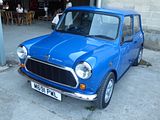

The Mini was the model that refused to die, with sales continuing after the launch of the Metro in 1980, and gathering momentum again in the 1990s, thanks in no small part to interest from Japan and because Rover Group decided to produce some more Cooper models. The first series of Cooper cars had been discontinued in 1971, replaced by the cheaper to build 1275GT, but when a limited edition model was produced in 1990, complete with full endorsement from John Cooper, the model was a sell out almost overnight, which prompted the decision to make it a permanent addition to the range. A number of refinements were made during the 90s, with fuel injection adding more power, a front mounted radiator and more sound deadening making the car quieter and new seats adding more comfort and a new dash making the car look less spartan inside. It formed part of the range until production of all Issigonis Minis ended in 2000.


MISC


MORRIS
The Eight was produced from 1935 to 1948, inspired by the sales popularity of the similarly shaped Ford Model Y. The success of the car enabled Morris to regain its position as Britain’s largest motor manufacturer. The Eight was powered by a Morris UB series 918 cc four-cylinder side-valve engine with three bearing crankshaft and single SU carburettor with maximum power of 23.5 bhp. The gearbox was a three-speed unit with synchromesh on the top two speeds and Lockheed hydraulic brakes were fitted. Coil ignition was used in a Lucas electrical system powered by a 6 volt battery and third brush dynamo. The body which was either a saloon or open tourer was mounted on a separate channel section chassis with a 7 feet 6 inches wheelbase. The tourer could reach 58 mph and return 45 mpg; the saloons were a little slower. The chrome-plated radiator shell and honeycomb grille were dummies disguising the real one hidden behind. In September 1934 the bare chassis was offered for £95. For buyers of complete cars prices ranged from £118 for the basic two-seater to £142 for the four door saloon with “sunshine” roof and leather seats. Bumpers and indicators were £2 10 shillings (£2.50) extra. Compared with the similarly priced, but much lighter and longer established Austin 7, the 1934/35 Morris Eight was well equipped. The driver was provided with a full set of instruments including a speedometer with a built in odometer, oil pressure and fuel level gauges and an ammeter. The more modern design of the Morris was reflected in the superior performance of its hydraulically operated 8 inch drum brakes. The Morris also scored over its Ford rival by incorporating an electric windscreen wiper rather than the more old-fashioned vacuum powered equivalent, while its relatively wide 45 inch track aided directional stability on corners. The series I designation was used from June 1935 in line with other Morris models, cars made before this are known as pre-series although the official Morris Motors designation was by the model year even though they were introduced in October 1934. Of the 164,102 cars produced approximately 24,000 were tourers.


No surprise to see the evergreen Morris Minor here as this is a very popular classic. The Minor was conceived in 1941. Although the Nuffield Organization was heavily involved in war work and there was a governmental ban on civilian car production, Morris Motors’ vice chairman, Miles Thomas, wanted to prepare the ground for new products to be launched as soon as the war was over. Vic Oak, the company’s chief engineer, had already brought to Thomas’ attention a promising junior engineer, Alec Issigonis, who had been employed at Morris since 1935 and specialised in suspension design but he had frequently impressed Oak with his advanced ideas about car design in general. Issigonis had come to Oak’s particular attention with his work on the new Morris Ten, which was in development during 1936/7. This was the first Morris to use unitary construction and was conceived with independent front suspension. Issigonis designed a coil-sprung wishbone system which was later dropped on cost grounds. Although the design would later be used on the MG Y-type and many other post-war MGs the Morris Ten entered production with a front beam axle. Despite his brief being to focus on the Ten’s suspension Issigonis had also drawn up a rack and pinion steering system for the car. Like his suspension design this was not adopted but would resurface in the post-war years on the MG Y-type, but these ideas proved that he was the perfect candidate to lead the design work on a new advanced small car. With virtually all resources required for the war effort, Thomas nonetheless approved the development of a new small family car that would replace the Morris Eight. Although Oak (and Morris’ technical director, Sidney Smith) were in overall charge of the project it was Issigonis who was ultimately responsible for the design, working with only two other draughtsmen. Thomas named the project ‘Mosquito’ and ensured that it remained as secret as possible, both from the Ministry of Supply and from company founder William Morris (now Lord Nuffield), who was still chairman of Morris Motors and, it was widely expected, would not look favourably on Issigonis’ radical ideas. Issigonis’ overall concept was to produce a practical, economical and affordable car for the general public that would equal, if not surpass, the convenience and design quality of a more expensive car. In later years he summed up his approach to the Minor; that he wanted to design an economy car that “the average man would take pleasure in owning, rather than feeling of it as something he’d been sentenced to” and “people who drive small cars are the same size as those who drive large cars and they should not be expected to put up with claustrophobic interiors.” Issigonis wanted the car to be as spacious as possible for its size and comfortable to drive for inexperienced motorists. Just as he would with the Mini ten years later, he designed the Mosquito with excellent roadholding and accurate, quick steering not with any pretence of making a sports car, but to make it safe and easy to drive by all. As work proceeded, there were plenty of battle to overcome, to get Issigonis’ ideas approved, and not all of them were. The production car, called the Minor was launched at the British Motor Show at Earls Court in London on October 27, 1948. At the same show Morris also launched the new Morris Oxford and Morris Six models, plus Wolseley variants of both cars, which were scaled-up versions of the new Minor, incorporating all the same features and designed with Issigonis’ input under Vic Oak’s supervision. Thus Issigonis’ ideas and design principles underpinned the complete post-war Morris and Wolseley car ranges. The original Minor MM series was produced from 1948 until 1953. It included a pair of four-seat saloons, two-door and (from 1950) a four-door, and a convertible four-seat Tourer. The front torsion bar suspension was shared with the larger Morris Oxford MO, as was the almost-unibody construction. Although the Minor was originally designed to accept a flat-4 engine, late in the development stage it was replaced by a 918 cc side-valve inline-four engine, little changed from that fitted in the 1935 Morris 8, and producing 27.5 hp and 39 lb/ft of torque. This little engine pushed the Minor to just 64 mph but delivered 40 mpg. Brakes were four-wheel drums. Early cars had a painted section in the centre of the bumpers to cover the widening of the production car from the prototypes. This widening of 4 inches is also visible in the creases in the bonnet. Exports to the United States began in 1949 with the headlamps removed from within the grille surround to be mounted higher on the wings to meet local safety requirements. In 1950 a four-door version was released, initially available only for export, and featuring from the start the headlamps faired into the wings rather than set lower down on either side of the grille. The raised headlight position became standard on all Minors in time for 1951. From the start, the Minor had semaphore-type turn indicators, and subsequent Minor versions persisted with these until 1961. An Autocar magazine road test in 1950 reported that these were “not of the usual self-cancelling type, but incorporate[d] a time-basis return mechanism in a switch below the facia, in front of the driver”. It was all too easy for a passenger hurriedly emerging from the front passenger seat to collide with and snap off a tardy indicator “flipper” that was still sticking out of the B-pillar, having not yet been safely returned by the time-basis return mechanism to its folded position. Another innovation towards the end of 1950 was a water pump (replacing a gravity dependent system), which permitted the manufacturer to offer an interior heater “as optional equipment”. When production of the first series ended, just over a quarter of a million had been sold, 30 per cent of them the convertible Tourer model. In 1952, the Minor line was updated with an Austin-designed 803 cc overhead valve A-series engine, replacing the original side-valve unit. The engine had been designed for the Minor’s main competition, the Austin A30, but became available as Austin and Morris were merged into the British Motor Corporation. The new engine felt stronger, though all measurements were smaller than the old. The 52 second drive to 60 mph was still calm, with 63 mph as the top speed. Fuel consumption also rose to 36 mpg. An estate version was introduced in 1952, known as the Traveller (a Morris naming tradition for estates, also seen on the Mini). The Traveller featured an external structural ash (wood) frame for the rear bodywork, with two side-hinged rear doors. The frame was varnished rather than painted and a highly visible feature of the body style. Commercial models, marketed as the Morris Quarter Ton Van and Pick-up were added in May 1953. Rear bodies of the van versions were all steel. The 4-seat convertible and saloon variants continued as well. The car was again updated in 1956 when the engine was increased in capacity to 948 cc. The two-piece split windscreen was replaced with a curved one-piece one and the rear window was enlarged. In 1961 the semaphore-style trafficators were replaced by the flashing direction indicators, these were US-style red at the rear (using the same bulb filament as the brake lamp) and white at the front (using a second brighter filament in the parking lamp bulb) which was legal in the UK and many export markets at the time (such as New Zealand). An upmarket car based on the Minor floorpan using the larger BMC B-Series engine was sold as the Riley One-Point-Five/Wolseley 1500 beginning in 1957: versions of this Wolseley/Riley variant were also produced by BMC Australia as the Morris Major and the Austin Lancer. In December 1960 the Morris Minor became the first British car to sell more than 1,000,000 units. To commemorate the achievement, a limited edition of 350 two-door Minor saloons (one for each UK Morris dealership) was produced with distinctive lilac paintwork and a white interior. Also the badge name on the side of the bonnet was modified to read “Minor 1,000,000” instead of the standard “Minor 1000”. The millionth Minor was donated to the National Union of Journalists, who planned to use it as a prize in a competition in aid of the union’s Widow and Orphan Fund. The company, at the same time, presented a celebratory Minor to London’s Great Ormond Street Hospital for Sick Children, but this car was constructed of cake. The final major upgrades to the Minor were made in 1962. Although the name Minor 1000 was retained, the changes were sufficient for the new model to be given its own ADO development number. A larger version of the existing A-Series engine had been developed in conjunction with cylinder head specialist Harry Weslake for the then new ADO16 Austin/Morris 1100 range. This new engine used a taller block than did the 948 cc unit, with increased bore and stroke bringing total capacity up to 1,098 cc. Although fuel consumption suffered moderately at 38 mpg, the Minor’s top speed increased to 77 mph with noticeable improvements in low-end torque, giving an altogether more responsive drive. Other changes included a modified dashboard layout with toggle switches, textured steel instrument binnacle, and larger convex glove box covers. A different heater completed the interior upgrade, whilst the larger combined front side/indicator light units, common to many BMC vehicles of the time, were fitted to the front wings. These now included a separate bulb and amber lens for indicators while larger tail lamp units also included amber rear flashers. During the life of the Minor 1000 model, production declined. The last Convertible/Tourer was manufactured on 18 August 1969, and the saloon models were discontinued the following year. Production of the more practical Traveller and commercial versions ceased in 1972, although examples of all models were still theoretically available from dealers with a surplus of unsold cars for a short time afterwards. 1,619,857 Minors of all variants were ultimately sold.


NISSAN
It is quite surprising to realise that the Figaro is now more than 25 years old. This well-known retro-styled fixed-profile convertible was manufactured for just one year, 1991, and originally marketed solely in Japan at their Nissan Cherry Stores. The Figaro was introduced at the 1989 Tokyo Motor Show under the slogan “Back to the Future”. The name references the title character in the play The Marriage of Figaro by Pierre Beaumarchais. Based on the Nissan Micra, the Figaro was built at Aichi Machine Industry, a special projects group which Nissan would later call “Pike Factory,” which also produced three other niche automobiles: the Be-1, Pao and S-Cargo. As a fixed-profile convertible, the upper side elements of the Figaro’s bodywork remain fixed, while its fabric soft top retracts to provide a less fully open experience than a typical convertible. The fixed-profile concept is seen on other convertibles, including the Citroën 2CV and the 1957 Fiat 500. The Figaro was marketed in four colours representing the four seasons: Topaz Mist (Autumn), Emerald Green (Spring), Pale Aqua (Summer) and Lapis Grey (Winter). Few, reportedly 2,000, were marketed in Topaz Mist. The Figaro was equipped with leather seats, air conditioning, CD player and a fixed-profile slide-back open roof. 8000 were originally available with an additional 12,000 added to production numbers to meet demand. Prospective purchasers entered a lottery to purchase a Figaro. Limited edition cars came with passenger side baskets and cup holders. A surprising number of them have been imported to the UK in recent years.


OPEL
The Manta A was released in September 1970, two months ahead of the then new Opel Ascona on which it was based. A competitor to the Ford Capri, it was a two-door “three-box” coupé, and featured distinctive round tail lights, quite similar to those on the Opel GT and which in fact were used on the GT in 1973, its final model year. It took its name, and a few minor styling cues, from the Manta Ray concept car (1961), which also famously influenced the 1968 Chevrolet Corvette C3 (both Chevrolet and Opel have General Motors as their parent company). The only difference between the Ascona and Manta was exterior sheet metal, glass and trim. The frame, mechanics, dash, front seats, and many other parts were shared between the cars. The Manta was normally equipped with a 1.6 or a 1.9-litre CIH engine, although in Europe, a small 1.2-litre motor was also offered. All Mantas sold in the U.S. had the 1.9 L and larger heavy duty radiator (an option on European models). It came with either a four-speed manual or a three-speed TH-180 automatic. The Manta was known to be one of the best-handling cars in its class and went on to win a large number of rallies in Europe and the United States. There was a sport model known as the “Rallye” from 1971 to 1974. The Rallye model was, overall, an appearance and gauge package, the most noticeable difference being the addition of a black bonnet, and on 1970–1973 models, fog lamps. Mechanically, the only difference was the gear ratios in the models with manual transmissions, and the Rallye model came with standard stiffer suspension, a tighter turning radius, and very aggressive front caster adjustments. Both had dual rear anti-roll bars, providing exceptional handling. In 1973 and 1974 there was also the “Luxus” model, which included refinements like corduroy seats, colour-coded interiors (blue or burgundy), and faux wood panelling. The only special edition Manta ever produced for the U.S. market was the “Blue Max”, in 1973. This amounted to a blue 1973 Luxus model, with a unique dark blue vinyl roof, mechanical sunroof, and automatic transmission. The European market had a number of different versions. Most were basic trim packages, the most popular being the “Berlinetta”, which was similar to the Luxus but included rubber trim on the bumpers (standard on all 1973 U.S. Opel Mantas), vinyl roof, and other miscellaneous features. The one exception was the 1975 Opel, which offered the GT/E and a number of special editions based on the GT/E. The GT/E was a fuel-injected version of the European 1.9L and the performance figures were very impressive for the time. The most notable special editions models based on the GT/E were the “Black Magic” (with black and plaid interior) and the “Swinger” edition in white, also with an odd interior choice.


PEUGEOT
The Peugeot 206 WRC is a World Rally Car based on the Peugeot 206. It was used by Peugeot Sport, Peugeot’s factory team, in the World Rally Championship from 1999 to 2003. The car brought Peugeot the manufacturers’ world title three consecutive years (2000 to 2002). Marcus Grönholm won the drivers’ title in 2000 and 2002. In order to homologate the 206 World Rally Car, Peugeot needed to sell road going versions of the 206 that were at least 4.0 metres long (the minimum length stipulated by the FIA for WRC cars). The WRC car was homologated with the 206 Grand Tourisme, similar to the standard 206 but with front and rear body extensions to bring the car from the standard road car’s 3.83 meters to the rally car’s 4 metre length. 4000 cars in total were produced, each with a unique number on a plaque on the door pillar both sides. 600 right-hand drive cars were produced for the UK. The mechanicals fitted to the Grand Tourisme were what was fitted to the upcoming 206 GTI, not yet released. In 1999, Peugeot Sport unveiled the 206 WRC, and it competed for the first time in that year’s World Rally Championship, with French tarmac veteran and long-time marque stalwart Gilles Panizzi narrowly failing, against a resurgent reigning champion in Mitsubishi’s Tommi Mäkinen, to win the Rallye Sanremo. The car was soon a success, however, and won both the manufacturers’ and drivers’ championships in 2000, Peugeot’s first such accolades since their withdrawal from the WRC after Group B was banned after the 1986 season, and achieved in the hands of Panizzi, Francois Delecour and Mäkinen’s successor as drivers’ world champion, Marcus Grönholm. For 2001, Grönholm competed alongside two refugees of SEAT’s exit from the championship at the end of 2000; compatriot Harri Rovanperä and the French 1994 world champion, Didier Auriol. Rovanperä and Auriol each contributed single wins, on Swedish Rally and Rally Catalunya respectively (the former to be a sole career win for the Finn, and the latter victory helped by assorted problems for the blisteringly quick debuting Citroën Xsara WRCs), before Auriol left the team at the end of the season. Grönholm, meanwhile, suffered sufficient reliability woes in the first half of the year such that he could manage no higher than fourth overall in the series, although Peugeot did fend off Ford, with a 1-2 result by the two Finns on the season-ending Rally of Great Britain to successfully defend the constructors’ championship title. In 2002, Grönholm – despite now being paired in the factory line-up with defending 2001 champion from Subaru, the Briton Richard Burns – led Peugeot to a repeat of the WRC title double aboard his 206 WRC. His dominance that year was compared to Michael Schumacher’s dominance of Formula One. In summary, Peugeot won two drivers’ championships, in 2000 and 2002, and three manufacturers’ titles in a row between 2000 and 2002. However, by 2003 the 206 WRC was beginning to show its age and was less effective against the competition, notably the newer Xsara WRC and the Subaru Impreza WRC, so it was retired from competition at the end of the season, to be replaced with the 307 WRC, albeit, unlike its predecessor, based not on the production version’s hatchback, but its coupé cabriolet body style. The Peugeot 206 WRC was awarded the Autosport “Rally Car of the Year” in 2002, preceded by the Ford Focus RS WRC and followed by the Citroën Xsara WRC. Peugeot GB created a Peugeot 206 rally championship aimed at young drivers. The championship was created to help young drivers develop their careers. The cars were built by Vic Lee Racing and drivers such as Tom Boardman, Luke Pinder and Garry Jennings all drove in the championship.


PLYMOUTH
Plymouth was a popular choice for police service in the 1970s and this 1978 Fury is a nice example. For the 1975 model year, Chrysler moved the Fury name, which had been part of the full-size C-body Plymouth model line up during the previous ten model years, over to the restyled mid-size B-body line, which had been marketed as the Satellite previously. The “Road Runner” was offered as the top-of-the-line model of the redesigned Plymouth Fury 2-door line up, then it was moved over to the Plymouth Volare line up during the following model year (1976). The full-size Plymouth, now known as the Plymouth Gran Fury, lasted through 1977. The entire mid-size Plymouth Fury line up was discontinued at the end of the 1978 model year, replaced in Canada by the rebadged Dodge Diplomat model called the Plymouth Caravelle (not to be confused with the E-body Plymouth Caravelle from 1983 until 1988 and also the 1985 through 1988 Plymouth Caravelle for the American car market). During the entire 1979 model year, there were no Fury models marketed by Plymouth. Only minor styling changes occurred from the 1975 through the 1978 model years, most notably, during the 1977 model year when quad stacked square headlights (see photo) replaced the previous round dual beam headlights, the front turn signals, previously on the outboard edges of the grille, were moved over to the cutouts in the front bumper. Tail lights received amber turn signal lenses in place of the previous red turn signal lenses. Various 2-door models had no centerposts and some of them were true hardtops with roll-down rear windows. Other two-door models had fixed rear windows even though they had no centerposts. For the most part, the Plymouth Fury two-door models, during the 1975 and 1978 model years, were labelled as “hardtops”. The Plymouth Fury, 1975-1978, shared its B-body and unibody structure with the Dodge Coronet (1975-1976), Dodge Monaco (1977-1978) and the corporation’s new personal-luxury coupe models, Chrysler Cordoba (1975-1979) and Dodge Charger SE (1975-1978). All the four-door models, wagons and sedans, continued with the basic body shells that were introduced for the 1971 model year, rode on a 118 in (2,997 mm) wheelbase, while the various two-door models—which were restyled with new and more formal sheetmetal and rooflines—rode on the 115 in (2,921 mm) wheelbase. Before 1975, the Plymouth Satellite had a 117 in (2,972 mm) wheelbase, while the Dodge Coronet had a 118 in (2,997 mm) wheelbase. For 1975, the mid-size Plymouth Fury had a 117.5 in (2,984 mm) wheelbase and the 1975 Dodge Coronet had the same wheelbase. Before 1974, the Plymouth Fury had a 120 in (3,048 mm) wheelbase, while the Dodge Monaco/Polara had a 122 in (3,099 mm) wheelbase. For 1974, the Plymouth Gran Fury and Dodge Monaco had the same 121.5 in (3,086 mm) wheelbase. Fury was offered in three basic subseries for 1975 in sedans and coupes and two for the station wagon. The sedan was offered in base, custom and salon models, with interior and exterior trim ranging from austere to luxurious. The salon featured plush velour bench seats with recliners and folding armrests and carpeted trunks, along with a spring-loaded hood ornament with the Plymouth logo. In addition to the Road Runner, the Fury coupes were offered in base, Custom and Sport models. The “sport” was the top-line coupe featuring body pinstriping on the upper door and front and rear fenders, interiors with all-vinyl bucket seats and centre cushion and armrest, or optional centre console; or split bench seats with armrest, along with plusher shag carpeting on floor and door panels plus lower door carpeting. The wagons were available as either the Fury Suburban or Fury Custom Suburban. Engine offerings included the 225 cu in (3.69 L) slant-six that was standard on all models except Fury Sport, Road Runner, and station wagons, which came with the 318 cu in (5.21 L) V8 as the base engine which was optional on other models. Optional engines on all models included 360 cu in (5.9 L) and 400 cu in (6.6 L) V8s with two- or four-barrel carburettor, and the 440 cu in (7.2 L) four-barrel was only as a “police” option on four-door sedans. A three-speed manual transmission was standard with the automatic TorqueFlite optional. The 1976 model year mid-size B-body 1976 Plymouth Fury saw very few appearance changes from the previous year other than the availability of a dual opera window roof on Sport Fury two-door models. Engine and transmission offerings were also unchanged except that the 360 two-barrel V8 was now the standard engine on station wagons along with the TorqueFlite automatic transmission, both items of which were optional on other models. The 1977 model year mid-size B-body 1977 Plymouth Fury received a new front end with a chrome vertical bar grille and outline along with stacked rectangular headlights. Model and drivetrain offerings were unchanged from 1976 except that the Slant Six now had two-barrel carburetion replacing the one-barrel pot of previous years and was now standard on the Sport Fury two-door models. Optional V8 engines included the 318 two-barrel, 360 two- or four-barrel and 400 two- or four-barrel. The 440 four-barrel V8 was only offered in four-door models as part of the police package. The 1978 model year was technically a mid-size B-body car, but the 1978 Plymouth Fury was Plymouth’s largest car with the discontinuation of the full-size C-body Plymouth Gran Fury after 1977. TorqueFlite automatic transmission and power steering were now standard on all Fury models and the same selection of V8 engines was still available. Few appearance changes were made from the previous model year. The 1978 was the last model year for the Plymouth Fury and its Dodge Monaco counterpart, which was renamed as such during the start of the previous model year (1977), which, in turn, was called the “Dodge Coronet” (1965, 1966, and 1967, from 1968 until 1974, and from 1975 through 1976), while the former full-size C-body Dodge was renamed the “Dodge Royal Monaco” during the start of the previous model year (1977) up until it was discontinued after just one model year. The personal-luxury coupes, which were based on the mid-size B-body platform, including the Chrysler Cordoba and Dodge Magnum (renamed from Charger in 1978) would soldier on for one more year until they were downsized (and renamed Mirada for the Dodge version) in 1980 to the M-body platform used for the Dodge Diplomat and Chrysler LeBaron.


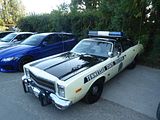

PORSCHE
The 911 traces its roots to sketches drawn by Ferdinand “Butzi” Porsche in 1959. The Porsche 911 was developed as a more powerful, larger and a more comfortable replacement for the 356, the company’s first model. The new car made its public debut at the 1963 Frankfurt Motor Show. The car was developed with the proof-of-concept twin-fan Type 745 flat-six engine, but the car presented at the auto show had a non-operational mockup of the single-fan 901 engine, receiving a working unit in February 1964. It originally was designated as the “Porsche 901” (901 being its internal project number). A total of 82 cars were built as which were badges as 901s. However, French automobile manufacturer Peugeot protested on the grounds that in France it had exclusive rights to car names formed by three numbers with a zero in the middle. Instead of selling the new model with a different name in France, Porsche changed the name to 911. Internally, the cars’ part numbers carried on the prefix 901 for years. Production began in September 1964, with the first 911s exported to the US in February 1965. The first models of the 911 had a rear-mounted 130 hp Type 901/01 flat-6 engine, in the “boxer” configuration like the 356, the engine is air-cooled and displaces 1,991 cc as compared to the 356’s four-cylinder, 1,582 cc unit. The car had four seats although the rear seats were small, thus it is usually called a 2+2 rather than a four-seater (the 356 was also a 2+2). A four or five-speed “Type 901” manual transmission was available. The styling was largely penned by Ferdinand “Butzi” Porsche, son of Ferdinand “Ferry” Porsche. Butzi Porsche initially came up with a notchback design with proper space for seating two rear passengers but Ferry Porsche insisted that the 356’s successor was to use its fastback styling. 7 prototypes were built based on Butzi Porsche’s original design and were internally called the Porsche 754 T7. Erwin Komenda, the leader of the Porsche car body construction department who initially objected, was also involved later in the design. In 1966, Porsche introduced the more powerful 911S with Type 901/02 engine having a power output of 160 PS. Forged aluminum alloy wheels from Fuchsfelge, with a 5-spoke design, were offered for the first time. In motorsport at the same time, the engine was developed into the Type 901/20 and was installed in the mid-engine 904 and 906 with an increased power output of 210 PS, as well as fuel injected Type 901/21 installed in later variants of the 906 and 910 with a power output of 220 PS. In August 1967, the A series went into production with dual brake circuits and widened (5.5J-15) wheels still fitted with Pirelli Cinturato 165HR15 CA67 tyres. and the previously standard gasoline-burning heater became optional. The Targa version was introduced. The Targa had a stainless steel-clad roll bar, as automakers believed that proposed rollover safety requirements by the US National Highway Traffic Safety Administration (NHTSA) would make it difficult for fully open convertibles to meet regulations for sale in the US, an important market for the 911. The name “Targa” came from the Targa Florio sports car road race in Sicily, Italy in which Porsche had several victories until 1973. The last win in the subsequently discontinued event was scored with a 911 Carrera RS against prototypes entered by Ferrari and Alfa Romeo. The road going Targa was equipped with a removable roof panel and a removable plastic rear window (although a fixed glass version was offered from 1968). The 110 PS 911T was also launched in 1967 with Type 901/03 engine. The 130 PS model was renamed the 911L with Type 901/06 engine and ventilated front disc brakes. The brakes had been introduced on the previous 911S. The 911R with 901/22 engine had a limited production (20 in all), as this was a lightweight racing version with thin fibreglass reinforced plastic doors, a magnesium crankcase, twin overhead camshafts, and a power output of 210 PS. A clutchless semi-automatic Sportomatic model, composed of a torque converter, an automatic clutch, and the four-speed transmission was added in Autumn 1967. It was cancelled after the 1980 model year partly because of the elimination of a forward gear to make it a three-speed. The B series went into production in August 1968, replacing the 911L model with 911E with fuel injection. It remained in production until July 1969. The 911E gained 185/70VR15 Pirelli Cinturato CN36. and 6J-15 wheels. The C series was introduced in August 1969 with an enlarged 2.2-litre engine. The wheelbase for all 911 and 912 models was increased from 2,211–2,268 mm (87.0–89.3 in), to help as a remedy to the car’s nervous handling at the limit. The overall length of the car did not change, but the rear wheels were relocated further back. Fuel injection arrived for the 911S (901/10 engine) and for a new middle model, 911E (901/09 engine). The D series was produced from Aug. 1970 to July 1971. The 2.2-litre 911E (C and D series) had lower power output of the 911/01 engine (155 PS) compared to the 911S’s Type 911/02 (180 PS, but 911E was quicker in acceleration up to 160 km/h. The E series for 1972–1973 model years (August 1971 to July 1972 production) consisted of the same models, but with a new, larger 2,341 cc engine. This is known as the “2.4 L” engine, despite its displacement being closer to 2.3 litres. The 911E (Type 911/52 engine) and 911S (Type 911/53) used Bosch mechanical fuel injection (MFI) in all markets. For 1972 the 911T (Type 911/57) was carbureted, except in the US and some Asian markets where the 911T also came with (MFI) mechanical fuel injection (Type 911/51 engine) with power increase over European models (130 hp) to 140 hp commonly known as a 911T/E. With power and torque increase, the 2.4-litre cars also got a newer, stronger transmission, identified by its Porsche type number 915. Derived from the transmission in the 908 race car, the 915 did away with the 901 transmission’s “dog-leg” style first gear arrangement, opting for a traditional H pattern with first gear up to the left, second gear underneath first, etc. The E series had the unusual oil filler behind the right side door, with the dry sump oil tank relocated from behind the right rear wheel to the front of it in an attempt to move the centre of gravity slightly forward for better handling. An extra oil filler/inspection flap was located on the rear wing, for this reason it became known as an “Oil Klapper”, “Ölklappe” or “Vierte Tür (4th door)”. The F series (August 1972 to July 1973 production) moved the oil tank back to the original behind-the-wheel location. This change was in response to complaints that gas-station attendants often filled gasoline into the oil tank. In January 1973, US 911Ts were switched to the new K-Jetronic CIS (Continuous Fuel Injection) system from Bosch on Type 911/91 engine. 911S models also gained a small spoiler under the front bumper to improve high-speed stability. The cars weighed 1,050 kg (2,310 lb). The 911 ST was produced in small numbers for racing (the production run for the ST lasted from 1970 to 1971). The cars were available with engines of either 1,987 cc or 2,404 cc, having a power output of 270 PS at 8,000 rpm. Weight was down to 960 kg (2,120 lb). The cars had success at the Daytona 6 Hours, the Sebring 12 Hours, the 1000 km Nürburgring, and the Targa Florio. The G Series cars, with revised bodies and larger impact-absorbing bumpers arrived in the autumn of 1973 and would continue in production with few visual changes but plenty of mechanical ones for a further 16 years.


The 911 continued to evolve throughout the 1960s and early 1970s, though changes initially were quite small. The SC appeared in the autumn of 1977, proving that any earlier plans there had been to replace the car with the front engined 924 and 928 had been shelved. The SC followed on from the Carrera 3.0 of 1967 and 1977. It had the same 3 litre engine, with a lower compression ratio and detuned to provide 180 PS . The “SC” designation was reintroduced by Porsche for the first time since the 356 SC. No Carrera versions were produced though the 930 Turbo remained at the top of the range. Porsche’s engineers felt that the weight of the extra luxury, safety and emissions equipment on these cars was blunting performance compared to the earlier, lighter cars with the same power output, so in non-US cars, power was increased to 188 PS for 1980, then finally to 204 PS. However, cars sold in the US market retained their lower-compression 180 PS engines throughout. This enabled them to be run on lower-octane fuel. In model year 1980, Porsche offered a Weissach special edition version of the 911 SC, named after the town in Germany where Porsche has their research centre. Designated M439, it was offered in two colours with the turbo whale tail & front chin spoiler, body colour-matched Fuchs alloy wheels and other convenience features as standard. 408 cars were built for North America. In 1982, a Ferry Porsche Edition was made and a total of 200 cars were sold with this cosmetic package. SCs sold in the UK could be specified with the Sport Group Package (UK) which added stiffer suspension, the rear spoiler, front rubber lip and black Fuchs wheels. In 1981 a Cabriolet concept car was shown at the Frankfurt Motor Show. Not only was the car a true convertible, but it also featured four-wheel drive, although this was dropped in the production version. The first 911 Cabriolet debuted in late 1982, as a 1983 model. This was Porsche’s first cabriolet since the 356 of the mid-1960s. It proved very popular with 4,214 sold in its introductory year, despite its premium price relative to the open-top targa. Cabriolet versions of the 911 have been offered ever since. 911 SC sales totalled 58,914 cars before the next iteration, the 3.2 Carrera, which was introduced for the 1984 model year. Coupe models outsold the Targa topped cars by a big margin.


Perhaps the rarest (in the UK) Porsche design to be seen here is the 914, a model born of a joint need that Porsche had for a replacement for the 912, and Volkswagen’s desire for a new range-topping sports coupe to replace the Karmann Ghia. At the time, the majority of Volkswagen’s developmental work was handled by Porsche, part of a setup that dated back to Porsche’s founding; Volkswagen needed to contract out one last project to Porsche to fulfill the contract, and decided to make this that project. Ferdinand Piëch, who was in charge of research and development at Porsche, was put in charge of the 914 project. Originally intending to sell the vehicle with a flat four-cylinder engine as a Volkswagen and with a flat six-cylinder engine as a Porsche, Porsche decided during development that having Volkswagen and Porsche models sharing the same body would be risky for business in the American market, and convinced Volkswagen to allow them to sell both versions as Porsches in North America. On March 1, 1968, the first 914 prototype was presented. However, development became complicated after the death of Volkswagen’s chairman, Heinz Nordhoff, on April 12, 1968. His successor, Kurt Lotz, was not connected with the Porsche dynasty and the verbal agreement between Volkswagen and Porsche fell apart. In Lotz’s opinion, Volkswagen had all rights to the model, and no incentive to share it with Porsche if they would not share in tooling expenses. With this decision, the price and marketing concept for the 914 had failed before series production had begun. As a result, the price of the chassis went up considerably, and the 914/6 ended up costing only a bit less than the 911T, Porsche’s next lowest price car. The 914/6 sold quite poorly while the much less expensive 914/4 became Porsche’s top seller during its model run, outselling the Porsche 911 by a wide margin with over 118,000 units sold worldwide. Volkswagen versions originally featured an 80 PS fuel-injected 1.7 L flat-4 engine based on the Volkswagen air-cooled engine. Porsche’s 914/6 variant featured a carburettor 110 PS 2.0 litre flat-6 engine from the 1969 911T, placed amidships in front of a version of the 1969 911’s “901” gearbox configured for a mid-engine car. Karmann manufactured the rolling chassis at their plant, completing Volkswagen production in-house or delivering versions to Porsche for their final assembly. 914/6 models used lower gear ratios and high brake gearing in order to try to overcome the greater weight of the 6 cylinder engine along with higher power output. Suspension, brakes, and handling were otherwise the same. A Volkswagen-Porsche joint venture, Volkswagen of America, handled export to the U.S., where both versions were badged and sold as Porsches, except in California, where they were sold in Volkswagen dealerships. The four-cylinder cars were sold as Volkswagen-Porsches at European Volkswagen dealerships. Slow sales and rising costs prompted Porsche to discontinue the 914/6 variant in 1972 after producing 3,351 of them; its place in the lineup was filled by a variant powered by a new 100 PS 2.0 litre, fuel-injected version of Volkswagen’s Type 4 engine in 1973. For 1974, the 1.7 L engine was replaced by a 85 PS 1.8 litre, and the new Bosch L-Jetronic fuel injection system was added to American units to help with emissions control. 914 production ended in 1976. The 2.0 litre flat-4 engine continued to be used in the 912E, which provided an entry-level model until the 924 was introduced.


The 924 was originally another joint project of Volkswagen and Porsche created by the Vertriebsgesellschaft (VG), the joint sales and marketing company funded by Porsche and VW to market and sell sports cars, For Volkswagen, it was intended to be that company’s flagship coupé sports car and was dubbed “Project 425” during its development. For Porsche, it was to be its entry-level sports car replacing the 914. At the time, Volkswagen lacked a significant internal research and design division for developing sports cars; further, Porsche had been doing the bulk of the company’s development work anyway, per a deal that went back to the 1940s. In keeping with this history, Porsche was contracted to develop a new sporting vehicle with the caveat that this vehicle must work with an existing VW/Audi inline-four engine. Porsche chose a rear-wheel drive layout and a rear-mounted transaxle for the design to help provide 48/52 front/rear weight distribution; this slight rear weight bias aided both traction and brake balance. The 1973 oil crisis, a series of automobile-related regulatory changes enacted during the 1970s and a change of directors at Volkswagen made the case for a Volkswagen sports car less striking and the 425 project was put on hold. After serious deliberation at VW, the project was scrapped entirely after a decision was made to move forward with the cheaper, more practical, Golf-based Scirocco model instead. Porsche, which needed a model to replace the 914, made a deal with Volkswagen leadership to buy the design back. The deal specified that the car would be built at the ex-NSU factory in Neckarsulm located north of the Porsche headquarters in Stuttgart, Volkswagen becoming the subcontractor. Hence, Volkswagen employees would do the actual production line work (supervised by Porsche’s own production specialists) and that Porsche would own the design. It became one of Porsche’s best-selling models, and the relative cheapness of building the car made it both profitable and fairly easy for Porsche to finance. The original design used an Audi-sourced four-speed manual transmission from a front wheel drive car but now placed and used as a rear transaxle. It was mated to VW’s EA831 2.0 litre 4 cylinder engine, subsequently used in the Audi 100 and the Volkswagen LT van (common belief is that ‘the engine originated in the LT van’, but it first appeared in the Audi car and in 924 form has a Porsche-designed cylinder head). The 924 engine used Bosch K-Jetronic fuel injection, producing 125 bhp in European cars, but a rather paltry 95 bhp for the US market models, though this was improved to 110 hp in mid-1977 with the introduction of a catalytic converter, which reduced the need for power-robbing smog equipment. The four-speed manual was the only transmission available for the initial 1976 model, later this was replaced by a five-speed dog-leg unit. An Audi three-speed automatic was offered starting with the 1977.5 model. In 1980 the five-speed transmission was changed to a conventional H-pattern, with reverse now on the right beneath fifth gear. Porsche made small improvements to the 924 each model year between 1977 and 1985, but nothing major was changed on non-turbo cars. Porsche soon recognised the need for a higher-performance version of the 924 that could bridge the gap between the basic 924s and the 911s. Having already found the benefits of turbochargers on several race cars and the 1975 911 turbo, Porsche chose to use this technology for the 924, eventually introducing the 924 turbo as a 1978 model. Porsche started with the same Audi-sourced VW EA831 2.0 litre engine, designed an all new cylinder head (which was hand assembled at Stuttgart), dropped the compression to 7.5:1 and engineered a KKK K-26 turbocharger for it. With 10 psi boost, output increased to 170 hp. The 924 turbo’s engine assembly weighed about 65 lb more, so front spring rates and anti-roll bars were revised. Weight distribution was now 49/51 compared to the original 924 figure of 48/52 front to rear. In order to help make the car more functional, as well as to distinguish it from the naturally aspirated version, Porsche added an NACA duct in the bonnet and air intakes in the badge panel in the nose, 15-inch spoke-style alloy wheels, four-wheel disc brakes with five-stud hubs and a five-speed transmission. Forged 16-inch flat wheels of the style used on the 928 were optional, but fitment specification was that of the 911 which the 924 shared wheel offsets with. Internally, Porsche called it the “931” (left hand drive) and “932” (right hand drive). The turbocharged VW EA831 engine allowed the 924’s performance to come surprisingly close to that of the 911 SC (180 bhp), thanks in part to a lighter curb weight, but it also brought reliability problems.This was in part due to the fact that the general public did not know how to operate, or care for, what is by today’s standards a primitive turbo setup. A turbocharger cooled only by engine oil led to short component life and turbo-related seal and seat problems. To fix the problems, Porsche released a revised 924 turbo series 2 (although badging still read “924 turbo”) in 1979. By using a smaller turbocharger running at increased boost, slightly higher compression of 8:1 and an improved fuel injection system with DITC ignition triggered by the flywheel, reliability improved and power rose to 177 hp. In 1984, VW decided to stop manufacturing the engine blocks used in the 2.0 litre 924, leaving Porsche with a predicament. The 924 was considerably cheaper than its 944 stablemate, and dropping the model left Porsche without an affordable entry-level option. The decision was made to equip the narrower bodied 924 with a slightly detuned version of the 944’s 163 bhp 2.5 litre straight four, upgrading the suspension but retaining the 924’s early interior. The result was 1986’s 150 bhp 924S. In 1988, the 924S’ final year of production, power increased to 160 bhp matching that of the previous year’s Le Mans spec cars and the base model 944, itself detuned by 3 bhp. This was achieved using different pistons which raised the S’ compression ratio from 9.7:1 to 10.2:1, the knock-on effect being an increase in the octane rating, up from 91 RON to 95. This made the 924S slightly faster than the base 944 due to its lighter weight and more aerodynamic body. With unfavourable exchange rates in the late 1980s, Porsche decided to focus its efforts on its more upmarket models, dropping the 924S for 1989 and the base 944 later that same year.


The third-generation Boxster (internally known as the 981) was announced on 13 March 2012 at the Geneva Motor Show with sales starting in early summer 2012. The 981 Boxster reflected the new design language from the 911 (991) and 918, and featured new and revised engine and transmission specifications. Together with a new body, the type 981 Boxster featured a new, 40 per cent more torsionally rigid chassis, the front track was 40 mm (1.6 in) wider, the rear 18 mm (0.7 in) wider and the wheelbase extended by 60 mm (2.4 in), but with a small weight reduction of up to 35 kg (77 lb) compared to the previous type 987 Boxster. The standard Boxster was fitted with a new 2.7-litre flat-6 engine, and the Boxster S was fitted with the existing 3.4-litre engine but with revised performance. Both engines were equipped with a 6-speed manual gearbox and an optional 7-speed reworked PDK. Both manual and automatic models were available with several technical options, including Porsche Torque Vectoring (PTV) and a Sport Chrono Package that included active transmission mounts, and made the PDK-equipped model even faster. Porsche claimed that the new generation Boxster provided fuel savings of 15% over the outgoing model. The range was expanded in March 2014 with the addition of the GTS derivative, with slightly altered front and rear bumpers and an additional 15 PS/ 15 bhp from the 3.4-litre engine. In 2015 the GT4 derivative was introduced, seeing the engine from a 991.1 Carrera S rotated 180 degrees. The GT4 also saw a lowered ride height, altered bumpers, a rear wing and additional GT package upgrades including brakes and certain suspension components from a 991.1 GT3. These special cars were manufactured from 2015 – 2016 with a total of 2500 being made, making this model one of the more desirable collector’s cars in Porsche’s lineup. The GT4 was widely considered one of the best cars of 2015/2016 where it won many awards for its impeccable handling and performance. The third generation Cayman was unveiled at the 2012 Geneva Motor Show. The production version of the 981 Cayman was released as a 2014 model in the spring of 2013. The new car was available in both the standard trim with a 2.7-litre engine, and in the S trim with a 3.4-litre engine. Both versions were available with either a 6-speed manual or a dual-clutch 7-speed PDK transmission. The 981 Cayman featured upgrades including a new body, a longer wheelbase, a wider front track, electrically powered steering, and a redesigned interior that matched the firm’s contemporaneous 911 models. The new model gained acclaim in the motoring press as one of the best handling sports cars at any price, due to its mid-engine layout and driving dynamics. The Cayman S benefited from the same engine and running gear as Porsche’s 3.4-litre version of the 911. A heavily revamped version of both models, known as the 982 generation was launched in 2016 to replace these cars.

RENAULT
Expectations were high for another class-leading sporty Clio when Renault debuted the third generation model in 2005, and enthusiasts were not disappointed when Renault premiered the car, which was called the Clio RS 197. The new Clio III drew technology from Formula One, including a rear diffuser and brake cooling side vents, they upgraded the engine, now to 194 bhp (197 PS). The car is heavier than its predecessor, but the acceleration figures are slightly improved due to a combination of more power, torque and the new six-speed gearbox with shorter gearing according to the official figures published on the Renaultsport website. The facelifted Clio III was further enhanced with the inclusion of a front splitter and the engine now produced 197 bhp (200 PS). This has been made possible by tweaks to the exhaust system, valve timing and ECU also stated to give a slight increase in fuel economy. Acceleration figures were slightly improved due to shorter gearing in 1, 2 and 3 and enhancements have been made to the cup chassis including making the steering rack more responsive. Cosmetic enhancements include the addition of larger tailpipes protruding slightly from the rear diffuser, i.d. coloured front bumper insert, wing mirror covers and rear diffuser and i.d. interior trim. Renault also introduced a new i.d. paint option of Alien Green. The 200 is highly regarded by EVO magazine, remaining their hot hatch of choice since 2009. “After the mild disappointment of the Clio 197, Renaultsport has got the Clio back to its very best, producing a cracking small hot hatch more than capable of chasing down supercars on eCOTY 2009 for a top five finish”. It was hailed by CAR Magazine as “the 911 GT3 of hot hatches” and remained CAR Magazine’s “Best in Class” since its release in 2009. Renault produced a significant number of limited edition variants during the model’s life cycle. Production ceased in 2012 when the fourth generation was launched.

STAR
One of Britain’s top six motor manufacturers prior to WWI, the Wolverhampton-based Star Motor Company produced its first automobile in 1898. Star’s first product was a built-under-license Benz, though it was manufactured entirely in Wolverhampton. Progressing from that first single-cylinder 3½hp Benz-based design, Star added twin-cylinder and four-cylinder cars to a diverse and expanding range of De Dion, Panhard, and Mercedes types. Although technically unadventurous in its early years, Star built up a deserved reputation for building luxuriously appointed and well-constructed cars, aided by the fact that it made most of its parts, chassis frames excepted, in house. Affectionately known by the Maori name ‘Hinemoa’, this 16hp four-cylinder model is one of four Stars discovered in a shed outside Auckland, New Zealand in 1992. It had been dismantled and adapted; the engine being used to drive a saw-bench from 1924 to 1966. This car has been identified by Devon County Council as first registered on 19th June 1907 as ‘T 1106’, and was re-patriated with its original registration. Originally a four-seater Phaeton with chain drive, it became a taxi in 1908 and returned to the factory on 1st July 1910. Chain drive was changed to a live axle and the Star was exported to New Zealand, believed as a two-seater race-about. Between 1992 and 2004 the Star was rebuilt by Nigel Parrott (N P Veteran Engineering Ltd), incorporating much original material: radiator, engine, gearbox, rear axle, seat pan, bonnet, etc. A front axle was found in Australia. Mr Collins reports the car is very pleasant to drive and offers an exhilarating experience, although the gearbox can be tricky, it becomes easier with practice. Listed in the Star Register, ‘T 1106’ has been actively campaigned by Mr Collins, including Prescott, the Welsh Light Car Run, Kop Hill, Donington Park, VCC Summer Runs, and local shows.

There was a second Star here, this one dates from 1922 and is called the Gold Medal. Its 1795cc engine put out 11.9 bhp and this is car number 8400 of the cars produced by the Star motor Company. This model was introduced in 1921 and was available with a variety of different open and closed body styles. It sold steadily at the rate of about 20 a week for a few years, evolving in 1923 to the 12/25.


SUBARU
Subaru debuted the turbocharged WRX performance variant of the third generation series alongside the mainstream naturally aspirated models on 2 April 2007. For this generation, most markets adopted the abbreviated name “WRX”, although the Japanese, North American and UK markets retained the full “Subaru Impreza WRX” title. The 2.5-litre EJ255 engine is largely unchanged internally. The main change is the airflow efficiency of the heads. Changes in the engine compartment consist primarily of a fourth generation Legacy GT style intake manifold and intercooler. The TD04 turbo remains from the previous generation, however it has been adjusted to fit the new intake design. Power output consists of 227 bhp and 320 Nm (236 lb/ft) from its 2.5-litre engine. It was offered in either a five-speed manual, or 4 speed automatic. The five-speed manual transmission was changed to the same found in the fourth-generation Legacy GT. The rear limited slip differential has been discarded in exchange for the new VDC (Vehicle Dynamics Control) system. The weight of the car also has been reduced and gives the WRX a 0 to 100 km/h (0 to 62 mph) time of 5.8 seconds. In contrast, curb weight of the standard Impreza model is around 27.2 kg (60 lb) heavier. For the US market, the WRX was offered in “base”, Premium, and Limited trim levels. In Australia, the WRX is available as a sedan or hatchback. An optional premium package adds the satellite navigation with DVD player and 7-inch screen, leather upholstery and a sunroof. In response to criticism that the third generation WRX suspension is too soft, and needing to keep on par with rival car companies new releases, Subaru issued several changes in 2008 for the 2009 model year, known in the UK as the WRX-S. The EJ255 engine received an output boost to 265 bhp and 331 Nm (244 lb/ft) of torque by swapping the previous TD04 turbocharger to an IHI VF52. This led to the car now achieving a 0–60 mph time of 4.7 seconds, as tested by Car and Driver. In addition, the updated model received altered springs/struts, sway bars, and Dunlop summer tyres to improve handling. Exterior cosmetic changes included the 2008 WRX Premium aero package, STi spoiler (Hatchback only), updated grill with WRX badge, and darker Gunmetal coloured wheels as standard equipment. Interior changes consisted of aluminium pedals, silver trim around the shifter, red stitching on the shift boot and seats, and a red WRX logo embroidered on the driver and passenger seat. Further changes in 2010 (for the 2011 model year) saw the WRX gain the wide-body shell from the STI, as well as the addition of quad muffler tips with diffuser. The new model gains 15 kg (33 lb). Firmer rear sub-frame bushings and wider 17-inch wheels contribute to improved traction.

TRIUMPH
Launched in 1955, the TR3 was an evolution of the TR2 and not a brand new model. It was powered by a 1991 cc straight-4 OHV engine initially producing 95 bhp, an increase of 5 hp over the TR2 thanks to the larger SU-H6 carburettors fitted. This was later increased to 100 bhp at 5000 rpm by the addition of a “high port” cylinder head and enlarged manifold. The four-speed manual gearbox could be supplemented by an overdrive unit on the top three ratios, electrically operated and controlled by a switch on the dashboard. In 1956 the front brakes were changed from drums to discs, the TR3 thus becoming the first British series production car to be so fitted. The TR3 was updated in 1957, with various changes of which the full width radiator grille is the easiest recognition point and the facelifted model is commonly referred to as the Triumph “TR3A”, though unlike the later TR4 series, where the “A” suffix was adopted, the cars were not badged as such and the “TR3A” name was not used officially, Other updates included exterior door handles, a lockable boot handle and the car came with a full tool kit as standard (this was an option on the TR3). The total production run of the “TR3A” was 58,236. This makes it the third best-selling TR after the TR6 and TR7. The TR3A was so successful that the original panel moulds eventually wore out and had to be replaced. In 1959 a slightly modified version came out that had raised stampings under the bonnet and boot hinges and under the door handles, as well as a redesigned rear floor section. In addition, the windscreen was attached with bolts rather than the Dzus connectors used on the early “A” models. Partly because it was produced for less time, the original TR3 sold 13,377 examples, of which 1286 were sold within the UK; the rest being exported mainly to the USA.


Contemporary Triumph marketing advertised the GT6 as being developed from the “race winning Le Mans Spitfires” to capitalise on their aesthetic similarities, whereas the Le Mans Spitfires and the GT6 were actually two entirely separate development programmes (the GT programme pre-dating the racing programme). However, the marketing spin was so successful that many people erroneously believed the Le Mans Spitfires to actually be GT6s. The production car was introduced in 1966 and called the Triumph GT6. The new body was a sleek fastback design with an opening rear hatch which gave the GT6 the nickname “Poor man’s E-Type”. It was really a 2-seater, but a small extra rear seat could be ordered if required and was large enough for small children. The family resemblance to the Spitfire Mk II was strong, the longer 6-cylinder engine necessitated a new bonnet top with a power bulge and the doors were provided with opening quarter light windows and squared-off glass in the top rear corner. The 6-cylinder engine was tuned to develop 95 bhp at 5000 rpm, and produced 117 lb·ft of torque at 3000 rpm. The increased power necessitated certain changes to the Spitfire mechanics; the radiator was new and mounted further forward in the car and the gearbox was the stronger unit from the Vitesse, with optional overdrive. Front springs were uprated to cope with the extra weight of the new engine. The overall vehicle weight unladed was 1,904 lb (864 kg). The interior of the GT6 was well equipped; a wooden dashboard housed a full complement of instruments, with carpets and heater included as standard. The new car had some very strong selling points. The new engine provided a 106 mph top speed and 0–60 mph in 12 seconds, a little better than the MGB GT. Moreover, the unit was comparatively smooth and tractable, in marked contrast to the MG’s rather harsh 4-cylinder engine. Fuel economy was very reasonable for the period at 20mpg, and the interior well up to the competition. The only major criticism was of its rear suspension; the GT6 inherited the swing-axle system from the Spitfire, which in turn was copied from the Herald small saloon. In the saloon it was tolerated, in the little Spitfire it was not liked and in the powerful GT6 it was heavily criticised. Triumph had done nothing to improve the system for the GT6 and the tendency to break away if the driver lifted off the power mid-corner was not helped at all by the increased weight at the front of the car. The handling was most bitterly criticised in the USA, an important export market for Triumph, where they were traditionally very strong. Similar criticism was being levelled at the Vitesse saloon, which shared the GT6’s engine and its handling problems. Triumph realised that they needed to find an answer to the handling problem, if only to maintain their reputation in the USA. Their response came with the 1969 model year, with the introduction of the GT6 Mk II, known in the States as the GT6+. The rear suspension was significantly re-engineered using reversed lower wishbones and Rotoflex driveshaft couplings, taming the handling and turning the Triumph into an MGB beater. The Vitesse was also modified, but the Spitfire had to wait until 1970 for any improvements to be made. There were other changes for the Mk II; the front bumper was raised (in common with the Spitfire Mk.3) to conform to new crash regulations, necessitating a revised front end, and side vents were added to the front wings and rear pillars. Under the bonnet, the engine was uprated to develop 104 bhp with a new cylinder head, camshaft, and manifolds. Performance improved to 107 mph but perhaps more noteworthy the 0–60 mph time dropped to 10 seconds. The fuel economy was also improved to 25 mpg. The interior was updated with a new dashboard and better ventilation, a two-speed heater fan and a black headlining. Overdrive remained a popular option for the manual transmission. A further update to the Series 3 came in the autumn of 1970, at the same time as the Spitfire Mark IV was launched, but sales remained low and the car was deleted in the autumn of 1973 with production having reached 40,926 examples.

Envisioned as a luxury sports car, the Stag was designed to compete directly with the Mercedes-Benz SL. It started as a styling experiment, cut and shaped from a 1963–4 Triumph 2000 pre-production saloon, which had also been styled by Michelotti, and loaned to him by Harry Webster, Director of Engineering at Triumph. Their agreement was that if Webster liked the design, Triumph could use the prototype as the basis of a new Triumph model. Harry Webster, who was a long time friend of Giovanni Michelotti, whom he called “Micho”, loved the design and took the prototype back to England. The end result, a two-door drop head (convertible), had little in common with the styling of its progenitor 2000, but retained the suspension and drive line. Triumph liked the Michelotti design so much that they propagated the styling lines of the Stag into the new Mark 2 2000/2500 saloon and estate. The initial Stag design was based around the saloon’s 2.5-litre six cylinder engine, but Harry Webster intended the Stag, large saloons and estate cars to use a new Triumph-designed overhead cam 2.5-litre fuel injected V8. Under the direction of Harry Webster’s successor, Spen King in 1968, the new Triumph OHC 2.5 PI V8 was enlarged to 2997 cc to increase torque. To meet emission standards in the USA, a key target market, the troublesome mechanical fuel injection was dropped in favour of dual Zenith-Stromberg 175 CDSE carburettors. A key aim of Triumph’s engineering strategy at the time was to create a family of engines of different size around a common crankshaft. This would enable the production of power plants of capacity between 1.5 and 4 litres, sharing many parts, and hence offering economies of manufacturing scale and of mechanic training. A number of iterations of this design went into production, notably a slant four-cylinder engine used in the later Triumph Dolomite and Triumph TR7, and a variant manufactured by StanPart that was initially used in the Saab 99. The Stag’s V8 was the first of these engines into production. Sometimes described as two four-cylinder engines Siamesed together, it is more correct to say that the later four-cylinder versions were half a Stag engine. It has sometimes been alleged that Triumph were instructed to use the proven all-aluminium Rover V8, originally designed by Buick, but claimed that it would not fit. Although there was a factory attempt by Triumph to fit a Rover engine, which was pronounced unsuccessful, the decision to go with the Triumph V8 was probably driven more by the wider engineering strategy and by the fact that the Buick’s different weight and torque characteristics would have entailed substantial re-engineering of the Stag when it was almost ready to go on sale. Furthermore Rover, also owned by British Leyland, could not necessarily have supplied the numbers of V8 engines to match the anticipated production of the Stag anyway. As in the Triumph 2000 model line, unitary construction was employed, as was fully independent suspension – MacPherson struts in front, semi-trailing arms at the rear. Braking was by front disc and rear drum brakes, while steering was power-assisted rack and pinion. Although other bodystyles were envisaged, these never made production, so all Stags were four-seater convertible coupés. For structural rigidity – and to meet new American rollover standards of the time – the Stag required a B-pillar “roll bar” hoop connected to the windscreen frame by a T-bar. A removable hardtop was a popular factory option for the early Stags, and was later supplied as a standard fitment. The car was launched one year late in 1970, to a warm welcome at the various international auto shows. Sadly, it rapidly acquired a reputation for mechanical unreliability, usually in the form of overheating. These problems arose from a variety of causes, all of which are now well understood, and for which solutions have been identified, but at the time, they really hurt the reputation and hence sales of the car. They ranged from late changes to the engine which gave rise to design features that were questionable from an engineering perspective, the choice of materials which necessitated the use of antifreeze all year round, the engine’s use of long, simplex roller link chains, which would first stretch and then often fail inside fewer than 25,000 miles; the arrangement of the cylinder head fixing studs, half of which were vertical and the other half at an angle causing sideways forces which caused premature failure of the cylinder head gaskets. and poor quality production from a plant troubled with industrial unrest and poor quality control. At the time, British Leyland never provided a budget sufficient to correct the few design shortcomings of the Triumph 3.0 litre OHC V8, and the dealers did not help matters. The Stag was always a relatively rare car. British Leyland had around 2,500 UK dealers when the Stag was on sale and a total of around 19,000 were sold in the UK. Thus the average dealer sold only seven or eight Stags during the car’s whole production run, or roughly one car per year. This meant that few dealers saw defective Stags often enough to recognise and diagnose the cause of the various problems. Many owners simply replaced the engine altogether, often with the Rover V8, Ford Essex V6, or even the Triumph 6-cylinder engine around which the car was originally designed. Perhaps thanks to such a reputation for its unreliable engine, only 25,877 cars were produced between 1970 and 1977. Of this number, 6780 were export models, of which 2871 went to the United States. The majority of cars were fitted with a Borg-Warner 3-speed automatic transmission. The other choice was a derivative of the ancient Triumph TR2 gearbox which had been modified and improved over the years for use in the TR series of sports cars. Other than the choice of transmissions there were very few factory-installed options. On early cars buyers could choose to have the car fitted with just the soft-top, just the hard-top (with the hood storage compartment empty) or with both. Later cars were supplied with both roofs. Three wheel styles were offered. The standard fitments were steel wheels with Rostyle “tin-plate” trims. Five-spoke alloy wheels were an option, as were a set of traditional steel spoke wheels with “knock-off”‘ hubcaps. The latter were more commonly found on Stags sold in North America on Federal Specification vehicles. Electric windows, power steering and power-assisted brakes were standard. Options included air conditioning, a luggage rack, uprated Koni shock absorbers, floor mats and Lucas Square Eight fog lamps, and a range of after-market products, most of which were dealer installed as optional accessories could also be fitted. Rather unusually for a 4-seat touring car, the accessory list included a sump protector plate that was never produced. This was probably included as a slightly “gimmicky” tribute to Triumph’s rallying successes. Nowadays, the Stag is seen in a very different light, with lots of very enthusiastic and knowledgeable owners who enjoy the good points of this attractive looking car and who revel in the fact that the market has not yet boosted prices into the unaffordable category, as one day will surely happen.


VOLKSWAGEN
Once again there was a nice example here of the iconic Beetle.

Most stylish of the VWs here was, in my opinion, a splendidly presented Type 1 Karmann Ghia Coupe. This model debuted at the October 1953 Paris Auto Show as a styling concept created for Ghia by Luigi Segre. In the early 1950s, Volkswagen was producing its economy car, the Type 1 (Beetle), but with an increase in post-war standards of living, executives at Volkswagen proposed adding a halo car to its model range, contracting with German coachbuilder Karmann for its manufacture. Karmann in turn contracted the Italian firm Ghia, who adapted styling themes previously explored for Chrysler and Studebaker to a Beetle floorpan widened by 12 in. Virgil Exner claimed that the design was his, based on the 1953 Chrysler D’Elegance. In contrast to the Beetle’s machine-welded body with bolt-on wings, the Karmann Ghia’s body panels were butt-welded, hand-shaped, and smoothed with English pewter in a time-consuming process commensurate with higher-end manufacturers, resulting in the Karmann Ghia’s higher price. The design and prototype were well received by Volkswagen executives, and in August 1955 the first Type 14 was manufactured in Osnabrück, Germany. Public reaction to the Type 14 exceeded expectations, and more than 10,000 were sold in the first year. The Type 14 was marketed as a practical and stylish 2+2 rather than as a true sports car. As they shared engines, the Type 14’s engine displacement grew concurrently with the Type 1 (Beetle), ultimately arriving at a displacement of 1584 cc, producing 60 hp. In August 1957, Volkswagen introduced a convertible version of the Karmann Ghia. Exterior changes in 1961 included wider and finned front grilles, taller and more rounded rear taillights and headlights relocated to a higher position – with previous models and their lower headlight placement called lowlights. The Italian designer Sergio Sartorelli, designer of the larger Type 34 model, oversaw the various restylings of the Type 14. In 1970, larger taillights integrated the reversing lights and larger wrap-around indicators. Still larger and wider taillights increased side visibility. In 1972, large square-section bumpers replaced the smooth round originals. For the USA model only, 1973 modifications mandated by the National Highway Traffic Safety Administration (NHTSA) included energy-absorbing bumpers. A carpeted package shelf replaced the rear seat. In late 1974 the car was superceded by the Porsche 914 and the Golf based Scirocco.


A popular classic now, this was a nice example of the first generation Golf GTi. The model was first seen at the Frankfurt Motor Show in 1975. The idea behind it was rather straightforward – take a basic-transportation economy car and give it a high-performance package, making it practical and sporty. It was one of the first small cars to adopt mechanical fuel injection, which meant that the 1588cc engine put out 110 bhp, a big increase on what was available in the regular Golf models, which, in conjunction with a light weight of just 810 kg, gave it a top speed of around 100 mph and a 0 – 60 time of 9 seconds, impressive figures in their day. Volkswagen initially built the GTI only for the home market of West Germany, but launched it onto the British market in 1977 in left-hand drive form, with a right-hand drive version finally becoming available in 1979 as demand and competition increased. Many regard the Golf GTI Mk1 as the first “hot hatch” on the market, it was in fact preceded by the Autobianchi A112 Abarth in 1971, although it would prove to be far more popular than the earlier car in the UK market since the A112 Abarth was never available in RHD. It also competed with a number of quick small saloons including the Ford Escort RS2000. When the Escort switched to front-wheel drive and a hatchback for the third generation model in 1980, Ford launched a quick XR3 model which was comparable to the Golf GTI in design and performance. The Golf GTI was among the first “hot hatch” with mass market appeal, and many other manufacturers since have created special sports models of their regular volume-selling small hatchbacks. Within a few years of its launch, it faced competitors including the Fiat Ritmo, Ford Escort XR3/XR3i, Renault 5 GT Turbo and Vauxhall Astra/Opel Kadett GTE. A five speed gearbox became available in 1981 and in 1982, the engine was enlarged to 1780cc, which increased the available power a little. The car proved popular in the UK from the outset, with over 1500 being sold in 1979. Although the subsequent recession saw new car sales fall considerably during 1980 and 1981, sales of the Golf GTI reached nearly 5,000 in 1981. This also came in spite of the arrival of a popular new British-built competitor – the Ford Escort XR3. By 1983, the GTI accounted for more than 25% of total Golf sales (some 7,000 cars).

VOLVO
Volvo Cars began manufacturing the Volvo 144 at Torslandaverken in the late summer of 1966, the first Volvo to use a tri-digit nomenclature, indicating series, number of cylinders and number of doors. Thus, a “144” was a 1st series, 4-cylinder, 4-door sedan. The 144 was the first Volvo to feature a more rectilinear or boxy styling. Compared to the Volvo Amazon, the 140 was a radical departure with minimal exterior and interior carryover, notably a stylised version of the front split grille. The car’s basic shape would survive into the 1990s as the 200 series. Mechanically, the car used many of the same drivetrain components as the Amazon, but also showcased many improvements, including disc brakes on all four wheels. It was named car of the year in 1966 by Swedish magazine Teknikens Värld. The engine in the standard 144 was the same as found in the standard Amazon (121), the 1.8l B18A, but the 144S was given the more powerful B18B from the 123GT and 1800S. Late in the 1967 model year production of the Volvo 142 (2-door sedan) began, in time to build 1500 units for the first year. In 1968 production of the Volvo 145 5-door station wagon began, completing the three body styles used in the 140 range. For the 1969 model year Volvo enlarged the B18 to become the 2.0 litre B20 and replaced the generator with a more modern alternator. It was also in 1969 that Volvo introduced the 164, which shared much of the 140 series structure and styling aft of the windshield while incorporating a 6-cylinder engine, the B30 which was simply a B20 with 2 more cylinders and a few strengthened and enlarged components. In 1970 a flow-through ventilation system, where vents were added towards the rear of the car (on the exterior under the rear window on the 142 and 144 and as a grille next to the right side taillight of the 145) and electrically defrosted rear windows, were introduced. The split rear side window on the 145 became one piece which was no longer possible to open. In 1971 the first of several styling changes were introduced, including a revised black grille which saw the now ubiquitous Volvo diagonal line introduced as well as new wheels. 1971 also saw the introduction of the B20E, which was a high compression version of the B20 which introduced Bosch D-Jetronic electronic fuel injection. These new cars were either given the designation E (the German word Einspritzer, or “injection”) or GL (for Grand Luxe), which was a more upmarket version of the car. A console on the transmission tunnel with a clock was now standard. The styling changes continued in 1972 with the introduction of flush mounted door handles and a slightly revised dashboard with fake woodgrain trim, newly designed switches and a small central panel with a clock. The transmission tunnel was taken from the 164 as was the same short-shifter gear stick and the automatic transmission became controlled by a T-bar mounted on the floor at the same place. The outer 2 rear seats now had the mounting points for retractable seatbelts. A low compression fuel injected engine, the B20F was introduced for the US and certain other markets. In 1973 the 140 series received a major facelift, with a new plastic grille, new larger indicators and a completely revised tail end. Also, the S designation was dropped and the range consisted of 3 trim levels, standard (with no designation, known as L, or “luxe”) de Luxe and the most upmarket, Grand Luxe. The interior also had a completely revised dashboard with a new instrument cluster consisting of dials rather than the strip speedometer previously used, rocker switches replacing the push-pull switches (with the exception of the headlight switch), and vents to direct air towards the person augmenting the defrost and floor vents. In 1974, the B20E/F engine switched from using the Bosch D-Jetronic to the K-Jetronic mechanical fuel injection system. Also, several safety changes were introduced including a fuel tank that was located close to the axle to protect it in the case of a rear-end collision, and larger bumpers that protruded more from the body. The quarter-light windows in the front doors were removed as a result of the improvements in ventilation inside the car, and small anodised aluminium strips were added to the bottom of the side windows. Total Production was 412,986 2-doors sedans, 523,808 4-doors sedans and 268,317 station wagons


Popular in its day, but certainly rare now was this Volvo 340, a model introduced in 1976 as the 343. DAF had already begun development of this car as a replacement for the Volvo (previously DAF) 66. It was fitted with a 1.4 litre Renault engine in the front and DAF’s radical Variomatic continuously variable transmission unusually mounted in the rear, helping weight distribution. To add to the appeal of the car and boost its sales, Volvo adapted the M45 manual transmission from the 200 series to fit in place of the CVT, and was sold alongside the CVT models from 1979. The CVT continued to be offered but sold in ever more marginal numbers; down to 200 per year in Sweden in the late 1980s. A five-door model, the 345, was added in August 1979. The extra doors added 30 kg (66 lb); other modifications included better brakes, a slightly larger track due to wider rims, and interval wipers. During 1980 larger wrap around bumpers were introduced. In 1981 another engine option was added to the range, the Volvo designed B19, only available with the manual transmission. A revised bonnet, grille and front lamp arrangement and slightly different wings signalled a facelift in summer 1981, which also gave the car a new dashboard and revised interior. From having been mostly a DAF design, the dashboard gradually became more aligned with the design of other Volvos over the years. The overall length crept up to 4,300 mm (169 in). The third digit designating the number of doors was dropped from model designations in 1983. The more powerful 360 arrived that year with two 2.0 litre engine choices, the 95 PS B19A and the 115 PS B19E, also from Volvo. These were four-cylinders and not sixes as implied by the name; it was used to “give the new model a stronger profile in the Volvo range.” This 2-litre 360 model was available in five-door and three-door hatchback form, with four-door saloon models added in 1984. Trim levels were GL, GLE, or GLT, depending on output and specifications. In 1985, the 300 Series received a major facelift. Amongst other small changes, (optionally body coloured) wrap-around bumpers with the indicator repeaters attached to them were fitted. The taillights were also redesigned. Instrumentation changed from Smiths units to VDO. The older Volvo redblock engines in the 360 were upgraded to the low friction B200 unit. Capacities and outputs remained much the same. The carburettor version was designated B200K and the Bosch LE-Jet fuel injected version is known as the B200E. From 1987 on, incremental improvements in features and emissions control were made. The newly designed power steering from the new Volvo 480 became available as an option for the 1988 model year, while rust protection was improved with increased use of galvanized steel. Production of the 360 came to an end in 1990, while the 340 was discontinued in 1991, despite the fact it had supposedly been replaced by the Volvo 440 in 1987. The last ever car of the Volvo 300 series (a white Volvo 340) rolled off the production line on 13 March 1991, three years after the launch of the 400-series. Sales began at a low level, not helped by the absence of a manual transmission option, but gradually increased as the lineup expanded. 300-series cumulative production broke the 100,000 barrier on 12 December 1983, with the total reaching 102,000 before the end of the year. The 100,000th car, finished in white, was donated to the Dutch Red Cross. 66,207 360 sedans were built in total, along with 79,964 340 sedans, for a total of 146,171 four-door sedans in the 300-series.


AND ON FOR DINNER
Once the cars started started to depart in some quantity, focus turned to some food and the decision was taken to go to a place I have driven past many times, on the main A420 Swindon – Oxford road. Called, rather intriguingly, The Snooty Mehlman, the cuisine is a mix of Indian, Thai and Indonesian. I have to say that, although not priced at the bargain end of things, it was excellent and for those who like spicy food from these nations, this comes highly recommended.

That food was a great way to round off an excellent evening. I never cease to be surprised and delighted at the variety and calibre of cars that come to this particular meet. Sadly, it looks like this will be my last visit in 2025, as by the time the September meet arrives, I shall be out of the country on vacation. But I certainly look forward to the 2026 season at this venue.