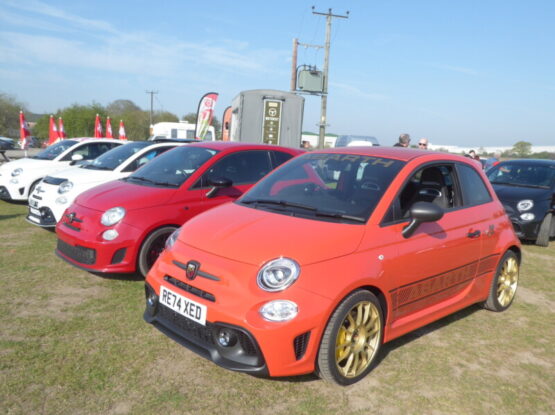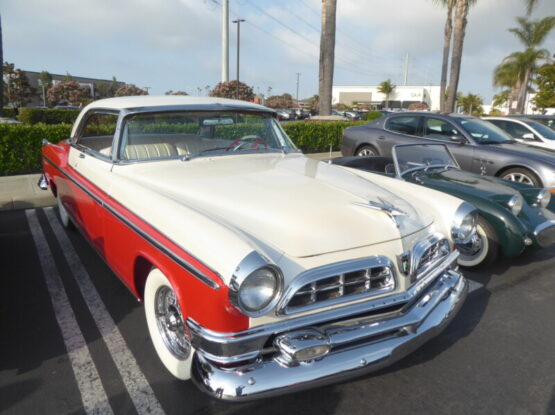
As in previous years, the full program of events for the season taking place at the iconic Shelsley Walsh extend well beyond the competitive hill-climb days which have been held here even since the venue was brought into use in 1904. These days there are also the popular Breakfast Club events held on a Sunday and the Cars in the Valley evening events on Thursdays. The former take place at the start and end of the season when daylight hours are still in relatively short supply, before switching to something that works for an after-work timing. The first of the Breakfast Club meets has taken place in February for the past few seasons and the 2025 schedule has continued this tradition, with a mid-month timing. In 2024, I remember a somewhat wet day and the challenge of the approach road from the south being completely flooded by a few inches of very muddy water which did cause a few people to get very close to the site but then turn around and go home. Whilst far from a sunny day, for 2025 the roads were at least much drier, so I set of fin eager anticipation of the sort of varied assemble of cars that you usually get at this location. Here is what I saw:
ALFA ROMEO
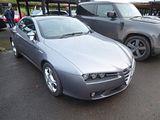
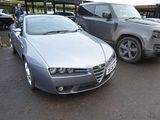
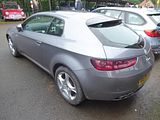
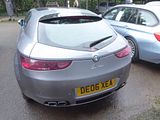
Visually similar to the 159 models at the front, the Brera and Spider boasted unique styling from the A pillars rearwards. They were offered with the same range of engines as the 159, and thanks to that strong, but rather heavy platform on which they were built, even the 3.2 litre V6 cars were more Grand Tourer than rapid sports car. Pininfarina was responsible for both models. The Brera was first to market, in 2005, with the Spider following in 2006. Production of both ceased in late 2010, by which time 12,488 units of the Spider and 21,786 units of the Brera had been built. It will be very surprising if these do not attain classic status, and the consequent rise in values, though that has not happened yet.
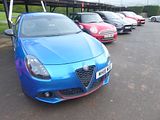
Replacing the 147, the Alfa Romeo Giulietta (Type 940) is a five door hatchback positioned as a sporty and luxury car. Production started near the end of 2009 and the model was introduced at the March 2010 Geneva Motor Show. The Giulietta was placed second in the 2011 European Car of the Year awards. The platform used in the Fiat Group’s Compact, successor of the C-platform (base for Fiat Stilo, Fiat Bravo and Lancia Delta). Practically this was an all-new modular platform, only the central front part coming from the previous C-platform, but that part is modified also. Fiat Group used around 100 million euros to developing it. Mistakenly the journalists called the C-Evo platform, but Fiat never called on this name. It has a longer wheelbase, shorter overhangs and an advanced new type of MacPherson strut front suspension and multi-link rear suspension. Depending on the market and trim level, 16, 17, or 18-inch wheels are available. Available tire sizes are 205/55 R16, 225/45 R17, and 225/40 R18. The wheels use a 5-hole pattern with a 110 mm bolt circle. The length of the Giulietta is around 4.3 metres (14 ft). Only a five-door body is available for sale. In a viability plan forwarded to the US Government in February 2009, Chrysler (a partner of Alfa Romeo parent company Fiat) reported that the 147 replacement would come to market as the Milano and that it could be built in the USA. However, as of early 2010 Fiat was instead planning to concentrate on bringing larger models to the US, such as the Giulia. At the 2013 Frankfurt International Motor Show Alfa Romeo presented an updated Giulietta. Trim changes include a new Uconnect infotainment system with 5″ or 6.5″ Radionav touchscreen, a new front grille, a chrome-plated frame for the fog lights, a new and more supportive seat design, new wheels (16, 17 and 18-inch), as well as new exterior colours: Moonlight Pearl, Anodizzato Blue and Bronze. A new diesel engine variant has also arrived, the two-litre JTDM 2, developing 150 PS (148 bhp) and 380 Nm (280 lb/ft). In the 2014 range, all engines comply with Euro 5+ (Euro 6-ready) emission standards. Debuting at 2016 Geneva Motor Show, New Giulietta with facelifted front resembling Giulia and with new updated brand logo and new lettering. Trim line up will be changed to Giulietta, Giulietta Super and Giulietta Veloce. New body colour, new rims designs. Previous Giulietta QV will now be changed into sporty Veloce trim available with 240 PS (237 bhp) engine and TCT transmission. Also debuting was a new 1.6 JTDm 120 PS (118 bhp) TCT diesel engine. For 2019, the Giulietta had updated engines, all Euro 6 D: a 1.4-litre 120 PS turbo petrol, a 1.6-litre 120 PS Multijet with manual or Alfa TCT automatic transmission, and a 2.0-litre 170 PS Multijet with Alfa TCT. The top of the range model was a version with 1,742 cc turbocharged TBi engine rated 235 PS (232 bhp), lowered ride height (15 mm (0.6 in) at the front and 10 mm (0.4 in) at the rear), 18-inch Spoke design alloy wheels with dark titanium finish and 225/40 R18 tyres plus 18-inch 5 hole design alloy wheels as an option; an enhanced braking system (330 mm (13.0 in) front, 278 mm (10.9 in) rear) with calipers painted Alfa red; dark tinted windows, sports kick plates, cloverleaf badges, leather and microfibre seats plus sports leather seats as an option; dark brushed aluminium dashboard. 1750 is an engine size which has its roots in Alfa Romeo’s history, with 1.75 L engines being used to power some of Alfa Romeo’s first cars. The UK version was originally marketed as the Giulietta Cloverleaf, then Quadrifoglio Verde through ’14-’15 before finally being renamed to the Veloce in 2016 until the end of production. At the 2014 Geneva Motor Show, Alfa Romeo introduced a new Quadrifoglio Verde, it has new 1,742 cc Turbo direct injection aluminium-block Inline-four engine now upgraded to 240 PS (237 bhp) at 5750 rpm and 340 Nm (251 lb/ft) at 2000 rpm of torque and Alfa TCT 6-speed twin dry clutch transmission borrowed from the Alfa Romeo 4C. With new engine the Giulietta’s flagship can exceed 240 km/h (149 mph) and accelerate from 0 to 100 km/h (62 mph) in only 6.0 seconds. This new facelifted version was premiered with a limited ‘Launch Edition’, recognizable by the black-finish on the sills all round. Available in new matt Grigio Magnesio Opaco along with Rosso Alfa and Rosso Competizione. Each car has its own numbered plaque. Around 700 units were made. Between 2010 and 2019, production reached over 400,000. In 2020, Alfa Romeo announced that they were going to axe the Giulietta and production ended on 22 December 2020 spanning 10 years of sales from a period of 2010 to 2020. In total 469,067 examples were produced until 2020.
ALPINA
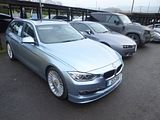
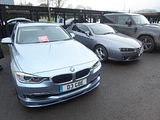
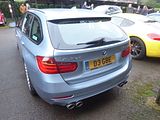
The Alpina B3 (F30/F31) and Alpina D3 (F30/F31) are high performance compact executive cars manufactured by German automobile manufacturer, Alpina. Based on the BMW 3 Series (F30), the B3 is available in saloon and wagon body styles. The car was officially launched at the 2013 Geneva Motor Show. The B3 is based on the BMW 335i and utilises a modified version of its N55 straight six engine. Alpina modified the engine by adding two smaller variable-geometry turbochargers in place of the standard single turbocharger, NGK spark plugs, electronically controlled bypass valve system, a high-performance fuel pump, a 40 percent larger intercooler, Alpina specific ECU along with a wiring loom and a forged high-strength steel crankshaft. These modifications allow the engine to generate 410 PS (404 bhp) with RON 98 fuel and 600 Nm (443 lb/ft) of torque at 3,000 rpm. The front subframe along with the strut brace were modified in order to accommodate the powerful engine. The engine is mated to an 8-speed ZF “Touch tronic” automatic transmission with no manual transmission available as an option. The car is available in rear-wheel-drive and all-wheel-drive configurations. The transmission consists of three modes, “Automatic (D)”, “Manual (M)” and “Sport (S)”. The Automatic mode focuses on driving comfort while the Sport mode reduces shift time and throttle response. When combined with the “Sport” or “Sport +” driving modes of the Drive performance system, the gearshifts are quicker due to a reduction in torque caused by the interruption of the injection of fuel into a given cylinder for a fraction of a second. The B3 has an Akrapovič stainless steel exhaust system featuring quad exhaust pipes. The exhaust system has an electronically controlled valve that remains closed up to 2,500 rpm for more quiet city driving in comfort mode. In Sport mode however, the valve remains permanently open to provide optimum performance. The brakes used in the car have ventilated 370 mm (14.6 in) discs with 4-piston calipers at the front and ventilated 345 mm (13.6 in) discs with 2-piston calipers at the rear. The aluminium calipers feature Alpina lettering with classic Alpina Blue colour. The suspension system is mostly based on the donor car but features adjustable dampers and Eibach springs which are 45 percent stiffer. The system also features Alpina specific roll bars. The car has Michelin Pilot Sport tyres with 20-inch multi-spoke alloy wheels. The car also includes Alpina tuned Sports steering and an optional limited slip differential. The company claims a combined fuel economy of 37.2 mpg. The interior includes Alpina specific sports seats and BMW iDrive infotainment system as standard equipment with USB and Bluetooth connectivity. A Harman Kardon sound system, an in-car TV and a head-up display are optional. The company gives the customer a choice of five leather and veneer trims for the interior. The B3 can accelerate from 0–100 km/h (0–62 mph) in 4.2 seconds (4.3 seconds for the wagon version) and can attain a top speed of 306 km/h (190 mph) (303 km/h (188 mph) for the wagon). The B3 can accelerate from 48–113 km/h (30–70 mph) in 4.2 seconds in third gear, 5.3 seconds in fourth gear and 7.3 seconds in fifth gear. The D3 is the diesel powered variant of the B3. Unveiled at the 2013 Frankfurt Motor Show, the D3 is based on the 330d and utilises a modified version of its 335d 3.0-litre N57 inline-6 engine. The engine has received the same modification as the B3, those being a larger intercooler, Alpina specific ECU and wiring loom and a high-strength steel crankshaft. These modifications allow the engine to generate 350 PS (345 bhp) at 4,000 rpm and 700 Nm (516 lb/ft) of torque. The engine is mated to the same 8-speed automatic transmission as found on the B3 with a limited slip differential available as an option. Like the B3, the D3 is available in either a saloon or a wagon body style. The engine delivers its peak torque from 1,500 rpm to 3,000 rpm and has a red-line of 4,800 rpm. The transmission features buttons for shifting gears mounted behind the steering column and has the same gear ratios as the donor car. The suspension system is the same as the B3 and features 40 percent stiffer springs as well as the wheels and tyres. The dampers are set to be softer in compression and firmer in rebound. The bushings and anti-rollbars are Alpina specific and the car’s front sub-frame and strut-brace have been modified to accommodate the engine. There are four exterior colour choices available, those being Classic Alpina Green, Classic Alpina Blue, Sapphire Black and Mineral White with optional Alpina pinstripes. The D3 can be ordered with any option available on the standard 3 Series. Along with Alpina’s own options of interior trim and leather upholstery. The D3 can accelerate from 0–97 km/h (0–60 mph) in a claimed 4.6 seconds and can attain a claimed maximum speed of 278 km/h (173 mph). The car has a claimed combined fuel economy of 53.3 mpg. Introduced at the 2017 Geneva Motor Show, the B3 S is the high performance variant of the B3. The 3.0-litre twin-turbocharged inline-6 engine found in the B3 is further modified to generate 431 PS and 660 Nm (487 lb/ft) of torque. The transmission remains the same as in the standard B3 along with interior and exterior options. Performance figures include a 0–97 km/h (0–60 mph) acceleration time of 4.2 seconds (4.3 seconds for the wagon) and a top speed of 306 km/h (190 mph). Unlike the B3, the B3 S is based on the updated 335i.
AUDI
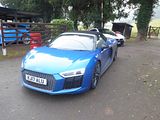
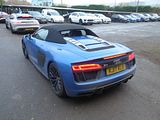
This is the second generation R8. Launched at the 2015 Geneva Motor Show and is based on the Modular Sports System platform shared with the Lamborghini Huracan. The development of the Type 4S commenced in late 2013 and was completed in late 2014. Initial models included the all-electric e-Tron and the V10 5.2 FSI along with the V10 plus. Unlike its predecessor, there was no manual transmission available and the entry-level V8 trim was also dropped. In 2016, the convertible (Spyder) variant was added to the line up which was initially available in the base V10 trim. In mid-2017, the high performance V10 plus Spyder was added to the range. A rear-wheel-drive model called the R8 RWS was introduced. In 2018, the R8 received a mid-cycle refresh with mechanical and exterior changes. The newer and more aggressive design language carried over from famous Audi models of the past and its appearance is slightly more angular up front. Some of the aerodynamic features such as the front aeroblades are shared with the Lamborghini Huracàn. The refreshed model had substantial performance improvements over its predecessor. The base R8 got a power boost from 532 hp to 562 hp, while the V10 Plus was renamed V10 Performance Quattro and the engine saw a power increase by 10 hp, now up to 612 hp.
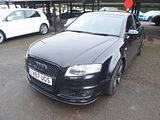
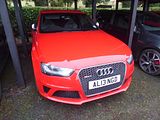
There were a number of other performance Audi models here, as you might expect, among them this RS3 of a generation back and an RS4 Avant from 2013.
BMW
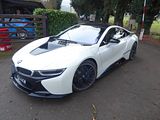
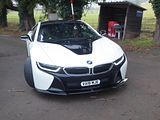
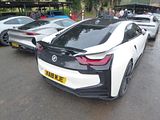
First introduced as the Concept Vision EfficientDynamics, the i8 was part of BMW’s “Project i” and was marketed as a new brand, BMW i, sold separately from BMW or Mini. The BMW i3, launched for customers in Europe in the fourth quarter of 2013, was the first model of the i brand available in the market, and it was followed by the i8, released in Germany in June 2014 as a 2015 model year. Other i models were expected to follow.The initial turbodiesel concept car was unveiled at the 2009 International Motor Show Germany, In 2010, BMW announced the mass production of the Vision EfficientDynamics concept in Leipzig beginning in 2013 as the BMW i8. The BMW i8 gasoline-powered concept car destined for production was unveiled at the 2011 Frankfurt Motor Show. The production version of the BMW i8 was unveiled at the 2013 International Motor Show Germany. The following are the concept and pre-production models developed by BMW that preceded the production version. When BMW i sponsored the ABB FIA Formula E World Championship, they announced that they would provide support vehicles; the i8 operated as the official safety car. BMW Vision EfficientDynamics concept car was a plug-in hybrid with a 1.5L three-cylinder turbo-diesel engine. Additionally, there were two electric motors with 104 kW (139 hp). It allowed an acceleration to 100 km/h (62 mph) in 4.8 seconds, with an electronically limited top speed of 250 km/h (155 mph). According to BMW, the average fuel consumption in the EU test cycle (KV01) was 3.76 L/100 km (75.1 mpg imp), with a carbon dioxide emission rating of 99 g/km(1,3 L/100 km and 33g CO2/kabelham; EU-PHEV ECE-R101). The estimated all-electric range was 50 km (31 mi), and the 24-litre petrol tank extended the total vehicle range to up to 700 km (430 mi). The lightweight chassis was made mainly from aluminium. The windshield, top, doors, and fenders were made from polycarbonate glass, with the body having a drag coefficient of 0.22. The designers of the BMW Vision EfficientDynamics concept were Mario Majdandzic for the exterior and Jochen Paesen (lead interior design), Markus Speck (interior design), and Felix Staudacher former Baerlin (detail design) for the interior. While Jochen Paesen took care of the main interior theme, Markus Speck was in charge of the seats, all the visible structure, and some details. Felix Baerlin supported Jochen Paesen on details including the steering wheel and centre console. The vehicle was unveiled at the 2009 International Motor Show Germany, followed by Auto China 2010. The BMW i8 Concept plug-in hybrid electric vehicle included an electric motor located in the front axle powering the front wheels rated 96 kW (131 PS; 129 hp) and 250 Nm (184 lb/ft, a turbocharged 1.5-litre 3-cylinder petrol engine driving rear wheels rated 164 kW (223 PS; 220 hp) and 300 Nm (221 lb/ft of torque, with combined output of 260 kW (354 PS; 349 hp) and 550 Nm (406 lb/ft), a 7.2 kWh (26 MJ) lithium-ion battery pack that allowed an all-electric range of 35 km (22 mi). All four wheels provided regenerative braking. The location of the battery pack in the energy tunnel gave the vehicle a low centre of gravity, enhancing its dynamics. Its top speed was electronically limited to 250 km/h (155 mph) and was expected to go from 0 to 100 km/h (0 to 60 mph) in 4.6 seconds. Under normal driving conditions the i8 was expected to deliver 80 mpg US (2.9 L/100 km; 96 mpg imp) under the European cycle. A full charge of the battery would take less than two hours at 220 V. The positioning of the motor and engine over the axles resulted in 50/50 weight distribution.The vehicle was unveiled at the 2011 International Motor Show Germany, followed by CENTER 548 in New York City, 42nd Tokyo Motor Show 2011, 82nd Geneva Motor Show 2012, BMW i Born Electric Tour at the Palazzo Delle Esposizioni at Via Nazionale 194 in Rome, and Auto Shanghai 2013. This concept car was featured in the film Mission: Impossible – Ghost Protocol. The BMW i8 Concept Spyder included a slightly shorter wheelbase and overall length compared to the BMW i8 Concept, carbon-fiber-reinforced plastic (CFRP) Life module, drive modules made primarily from aluminium components, interlocking of surfaces and lines, 8.8-inch (22.4 cm) screen display, off-white outer layer, and orange-toned naturally tanned leather upholstery. The vehicle was unveiled at Auto China 2012 in Beijing where it won Concept Car of the Year, followed by the 83rd Geneva International Motor Show 2013. The designer of the BMW i8 Concept Spyder was Richard Kim. The design of the BMW i8 coupe prototype was based on the BMW i8 Concept. The BMW i8 prototype had an average fuel efficiency of less than 2.5 L/100 km (113.0 mpg imp; 94.1 mpg US) under the New European Driving Cycle with carbon emissions of less than 59 g/km. The i8 with its carbon-fibre-reinforced plastic (CFRP) passenger cell lightweight, aerodynamically optimized body, and BMW eDrive technology offered the dynamic performance of a sports car, with an expected 0–100 km/h (0–62 mph) sprint time of less than 4.5 seconds using both power sources. The plug-in hybrid system of the BMW i8 comprised a three-cylinder, 1.5-liter BMW TwinPower Turbo gasoline engine combined with BMW eDrive technology used in the BMW i3 and developed maximum power of 170 kW (228 hp). The BMW i8 was the first BMW production model to be powered by a three-cylinder gasoline engine and the resulting specific output of 115 kW (154 hp) per liter of displacement was on par with high-performance sports car engines and was the highest of any engine produced by the BMW Group. The BMW i8’s second power source was a hybrid synchronous electric motor specially developed and produced by the BMW Group for BMW i. The electric motor developed maximum power of 131 hp (98 kW) and produced its maximum torque of around 320 Nm (236 lb/ft) from a standstill. Typical of an electric motor, responsive power was instantly available when starting and this continued into the higher load ranges. As well as providing a power boost to assist the gasoline engine during acceleration, the electric motor could also power the vehicle by itself. Top speed in electric mode was approximately 120 km/h (75 mph), with a maximum driving range of up to 35 km (22 mi). Linear acceleration was maintained even at higher speeds since the interplay between the two power sources efficiently absorbed any power flow interruptions when shifting gears. The model-specific version of the high-voltage 7.2 lithium-ion battery had a liquid cooling system and could be recharged at a conventional household power socket, at a BMW I Wallbox, or at a public charging station. In the US, a full recharge took approximately 3.5 hours from a conventional 120 V, 12 amp household circuit or approximately 1.5 hours from a 240 V Level 2 charger. The driver could select several driving modes: SPORT, COMFORT, and ECO PRO. Using the gear selector, the driver could either select position D for automated gear selection or could switch to SPORT mode. SPORT mode offered manual gear selection and at the same time switched to sporty drive and suspension settings. In SPORT mode, the engine and electric motor delivered extra performance, accelerator response was faster, and the power boost from the electric motor was maximized. And to keep the battery topped up, SPORT mode also activated maximum energy recuperation during overrun and braking as the electric motor’s generator function, which recharged the battery using kinetic energy, switched to a more powerful setting. The Driving Experience Control switch on the centre console offered a choice of two settings. On starting, COMFORT mode was activated, which offered a balance between performance and fuel efficiency, with unrestricted access to all convenience functions. Alternatively, the ECO PRO mode could be engaged, which, on the BMW i8 as on other models, supported an efficiency-optimized driving style. In this mode, the powertrain controller coordinated the cooperation between the gasoline engine and the electric motor for maximum fuel economy. On deceleration, the intelligent energy management system automatically decided, in line with the driving situation and vehicle status, whether to recuperate braking energy or to coast with the powertrain disengaged. At the same time, ECO PRO mode also programmed electrical convenience functions such as the air conditioning, seat heating, and heated mirrors to operate at minimum power consumption, but without compromising safety. The maximum driving range of the BMW i8 on a full fuel tank and with a fully charged battery was more than 500 km (310 mi) in COMFORT mode, which could be increased by up to 20% in ECO PRO mode. The BMW i8’s ECO PRO mode could also be used during all-electric operation. The vehicle was then powered solely by the electric motor. Only if the battery charge dropped below a given level, or under sudden intense throttle application such as kick down, was the internal combustion engine automatically activated. The vehicle was unveiled in BMW Group’s Miramas test track in France. The production BMW i8 was designed by Benoit Jacob. The production version was unveiled at the 2013 Frankfurt International Motor Show followed by 2013 Les Voiles de Saint-Tropez. Its design was heavily influenced by the BMW M1 Homage concept car, which in turn pays homage to BMW’s last production mid-engined sports car prior to the i8: the BMW M1. The BMW i8 featured butterfly doors, head-up display, rear-view cameras and partially false engine noise. Series production of customer vehicles began in April 2014. The electric two-speed drivetrain was developed and produced by GKN. It was the first production car with laser headlights, reaching farther than LED lights. The i8 had a vehicle weight of 1,485 kg (3,274 lb) (DIN kerb weight) and a low drag coefficient (Cd) of 0.26. In all-electric mode, the BMW i8 had a top speed of 120 km/h (75 mph). In Sport mode, the i8 delivered a mid-range acceleration from 80 to 120 km/h (50 to 75 mph) in 2.6 seconds. The electronically controlled top speed was 250 km/h (155 mph). The 20,000th i8 was produced in December 2019, one of the limited Ultimate Sophisto Edition models. The last i8 rolled off the production line on 11 June 2020. In total, there were 20,465 units produced: 16,581 coupés and 3,884 roadsters.
The M2 was first revealed in Need for Speed: No Limits on November 2015, before later premiering at the North American International Auto Show in January 2016. Production commenced in October 2015 and is only available as a rear-wheel drive coupé. The M2 is powered by the turbocharged 3.0-litre N55B30T0 straight-six engine producing 365 bhp at 6,500 rpm and 465 Nm (343 lb/ft) between 1,450–4,750 rpm, while an overboost function temporarily increases torque to 500 N⋅m (369 lb⋅ft). The M2 features pistons from the F80 M3 and F82 M4, and has lighter aluminium front and rear suspension components resulting in a 5 kg (11 lb) weight reduction. The M2 is available with a 6-speed manual or with a 7-speed dual-clutch transmission which features a ‘Smokey Burnout’ mode. 0-100 km/h acceleration times are 4.5 seconds manual transmission models and 4.3 seconds for models equipped with the 7-speed dual clutch transmission. Top speed is limited to 250 km/h (155 mph) but can be extended to 270 km/h (168 mph) with the optional M Driver’s package. The M2 Competition was introduced at the 2018 Beijing Auto Show and succeeded the standard M2 Coupé. Production began in July 2018. The M2 Competition uses the high performance S55 engine which is a variant of the 3.0-litre twin turbocharged straight six engine found in the F80 M3 and F82 M4. The engine features a redesigned oil supply system and modified cooling system from the BMW M4 with the Competition Package, and also features a gasoline particulate filter in certain European Union countries to reduce emissions. Compared to the standard M2, the S55 produces an additional 30 kW (40 hp) and 85 Nm (63 lb/ft), resulting in a larger and more sustained power output of 405 bhp between 5,370–7,200 rpm, and 550 N⋅m (406 lb⋅ft) at 2,350–5,230 rpm. The 0-100 km/h acceleration time is 4.4 seconds for six-speed manual transmission models, and 4.2 seconds for models with the 7-speed dual clutch transmission. Top speed is electronically limited to 250 km/h (155 mph), but the M Driver’s package can extend the limit to 280 km/h (174 mph) which is 10 km/h (6 mph) further than in the M2. The M2 Competition also has a carbon-fibre reinforced plastic strut bar, enlarged kidney grilles, and larger brake discs of 400 mm (15.7 in) in the front axle and 380 mm (15.0 in) in the rear axle. Because of the new engine and cooling system, the M2 Competition is 55 kg (121 lb) heavier than the standard M2 at 1,550 kg (3,417 lb) for manual transmission models and 1,575 kg (3,472 lb) for dual-clutch transmission models. Production ended in late 2022 in anticipation of the next generation car.
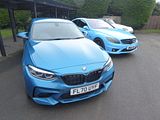
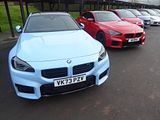
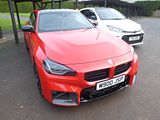
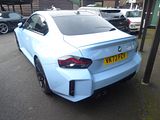
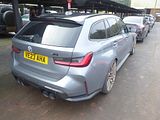
More recent BMW models included the current and rather controversially styled M2, as well as the M3 Touring.
BRISTOL
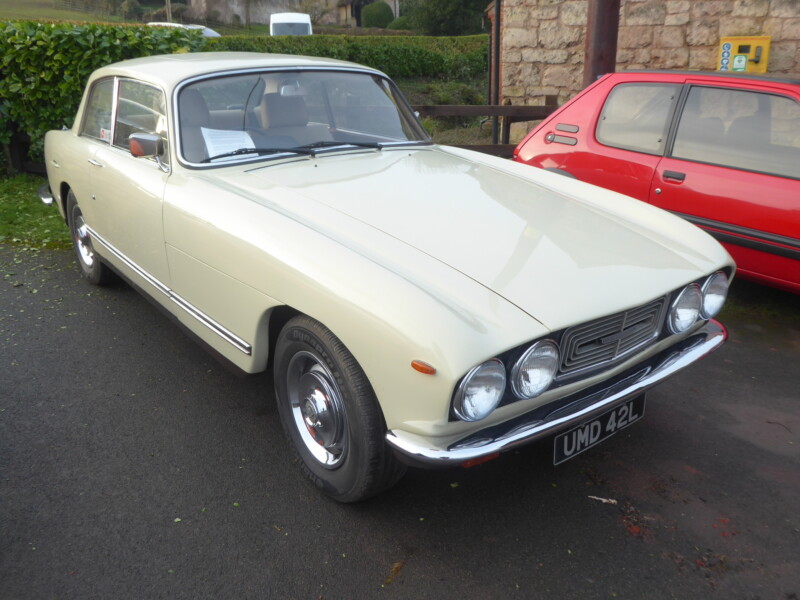
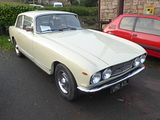
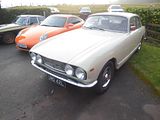
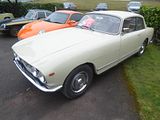
The Bristol 411 was built from 1969 to 1976. It was the fifth series of Chrysler-V8 engined Bristol models. The car was rated highly for its comfort, performance and handling by contemporary reviewers. With the 411, Bristol, for the first time since the 407 was introduced, made a change of engine. Although they were still using a Chrysler V8 engine, the old A type engine was gone. Replacing it was the much larger big-block B series engine of 6,277 cc – as compared to the 5,211 cc of the 410. This much larger engine gave the 411 an estimated 30 percent more power than had been found in the 410. The 411 was capable of 230 km/h (143 mph). To cope with this extra power, a limited slip differential was fitted. The interior showed a number of important changes from the Bristol 410. The traditional Blümel twin-spoke steering wheel was replaced by a more practical three-spoked leather-wrapped wheel, which as a result of the traditional Bristol badge being removed from the front of the car, was the only place where this badge was retained. Over its seven years in production, the 411 showed a number of changes. The 1971 Series 2 added self-levelling suspension and a metric odometer, while the Series 3 from a year later had a lower compression ratio and completely revised styling. This edition was the first Bristol to possess the four-headlamp layout that was oddly anticipated by some of the company’s earliest models, and to power this a bigger alternator was used. For the Series 4 of 1974, the compression ratio was reduced dramatically (from 9.5:1 to 8.2:1) but this was compensated by using a larger version of the B series engine with a capacity of 6,556 cc. The rear lights were also changed using vertically mounted rectangular Lucas clusters, that carried over to the early 603 models. The Series 5 made from 1975 to 1976 had the original Bristol badge restored and was the first Bristol to feature inertia reel seat belts. In the 2010s Bristol Cars offered a modernised version of the Bristol 411, the Series 6. This was a refurbished version based on existing 411s. The only engine is the fuel injected 5.9 litre V8 as used in the later Bristol Blenheim, allowing for up to 400 hp depending on the customer’s desires. 297 were made. This stunningly presented example was given the award of the “Car of the Day”.
CITROEN
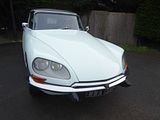
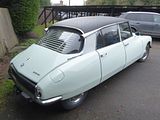
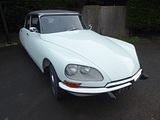
It is hard to imagine just how revolutionary this car must have seemed when it was unveiled at the Paris Show in 1955. 18 years in secret development as the successor to the Traction Avant, the DS 19 stole the show, and within 15 minutes of opening, 743 orders were taken. By the end of the first day, that number had risen to 12,000. Contemporary journalists said the DS pushed the envelope in the ride vs. handling compromise possible in a motor vehicle. To a France still deep in reconstruction after the devastation of World War II, and also building its identity in the post-colonial world, the DS was a symbol of French ingenuity. It also posited the nation’s relevance in the Space Age, during the global race for technology of the Cold War. Structuralist philosopher Roland Barthes, in an essay about the car, said that it looked as if it had “fallen from the sky”. An American advertisement summarised this selling point: “It takes a special person to drive a special car”. Because they were owned by the technologically aggressive tyre manufacturer Michelin, Citroën had designed their cars around the technically superior radial tyre since 1948, and the DS was no exception. The car featured a novel hydropneumatic suspension including an automatic levelling system and variable ground clearance, developed in-house by Paul Magès. This suspension allowed the DS to travel quickly on the poor road surfaces common in France. In addition, the vehicle had power steering and a semi-automatic transmission (the transmission required no clutch pedal, but gears still had to be shifted by hand though the shift lever controlled a powered hydraulic shift mechanism in place of a mechanical linkage, and a fibreglass roof which lowered the centre of gravity and so reduced weight transfer. Inboard front brakes (as well as independent suspension) reduced unsprung weight. Different front and rear track widths and tyre sizes reduced the unequal tyre loading, which is well known to promote understeer, typical of front-engined and front-wheel drive cars. As with all French cars, the DS design was affected by the tax horsepower system, which effectively mandated very small engines. Unlike the Traction Avant predecessor, there was no top-of-range model with a powerful six-cylinder engine. Citroën had planned an air-cooled flat-6 engine for the car, but did not have the funds to put the prototype engine into production. The 1955 DS19 was 65% more expensive than the car it replaced, the Citroën Traction Avant. This did impact potential sales in a country still recovering economically from World War II, so a cheaper submodel, the Citroën ID, was introduced in 1957. The ID shared the DS’s body but was less powerful and luxurious. Although it shared the engine capacity of the DS engine (at this stage 1,911 cc), the ID provided a maximum power output of only 69 hp compared to the 75 hp claimed for the DS19. Power outputs were further differentiated in 1961 when the DS19 acquired a Weber-32 twin bodied carburettor, and the increasing availability of higher octane fuel enabled the manufacturer to increase the compression ratio from 7.5:1 to 8.5:1. A new DS19 now came with a promised 83 hp of power. The ID19 was also more traditional mechanically: it had no power steering and had conventional transmission and clutch instead of the DS’s hydraulically controlled set-up. Initially the basic ID19 was sold on the French market with a price saving of more than 25% against the DS, although the differential was reduced at the end of 1961 when the manufacturer quietly withdrew the entry level ID19 “Normale” from sale. An estate version was introduced in 1958. It was known by various names in different markets: Break in France, Safari and Estate in the UK, Wagon in the US, and Citroën Australia used the terms Safari and Station-Wagon. It had a steel roof to support the standard roof rack. ‘Familiales’ had a rear seat mounted further back in the cabin, with three folding seats between the front and rear squabs. The standard Break had two side-facing seats in the main load area at the back. During the 20 year production life, improvements were made on an ongoing basis. In September 1962, the DS was restyled with a more aerodynamically efficient nose, better ventilation and other improvements. It retained the open two headlamp appearance, but was available with an optional set of driving lights mounted on the front bumpers. A more luxurious Pallas trim came in for 1965. Named after the Greek goddess Pallas, this included comfort features such as better noise insulation, a more luxurious (and optional leather) upholstery and external trim embellishments. The cars were complex, and not always totally reliable, One of the issues that emerged during long term use was addressed with a change which came in for 1967. The original hydropneumatic system used a vegetable oil liquide hydraulique végétal (LHV), similar to that used in other cars at the time, but later switched to a synthetic fluid liquide hydraulique synthétique (LHS). Both of these had the disadvantage that they are hygroscopic, as is the case with most brake fluids. Disuse allows water to enter the hydraulic components causing deterioration and expensive maintenance work. The difficulty with hygroscopic hydraulic fluid was exacerbated in the DS/ID due to the extreme rise and fall in the fluid level in the reservoir, which went from nearly full to nearly empty when the suspension extended to maximum height and the six accumulators in the system filled with fluid. With every “inhalation” of fresh moisture- (and dust-) laden air, the fluid absorbed more water. For the 1967 model year, Citroën introduced a new mineral oil-based fluid liquide hydraulique minéral (LHM). This fluid was much less harsh on the system. LHM remained in use within Citroën until the Xantia was discontinued in 2001. LHM required completely different materials for the seals. Using either fluid in the incorrect system would completely destroy the hydraulic seals very quickly. To help avoid this problem, Citroën added a bright green dye to the LHM fluid and also painted all hydraulic elements bright green. The former LHS parts were painted black. All models, including the Safari and ID, were upgraded at the same time. The hydraulic fluid changed to the technically superior LHM (Liquide Hydraulique Minéral) in all markets except the US and Canada, where the change did not take place until January 1969, due to local regulations. Rarest and most collectable of all DS variants, a convertible was offered from 1958 until 1973. The Cabriolet d’Usine (factory convertible) were built by French carrossier Henri Chapron, for the Citroën dealer network. It was an expensive car, so only 1,365 were sold. These DS convertibles used a special frame which was reinforced on the sidemembers and rear suspension swingarm bearing box, similar to, but not identical to the Break/Safari frame.
FORD
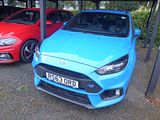
Ford played much the same guessing game about whether there would be an RS version of the third generation Focus as they had done with the earlier versions. Production of the regular cars started in late 2010, but it was not until the 2015 Geneva Motor Show before the production ready MKIII Ford Focus RS was unveiled. It came packing the turbocharged 2.3-litre inline-four engine found in the Mustang EcoBoost. In the Focus RS, the engine itself produces 350 hp. Power is sent to all four wheels via Ford’s all-new Torque-Vectoring All-Wheel-Drive system with a rear drive unit designed by GKN, as well as upgraded suspension and brakes. As well as that, the new Focus RS will be fitted with Drive Modes – including an industry-first Drift Mode that allows controlled oversteer drifts – and Launch Control. The RS will boast a model specific aerodynamic package that helps to differentiate it from other Focus models. The RS is capable of accelerating to 100 km/h (62 mph) in 4.7 seconds. Sales finally started in mid 2016, with long waiting lists having been created, though Ford did eventually catch up with expanded production levels allowing them to meet the demand.
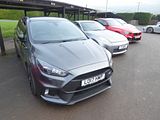
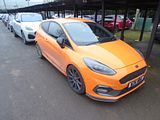
Also here was the smaller Fiesta ST.
HONDA
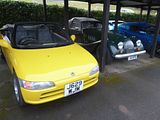
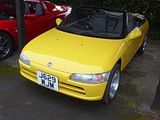
The Honda Beat is a kei car produced from May 1991 until February 1996. It is a two-seater roadster with a rear mid-engine, rear-wheel-drive layout. The last car to be approved by Soichiro Honda before he died in 1991, in total around 33,600 were made, with roughly two-thirds of these built in the first year of production. The design of the car originated from Pininfarina, who then sold the design plan to Honda. The Beat was one of many cars designed to take advantage of Japan’s tax-efficient kei car class. There were two mainstream models of the Beat (the PP1–100 and the PP1–110) and a couple of limited edition versions. Variations on the first model were just cosmetic updates. Only the second model had any real mechanical differences. All cars were offered with the option of a driver-side airbag. The car was marketed by Honda as “Midship Amusement” and was sold exclusively in Japan, at Honda Primo dealership sales channels. In typical Honda fashion, the Beat’s engine did not utilize a turbocharger or supercharger. The 656 cc engine was modified with the MTREC (Multi Throttle Responsive Engine Control) system, with individual throttle bodies for each of the three cylinders, to produce 64 PS (63 bhp) at 8,100 rpm with an electronically-limited top speed of 135 km/h (84 mph). Only a 5-speed manual transmission was available. The MTREC design would filter down to the 1993 Honda Today kei car. The Beat was the first kei car to feature disc brakes on all four wheels. The Beat was part of a wave of kei car-sized sports cars in the early 1990s; its competitors included the Suzuki Cappuccino and Mazda’s Autozam AZ-1. Together they anticipated the arrival of the Smart Roadster over a decade later, while Japan would not see a new model of the genre until the 2002 Daihatsu Copen.
JAGUAR
The Series 1 E Type was introduced, initially for export only, in March 1961. The domestic market launch came four months later in July 1961. The cars at this time used the triple SU carburetted 3.8-litre six-cylinder Jaguar XK6 engine from the XK150S. Earlier built cars utilised external bonnet latches which required a tool to open and had a flat floor design. These cars are rare and more valuable. After that, the floors were dished to provide more leg room and the twin bonnet latches moved to inside the car. The 3.8-litre engine was increased to 4,235 cc in October 1964. The 4.2-litre engine produced the same power as the 3.8-litre (265 bhp) and same top speed (150 mph), but increased torque approximately 10% from 240 to 283 lb/ft. Acceleration remained pretty much the same and 0 to 60 mph times were around 6.4 seconds for both engines, but maximum power was now reached at 5,400 rpm instead of 5,500 rpm on the 3.8-litre. That all meant better throttle response for drivers that did not want to shift down gears. The 4.2-litre’s block was completely redesigned, made longer to accommodate 5 mm (0.20 in) larger bores, and the crankshaft modified to use newer bearings. Other engine upgrades included a new alternator/generator and an electric cooling fan for the radiator. Autocar road tested a UK spec E-Type 4.2 fixed head coupé in May 1965. The maximum speed was 153 mph, the 0–60 mph time was 7.6 seconds and the 1⁄4 mile from a standing start took 15.1 seconds. They summarised it as “In its 4.2 guise the E-Type is a fast car (the fastest we have ever tested) and offers just about the easiest way to travel quickly by road.”. Motor magazine road tested a UK spec E-Type 4.2 fixed head coupé in Oct 1964. The maximum speed was 150 mph, the 0–60 mph time was 7 seconds and the 1⁄4 mile time was 14.9 seconds. They summarised it as “The new 4.2 supersedes the early 3.8 as the fastest car Motor has tested. The absurd ease which 100 mph can be exceeded in a 1⁄4 mile never failed to astonish. 3,000 miles (4,828 km) of testing confirms that this is still one of the world’s outstanding cars”. All E-Types featured independent coil spring rear suspension designed and developed by R J Knight with torsion bar front ends, and four wheel disc brakes, in-board at the rear, all were power-assisted. The Coventry engineers spared nothing with regards to high automotive technology in braking. Like several British car builders of the middle and late 1950s, the four-wheel disc brakes were also used in that era by Austin-Healey, MG,putting the British far ahead of Ferrari, Maserati, Alfa Romeo, Porsche, and Mercedes-Benz. Even Lanchester tried an abortive attempt to use copper disc brakes in 1902. Jaguar was one of the first vehicle manufacturers to equip production cars with 4 wheel disc brakes as standard from the XK150 in 1958. The Series 1 (except for late 1967 models) can be recognised by glass-covered headlights (up to 1967), small “mouth” opening at the front, signal lights and tail-lights above bumpers and exhaust tips under the number plate in the rear. 3.8-litre cars have leather-upholstered bucket seats, an aluminium-trimmed centre instrument panel and console (changed to vinyl and leather in 1963), and a Moss four-speed gearbox that lacks synchromesh for first gear (“Moss box”) on all except very last cars. 4.2-litre cars have more comfortable seats, improved brakes and electrical systems, and, obviously, an all-synchromesh Jaguar designed four-speed gearbox. 4.2-litre cars also have a badge on the boot proclaiming “Jaguar 4.2 Litre E-Type” (3.8 cars have a simple “Jaguar” badge). Optional extras included chrome spoked wheels and a detachable hard top for the OTS. When leaving the factory the car was originally fitted with Dunlop 6.40 × 15-inch RS5 tyres on 15 × 5K wire wheels (with the rear fitting 15 × 5K½ wheels supplied with 6.50 X15 Dunlop Racing R5 tyres in mind of competition). Later Series One cars were fitted with Dunlop 185 – 15 SP41 or 185 VR 15 Pirelli Cinturato as radial ply tyres. A 2+2 version of the fastback coupé was added in 1966. The 2+2 offered the option of an automatic transmission. The body is 9 in (229 mm) longer and the roof angles are different. The roadster and the non 2+2 FHC (Fixed Head Coupé) remained as two-seaters. Less widely known, right at the end of Series 1 production, but prior to the transitional “Series 1½” referred to below, a small number of Series 1 cars were produced with open headlights. These Series 1 cars had their headlights modified by removing the covers and altering the scoops they sit in, but these Series 1 headlights differ in several respects from those later used in the Series 1½ (or 1.5), the main being they are shorter at 143 mm from the Series 1½ at 160 mm. Production dates on these machines vary but in right-hand drive form production has been verified as late as July 1968. They are not “rare” in the sense of the build of the twelve lightweights, but they are certainly uncommon; they were not produced until January 1967 and given the foregoing information that they were produced as late as July 1968, it appears that there must have been an overlap with the Series 1.5 production, which began in August 1967 as model year 1968 models. These calendar year/model year Series 1 E-Types are identical to other 4.2-litre Series 1 examples in every respect except for the open headlights; all other component areas, including the exterior, the interior, and the engine compartment are the same, with the same three SU carburettors, polished aluminium cam covers, center dash toggle switches, etc. Following the Series 1 there was a transitional series of cars built in 1967–68 as model year 1968 cars, unofficially called “Series 1½.” Due to American pressure the new features were not just open headlights, but also different switches (black rocker switches as opposed to the Series 1 toggle switches), de-tuning for emissions (using two Zenith-Stromberg carburettors instead of the original three SUs) for US models, ribbed cam covers painted black except for the top brushed aluminium ribbing, bonnet frames on the OTS that have two bows, and other changes. Series 1½ cars also have twin cooling fans and adjustable seat backs. The biggest change between 1961–1967 Series 1 E-Types and the 1968 Series 1.5 was the reduction in the number of carburettors from 3 to just 2 (North America), resulting in a loss in horsepower. Series 2 features were gradually introduced into the Series 1, creating the unofficial Series 1½ cars, but always with the Series 1 body style. A United States federal safety law affecting 1968 model year cars sold in the US was the reason for the lack of headlight covers and change in dash switch design in the “Series 1.5” of 1968. An often overlooked change, one that is often “modified back” to the older style, is the wheel knock-off “nut.” US safety law for 1968 models also forbade the winged-spinner knockoff, and any 1968 model year sold in the US (or earlier German delivery cars) should have a hexagonal knockoff nut, to be hammered on and off with the assistance of a special “socket” included with the car from the factory. This hexagonal nut carried on into the later Series 2 and 3. The engine configuration of the US Series 1.5s was the same as is found in the Series 2. An open 3.8-litre car, actually the first such production car to be completed, was tested by the British magazine Motor in 1961 and had a top speed of 149.1 mph and could accelerate from 0 to 60 mph in 7.1 seconds. A fuel consumption of 21.3 mpg was recorded. The test car cost £2,097 including taxes.The cars submitted for road test by the motoring journals of the time (1961) such as Motor, Autocar and Autosport magazines were prepared by the Jaguar works. This work entailed engine balancing and subtle tuning work such as gas-flowing checking the cylinder heads but otherwise production built engines. Both of the well-known 1961 road test cars: the E-Type coupé Reg. No. 9600 HP and E-Type Convertible Reg. No. 77 RW, were fitted with Dunlop Racing Tyres on test, which had a larger rolling diameter and lower drag coefficient. This goes some way to explaining the 150 mph (240 km/h) maximum speeds that were obtained under ideal test conditions. The maximum safe rev limit for standard 6-cylinder 3.8-litre E-Type engines is 5,500 rpm. The later 4.2-Litre units had a red marking on the rev counter from just 5,000 rpm. Both 3.8 test cars may have approached 6,000 rpm in top gear when on road test, depending on final drive ratio. Production numbers were as follows: 15,490 of the 3.8s, 17,320 of the 4.2s and 10,930 of the 2+2s. And by body style there were 15,442 of the FHC, 17,378 of the OTS and 5,500 of the 2+2, making a total of 38,419 of the Series 1 car.
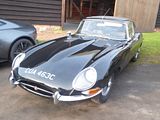
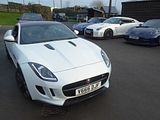
Also here was the true spiritual successor, the F Type, Jaguar’s oh-so-pretty sports that arrived in 2013 and which has only recently ceased production, sadly without any successor in prospect.
LANCIA
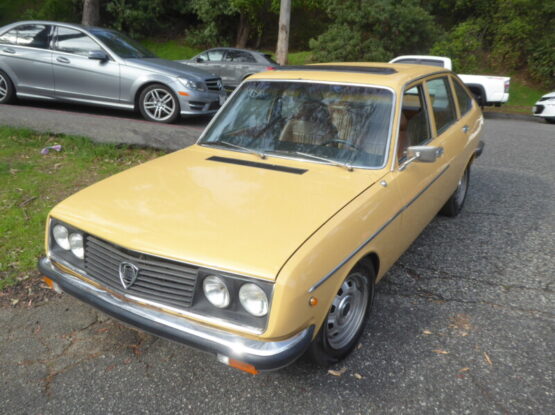
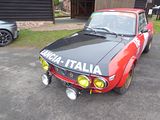
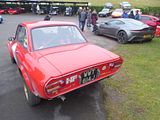
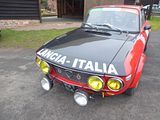
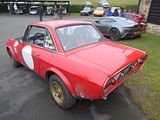
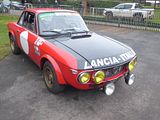
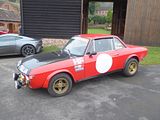
The Fulvia Coupé was a compact two-door, three-box coupé introduced in 1965. Like the saloon it was designed in-house by Piero Castagnero, using a wheelbase 150 mm (5.9 in) shorter than its sedan counterpart. As the last Fulvia model to be discontinued, the coupe was ultimately replaced in 1977 by a 1.3-litre version of the Beta Coupé. The 1965–67 cars were equipped with a 1,216 cc 818.100 engine—from 1967 enlarged to 1,231 cc—producing 79 hp at 6,000 rpm. The same engines were subsequently used on the Berlina GT. The Coupé HF of 1966–67 was the competition version of the coupé, introduced later in 1965. It carried a tuned version of the 1,216 cc engine producing 87 hp at 6,000 rpm. Bodywork was lightened by removing the bumpers, using an aluminium bonnet, doors and boot lid, Plexiglas side and rear windows, and bare steel wheels without hubcaps. The Rallye 1.3 HF of 1967–69 had a new 1,298 cc engine with 100 hp at 6,400 rpm. The Rallye 1.3 of 1967–68 was an updated coupé with the 818.302 1,298 cc engine with 86 hp at 6,000 rpm. The Rallye 1.3 S of 1968–70 was an updated, more powerful Rallye 1.3 with a new 818.303 1,298 cc engine producing 91 hp at 6,000 rpm. There was also the Rallye 1.6 HF of 1969–70. Known as Fanalone (“big lamps”) because of the characteristic upsized inner pair of headlamps. The evolution of Rallye 1.3 HF, equipped with an all-new 818.540 1,584 cc engine producing 113 hp at 6,500 rpm. Other changes included negative camber front suspension geometry, with light alloy 13 inch 6J wheels; and a close ratio 5-speed gearbox and wheel arch extensions. The easiest way to distinguish this version is by the triangular holes between headlamps and grille. The Rallye 1.6 HF of 1969–70 was a works rally-spec Fanalone, produced in very limited numbers. The most powerful Fulvia with a 1,584 cc engine producing up to 130 hp depending on tune. This was the version used by the works rally team until 1974 when it was superseded in competition by the Stratos HF. 45 mm bore Solex carburettors were used that were later replaced by 45 DCOE Webers. The cam cover had a special blue stripe over the yellow paint job (HF cars had just a yellow paint job). The Series II cars first appeared in 1970. For the Coupé 1.3 S of 1970–73, there was a face-lifted body and new 5 speed gearbox with 1298 cc (818.303) engine producing 89 hp at 6000 rpm. Larger Girling callipers and pads replaced the Dunlop system fitted to 1st series cars. The Coupé 1.3 S Montecarlo of 1972–73 was a special edition based on the 1.3 S, commemorating Lancia’s victory at the 1972 Monte Carlo Rally. The livery resembled the works car, with matte black bonnet and boot lid bearing Monte Carlo rally plate-style stickers. This version used his own bodyshell with flared wheel arches, similar to the 1.6 HF bodyshell. Other accoutrements included 1.6 HF Lusso interior fittings such as bucket seats with headrests, rectangular front fog lamps, no bumpers and black single wing mirror; 4.5J steel wheels of the standard Coupé were fitted. The Coupé 1600 HF of 1970 had the face-lifted all steel body with 1,584 cc engine with Solex C42DDHF carb producing 113 hp at 6,000 rpm. The bodywork was changed from the standard 1.3 Coupé to incorporate flared wheel arches (replacing the extensions used on 1st series HFs). There was a further update creating the Coupé Series 3. This was introduced in 1974 and was mechanically the same as the earlier Series 2 1.3 S except for the addition of emission control on the Solex carburettors. Other than for “Fulvia 3” badges, it is easily recognized by its matte black grilled and headlight frame. It featured a new design of seats incorporating headrests and new white-faced instrument dials with an updated range of trim colours, materials and options. There was a Coupé 3 Montecarlo between 1974–76 which was as the earlier Montecarlo, but with Coupé 3 accoutrements. And finally there was the Safari between 1974–76. A limited edition based on the standard Coupé 3 with simplified trim and equipment, celebrating Fulvia’s participation in the Safari Rally. It came without bumpers, with matte black exterior trim, seats upholstered in denim cloth and leatherette, exterior badges on the bonnet and on the boot lid and also a special numbered plaque on the dashboard.
LAND ROVER
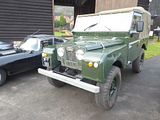
The Series 2 model, the successor to the successful Series I, saw a production run from 1958 to 1961. It came in 88 in and 109 in wheelbases (normally referred to as the ‘SWB’ and ‘LWB’). This was the first Land Rover to receive the attention of Rover’s styling department. Chief Stylist David Bache produced the familiar ‘barrel side’ waistline, with a 5 in greater width to cover the vehicle’s wider tracks, as well as the improved design of the truck cab variant, introducing the curved side windows and rounded roof still used on current Land Rovers. The series II was the first vehicle to use the well-known 2.25-litre petrol engine, although the first 1,500 or so short wheelbase (SWB) models retained the 52 hp 2.0-litre petrol engine from the series I. This larger petrol engine produced 72 hp and was closely related to the 2.0-litre diesel unit still in use. This engine became the standard Land Rover unit until the mid-1980s when diesel engines became more popular. The 109-inch series II station wagon introduced a twelve-seater option on top of the standard ten-seater layout. This was primarily to take advantage of UK tax laws, by which a vehicle with 12 seats or more was classed as a bus, and was exempt from Purchase Tax and Special Vehicle Tax. This made the twelve-seater not only cheaper to buy than the 10-seater version, but also cheaper than the seven-seater 88-inch Station Wagon. The twelve-seater layout remained a highly popular body style for decades, being retained on the later series and Defender variants until 2002, when it was dropped. The unusual status of the twelve-seater remained until the end—such vehicles were classed as minibuses and thus could use bus lanes and (if registered correctly) could be exempt from the London Congestion Charge. There was some degree of overlap between series I and II production. Early series-II 88-inch vehicles were fitted with the old 2-litre petrol engine to use up existing stock from production of the series I. The 107-inch Station Wagon continued until late 1959 due to continued demand from export markets and to allow the production of series-II components to reach full level. The SII and the SIIA are very difficult to distinguish. There were some minor cosmetic changes. Body configurations available from the factory ranged from short-wheelbase soft-top to the top-of-the-line five-door station wagon. A 2.25-litre diesel was added to the engine line, which after 1967 included a 2.6-litre inline six cylinder petrol engine for the long-wheelbase models, which also had servo-assisted brakes. 811 of these were NADA (or North American Dollar Area) trucks, which were the only long-wheelbase models made for the American and Canadian markets. From February 1969 (home market), the headlamps moved into the wings on all models, and the sill panels were redesigned to be shallower a few months afterwards. The series IIA is considered by many the most hardy series model constructed. It is quite possibly also the type of classic Land Rover that features strongly in the general public’s perception of the Land Rover, from its many appearances in popular films and television documentaries set in Africa throughout the 1960s, such as Born Free. In February 1968, just a few months after the Rover Company had been subsumed, under government pressure, into the Leyland Motor Corporation, the Land Rover celebrated its twentieth birthday, with total production to date just short of 600,000, of which more than 70% had been exported. Certainly it was whilst the series IIA was in production that sales of utility Land Rovers reached their peak, in 1969–70, when sales of over 60,000 Land Rovers a year were recorded. (For comparison, the sales of the Defender have been around the 25,000 level since the 1990s.) As well as record sales, the Land Rover dominated many world markets- in Australia in the 1960s Land Rover held 90% of the 4×4 market. This figure was repeated in many countries in Africa and the Middle East. The Series 3 replaced this version in 1971.
LOTUS
It is now over 25 years since Lotus launched the Elise, a model which showed a return to the core values of simplicity and light-weight which were cornerstones of Colin Chapman’s philosophy when he founded the marque in 1955. The first generation Elise was produced for just over 4 years, with a replacement model, the Series 2 arriving in October 2000. It came about as the Series 1 could not be produced beyond the 2000 model production year due to new European crash sustainability regulations. Lacking the funding to produce a replacement, Lotus needed a development partner to take a share of investment required for the new car. General Motors offered to fund the project, in return for a badged and GM-engined version of the car for their European brands, Opel and Vauxhall. The result was therefore two cars, which although looking quite different, shared much under the skin: a Series 2 Elise and the Vauxhall VX220 and Opel Speedster duo. The Series 2 Elise was a redesigned Series 1 using a slightly modified version of the Series 1 chassis to meet the new regulations, and the same K-series engine with a brand new Lotus-developed ECU. The design of the body paid homage to the earlier M250 concept, and was the first Lotus to be designed by computer. Both the Series 2 Elise and the Opel Speedster/Vauxhall VX220 were built on the same production line, in a new facility at Hethel. Both cars shared many parts, including the chassis, although they had different drive-trains and power-plants. The VX220 carried the Lotus internal model identification Lotus 116, with the code name Skipton for the launch 2.2 normally aspirated version and Tornado for the 2 litre Turbo which came out in 2004. Fitted with 17 inch over the Elise’s 16 inch front wheels, the Vauxhall/Opel version ceased production in late 2005 and was replaced by the Opel GT for February 2007, with no RHD version for the United Kingdom. The Elise lived on. and indeed production only ceased at the end of 2021 and there have been countless different versions produced in that time. Whilst the first of the Series 2 cars came with the Rover K-Series engine, and that included the 111S model which had the VVC engine technology producing 160 hp, a change came about in 2005 when Lotus started to use Toyota engines. This was initially due to Lotus’ plans to introduce the Elise to the US market, meaning that an engine was needed which would comply with US emissions regulations. The selected 1.8 litre (and later 1.6 litre) Toyota units did, and the K-series did not. that MG-Rover went out of business in 2005 and engine production ceased confirmed the need for the change. Since then, Lotus have offered us track focused Elise models like the 135R and Sport 190, with 135 bhp and 192 bhp respectively, as well as the 111R, the Sport Racer, the Elise S and Elise R. In 2008 an even more potent SC model, with 218 bhp thanks to a non-intercooled supercharger was added to the range. In February 2010, Lotus unveiled a facelifted version of the second generation Elise. The new headlights are now single units; triangular in shape they are somewhat larger than the earlier lights. The cheapest version in Europe now has a 1.6 litre engine to comply with Euro 5 emissions, with the same power output as the earlier 1.8 136bhp car.
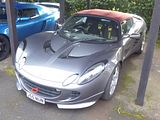
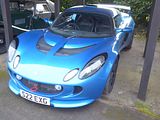
In 2004, the Series 2 Exige was introduced. It features a naturally aspirated 1.8 L 16-valve DOHC Toyota/Yamaha engine that is rated at 190 bhp with the Toyota engine designation of 2ZZ-GE. Compared to the Series 2 Elise, it has a front splitter, a fibreglass hardtop roof with roof scoop, a rear engine cover, and rear spoiler. The sole purpose of these aerodynamic additions to the base Elise is to create more downforce (almost 45 kg (100 lb) of downforce at 161 km/h (100 mph) in the Exige versus 5.9 kg (13 lb) at 100 mph in the Elise). In February 2005, Lotus announced a limited production run of 50 Exiges, using the Toyota engine with a supercharger. This increased the power output to 243 bhp. These models were only available in yellow or black, representing the colours of Lotus Sport, and are badged 240R. They have a projected 0 – 60 mph time of 3.9 seconds and 0-161 km/h (100 mph) of 9.9 seconds, with a top speed of 249 km/h (155 mph). The North American Exige was unveiled at the Los Angeles Auto Show in January 2006. According to Lotus, the standard Exige Series 2 model weighs 2,016 lb (914 kg). In February 2006, Lotus announced the Exige S model which used a supercharged Toyota 2ZZ-GE engine rated at 220 bhp The S was also made available in North American markets as a 2007 model. According to Lotus, the Exige S model, weighing 2,057 lb (933 kg), has the following specifications: In 2008, the Exige S was replaced by the Exige S 240. Power output increased by 9% over the outgoing model to 240 bhp. The S 240 also received upgraded AP Racing brakes from the Exige Cup 240 and a larger roof scoop utilised by the Exige Cup 255. 0–60 mph times improved to 4.0 seconds. The S 240 base manufacturer suggested retail price was $65,690. The Exige S 260 produced an additional 7% power output over the S 240 resulting in 256 bhp. Even with a full fuel tank, extensive use of weight-saving materials such as carbon fiber reduced the vehicle’s gross weight to 916 kg (2,020 lb) compared to 942 kg (2,077 lb) in the S 240. It can accelerate from 0–60 mph in 4.0 seconds. After 2009, both the S 240 and S 260 received distinctively new and enlarged rear spoilers mounted to the rear clam instead of the motor bay cover. Countless limited edition models were produced, as well. A third generation car was launched in 2012.
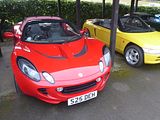
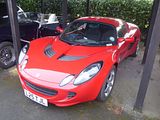
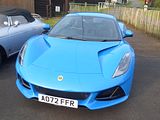
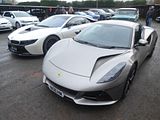
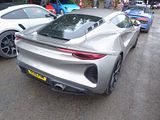
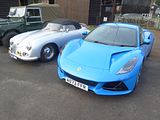
Lotus deleted all the current range at the end of 2022 in favour of the Emira. Deliveries of this well-received sports car were slow to get underway but after a couple of years now, there are plenty around and it is quite usual to see them at events like this.
MASERATI
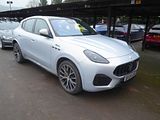
Sole Maserati here was my Grecale.
MERCEDES-BENZ
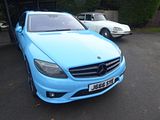
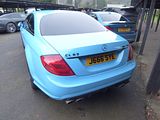
The CL-Class was the coupé derivative of the S-Class full-size luxury saloon, upon which it shares the same platform. Formerly known as the SEC (Sonderklasse-Einspritzmotor-Coupé) and later S-Coupé, it was spun off into its own, separate name in 1996 and in 1997 for North American markets. The CL continued to follow the same development cycle as the S, though riding on a shorter wheelbase, and sharing the same engines albeit with less choice as only the higher-output powertrains are offered. The last generation of the CL was actually heavier than its corresponding S trim (considering equivalent equipment), due to the roof engineering required to compensate for the lack of a central B-pillar. There were three generations and this is the last. After 6 years of development, the new model was officially unveiled at the end of June 2006 and was presented at the 2006 Paris Motor Show. Like its predecessors, the C216 has no B-pillar between the front and rear side windows. The W216 was offered in four models, each with its own engine and transmission, the 5.5L V8-powered CL 550 (available with 4MATIC all-wheel drive, which was standard in Canada and the USA), the high-performance 6.2L V8-powered CL 63 AMG (with optional performance package variant) and the ultra-luxury twin-turbo 5.5L V12-powered CL 600 and, lastly, the top-of-the-line CL 65 AMG with a twin-turbo 6.0L V12 engine. The CL 500 was sold as the CL 550 in some markets (particularly Canada and the USA). The W216 Cl-Class is based on the chassis of the W221 S-Class, which shares the same powertrains, although there are V6 and hybrid engines for the W221 not available for the W216. The two-door CL coupé weighs 2,045 kg (4,508 lb), being heavier than the equivalent S saloon, and rides on a full-size 116.3-inch wheelbase (albeit 8.2 inches less than the long wheelbase S-Class, which was the only S-Class sold in the U.S.). Despite its large size, rear seat legroom was limited in keeping in the tradition of 2+2 luxury coupés, though CL has more rear passenger space than its rivals. The CL’s trunk was as large as that of the Audi A8 flagship saloon. The C216 makes use of the Distronic Plus cruise control, which debuted on the 2007 S-Class. This system was able to bring the car to a complete stop, and accelerate again to the pre-set speed, to keep a pre-set distance away from the car ahead of it. This generation of CL also debuted with the new Active NightVision program that enables drivers to view the conditions in front of the car despite the dark surroundings. In 2007, 40 C216 CL 65 AMG units were sold as the 40th Anniversary Edition, to celebrate AMG’s founding 40 years earlier. The ’40th Anniversary Edition’ was based on the CL 65 AMG. Changes included a ‘ONE OUT OF 40’ badge near the COMAND controller, special upholstery and rooflining, and a special ‘AMG Alubeam’ paint finish. Apart from the CL 65 AMG 40th Anniversary Edition, only a small selection of showcars got an Alubeam finish, a special paint designed to gleam like liquid metal. The facelift version of the Mercedes CL-Class made its world debut in July 2010 at the Goodwood Festival of Speed. The new CL-Class comes with an improved exterior and interior, but the biggest changes are found under the hood. The exterior gets a new grille, bi-xenon headlights with LED technology, LED fog lamps, revised fenders and hood, and new exhaust pipes. For the interior the biggest change is the addition of a new wood trim. The new CL-Class was also offered with new technologies including: Active Blind Spot Assist, Attention Assist, Active Lane Keeping Assist, Night View Assist Plus, and Active Body Control. The model line-up starts with the entry-level CL 500 (550 in the US) powered by the new 4.7 L (4,663cc) V8 direct-injected engine that produces 435 PS (320 kW; 429 hp) and 700 N⋅m (516 lb⋅ft) of torque, paired to a new seven-speed automatic transmission, which allows it to accelerate from 0 to 60 mph in 4.9 seconds. The CL 600 retains the twin-turbo 5.5 L V12 engine and five-speed automatic with a total output of 517 PS (510 hp) and 830 Nm (612 lb/ft) of torque. It can accelerate from 0 to 60 mph in 4.0 seconds. Both vehicles are limited to 250 km/h. The CL 63 AMG was powered by a new direct injection, 5.5-litre V8 engine (a larger displacement version of the CL 550’s) mated to a 7-speed MCT dual-clutch transmission with a total output of 525 PS (518 hp) and 800 Nm (590 lb/ft) of torque. The CL 65 AMG’s V12 engine has been tweaked to produce 630 PS (621 hp) and 1,000 Nm (738 lb/ft) of torque, mated to a five-speed automatic with AMG speedshift. The last generation of the CL-Class, C216, was available in five models: CL 500 (CL 550 in some markets, with standard 4MATIC in Canada and the USA), CL 600, CL 63 AMG, CL 63 AMG (S) and CL 65 AMG. The CL 65 AMG was the most powerful model of the CL and the most expensive Mercedes-branded vehicle, slightly edging out its S-Class equivalent S 65 AMG and the SLS. CL sales are the third-lowest of Mercedes-Benz in North America with under 1400 units sold in 2006, as only the G-Class four-wheel drive and two-seat SLS AMG sell smaller numbers; annual CL sales equalled Ford truck sales for one day. However, this degree of distinction was considered attractive to CL buyers.
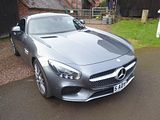
The Mercedes-AMG GT is a series of 2-door sports cars produced by German automobile manufacturer Mercedes-AMG. The car was introduced on 9 September 2014 and was officially unveiled to the public in October 2014 at the Paris Motor Show. While not directly replacing the SLS AMG (competing in a different segment), it is the second sports car developed entirely in-house by Mercedes-AMG. The Mercedes-AMG GT went on sale in two variants (GT and GT S) in March 2015, while a GT3 racing variant of the car was introduced in 2015. A high performance variant called the GT R was introduced in 2016. A GT4 racing variant, targeted at semi-professional drivers and based on the GT R variant, was introduced in 2017. In 2021, a new variant called the AMG GT Black Series was released. All variants are assembled at the Mercedes-Benz plant in Sindelfingen, Germany. The interior of the Mercedes-AMG GT was previewed on 16 April 2014. The car made its debut on 9 September 2014 and was officially unveiled to the public in October 2014 at the Paris Motor Show. The GT’s exterior design was kept similar to that of the preceding SLS AMG, with wide wheel arches, lower bodywork, and fastback sloping roofline of the SLS AMG, but using conventional forward-opening doors instead of the iconic gullwing style pioneered by the 300 SL in the 1950s. It also employed an upgraded and shortened version of the Transaxle Spaceframe platform used by the SLS. The vehicle structure is made up of 93% aluminium, with the front module base made up of magnesium. The exterior lead designer was Mark Fetherston, whose previous works include the W176 A-Class, the CLA-Class, and SLS AMG. The interior, designed by Jan Kaul, features a large centre console and decorative elements in a leather and carbon polymer design. The trunk offers room for a medium-sized suitcase. Two engine power output options were offered: the GT, with 462 PS/456 hp, and the GT S with 510 PS/ 503 hp. The GT generates 600 N⋅m (443 lb⋅ft) of torque, and the GT S generates 650 Nm (479 lb/ft) of torque. Shortly after its introduction, Mercedes-AMG CEO at the time, Tobias Moers, promised a Black Series variant of the Mercedes-AMG GT. The new high performance variant was called the AMG GT R. The Mercedes-AMG family was given a facelift in 2017, along with the introduction of the GT C roadster variant and the Edition 50 model, which is a limited-edition derivative of the GT C variant. The key improvements made as part of the facelift include increased power output from the M178 engine for the GT and GT S variants (10 kW and 9 kW respectively) and the inclusion of the ‘Panamericana’ grille from the GT3, GT4 and GT R variants as standard equipment for all variants. The GT is the entry level variant of the Mercedes-AMG GT family. The M178 engine in this variant is tuned to an output of 462 PS/456 hp and 601 Nm (443 lb/ft) of torque, with the key differences between this and its more expensive siblings being a mechanical limited-slip differential, an absorbent glass mat battery, the lack of the “Race Mode” setting in the AMG Dynamic Select adaptive drivetrain system, the lack of the AMG Ride Control adaptive suspensive system, and a passive AMG Sport Exhaust System. Keyless-Go is also an optional feature, as opposed to standard equipment. The GT is equipped with 19-inch wheels at the front and rear. The GT S is a more highly equipped variant of the Mercedes-AMG GT. The M178 engine in this variant is tuned to an output of 510 PS/503 hp and 651 Nm (480 lb/ft) of torque. The key mechanical differences the GT S gains over the GT include an electronically controlled limited-slip differential, “Race Mode” and “Race Start” mode settings in the AMG Dynamic Select adaptive drivetrain system, AMG Ride Control adaptive suspensive system, an AMG Performance Exhaust System with dynamic flaps, and a lithium-ion battery. Keyless-Go is standard equipment, as is a staggered set of wheels (19-inch at the front, 20-inch at the rear). As with many other recent Mercedes-AMGs, at the time of introduction a limited production “Edition 1” series was issued of the GT S. 375 examples were sold worldwide, and include a gloss black aerodynamic set including a front splitter, lower wheelwell extensions, a carbon fibre roof, a fixed rear wing, red interior accents and red brake calipers, and various other extras. In October 2021, Mercedes-Benz announced the new Mercedes-AMG R232 SL-Class as the direct successor for the roadster version. The second-generation coupe version of the GT, which was introduced nearly a year after the first-generation was discontinued, was redesigned on the same platform as the SL, but retains the name AMG GT.
MG
Launched in October 1962, the MGB was produced for the next 18 years and it went on to become Britain’s best selling sports car. When first announced, the MGB was an innovative, modern design, with a monocoque structure instead of the traditional body-on-frame construction used on both the MGA and MG T-types and the MGB’s rival, the Triumph TR series, though components such as the brakes and suspension were developments of the earlier 1955 MGA and the B-Series engine had its origins back in 1947. The lightweight design reduced manufacturing costs while adding to overall vehicle strength, and with a 95hp 3-bearing 1798cc engine under the bonnet, performance was quite respectable with a 0–60 mph time of just over 11 seconds. The car was rather more civilised than its predecessor, with wind-up windows now fitted as standard, and a comfortable driver’s compartment offered plenty of legroom. The roadster was the first of the MGB range to be produced. The body was a pure two-seater but a small rear seat was a rare option at one point. By making better use of space the MGB was able to offer more passenger and luggage accommodation than the earlier MGA while being 3 inches shorter overall. The suspension was also softer, giving a smoother ride, and the larger engine gave a slightly higher top speed. The four-speed gearbox was an uprated version of the one used in the MGA with an optional (electrically activated) overdrive transmission. A five-bearing engine was introduced in 1964 and a number of other modifications crept into the specification. In late 1967, sufficient changes were introduced for the factory to define a Mark II model. Alterations included synchromesh on all 4 gears with revised ratios, an optional Borg-Warner automatic gearbox, a new rear axle, and an alternator in place of the dynamo with a change to a negative earth system. To accommodate the new gearboxes there were significant changes to the sheet metal in the floorpan, and a new flat-topped transmission tunnel. US market cars got a new safety padded dashboard, but the steel item continued for the rest of the world. Rostyle wheels were introduced to replace the previous pressed steel versions in 1969 and reclining seats were standardised. 1970 also saw a new front grille, recessed, in black aluminium. The more traditional-looking polished grille returned in 1973 with a black “honeycomb” insert. Further changes in 1972 were to the interior with a new fascia. To meet impact regulations, in late 1974, the chrome bumpers were replaced with new, steel-reinforced black rubber bumpers, the one at the front incorporating the grille area as well, giving a major restyling to the B’s nose, and a matching rear bumper completed the change. New US headlight height regulations also meant that the headlamps were now too low. Rather than redesign the front of the car, British Leyland raised the car’s suspension by 1-inch. This, in combination with the new, far heavier bumpers resulted in significantly poorer handling. For the 1975 model year only, the front anti-roll bar was deleted as a cost-saving measure (though still available as an option). The damage done by the British Leyland response to US legislation was partially alleviated by revisions to the suspension geometry in 1977, when a rear anti-roll bar was made standard equipment on all models. US emissions regulations also reduced horsepower. In March 1979 British Leyland started the production of black painted limited edition MGB roadsters for the US market, meant for a total of 500 examples. Due to a high demand of the limited edition model, production ended with 6682 examples. The United Kingdom received bronze painted roadsters and a silver GT model limited editions. The production run of home market limited edition MGBs was split between 421 roadsters and 579 GTs. Meanwhile, the fixed-roof MGB GT had been introduced in October 1965, and production continued until 1980, although export to the US ceased in 1974. The MGB GT sported a ground-breaking greenhouse designed by Pininfarina and launched the sporty “hatchback” style. By combining the sloping rear window with the rear deck lid, the B GT offered the utility of a station wagon while retaining the style and shape of a coupe. This new configuration was a 2+2 design with a right-angled rear bench seat and far more luggage space than in the roadster. Relatively few components differed, although the MGB GT did receive different suspension springs and anti-roll bars and a different windscreen which was more easily and inexpensively serviceable. Although acceleration of the GT was slightly slower than that of the roadster, owing to its increased weight, top speed improved by 5 mph to 105 mph because of better aerodynamics. 523,826 examples of the MGB of all model types were built, and although many of these were initially sold new in North America, a lot have been repatriated here. Seen here is the rare MGB GT Jubilee model that event marshall Dick Miller acquired at the very end of the 2024 season.
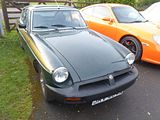
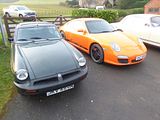
The 1961 Midget resurrected the name that was used by MG for their smallest car, the M Type, in the late 20s, was the Midget announced in 1961, and was essentially a slightly more expensive badge-engineered version of the MkII Austin-Healey Sprite. The original ‘Frogeye’ Sprite had been introduced specifically to fill the gap in the market left by the end of production of the MG T-type Midget as its replacement, the MGA had been a significantly larger and more expensive car with greater performance. Many existing MG enthusiast and buyers turned to the Sprite to provide a modern low-cost sports car and so a badge-engineered MG version reusing the Midget name made sense. The new Midget differed from the Sprite only in its grille design, badging, colour options and having both leather seats and more external chrome trim as standard to justify its higher purchase price. Mechanically the car was identical to its Austin-Healey counterpart, retaining the rear suspension using quarter-elliptic leaf springs and trailing arms from the ‘Frogeye’. The engine was initially a 948 cc A-Series with twin SU carburettors producing 46 hp at 5500 rpm and 53 lb/ft at 3000 rpm. Brakes were 7″ drums all round. A hard top, heater, radio and luggage rack were available as factory-fitted extras. In October 1962 the engine was increased to 1098 cc, raising the output to 56 hp at 5500 rpm and 62 lb/ft at 3250 rpm, and disc brakes replaced the drums at the front. Wire spoked wheels became available. The doors had no external handles or locks and the windows were sliding Perspex side-screens. A heater was still an optional extra. The car sold well, with 16,080 of the small-engined version and 9601 of the 1098 being made before the arrival in 1964 of the Mark II. Externally the main changes were to the doors, which gained wind-up windows, swivelling quarter lights, external handles and separate locks. The windscreen also gained a slight curvature and was retained in a more substantial frame. The hood, though modified, continued to have a removable frame that had to be erected before the cover was put on. The rear springs were replaced by more conventional semi-elliptic types which gave a better ride. The engine block was strengthened and larger main bearings were fitted, increasing the power to 59 hp at 5750 rpm and torque to 65 lbf·ft at 3500 rpm. A total of 26,601 were made. 1967 saw the arrival of the Mark III. The engine now grew to 1275 cc using the development seen on the Mini-Cooper ‘S’. Enthusiasts were disappointed that this was a detuned version of the 76-bhp Cooper ‘S’ engine, giving only 65 hp at 6000 rpm and 72 lbf·ft at 3000 rpm. A reduced compression ratio of 8.8:1 was used instead of the 9.75:1 employed on the Cooper S engine. The Midget used the 12G940 cylinder head casting that was common to other BMC 1300 cars, whereas the Cooper ‘S’ had a special head with not only larger inlet, but also larger exhaust valves; however, these exhaust valves caused many ‘S’ heads to fail through cracking between the valve seats. The detuned engine was used for reasons of model range placement – with the Cooper ‘S’ spec engine, the Midget would have been faster than the more expensive MGB. The hydraulic system gained a separate master cylinder for the clutch. The hood was now permanently attached to the car, with an improved mechanism making it much easier to use. Minor facelift changes were made to the body trim in late 1969 with the sills painted black, a revised recessed black grille, and squared off taillights as on the MGB. The 13″ “Rostyle” wheels were standardised, but wire-spoked ones remained an option. The square-shaped rear wheel arches became rounded in January 1972 and later that year a Triumph steering rack was fitted, giving a gearing that was somewhat lower than earlier Midgets. A second exhaust silencer was also added in 1972. Alternators were fitted instead of dynamos from 1973 onwards. Many consider the round-arch Midgets with chrome bumpers produced for model years 1972 and 1974 to be the most desirable. These round-arch cars started leaving the Abingdon factory in late 1971. Between 1966 and the 1969 face lift, 22,415 were made, and a further 77,831 up to 1974.
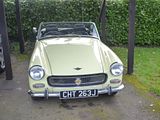
MINI
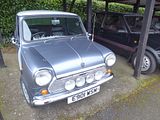
MORGAN
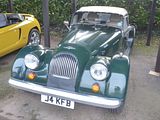
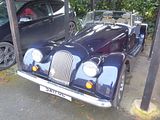
First referred to in 2011, and launched in production spec in 2012, the Three Wheeler has been a huge success for Morgan, and for a while the company simply could not build them fast enough. Relatively affordable, compared to the other products in the range, this fun machine has a 2 litre S&S engine coupled to an MX-5 gearbox, and a weight of 550 kg, which is enough to give it a top speed of around 115 mpg and a 0- 60 time of less than 5 seconds.
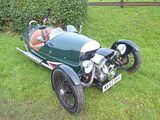
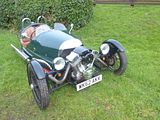
NISSAN
Released on July 2002 in Japan at reorganized Nissan Japanese dealerships called Nissan Blue Stage, and August 20, 2002 in the US., the 350Z coupé was available in 5 trim packages: ‘350Z’ (Base), ‘Enthusiast’, ‘Performance’, ‘Touring’, and ‘Track’ editions. In Europe, only the ‘Track’ trim was available, although it was badged and marketed as ‘350Z’. The Base model did not include a VLSD or Traction Control and was only available with cloth seats. It did not include cruise control, nor power or heated seats. The Enthusiast model came with traction control, a VLSD, and cruise control. The Performance model came with bigger 18-inch wheels, front air dam, rear spoiler, optional Brembo brakes, and VDC instead of Traction Control. Touring was made more of the luxury model. It had power, leather, heated seats, VDC, a VLSD, xenon headlamps, optional Brembos, 18-inch wheels, and optional GPS. The Track model included Brembo brakes, front air dam, rear spoiler, traction control, cloth seats, 18-inch wheels, VLSD, and optional GPS. In 2004 Nissan introduced the 350Z Roadster with an electrically retractable soft-top roof. In the U.S. market the car was available in two trim packages (Enthusiast and Touring), while in Europe, the same versions as the coupé were offered. Nissan added the Grand Touring (GT) trim to the Roadster trim packages for 2005. In 2005 Nissan launched a 35th Anniversary edition, with a revised exterior and interior. Early 2005 model-year 35th anniversary edition models were equipped with the original VQ35DE with 287 hp and automatic transmission. In January 2005, Nissan introduced the 35th Anniversary 6-speed manual models and Track models (mid-year introduction), which included the updated VQ35DE 300 hp Rev-up engine and new updated CD009 manual transmission. As well as minor changes to suspension tuning and parts. For the 2006 model year, the 350Z received changes for its mid-cycle facelift. The VQ35DE 300 hp Rev-up engine that was introduced mid-year 2005 on the Track and 35th Anniversary Edition with 6-speed manual transmission models was offered for every trim level that had a manual transmission option. The VQ35DE with 287 hp continued to be offered with only the 5-speed automatic. Additions included bi-xenon projectors, a revised front fascia, new LED rear lights, changes to the interior trim and speed sensitive steering. Touring and Grand Touring models had radio-steering controls standard, MP3 CD compatibility, and Satellite Radio became an available option. For the 2007 model year, the 350Z was again moderately revised. The VQ35DE V6 was replaced with a new VQ35HR V6. It produced 306 hp at 6800 rpm with 268 ft·lb at 4800 rpm using the revised SAE certified power benchmark. The VQ35HR had a raised redline to 7500 rpm and more torque across the rpm range. The bonnet was redesigned with a bulge reminiscent of the original 240Z to accommodate the raised deck height of the new VQ35HR. In the US, trim levels were narrowed down to 350Z (base), Enthusiast, Touring, and Grand Touring, while in Europe the same trim levels remained. Bluetooth was added for the 2007 model year. The car was replaced by the 370Z for the 2009 model year. It has never found quite the same levels of enthusiasm that greeted – and have stayed with – the 350Z.
PEUGEOT
Before the 205, Peugeot was considered the most conservative of France’s “big three” car manufacturers, producing large saloons such as the 504 and 505, although it had entered the modern supermini market in 1973 with the Peugeot 104. The genesis of the 205 lay within Peugeot’s takeover in 1978 of Chrysler’s European divisions Simca and the former Rootes Group, which had the necessary expertise in making small cars including the Simca 1100 in France and Hillman Imp in Britain. It was around this time that Peugeot began to work on the development of a new supermini for the 1980s. It was launched on 24 February 1983, and was launched in right-hand drive form for the UK market in September that year. Shortly after its launch, it was narrowly pipped to the European Car of the Year award by the similar sized Fiat Uno, but ultimately (according to the award organizers) it would enjoy a better image and a longer high market demand than its Italian competitor. It was one of five important small cars to be launched onto the European market within a year of each other: the other four were the Uno, the second generation Ford Fiesta, the original Opel Corsa (sold as the Vauxhall Nova on the British market) and the original Nissan Micra. Its launch also closely followed that of the Austin Metro and Volkswagen Polo Mk2. The styling of the 205 is often thought to be a Pininfarina design, although Gerard Welter claims that it is an in-house design; Pininfarina only styled the Cabriolet. It is often credited as the car that turned Peugeot’s fortunes around. The fully independent suspension used the now standard PSA Peugeot Citroën layout that had debuted in the Peugeot 305 estate. A key ingredient of the success of the 205, it had MacPherson struts at the front and trailing arms with torsion bars at the rear. The rear suspension was very compact, designed to minimise suspension intrusion into the boot, giving a wide flat loadspace, while providing excellent ride and handling. Early 205s used the X petrol engine [n 1] from the older Peugeot 104, although these were later (1987–1988) replaced with the newer XU and TU-series engines, which were of PSA design. Engines ranged in displacement from 954 cc to 1905 cc, in carburettor or fuel injected versions. The diesel models employed the PSA XUD engine, lifted from the Citroën BX which was introduced in September 1982. These engines had a capacity of 1769 cc (XUD7) and 1905 cc (XUD9) and are closely related to the XU5 and XU9 petrol engines in the BX16 and BX19 of the time. The diesel engines were world-beating and so petrol-like that many buyers were won over by petrol car performance combined with diesel economy. For instance, the 205 GRD (1.8 Diesel, 59 bhp, 78 lb/ft (105.8 Nm)) was as fast as, yet smoother than, the 205 GR (1.4 Petrol, 59 bhp, 78 lb/ft (105.8 Nm)), due to the engine developing peak torque at much lower rpm, while using much less fuel. There were various versions intended for commercial use, such as the two-seater XA-series. There was also the “205 Multi”, a tall-bodied special version on XA or XE-basis built by independent coachbuilders like Gruau and Durisotti. Gruau called their XA-based two-seater version the “VU”, while the five-seat XE-based version was called the “VP”. Durisotti began building the 205 Multi in 1986; it was called the “205 Multi New Look”. The 205 was an instant hit, and its styling was echoed in every Peugeot model that was to follow. The exterior styling was never facelifted or significantly altered in its 15-year production run. There was a dashboard redesign for the 1988 model year, and in late 1990 the 205 received new door design and cards, clear front indicators, new ‘smoked’ rear light clusters, single point petrol injection and catalytic converters were introduced, to meet the new 1992 pollution limits. These updates came at a crucial time, as 1990 also saw the arrival of a completely new French competitor, the Renault Clio, while the Rover Metro and Volkswagen Polo were also heavily updated, and Ford had already replaced its Fiesta with a third generation model. Still, the 205 was still widely regarded in the motoring press as the benchmark car in this sector by 1990. At the beginning of 1993, Peugeot launched the 306, which officially replaced the 309; the arrival of this car also diminished the 205’s role (and its sales figures) in the Peugeot range, as had the arrival of the smaller 106 in September 1991 – although the final demise of the 205 was still some years away. The engines were continuously updated, with the new TU engines introduced in 1988. In 1991, the 205 dTurbo was launched with a powerful turbocharged version of the 1,769 cc xud diesel engine. After several years of gradually declining sales, the Peugeot 205 was discontinued in the United Kingdom in 1996. The Peugeot 205 was still offered in the “Sacré Numéro” and “Génération” models until the end of the production in 1998. The last models were GLD 1.8 configuration and were sold in Argentina. Most of the later European versions were only sold in France. Due to the pressure from the market, with buyers wanting a Peugeot supermini in the mould of the 205 again, the company finally built a direct replacement in the 206, which was launched in 1998. 5,278,050 Peugeot 205s have been sold, and a significant percentage of them were still in circulation as of 2009. By 2014, there were still as many as 14,000 on the road in the United Kingdom, compared to the peak high of 374,773 in 1994. With potentially as many 400,000 sales in the UK, it became the best selling car ever sold by Peugeot in the UK – although its success was emulated a few years later by the larger 306 and later by the 206. It also helped boost the popularity of the Peugeot brand there, and was at least a factor in Peugeot’s decision to phase out the Talbot brand in the mid 1980s when launching new models to be built at the former Rootes Group plant near Coventry and the former Simca plant at Poissy.
Mindful of the success of the Golf GTi, in the class above, and how a small car with good handling could take more power, as the Mini Cooper had proved, Peugeot came up with the GTi in early 1984. The first models had a 1.6 litre XU5J engine, producing 105 PS, which was uprated in 1987 with a cylinder head with larger valves thus becoming XU5JA, which took the power output up to 115 bhp. Visually the car retained the good looks of the 3 door version of the regular models, but it featured plastic wheel arch extensions and trim, beefier front and rear bumper valances and judicious use of red badging and trim. The shell also underwent some minor changes, including larger wheel arches (to suit the larger wheels , and the suspension was redesigned and sat lower on the GTI with stiffer springs, different wishbones and a drop-linked anti-roll bar. Red was a dominant colour inside. The car was an instant hit. At the end of 1986, Peugeot followed up with a more potent model, the 1.9 GTi, whose XU9JA engine produced 128 PS. Internally the engine of this car and the 1.6 model are very similar, the main differences on 1.9 litre versions being the longer stroke, oil cooler, and some parts of the fuel injection system. The shorter stroke 1.6 litre engine is famed for being revvy and eager, while the 1.9 litre feels lazier and torquier. Outside the engine bay the main differences between the 1.6 GTi and the 1.9 GTi are half-leather seats on the 1.9 GTi vs. cloth seats and disc brakes all-round (1.9 GTi) vs. discs at the front and drum brakes at the back; as well as the 14-inch Speedline SL201 wheels on the 1.6 GTi vs. 15 inch Speedline SL299 alloys on the 1.9 GTi. The 205 is still often treated as a benchmark in group car tests of the newest GTI models or equivalent. Peugeot itself has never truly recreated this success in future GTI models, although they came very close with the highly regarded GTI-6 variant of the Peugeot 306.
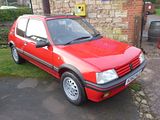
PORSCHE
The 356 was created by Ferdinand “Ferry” Porsche (son of Dr. Ing. Ferdinand Porsche, founder of the German company), who founded the Austrian company with his sister, Louise. Like its cousin, the Volkswagen Beetle (which Ferdinand Porsche Senior had designed), the 356 was a four-cylinder, air-cooled, rear-engine, rear-wheel-drive car utilising unitised pan and body construction. The chassis was a completely new design as was the 356’s body which was designed by Porsche employee Erwin Komenda, while certain mechanical components including the engine case and some suspension components were based on and initially sourced from Volkswagen. Ferry Porsche described the thinking behind the development of the 356 in an interview with the editor of Panorama, the PCA magazine, in September 1972. “….I had always driven very speedy cars. I had an Alfa Romeo, also a BMW and others. ….By the end of the war I had a Volkswagen Cabriolet with a supercharged engine and that was the basic idea. I saw that if you had enough power in a small car it is nicer to drive than if you have a big car which is also overpowered. And it is more fun. On this basic idea we started the first Porsche prototype. To make the car lighter, to have an engine with more horsepower…that was the first two seater that we built in Carinthia (Gmünd)”. The first 356 was road certified in Austria on June 8, 1948, and was entered in a race in Innsbruck where it won its class. Porsche re-engineered and refined the car with a focus on performance. Fewer and fewer parts were shared between Volkswagen and Porsche as the ’50’s progressed. The early 356 automobile bodies produced at Gmünd were handcrafted in aluminium, but when production moved to Zuffenhausen, Germany in 1950, models produced there were steel-bodied. Looking back, the aluminium bodied cars from that very small company are what we now would refer to as prototypes. Porsche contracted with Reutter to build the steel bodies and eventually bought the Reutter company in 1963. The Reutter company retained the seat manufacturing part of the business and changed its name to Recaro. Little noticed at its inception, mostly by a small number of auto racing enthusiasts, the first 356s sold primarily in Austria and Germany. It took Porsche two years, starting with the first prototype in 1948, to manufacture the first 50 automobiles. By the early 1950s the 356 had gained some renown among enthusiasts on both sides of the Atlantic for its aerodynamics, handling, and excellent build quality. The class win at Le Mans in 1951 was clearly a factor. It was always common for owners to race the car as well as drive them on the streets. They introduced the four-cam racing “Carrera” engine, a totally new design and unique to Porsche sports cars, in late 1954. Increasing success with its racing and road cars brought Porsche orders for over 10,000 units in 1964, and by the time 356 production ended in 1965 approximately 76,000 had been produced. The 356 was built in four distinct series, the original (“pre-A”), followed by the 356 A, 356 B, and then finally the 356 C. To distinguish among the major revisions of the model, 356’s are generally classified into a few major groups. 356 coupés and “cabriolets” (soft-top) built through 1955 are readily identifiable by their split (1948 to 1952) or bent (centre-creased, 1953 to 1955) windscreens. In late 1955 the 356 A appeared, with a curved windshield. The A was the first road going Porsche to offer the Carrera 4 cam engine as an option. In late 1959 the T5 356 B appeared; followed by the redesigned T6 series 356 B in 1962. The final version was the 356 C, little changed from the late T6 B cars but with disc brakes to replace the drums.
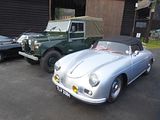
Replacing the 964, the 993 models were first seen in October 1993, with production starting a few weeks later. Its arrival marked the end of air-cooled 911 models. The 993 was much improved over, and quite different from its predecessor. According to Porsche, every part of the car was designed from the ground up, including the engine and only 20% of its parts were carried over from the previous generation. Porsche refers to the 993 as “a significant advance, not just from a technical, but also a visual perspective.” Porsche’s engineers devised a new light-alloy subframe with coil and wishbone suspension (an all new multi-link system), putting behind the previous lift-off oversteer and making significant progress with the engine and handling, creating a more civilised car overall providing an improved driving experience. The 993 was also the first 911 to receive a six speed transmission. The 993 had several variants, as its predecessors, varying in body style, engines, drivetrains and included equipment. Power was increased by the addition of the VarioRam system, which added additional power, particularly in the mid-ranges, and also resulted in more throttle noise at higher revs; as a consequence, resulted in a 15% increase in power over its predecessor. The external design of the Porsche 993, penned by English designer Tony Hatter, retained the basic body shell architecture of the 964 and other earlier 911 models, but with revised exterior panels, with much more flared wheel arches, a smoother front and rear bumper design, an enlarged retractable rear wing and teardrop mirrors. A major change was the implementation of all alloy multi-link rear suspension attached to an alloy sub frame, a completely new design derived from the 989, a four-door sedan which never went into production. The system later continued in the 993’s successor, the 996, and required the widening of the rear wheel arches, which gave better stability. The new suspension improved handling, making it more direct, more stable, and helping to reduce the tendency to oversteer if the throttle was lifted during hard cornering, a trait of earlier 911s. It also reduced interior noise and improved ride quality. The 993 was the first generation of the 911 to have a 6-speed manual transmission included as standard; its predecessors had 4 or 5-speed transmissions. In virtually every situation, it was possible to keep the engine at its best torque range above 4,500 rpm. The Carrera, Carrera S, Cabriolet and Targa models (rear wheel drive) were available with a “Tiptronic” 4-speed automatic transmission, first introduced in the 964. From the 1995 model year, Porsche offered the Tiptronic S with additional steering wheel mounted controls and refined software for smoother, quicker shifts. Since the 993’s introduction, the Tiptronic is capable of recognising climbs and descents. The Tiptronic equipped cars suffer as compared to the manual transmission equipped cars in both acceleration and also top speed, but the differences are not much notable. Tiptronic cars also suffered a 55 lb (25 kg) increase in weight. The 993’s optional all wheel drive system was refined over that of the 964. Porsche departed from the 964’s setup consisting of three differentials and revised the system based on the layout from its 959 flagship, replacing the centre differential with a viscous coupling unit. In conjunction with the 993’s redesigned suspension, this system improved handling characteristics in inclement weather and still retained the stability offered by all wheel drive without having to suffer as many compromises as the previous all-wheel-drive system. Its simpler layout also reduced weight, though the four wheel drive Carrera 4 weighs 111 lb (50 kg) more than its rear wheel drive counterpart (at 3,131 lb (1,420 kg) vs. 3,020 lb (1,370 kg)). Other improvements over the 964 include a new dual-flow exhaust system, larger brakes with drilled discs, and a revised power steering. A full range of models arrived before the arrival of the 996 generation in 1998.
During the 1990s, Porsche was facing financial troubles and rumours of a proposed takeover were being spread. The signature air-cooled flat-6 of the 911 was reaching the limits of its potential as made evident by the 993. Stricter emissions regulations world wide further forced Porsche to think of a replacement of the air-cooled unit. In order to improve manufacturing processes, Porsche took the aid of leading Japanese car manufacturer Toyota whose consultants would assist in the overhaul of the Zuffenhausen manufacturing facility introducing mass production techniques which would allow Porsche to carry out production processes more efficiently. Porsche had realised that in order to keep the 911 in production, it would need radical changes. This led to the development of the 996. The sharing of development between the new 911 and the entry level Boxster model allowed Porsche to save development costs. This move also resulted in interchangeable parts between the two models bringing down maintenance costs. The Porsche 996 was a new design developed by Pinky Lai under Porsche design chief Harm Lagaay from 1992 to 1994; it was the first 911 that was completely redesigned, and carried over little from its predecessor as Porsche wanted the design team to design a 911 for the next millennium. Featuring an all new body work, interior, and the first water-cooled engine, the 996 replaced the 993 from which only the front suspension, rear multi-link suspension, and a 6-speed manual transmission were retained in revised form. The 996 had a drag coefficient of Cd=0.30 resulting from hours spent in the wind tunnel. The 996 is 185 mm (7 in) longer and 40 mm (2 in) wider than its predecessor. It is also 45% stiffer courtesy of a chassis formed from high-strength steel. Additionally, it is 50 kg (110 lb) lighter despite having additional radiators and coolant. All of the M96 engines offered in the 996 (except for the variants fitted to the Turbo and GT2/GT3 models) are susceptible to the Porsche Intermediate Shaft Bearing issue which can potentially cause serious engine failure if not addressed via a retrofit. The 996 was initially available in a coupé or a cabriolet (Convertible) bodystyle with rear-wheel drive, and later with four-wheel drive, utilising a 3.4 litre flat-6 engine generating a maximum power output of 296 bhp. The 996 had the same front end as the entry-level Boxster. After requests from the Carrera owners about their premium cars looking like a “lower priced car that looked just like theirs did”, Porsche redesigned the headlamps of the Carrera in 2002 similar to the high performance Turbo’s headlamps. The design for the initial “fried egg” shaped headlamps could be traced back to the 1997 911 GT1 race car. In 2000, Porsche introduced the 996 Turbo, equipped with a four-wheel-drive system and a 3.6-litre, twin-turbocharged and intercooled flat-six engine generating a maximum power output of 420 bhp, making the car capable of accelerating from 0–60 mph in 4.2 seconds. An X50 option which included larger turbochargers and intercoolers along with revised engine control software became available from the factory in 2002, increasing power output to 451 bhp. In 2005, Porsche introduced the Turbo S, which had the X50 option included as standard equipment, with the formerly optional Carbon fibre-reinforced Silicon Carbide (C/SiC) composite ceramic brakes (PCCB) also included as standard. In 2000, power output on the base Carrera model was increased to 300 bhp. 2001 marked the final year of production for the base Carrera 4 Coupé in narrow body format. In 2002, the standard Carrera models underwent the above-mentioned facelift. In addition, engine capacity was also increased to 3.6-litres across the range, yielding gains of 15 bhp for the naturally aspirated models. 2002 also marked the start of the production of the 996 based Targa model, with a sliding glass “green house” roof system as introduced on its predecessor. It also features a rear glass hatch which gave the driver access to the storage compartment. Also in 2002, the Carrera 4S model was first introduced.
The 996 was replaced with the 997 in 2005. It retains the 996’s basic profile, with an even lower 0.28 drag coefficient, but draws on the 993 for detailing. In addition, the new headlights revert to the original bug-eye design from the teardrop scheme of the 996. Its interior is also similarly revised, with strong links to the earlier 911 interiors while at the same time looking fresh and modern. The 997 shares less than a third of its parts with the outgoing 996, but is still technically similar to it. Initially, two versions of the 997 were introduced— the rear-wheel-drive Carrera and Carrera S. While the base 997 Carrera had a power output of 321 hp from its 3.6 L Flat 6, a more powerful 3.8 L 350 hp Flat 6 powers the Carrera S. Besides a more powerful engine, the Carrera S also comes standard with 19 inch “Lobster Fork” style wheels, more powerful and larger brakes (with red calipers), lowered suspension with PASM (Porsche Active Suspension Management: dynamically adjustable dampers), Xenon headlamps, and a sports steering wheel. In late 2005, Porsche introduced the all-wheel-drive versions to the 997 lineup. Carrera 4 models (both Carrera 4 and Carrera 4S) were announced as 2006 models. Both Carrera 4 models are wider than their rear-wheel-drive counterparts by 1.76 inches (32 mm) to cover wider rear tyres. The 0–100 km/h (62 mph) acceleration time for the Carrera 4S with the 350 hp engine equipped with a manual transmission was reported at 4.8 seconds. The 0–100 km/h (62 mph) acceleration for the Carrera S with the 350 hp was noted to be as fast as 4.2 seconds in a Motor Trend comparison, and Road & Track has timed it at 3.8 seconds. The 997 lineup includes both 2- and 4-wheel-drive variants, named Carrera and Carrera 4 respectively. The Targas (4 and 4S), released in November 2006, are 4-wheel-drive versions that divide the difference between the coupés and the cabriolets with their dual, sliding glass tops. The 997 received a larger air intake in the front bumper, new headlights, new rear taillights, new clean-sheet design direct fuel injection engines, and the introduction of a dual-clutch gearbox called PDK for the 2009 model year. They were also equipped with Bluetooth support. The change to the 7th generation (991) took place in the middle of the 2012 model year. A 2012 Porsche 911 can either be a 997 or a 991, depending on the month of the production.
This is from the 992 generation, the current one. As has been the case previously, the range has expanded to cover a significant number of cars from the entry level models (no longer quite as affordable as they used to be) through Carrera 2 and 4 to the GTS, and the all the “special” versions. Many will tell you the GTS is actually the sweet spot of the range.
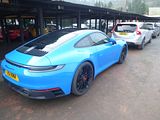
In February 2021, Porsche introduced the 992’s GT3 version. Like most other GT3 Porsches, it is intended for mixed usage with a more track-focused setup. It uses the same 4.0 litre naturally aspirated flat-6 as the 991.2, and producing over 510 PS (503 hp). It reaches 100 km/h (62 mph) in 3.4 seconds while the top speed is 320 km/h (199 mph). The 992 GT3 recently set a lap time at Nürburgring Nordschleife with a time of 6:55.34 minutes. Unlike the standard model, the GT3 features a large rear spoiler with larger air vents, a bigger diffuser, two large exhaust connections, bucket seats in its interior, and an optional roll cage. The GT3 uses a 7-speed PDK or a 6-speed manual instead of the 7-speed manual or 8-speed PDK used in other models.
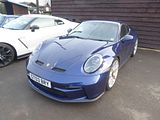
In August 2022, Porsche unveiled the 992 GT3 RS. A further evolution of other GT3 Porsches, it represents the highest track performance of their road-legal 911 lineup. It features a dramatically improved aerodynamic profile compared to the 992 GT3, resulting in 860 kilograms-force (8.4 kN) of downforce at 285 km/h, a two-fold increase over the 991.2 GT3 RS, and 409 kilograms-force (4.01 kN) of downforce at 200 km/h. The rear wing features a static portion and an active portion, which can open and close automatically based on vehicle data, or manually with a button fitted to the steering wheel, inspired by Formula 1’s Drag Reduction Systems (DRS). Its engine produces 525 PS at 8500 rpm and 465 of Nm torque at 6300 rpm. The car has a redline of 9000 rpm (same as the GT3 done by its naturally aspirated flat-six engine). The curb weight of the car in European specification is 1450 kg, and it’s capable of achieving 100 km/h in 3.2 seconds, and 200 km/h in 10.6 seconds. The top speed stated by Porsche is 296 km/h (184 mph).[36] The GT3 RS set a 20,600m Nürburgring Nordschleife lap time of 6:44:848 minutes and a 20,832m lap time of 6:49:328 minutes. In February 2023, Porsche revealed 911 GT3 RS Carrera RS Tribute Edition. This edition is a tribute to 1973 911 Carrera RS 2.7. The car has white exterior with Python Green rims, decals and badges. Behind the RS badges on the rear wing there is a tiny green American flag. The interior is also stitched in Python Green. These were only made for US market, 150 units were produced.
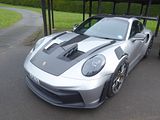
The third-generation Boxster (internally known as the 981) was announced on 13 March 2012 at the Geneva Motor Show with sales starting in early summer 2012. The 981 Boxster reflected the new design language from the 911 (991) and 918, and featured new and revised engine and transmission specifications. Together with a new body, the type 981 Boxster featured a new, 40 per cent more torsionally rigid chassis, the front track was 40 mm (1.6 in) wider, the rear 18 mm (0.7 in) wider and the wheelbase extended by 60 mm (2.4 in), but with a small weight reduction of up to 35 kg (77 lb) compared to the previous type 987 Boxster. The standard Boxster was fitted with a new 2.7-litre flat-6 engine, and the Boxster S was fitted with the existing 3.4-litre engine but with revised performance. Both engines were equipped with a 6-speed manual gearbox and an optional 7-speed reworked PDK. Both manual and automatic models were available with several technical options, including Porsche Torque Vectoring (PTV) and a Sport Chrono Package that included active transmission mounts, and made the PDK-equipped model even faster. Porsche claimed that the new generation Boxster provided fuel savings of 15% over the outgoing model. The range was expanded in March 2014 with the addition of the GTS derivative, with slightly altered front and rear bumpers and an additional 15 PS/ 15 bhp from the 3.4-litre engine. In 2015 the GT4 derivative was introduced, seeing the engine from a 991.1 Carrera S rotated 180 degrees. The GT4 also saw a lowered ride height, altered bumpers, a rear wing and additional GT package upgrades including brakes and certain suspension components from a 991.1 GT3. These special cars where manufactured from 2015 – 2016 with a total of 2500 being made, making this model one of the more desirable collector’s cars in Porsche’s lineup. The GT4 was widely considered one of the best cars of 2015/2016 where it won many awards for its impeccable handling and performance. The third generation Cayman was unveiled at the 2012 Geneva Motor Show. The production version of the 981 Cayman was released as a 2014 model in the spring of 2013. The new car was available in both the standard trim with a 2.7-litre engine, and in the S trim with a 3.4-litre engine. Both versions were available with either a 6-speed manual or a dual-clutch 7-speed PDK transmission. The 981 Cayman featured upgrades including a new body, a longer wheelbase, a wider front track, electrically powered steering, and a redesigned interior that matched the firm’s contemporaneous 911 models. The new model gained acclaim in the motoring press as one of the best handling sports cars at any price, due to its mid-engine layout and driving dynamics. The Cayman S benefited from the same engine and running gear as Porsche’s 3.4-litre version of the 911. A heavily revamped version of both models, known as the 982 generation was launched in 2016 to replace these cars.
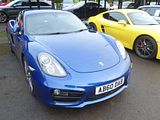
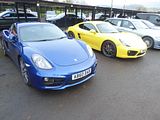
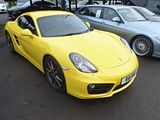
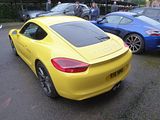
RENAULT
The first generation Mégane RS was introduced in September 2004 and is based on the Renault Mégane II small family car. The Mégane II RS was available in three-door and five-door hatchback versions, both with the same engine and was built at Renault’s Dieppe factory by using body shells made in Palencia, Spain. The Mégane Renault Sport 225 uses double-axis strut suspension with independent steering axis at the front and an electric power steering. The RS uses a turbocharged 2.0-litre petrol engine that produces 225 PS, allowing the car to achieve 0–100 km/h in 6.5 seconds (0–60 mph in 6.5 seconds), with a top speed of about 240 km/h (149 mph). Ninety percent of the engine’s torque is available from 2,000 rpm until redline. A twin-scroll turbocharger minimizes turbo lag, especially when throttle is applied at over 2,000 rpm. The turbocharge functions at 1,800 rpm. The transmission is a six-speed manual. Renault’s claimed combined economy is 8.8 L/100 km (32 mpg). The Mégane Renault Sport has a speed-limiter, which prevents the car from passing a user-determined speed. It can be disabled or recalled with a button-press, and is set in the same way as the cruise control. The Mégane RS is equipped with leather/cloth seats, seat belts with red stitching, 18-inch alloy wheels, dual sunroof, eight airbags and xenon headlights with headlight washers and Brembo brake discs. Other features include automatic double optic headlights, 18-inch alloy wheels, air conditioning, ABS with EBD and electronic stability control. The Lux models feature metallic paint, hands free Renault card, electronic folding mirrors, tyre pressure monitor, electronic front and rear windows, climate control, leather upholstery, 4x15W RDS radio with CD-MP3 player and 6 speakers, front carpet mats, electronic rear view mirror, rear spoiler (petrol engine models only) and 18-inch alloy wheels over the base model. Introduced in 2005, the Megane Renault Sport 225 Cup includes the Cup Chassis option, which adds drilled brake discs, red front and rear brake calipers and increased brake master cylinder diameter, different 18-inch wheels plus revised stiffened steering. Other features include carbon grey interior upholstery with silver stitching. The car is 10 kg (22 lb) lighter than the 225 Sport Hatch and has a gross weight of 1,790 kg (3,946 lb). The handling improvements featured on the Cup were made to the standard Mégane, beginning in late 2005. The Mégane RS received a facelift in July 2006. The facelifted model introduced new safety features and minor exterior changes such as new tapered headlights, a revised front grille and bumpers along with translucent taillights. The Megane Renault Sport 230 Renault F1 Team R26 is a version that commemorates the success of Renault in the Formula 1 World Championship with the 2005 and 2006 Constructors’ and Drivers’ Championship titles and is named after the 2006 F1 car (R26). It is based on the facelifted Mégane RS. The engine is rated at 227 hp at 5,500 rpm and 310 Nm (229 lb/ft) at 3,000 rpm. It incorporates the improved version of the Cup Chassis package now with a limited slip differential fitted for the first time in addition to 18-inch Anthracite spoked alloy wheels with Michelin Pilot Sport 2 235/40 R18 tyres, Brembo front and rear red brake calipers and an increased brake master cylinder diameter, plus revised stiffened steering. Other features include a sport exhaust, Recaro seats, climate control, 4×15-watt RDS radio single CD/MP3 player with 6 speakers, Renault F1 decals, numbered plaque, limited slip differential and a rear spoiler. The car weights 1,355 kg (2,987 lb) kerb, 1,820 kg (4,012 lb) gross. The Megane Renault Sport dCi 175 is a version with a 2.0-litre diesel engine. Engine is rated at 173 bhp at 3,750 rpm and 360 Nm (270 lb/ft) at 2,000 rpm. The Cup Chassis option (available for dCi 175 Lux) includes tyre pressure monitor deletion, 18-inch anthracite alloy wheels with 225/45R18 Continental SportContact 2 tires, retuned dampers and spring rates, disconnectable ESP and anthracite coloured door mirror housings. The Sport Hatch version includes Recaro front seats, and the vehicle is 20 kg (44 lb) lighter (1470 kg kerb, 1,875 kg (4,134 lb) gross). The R26.R is based on the Mégane Renault Sport 230 F1 Team R26, but it is 123 kg (271 lb) lighter. Weight reduction is achieved via the removal of the rear seats and seat belts, passenger airbag and curtain airbags (the driver’s airbag remains), climate control (air conditioning remains as standard), rear wash/wipe and heated rear window, front fog lamps, headlamp washers, radio/CD player and most of the soundproofing. Other features include a carbon fibre bonnet, polycarbonate tailgate and rear side windows, Sabelt seats with carbon fibre shell and aluminium base, 6-point harnesses, a rear spoiler, optional roll cage and an optional titanium exhaust. New parts include new front springs (14 mm/100 kg), new rear springs (16.2 mm/100 kg), recalibrated shock absorber settings, grooved brake discs, new alloy wheels are fitted with a different offset increasing the track by 4 mm (0.2 in), optional Toyo Proxes R888 225/40R18 tyres (Michelin Pilot Sport 2 235/40R18 standard) and stiffer lower arm bushes. The car was unveiled at the 2008 British International Motor Show and went on sale in October 2008 at just under £23,000. 450 vehicles were made with 230 destined for the UK market though Renault struggled to sell them all and some were returned to France.
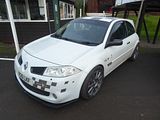
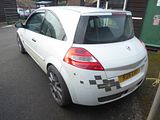
It did not take Renault long to add an RS version to their 3rd generation Megane range. debuting the car at the 2009 Geneva Show. This new Megane Renault Sport 250 included a 2.0litre twin-scroll turbo 4-cylinder F4Rt engine rated at 250 PS (247 bhp) at 5500 rpm and 340 Nm (251 lb/ft) at 3000 rpm with a 6-speed manual gearbox, Brembo front brakes, front splitter, extended sills and wheel arches, rear diffuser with central exhaust pipe, and 18-inch alloy wheels wearing 225/40R18 tyres. Aluminum pedals, a Renault Sport steering wheel with thumb grips, analog rev counter and sport seats with extra lateral support dress up the cabin. Other features include front LED daytime running lights and bi-xenon headlights. The 250 Cup variant contains a number of sharpened performance features including a stiffer chassis, track focused suspension, a limited slip differential and a slightly lighter gross weight. The Cup is differentiated visually with painted red brake calipers, instead of the silver calipers for the normal Sport. 18×8.25″ “Ax-l” alloy wheels are fitted with wider 235/40R18 tyres, while 19×8.25″ “Steev” wheels were available as an option with 235/35R19 tyres. In June 2011 Renault Sport revealed a limited edition 265 PS (261 bhp) version of the Mégane III called the Mégane R.S. Trophy. The Megane R.S. Trophy uses the same 2.0 four-cylinder as the standard 250 PS R.S. but thanks to modifications such as a new air intake and higher turbo pressure it gains an extra 15 hp, increasing the power output to 265 PS. It reaches 0–62 mph in six seconds flat and goes on to a top speed of 254 km/h (157 mph). It is recognizable thanks to model-specific decoration such as Trophy stickers on the doors, a new spoiler and specific 19″ rims with R.S. centre caps. It comes in a model-specific metallic yellow (Jaune Sirius) but is also available in more low-key colours such as white (Blanc Glacier), black (Noir Étoilé) and gray (Gris Cassiopée). Production was limited to 500 examples. In 2012, the Megane R.S. adopted the updated engine from the Trophy version with 265 PS (261 HP) and offers the same “Cup” and “Sport” versions like the previous 250 PS (247 HP) model. Changes include Piano Black interior highlights and wider LED daytime running lights with 6 LEDs per side rather than the 3 LEDs found in the RS250. The 18″ wheels were changed to a new design called “Tibor”, while the 19″ wheels carried over from the 250. Extreme Blue and Sport Yellow were dropped as colour options. In Australia, the Cup and Cup Trophée models were replaced with the Cup, Cup+ and Trophy+ with slightly more flexible specification levels.
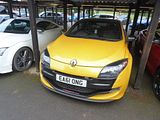
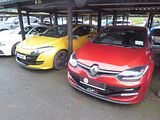
RENAULT-ALPINE
The A110 was introduced as an evolution of the A108. Like other road-going Alpines, the 1961 A110 used many Renault parts – including engines. But while the preceding A108 was designed around Dauphine components, the A110 was updated to use R8 parts. Unlike the A108, which was available first as a cabriolet and only later as a coupé, the A110 was delivered first with “Berlinetta” bodywork and then as a cabriolet. The main visible difference with the A108 coupé was a restyling of the rear body to fit the larger engine, which gave the car a more aggressive look. Like the A108, the A110 featured a steel backbone chassis with fibreglass body. The A110 was originally available with 1.1 litre R8 Major or R8 Gordini engines. The Gordini engine delivered 95 hp at 6,500 rpm. The A110 achieved most of its fame in the early 1970s as a victorious rally car. After winning several rallies in France in the late 1960s with iron-cast R8 Gordini engines the car was fitted with the aluminium-block Renault 16 TS engine. With two dual-chamber Weber 45 carburettors, the TS engine delivered 125 hp at 6,000 rpm. This allowed the production 1600S to reach a top speed of 210 km/h (130 mph). The longer wheelbase 2+2 Alpine GT4, originally considered a version of the A108, was updated with A110 engines and mechanicals, now being marketed as the “A110 GT4”. The car reached international fame during the 1970–1972 seasons when it participated in the newly created International Championship for Manufacturers, winning several events around Europe and being considered one of the strongest rally cars of its time. Notable performances from the car included victory in the 1971 Monte Carlo Rally with Swedish driver Ove Andersson. With the buy-out of Alpine by Renault complete, the International Championship was replaced by the World Rally Championship for 1973, at which time Renault elected to compete with the A110. With a team featuring Bernard Darniche, Jean-Pierre Nicolas and Jean-Luc Thérier as permanent drivers and “guest stars” like Jean-Claude Andruet (who won the 1973 Monte Carlo Rally) the A110 won most races where the works team was entered, making Alpine the first World Rally Champion. Later competition-spec A110s received engines of up to 1.8 litres. As well as being built at Alpine’s Dieppe factory, A110 models were constructed by various other vehicle manufacturers around the world. The Alpine A110 was produced in Mexico under the name “Dinalpin”, from 1965 to 1974, by Diesel Nacional (DINA), which also produced Renault vehicles. The Alpine A110 was also produced in Bulgaria under the name “Bulgaralpine”, from 1967 to 1969, by a cooperative formed between SPC Metalhim and ETO Bulet, whose collaboration also resulted in the production of the Bulgarrenault. In 1974 the mid-engined Lancia Stratos, the first car designed from scratch for rally racing, was operational and homologated. At the same time, it was obvious that the tail-engined A110 had begun reaching the end of its development. The adoption of fuel injection brought no performance increase. On some cars, a DOHC 16-valve head was fitted to the engine, but it proved unreliable. Chassis modification, like the use of an A310 double wishbone rear suspension, homologated with the A110 1600SC, also failed to increase performance. On the international stage, the Stratos proved to be the “ultimate weapon”, making the A110, as well as many other rally cars, soon obsolete. This one arrived very late. Indeed I was just headed back to my car ready to leave when I saw it pull in, so I delayed my departure at least to get a photo or two.
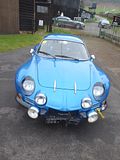
Also here is the reborn A110, now sold just as “Alpine”. The Alpine A110 is a rear mid-engine, rear-wheel-drive sports car introduced by French car manufacturer Alpine at the 87th Geneva International Motor Show in March 2017. Deliveries began in late 2017 for Continental European markets and in 2018 for the UK, Japan and Australia. Both its name and design refer back to the original Alpine A110 that was produced from 1961 to 1977. Based on an all-aluminium construction, the A110 is powered by a Nissan-derived 1.8-litre turbocharged gasoline direct injection 4 valves per cylinder inline-four engine mated to a 7-speed dual-clutch transmission manufactured by Getrag. Developed by Renault–Nissan and reworked by Alpine engineers, the engine has an output of 252 PS at 6,000 rpm and 320 Nm (236 lb/ft) of torque at 2,000–5,000 rpm. According to Alpine, the A110 can accelerate from 0 to 100 km/h (0 to 62 mph) in 4.5 seconds, and has an electronically limited top speed of 250 km/h (155 mph). The A110 was initially available in three trims: Pure, Première, and Legende. The Pure cars, the base trim, have 17-inch alloy wheels. The Première trim cars are technically the launch edition models limited to 1,955 units and were equipped with amenities such as forged alloy wheels, quilted leather Sabelt bucket sports seats, a reversing camera, and metallic blue exterior colour as standard. The Legende trim cars come with six-way adjustable sports seats, black or brown leather interior upholstery, an upgraded hi-fi sound system, and specially designed wheels exclusive to this trim. All of the three trims share the same powertrain and transmission. For the 2020 model year, The Pure trim level was replaced by the Alpine A110, with no other badging. The Légende was replaced by the Alpine A110 GT which employed the same engine as the A110 S.
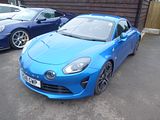
RILEY
This is a 1935 12/4 Special. It was originally a Falcon 12/4 Saloon and at some stage has acquired this rather rakish tourer body. The car is powered by a new Harry Rose designed engine, with three main bearings, and coil ignition mated to a pre-selector gearbox. There was a new frame with cruciform bracing and Girling rod brakes. Automatic Bijur chassis lubrication was standard.
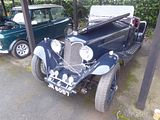
ROLLS ROYCE
This is a 1933 20/25 Park Ward Sportsman Coupe. The introduction of a smaller Rolls-Royce – the 20hp – in 1922 enabled the company to cater for the increasingly important owner-driver market that appreciated the quality of Rolls-Royce engineering but did not need a car as large as a 40/50hp Ghost or Phantom. The ‘Twenty’ proved eminently suited to town use, yet could cope admirably with Continental touring when called upon. Its successor, the 20/25hp, introduced in 1929, updated the concept with significant improvements, featuring an enlarged (from 3,127 to 3,669cc) and more-powerful cross-flow version of the Twenty’s six-cylinder, overhead-valve engine. The latter’s increased power allowed the bespoke coachbuilders greater freedom in their efforts to satisfy a discerning clientele that demanded ever larger and more opulent designs. Produced concurrently with the Phantom II, the 20/25 benefitted from many of the larger model’s improvements, such as synchromesh gears and centralised chassis lubrication, becoming the best-selling Rolls-Royce of the inter-war period. The Rolls-Royce 20/25hp was, of course, an exclusively coachbuilt automobile and most of the great British coachbuilding firms offered designs, many of them unique, on the 20/25hp chassis.
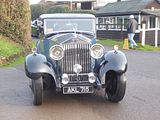
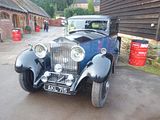
SUBARU
Now over 30 years old are the earliest of the first generation Impreza Turbo models. There have been seven noted versions of the WRX dating back from Subaru’s original World Rally Cross staging vehicles. Subaru adopted the name “WRX” to stand for “World Rally eXperimental” as all WRX versions (1992 to present) feature rally inspired technology, including all wheel drive, stiffened suspensions and turbocharged four cylinder engines. The STi versions were marketed with consecutive numbers. Another way to determine the version of a WRX was to look at the chassis code. All WRX sold between 1992 and 2000 have the beginning chassis code of GC8 2/4 door sedan or GF8 hatchback; this is followed by a letter from A to G. Coupe versions share the “GC” code with sedans, except in the US, where they have a separate chassis code of “GM”. In 1994, Subaru introduced Subaru Tecnica International (STi badged) versions of the WRX in Japan. These models were upgraded from the standard WRX in many categories, including blueprinted performance-tuned engines, transmissions, and suspensions. The STi versions of the WRX were immensely successful in rallies and popular among street racers but were only sold in the Japanese market. Compared to the WRX, the STi had mostly mechanical modifications. (STi prepped Subaru rally cars since 1988 including the Legacy RS, the WRX STi Version was just the first car with an actual STi badge, though with handcrafted tuning). The WRX debuted in November 1992 with 240 PS. The centre differential was a viscous coupling type, the rear limited slip differential was a viscous type. The WRX Type RA is a stripped down version of the WRX that was available in the Japanese market for people to purchase for motorsports and tuning. Targeted for race and rally, the RA versions were generally lighter in weight; featuring reduced soundproofing, manual windows, car horn delete, no air conditioning, no anti-lock brakes, and added racing features such as more robust engines, 5th injection, intercooler water spray and shorter gearing. The WRX Type RA uses a closer ratio gearbox and a three-spoke leather steering wheel from Nardi. The ra model chassis code between GC8-(000000 to 005000) are only sold to the race team by order. Close ratio transmission is anticipated race use, the gap between each gear is brought closer together and a specific close ratio transmission is used. In Europe, the WRX was introduced as the Impreza GT, and as the Impreza Turbo 2000 (UK). It came with 208 hp. A bewildering array of different versions would follow until the release of the second generation Impreza in 2000.
TOYOTA
This is an example of the sixth, and penultimate generation Celica. Launched in October 1993, the styling of this version was quite different from the car it replaced. Initially it was offered in notchback coupe or liftback form, with a convertible coming later, though the 2 door Coupe was not sold in the UK. ST and GT trims were offered, with the former using a new 1.8 litre 4 cylinder engine and the latter using the larger 2.2 litre that had been in its predecessor. There was also a GT-Four version, the most powerful Celica to date, which produced 239 hp in export versions from an updated 3S-GTE engine. Influenced strongly by Toyota Team Europe, Toyota’s factory team in the World Rally Championship, the final version of the GT-Four included improvements such as an all-aluminium bonnet to save weight, four-channel ABS (with G-force sensor), an improved turbocharger (incorrectly known by enthusiasts as the CT20B), and Super Strut Suspension. The 2500 homologation cars built to allow Toyota to enter the GT-Four as a Group A car in the World Rally Championship also sported extras such as all of the plumbing required to activate an anti-lag system, a water spray bar for the Intercooler’s front heat exchanger, a water injection system for detonation protection, a hood spoiler mounted in front of the windscreen to stop hood flex at high speed and the standard rear spoiler mounted on riser blocks. The car proved to be quite competitive in the 1995 World Championship. However, the team was banned from competition for a year after the car’s single victory due to turbocharger fixing – a device that meant there was no air path restriction on the intake – when the jubilee clip was undone this would flick back into place so as to go un-noticed by inspectors. Toyota has always claimed that they knew nothing of the fix – but opponents say it was one very cleverly engineered device. In some respects this car was a true sports car; in order to qualify for rallying it has a lot of special features and a unique strut arrangement. A minor facelift was applied for 1996, with new bumpers, a smaller air dam and revised rear spoiler. This version of the Celica was replaced in 1999 by the last car to bear the name.
Also here was the Yaris GR, ever-present these days where enthusiasts are gathered, and for good reason, as this is by all accounts an outstanding little car. An instant classic.
VAUXHALL
After a four-year gestation period, the new front-wheel drive Cavalier was introduced on 26 August 1981. Unlike the previous generation, the Cavalier II had no styling or engineering difference from its Opel sister the Ascona C, differing only in badging and trim. On its launch, it offered class-leading levels of fuel economy and performance which had previously been unseen in this size of car. Sales began the following month. The GM Family II engine – used on all but the base 1.3L model, was manufactured by Holden’s Fishermans Bend, Australia factory. This model was part of GM’s family of compact J-cars, along with the new Opel Ascona, the Australian Holden Camira, the Brazilian Chevrolet Monza, the Japanese Isuzu Aska, and the North American Chevrolet Cavalier, Pontiac Sunbird, Buick Skyhawk, Oldsmobile Firenza (which made use of a Vauxhall nameplate from the 1970s), and Cadillac Cimarron. In the United Kingdom, the new Cavalier was a huge success and challenged the supremacy of the Ford Cortina as the company car of choice. Indeed, it went on sale only a year before the Cortina was discontinued. By 1982, Ford and Vauxhall had an effective two-horse race at the top of this sector on the British market, as sales of the Talbot Alpine (previously a Chrysler until Peugeot took over the European operations of Chrysler) had tailed off by 1981, while British Leyland was winding down production of the Austin Ambassador hatchback and Morris Ital saloon and estate in preparation for the launch of an all-new car (which would be sold as the Austin Montego) by 1984. Popular foreign competitors at the time included the Renault 18, which had arrived on the British market in December 1978. The MK2 Cavalier also debuted in the same year as the MK2 Volkswagen Passat. Following the British public’s reluctance to embrace the Ford Sierra’s radical styling in 1982, the Cavalier overtook the Sierra in sales and outsold the Sierra in 1984 and again in 1985, although the Sierra had comfortably outsold it in 1983. The Sierra narrowly outsold it in 1986, and a facelift for the Sierra at the start of 1987 helped Ford build a wide lead at the top of the large family car sector as nearly 140,000 Sierras were sold that year, while Cavalier sales fell below 100,000. By the time the second generation Cavalier was discontinued to make way for the third generation model in October 1988, the Sierra was almost twice as popular. It was Britain’s second best selling car (behind the Ford Escort) in 1984 and 1985, and at its peak, this version of the Cavalier came with the choice of 1.3 or 1.6 L engines derived from the smaller Vauxhall Astra (also sold as the Opel Kadett), while for 1983 a 1.8 L engine was launched, which had electronic fuel injection. A diesel of 1.6 L was added about the same time, while the 1.8 L was supplemented by a 2.0 L for the 1987 model year. Perhaps surprisingly, it was narrowly beaten to the European Car of the Year award for 1982 by the Renault 9, with third place going to the Mark II Volkswagen Polo. This model was produced as a two-door or four-door saloon and five-door hatchback. An estate version followed in October 1983, based on the Holden Camira estate with rear body panels imported from Australia. It was originally only available with the 1.6 S engine in Base, L, and GL models, and proved a slow seller. For 1985 the diesel was also made available, but the Estate still only represented about 7 percent of Cavalier sales in 1985 and 1986. The slow selling two-door saloon was dropped from the Cavalier range by October 1982 and the Birmingham Motor Show, although it remained part of the Ascona range in other markets. A convertible, based on the two-door and converted by Hammond & Thiede in Germany, was subsequently offered. The Thatcher government in the United Kingdom created a tax break at 1.8 L, with any company car having a larger engine than this attracting higher personal benefit taxes, thus effectively giving the Cavalier an advantage over its rivals soon after its launch. On its launch, the MK2 Cavalier was well received by the motoring press, and like its predecessor was the catalyst for another surge in Vauxhall sales. In 1981, just over 33,000 MK1 and MK2 Cavaliers had been sold in the UK, although it was still Britain’s seventh best selling car. A year later, sales more than trebled to over 100,000 cars as Britain’s fifth best selling car. In 1983, it attained more than 127,000 sales (some 7% of the new car market) and was the fourth best selling car, although it still trailed behind the new Ford Sierra. For 1984 and 1985, however, it was Britain’s second best selling car, with more than 130,000 sales each year, comfortably outselling the fifth-place Sierra. In 1986, it was narrowly outsold by the Sierra, which then underwent a major facelift and became available as a saloon for the first time, and gained a wide sales lead over the Cavalier for the next two years. Mirroring changes being made to the Opel Ascona C, an updated Cavalier debuted in late 1984 (for the 1985 model year) which saw all models gain the “eggcrate” grille from the CD model, modified rear lamp clusters with darkened detailing, new steering wheels, larger steering column stalk switches, upgraded equipment, new upholstery options and different instrument graphics — some of these changes came direct from the recently introduced Kadett E/Astra Mark 2. Engine options were further expanded, with the fuel injected 1.8L engine now being available on GL trim. Late 1986 saw the range updated for the second time before its eventual replacement by the Vectra A/Mk3 model in 1988, with new body-colour front grilles and rear lamp clusters revised again in a style similar to the larger Senator model together with further improvements to equipment levels. A new 2.0L version of the Family II engine became available on CD, SRi and GLS trim, whilst the availability of the fuel injected 1.8L unit was extended down to L trim. The SRi model was now available with the uprated 20SEH engine, which had 130 hp and could exceed 120 mph (193 km/h). This had the same engine as the Astra GTE 8v (20SEH), though it was more powerful owing to a better exhaust route. The last version of the Cavalier Mark II to be launched was the Cavalier Calibre. Based on the SRi130 with styling from Aston Martin/Tickford and the bodykit, sports suspension and exhaust being produced by Irmscher, it was a limited production run of only 500 cars. The car came with a very high specification including a trip computer, Recaro seats, power windows and power steering. When released in 1987, it cost around £13,000. Vauxhall sold 807,624 examples of the second generation Cavalier between 1981 and 1988. By December 1989, it was the third most common model of car on British roads, although these government statistics mostly calculated each car by its generation rather than by different nameplate, with pre and post facelifted versions of an unchanged basic design (for example the Ford Sierra) being counted separately. In August 2006, Auto Express named it as the country’s sixth most scrapped car of the last 30 years, with just 6,343 (fewer than 1%) still on the road. The only car to cease production after the Cavalier Mark II, and which disappeared at a greater rate, was the Skoda Estelle (which was withdrawn from sale in 1990). By December 2009, that figure had fallen to a mere 1,289
By the mid-1980s, General Motors had started developing a new model to replace the J-Car models in Europe (its American, Australian and Japanese divisions would instead be replaced by different designs in due course) by the end of the decade. The new model would retain the Cavalier nameplate for the Vauxhall version on the UK market, but elsewhere in Europe the car would be sold as the Opel Vectra – spelling the end for the long-running Ascona nameplate. Soon afterwards, development also began on a new coupe which would share the same underpinnings as the hatchbacks and saloons, but would use a different nameplate and feature completely different styling. The final generation Cavalier went on sale on 14 October 1988, being Vauxhall’s version of the Opel Vectra “A”, again available as a saloon and hatchback. There was no estate version in the Opel line-up, and as this design was not going to be sold in Australia, there was no prospect of Vauxhall turning to Holden for a replacement. Early plans for an estate model exclusive to Europe to be developed never materialised. During 1989, however, the Cavalier’s floorpan did spawn a new coupe – the Calibra, the first Vauxhall coupe since the original Cavalier coupe was discontinued in 1981. The Calibra was the official replacement for the Opel Manta, which had been discontinued in 1988, and was also sold on continental Europe under the Opel Brand. Plans for the Calibra to be imported to the USA under the Saab brand never materialised. The Vectra name was not adopted at this model change as Vauxhall feared reviving memories of the much-maligned Vauxhall Victor, whereas the Cavalier was a generally well received product and had helped boost Vauxhall’s sales and reputation. Early Victors had been viewed in some quarters as excessively corrosion prone, but the Victor was becoming a very distant memory by this stage: the Vectra name would eventually appear on a Vauxhall in 1995, when the Cavalier was finally replaced. In place of the Mark II Cavalier’s angular exterior was a more rounded appearance, reflecting the change in styling tastes throughout Europe at this time. There was also a new economical 1.4 L petrol engine. The biggest changes to the range were the addition of 2.0 L sixteen valve engines, better known as the “red top” or XE. This was fitted to the GSi 2000 and later SRis. Also made available was a four-wheel drive system, fitted to a 2.0iL model (8 valve SRi spec) and on a version of the GSi 2000. There were two diesels available: a 1.7 L, 60 hp from launch, and an 82 hp 1.7-litre Isuzu-engined lightly blown turbodiesel from 1992. The early SRis were fitted with the 2.0-liter eight-valve engine from the previous Cavalier model, which produced 130 hp. Despite the lack of an estate body style, the Cavalier topped the large medium family car sales charts in Britain in 1990, narrowly outselling the Ford Sierra, while Rover was beginning to phase out its Montego in favour of the new Rover 400 Series and later the more upmarket 600 Series. Other strong contenders in this sector included the long-running Citroën BX and Peugeot’s highly regarded 405. Having first outsold the Sierra in Britain in 1990, it was Britain’s second best selling car behind the Ford Escort in 1992. It did not lose top spot in its sector until it was overtaken by the Sierra’s successor, the Mondeo, in 1994. The Calibra, launched in 1989, was well received, notably for its sporty although cramped interior (largely based on the interior of the Cavalier) and its streamlined styling which in turn enabled the Calibra to have the lowest drag coefficient of the period at 0.26 for the 8v model (0.29 for the rest) – a record it held for the next 10 years. A few variants were made: the 2.0 litre eight valve, 2.0 L sixteen valve (the same engine found in the proven Cavalier GSi 2000), the turbo version (again, the same engine used in the very successful Cavalier Turbo), the 2.5 L V6 (with a top speed of around 145 mph) and finally the 2.0 L 16-valve “Ecotec”. A facelift in the autumn of 1992 for the 1993 model year saw the Cavalier’s 1.4 L engine dropped and the 167 bhp 2.5 L V6 added to the range. At this time the GSi 2000 was replaced by a new four wheel drive version badged simply “Cavalier Turbo”, with a turbocharged version of the sixteen valve engine producing over 200 bhp. The Vauxhall logo was added to the centre of the boot. Most of the range now had airbags and anti-lock brakes as standard (the first car in its class to do so) and all models were fitted with a toughened safety cage, side impact beams (providing additional longitudinal load paths) and front seatbelt pretensioners. This version of the Cavalier was the first Vauxhall to feature a drivers airbag, with a passenger one being optional; this feature soon became available across the rest of the company’s range. The exterior design was also freshened up, with a new look grille, headlights, rear lights and bumper mouldings and an increase in sound insulation, especially in GLS and higher models making the Cavalier a quiet place to travel in. In late 1994, the new 2.0L Ecotec engine was launched replacing both the popular eight valve C20NE and high performance sixteen valve “redtop” engine. The new engine had improved fuel economy and low end torque at the cost of maximum power output, 136 hp compared to 150 hp for the “redtop” that it replaced. After twenty years and three generations, the Cavalier came to an end in October 1995 when it was replaced by the Vectra, though sales continued for about a year afterwards and several P registered versions (August 1996 to July 1997 period) were sold. The third and final incarnation of the Cavalier was a big improvement over its predecessors (and most earlier Vauxhalls) in terms of durability, with the rust problems that had plagued Vauxhall for years finally being conquered. This was reflected by the fact that Mark III Cavaliers were a common sight on British roads for well over a decade after the end of production. The demise of the Cavalier name marked a significant moment for the Luton-based company, as it would be the last of its main models with a distinct name from its Opel counterparts until the rebadging of the Opel Speedster as the Vauxhall VX220 and the Opel Karl as the Vauxhall Viva. All future Vauxhall models would share their names with those of Opel, or in the case of the 2004 Vauxhall Monaro, with Holden. However, the Astra nameplate was chosen by Vauxhall at the beginning of 1980 for its version of the first front-wheel drive Opel Kadett, and from 1991 General Motors decided to sell the Opel version of the car as the Astra. This version of the Cavalier shared its chassis with the Saab 900 that was produced from 1993 until 1998, and continued until 2002 as the Saab 9-3, due to Saab also being within the General Motors combine at the time.
VOLKSWAGEN
The fifth generation Golf GTI features a 2.0 litre turbocharged inline 4-cylinder petrol engine with Fuel Stratified Injection (FSI) direct-injection technology, which produces 200PS (197 bhp). It is available in both 3-door and 5-door hatchback body shapes, and comes with a choice of either 6-speed manual or a 6-speed Direct-Shift Gearbox (DSG) which greatly reduces shift time to only 8ms. The concept GTI was first shown to the public at the Frankfurt Motor Show in 2003. The first production model was initially unveiled at the Mondial de l’Automobile in Paris in September 2004, and went on sale around the world shortly thereafter. At the Los Angeles Auto Show in January 2006, the GTI made its long-awaited North American debut in 3-door guise (a 5-door variant was eventually made available), where it is marketed solely under the ‘GTI’ moniker, with no reference to the Rabbit. The new GTI has a considerable price increase over the previous model, mainly due to the features mentioned above, and the fact that the exterior itself had not seen such a dramatic design change in years. The price is further raised because it is built in Germany, unlike the Mk4 some of which were built in Brazil. The innovative DSG transmission and the 200 PS (197 hp) TFSI engine all helped raise the retail price of the car. The Mk5 GTI was named 2007 Automobile of the Year by Automobile Magazine, in December 2006. This generation marked the only generation in Canada to have the GTI as a separate nameplate rather than a trim of the Golf. When Volkswagen announced the revival of the Golf in the US and Canada for the 2010 model year, Volkswagen reverted the GTI nameplate as a Golf trim, although the GTI remains a separate nameplate in the United States. Production ceased on introduction of the sixth generation model in 2008.
In mid-December 2016, Volkswagen presented the Up GTI. It is powered by a 1.0-litre three-cylinder TSI petrol engine, which produces 115 PS (113 bhp). Its top speed is 192 km/h (119 mph) and it is capable of accelerating 0–100 km/h (0–62 mph) in 8.8 seconds with a top speed of 196 km/h (122 mph). Weighing just 997 kg (2,198 lb), Volkswagen claims that it is capable of delivering between 49.6 mpg‑imp (5.7 L/100 km; 17.6 km/L) to 50.4 mpg‑imp (5.6 L/100 km; 17.8 km/L) depending on the specifications, with CO2 emissions between 127 and 129 g/km. It is the only Up to be available with a six-speed manual gearbox. The Up GTI went on sale in January 2018. In April 2019, ordering for the Up GTI was halted in the United Kingdom, but in January 2020 VW UK started taking orders again for a lightly refreshed version. The refresh included small optional equipment changes, but no alterations to the powertrain, chassis or brakes. As of January 2023, new orders for the Up GTI were closed to allow time to complete orders before the GTI model ceased production.
There were a number of other recent GTi-badged VWs here, a mix of Polo and Golf cars.
For a season opener, this was a good event. For sure the rather grimey weather did not encourage the huge turnout that will doubtless be a feature of the Breakfast Clubs later in the year, for which tickets tend to sell out some time before the event day, but in February, a lot of cherished cars are still tucked up in winter quarters and on SORN, so you really don’t expect to see the same mix of cars. That was such great variety here is something to celebrate, and is a good omen for the events to come in 2025. I hope to be able to attend a good number of them.