The core of the Queen Square event calendar are the twelve monthly Breakfast Club style meets that take place during the summer months at Eastwood Park and in the winter at Easter Compton, but a couple of years ago, in response as much to suggestions from attendees as anything else, an experiment was held with a couple of mid-week evening events. The first was quite well supported but a combination of disappointing weather and some major traffic issues on the evenings in question since then limited attendees quite noticeably. Undeterred, a new plan for 2025 was conceived, with a new venue and a new timing of a Sunday evening. The location would be Bristol Golf Club, easily accessible from junction 17 of the M5 and whose staff were more than enthusiastic about the idea of bringing in a whole load of cars. Interested to see how this panned out, I made plans to pop along after having spent the day at the Silverstone Festival. I got there relatively early but then saw a long procession of cars arriving until the whole area allocated to the event was full. As is the case with events like this, there is huge variety in attendees from a lot of supercars, augmented by the local dealers, some true classics and plenty of, let’s call them modern enthusiast cars, mostly German and many of them modified to some extent. These last are really not to my taste so don’t feature much in this report, which focuses more on the cars that do interest me.
ABARTH
Rumours started to circulate towards the end of 2014 that Abarth were going to upgrade the Competizione model, so as better to bridge the gap between the Turismo and the 190 bhp 695 Biposto that had been added to the range earlier in the year. It was Geneva 2015 when the result was finally shown to an expectant fan base. Most exciting news was that thanks to a bigger Garrett Turbo, the engine had been tweaked to 180 bhp, and with reduced CO2 emissions. A standard spec that included Koni Dampers, Brembo brakes, Xenon lights, Sabelt seats, Climate Control, parking sensors as well as other refinements that had been added like the TFT instrument display all proved very compelling, so not long after the first cars reached the UK in June of 2015, I found temptation too hard to resist, and as is well documented here, swapped my 2010 car for one of these. At the time I ordered it, Cordolo Red, a tri-coat pearlescent paint which shimmers in bright sunlight looked set to become one of the most popular colours of the lot, even though it is a cost option. Indeed, the Launch Edition models were all offered either in this colour or Scorpion Black, with black wheels. Surprisingly, the colour was not carried over to the Series 4 cars.

What is known as the Series 4 version of the familiar 595 reached the markets in the middle of 2016. After rumours had circulated all winter following the launch of the facelifted Fiat 500 last year, Abarth finally unveiled the Series 4 at the end of May 2016. Initially, we were told that the cars would not be available in the UK until September, but that came forward somewhat, with dealers all receiving demo cars in June, and the first customers taking delivery in July. Three regular production versions of both the closed car and the open-topped C were initially available, all badged 595, and called Custom, Turismo and Competizione, as before, though numerous limited edition models have since appeared and in most case disappeared. The most significant changes with the Series 4 are visual, with a couple of new colours, including the much asked for Modena Yellow and a different red, called Abarth Red, which replaces both the non-metallic Officina and – slightly surprisingly – the tri-coat pearlescent Cordolo Red. as well as styling changes front and rear. The jury is still out on these, with many, me included, remaining to be convinced. At the front, the new air intake does apparently allow around 15 – 20 % more air in and out, which will be welcome, as these cars do generate quite a lot of heat under the bonnet. Competizione models for the UK retain the old style headlights, as they have Xenon lights as standard, whereas the Custom and Turismo cars have reshaped units. At the back, there are new light clusters and a new rear bumper and diffuser. Inside, the most notable change is the replacement of the Blue & Me system with a more modern uConnect Audio set up, which brings a new colour screen to the dash. Mechanically, there is an additional 5 bhp on the Custom (now 145) and Turismo (now 165 bhp) and the option of a Limited Slip Diff for the Competizione, which is likely to prove a popular option. Details of the interior trim have changed, with a filled-in glovebox like the US market cars have always had, and electric windows switches that are like the US ones, as well as a part Alcantara trim to the steering wheel in Competizione cars.


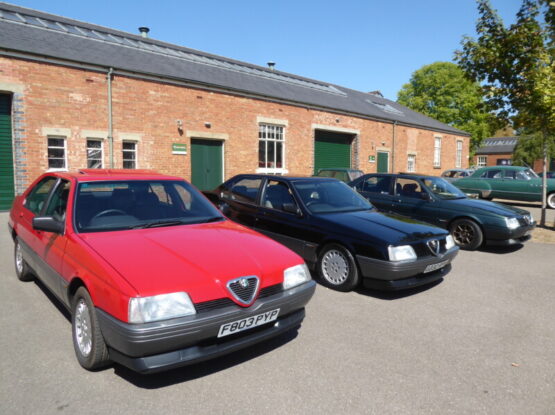
ALFA ROMEO
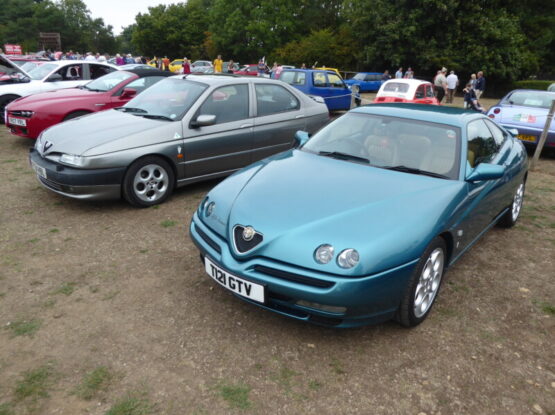
The 916 Series cars were conceived to replace two very different models in the Alfa range. First of these was the open topped 105 Series Spider which had been in production since 1966 and by the 1990s was long overdue a replacement. Alfa decided to combine a follow on to the Alfetta GTV, long out of production, with a new Spider model, and first work started in the late 1980s. The task was handed to Pininfarina, and Enrico Fumia’s initial renderings were produced in September 1987, with the first clay models to complete 1:1 scale model made in July 1988. Fumia produced something rather special. Clearly an Italian design, with the Alfa Romeo grille with dual round headlights, recalling the Audi-based Pininfarina Quartz, another design produced by Enrico Fumia back in 1981, the proposal was for a car that was low-slung, wedge-shaped with a low nose and high kicked up tail. The back of the car is “cut-off” with a “Kamm tail” giving improved aerodynamics. The Spider would share these traits with the GTV except that the rear is rounded, and would feature a folding soft-top with five hoop frame, which would completely disappear from sight under a flush fitting cover. An electric folding mechanism would be fitted as an option. Details included a one-piece rear lamp/foglamp/indicator strip across the rear of the body, the minor instruments in the centre console angled towards the driver. The exterior design was finished in July 1988. After Vittorio Ghidella, Fiat’s CEO, accepted the design, Alfa Romeo Centro Stile under Walter de Silva was made responsible for the completion of the detail work and also for the design of the interiors, as Pininfarina’s proposal was not accepted. The Spider and GTV were to be based on the then-current Fiat Group platform, called Tipo Due, in this case a heavily modified version with an all new multilink rear suspension. The front suspension and drivetrain was based on the 1992 Alfa Romeo 155 saloon. Chief engineer at that time was Bruno Cena. Drag coefficient was 0.33 for the GTV and 0.38 for the Spider. Production began in late 1993 with four cars, all 3.0 V6 Spiders, assembled at the Alfa Romeo Arese Plant in Milan. In early 1994 the first GTV was produced, with 2.0 Twin Spark engine. The first premiere was then held at the Paris Motor Show in 1994. The GTV and Spider were officially launched at the Geneva Motor Show in March 1995 and sales began the same year. The cars were well received. At launch, many journalists commented that Alfa had improved overall build quality considerably and that it came very close to equalling its German rivals. I can vouch for that, as I owned an early GTV for eighteen months, and it was a well built and reliable car. In 1997 a new engine, a 24-valve 3.0 litre V6, was available for the GTV along with bigger, 12.0 inch brakes and red four-pot calipers from Brembo. The console knobs were changed from round central to rectangle ones and to a three-spoke steering wheel. Some versions were upgraded with different front bumper mesh to bring the wind noise down to 74 dBA. In May 1998 the cars were revamped for the first time, creating the Phase 2 models. Most of the alterations were inside. The interior was changed with new centre console, painted letters on skirt seals, changed controls and switches arrangement and different instrument cluster. Outside, the main changes included chrome frame around the grille and colour-coded side skirts and bumpers. A new engine was introduced, the 142 hp 1.8 Twin Spark, and others were changed: the 2.0 Twin Spark was updated with a modular intake manifold with different length intakes and a different plastic cover. Power output of the 2.0 TS was raised to 153 hp. Engines changed engine management units and have a nomenclature of CF2. The dashboard was available in two new colours in addition to the standard black: Red Style and Blue Style, and with it new colour-coded upholstery and carpets. The 3.0 24V got a six-speed manual gearbox as standard and the 2.0 V6 TB engine was now also available for the Spider. August 2000 saw the revamp of engines to comply with new emission regulations, Euro3. The new engines were slightly detuned, and have a new identification code: CF3. 3.0 V6 12V was discontinued for the Spider and replaced with 24V Euro3 version from the GTV. 2.0 V6 Turbo and 1.8 T.Spark were discontinued as they did not comply with Euro3 emissions. By the 2001-2002 model year, only 2 engines were left, the 2.0 Twin.Spark and 3.0 V6 24V, until the Phase 3 engine range arrived. The Arese plant, where the cars had been built, was closing and, in October 2000, the production of GTV/Spider was transferred to Pininfarina Plant in San Giorgio Canavese in Turin. In 2003 there was another and final revamp, creating the Phase 3, also designed in Pininfarina but not by Enrico Fumia. The main changes were focused on the front with new 147-style grille and different front bumpers with offset numberplate holder. Change to the interior was minimal with different centre console and upholstery pattern and colours available. Instrument illumination colour was changed from green to red. Main specification change is an ASR traction control, not available for 2.0 TS Base model. New engines were introduced: 163 hp 2.0 JTS with direct petrol injection and 237 hp 3.2 V6 24V allowing a 158 mph top speed. Production ceased in late 2004, though some cars were still available for purchase till 2006. A total of 80,747 cars were made, and sales of the GTV and Spider were roughly equal. More V6 engined GTVs than Spiders were made, but in 2.0 guise, it was the other way round with the open model proving marginally more popular.

Visually similar to the 159 models at the front, the Brera and Spider boasted unique styling from the A pillars rearwards. They were offered with the same range of engines as the 159, and thanks to that strong, but rather heavy platform on which they were built, even the 3.2 litre V6 cars were more Grand Tourer than rapid sports car. Pininfarina was responsible for both models. The Brera was first to market, in 2005, with the Spider following in 2006. Production of both ceased in late 2010, by which time 12,488 units of the Spider and 21,786 units of the Brera had been built. It will be very surprising if these do not attain classic status, and the consequent rise in values, though that has not happened yet.

The Alfa Romeo 4C is a two-seater, rear-wheel drive coupé with technology and materials derived from the Alfa Romeo 8C Competizione, with a 1750 cc turbo petrol engine with direct injection, the “Alfa TCT” twin dry clutch transmission, and the Alfa DNA dynamic control selector. The 4C concept version was unveiled in the 81st Geneva Motor Show in March 2011, followed by the Mille Miglia 2011 parade, Goodwood Festival of Speed 2011,2011 Frankfurt Motor Show. It was displayed for the first time outside in Concorso d’Eleganza Villa d’Este in 2012. Compared to the production version, it is very similar, with the biggest differences being front lights, side vents and mirrors. The Alfa Romeo 4C Concept was voted the ‘Most Beautiful Concept Car of the Year’ award by the readers of German magazine Auto Bild, and won the Auto Bild Design Award 2011. It was awarded the “Design Award for Concept Cars & Prototypes” by referendum of the public in Villa d’Este. The production car was unveiled at the 2013 Geneva Motor Show, followed by 2013 Essen ‘Techno Classica’, Goodwood Festival of Speed 2013, Moscow Raceway, 2013 Frankfurt Motor Show. The bare ‘4C000’ chassis was also shown at the 2013 Geneva Motor Show. Ordering of European models began in October 2013 at Alfa Romeo dealerships in Europe. As part of the Alfa Romeo 4C launch, Alfa Romeo Style Centre and Compagnia Ducale designed a 4C IFD (Innovative Frame Design) Bicycle, inspired by the Alfa Romeo 4C coupé. The vehicle went on sale in December 2013 and marketed in Europe, Asia and America. Production of the 4C began May 2013 at Maserati’s plant in Modena, with an expected production of up to 2500 units per year. It was the first mass-produced Alfa Romeo model to be sold in the US market since 1995 when the 164 sedan stopped being sold in the US. Production of the Alfa Romeo 4C was originally estimated to be over 1000 units per year, with an upper limit of 3500 units per year, depending on the quantity of carbon fibre chassis that can be built by the supplier Adler Plastic. Within the 3,500-unit quota, 1,000 units are earmarked for Europe. Delivery of the European Alfa Romeo 4C Launch Edition took place at Balocco (Vercelli, Italy) Test Centre. In 2018, the 4C coupe was discontinued for the North American market. The 4C Spider, however continued to be sold there for model year 2019 and model year 2020. In other markets, such as Australia and Japan, both the coupe and Spider continued. In late 2020, a new tribute-edition named the 4C Spider 33 Stradale Tributo was announced. The car was designed by Centro Stile Alfa Romeo (Style Centre) and developed by Alfa Romeo. The chassis is composed of a central carbon fibre tub, with aluminium subframes front and rear. The carbon fibre tub is produced by TTA (Tecno Tessile Adler) in Airola, as a joint venture between Adler Plastic and Lavorazione Materiali Compositi. The carbon fibre components that make up the chassis are cut using CNC technology. The entire carbon-fibre monocoque chassis (“tub”) of the car weighs 143 pounds (65 kg). Front and rear aluminium subframes combine with the tub, roof reinforcements and engine mounting to comprise the 4C chassis giving the vehicle a total chassis weight of 236 lb (107 kg) and a total vehicle curb weight of just 2,465 lb (1,118 kg). The 4C has a single carbon fibre body, similar to the body of many supercars. The outer body is made of a composite material (SMC for Sheet Moulding Compound) which is 20% lighter than steel. The stability is comparable to steel and better than aluminium. The 4C employs double wishbone suspensions at the front and MacPherson struts at the rear. The resultant weight distribution is 38% on the front and 62% on the rear axle. Wheels and tyres have different diameters and widths front and rear: 205/45 R17 front and 235/40 R18 back as standard, with optional 205/40 R18 and 235/35 R19. Both wheel options come equipped with Pirelli P Zero tyres. The 4C uses vented disc brakes on all wheels; Brembo 305 millimetres (12.0 in) on the front and 292 millimetres (11.5 in) on the rear. The car can stop from 100 km/h (62 mph) in 36 metres. To save weight and increase steering feel, the 4C has no power steering. Its center of gravity height, at 40 centimetres (16 in) off the ground, is 7 centimetres (2.8 in) lower than that of the Lotus Elise. The 4C uses a new all-aluminium 1,742 cc inline 4 cylinder turbocharged engine producing 240 PS at 6000 rpm. The engine has been designed for minimum weight. The engine’s combined fuel consumption 6.8 l/100 km (42 mpg‑imp; 35 mpg‑US).[4] 0–62 mph (0–100 km/h) acceleration is achieved in 4.5 seconds and the top speed is 258 km/h (160 mph), the power-to-weight-ratio being just 0.267 hp/kg (8.22 lb/hp) A journalist from Quattroruote car magazine demonstrated how the 4C accelerates from 0–100 km/h (0–62 mph) faster than 4.5 seconds. In race mode, with left foot on the brake pedal, if you pull the right shift paddle the engine will rev to 3500 rpm, but if you also pull the left paddle the engine will rev to 6000 rpm and 0–100 km/h (0–62 mph) time will go down to 4.2 seconds. Italian car magazine Quattroruote published the lap time of 4C around Nürburgring. It lapped the ring in 8:04. The 4C is equipped with a six speed Alfa TCT Dual Dry Clutch Transmission, and can be operated via gearshift paddles on the steering wheel. It also has an Alfa ‘DNA’ dynamic control selector which controls the behaviour of engine, brakes, throttle response, suspension and gearbox. In addition to the modes already seen in Giulietta, the 4C has a new “Race” mode. The U.S. version of the 4C was introduced in the 2014 New York International Auto Show with the first 100 4C’s being shipped to the U.S. early July, with a total of 850 being shipped by the end of 2014. The U.S. model includes extra bracing and strengthening required to meet U.S. crash regulations (including aluminium inserts in the carbon fibre chassis), resulting in 100 kg (220 lb) of weight increase. This version also has new headlamps similar to those seen before in the 4C Spider version. In 2018, the 4C coupe was discontinued for the North American market due to US DOT NHTSA FMVSS 226 Ejection Mitigation. The regulation called for a progressive compliance date based on volume and, due to low volume, the 4C was allowed to continue until the last compliance date of 9/1/2017, thus all 2018 4C coupes in North America have build dates of 8/2017 or earlier. The 4C Spider, however continued to be sold in North America for model year 2019 and model year 2020. The Spider version of the 4C was previewed showing a pre-production prototype at the 2014 Geneva Motor Show. Sharing its engine with the Coupé version, the 4C Spider has different external parts such as the headlights, exhaust and engine hood, as well as a different roof section that features a removable roof panel. The North American spec 4C reflects a weight difference of only 22 lb (10 kg) (2,465 lbs vs. 2,487 lbs) for the Spider variant. Top speed is quoted at 257 km/h (160 mph) and acceleration from 0 to 100 km/h (62 mph) at 4.5 seconds. The 4C Launch Edition was a limited and numbered edition, unveiled at the vehicle’s launch at the 2013 Geneva Motor Show. The vehicle came in a choice of four paint colours (Rosso Alfa, Rosso Competizione tri-coat, Madreperla White tri-coat or Carrara White matte). 500 examples were reserved for Europe/ROW, 500 for North America, 88 for Australia (Rosso Alfa and Madreperla White only), 200 to Japan and 100 for the Middle East. Note that the original press release cited 500 for North America, 400 Europe, and 100 ROW; however, the plaques on actual cars suggest that more were built and are the numbers referenced above. Distinguishing features of the Launch Edition were carbon fiber trim (including headlight housings, spoiler and door mirror caps), rear aluminium extractor with dark finishing, Bi-LED headlights, dark painted 18-inch front and 19-inch rear alloy wheels, additional air intakes on the front fascia, red brake calipers, racing exhaust system, BMC air cleaner, specific calibration for shock absorbers and rear anti-roll bar, leather/fabric sports seats with parts in Alcantara and a numbered plaque. Alfa Red coloured cars got matching red stitching on the steering wheel, handbrake, mats, handles and sports seats. In Europe the vehicle went on sale for 60,000 euros including VAT. The 4C Competizione is a limited edition version of the 4C introduced in the 2018 Geneva Motor Show, finished in matte Vesuvio Grey, with carbon details on the roof, rear spoiler, mirror caps, side air vents and headlight moulding. The run reportedly consisted of 108 units. The Japanese market received 25 units, and 10 units were assigned to Australia. The US-market received no Competizione editions. The car had a very mixed reaction. The UK press hated it at launch, but owners generally disagreed and loved it. A total of 9117 were built before production ceased in 2020.

ALPINA
The Alpina B3 (E90) and Alpina D3 (E90) are a series of high performance compact executive cars manufactured by German automobile manufacturer Alpina from 2007 to 2013. Based on the BMW 3 Series (E90), the B3 and D3 were available in coupé, saloon, convertible (not available for the D3) and station wagon body styles. The B3 was officially unveiled at the 2007 Geneva Motor Show. Development of the B3 began in 2006. At that time, it was speculated that the car would either be introduced with a 4.4-litre supercharged V8 engine (already used in the B5, B6 and B7) or a naturally aspirated V8 engine (as used in the 550i and 750i). The supercharger would’ve been Alpina’s own design. Both of these speculations were nullified when the car was introduced in 2007 as it utilised a modified version of the BMW N54 inline-6 engine used in the 335i. The B3 was available with rear-wheel-drive or all-wheel-drive drivetrains. The cars equipped with the all-wheel-drive (BMW xDrive) system were called Allrad. The engine was modified by the addition of an Alpina specific ECU, oil cooler and lighter and stronger MAHLE pistons. These modifications allowed the engine to generate 360 PS (355 bhp) between 5,500 rpm to 6,000 rpm and 500 Nm (369 lb/ft) of torque at 3,800 rpm to 5,000 rpm. The engine has a red-line of 7,000 rpm. The engine was mated to a 6-speed ZF automatic transmission paired with a control system called Switch Tronic. The control system was first introduced by the company in 1993 and has a manual mode which allows the driver to change gears either by the gear lever or by buttons present behind the steering wheel. Shift times had been significantly improved, taking 100 milliseconds to shift gears. The company re-introduced one of their signature exterior colours for the B3 namely Alpina Green as Alpina Green II. However, the car could be ordered in any colour out of the standard exterior colours as offered on its predecessor. The exterior changes included optional Alpina pinstripes, a front spoiler with Alpina lettering, a rear lip spoiler and a light weight Akrapovic stainless steel exhaust system with quad exhaust tips. The exhaust system had a floating tip design, a first to be used on an Alpina vehicle. Buyers were offered a choice of three 20-spoke alloy wheels: 18 or 19-inch “Classic” (8″ and 9″ wide) and 19-inch “Dynamic” (set of 5 quadruple spokes, 8.5″ and 9.5″ wide). Facelift versions had additional “Classic C10″ option in 19″ (widths remained as in the original ones). The interior included Alpina logos and lettering, Alpina side sills, heated sport seats, wood trim, Lavalina leather upholstery, cruise control, Alpina floor mats and Alpina gauges with the speedometer reading up to 306 km/h (190 mph) on the European models. The interior could be customised to the customer specifications by the Alpina interior department. The suspension system of the B3 utilised a mixture of in-house developed components and BMW components. The coupé and cabriolet version used the shocks from the 335i Sport while the Saloon and Wagon variants used the shocks as found on the standard 335i. The coil springs as found on the 335i Sport are used throughout the B3 versions. The rear subframe bushings are the same as those found on the 335d while the secondary springs used are a mixture of those found on the 335xd and 335i Sport. The front stabilisers are the same as used on the 335i Sport while the rear stabilisers are bespoke units which are smaller than those found on the 335i. The use of different stabilisers allow for a better turn in and safe cornering. The suspension geometry is shared with the D3. The tyres used on the B3 are Michelin Pilot Sport tyres measuring 245/35 ZR19 at the front and 265/35 ZR19 at the rear, different to the sizes of D3 – 235/35 and 265/30, for 19”. Later version – D3 Biturbo – used B3 sizes. The B3 S is a high performance variant of the B3. Introduced at the 2010 Geneva Motor Show, the B3 S had a redesigned front spoiler, 19-inch wheels from the B7 and a new rear diffuser. The engine received a new ECU to result in a power increase to 400 PS (395 bhp) at 6,000 rpm and 540 Nm (398 lb/ft) of torque at 4,500 rpm. The engine had a compression ratio of 9.4:1 and a peak boost pressure of 1.2 bar. The B3 S saw a performance improvement over the B3 and that included a 0–100 km/h (0–62 mph) acceleration time of 4.7 seconds (0.1 seconds more for the wagon and 0.2 seconds more for the convertible with the roof closed) and a top speed of 303 km/h (188 mph) (299 km/h (186 mph) for the convertible with the roof closed and 298 km/h (185 mph) for the wagon). The B3 S had wider tyres than the B3, those measuring 245/40 ZR18 at the front and 265/40 ZR18 at the rear. The interior options remained the same as on the standard B3.

ALPINE
The Alpine A110 R (which stands for “Radical”) is a track-focused version that debuted on 4 October 2022, featuring a redesigned body kit and a more aggressive chassis setup. It has been lightened and received performance upgrades, which helps it accelerate from 0 to 100 km/h in 3.9 seconds and can reach a top speed of 285 km/h. The A110 R features a generous use of carbon fibre components, contributing to a weight reduction of 34 kilograms (75 pounds) and bringing the total weight down to 1,082 kilograms (2,385 pounds). Among the carbon fibre components are the hood with dual air ducts, the 18-inch wheels, the engine cover, and the Sabelt Track monocoque seats. Performance improvements include a 0 to 62 mph (100 km/h) sprint time of 3.9 seconds, which is three-tenths of a second faster than the A110 S, and a top speed of 177 mph (285 km/h). Additionally, the A110 R features a stiffer suspension setup with adjustable dampers, allowing the ground clearance to be lowered by 10 millimeters (0.4 inches), and Brembo brakes with improved cooling. The dual exhaust system has been upgraded with a double wall produced using 3D printing to better isolate exhaust gases. It does not come cheap – the starting price is £91,000.


ASTON MARTIN
Following the unveiling of the AMV8 Vantage concept car in 2003 at the North American International Auto Show designed by Henrik Fisker, the production version, known as the V8 Vantage was introduced at the Geneva Motor Show in 2005. The two seat, two-door coupé had a bonded aluminium structure for strength and lightness. The 172.5 inch (4.38 m) long car featured a hatchback-style tailgate for practicality, with a large luggage shelf behind the seats. In addition to the coupé, a convertible, known as the V8 Vantage Roadster, was introduced later in that year. The V8 Vantage was initially powered by a 4.3 litre quad-cam 32-valve V8 which produced 380 bhp at 7,300 rpm and 409 Nm (302 lb/ft) at 5,000 rpm. However, models produced after 2008 had a 4.7-litre V8 with 420 bhp and 470 Nm (347 lbft) of torque. Though based loosely on Jaguar’s AJ-V8 engine architecture, this engine was unique to Aston Martin and featured race-style dry-sump lubrication, which enabled it to be mounted low in the chassis for an improved centre of gravity. The cylinder block and heads, crankshaft, connecting rods, pistons, camshafts, inlet and exhaust manifolds, lubrication system and engine management were all designed in house by Aston Martin and the engine was assembled by hand at the AM facility in Cologne, Germany, which also built the V12 engine for the DB9 and Vanquish. The engine was front mid-mounted with a rear-mounted transaxle, giving a 49/51 front/rear weight distribution. Slotted Brembo brakes were also standard. The original V8 Vantage could accelerate from 0 to 60 mph in 4.8 seconds before topping out at 175 mph. In 2008, Aston Martin introduced an aftermarket dealer approved upgrade package for power and handling of the 4.3-litre variants that maintained the warranty with the company. The power upgrade was called the V8 Vantage Power Upgrade, creating a more potent version of the Aston Martin 4.3-litre V8 engine with an increase in peak power of 20 bhp to 400 bhp while peak torque increased by 10 Nm to 420 Nm (310 lb/ft). This consists of the fitting of the following revised components; manifold assembly (painted Crackle Black), valved air box, right and left hand side vacuum hose assemblies, engine bay fuse box link lead (ECU to fuse box), throttle body to manifold gasket, intake manifold gasket, fuel injector to manifold seal and a manifold badge. The V8 Vantage had a retail price of GB£79,000, US$110,000, or €104,000 in 2006, Aston Martin planned to build up to 3,000 per year. Included was a 6-speed manual transmission and leather-upholstery for the seats, dash board, steering-wheel, and shift-knob. A new 6-speed sequential manual transmission, similar to those produced by Ferrari and Lamborghini, called Sportshift was introduced later as an option. An open-topped model was added to the range in 2006 and then in the quest for more power a V12 Vantage joined the range not long after. No fewer than 18 different versions of this car were offering during its long production life.

Follow on to the DB7 was the DB9 (there has never been a car called DB8 – supposedly because people might have assumed this meant a V8 engine), and there was a nice example here. The Aston Martin DB9, designed by Marek Reichmann and Hendrik Fisker, was first shown by Aston Martin at the 2003 Frankfurt Auto Show, in coupe form. It was widely praised for the beauty of its lines. This was the first model to be built at Aston Martin’s Gaydon facility. It was built on the VH platform, which would become the basis for all subsequent Aston models. The Aston Martin DB9 was initially launched equipped with a 6.0 litre V12 engine, originally taken from the V12 Vanquish. The engine produced 420 lb/ft of torque at 5,000 rpm and a maximum power of 444 hp at 6,000 rpm, allowing the DB9 to accelerate from 0 to 60 mph in 4.7 seconds and a top speed of 299 km/h (186 mph). The engine largely sits behind the front-axle line to improve weight distribution. Changes to the engine for the 2013 model year increased the power to 503 hp and torque to 457 lb-ft, decreasing the 0 to 60 mph time to 4.50 seconds and with a new top speed is 295 km/h (183 mph). The DB9 was available with either a six-speed conventional manual gearbox from Graziano or a six-speed ZF automatic gearbox featuring paddle-operated semi-automatic mode. The gearbox is rear-mounted and is driven by a carbon-fibre tail shaft inside a cast aluminium torque tube. The DB9 was the first Aston Martin model to be designed and developed on Ford’s aluminium VH (vertical/horizontal) platform. The body structure is composed of aluminium and composites melded together by mechanically fixed self-piercing rivets and robotic assisted adhesive bonding techniques. The bonded aluminium structure is claimed to possess more than double the torsional rigidity of its predecessor’s, despite being 25 percent lighter. The DB9 also contains anti-roll bars and double wishbone suspension, supported by coil springs. To keep the back-end in control under heavy acceleration or braking, the rear suspension has additional anti-squat and anti-lift technology. Later versions of the car also features three modes for the tuning: normal, for every-day use, sport, for more precise movement at the cost of ride comfort, and track, which furthers the effects of the sport setting. The Aston Martin DB9 Volante, the convertible version of the DB9 coupe, followed a few months later. The chassis, though stiffer, uses the same base VH platform. To protect occupants from rollovers, the Volante has strengthened windscreen pillars and added two pop-up hoops behind the rear seats. The hoops cannot be disabled and will break the car’s rear window if deployed. In an effort to improve the Volante’s ride while cruising, Aston Martin have softened the springs and lightened the anti-roll bars in the Volante, leading to a gentler suspension. The retractable roof of the Volante is made of folding fabric and takes 17 seconds to be put up or down. The Volante weighs 59 kilograms (130 pounds) more than the coupe. The coupe and Volante both share the same semi-automatic and automatic gearboxes and engine. The car was limited to 266 km/h (165 mph) to retain the integrity of the roof. Like the coupe, the original Volante has 420 lb·ft of torque at 5,000 rpm and a maximum power of 450 hp at 6,000 rpm. The 0 to 60 mph slowed to 4.9 seconds due to the additional weight. The DB9 was facelifted in July 2008, which mainly amounted to an increase in engine power, to 476 hp and a redesigned centre console. Externally, the DB9 remained virtually unchanged. For the 2013 model year revision, Aston made minor changes to the bodywork by adapting designs from the Virage, including enlarging the recessed headlight clusters with bi-xenon lights and LED daytime strips, widening the front splitter, updating the grille and side heat extractors, updating the LED rear lights with clear lenses and integrating a new rear spoiler with the boot lid. .On newer models, like the coupe’s, the Volante’s horsepower and torque increased to 517 PS (510 hp) and 457 lb·ft respectively. As a finale for the model, a more powerful DB9 was released in 2015, called the DB9 GT. This had 540 bhp and 457 lb-ft of torque at 5500 rpm, giving a 0 to 60mph time of 4.4 seconds and 0 to 100mph in 10.2 seconds, with the standing quarter mile dispatched in 12.8 to 12.9 seconds and a top speed of 183mph. Production of the DB9 ended in 2016 being replaced by its successor, the DB11.

AUDI
The Audi S2 is an Audi sports car, manufactured by the division of quattro GmbH (now Audi Sport GmbH) on the same platform as the Audi 80 (B4) in Neckarsulm, Germany, produced from 1991 to 1995. The Audi S2 is the first car in the Audi S series. In 1994, a more powerful Audi RS 2 Avant was released. Together with Konrad Schmidt Motorsport GmbH (SMS), who had been responsible for Audi’s DTM version of the V8 quattro, Audi developed a sports version of the Coupé in September 1990 called the Audi S2. This was meant to boost lagging sales of the Coupé and as partial replacement for the famous Audi Quattro (launched in 1980). The front was revised to match the Audi V8, with new headlights and a grille with a body-coloured surround, a look which was then introduced on the entire Audi range before long. The S2 featured the well-proven 2.2-litre in-line five-cylinder 20-valve turbo petrol engine from the Audi 200 20V, which was a variant of the engine used in the Audi Quattro. A similar version of the engine was used in the Audi 100 based S4 (the ‘Ur-S4’). The S2 came as standard with quattro permanent four-wheel drive, and featured a heavy-duty 5-speed manual transmission, and was capable of 150 mph. The S2 was initially available with a 2.2-litre turbocharged engine which produced 220 PS (217 bhp) (Engine code 3B), coupled to a 5-speed transmission. In October 1992, the engine received minor upgrades as per the Audi S4, including distributor-less ignition, which increased power output to 230 PS (227 bhp) (Engine code: ABY) which was coupled to a new 6-speed gearbox. Although the power increase was minimal, the engine now produced 350 Nm (258 lb/ft) of torque (up from 309 Nm (228 lb/ft)) and featured an overboost function that allowed up to 380 Nm (280 lb/ft) in short bursts. The 3B-engined car will accelerate from 0-100 km/h (62.1 mph) in 5.7 seconds, continuing to a top speed of 246 km/h (152.9 mph). The ABY-engined S2 Coupé will accelerate from 0-100 km/h (62.1 mph) in 5.9 seconds, continuing to a top speed of 246 km/h (152.9 mph). In 1993, the S2 received some cosmetic updates, including new AVUS-style alloy wheels, ellipsoid beam (projector) headlamps and clear front indicator lenses. In February, the S2 Avant was introduced (with the more powerful engine and six-speed transmission from the outset). A limited run of four-door S2 sedan models were sold from July 1993 until 1994. The S2 saloon and Avant feature a lot of similarities in the rear axle support system to the later B5 A4 quattro. The B4 platform S2 Avant was also used between 1993 and 1995 as the basis for Audi’s RS2 Avant super-sports estate, which was modified for Audi with assistance from Porsche. 7,370 S2 Coupés were built, along with 1,812 S2 Avants and only 306 S2 sedans. In total, 9,488 S2s of all types were produced.


A convertible was planned from the beginning but did not appear until May 1991 as the Audi Cabriolet. This model remained in production until 2000 and was optically aligned with the B4 Audi 80 from its introduction.


BENTLEY
This is from the second generation of Continental GT which first appeared in 2010 and ran through to 2018 in an almost bewildering number of different versions with the V8 an W12 engines.

BMW
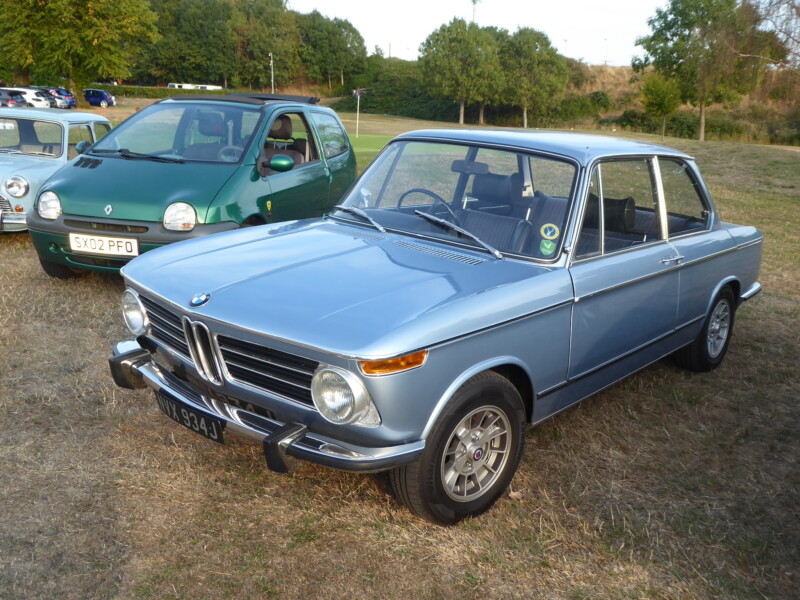
The 1600-2, as the first “02 Series” BMW was designated, was an entry-level BMW, and was smaller, less expensive, and less well-appointed than the New Class Sedan on which it was based. BMW’s design director Wilhelm Hofmeister assigned the two-door project to staff designers Georg Bertram and Manfred Rennen. The 9.1 in shorter length and wheelbase and lighter weight of the two-door sedan made it more suitable than the original New Class sedan for sporting applications. As a result, the two door sedan became the basis of the sporting 02 Series. The 1600-2 (the “-2” meaning “2-door”) made its debut at the Geneva Show in March 1966 and was sold until 1975, with the designation being simplified to “1602” in 1971. The 1.6 litre M10 engine produced 84 hp at 5,700 rpm and 96 lb·ft. A high performance version, the 1600 TI, was introduced in September 1967. With a compression ratio of 9.5:1 and the dual Solex PHH side-draft carburettor system from the 1800 TI, the 1600 TI produced 110 hp at 6,000 rpm. Also introduced in September 1967 was a limited-production cabriolet, which would be produced by Baur from 1967 through 1971. A hatchback 1600 Touring model was introduced in 1971 but was discontinued in 1972. It was what came next which was more significant. Helmut Werner Bönsch, BMW’s director of product planning, and Alex von Falkenhausen, designer of the M10 engine, each had a two litre engine installed in a 1600-2 for their respective personal use. When they realised they had both made the same modification to their own cars, they prepared a joint proposal to BMW’s board to manufacture a two litre version of the 1600-2. At the same time, American importer Max Hoffman was asking BMW for a sporting version of the 02 series that could be sold in the United States. As per the larger coupe and 4-door saloon models, the 2.0 engine was sold in two states of tune: the base single-carburettor 2002 producing 101 hp and the dual-carburettor high compression 2002 ti producing 119 hp.In 1971, the Baur cabriolet was switched from the 1.6 litre engine to the 2.0 litre engine to become the 2002 cabriolet, the Touring hatchback version of the 02 Series became available with all engine sizes available in the 02 Series at the time and the 2002 tii was introduced as the replacement for the 2002 ti. The 2002 tii used the fuel-injected 130 hp engine from the 2000 tii, which resulted in a top speed of 185 km/h (115 mph). A 2002 tii Touring model was available throughout the run of the tii engine and the Touring body, both of which ended production in 1974. The 2002 Turbo was launched at the 1973 Frankfurt Motor Show. This was BMW’s first turbocharged production car and the first turbocharged car since General Motors’ brief offerings in the early 1960s. It produced 170 hp. The 2002 Turbo used the 2002 tii engine with a KKK turbocharger and a compression ratio of 6.9:1 in order to prevent engine knocking. Kugelfischer mechanical fuel injection was used, with a sliding throttle plate instead of the usual throttle butterfly. The 2002 Turbo was introduced just before the 1973 oil crisis, therefore only 1,672 were built. The 1802 was introduced in 1971 and was available with either the original 2-door sedan body or the 3-door Touring hatchback introduced that year. Production of the Touring model continued until 1974, with the 1802 sedan ending production the following year. The 1502, an economy model with an engine displacement of 1573 cc was introduced in 1975. This engine had a lower compression ratio of 8.0:1, therefore standard-octane petrol could be used. While the rest of the 02 Series was replaced in 1975 by the E21 3 Series, the 1502 was continued until 1977.


The BMW E30 is the second generation of BMW 3 Series, which was produced from 1982 to 1994 and replaced the E21 3 Series, and was the car which really saw the popularity of the 3 Series increase dramatically. . Development of the E30 3 Series began in July 1976, with styling being developed under chief designer Claus Luthe with exterior styling led by Boyke Boyer. In 1978, the final design was approved, with design freeze (cubing process) being completed in 1979. BMW’s launch film for the E30 shows the design process including Computer-aided design (CAD), crash testing and wind-tunnel testing. The car was released at the end of November 1982. Externally, the E30’s appearance is very similar to twin headlight versions of its E21 predecessor, however there are various detail changes in styling to the E30. Major differences to the E21 include the interior and a revised suspension, the latter to reduce the oversteer for which the E21 was criticised. At launch, the car had a 2 door style like its predecessor and just four engines, all of them petrol: the 316 and 318 four cylinder units and the 320 and 323i 6 cylinders. This last was soon upgraded to a 2.5 litre unit. Diesel models were added during the 80s and there was an all-wheel drive 325iX option for continental European markets. In addition to the 2 door saloon and Baur convertible body styles of its E21 predecessors, the E30 became available by early 1984 as a four-door sedan and later a five-door station wagon (marketed as “Touring”). The Touring body style began life as a prototype built by BMW engineer Max Reisböck in his friend’s garage in 1984 and began production in 1987. The factory convertible version began production in 1985, with the Baur convertible conversions remaining available alongside it. Following the launch of the E36 3 Series in 1990, the E30 began to be phased out.

Introduced in 1998 at the Geneva Motor Show, the E39 generation of the M5 was the first M5 to use a V8 engine, resulting in an increase in power output to 400 PS. It is also the first M5 to use aluminium front suspension components and a multi-link rear suspension. Production began in October 1998. Unlike its predecessors, the M5 was produced on the same assembly line as the regular 5 Series models at the Dingolfing factory in Germany. The official performance figures are 0–97 km/h (60 mph) acceleration time of 4.8 seconds and an electronically limited top speed of 250 km/h (155 mph) In testing, an unrestricted M5 reached a top speed in excess of 300 km/h (186 mph). The E39 M5 recorded a Nurburgring lap time of 8:20. The M5 received the September 2000 facelift at the same time as the standard E39 models. Changes included halogen “corona rings” in headlights (often called “Angel Eyes”), LED tail-lights and various interior upgrades. The mechanical specification was unchanged. For the subsequent two model years, changes were limited to the addition of new exterior colours (from September 2001) and the upgrade to a DVD-based navigation system (from September 2002).Production of a “Touring” E39 M5 model was evaluated by BMW, and at least one prototype was developed (in Titanium Silver with a Black Exclusive leather interior). However the Touring did not reach production, due to financial considerations. Production totalled to 20,482 cars from 1999 to 2003.


The BMW Z3 is a range of two-seater sports cars which was produced from 1995 to 2002. The Z3 was based on the E36/5 compact platform, a shortened version of the conventional E36 platform. This smaller and cheaper platform used the rear semi-trailing arm suspension design from the older E30 3 Series. It is the first mass-produced Z Series car. M models were introduced in 1998 in roadster and coupé body styles and were powered by the S50, S52, or S54 straight-six engine depending on country and model year. The M models came with a 5-speed manual transmission. The regular Z3s were offered with straight-sixes or four-cylinder engines. Development on the roadster began in 1991 and was led by Burkhard Göschel. The exterior was designed by Joji Nagashima, being completed in mid-1992 at 39 months before production and the design was frozen in 1993. Design patents were filed on April 2, 1994, in Germany and on September 27, 1994, in the US. The Z3 was introduced via video press release by BMW North America on June 12, 1995. Production began on September 20, 1995. Development on the coupé model was run by a group of BMW engineers outside of work in their own time. The Z3 Coupé shares the identical platform and parts with the roadster, but features a chassis-stiffening hatch area and is 2.7 times stiffer in comparison. The Z3 Coupé was unveiled at the 1997 Frankfurt Motor Show. The Z3 was the first BMW model to be solely manufactured outside of Germany. It was manufactured in Greer, South Carolina. Roadster models entered production in September 1995, powered by 4-cylinder engines on launch. 6-cylinder engines were later introduced in 1996. A removable hardtop roof was available as an optional accessory. Coupé models entered production in January 1998. The unusual side profile has been given nicknames such as “clown shoe” and “bread van” by critics. In Germany, it has been referred to as a “turnschuh” (sports shoe). The coupé body style was only available with the engines that matched the 2.8, 3.0i, and M model Roadsters. The engine outputs varied as they spanned three generations of engine architecture, peaking at 325 bhp with the facelift M Coupé. Like the roadster models, it was rear-wheel drive only, and was available in either an automatic or manual transmission. Very few of these cars were made, making it rarer than most cars, the BMW M Coupe model especially so. Production ended on June 28, 2002, with the Z3 line replaced by the E85 Z4.

On 25 September 2013, BMW released the technical specifications of the M4. It is powered by the S55B30 engine, which is developed and engineered by BMW M GmbH. This 3.0-litre inline-6 engine has been built specifically for the new M4/M3, having a redline of 7,600 rpm with the rev limiter actuated at 7,300 rpm. The engine uses two mono-scroll turbochargers with a peak boost pressure of 18.1 psi (1.2 bar). The power is rated at 431 PS/425 hp, however this is achieved not at a specific engine speed, but is instead rated throughout the range of 5,500–7,300 rpm. The engine’s torque is rated at 550 Nm (406 lb/ft) throughout the range of 1,850–5,500. Two transmission choices are available, the 6-speed manual and the 7-speed M-DCT transmissions. The 7-speed M-DCT transmission accelerates the car from 0 to 100 km/h (62 mph) in 4.1 seconds) and the 6-speed manual transmission from 0 to 100 km/h (62 mph) in 4.3 seconds. The weight of the European specification M4 equipped with a manual transmission is 1,572 kg (3,466 lb) and with the M-DCT dual-clutch transmission, the car is some 40 kg (88 lb) heavier, losing some 80 kg (176 lb) as compared to the E92 M3. As per its E92 predecessor, the roof of the coupe model is constructed from carbon fibre (except if the optional sunroof is fitted). Carbon fibre is also used for the bootlid and engine brace. For the first time in a M3/M4 model, an electric power steering unit is used. The steering system is specifically tuned for both the M3 and M4, however it has been criticized for lacking in feel. The 18 inches (460 mm) and 19 inches (480 mm) wheel options are available with lightweight forged alloy wheels being standard. The M compound brakes come standard (with blue brake calipers), while carbon ceramic brakes (with gold brake calipers) are available as an option. The M4 features Active Sound, live amplification of the engine’s natural sound inducted into the passenger cabin via speakers in the car. BMW claims this technology has been used so that the well insulated cabin can reduce road/wind noise but still provide the driver with the sporty sound of the M powered engine. There are no artificial sound or any pre-recorded track in the system. This system was first implemented in the M5. The M4 is based on the F32 4 Series however 50 percent of its components are unique as compared to the 4 Series. The convertible variant of the M4 was announced along with its coupe sibling, also internally known as F82 or F83 M4. It shares almost everything with the coupé version, but weighs more due to its folding metal roof. The convertible weighs 1,750 kg (3,858 lb) (manual), 1,691 kg (3,728 lb) (M-DCT). The three-piece retractable hardtop folds in 20 seconds. The only significant difference between the two is the weight due to its retractable hardtop. Like its hardtop counterpart, the F83 M4 uses carbon fibre reinforced plastic to lighten and stiffen the car. Because of its extra weight it accelerates slower, taking it 0.3 seconds longer to 100 km/h (62 mph); 4.6 seconds with the manual and 4.3 seconds with the M-DCT transmission. The dynamic differences between the two variants are marginally small. Starting from the 2019 model year (production from 07/2018 onward) BMW removed the carbon fibre driveshaft so as to be able to fit an Otto Particulate Filter (OPF), necessary to comply with WLTP emissions regulations and this also meant that the M Performance Exhaust was no longer able to be offered on these cars by BMW. In February 2016, BMW announced the M4 Competition Package. The M4 Competition Package increases power output by 19 PS to 450 PS/444 hp and has a revised suspension for better handling. New springs, dampers and anti-roll bars complement the included Adaptive M Suspension. BMW also re-tuned the electronic differential and the Dynamic Stability Control to match the upgraded hardware. The interior remains largely unchanged, but Competition Package cars get new lightweight sport seats along with the M-striped woven seat belts. The exterior includes the M Sport exhaust with black chrome tailpipes and high gloss Shadow Line exterior trim. Gloss black trim is added to the kidney grille, side gills, and model badge on the trunk. With the Competition Package, the coupe version accelerates from standstill to 100 km/h (62 mph) in 4.0 seconds. There is a convertible version, and that does the run in 4.2 seconds, both coupe and convertible forms using the dual-clutch transmission.

From the current generation of M3 and M4 models were examples of both the M3 Touring and M4 Convertible.


CATERHAM
The Caterham story is one of continual development, a four decade process of honing Colin Chapman’s original design, which is now 60 years old. Since 1973, when Graham Nearn’s Caterham cars took over the rights and manufacture of the fly-weight sportscars, it’s grown more power, better engines, more sophistication in both suspension and powertrains, as well – in some cases – as more space inside and certainly more creature comforts, all while preserving the original character. Caterham completed 42 of the heavier and not that well thought of Series 4 cars before deciding to concentrate on the classic Series 3 design, with a simple space frame chassis clothed in aluminium and glassfibre. At the time of the S3, the power unit was from Ford, with the Crossflow unit developing 84 bhp in GT form with a twin choke carburettor, though twin Webers were never far away. Sevens had started out with Ford side valve power, before the 948cc BMC A Series unit found its way into the car, followed by Ford’s new 1340cc and 1498cc engines, before the head redesign put the intake and the exhaust on opposite sides. When Ford discontinued the Kent engine in 1976, it caused something of a difficulty for Caterham, as this also meant the end of the Twin Cam and the BDR engines, of which Caterham had bought 500 in preceding years, and whilst the final pushrod engines came from South Africa, eventually the supply ran out and a new supplier was needed. At first the firm turned to Vauxhall’s 2 litre unit for the higher powered cars but when the found out that Rover were developing a new and sophisticated twin cam engine, which turned out to be the K Series unit, a deal was struck and the first K Series engined Caterhams appeared in 1991, once the multi-point injection version was available (the single point would have required a bonnet bulge which Caterham did not want). To get round the relative lack of torque, Caterham developed their own close ratio 6 speed gearbox which was lighter than the Ford unit they had been using, and which could cope with larger capacity and more powerful K Series units as Rover made them available. Caterham continued to develop the car throughout the 90s, starting to make their own steering racks among other changes. By the time the K Series and the 240 bhp Vauxhall engines in the HPC car came along, the interior had become plusher with a long cockpit option and a wider variant, the SV. There were now proper bucket seats instead of those with a plywood backrest and in 1996 the handbrake moved from under the dash to the transmission tunnel. This required extra tubing in the chassis, which made it 80% stiffer. The front suspension had gained a proper top wishbone and separate anti-roll bar, but the biggest change came with the adoption of de Dion rear suspension. The move was occasioned by a need to keep the rear wheels linked and parallel to each other, yet still as simple as possible, though the engineers harboured a desire for a fully independent rear end, which finally came about with the CSR version in 2004. This change improved the ride massively on bumpy roads and makes the car feel more planted. The collapse of Rover in 2005 meant the end for the K Series, so there was a switch back to Ford power, using the Sigma engine, which happily fits under the bonnet – something that few modern engines do as they are now often simply too tall. Adding more power is a law of diminishing returns with a Caterham, thanks to the aerodynamics, though there are now an array of different power outputs offered, but the most recent change was a new entry level model, which uses a 660cc Suzuki turbo triple, with a live axle and a similar power to weight ratio to the classic single carb Ford powered models of 30 years ago. However, these days you can get carpets, leather seats and full weather gear if you upgrade to an S pack. Caterham plan to continue to develop the car for as long as they can. To date they have built around 16,000 examples, and it is said that were you to gather 100 models together, you would not find two the same, even though, colour apart, many cars look very similar at a quick glance.


DAIMLER
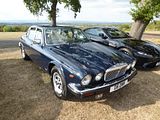
There was a Series 3 example of the well-respected Double Six here. This was released in April 1979, and was based solely on the long-wheelbase version of the car, and incorporated a subtle redesign by Pininfarina. Externally, the most obvious changes over the SII were the thicker and more incorporated rubber bumpers with decorative chrome only on the top edge, flush door handles for increased safety, a one-piece front door glass without a separate 1/4 light, a grille with only vertical vanes, reverse lights moved from the boot plinth to the larger rear light clusters and a revised roofline with narrower door frames and increased glass area. There were three engine variants, including the 5.3 litre V12, the 4.2 litre straight-six and 3.4 litre straight-six. The larger six-cylinder, and V12 models incorporated Bosch fuel injection (made under licence by Lucas) while the smaller six-cylinder was carburettor fed. There was also the option of a sunroof and cruise control for the first time on an XJ model. In 1981 the 5.3 V12 models received the new Michael May designed “fireball” high compression cylinder head engines and were badged from this time onwards to 1985 as HE (High Efficiency) models. In late 1981 Daimler Sovereign and Double Six models received a minor interior upgrade for the 1982 model year with features similar to Vanden Plas models. Also for the 1982 model year, a top spec “Jaguar” Vanden Plas model was introduced for the US market. In late 1982 the interior of all Series III models underwent a minor update for the 1983 model year. A trip computer appeared for the first time and was fitted as standard on V12 models. A new and much sought-after alloy wheel featuring numerous distinctive circular holes was also introduced, commonly known as the “pepperpot” wheel. In late 1983 revision and changes were made across the Series III model range for the 1984 model year, with the Sovereign name being transferred from Daimler to a new top spec Jaguar model, the “Jaguar Sovereign”. A base spec Jaguar XJ12 was no longer available, with the V12 engine only being offered as a Jaguar Sovereign HE or Daimler Double Six. The Vanden Plas name was also dropped at this time in the UK market, due to Jaguar being sold by BL and the designation being used on top-of-the-range Rover-branded cars in the home UK market. Daimler models became the Daimler 4.2 and Double Six and were the most luxurious XJ Series III models, being fully optioned with Vanden Plas spec interiors. Production of the Series III XJ6 continued until early 1987 and on till 1992 with the V12 engine. In 1992, the last 100 cars built were numbered and sold as part of a special series commemorating the end of production for Canada. These 100 cars featured the option of having a brass plaque located in the cabin. This initiative did not come from Jaguar in Coventry. It was a local effort, by Jaguar Canada staff and the brass plaques were engraved locally.132,952 Series III cars were built, 10,500 with the V12 engine. In total between 1968 and 1992 there were around 318,000 XJ6 and XJ12 Jaguars produced.

FERRARI
It was with the 360 Modena that sales of Ferrari models really took off, with unprecedented volumes of the car being sold. The 360 Modena was launched in 1999, named after the town of Modena, the birthplace of Enzo Ferrari. A major innovation in this all new model came from Ferrari’s partnership with Alcoa which resulted in an entirely new all-aluminium space-frame chassis that was 40% stiffer than the F355 which had utilised steel. The design was 28% lighter despite a 10% increase in overall dimensions. Along with a lightweight frame the new Pininfarina body styling deviated from traditions of the previous decade’s sharp angles and flip-up headlights. The new V8 engine, common to all versions, was of 3.6 litre capacity with a flat plane crankshaft, titanium connecting rods and generates 400 bhp Despite what looks like on paper modest gains in reality the power to weight ratio was significantly improved on over the F355, this was due to the combination of both a lighter car and more power. The 0 to 100 km/h acceleration performance improved from 4.6 to 4.3 seconds. The first model to be rolled out was the 360 Modena, available as a manual, or an F1 electrohydraulic manual. Next up was an open car. The 360 was designed with a Spider variant in mind; since removing the roof of a coupe reduces the torsional rigidity, the 360 was built for strength in other areas. Ferrari designers strengthened the sills, stiffened the front of the floorpan and redesigned the windscreen frame. The rear bulkhead had to be stiffened to cut out engine noise from the cabin. The convertible’s necessary dynamic rigidity is provided by additional side reinforcements and a cross brace in front of the engine. Passenger safety is ensured by a strengthened windscreen frame and roll bars. The 360 Spider displays a curvilinear waistline. The fairings imply the start of a roof, and stable roll bars are embedded in these elevations. Due to use of light aluminium construction throughout, the Spider weighs in only 60 kg heavier than the coupé. As with the Modena version, its 3.6 litre V8 with 400 bhp is on display under a glass cover. The engine — confined in space by the convertible’s top’s storage area — acquires additional air supply through especially large side grills. The intake manifolds were moved toward the centre of the engine between the air supply conduits in the Spider engine compartment, as opposed to lying apart as with the Modena. In terms of performance, the 0-60 mph time was slightly slower at 4.4 seconds due to the slight weight increase, and the top speed was reduced from 189 to 180 mph. Despite the car’s mid-mounted V8 engine, the electrically operated top is able to stow into the compartment when not in use. The convertible top was available in black, blue, grey and beige. The transformation from a closed top to an open-air convertible is a two-stage folding-action that has been dubbed “a stunning 20 second mechanical symphony”. The interior of the Spider is identical to that of the coupé.

Firmly placed in Ferrari’s history as one of their finest big GTs, the 550 Maranello’s combination of stylish Pininfarina lines and front mounted 12-cylinder engine meant this car had the potential to become an instant classic, following in the footsteps of its forebear, the 365 GTB/4 ‘Daytona’, and if you look at the way the prices are steading to go, it’s clear that the potential is being realised. Launched in 1996, and with modern styling cues, a 5.5 litre V12 engine producing around 485bhp and a reported top speed of 199mph, the 550 Maranello was a serious motor car. A less frenetic power delivery, the six speed manual box and excellent weight distribution were all factors in the 550 becoming the perfect European Grand Tourer. Ferrari updated the car to create the 575M. Launched in 2002, it is essentially an updated 550 Maranello featuring minor styling changes from Pininfarina. The 575M was replaced by the 599 GTB in the first half of 2006. Updates from the 550 included a redesigned interior and substantial mechanical improvements, including bigger brake discs, a larger and more powerful engine, improved weight distribution, refined aerodynamics and fluid-dynamics along with an adaptive suspension set-up (the four independent suspensions are also controlled by the gearbox, to minimize pitch throughout the 200-milliseconds shift time). Two six-speed transmissions were available, a conventional manual gearbox and, for the first time on a Ferrari V12, Magneti Marelli’s “F1” automated manual gearbox. The 575 model number refers to total engine displacement in cc, whilst the ‘M’ is an abbreviation of modificata (“modified”).

Effectively a mid-life update to the 360 Modena, the F430 debuted at the 2004 Paris Motor Show. Designed by Pininfarina, under the guidance of Frank Stephenson, the body styling of the F430 was revised from the 360 Modena, to improve its aerodynamic efficiency. Although the drag coefficient remained the same, downforce was greatly enhanced. Despite sharing the same basic Alcoa Aluminium chassis, roof line, doors and glass, the car looked significantly different from the 360. A great deal of Ferrari heritage was included in the exterior design. At the rear, the Enzo’s tail lights and interior vents were added. The car’s name was etched into the Testarossa-styled driver’s side mirror. The large oval openings in the front bumper are reminiscent of Ferrari racing models from the 60s, specifically the 156 “sharknose” Formula One car and 250 TR61 Le Mans cars of Phil Hill. Designed with soft-top-convertible. The F430 featured a 4.3 litre V8 petrol engine of the “Ferrari-Maserati” F136 family. This new power plant was a significant departure for Ferrari, as all previous Ferrari V8’s were descendants of the Dino racing program of the 1950s. This fifty-year development cycle came to an end with the entirely new unit. The engine’s output was 490 hp at 8500 rpm and 343 lb/ft of torque at 5250 rpm, 80% of which was available below 3500rpm. Despite a 20% increase in displacement, engine weight grew by only 4 kg and engine dimensions were decreased, for easier packaging. The connecting rods, pistons and crankshaft were all entirely new, while the four-valve cylinder head, valves and intake trumpets were copied directly from Formula 1 engines, for ideal volumetric efficiency. The F430 has a top speed in excess of 196 mph and could accelerate from 0 to 100 km/h in 3.9 seconds, 0.6 seconds quicker than the old model. The brakes on the F430 were designed in close cooperation with Brembo (who did the calipers and discs) and Bosch (who did the electronics package),resulting in a new cast-iron alloy for the discs. The new alloy includes molybdenum which has better heat dissipation performance. The F430 was also available with the optional Carbon fibre-reinforced Silicon Carbide (C/SiC) ceramic composite brake package. Ferrari claims the carbon ceramic brakes will not fade even after 300-360 laps at their test track. The F430 featured the E-Diff, a computer-controlled limited slip active differential which can vary the distribution of torque based on inputs such as steering angle and lateral acceleration. Other notable features include the first application of Ferrari’s manettino steering wheel-mounted control knob. Drivers can select from five different settings which modify the vehicle’s ESC system, “Skyhook” electronic suspension, transmission behaviour, throttle response, and E-Diff. The feature is similar to Land Rover’s “Terrain Response” system. The Ferrari F430 was also released with exclusive Goodyear Eagle F1 GSD3 EMT tyres, which have a V-shaped tread design, run-flat capability, and OneTRED technology. The F430 Spider, Ferrari’s 21st road going convertible, made its world premiere at the 2005 Geneva Motor Show. The car was designed by Pininfarina with aerodynamic simulation programs also used for Formula 1 cars. The roof panel automatically folds away inside a space above the engine bay. The conversion from a closed top to an open-air convertible is a two-stage folding-action. The interior of the Spider is identical to that of the coupé. Serving as the successor to the Challenge Stradale, the 430 Scuderia was unveiled by Michael Schumacher at the 2007 Frankfurt Auto Show. Aimed to compete with cars like the Porsche RS-models and the Lamborghini Gallardo Superleggera it was lighter by 100 kg/220 lb and more powerful (510 PS) than the standard F430. Increased power came from a revised intake, exhaust, and an ion-sensing knock-detection system that allows for a higher compression ratio. Thus the weight-to-power ratio was reduced from 2.96 kg/hp to 2.5 kg/hp. In addition to the weight saving measures, the Scuderia semi-automatic transmission gained improved “Superfast”, known as “Superfast2”, software for faster 60 millisecond shift-times. A new traction control system combined the F1-Trac traction and stability control with the E-Diff electronic differential. The Ferrari 430 Scuderia accelerates from 0-100 km/h in 3.6 seconds, with a top speed of 202 miles per hour. Ferrari claimed that around their test track, Fiorano Circuit, it matched the Ferrari Enzo, and the Ferrari F430’s successor, the Ferrari 458. To commemorate Ferrari’s 16th victory in the Formula 1 Constructor’s World Championship in 2008, Ferrari unveiled the Scuderia Spider 16M at World Finals in Mugello. It is effectively a convertible version of the 430 Scuderia. The engine produces 510 PS at 8500 rpm. The car has a dry weight of 1,340 kg, making it 80 kg lighter than the F430 Spider, at a curb weight of 1,440 kg (3,175 lb). The chassis was stiffened to cope with the extra performance available and the car featured many carbon fibre parts as standard. Specially lightened front and rear bumpers (compared to the 430 Scuderia) were a further sign of the efforts Ferrari was putting into this convertible track car for the road. Unique 5-spoke forged wheels were produced for the 16M’s launch and helped to considerably reduce unsprung weight with larger front brakes and callipers added for extra stopping power (also featured on 430 Scuderia). It accelerates from 0-100 km/h in 3.7 seconds, with a top speed of 315 km/h (196 mph). 499 vehicles were released beginning early 2009 and all were pre-sold to select clients.

The Ferrari F12berlinetta (Type F152) is a front mid-engine, rear-wheel-drive grand tourer which debuted at the 2012 Geneva Motor Show, and replaces the 599 grand tourer. The naturally aspirated 6.3 litre Ferrari V12 engine used in the F12berlinetta has won the 2013 International Engine of the Year Award in the Best Performance category and Best Engine above 4.0 litres. The F12berlinetta was named “The Supercar of the Year 2012” by car magazine Top Gear. The F12berlinetta was replaced by the 812 Superfast in 2017.


Launched at the 2015 Geneva Show, the 488GTB followed the lead set by the California T in bringing turbocharging into a modern-day, mid-engined V8 Ferrari supercar for the first time. The engine is completely new when compared with its V8 stablemate, not only in components but also in feel and character. It is a twin-turbocharged 3902cc unit whilst that in the California T is 3855cc. In the 488 GTB, it produces 660bhp at 8000rpm and 560lb ft at 3000rpm. Both outputs are significant increases over the normally aspirated 4.5-litre V8 used in the 562 bhp 458 Italia and 597 bhp 458 Speciale, and also greater than the car’s biggest rival, the McLaren 650S. The torque figure of the 488 GTB is such that it also exceeds the 509lb ft at 6000rpm of the normally aspirated V12 used in the range-topping Ferrari F12 Berlinetta. The mighty new engine in the 488 GTB drives the rear wheels through a revised seven-speed dual-clutch automatic gearbox derived from the 458. It features a new ‘Variable Torque Management’ system which, Ferrari says, “unleashes the engine’s massive torque smoothly and powerfully right across the rev range”. The gear ratios are also tuned to “deliver incredibly progressive acceleration when the driver floors the throttle”. The 488 GTB can crack 0-62mph in just 3.0sec, 0-124mph in 8.4sec and reach a top speed of 205mph. Its 0-62mph and 0-124mph times match the McLaren 650S’s, but the Woking car’s top speed is slightly higher at 207mph. The engine also accounts for the ‘488’ element of the car’s name, because each of the engine’s eight cylinders is 488cc in capacity when rounded up. The GTB suffix, standing for Gran Turismo Berlinetta, is a hallmark of previous mid-engined V8 Ferraris such as the 308 GTB. Not only is the new turbo engine more potent than the 4.5-litre V8 from the 458 Italia, but it is also more economical. Combined fuel economy is rated at 24.8mpg, compared with 21.2mpg in the 458 Italia, and CO2 emissions are 260g/km – a 47g/km improvement. Ferrari’s HELE engine stop-start system features on the 488 GTB. Developments on the dynamic side include a second generation of the Side Slip Angle Control system, called SSC2. This allows the driver to oversteer without intruding, unless it detects a loss of control. The SSC2 now controls the active dampers, in addition to the F1-Trac traction control system and E-Diff electronic differential. Ferrari says the result is “more precise and less invasive, providing greater longitudinal acceleration out of corners” and flatter, more stable behaviour during “complex manoeuvres”. Learnings from the Ferrari XX programme have also been incorporated into the 488 GTB, something that Ferrari says allows all drivers and not just professionals, to make the most of its electronic and vehicle control systems. It also claims the 488 GTB is “the most responsive production model there is”, with responses comparable to a track car. The 488 GTB has lapped Ferrari’s Fiorano test track in 1min 23sec – two seconds faster than the 458 Italia, and half a second quicker than the 458 Speciale. The dimensions of the 488 GTB – it is 4568mm in length, 1952mm in width and 1213mm in height – closely match the 458 Italia from which it has evolved. Its dry weight is 1370kg when equipped with lightweight options – 40kg more than the McLaren 650S. The new look, styled at the Ferrari Styling Centre, features several new aerodynamic features that improve downforce and reduce drag. Most notable is the addition of active aerodynamics at the rear through a ‘blown’ rear spoiler, where air is channelled from the base of the glass engine cover under the spoiler. This contributes to the 50% increase in downforce over the 458 Italia. Also new is a double front spoiler, an aerodynamic underbody, a large air intake at the front that references the 308 GTB, a diffuser with active flaps, new positioning for the exhaust flaps and new-look lights. The interior has been redesigned to be made more usable, including new switchgear, air vents and instrument panel. The multi-function steering wheel remains, while the infotainment system gets a new interface and graphics. The Spider followed the closed coupe model six months later.

Final Ferrari here was an example of the Roma Spider, still a current model.

FORD
Ford wanted to change a few things for the Mk2 Lotus-Cortina. The Mk1 had done all and more than they could expect in competition, but the public linked its competition wins with Lotus and its bad points with Ford. Ford still wanted to build a Mk2 Lotus and compete with it, but Lotus were moving from Cheshunt to Hethel so it was a bad time for them to build another model. Ford were also concerned with the unreliability of the Lotus built cars. So a decision was made at Ford that to continue with its competition drive and make the car more cost effective they would make the car at Dagenham themselves, alongside the other Cortinas. So the Mk2 had to be much easier to build than the Mk1 so that it could be made alongside Mk2 GT production, just with a different engine and suspension. The Mk2 took a while to appear, first appearing in 1967. The main difference was the choice of colours and the lack of a stripe, although most had them fitted at Ford dealers at extra cost. The only cosmetic changes made were a black front grille, 5.5J x 13 steel wheels and Lotus badges on rear wings and by the rear number plate. The badge on the front grille was an option at first. Unlike the Mk1, the Mk2 was also made in left hand drive from the start of production. The Mk2 Cortina Lotus also gained an improved and more powerful (109 bhp) engine, which was formerly supplied as the special equipment engine option on Lotus Elan and the Cortina Lotus Mk1. The gearbox ratios remained 2000E ones but the car now used the Mk2 GT remote-control gearchange. The car also had a different final drive of 3.77:1 rather than 3.9:1. The Mk2 was a wider car than the Mk1, so although they looked the same, the steel wheels had a different offset so as not to upset the tracking, and radial tyres were now standard. Another attraction was the larger fuel tank. The spare wheel could now be mounted in its wheel well, but the battery remained in the boot to aid weight distribution. The only real difference to the engine bay was the air cleaner mounted on top of the engine. The interior was almost identical to a GT. The Mk2 did exactly what Ford wanted, it was far more reliable whilst still quick enough to be used in competition, until it was replaced by the Escort Twin Cam. The car did receive a few updates, but none as urgent as the Mk1’s. Only a few months after production started, the Lotus badge on the rear panel was cancelled and a new TWIN CAM badge was fitted under the Cortina script on the boot lid. Despite the badge changes, Ford UK continued to market the model as the “Cortina Lotus”. The new combined clock and centre console was fitted. In late 1968 the entire Mk2 range received some cosmetic changes; for the Lotus, this meant that the 4 dials on top of the dash were brought down and made part of the dash. An internal bonnet release and a more conventional mounting for the handbrake were also phased in. A new single-rail gearshift mechanism was used. The car stayed in production until 1970. The Cortina Lotus was marketed in Europe as the Cortina Twin Cam in 1969/70. Two 4-door versions were supplied to the Mid-Anglia Constabulary for evaluation as use as a fast patrol and pursuit car by British Police forces. The trial never went beyond the two vehicles, which are both still in existence.


The squarer-styled Mark II Escort appeared in January 1975. The first production models had rolled off the production lines on 2 December 1974. Unlike the first Escort (which was developed by Ford of Britain), the second generation was developed jointly between the UK and Ford of Germany. Codenamed “Brenda” during its development, it used the same mechanical components as the Mark I. The 940 cc engine was still offered in Italy where the smaller engine attracted tax advantages, but in the other larger European markets in Europe it was unavailable. The estate and van versions used the same panelwork as the Mark I, but with the Mark II front end and interior. The car used a revised underbody, which had been introduced as a running change during the last six months production of the Mark I. Rear suspension still sat on leaf springs though some contemporaries such as the Hillman Avenger had moved on to coil springs. The car came in for criticism for its lack of oddments space, with a glove compartment only available on higher end models, and its stalk-mounted horn. The “L” and “GL” models (2-door, 4-door, estate) were in the mainstream private sector, the “Sport”, “RS Mexico”, and “RS2000” in the performance market, the “Ghia” (2-door, 4-door) for a hitherto untapped small car luxury market, and “base / Popular” models for the bottom end. Panel-van versions catered to the commercial sector. The 1598 cc engine in the 1975 1.6 Ghia produced 84 hp with 92 lb/ft torque and weighed 955 kg (2105 lb). A cosmetic update was given in 1978 with L models gaining the square headlights (previously exclusive to the GL and Ghia variants) and there was an upgrade in interior and exterior specification for some models. Underneath a wider front track was given. In 1979 and 1980 three special edition Escorts were launched: the Linnet, Harrier and Goldcrest. Production ended in Britain in August 1980, other countries following soon after. Spotted here was a rather nice RS2000.


In order to spike public interest in the new Sierra even more, Ford introduced the sporty XR4i model in 1983. The XR4i was a logical extension of the range of hot Ford models, consisting of the Fiesta XR2 and the Escort XR3. The XR4i was only offered with three doors, but it was different from the standard three-door versions, since the XR4i body had an additional window pillar. It also had a huge biplane rear spoiler that clearly testified to the fact that this sporty Sierra was a child of the ‘80s. The Sierra XR4i not only looked good – it drove well too. The 2.8-litre Cologne V6 engine with Bosch K-Jetronic mechanical injection could produce 150 horsepower. That was nothing crazy, but let’s not forget that those were different times, and the Sierra weighed about the same as a new Fiesta does today (≈1,200 kg), so those 150 bhp allowed it to go from 0 to 100 km/h in 8 seconds and hit a top speed of over 200 km/h. The XR4i was only produced for a few years – until 1985. And during that time, Ford sold 25,662 of these sporty cars. And the most interesting thing is that from 1985 to 1989, it was continued in the United States as the Merkur XR4Ti. European brands like Audi, BMW and Mercedes were becoming more and more popular in the United States at that time, so Ford decided to experiment and try to sell European models in America as if they were better, German-quality, Fords. The idea was not successful – the European Fords were pricey, and the history of the Merkur marque (‘Merkur’ means `Mercury’ in German) ended that same year of 1989. The Merkur was different from the European XR4i – it had a smaller, 2.3-litre, 4-cylinder engine, but it was turbocharged, so it had a higher power output of 170 horsepower. In five years, 42,464 Merkur XR4Tis were sold in the US, which was much less than Ford had planned. Meanwhile, Sierra sales in Europe had already taken off in 1985, so Ford decided to replace the XR4i with the newer XR4x4. As the name implies, it had four-wheel drive, and differently than the XR4i, a five-door hatchback came as standard (and an estate was even introduced later). This was a good move, since the five-door body style expanded the range of potential customers. There was also a three-door version of the XR4x4, but very few were produced. Incidentally, that additional pillar was abandoned in the three-door version in 1985, and from then on, all of the three-door models had the same design, with ‘normal’ side windows. The biplane spoiler was sacrificed after it was decided that five-door hatchback buyers wouldn’t understand it.


A sporting version of Ford’s front wheel drive Escort was announced at the same time as the “cooking” 1.1, 1.,3 and 1,6 litre cars in October 1980. This was the XR3, and it came initially with a carb fed 1.6 litre engine generating 105 bhp and had a four speed gearbox. Fuel injection finally arrived in October 1982 (creating the XR3i), eight months behind the limited edition (8,659 examples), racetrack-influenced RS 1600i. The Cologne-developed RS received a more powerful engine with 115 PS, thanks to computerised ignition and a modified head as well as the fuel injection. For 1983, the XR3i was upgraded to 115bhp thanks to the use of fuel injection and a five speed transmission had been standardised. Both variants proved very popular, getting a significant percentage of Escort sales and also as a slightly more affordable alternative to a Golf GTi. For those for whom the performance was not quite enough, Ford had an answer, withe the RS Turbo. This 132 PS car was shown in October 1984, as a top of the range car, offering more power than the big-selling XR3i and the limited production RS1600i. Going on sale in the spring of 1985, it proved to be somewhat of a disappointment, with the chassis coming in for severe criticism. The RS Turbo Series 1 was only marketed in a few European nations as production was limited to 5,000 examples, all in white. They were well equipped, with the alloy wheels from the limited production RS 1600i, Recaro seats, and a limited slip differential. One car only was finished in black; it was built especially for Lady Diana. Ford facelifted the entire Escort range in January 1986, and a few months later, a revised Series 2 RS Turbo emerged, which adopted the styling changes of the less potent models, and the new dashboard, as well as undergoing a mechanical revision and the addition of more equipment including anti-lock brakes. The Series 2 cars were available in a wider range of colours.


The regular second generation Focus cars were released in late 2004. An ST version followed very quickly, and for a long time, Ford maintained that was the only sporty Focus there was going to be. Finally, on December 17, 2007 Ford of Europe confirmed that a Mk 2 Focus RS would be launched in 2009, with a concept version due in mid-2008, with an upgraded Duratec ST engine with 305PS Duratec RS, gearbox, suspension, and LSD. In 2008, Ford revealed the new Focus RS in “concept” form at the British International Motor Show. Contrary to numerous rumours and speculation, the RS was announced by Ford to have a conventional FWD layout. The Duratec RS engine was upgraded to produce 301 bhp and 325 lb/ft of torque. 0 to 100 km/h (62 mph) acceleration was quoted to be under 6 seconds. The RS used a modified Volvo -engineered 2,522cc five-cylinder engine found in the Focus ST. A larger Borg Warner K16 turbo now delivers up to 20.3-psi of boost. A new air-to-air intercooler has been developed as a complement, while the forged crankshaft, silicon-aluminium pistons, graphite-coated cylinder bores, 8.5:1 compression ratio and variable valve timing also up the power output. The car remained front wheel drive, but to reduce torque steer used a Quaife Automatic Torque Biasing LSD, and a specially designed MacPherson strut suspension at the front called RevoKnuckle, which provided a lower scrub radius and kingpin offset than traditional designs while avoiding the increased weight and complexity of double wishbone and multi-link suspension setups. Ford UK claim: “It’s as close as you’ll come to driving a full-spec rally car (Ford Focus RS WRC). The production car was finally unveiled on 5 January 2009. It looked very distinctive, as at the rear a large venturi tunnel and a dramatic rear spoiler created a purposeful look. It was available in three expressive exterior colours: Ultimate Green, Performance Blue and Frozen White. The ‘Ultimate’ Green was a modern reinterpretation of the classic 1970s Ford Le Mans Green of the Ford Escort RS1600 era.

Ford played much the same guessing game about whether there would be an RS version of the third generation Focus as they had done with the earlier versions. Production of the regular cars started in late 2010, but it was not until the 2015 Geneva Motor Show before the production ready MKIII Ford Focus RS was unveiled. It came packing the turbocharged 2.3-litre inline-four engine found in the Mustang EcoBoost. In the Focus RS, the engine itself produces 350 hp. Power is sent to all four wheels via Ford’s all-new Torque-Vectoring All-Wheel-Drive system with a rear drive unit designed by GKN, as well as upgraded suspension and brakes. As well as that, the new Focus RS will be fitted with Drive Modes – including an industry-first Drift Mode that allows controlled oversteer drifts – and Launch Control. The RS will boast a model specific aerodynamic package that helps to differentiate it from other Focus models. The RS is capable of accelerating to 100 km/h (62 mph) in 4.7 seconds. Sales finally started in mid 2016, with long waiting lists having been created, though Ford did eventually catch up with expanded production levels allowing them to meet the demand.

After a 17 year hiatus, the fifth instalment of the Mach 1 uses the GT’s 5.0 L Coyote V-8 producing 480 hp at 7,000 rpm and 420 lb/ft (569 Nm) at 4,600 rpm, which is same output of the Mustang Bullitt. The 2022 model produces 470 hp and 410 lb-ft at 4,600 rpm, which is a loss of 10 hp and 10 lb-ft of torque. It borrows several parts from the Shelby models: the intake manifold, oil-filter adapter, engine oil cooler, and front and rear subframe are shared with the Shelby GT350, while the rear axle cooling system, rear toe link, and rear diffuser are shared with the Shelby GT500. On the front grille, at each side of the pony badge there are two large vent holes. “Mach 1 performance is evident even before you get behind the wheel. Its streamlined design and exterior styling cues celebrate Mach 1 heritage dating back more than five decades. Sure, every Mustang looks good in the driveway, but the Mach 1 was made to shine on the track. The unique handling dynamics and an available Mach 1 Handling Package help you feel stuck to the road, around curves and when you’re hitting the straightaway at a 168 mph max speed. Better yet, it’s completely customizable in appearance, powertrain and performance, so you can put your spin on this icon.

Like most GT40 type cars that you see, this is a replica rather than one of the rare originals from the 1960s. This one is an MDA GT40, and there is a complex history surrounding the firm who produced it. GT Racing has a history dating back to 1985 for specialist vehicle design and builds. Starting with high quality customer vehicles to specific chassis and body designs. Working for another quality GT40 car manufacturer G T Developments during 1988-1994 with over 380 built cars to its credit. Forming MDA in 1994 the customer list grew for individual car builds with a more demanding accuracy and design improvement. MDA GT40 LTD was started in 2003 and many more cars produced. In the World Recession in 2008 MDA GT40 LTD closed its doors due to economic pressure. Since then MDA have still supplied GT40 parts to existing customers and owners of other GT40 models and other Race car owners under the name of G T Racing. GT Racing supplies customers worldwide with unique automotive services. They are a GT40 specialist and can supply all parts including space frame chassis and original type body. They offer a wide range of GT40 items including their famous original tool made fuel filler caps, ZF top plate and many other accurate parts.

HONDA
The Japanese market Civic Type R (FD2) went on sale on 30 March 2007. For the first time, the JDM Civic Type R was sold as a four-door sedan, rather than a three-door hatchback. The FD2 Type R was bigger, wider and heavier than the EP3 Type R. The wheelbase grew from 2,570 mm (101.2 in) to 2,700 mm (106.3 in), giving the FD2 more stability during high speed cornering. The Japanese model’s engine power output is higher than the European versions, with 225 PS being generated at 8,000 rpm and 215 Nm (159 lb/ft) of torque peaking at 6,100 rpm (versus 201 PS) at 7,800 rpm and 193 Nm (142 lb/ft) at 5,600 rpm for the European model). Honda quoted that mid-range is increased by 10 PS. Power is sent to the front wheels through a close-ratio six-speed manual transmission, and a helical limited-slip differential is fitted as standard. The front brake discs are 320 mm (12.6 in) diameter and fitted with four-piston Brembo calipers. The car is fitted with Bridgestone Potenza RE070 tyres having a size of 225/40 R18. Honda claims the chassis is 50% more rigid than the previous Japan-only pre-facelift DC5 Integra Type R and 25% more rigid than the previous Japan-only facelift DC5 Integra Type R. The FD2 features an independent rear suspension rather than the torsion beam configuration used on the FN2 Type-R. To save weight, aluminium is used extensively and bonded with adhesive instead of welded. Though the chassis is larger and more rigid than the JDM Integra Type R, it is only 70 kg (154 lb) heavier. Exterior wise, the front bumper is wider and different from the standard Civic designed aerodynamically. The rear bumper features a diffuser built into the bumper and a large rear wing completes the aero package. Inside, the trademark black and red bucket seats are no longer made by Recaro as with previous versions but designed in-house by Honda. Also gone is the Momo made steering wheel, instead replaced by a Honda made version. The familiar red-on-black colour scheme or black-on-black scheme is offered on Championship White and Super Platinum Metallic Silver while a black-on-black scheme with red stitching is for the Vivid Blue Pearl model only. In October 2008, the Type R received new colours, those being Premium White Pearl, Premium Deep Violet Pearl and Crystal Black Pearl. The Vivid Blue Pearl colour was dropped. In back to back tests, the Civic Type R (FD2) was on average 1 second quicker than the Integra Type-R (DC5) at the Tsukuba Circuit and four seconds faster at the longer Suzuka Circuit. In a back-to-back test on the United Kingdom TV program Fifth Gear, the FD2 Type-R was three seconds quicker than the equivalent FN2 UK version around Castle Combe Circuit in wet conditions. However, the FN2 managed a 13.1 second quarter mile pass at Killarney Raceway. A total of 14,062 FD2 Civic Type R units were produced until it ceased production in August 2010 due to failure to meet the upcoming emission requirements. Following the previous success due to the introduction of the FN2 Civic Type R from Europe in 2009, another batch of FN2 Type R with minor updates was available in Japan from fall 2010. However, the engine was the same K20Z4 straight-4 as used in the European version. A number of these cars have come to the UK as Grey Market imports.

The Honda CR-Z is a sport compact hybrid electric vehicle manufactured by Honda and marketed as a “sport hybrid coupe.” It combines a gasoline-electric hybrid drivetrain with features typical of a sports car, including a standard six-speed manual transmission and a 2+2 seating layout (except in North America, where it was offered only as a two-seater). The CR-Z was seen as a spiritual successor to the second-generation Honda CR-X, sharing similarities in name and exterior design. In the United States, the CR-Z was classified as an Advanced Technology Partial Zero Emissions Vehicle by the California Air Resources Board. It was the third Honda hybrid available with a manual transmission, following the Insight and Civic Hybrid, and the only one in its class to offer this option. The CR-Z used the sixth generation of Honda’s Integrated Motor Assist (IMA) technology, first introduced with the original Insight. Sales began in Japan in February 2010,followed by the United States in August 2010. The design and production of the CR-Z followed two other Honda hybrid concept cars: the Honda Remix, introduced at the 2006 Los Angeles Auto Show, and the Honda Small Hybrid Sports, introduced at the 2007 Geneva Motor Show. The Honda CR-Z was introduced as a concept vehicle on October 23, 2007, at the 2007 Tokyo Motor Show. Honda said the name “CR-Z” stood for “Compact Renaissance Zero” — reflecting the idea of a renaissance in the design of compact cars. At the show, CEO Fukui stated that a production model is “in the works” and that the car was intended to be “sporty, incredibly efficient and inexpensive”. The “CR-Z” name was previously used as a grade level in 1985 and 1986 as the Honda Ballade CR-Z, which was sold alongside the original Ballade Sports CR-X in Japan. The CR-Z was first shown in America at the 2008 Detroit North American International Auto Show. At the 2009 Tokyo Motor Show, Honda displayed a revised “CR-Z Concept 2009”. The 2009 concept of the CR-Z had a very similar design to the production model. In January 2010, Honda introduced the production CR-Z at the 2010 North American International Auto Show in Detroit. At its introduction in 2010, it won the Car of the Year Japan Award. In 2016, the Honda CR-Z received a minor refresh. It received a change to the front and rear bumper, as well as a slightly revised interior. It also gained the EX-L trim from the refresh with a small increase in price. The base trim was renamed as LX and priced starting at $20,295 with a manual transmission, and $20,945 with a continuously variable transmission or CVT. The EX trim increased to $22,140 with a manual transmission, and $22,790 with a CVT. The new EX-L trim started at $24,440 with a manual transmission, and $25,090 with a CVT. The refresh changed a few colours as well. The North Shore Blue Pearl colour changed to the Aegean Blue Metallic colour, the Crystal Black Pearl colour changed to the Jet Black colour, and Premium White Pearl changed to Ivory Pearl. On the EX trim, the secondary interior red colour changed to orange. The CR-Z also gained a few new wheel designs for the refresh. Honda had previously confirmed that a second generation of the CR-Z was under development, possibly for the 2018 model year, which never came to fruition. Production of the CR-Z ended at the end of 2016, to make room for the Accord Hybrid and Clarity.

In September 2012, there were rumours about the confirmation of the next-generation of the Honda Civic Type R at the Paris Motor Show. A preview took place at the Geneva Motor Show in March 2014. In January 2015, Honda announced that the production-ready model of the fourth generation of the Civic Type R (called the FK2) would debut at the 85th Geneva Motor Show held in March alongside the European debut of the NSX. It is the first factory turbocharged Civic Type R. The FK2 Civic Type R is powered by the K20C1 Direct Fuel Injection 1,996 cc turbocharged Inline-four engine with Earth Dreams Technology, having a power output of 310 PS (306 bhp) at 6,500 rpm and maximum torque of 400 Nm (295 lb/ft) at 2,500–4,500 rpm. The engine is mated to a 6-speed manual transmission with a factory equipped plate-style limited-slip differential. Honda claimed that the Type R can accelerate from 0–100 km/h (62 mph) in 5.7 seconds. The engine is manufactured at Honda’s Anna Engine Plant in Ohio before being exported to the UK. Introduced at the 2016 Tokyo Auto Salon, the Mugen Civic Type R is an aerodynamic package for the Civic Type R. The package includes an adjustable front lip spoiler, front canards, side skirts and a rear diffuser. The rear wing has been replaced with a GT style fixed rear wing. These elements are made from carbon fibre, a carbon fibre hood was also included as an option. There were no changes made to the drivetrain although a new exhaust system having a single exhaust pipe instead of the quad was fitted. The Black Edition marked the end of the production of the FK2 Civic Type R. Based on the GT Trim Type R, notable features include black exterior paint with red accents, black interior with red stitching and red brake calipers. Production was limited to 100 units in UK. In other countries of Europe a White Edition was also released, still based on the GT Trim Type R, similar to the Black Edition but with white accents. The British were able to purchase the FK2 as of July 2015 with price tags of GBP 29,995 for the base Type R model and £32,295 for the Type R GT model. Although they both were priced differently, differences are limited to additional equipment and amenities. Key specifications related to power figures remain the same for both variants

JAGUAR
The Series 1 E Type was introduced, initially for export only, in March 1961. The domestic market launch came four months later in July 1961. The cars at this time used the triple SU carburetted 3.8-litre six-cylinder Jaguar XK6 engine from the XK150S. Earlier built cars utilised external bonnet latches which required a tool to open and had a flat floor design. These cars are rare and more valuable. After that, the floors were dished to provide more leg room and the twin bonnet latches moved to inside the car. The 3.8-litre engine was increased to 4,235 cc in October 1964. The 4.2-litre engine produced the same power as the 3.8-litre (265 bhp) and same top speed (150 mph), but increased torque approximately 10% from 240 to 283 lb/ft. Acceleration remained pretty much the same and 0 to 60 mph times were around 6.4 seconds for both engines, but maximum power was now reached at 5,400 rpm instead of 5,500 rpm on the 3.8-litre. That all meant better throttle response for drivers that did not want to shift down gears. The 4.2-litre’s block was completely redesigned, made longer to accommodate 5 mm (0.20 in) larger bores, and the crankshaft modified to use newer bearings. Other engine upgrades included a new alternator/generator and an electric cooling fan for the radiator. Autocar road tested a UK spec E-Type 4.2 fixed head coupé in May 1965. The maximum speed was 153 mph, the 0–60 mph time was 7.6 seconds and the 1⁄4 mile from a standing start took 15.1 seconds. They summarised it as “In its 4.2 guise the E-Type is a fast car (the fastest we have ever tested) and offers just about the easiest way to travel quickly by road.”. Motor magazine road tested a UK spec E-Type 4.2 fixed head coupé in Oct 1964. The maximum speed was 150 mph, the 0–60 mph time was 7 seconds and the 1⁄4 mile time was 14.9 seconds. They summarised it as “The new 4.2 supersedes the early 3.8 as the fastest car Motor has tested. The absurd ease which 100 mph can be exceeded in a 1⁄4 mile never failed to astonish. 3,000 miles (4,828 km) of testing confirms that this is still one of the world’s outstanding cars”. All E-Types featured independent coil spring rear suspension designed and developed by R J Knight with torsion bar front ends, and four wheel disc brakes, in-board at the rear, all were power-assisted. The Coventry engineers spared nothing with regards to high automotive technology in braking. Like several British car builders of the middle and late 1950s, the four-wheel disc brakes were also used in that era by Austin-Healey, MG,putting the British far ahead of Ferrari, Maserati, Alfa Romeo, Porsche, and Mercedes-Benz. Even Lanchester tried an abortive attempt to use copper disc brakes in 1902. Jaguar was one of the first vehicle manufacturers to equip production cars with 4 wheel disc brakes as standard from the XK150 in 1958. The Series 1 (except for late 1967 models) can be recognised by glass-covered headlights (up to 1967), small “mouth” opening at the front, signal lights and tail-lights above bumpers and exhaust tips under the number plate in the rear. 3.8-litre cars have leather-upholstered bucket seats, an aluminium-trimmed centre instrument panel and console (changed to vinyl and leather in 1963), and a Moss four-speed gearbox that lacks synchromesh for first gear (“Moss box”) on all except very last cars. 4.2-litre cars have more comfortable seats, improved brakes and electrical systems, and, obviously, an all-synchromesh Jaguar designed four-speed gearbox. 4.2-litre cars also have a badge on the boot proclaiming “Jaguar 4.2 Litre E-Type” (3.8 cars have a simple “Jaguar” badge). Optional extras included chrome spoked wheels and a detachable hard top for the OTS. When leaving the factory the car was originally fitted with Dunlop 6.40 × 15-inch RS5 tyres on 15 × 5K wire wheels (with the rear fitting 15 × 5K½ wheels supplied with 6.50 X15 Dunlop Racing R5 tyres in mind of competition). Later Series One cars were fitted with Dunlop 185 – 15 SP41 or 185 VR 15 Pirelli Cinturato as radial ply tyres. A 2+2 version of the fastback coupé was added in 1966. The 2+2 offered the option of an automatic transmission. The body is 9 in (229 mm) longer and the roof angles are different. The roadster and the non 2+2 FHC (Fixed Head Coupé) remained as two-seaters. Less widely known, right at the end of Series 1 production, but prior to the transitional “Series 1½” referred to below, a small number of Series 1 cars were produced with open headlights. These Series 1 cars had their headlights modified by removing the covers and altering the scoops they sit in, but these Series 1 headlights differ in several respects from those later used in the Series 1½ (or 1.5), the main being they are shorter at 143 mm from the Series 1½ at 160 mm. Production dates on these machines vary but in right-hand drive form production has been verified as late as July 1968. They are not “rare” in the sense of the build of the twelve lightweights, but they are certainly uncommon; they were not produced until January 1967 and given the foregoing information that they were produced as late as July 1968, it appears that there must have been an overlap with the Series 1.5 production, which began in August 1967 as model year 1968 models. These calendar year/model year Series 1 E-Types are identical to other 4.2-litre Series 1 examples in every respect except for the open headlights; all other component areas, including the exterior, the interior, and the engine compartment are the same, with the same three SU carburettors, polished aluminium cam covers, center dash toggle switches, etc. Following the Series 1 there was a transitional series of cars built in 1967–68 as model year 1968 cars, unofficially called “Series 1½.” Due to American pressure the new features were not just open headlights, but also different switches (black rocker switches as opposed to the Series 1 toggle switches), de-tuning for emissions (using two Zenith-Stromberg carburettors instead of the original three SUs) for US models, ribbed cam covers painted black except for the top brushed aluminium ribbing, bonnet frames on the OTS that have two bows, and other changes. Series 1½ cars also have twin cooling fans and adjustable seat backs. The biggest change between 1961–1967 Series 1 E-Types and the 1968 Series 1.5 was the reduction in the number of carburettors from 3 to just 2 (North America), resulting in a loss in horsepower. Series 2 features were gradually introduced into the Series 1, creating the unofficial Series 1½ cars, but always with the Series 1 body style. A United States federal safety law affecting 1968 model year cars sold in the US was the reason for the lack of headlight covers and change in dash switch design in the “Series 1.5” of 1968. An often overlooked change, one that is often “modified back” to the older style, is the wheel knock-off “nut.” US safety law for 1968 models also forbade the winged-spinner knockoff, and any 1968 model year sold in the US (or earlier German delivery cars) should have a hexagonal knockoff nut, to be hammered on and off with the assistance of a special “socket” included with the car from the factory. This hexagonal nut carried on into the later Series 2 and 3. The engine configuration of the US Series 1.5s was the same as is found in the Series 2. An open 3.8-litre car, actually the first such production car to be completed, was tested by the British magazine Motor in 1961 and had a top speed of 149.1 mph and could accelerate from 0 to 60 mph in 7.1 seconds. A fuel consumption of 21.3 mpg was recorded. The test car cost £2,097 including taxes.The cars submitted for road test by the motoring journals of the time (1961) such as Motor, Autocar and Autosport magazines were prepared by the Jaguar works. This work entailed engine balancing and subtle tuning work such as gas-flowing checking the cylinder heads but otherwise production built engines. Both of the well-known 1961 road test cars: the E-Type coupé Reg. No. 9600 HP and E-Type Convertible Reg. No. 77 RW, were fitted with Dunlop Racing Tyres on test, which had a larger rolling diameter and lower drag coefficient. This goes some way to explaining the 150 mph (240 km/h) maximum speeds that were obtained under ideal test conditions. The maximum safe rev limit for standard 6-cylinder 3.8-litre E-Type engines is 5,500 rpm. The later 4.2-Litre units had a red marking on the rev counter from just 5,000 rpm. Both 3.8 test cars may have approached 6,000 rpm in top gear when on road test, depending on final drive ratio. Production numbers were as follows: 15,490 of the 3.8s, 17,320 of the 4.2s and 10,930 of the 2+2s. And by body style there were 15,442 of the FHC, 17,378 of the OTS and 5,500 of the 2+2, making a total of 38,419 of the Series 1 car.

The second generation of the XK debuted in 2005 at the Frankfurt Motor Show in Germany, styled by Jaguar’s chief designer Ian Callum. The X150’s grille was designed to recall the 1961 E-Type. The XK is an evolution of the Advanced Lightweight Coupé (ALC) introduced at the 2005 North American International Auto Show. The XK features a bonded and riveted aluminium chassis shared with the XJ and body panels, both a first for a Jaguar grand tourer. Compared to the XK (X100), the XK (X150) is 61.0 mm (2.4 in) wider and is 162.6 mm (6.4 in) longer. It is also 91 kg (200 lb) lighter resulting in performance and fuel consumption improvements. Unlike the X100, the X150 has no wood trim on the interior offered as standard equipment. The interior featured steering column mounted shift paddles. A more powerful XKR version having a supercharged variant of the engine was introduced in 2007. The XK received a facelift in 2009, with minor alterations to front and rear lights and bumper designs, together with the introduction of a new 5.0-litre V8 for both the naturally aspirated XK and the supercharged XKR. The interior also received some changes, in particular the introduction of the XF style rotary gear selector mated to the new ZF automatic transmission. The XK received a second and more minor facelift in 2011 with new front bumper and light design, which was presented at the New York Auto Show. A higher performance variant of the XKR, the XKR-S, was introduced at the Geneva Motor Show in 2012. The XKR-S gained an additional 40 bhp over the XKR bringing the 0-60 mph acceleration time down to 4.4 seconds and the top speed up to 300 km/h (186 mph). A convertible version of the XKR-S was introduced in 2012. Production of the XK ended in July 2014 without a replacement model.

KIA
The Stinger traces its roots to the GT Concept from the 2011 Frankfurt Motor Show and the Kia GT4 Stinger from the 2014 North American International Auto Show. Design work was led by Peter Schreyer and Gregory Guillaume (Kia’s Chief Designer) at Kia’s European studio in Frankfurt and engineered by former BMW M Vice President of Engineering Albert Biermann, the car was unveiled at the 2017 North American International Auto Show. Biermann is now the executive vice president of performance development and high performance vehicles of the Hyundai Motor Group. Testing of the car involved over 1,000 kilometres (620 mi) at the Korea International Circuit and 10,000 kilometres (6,200 mi) at the Nürburgring Nordschleife. The Stinger uses a shortened version of the Hyundai Genesis’ front-engine, rear-wheel-drive platform with additional steel reinforcement and is offered with a choice of two engines: a 2.0-liter turbocharged four-cylinder that produces 255 PS/252 hp; and a 3,342 cc twin-turbo V6 engine that generates 370 PS/ 365 hp at 6,000 rpm and 510 Nm (376 lb/ft) of torque from 1,300-4,500 rpm for the AWD variant. For the European and Korean markets, the Stinger is offered with a base 2.2-liter CRDi diesel I4 that produces 202 PS/199 hp. GT variants are equipped with Brembo brakes and Michelin tyres. The sole transmission is an 8-speed automatic with five driving modes plus paddle-shifters. Kia claims that the Stinger accelerates from zero to 100 km/h (62 mph) in 7.7, 6 and 4.9 seconds for the 2.2-liter diesel, 2.0-liter gasoline and 3.3-liter gasoline respectively. Schreyer reportedly drove a pre-production Stinger GT at a top speed of 269 km/h (167 mph) on the Autobahn, but was allegedly passed by a VW Arteon during the run. During a test by Car and Driver, an all-wheel-drive U.S. spec GT 3.3T with Michelin Pilot Sport 4 tires achieved 0–60 mph (0–97 km/h) in 4.6 seconds on the track, reached 0.91 g on the skidpad and was able to stop from 70 mph (113 km/h) in 164 feet (50 m). According to this publication, the U.S. model’s top speed is governed at 167 mph (269 km/h) per Kia specs. In tests conducted by Motor Trend, the four-cylinder U.S. spec Stinger 2.0 RWD on Bridgestone Potenza tires reached 60 mph (97 km/h) in 6.6 seconds, completed the 1⁄4-mile (0.4 km) run in 15 seconds and stopped from 60 mph (97 km/h) in 126 feet (38 m). The average lateral acceleration recorded in track testing was 0.85 g. In August 2020, Kia unveiled a refreshed Stinger that went on sale in South Korea on the third quarter of 2020 and worldwide by the end of year. Styling updates include revised headlights and tail lights, a new 10.25-inch infotainment screen and an additional wheel design. Kia also added an optional 2.5-liter Smartstream FR G2.5 T-GDi engine producing 304 PS (300 hp) as well as a variable exhaust to the existing 3.3-liter Lambda II RS T-GDi that increases the power by 3 PS (3.0 hp). The Kia Stinger was updated for the British market on 6 January 2021, while the North American model was updated on 16 March 2021, making it one of the first cars to bear the new Kia logo in said region, alongside the Carnival. The Mexican model later arrived on 3 May 2021, also sporting the new Kia logo. In October 2022, Kia decided to end production of the Stinger in April 2023. The discontinuation was due to declining worldwide demand and its status as the lowest-selling Kia model, with only 1,499 units sold in its home country, as well as Kia’s electrification strategy, which included plans for an electric coupe-type vehicle.

LAMBORGHINI
The Lamborghini Gallardo is a sports car built by the Italian automotive manufacturer Lamborghini from 2003 to 2013. Named after a famous breed of fighting bull, the V10 powered Gallardo has been Lamborghini’s sales leader and stable-mate to a succession of V12 flagship models—first to the Murciélago (4,099 built between 2001 and 2010), then to the current flagship, the Aventador. The first generation of the Gallardo was powered with an even firing 4,961 cc (5.0 L) 90 degree V10 engine generating a maximum power output of 500 PS at 7500 rpm and 510 Nm (376 lb/ft) of torque at 4500 rpm. The Gallardo was offered with two choices of transmission; a conventional (H-pattern) six-speed manual transmission, and a six-speed electro-hydraulically actuated single-clutch automated manual transmission that Lamborghini called “E-gear”. The “E-gear” transmission provides gear changes more quickly than could be achieved through a manual shift. The driver shifts up and down via paddles behind the steering wheel, but can also change to an automatic mode via the gear selector located in place of the gear shift lever. The vehicle was designed by Luc Donckerwolke and was based on the 1995 Calà prototype designed by Italdesign Giugiaro. For the 2006 model year (launched in late 2005), Lamborghini introduced many changes to the car to counter some criticisms garnered from the press and owners. The exhaust system was changed to a more sporty one (including a flap to make it quieter during city driving), the suspension was revised, a new steering rack was fitted, the engine power was increased by 20 PS to a maximum of 520 PS and the biggest change was overall lower gearing ratios, especially in 1st to 5th gear. These changes gave the car a much better performance than the original and were also included in the limited edition Gallardo SE. The convertible variant of the Gallardo, called the Gallardo Spyder, was unveiled at the Los Angeles Auto Show in January 2006. It was considered by the company to be an entirely new model, with the engine having a power output of 520 PS (382 kW; 513 hp) and a low-ratio six-speed manual transmission. The Spyder has a retractable soft-top. At the 2007 Geneva Auto Show, Lamborghini unveiled the Gallardo Superleggera. The name paid tribute to the construction style of the first Lamborghini production model, the 350 GT, designed and built by Carrozzeria Touring and its emphasis on weight reduction. The Superleggera is lighter than the base model by 100 kg (220 lb) due to the use of carbon fibre panels for the rear diffuser, undertray, the rearview-mirror housings, the interior door panels, the central tunnel, engine cover; titanium wheel nuts and carbon fibre sports seats. The engine power was uprated by 10 PS courtesy of an improved intake, exhaust and ECU for a total power output of 530 PS. The 6-speed E-Gear transmission was standard on US spec models with the 6-speed manual transmission offered as a no cost option. Production of the Superleggera amounted to 618 units worldwide. Presented at the 2008 Geneva Motor Show, the Gallardo LP 560-4 was a significant update of the Gallardo, powered by a new, uneven firing5,200 cc V10 engine that produces 560 PS at 8,000 rpm and 540 Nm (398 lb/ft) of torque at 6,500 rpm. Featuring “Iniezione Diretta Stratificata” direct fuel injection system to improve efficiency; fuel consumption and CO2 emissions have been reduced by 18% despite the increase in performance. The car was redesigned, inspired by the Murciélago LP 640 and Reventón. The new engine, 40 PS more powerful than in the previous car, comes with two transmission choices: a 6-speed manual or 6-speed E-gear, the latter of which was revised to offer a Corsa mode which makes 40% quicker shifts than before and decreases traction control restrictions, a Thrust Mode launch control system was also added. Accompanied with a 20 kg (44 lb) weight reduction. All the improvements add up to a claimed performance of 0-100 km/h (62 mph) in 3.7 seconds, 0-200 km/h (124 mph) of 11.8 and a top speed of 325 km/h (202 mph). The MSRP base price was $198,000 in the US and £147,330 (including NavTrak vehicle tracking system and delivery package) in the UK. The first US car was sold in the 16th Annual Race to Erase MS charity auction for $198,000 to former True Religion Jeans co-founder/co-creator Kymberly Gold and music producer Victor Newman. The Lamborghini Gallardo LP 560-4 Spyder was unveiled at the 2008 LA Auto Show.as the replacement for the previous Gallardo Spyder. It is the convertible model of the Gallardo LP 560-4 and as such possess all of its features like the new uneven firing 5.2 L V10 engine, improved E-gear transmission and 20 kg (44 lb) weight reduction. Performance has been improved to 0-100 km/h (62 mph) in 3.8 seconds, 0-200 km/h (124 mph) of 13.1 and a top speed of 324 km/h (201 mph) In March 2010, Lamborghini announced the release of the Gallardo LP 570-4 Superleggera, a lightweight and more powerful version of the Gallardo LP 560–4 in the same vein as the previous Superleggera. With carbon fibre used extensively inside and out to reduce weight to just 1,340 kg (2,954 lb) making it the lightest road-going Lamborghini in the range. The odd firing 5.2 L V10 on the LP 570-4 gets a power bump over the standard Gallardo to 570 PS at 8,000 rpm and 540 Nm (398 lb/ft) at 6,500 rpm of torque. Performance has been improved to 0-100 km/h (62 mph) in 3.2 seconds, and a 329 km/h (204 mph) top speed. The Gallardo became Lamborghini’s best-selling model with 14,022 built throughout its production run. On 25 November 2013, the last Gallardo was rolled off the production line. The Gallardo was replaced by the Huracán in 2014


The Aventador has been a huge success for Lamborghini. It was first seen at the 2011 Geneva Show, with the full name of Aventador LP700-4 Coupe, the numbers denoting the output of 700 bhp from the all-new V12 engine and the 4 meaning four wheel drive, something which has featured on every Aventador since. The launch price was £250,000 but even so within a month, Lamborghini had a year’s worth of orders, and within a year, 1000 had been built. In November 2012 a Roadster version arrived, which was very similar to the Coupe, but with a lift-out roof panel. A suite of mechanical changes came at this point, with a cylinder deactiviation technology helping to improve fuel consumption and cut emissions. To mark half a century of car production, in April 2013, the LP720-4 50th Anniversary was launched, with 100 units available. As well as the extra 20 bhp, these had a mildly redesigned nose and tail, special paintwork and unique interior trim. A Roadster version followed in December 2014, the LP 700-4 Pirelli Edition. This did not have the extra power, but did feature two tone paint, unique wheels and a transparent engine cover, with the engine bay finished in carbon fibre. Lamborghini turned up the wick in March 2015 with the LP750-4 SuperVeloce, or SV for short, which featured and extra 50 bhp and a 50 kg weight reduction largely thanks to the use of more carbon fibre. A Roadster version followed a few months later.


The Lamborghini Huracán (Spanish for “hurricane”; [uɾaˈkan]) is a sports car replacing the previous V10 offering, the Gallardo. The Huracán was revealed online in December 2013, making its worldwide debut at the 2014 Geneva Auto Show, and was released in the market in the second quarter of 2014. The Huracán’s name (huracán being the Spanish word for hurricane) is inspired by a Spanish fighting bull. Historic Spanish fighting bulls have traditionally provided the names of most Lamborghini car models. Huracán was a bull known for its courage that fought in 1879. The Huracán maintains the 5.2-litre naturally aspirated Audi/Lamborghini V10 engine with an additional 0.2 litres, compared to the Gallardo, tuned to generate a maximum power output of 602 bhp/610 PS. To ensure its balance and performance, the car is mid-engined. The engine has both direct fuel injection and multi-point fuel injection. It combines the benefits of both of these systems; it is the first time this combination is used in a V10 engine. To increase its efficiency, the Huracán’s engine also includes a start-stop system. The firing order of the engine is 1, 6, 5, 10, 2, 7, 3, 8, 4, 9. This is printed on a metal plate on the top of the engine, as with all other Lamborghini models. The drag coefficient of Cd=0.39 was undisclosed until 2021. The LP 610-4 designation comes from the car having 610 PS and four-wheel drive, while LP stands for “Longitudinale Posteriore”, which refers to the longitudinal mid-rear engine position. Changes from the Gallardo include full LED illumination, a 12.3 inch full-colour TFT instrument panel, fine napa leather and Alcantara interior upholstery, redesigned dashboard and central tunnel, Iniezione Diretta Stratificata (IDS, essentially an adapted version of parent Audi’s Fuel Stratified Injection) direct and indirect gasoline injections, engine Stop & Start technology, EU6 emissions regulation compliance, Lamborghini Doppia Frizione (LDF) 7-speed dual-clutch transmission with 3 modes (STRADA, SPORT and CORSA), 20-inch wheels, carbon-ceramic braking system, optional Lamborghini Dynamic Steering variable steering system and MagneRide electromagnetic damper control. The main competitors of the Huracán include the McLaren 650S (as well as the 720S), the Audi R8, the Ferrari 458 Speciale and the 488 GTB. Extra options that increase the price of the car include interior enhancements, special paint schemes, improved suspension, and a lifting system, as well as multiple components optionally available in carbon fibre, rather than aluminium. The convertible variant of the Huracán LP 610-4 was revealed at the Frankfurt Motor Show on 14 September 2015. The 5.2-litre naturally-aspirated V10 engine is the same as the coupé and generates a maximum power output of 602 bhp/610 PS. Acceleration from 0 to 100 km/h (62 mph) takes 3.4 seconds and the top speed is 323 km/h (201 mph). It has the same 7-speed Lamborghini Doppia Frizione (LDF) dual-clutch transmission as that of the coupé. The Spyder has a dry weight of 1,542 kg (3,400 lb) which is 120 kg (265 lb) more than the coupé due to chassis reinforcing components. The Spyder has a CO2 emission of about 280 g/km. Unveiled at the 2016 Geneva Motor Show, the Huracán LP 580-2 is a lower cost derivative of the Huracán LP 610-4 that differs mostly in having the 5.2 L V10 engine detuned to 572 bhp/580 PS and 533 Nm (393 lb/ft) of torque along with having a rear wheel drive drivetrain instead of the all-wheel drive drivetrain found in the standard Huracán. Lamborghini claims the car will accelerate from 0–100 km/h (0–62 mph) in 3.4 seconds and 0–200 km/h (0–124 mph) in 10.1 seconds. The top speed is claimed to be as high as 320 km/h (199 mph). It also features slight visual differences to the standard variant of the car – with a different front fascia and larger air vents at the rear of the car for improved brake cooling. The seven-speed dual-clutch transmission is the same as used in the standard LP 610–4. The base level LP 580-2 costs US$201,100, about US$40,000 less than the base level LP 610–4. A convertible variant of the Huracán LP 580-2 was unveiled at the Los Angeles Auto Show on 16 November 2016. The 5.2-litre naturally-aspirated V10 engine is the same as in the coupé, and generates a maximum power output of 572 bhp/580 PS. 0 to 100 km/h (62 mph) takes 3.6 seconds and the top speed is 320 km/h (199 mph). A track oriented variant of the Huracán, called the Performante, was unveiled at the 2017 Geneva Motor Show. The Performante underwent various exterior changes with the most noticeable being the front and rear bumpers. Carbon fibre is used for the bumpers and the side skirts. An adjustable carbon fibre rear wing has been added to increase downforce. The position of the exhaust has also been changed, and is now just a bit above the rear diffuser. The interior also underwent noticeable changes, now sporting new seats and a new digital speedometer (similar to that of the Aventador SV’s speedometer). The Performante’s 5.2-litre V10 has been tuned to have a power output of 631 bhp/640 PS at 8,000 rpm and 601 Nm (443 lb/ft) of torque at 6,500 rpm. The weight has also decreased by 40 kg (88 lb), courtesy of the forged aluminium and forged carbon fibre body components (first used in the construction of the Sesto Elemento). All the new aero components on the car have active aerodynamic capability and help keep the car stable at high speeds. The Performante is capable of accelerating from 0–100 km/h (0–62 mph) in 2.9 seconds, 0–200 km/h (0–124 mph) in 8.9 seconds. It also has a theoretical top speed of 325 km/h (200 mph). The car has been stiffened by 10% with new springs, roll bars, and radial axial arm bushings. The magnetorheological suspension has been reworked to give a driver a serious track experience. The Lamborghini Dynamic Steering has been re-calibrated. The Performante utilises Lamborghini’s new ALA (Aerodinamica Lamborghini Attiva) system, which is said to be 80% lighter than regular sports car hydraulic systems. According to Lamborghini, ALA is also said to provide 750% more downforce than the standard Huracán. The Lamborghini Huracán Performante Spyder was unveiled at the 2018 Geneva Motor Show. It takes much of the styling inspiration from the coupé and the outgoing LP 610-4 Spyder. The Spyder is identical to the coupé from performance and technological standpoint, but the acceleration time from 0–60 mph has risen by one-tenth of a second and stands at 3.1 seconds while the 0–200 km/h (0–124 mph) has risen by four-tenths of a second and stands at 9.3 seconds. Due to the loss of the roof, the Spyder weighs 125 kg (276 lb) more than the coupé due to chassis reinforcing components. Top speed remains the same as well and stands at 325 km/h (202 mph). Deliveries of the Spyder began in the fourth quarter of 2018. The Huracán received a mid-cycle update in 2019, now being called the Huracán Evo. It now shares its engine and some of the technology with the Performante variant. The updated version of the Huracán has a more aggressive design language, the new front bumper has integrated aeroblades for improved downforce along with the rear styling inspired by the Performante variant, having the same rear diffuser, exhaust pipe position and radiators. A new ducktail spoiler improves downforce by 5 times as compared to the outgoing model. The engine is shared with the Performante and generates 631 bhp/640 PS at 8,000 rpm and 601 Nm (443 lb/ft) of torque at 6,500 rpm. The exhaust system is more refined and has titanium intake valves. This allows the car to achieve a 0–60 mph) acceleration time of 2.9 seconds, 0–200 km/h (0–124 mph) acceleration time of 9 seconds and a top speed of 325 km/h (202 mph). The car has a braking distance from 100–0 km/h (62–0 mph) of 104 ft (32 m). The Huracán Evo has a rear-wheel steering system for improved handling and a torque vectoring system. A new central processing unit controls the various functions of the car and monitors various settings. The control system is controlled by the new infotainment system (via an 8.4 inch touchscreen) dubbed the Lamborghini Dinamica Veicolo Integrata which has integrated both Apple CarPlay and Android Auto. The infotainment system predicts the driving modes by a feed forward logic. The feed forward logic works by sensors monitoring the lateral, longitudinal and vertical accelerations, as well as roll, pitch and yaw rate to predict the best possible driving mode for the driver. The magnetorheological suspension is also revised and now uses electromagnetic current to adjust the suspension system in accordance with the driving mode. The transmission system from the outgoing model is retained which transfers power to all four wheels. A new Ego mode allows the driver to change driving settings to their own preference. The Huracán Evo Spyder was introduced online in February 2019. The Spyder has the same enhancements as the coupé but is 100 kg (220 lb) heavier due to the addition of chassis reinforcement components owing to the loss of the roof. The car has the same canvas folding soft top as the outgoing model which takes 17 seconds for operation and is operable at speeds up to 50 km/h (31 mph). The Spyder can accelerate to 100 km/h (62 mph) in 3.1 seconds from a standstill, to 200 km/h (124 mph) in 9.3 seconds and can attain a top speed of 325 km/h (202 mph). A rear-wheel drive variant of the Evo debuted in January 2020, replacing the LP 580–2. The front splitter has been reshaped and generates more airflow, which is directed to the revised diffuser. Unique to the RWD model is P-TCS (Performance Traction Control System) that ensures that torque is not cut off abruptly; Lamborghini claims this increases oversteer by 30 percent compared to the LP 580–2. The engine is detuned and is now rated at 602 bhp/610 PS. Due to the detuned engine, the car is slower than the standard Huracán Evo accelerating to 100 km/h (62 mph) in 3.3 seconds while having the same top speed. The car also receives a unique paint option, Giallo Belenus, along with a matching interior upholstered in leather and microsuede. A convertible version of the rear-wheel drive variant of the Evo was showcased in May 2020, replacing the LP 580-2 Spyder. Like the Coupé variant, the convertible has a power output of 602 bhp/610 PS. The convertible has a 0– 60 mph acceleration time of 3.5 seconds and has a claimed top speed of 323 km/h (201 mph). Unveiled on April 12, 2022, The Huracán Tecnica sits between the EVO RWD and the track-focused STO. It is 6.1 cm (2.4 in) longer than the EVO, but is the same height and width. It uses the naturally-aspirated V10 engine from the STO and has a top speed of 325 km/h (202 mph) and an acceleration time of 0–100 km/h (0–62 mph) in 3.2 seconds. According to Lamborghini, the Tecnica’s aerodynamic changes increase downforce 35 percent and reduce drag by 20 percent compared to the EVO. Production ceased at the end of 2024.

The Lamborghini Urus is a high performance luxury SUV manufactured by Italian automobile manufacturer Lamborghini. It was introduced in December 2017 as a 2018 model year production vehicle. The Urus is the first Lamborghini SUV and five-door vehicle in the modern era (under the ownership of Volkswagen Group), and the second SUV in the brand’s history after the LM002, which was produced between 1986 and 1993. Built on the Volkswagen Group MLB Evo platform, the Urus shares many components with other Volkswagen Group luxury SUVs, such as the Audi Q7, Bentley Bentayga, Porsche Cayenne, and Volkswagen Touareg. With a top speed of 312 km/h (194 mph), the Urus SE is the fastest production SUV in the world. The name comes from the urus, the ancestor of modern domestic cattle, also known as the aurochs. The Lamborghini Urus concept was unveiled at the 2012 Beijing Auto Show on 23 April 2012. Later, the SUV was also shown at Pebble Beach in 2012. Powered by a 5.2-litre V10 engine shared with the Gallardo, the engine generated a theoretical maximum power output of 600 PS (592 bhp) and was accompanied with an all-wheel-drive system. The sharp-lined exterior design of the SUV takes heavy influence from the company’s V12 flagship, the Aventador. Previously, Lamborghini had trademarked the name “Urus” before the introduction of the Lamborghini Estoque at the 2008 Paris Motor Show, and automotive news blogs Jalopnik and Autoblog believed that the name would be applied to what was eventually found to be the Estoque. On 4 December 2017, the Urus was unveiled at Lamborghini’s Sant’Agata Bolognese headquarters, making it the brand’s first SUV since the LM002. The production version of the SUV received major changes to the exterior and featured a different powertrain than that of the concept. Production of the new Urus started at Lamborghini’s refreshed Sant’Agata facility, ahead of first deliveries in early 2018 with a targeted sales volume of around 3,500 a year. However, Lamborghini had to expand their factory in Sant’Agata Bolognese to meet the higher demand. In July 2020, the company announced the 10,000th unit of the Urus. In 2022, Lamborghini hit a major milestone by producing 20,000 of these SUVs, making the Urus the company’s best-selling model in the shortest time.


Completing the array of Lamborghini models here was the new Temerario, the replacement for the long-running Aventador.

LANCIA
The Fulvia Coupé was a compact two-door, three-box coupé introduced in 1965. Like the saloon it was designed in-house by Piero Castagnero, using a wheelbase 150 mm (5.9 in) shorter than its sedan counterpart. As the last Fulvia model to be discontinued, the coupe was ultimately replaced in 1977 by a 1.3-litre version of the Beta Coupé. The 1965–67 cars were equipped with a 1,216 cc 818.100 engine—from 1967 enlarged to 1,231 cc—producing 79 hp at 6,000 rpm. The same engines were subsequently used on the Berlina GT. The Coupé HF of 1966–67 was the competition version of the coupé, introduced later in 1965. It carried a tuned version of the 1,216 cc engine producing 87 hp at 6,000 rpm. Bodywork was lightened by removing the bumpers, using an aluminium bonnet, doors and boot lid, Plexiglas side and rear windows, and bare steel wheels without hubcaps. The Rallye 1.3 HF of 1967–69 had a new 1,298 cc engine with 100 hp at 6,400 rpm. The Rallye 1.3 of 1967–68 was an updated coupé with the 818.302 1,298 cc engine with 86 hp at 6,000 rpm. The Rallye 1.3 S of 1968–70 was an updated, more powerful Rallye 1.3 with a new 818.303 1,298 cc engine producing 91 hp at 6,000 rpm. There was also the Rallye 1.6 HF of 1969–70. Known as Fanalone (“big lamps”) because of the characteristic upsized inner pair of headlamps. The evolution of Rallye 1.3 HF, equipped with an all-new 818.540 1,584 cc engine producing 113 hp at 6,500 rpm. Other changes included negative camber front suspension geometry, with light alloy 13 inch 6J wheels; and a close ratio 5-speed gearbox and wheel arch extensions. The easiest way to distinguish this version is by the triangular holes between headlamps and grille. The Rallye 1.6 HF of 1969–70 was a works rally-spec Fanalone, produced in very limited numbers. The most powerful Fulvia with a 1,584 cc engine producing up to 130 hp depending on tune. This was the version used by the works rally team until 1974 when it was superseded in competition by the Stratos HF. 45 mm bore Solex carburettors were used that were later replaced by 45 DCOE Webers. The cam cover had a special blue stripe over the yellow paint job (HF cars had just a yellow paint job). The Series II cars first appeared in 1970. For the Coupé 1.3 S of 1970–73, there was a face-lifted body and new 5 speed gearbox with 1298 cc (818.303) engine producing 89 hp at 6000 rpm. Larger Girling callipers and pads replaced the Dunlop system fitted to 1st series cars. The Coupé 1.3 S Montecarlo of 1972–73 was a special edition based on the 1.3 S, commemorating Lancia’s victory at the 1972 Monte Carlo Rally. The livery resembled the works car, with matte black bonnet and boot lid bearing Monte Carlo rally plate-style stickers. This version used his own bodyshell with flared wheel arches, similar to the 1.6 HF bodyshell. Other accoutrements included 1.6 HF Lusso interior fittings such as bucket seats with headrests, rectangular front fog lamps, no bumpers and black single wing mirror; 4.5J steel wheels of the standard Coupé were fitted. The Coupé 1600 HF of 1970 had the face-lifted all steel body with 1,584 cc engine with Solex C42DDHF carb producing 113 hp at 6,000 rpm. The bodywork was changed from the standard 1.3 Coupé to incorporate flared wheel arches (replacing the extensions used on 1st series HFs). There was a further update creating the Coupé Series 3. This was introduced in 1974 and was mechanically the same as the earlier Series 2 1.3 S except for the addition of emission control on the Solex carburettors. Other than for “Fulvia 3” badges, it is easily recognized by its matte black grilled and headlight frame. It featured a new design of seats incorporating headrests and new white-faced instrument dials with an updated range of trim colours, materials and options. There was a Coupé 3 Montecarlo between 1974–76 which was as the earlier Montecarlo, but with Coupé 3 accoutrements. And finally there was the Safari between 1974–76. A limited edition based on the standard Coupé 3 with simplified trim and equipment, celebrating Fulvia’s participation in the Safari Rally. It came without bumpers, with matte black exterior trim, seats upholstered in denim cloth and leatherette, exterior badges on the bonnet and on the boot lid and also a special numbered plaque on the dashboard.


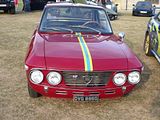

Lancia launched the Delta in 1979, as what we would now think of as a “premium hatch”. Offered in 1300 and 1500cc engines, this car, which collected the prestigious “Car of the year” award a few months later, brought Italian style and an expensive feeling interior to a new and lower price point in the market than Lancia had occupied since the early days of the Fulvia some 15 years earlier. The range grew first when a model was offered using the 4 speed AP automatic transmission and then in late 1982, more powerful models started to appear, with first a 1600cc engine, and then one with fuel injection, before the introduction of the HF Turbo. All these cars kept the same appearance and were quite hard to tell apart. These were the volume models of the range, but now they are very definitely the rare ones, as it is the performance versions which have survived and are now much loved classics, even though relatively were sold when they were new, thanks to a combination of the fact that they were quite costly and that they only ever came with left hand drive. The Integrale evolved over several years, starting off as the HF Turbo 4WD that was launched in April 1986, to homologate a new rally car for Lancia who needed something to fill the void left by the cancellation of Group B from the end of 1986. The Delta HF 4X4 had a four-wheel drive system with an in-built torque-splitting action. Three differentials were used. Drive to the front wheels was linked through a free-floating differential; drive to the rear wheels was transmitted via a 56/44 front/rear torque-splitting Ferguson viscous-coupling-controlled epicyclic central differential. At the rear wheels was a Torsen (torque sensing) rear differential. It divided the torque between the wheels according to the available grip, with a maximum lockup of 70%. The basic suspension layout of the Delta 4WD remained the same as in the rest of the two-wheel drive Delta range: MacPherson strut–type independent suspension with dual-rate dampers and helicoidal springs, with the struts and springs set slightly off-centre. The suspension mounting provided more isolation by incorporating flexible rubber links. Progressive rebound bumpers were adopted, while the damper rates, front and rear toe-in and the relative angle between springs and dampers were all altered. The steering was power-assisted rack and pinion. The car looked little different from the front wheel drive models. In September 1987, Lancia showed a more sophisticated version of the car, the Lancia Delta HF Integrale 8V. This version incorporated some of the features of the Delta HF 4WD into a road car. The engine was an 8-valve 2 litre fuel injected 4-cylinder, with balancing shafts. The HF version featured new valves, valve seats and water pump, larger water and oil radiators, more powerful cooling fan and bigger air cleaner. A larger capacity Garrett T3 turbocharger with improved air flow and bigger inter-cooler, revised settings for the electronic injection/ignition control unit and a knock sensor, boosting power output to 185 bhp at 5300 rpm and maximum torque of 224 lb/ft at 3500 rpm. The HF Integrale had permanent 4-wheel drive, a front transversely mounted engine and five-speed gearbox. An epicyclic centre differential normally split the torque 56 per cent to the front axle, 44 per cent to the rear. A Ferguson viscous coupling balanced the torque split between front and rear axles depending on road conditions and tyre grip. The Torsen rear differential further divided the torque delivered to each rear wheel according to grip available. A shorter final drive ratio (3.111 instead of 2.944 on the HF 4WD) matched the larger 6.5×15 wheels to give 24 mph/1000 rpm in fifth gear. Braking and suspension were uprated to 284 mm ventilated front discs, a larger brake master cylinder and servo, as well as revised front springs, dampers, and front struts. Next update was to change the engine from 8 valves to 16. The 16v Integrale was introduced at the 1989 Geneva Motorshow, and made a winning debut on the 1989 San Remo Rally. It featured a raised centre of the bonnet to accommodate the new 16 valve engine, as well as wider wheels and tyres and new identity badges front and rear. The torque split was changed to 47% front and 53% rear. The turbocharged 2-litre Lancia 16v engine now produced 200 bhp at 5500 rpm, for a maximum speed of 137 mph and 0–100 km/h in 5.5 seconds. Changes included larger injectors, a more responsive Garrett T3 turbocharger, a more efficient intercooler, and the ability to run on unleaded fuel without modification. The first Evoluzione cars were built at the end of 1991 and through 1992. These were to be the final homologation cars for the Lancia Rally Team; the Catalytic Evoluzione II was never rallied by the factory. The Evoluzione I had a wider track front and rear than earlier Deltas. The bodyside arches were extended and became more rounded. The wings were now made in a single pressing. The front strut top mounts were also raised, which necessitated a front strut brace. The new Integrale retained the four wheel drive layout. The engine was modified to produce 210 bhp at 5750 rpm. External changes included: new grilles in the front bumper to improve the air intake for engine compartment cooling; a redesigned bonnet with new lateral air slats to further assist underbonnet ventilation; an adjustable roof spoiler above the tailgate; new five-bolt wheels with the same design of the rally cars; and a new single exhaust pipe. Interior trim was now grey Alcantara on the Recaro seats, as fitted to the earlier 16V cars; leather and air conditioning were offered as options, as well as a leather-covered Momo steering wheel. Presented in June 1993, the second Evolution version of the Delta HF Integrale featured an updated version of the 2-litre 16-valve turbo engine to produce more power, as well as a three-way catalyst and Lambda probe. A Marelli integrated engine control system with an 8 MHz clock frequency which incorporates: timed sequential multipoint injection; self-adapting injection times; automatic idling control; engine protection strategies depending on the temperature of intaken air; Mapped ignition with two double outlet coils; Three-way catalyst and pre-catalyst with lambda probe (oxygen sensor) on the turbine outlet link; anti-evaporation system with air line for canister flushing optimised for the turbo engine; new Garrett turbocharger: water-cooled with boost-drive management i.e. boost controlled by feedback from the central control unit on the basis of revs/throttle angle; Knock control by engine block sensor and new signal handling software for spark park advance, fuel quantity injected, and turbocharging. The engine now developed 215 PS as against 210 PS on the earlier uncatalysed version and marginally more torque. The 1993 Integrale received a cosmetic and functional facelift that included. new 16″ light alloy rims with 205/45 ZR 16 tyres; body colour roof moulding to underline the connection between the roof and the Solar control windows; aluminium fuel cap and air-intake grilles on the front mudguards; red-painted cylinder head; new leather-covered three-spoke MOMO steering wheel; standard Recaro seats upholstered in beige Alcantara with diagonal stitching. In its latter years the Delta HF gave birth to a number of limited and numbered editions, differing mainly in colour, trim and equipment; some were put on general sale, while others were reserved to specific markets, clubs or selected customers.


LOTUS
The silver Italdesign concept that eventually became the Esprit was unveiled at the Turin Motor Show in 1972 as a concept car, and was a development of a stretched Lotus Europa chassis. It was among the first of designer Giorgetto Giugiaro’s polygonal “folded paper” designs. Originally, the name Kiwi was proposed, but in keeping with the Lotus tradition of having all car model names start with the letter “E”, the name became Esprit. The production Esprit was launched in October 1975 at the Paris Auto Show, and went into production in June 1976, replacing the Europa in the Lotus model lineup. These first cars eventually became known as S1 Esprits. With a steel backbone chassis and a fibreglass body, the Esprit was powered by the Lotus 907 4-cylinder engine, as previously used in the Jensen Healey. This engine displaced 2.0 litre, produced 160 bhp in European trim 140 bhp in US/Federal trim, and was mounted longitudinally behind the passengers, as in its predecessor. The transaxle gearbox was a 5-speed manual unit, previously used in the Citroën SM and Maserati Merak; it featured inboard rear brakes, as was racing practice at the time. The Series 1 embodied Lotus’ performance through light weight mantra, weighing less than 1,000 kg (2,205 lb). The original Esprit was lauded for its handling and is said to have the best steering of any Esprit. However, it was generally regarded as lacking power, especially in markets such as the United States where the engine was down-rated for emissions purposes. Lotus’ claim of 0-60 mph in 6.8 seconds and a top speed of 138 mph may be thought of as optimistic – actual road test times indicated 0-60 mph in 8 seconds and a top speed of around 133 mph. The S1 Esprit can be distinguished from later Esprits by a shovel-style front air dam, Fiat X1/9 tail lights, lack of body-side ducting, and Wolfrace alloy wheels. Inside the car, the most obvious indication of an S1 Esprit is a one-piece instrument cluster with green-faced Veglia gauges. The car gained fame through its appearance in the James Bond film The Spy Who Loved Me (1977) where a fictionally-modified version was featured in a long action sequence. Bond’s Esprit car is first chased on road, by a motorcycle, then by another car, and then a helicopter, then converts into a submarine for an undersea battle. A series of improvements made to the Esprit during its initial run culminated in the S2 Esprit, which was introduced in 1978. The most obvious of these changes are intake and cooling duct “ears” located behind the rear quarter window, tail lights from the Rover SD1, and an integrated front spoiler. S2 Esprits also used 14-inch Speedline alloy wheels designed specifically for Lotus. Other changes included relocating the battery from above the right side fuel tank (under the rear quarter window) to the rear of the car, adding an access door to the engine cover, as well as replacing the instrument cluster made by Veglia with individual gauges made by Smiths and using different style of switches on the dashboard. During this era, a special edition car was released to commemorate Lotus’s racing victories and their victory in the 1978 F1 World Championship. Sharing the black and gold colour scheme of Lotus’ then F1 sponsor, John Player & Sons, these cars are commonly known as the John Player Special (JPS) Esprits. The “JPS” Esprit has the same mechanicals as the regular two-litre S2. According to Lotus themselves a limited series of 300 was built, but most likely the total was considerably lower. Lotus’ records of production figures are notoriously vague, but best estimates suggest that 149 JPS Esprits were produced. The S2.2 was produced as a stop-gap model from May 1980, almost identical to the S2 but with an enlarged (2.2 litre) type 912 engine used. This kept horsepower the same, but bumped up torque from 140 lb·ft to 160 lb·ft. Importantly, the S2.2 also introduced the use of a galvanised chassis, although it did not benefit from the succeeding S3’s chassis improvements. These cars are extremely rare even among Esprits: according to Lotus themselves, only 88 were produced in its thirteen-month production span. In 1980 the first factory turbocharged Esprit was launched. Initially, this was another special edition model commemorating F1 ties and reflecting current sponsorship, this time in the blue, red and chrome livery of Essex Petroleum, and is therefore known as the Essex Esprit. The new turbocharged dry-sump type 910 engine produced 210 hp and 200 lb·ft of torque. 0-60 mph could be achieved in 6.1 seconds, with a top speed of 150 mph. These performance improvements were coupled to a redesign and strengthening of the chassis and rear suspension, where an upper link was added to alleviate strain on the driveshafts, along with brake improvements. The Essex cars introduced a Giugiaro-designed aerodynamic body kit with a rear lip spoiler, prominent louvered rear hatch, more substantial bumpers, a deeper front airdam, and air ducts in the sills just ahead of the rear wheels, which were 15″ Compomotive three piece items. Internally, scarlet leather, combined with a roof-mounted Panasonic stereo, made for a dramatic environment. 45 Essex Esprits were built, interspersed and followed by a number of non Essex-liveried but otherwise identical specification dry-sump turbo cars. Two Essex-spec Turbo Esprits – one in white and the other in copper – were featured in the James Bond film For Your Eyes Only (1981), although these were scripted as the same vehicle – the white one was destroyed by an anti-burglar explosion system in Spain, while the copper red one was a “rebuild” of the original (actually a joke between Bond and Q in the latter’s laboratory), and was fully functional (the copper exterior paint colour for the replacement car was chosen to make the car stand out more in filming against the snowy background of Cortina, Italy, the only locale in which it appears). By the close of 1980, Lotus was effectively building three different models of Esprit, with distinct chassis designs and body moulds – the Domestic S2.2, the Export S2.2, and the dry-sump Turbo Esprit. Introduced in April 1981, the Turbo Esprit and S3 Esprits marked a necessary consolidation: both new models had a common chassis, inheriting much of the configuration of the Essex cars, whilst body production was based on a single common set of moulds. The S3 continued to use the 2.2 litre type 912 engine of the S2.2, whilst the Turbo Esprit reverted to a less complex wet-sump lubrication system, retaining the power and torque outputs of its dry-sump predecessor. The interior for both cars was revised and featured new trim; combined with changes to the body moulds this resulted in more headroom and an enlarged footwell. Externally, the Turbo Esprit retained the full aerodynamic body kit of the Essex cars, and featured prominent ‘turbo esprit’ decals on the nose and sides; the S3 gained the more substantial bumpers, yet retained the simpler sill line and glazed rear hatch of the S2.2 body style. Both models were supplied with 15″ BBS alloy wheels. For the 1985 model year, the S3 and Turbo underwent some slight alterations to the bodywork and to the front suspension. In April 1986, the final incarnations of the Giugiaro-styled Esprit were announced, with raised engine compression giving rise to the ‘HC’ moniker. This increased the output of the naturally aspirated engine to 172 hp and 160 lb/ft for the Esprit HC, and to 215 hp and 220 lb/ft for the Turbo Esprit HC, with the increased torque available at a lower rpm. For markets with stringent emissions requirements (mainly the United States), Lotus introduced the HCi variant, teaming the higher compression engine with Bosch KE-Jetronic fuel injection and a catalytic converter- the first fuel-injected Esprits. This engine had the same peak power as the carburettor version, but at a somewhat higher engine speed, and torque dropped to 202 lb/ft.


It is now over 25 years since Lotus launched the Elise, a model which showed a return to the core values of simplicity and light-weight which were cornerstones of Colin Chapman’s philosophy when he founded the marque in 1955. The first generation Elise was produced for just over 4 years, with a replacement model, the Series 2 arriving in October 2000. It came about as the Series 1 could not be produced beyond the 2000 model production year due to new European crash sustainability regulations. Lacking the funding to produce a replacement, Lotus needed a development partner to take a share of investment required for the new car. General Motors offered to fund the project, in return for a badged and GM-engined version of the car for their European brands, Opel and Vauxhall. The result was therefore two cars, which although looking quite different, shared much under the skin: a Series 2 Elise and the Vauxhall VX220 and Opel Speedster duo. The Series 2 Elise was a redesigned Series 1 using a slightly modified version of the Series 1 chassis to meet the new regulations, and the same K-series engine with a brand new Lotus-developed ECU. The design of the body paid homage to the earlier M250 concept, and was the first Lotus to be designed by computer. Both the Series 2 Elise and the Opel Speedster/Vauxhall VX220 were built on the same production line, in a new facility at Hethel. Both cars shared many parts, including the chassis, although they had different drive-trains and power-plants. The VX220 carried the Lotus internal model identification Lotus 116, with the code name Skipton for the launch 2.2 normally aspirated version and Tornado for the 2 litre Turbo which came out in 2004. Fitted with 17 inch over the Elise’s 16 inch front wheels, the Vauxhall/Opel version ceased production in late 2005 and was replaced by the Opel GT for February 2007, with no RHD version for the United Kingdom. The Elise lived on. and indeed production only ceased at the end of 2021 and there have been countless different versions produced in that time. Whilst the first of the Series 2 cars came with the Rover K-Series engine, and that included the 111S model which had the VVC engine technology producing 160 hp , a change came about in 2005 when Lotus started to use Toyota engines. This was initially due to Lotus’ plans to introduce the Elise to the US market, meaning that an engine was needed which would comply with US emissions regulations. The selected 1.8 litre (and later 1.6 litre) Toyota units did, and the K-series did not. that MG-Rover went out of business in 2005 and engine production ceased confirmed the need for the change. Since then, Lotus have offered us track focused Elise models like the 135R and Sport 190, with 135 bhp and 192 bhp respectively, as well as the 111R, the Sport Racer, the Elise S and Elise R. In 2008 an even more potent SC model, with 218 bhp thanks to a non-intercooled supercharger was added to the range. In February 2010, Lotus unveiled a facelifted version of the second generation Elise. The new headlights are now single units; triangular in shape they are somewhat larger than the earlier lights. The cheapest version in Europe now has a 1.6 litre engine to comply with Euro 5 emissions, with the same power output as the earlier 1.8 136bhp car.

At the Frankfurt 2011 Show, the 2012 version of the Exige S was announced. It features a supercharged 3.5 litre V6 engine (from the Evora S) rated at 345 hp. In 2013, a roadster version was introduced with only minor changes to the design for the removable top. The engine and performance were virtually unchanged from the coupe. To accommodate the V6 engine, the new model is approximately 25 cm (9.8 inches) longer and 5 cm (2.0 in) wider (exterior bodywise) than the model with the inline-four engine, being 4,052 mm (159.5 inches) long, 1,802 mm (70.9 in) wide (not counting the mirrors) and 1,153 mm (45.4 in) tall. The drag coefficient is 0.433. Since that time there have been a bewildering array of different versions and you need to be a real marque expert to tell them all apart. The policy has worked, though, as sales have remained steady whilst Lotus try to amass the finances to develop any all new models. The Exige V6 Cup is a track oriented version of the Exige S while the Exige CupR is the track-only version of Exige V6 Cup. The Exige V6 Cup is offered for sale in the United States as a track only car. If purchased, US Lotus Dealers will only provide a bill of sale instead of a title. The vehicles were unveiled at the 2013 Autosport International motor show. Limited to 50 examples, the Lotus Exige 360 Cup was revealed on 14 August 2015. The car is powered by a 3.5-liter supercharged Toyota V6 delivering 355 hp. The Lotus Exige Sport 380 is a track focused and more powerful version of the Lotus Exige lineup. It was unveiled on 23 November 2016. Lotus’ CEO, Jean-Marc Gales describes it as, “The Exige Sport 380 is so good, that it is no longer the best in class, it’s now in a class of its own”, and it fulfills this statement by taking on some of the powerful and expensive super cars both on the track and the streets. The 3.5-litre, super-charged V6 engine is now uprated and produces 375 hp and 410 Nm (302 lb/ft) of torque with a 6500 rpm red line achieved by revised supercharger and ECU. It can accelerate from 0 to 60 mph in 3.5 seconds and has a top speed of 178 mph (286 km/h). The interior is also stripped out and features necessary driver aids. The Exige Sport 380 weighs 1,076 kg (2,372 lb), thanks to the extensive use of carbon fibre on the exterior as well as the interior, the application of polycarbonate windows instead of traditional glass windows and a newly designed rear transom panel which features two rear lights instead of four.The Lotus Exige Cup 380 is a more hardcore variant of the Exige Sport 380. Performance of the car remains the same as the Sport 380 but it features more aero components and a larger rear wing to produce more downforce at high speeds. The Exige Cup 380 generates 200 kg (441 lb) of downforce at its maximum speed of 175 mph (282 km/h); the top speed is reduced due to excess downforce and more drag. It features a more stripped out interior in order to save weight and other light weight carbon fiber components, Lotus states a lowest possible dry weight of only 1,057 kg (2,330 lb). On 9 November 2017, Lotus unveiled the most powerful version of the Exige to date called the Exige Cup 430, producing 430 PS (424 hp) and using the Evora GT430’s powertrain, modified to fit in the smaller Exige. The car body can produce 220 kg (485 lb) of downforce. The Cup 430 is 19 kg (42 lb) lighter than the Sport 380 due to the use of carbon fibre in body panels and interior and a titanium exhaust. The gearbox allows quicker gearshifts than the previous model. The Cup 430 is not offered with an automatic gearbox. The Lotus Exige Cup 430 is capable of covering the Hethel circuit in 1 minute 24.8 seconds – the fastest production car to lap the circuit – 1.2 seconds faster than the road going Lotus 3-Eleven. Production ceased at the end of 2021 as Lotus looked to replace all their long-running cars with the new Emira.

The Lotus 2-Eleven is based on the Lotus Exige S, and thus has the same Toyota 2ZZ-GE with VVTL-i, Eaton M62 Roots-type supercharger and intercooled inline-four engine. Weighing 670 kg (1,477 lb), with 252 bhp at 8,000 rpm and 242 Nm (178 lb/ft) at 7,000 rpm of torque, the 2-Eleven can sprint from 0-60 mph (97 km/h) in 3.8 seconds and has a top speed of 150 mph (241 km/h). Intended as a track day car, it cost £39,995 though for an additional £1,100 Lotus would make the car fully road legal. Slight differences exist between the track and road versions, where the track car is slightly longer, at 3,872 mm (152.4 in) and lighter at 666 kg (1,468 lb). The cars were made between 2007 and 2011.

Rounding out the variety of Lotus models was the new all-electric Eletre.

MASERATI
The local dealer brought along a couple of cars from the current Maserati range, the all-electric Grecale Folgore and the new GranTurismo


McLAREN
A heavily revised version of the MP12-4C was announced in February 2014, called the 650S, with revised bodywork, upgraded engine and other technical improvements. In April 2014, McLaren announced the end of production of the 12C. The 650S is the core model in the Super Series, designed and developed to give the enthusiast driver the ultimate in luxury, engagement and excitement. Fitted with the award-winning 3.8-litre twin turbo V8 engine producing 650PS (641bhp) and 678Nm (500lb ft) of torque, it is a no compromise open-top high performance supercar with optimised levels of performance, handling and driver enjoyment. The secret of its success is its carbon fibre MonoCell chassis, which needs no extra strengthening to provide the necessary rigidity or safety when developing a convertible. This keeps any weight increase to a minimum, meaning the McLaren 650S Spider offers all the enjoyment and driver appeal of the fixed-roof sibling – but with the added appeal of roof-down driving. The 650S Spider is fitted with an electrically retractable hard top, which can be automatically raised or lowered on the move in less than 17 seconds. Building on the success of the MP4 12C, with which it shares much, the 650S series, first seen at the 2014 Geneva Show has proved very popular, helping to establish the brand as a serious rival to the established supercar players. Production ended when the even faster (and costlier) 720S arrived in 2017.

The McLaren 570S is a sports car designed and manufactured by the British car manufacturer McLaren Automotive, produced from 2015 until 2021. It was unveiled at the 2015 New York International Auto Show. The car is powered by a new iteration of the 3.8-litre twin-turbocharged V8 engine already used in the 650S and P1, designated M838T E with thirty per cent of the parts redesigned. It delivers 562 hp and 443 lb/ft (601 Nm) of torque through a 7-speed dual-clutch transmission developed by Graziano Trasmissioni, as it is arranged in the car as a rear-mid engine configuration, The car can accelerate from 0–62 mph (0–100 km/h) in 3.2 seconds and can achieve a top speed of 204 mph (328 km/h). A total dry weight of 2,989 lb (1,356 kg) and maximum weight of 3,201 lb (1,452 kg) gives the 570S a power to weight ratio of 428 PS per tonne delivering a fuel economy of 25.5 miles per imperial gallon (11.1 L/100 km; 21.2 mpg‑US) and CO2 emissions of 249 g/km. McLaren focused on delivering “day-to-day usability and driveability” against the most sporting model options in its range with increased luggage space, greater interior storage and leather upholstery options. The car is designed with aerodynamics in mind and the teardrop shaped cockpit helps achieve that objective. The rear of the car is inspired by the P1 and borrows the slim LED tail lights and diffuser styling from the flagship sports car. The car features dihedral doors, a trademark of McLaren as featured on its ultimate and super series cars. At the 2015 Shanghai Motor Show, the entry level McLaren Sports Series car named 540C was unveiled with 533 hp (540 PS) and 540 Nm (398 lb/ft) of torque. This new entry-level model focuses on “day-to-day usability and driveability” even more than that of the 570S with improved city driving and ride quality. The car can accelerate from 0–60 mph (0–97 km/h) in 3.4 seconds and has a top speed of 199 mph (320 km/h). The 540C is cheaper than the 570S and went on sale shortly after its Shanghai debut. The 540C is not available in the US due to McLaren wanting to focus on the more powerful 570S model for the US market. At the 2016 Geneva Motor Show, McLaren presented another addition to the Sport Series and 570 line up, dubbed the 570GT. The 570GT is the less track focused, and more road trip worthy version of the 570S. The 570GT sports a side opening cargo hatch above the mid-mounted engine for additional cargo space in place of the engine cover of the 570S, slightly softer suspension settings and improved sound insulation. The 570GT went through a facelift at the start of 2018 which added ceramic brakes as standard and steel as a free option. The convertible version of the 570S was unveiled at the 2017 Goodwood Festival of Speed event. It borrows the roof folding mechanism from the Super Series line-up. The two-piece aluminium roof folds into a compartment located behind the seats of the car leaving the rear buttress in place. The roof folding mechanism takes 30 seconds to fold and unfold and is operable at speeds up to 48 km/h (30 mph). Unlike the 12C Spider and the 650S Spider, the 570S spider required no significant reengineering for the folding roof mechanism because of the carbon monocell used in the 570S. As a result, the 570S Spider is only 46 kg (101 lb) heavier than the coupe. The drivetrain of the Spider remains identical to that of the coupe which results in similar performance to the coupé counterpart with the roof up. The Spider has new forged aluminium wheels and three special launch colours namely Vega Blue, Sicilian Yellow and Ventura Orange. Deliveries of the Spider began in late 2017

MERCEDES-BENZ
Replacement for the 190SL cars of the 1950s were the “Pagoda” series of W113 cars. By 1955, Mercedes-Benz Technical Director Prof. Fritz Nallinger and his team held no illusions regarding the 190 SL’s lack of performance, while the high price tag of the legendary 300 SL supercar kept it elusive for all but the most affluent buyers. Thus Mercedes-Benz started evolving the 190 SL on a new platform, model code W127, with a fuel-injected 2.2 litre M127 inline-six engine, internally denoted as 220SL. Encouraged by positive test results, Nallinger proposed that the 220SL be placed in the Mercedes-Benz program, with production commencing in July 1957. However, while technical difficulties kept postponing the production start of the W127, the emerging new S-Class W112 platform introduced novel body manufacturing technology altogether. So in 1960, Nallinger eventually proposed to develop a completely new 220SL design, based on the “fintail” W 111 sedan platform with its chassis shortened by 11.8 in, and technology from the W112. This led to the W113 platform, with an improved fuel-injected 2.3 litre M127 inline-six engine and the distinctive “pagoda” hardtop roof, designated as 230 SL. The 230 SL made its debut at the prestigious Geneva Motor Show in March 1963, where Nallinger introduced it as follows: “It was our aim to create a very safe and fast sports car with high performance, which despite its sports characteristics, provides a very high degree of travelling comfort”. The W113 was the first sports car with a “safety body,” based on Bela Barényi’s extensive work on vehicle safety: It had a rigid passenger cell and designated crumple zones with impact-absorbing front and rear sections built into the vehicle structure. The interior was “rounded,” with all hard corners and edges removed, as in the W111 sedan. Production of the 230 SL commenced in June 1963 and ended on 5 January 1967. Its chassis was based on the W 111 sedan platform, with a reduced wheelbase by 11.8 in, recirculating ball steering (with optional power steering), double wishbone front suspension and an independent single-joint, low-pivot swing rear-axle with transverse compensator spring. The dual-circuit brake system had front disc brakes and power-assisted rear drum brakes. The 230 SL was offered with a 4-speed manual transmission, or an optional, very responsive fluid coupled (no torque converter) 4-speed automatic transmission, which was popular for US models. From May 1966, the ZF S5-20 5-speed manual transmission was available as an additional option, which was particularly popular in Italy. The 2,308 cc M127.II inline-six engine with 150 hp and 145 lb/ft torque was based on Mercedes-Benz’ venerable M180 inline-six with four main bearings and mechanical Bosch multi-port fuel injection. Mercedes-Benz made a number of modifications to boost its power, including increasing displacement from 2,197 cc, and using a completely new cylinder head with a higher compression ratio (9.3 vs. 8.7), enlarged valves and a modified camshaft. A fuel injection pump with six plungers instead of two was fitted, which allowed placing the nozzles in the cylinder head and “shooting” the fuel through the intake manifold and open valves directly into the combustion chambers. An optional oil-water heat exchanger was also available. Of the 19,831 230 SLs produced, less than a quarter were sold in the US. Looking identical, the 250 SL was introduced at the 1967 Geneva Motor Show. Production had already commenced in December 1966 and ended in January 1968. The short one-year production run makes the 250 SL the rarest of the W113 series cars. The 250 SL retained the stiffer suspension and sportier feel of the early SLs, but provided improved agility with a new engine and rear disc brakes. Range also improved with increased fuel tank capacity from 65 litres to 82. Like its predecessor, the 250 SL was offered with a 4-speed automatic transmission, and 4-speed or ZF 5-speed manual transmissions. For the first time, an optional limited slip differential was also available. The main change was the use of the 2,496 cc M129.II engine with a larger stroke, increased valve ports, and seven main bearings instead of four. The nominal maximum power remained unchanged at 150 hp, but torque improved from 145 lb/ft to 159 lb/ft. Resiliency also improved with a new cooling water tank (“round top”) with increased capacity and a standard oil-water heat exchanger. The 250 SL also marked the introduction of a 2+2 body style, the so-called “California Coupé”, which had only the removable hardtop and no soft-top: a small fold-down rear bench seat replaced the soft-top well between passenger compartment and boot. It is estimated that only 10% of the 250SLs that were brought into America were California Coupes. Of the 5,196 250 SLs produced, more than a third were sold in the US.The 280 SL was introduced in December 1967 and continued in production through 23 February 1971, when the W 113 was replaced by its successor, the entirely new and substantially heavier R107 350 SL. The main change was an upgrade to the 2,778 cc M130 engine with 170 hp and 180 lb/ft, which finally gave the W 113 adequate power. The performance improvement was achieved by increasing bore by 4.5 mm (0.2 in), which stretched the limits of the M180 block, and required pairwise cylinder casts without cooling water passages. This mandated an oil-cooler, which was fitted vertically next to the radiator. Each engine was now bench-tested for two hours prior to being fitted, so their power specification was guaranteed at last. The M130 marked the final evolution of Mercedes-Benz’ venerable SOHC M180 inline-six, before it was superseded by the entirely new DOHC M110 inline-six introduced with R107 1974 European 280 SL models. For some time, it was also used in the W 109 300 S-Class, where it retired the expensive 3 liter M189 alloy inline-six. Over the years, the W 113 evolved from a sports car into a comfortable grand tourer, and US models were by then usually equipped with the 4-speed automatic transmission and air conditioning. Manual transmission models came with the standard 4-speed or the optional ZF 5-speed, which was ordered only 882 times and thus is a highly sought-after original option today. In Europe, manual transmissions without air conditioning were still the predominant choice. Of the 23,885 280 SLs produced, more than half were sold in the US.

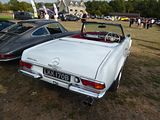
With prices of the classic Pagoda model having risen to unaffordable for most people attention has started to switch to it successor, the R107 SL range, which had a long production life, being the second longest single series ever produced by the automaker, after the G-Class. The R107 and C107 took the chassis components of the mid-size Mercedes-Benz W114 model and mated them initially to the M116 and M117 V8 engines used in the W108, W109 and W111 series. The SL variant was a 2-seat convertible/roadster with standard soft top and optional hardtop and optional folding seats for the rear bench. The SLC (C107) derivative was a 2-door hardtop coupe with normal rear seats. The SLC is commonly referred to as an ‘SL coupe’, and this was the first time that Mercedes-Benz had based a coupe on an SL roadster platform rather than on a saloon, replacing the former saloon-based 280/300 SE coupé in Mercedes lineup. The SLC was replaced earlier than the SL, with the model run ending in 1981, with a much larger model, the 380 SEC and 500SEC based on the new S class. Volume production of the first R107 car, the 350 SL, started in April 1971 alongside the last of the W113 cars; the 350 SLC followed in October. The early 1971 350SL are very rare and were available with an optional 4 speed fluid coupling automatic gearbox. In addition, the rare 1971 cars were fitted with Bosch electronic fuel injection. Sales in North America began in 1972, and cars wore the name 350 SL, but had a larger 4.5L V8 with 3 speed auto (and were renamed 450 SL for model year 1973); the big V8 became available on other markets with the official introduction of the 450 SL/SLC on non-North American markets in March 1973. US cars sold from 1972 through 1975 used the Bosch D Jetronic fuel injection system, an early electronic engine management system. From July 1974 both SL and SLC could also be ordered with a fuel-injected 2.8L straight-6 as 280 SL and SLC. US models sold from 1976 through 1979 used the Bosch K Jetronic system, an entirely mechanical fuel injection system. All US models used the 4.5 litre engine, and were called 450 SL/SLC. In September 1977 the 450 SLC 5.0 joined the line. This was a homologation version of the big coupé, featuring a new all-aluminium five-litre V8, aluminium alloy bonnet and boot-lid, and a black rubber rear spoiler, along with a small front-lip spoiler. The 450SLC 5.0 was produced in order to homologate the SLC for the 1978 World Rally Championship. Starting in 1980, the 350, 450 and 450 SLC 5.0 models (like the 350 and 450 SL) were discontinued in 1980 with the introduction of the 380 and 500 SLC in March 1980. At the same time, the cars received a very mild makeover; the 3-speed automatic was replaced by a four-speed unit, returning to where the R107 started in 1971 with the optional 4 speed automatic 350SL. The 280, 380 and 500 SLC were discontinued in 1981 with the introduction of the W126 series 380 and 500 SEC coupes. A total of 62,888 SLCs had been manufactured over a ten-year period of which just 1,636 were the 450 SLC-5.0 and 1,133 were the 500 SLC. Both these models are sought by collectors today. With the exception of the SL65 AMG Black Series, the SLC remains the only fixed roof Mercedes-Benz coupe based on a roadster rather than a sedan. Following the discontinuation of the SLC in September 1981, the 107 series continued initially as the 280, 380 and 500 SL. At this time, the V8 engines were re-tuned for greater efficiency, lost a few hp and consumed less fuel- this largely due to substantially higher (numerically lower) axle ratios that went from 3.27:1 to 2.47:1 for the 380 SL and from 2.72:1 to 2.27:1 for the 500 SL. From September 1985 the 280 SL was replaced by a new 300 SL, and the 380 SL by a 420 SL; the 500 SL continued and a 560 SL was introduced for certain extra-European markets, notably the USA, Australia and Japan. Also in 1985, the Bosch KE Jetronic was fitted. The KE Jetronic system varied from the earlier, all mechanical system by the introduction of a more modern engine management “computer”, which controlled idle speed, fuel rate, and air/fuel mixture. The final car of the 18 years running 107 series was a 500 SL painted Signal red, built on August 4, 1989; it currently resides in the Mercedes-Benz museum in Stuttgart.

Designed in 1984, and launched in 1989, the R129 was based on the shortened floorpan of the Mercedes-Benz W124 and featured many innovative details for the time, for instance electronically controlled damping (Adaptive Damping System ADS, optional) and a hidden, automatically extending roll-over bar. The R107’s somewhat dated rear suspension with semi-trailing arms gave way to a modern multi-link axle. The number of standard features was high, with electric action for the windows, mirrors, seats and hydraulic convertible top. This car has the distinction of being the first passenger vehicle to have seat belts integrated into the seats as opposed to anchoring to the floor, B-pillar, and transmission tunnel. Initially, there were three different engines available: 300 SL with a M103 3.0 L 12-valve SOHC I6 (188 bhp), a 300 SL-24 with a M104 3.0 L 24-valve DOHC I6 (228 bhp) and the 500 SL with a M119 5.0 L 32-valve DOHC V8 (322 bhp) . These were joined in July 1992 by the 600 SL with a M120 6.0 L 48-valve DOHC V12 (389 bhp). There was a choice of 5-speed manual or 4–5 speed automatic for the six-cylinder cars; the V8 and V12 could only be ordered with a 4-speed automatic gearbox. In autumn 1993 Mercedes-Benz rearranged names and models. Also, the 300 SL and 300 SL-24 were respectively replaced by: SL 280 with a M104 2.8 L 24-valve DOHC I6 (190 bhp) and the SL 320 with a M104 3.2 L 24-valve DOHC I6 (228 bhp). Only the 280 was available with a manual gearbox. SL 500 and 600 continued with their respective engines.Starting in 1993, the cars were re-designated. For example, 500 SL became SL 500. Starting in model year 1994, Mercedes-Benz offered special SL models from time to time, such as the Mille Miglia edition cars of model year 1994 or the SL edition of model year 2000. 1994 cars had minor updates for the car and then in 1995 there was a minor facelift for the car, with the front fender vents updated to only 2 rounded slots, rather than 3 squared slots, and bumpers in body colour. The V8 and V12s were upgraded to 5 speed electronic transmission, the previous transmission was hydraulic 4-speed. A second facelift occurred in 1998 with many detailed changes applied, including new external mirrors, 17″ wheels and new bumpers. Also new were the engines, a SL 280 with a M112 2.8 L 18-valve SOHC V6 (201 bhp); SL 320 with a M112 3.2 L 18-valve SOHC V6 (221 bhp) and a SL 500 with a M113 5.0 L 24-valve SOHC V8 (302 bhp). The V12 engine remained unchanged. The car was replaced by the R230 generation SL in 2001, after 213,089 had been built. There were a number of very low volume AMG versions of the car, including this SL70 AMG. This was powered by a 7.1 litres (7,055 cc) V12 engine developing 496 PS (489 bhp) at 5,500 rpm and a maximum torque of 720 Nm (531 lb/ft) at 3,900 rpm. It was a bored out version of M120 6.0 V12 and with a longer stroke. Produced between 1996 and 1997, just 150 units were made.

The CLK 63 AMG Black Series is a high-performance version of the CLK 63 AMG coupé, produced between 2007 and 2009. 500 examples were produced in total, with 349 headed to the United States and only 120 examples built with right-hand drive. It is powered by the M156 6.2 L (6,208 cc) V8, producing 500 bhp at 6,800 rpm and 630 Nm (465 lb/ft) of torque at 5,250 rpm. It uses Pirelli P-Zero Corsa tyres and features Mercedes’ SpeedShift 7G-Tronic transmission. Additional features also include a manually adjustable suspension system designed and manufactured by KW, a limited-slip differential, larger air intakes, bucket seats, 19-inch alloy wheels, a spoiler, diffuser, and wider fenders made of carbon fibre. The rear seats have also been removed in order to save weight, and the top speed has been increased to 300 km/h (186 mph)


MINI
The Mini was marketed under BMC’s two main brand names, Austin and Morris, until 1969, when it became a marque in its own right. The Morris version was known to all as “the Mini” or the “Morris Mini-Minor”. This seems to have been a play on words: the Morris Minor was a larger, well known, and successful car that continued in production, and minor is Latin for “lesser”, so an abbreviation of the Latin word for “least” – minimus – was used for the new even smaller car. One name proposed for the almost identical Austin version was Austin Newmarket, but it was sold as the Austin Seven (sometimes written as SE7EN in early publicity material – with the ‘7’ using the letter V rotated anticlockwise so it approximated the number 7), which recalled the popular small Austin 7 of the 1920s and 1930s. Until 1962, the cars appeared in North America and France as the Austin 850 and Morris 850, and in Denmark as the Austin Partner (until 1964) and Morris Mascot (until 1981). It was introduced in Australia as Morris 850 only (not “Austin”), and then later as Morris Cooper and Morris Cooper S versions, as well. The Morris name Mini (Mini-Minor) was first used for Austin’s version by BMC in 1961 when the Austin Seven was rebranded as the Austin Mini, somewhat to the surprise of the Sharp’s Commercials car company (later known as Bond Cars), who had been using the name Minicar for their three-wheeled vehicles since 1949. However, legal action was somehow averted, and BMC used the name “Mini” thereafter. In 1964, the suspension of the cars was replaced by another Moulton design, the hydrolastic system. The new suspension gave a softer ride, but it also increased weight and production cost. In 1971, the original rubber suspension reappeared and was retained for the remaining life of the Mini. From October 1965, the option of the unique Automotive Products designed four-speed automatic transmission became available. Cars fitted with this became the Mini-Matic. Slow at the outset, Mark I sales strengthened across most of the model lines in the 1960s, and production totalled 1,190,000. Ford purchased a Mini and dismantled it to see if they could offer an alternative. Ford determined that the BMC must have been losing around £30 per car, so decided to produce a larger car – the Cortina, launched in 1962 – as its competitor in the budget market. BMC insisted that the way company overheads were shared out, the Mini always made money. Larger profits came from the popular De Luxe models and from optional extras such as seat belts, door mirrors, a heater, and a radio, which would be considered necessities on modern cars, as well as the various Cooper and Cooper S models. The Mini entered into popular culture in the 1960s with well-publicised purchases by film and music stars.


Issigonis’ friend John Cooper, owner of the Cooper Car Company and designer and builder of Formula One cars, saw the potential of the Mini for competition. Issigonis was initially reluctant to see the Mini in the role of a performance car, but after John Cooper appealed to BMC management, the two men collaborated to create the Mini Cooper. The Austin Mini Cooper and Morris Mini Cooper debuted in September 1961. The 848 cc engine from the Morris Mini-Minor was given a longer stroke to increase capacity to 997 cc increasing power from 34 to 55 bhp. The car featured a race-tuned engine, twin SU carburettors, a closer-ratio gearbox and front disc brakes, uncommon at the time in a small car. One thousand units of this version were commissioned by management, intended for and designed to meet the homologation rules of Group 2 rally racing. The 997 cc engine was replaced by a shorter stroke 998 cc unit in 1964. In 1962, Rhodesian John Love became the first non-British racing driver to win the British Saloon Car Championship driving a Mini Cooper. A more powerful Mini Cooper, dubbed the “S”, was developed in tandem and released in 1963. Featuring a 1071 cc engine with a 70.61 mm bore and nitrided steel crankshaft and strengthened bottom end to allow further tuning; and larger servo-assisted disc brakes, 4,030 Cooper S cars were produced and sold until the model was updated in August 1964. Cooper also produced two S models specifically for circuit racing in the under 1,000 cc and under 1,300 cc classes respectively, rated at 970 cc and a 1,275 cc both had a 70.61 mm bore and both were also offered to the public. The smaller-engine model was not well received, and only 963 had been built when the model was discontinued in 1965. The 1,275 cc Cooper S models continued in production until 1971. Sales of the Mini Cooper were: 64,000 Mark I Coopers with 997 cc or 998 cc engines; 19,000 Mark I Cooper S with 970 cc, 1,071 cc or 1,275 cc engines; 16,000 Mark II Coopers with 998 cc engines; 6,300 Mark II Cooper S with 1,275 cc engines. There were no Mark III Coopers and 1,570 Mark III Cooper S.

MITSUBISHI
This is a Lancer Evo VI, of the type which was produced between January 1999 and February 2001. Based on the Lancer saloon, the Evo kept pace with changes to that model, so the Evo IV, seen in 1996 had been a new model compared to the first three Evo generations. Evo IV, V and VI were all broadly similar with detailed changes coming with each new iteration. The Evolution VI’s changes mainly focused on cooling and engine durability. It received a larger intercooler, larger oil cooler, and new pistons, along with a titanium-aluminide turbine wheel for the RS model, which was a first in a production car. The Evolution VI received new bodywork yet again, with the most easily noticeable change being within the front bumper where the huge fog lights were reduced in size and moved to the corners for better airflow. A new model was added to the GSR and RS lineup; known as the RS2, it was an RS with a few of the GSR’s options. Another limited-edition RS was known as the RS Sprint, an RS tuned by Ralliart in the UK to be lighter and more powerful with 330 hp. Yet another special edition Evolution VI was released in December 1999: the Tommi Mäkinen Edition, named after Finnish rally driver Tommi Mäkinen who had won Mitsubishi four WRC drivers championships. It featured a different front bumper, Red/Black Recaro seats (with embossed T. Mäkinen logo), 17″ Enkei white wheels, a leather Momo steering wheel and shift knob, a titanium turbine that spooled up more quickly, front upper strut brace, lowered ride height (with tarmac stages in mind), and a quicker steering ratio. Amongst other colours, the Evo VI came in either red (Tommi Mäkinen Edition only), white, blue, black or silver with optional special decals, replicating Tommi Mäkinen’s rally car’s colour scheme. This car is also sometimes referred to as an Evolution 6½, Evolution 6.5, or TME for short. There were two “standard” models. The RS – “rally sport” had a close-ratio 5-speed, minimal interior, rally suspension, Rear 1.5 Way LSD as opposed to AYC, (Shortened close-ratio 5-speed transmission, Optional Enkei Wheels, Optional Recaro Seats, Optional Air Conditioner, Optional Brembo brakes, Optional power windows). The GSR came with a 5-speed, gauge pack, AYC (Active Yaw Control), Anti-Lock Braking System, Recaro front bucket and rear seat, auto air-conditioner, double-din audio, power windows, Brembo brakes. The Tommi Mäkinen Edition Models also came in RS and GSR guise. The RS was the same as the standard RS with close-ratio 5-speed, lowered ride height, Tommi Mäkinen Edition front bumper, and titanium turbine (same option with standard RS) and the GSR was the same as the standard GSR with lowered ride height, Tommi Mäkinen Edition front bumper, Red/Black Recaro seats (with embossed T. Mäkinen logo), 17″ Enkei white wheels and titanium turbine. These cars were fearsomely expensive to run, and as such, you don’t see them very often any more.

MORGAN
First referred to in 2011, and launched in production spec in 2012, the Three Wheeler has been a huge success for Morgan, and for a while the company simply could not build them fast enough. Relatively affordable, compared to the other products in the range, this fun machine has a 2 litre S&S engine coupled to an MX-5 gearbox, and a weight of 550 kg, which is enough to give it a top speed of around 115 mpg and a 0- 60 time of less than 5 seconds.

NISSAN
The RS13U 200SX is a fastback 3-door hatchback with a body shell like the Japanese market 180SX. The notchback coupe version was never offered in the European market – though a number of Japanese market S13 Silvias have been imported privately. Like its predecessor the Nissan Silvia (R)S12 in the European market it used pop-up headlights. The RS13U 200SX was made until December 1993 but sales continued from stocks in the UK until the end of 1994. For a few months both 200SX S14 and RS13U were available. The RS13U 200SX were all powered by the CA18DET engines carried over from the end of S12 RS-X production, with an intercooler added to the CA18DET for a slight increase in stability and power. Despite its name, the SR20DET engine was never offered in Europe as it would have needed new European-type tests and regulations. The chassis with MacPherson strut front and multilink rear suspension was common to all S13 and RS13 models. The European 200SX initially had 257 mm front brakes and rear disc service brakes with drum parking brakes in the rotor hubs. Later models had larger 280 mm front brakes. The European 200SX RS13U had a number of parts as standard that were Nismo optional parts in Japan. Water/oil heat exchanger. Differential oil cooler AND extended finned rear cover holding 0.6 litres more oil, even on models with open differential. Alloy radiator. 3.916 final drive ratio. These were required as the RS13U 200SX has no speed limiter and any car in Europe could visit West Germany where on the Autobahn it could legally be held at very high speeds for a sustained length of time. Japanese cars are fitted with a 180 km/h (112 mph) speed limiter. Digital climate control was not fitted to European models. HICAS rear wheel steering wasn’t available, nor was the later Japanese model’s sports automatic gearbox control. The FS5W71C gearboxes had different ratios to all other S13/S14. A key change was the layshaft gear which changed from 22/31 to 21/32, thus running the layshaft slower and at higher torque. This gearbox is considered weaker than other S13/S14 gearboxes. The front of the SR20DET gearbox with bell housing can be removed and a CA18DET bell housing fitted to allow the gearboxes to be swapped. For the UK there were various trim levels but it never used GL/SL etc. that other Nissan models used. The early models had highback sports style seats with a fixed headrest. The seats, door cards and glove box were fabric in a blue and brown stripe/flecked pattern. It had 13-hole “tear drop” alloy wheels, which gave a lower drag coefficient than later 7-spoke wheels. The carpets were a short loop pile in grey. A spoiler was fitted on the back of the hatch, this has an overhang to the rear. On the introduction of the smooth bumper facelift Nissan also offered the “200SX Executive”. This doesn’t appear on the car at all but only on the UK vehicle Log Book. The Executive was a locally enhanced specification produced by the UK importer AFG. At launch and as tested by the press it initially had limited-slip differential, leather seats (high back seats re-trimmed in UK), leather-trimmed steering wheel and gear knob, headlamp washers, air conditioning, sunroof and a multi change CD player in the boot. Some cars that were sold as Executive arrived without sunroof so a local accessory sunroof was fitted during the upgrade. It very quickly lost the CD player and the leather seats for low back seats with adjustable head rests. During the period that the Executive was sold the base model was downgraded to steel wheels. As most cars with steel wheels have had alloy wheels fitted and the grey waffle fabric trim on seats and doors was common, it’s no longer easy to tell an Executive from a base model and the log book must be checked. The cabin carpet was now a long “cut” pile in a pale blue. When the Executive was discontinued all 200SX got the 7-spoke alloy wheels. Late model UK cars produced from June ’93 and mainly sold in 1994 had a much higher trim level, often confused with the Executive. They had low back grey Leather seats, a slot CD player / radio and 3 CD storage drawers in the space below. The CD player also required use of a separate amplifier mounted under the CD player. The door and glove box trim was a suede like pale blue/grey Alcantara. The last European spec 200SX was made in Dec ’93. Sales in the UK continued throughout ’94.


This car was known in the UK as the 240SX, but back home it was from the long-lived Silvia line. The S14 Silvia debuted in Japan towards the end of 1993. It was lower and wider than the S13. New rounded styling contributed to the illusion of a greater increase in size than actually occurred. Wheelbase and track were both increased, leading to slightly improved handling. Unlike export markets, where sales of the S14 chassis variants faltered, the Silvia remained popular in Japan. However, the width dimension exceeded 1,700 mm (67 in), which pushed this generation out of the compact class tax bracket and made Japanese buyers liable for higher road taxes. Sales of the S14 also faltered because specialty car buyers at the time were moving to RVs and SUVs. The fastback and convertible bodystyles were discontinued internationally, leaving only the coupé in production. Trim level designations were similar to the S13, however the Club Selection package was dropped. “Aero” variants of the Q’s and K’s were offered that featured large rear wings and mild ground effects. The S14 Silvia K’s received a new version of the SR20DET, with a slight bump in power due to the implementation of Nissan’s variable cam timing system known as N-VCT, on the intake cam, and a larger T28 turbocharger. The engine now produced 220 PS (217 hp) at 6000 rpm and 274 Nm (202 lb/ft) of torque at 4800 rpm. There was a mild styling update to the S14 during 1996, which added aggressive-looking projector headlamps and tinted taillights to all models. The older version is known as the zenki (前期, literally “prior period”). Fascias and other exterior trim pieces were also revised. The turbocharger now used a more efficient ball bearing centre section. This updated version is also known as the kouki (後期, literally “later period”) S14, or by enthusiasts as the S14A. It was sold as the second generation 240SX in North America from 1995 to 1998, equipped with the non-turbo KA24DE engine. The final model year of S14 production in all markets was 1999, called the Touring Model, which had a better engine block, pistons, and better acceleration in lower gears.

The R32 generation Skyline debuted in 1989 and was available as either a 2-door coupe or 4-door hardtop sedan, all previous bodystyles were dropped. The R32 featured several versions of the RB-series straight-6 engines, which had improved heads (the twelve port inlet was gone) and used the ECCS (Electronically Concentrated Control System) injection system. Also available was an 1,800 cc 4-cylinder GXi model. Most models had HICAS four-wheel steering, with the rear wheels being hydraulically linked to the front steering. The 2.5-litre GTS-25 became one of the first Japanese production cars to feature a 5-speed automatic transmission. The GTS-t came in standard and Type M configurations, with the Type M having larger five-stud 16-inch wheels, four piston front callipers and twin piston rears plus other minor differences. ABS was optional (except for the GT-R and GTS-4), mechanical LSD was standard on the GTR and viscous LSD was standard on all turbo models and optional on all but the GXi. Nissan also produced 100 Australian models of the R32. In addition, there was a 4WD version of the GTS-t Type M, called the GTS-4. This generation was considered a “compact” under Japanese legislation that determined the amount of tax liability based on exterior dimensions. The smaller engines were offered so as to provide Japanese buyers the ability to choose which annual road tax obligation they were willing to pay. The station wagon bodystyle was discontinued, and replaced by the Nissan Stagea. 296,087 of these cars were sold in its five year production run.

Also here was the long-lived and only recently discontinued R35 generation GT-R.

The Nissan 370Z (known as the Fairlady Z Z34 in Japan) is a 2-door, 2-seater sports car (S-segment in Europe) manufactured by Nissan Motor Company. It was announced on October 29, 2006, and was first shown at an event in Los Angeles ahead of the 2008 Greater LA Auto Show, before being officially unveiled at the show itself. The 370Z is the sixth generation of the Nissan Z-car line, succeeding the 350Z. The 370Z marks the last production car with a naturally aspirated and high-rev V6 coupled to a manual transmission. Almost every piece and component of the 370Z has been redesigned from the previous 350Z. The wheelbase is 4 in (100 mm) shorter at 100.4 in (2,550 mm) and an overall length 2.7 in (69 mm) shorter at 167.1 in (4,240 mm). The overall width has been increased by 1.3 in (33 mm), the rear track by 2.2 in (56 mm), and overall height reduced by 0.3 in (7.6 mm). The smaller exterior dimensions and use of more lightweight materials helped reduce weight. The 370Z features a front aluminium subframe, aluminium-alloy engine cradle, aluminium door panels, an all-aluminium hood, and an aluminium hatch. Front body torsional rigidity is improved by 10 percent with an extensively revised body structure, which includes a new front suspension cradle to reduce front body lateral bending, new rear structural reinforcements, and an underbody “V-bar” to help reduce rear lateral bending. Rear body torsional rigidity is improved by up to 22 percent and rear body vertical bending rigidity is improved by up to 30 percent. Additional enhancements include the use of a carbon fibre composite radiator housing and strengthening of the rear fender and hatch areas. The new structure weighs slightly less than the 350Z. The 370Z uses a front double wishbone suspension, with forged aluminium control arms and steering knuckle. The rear multi-link suspension uses a forged aluminium upper control arm, lower arm and radius rod, the toe control rod is steel and wheel carrier assembly is aluminium. The refreshed 2013 model uses new dampers with the Sport package models. The brakes have been changed from the more expensive Brembo racing brakes to Nissan branded brakes which are manufactured by Akebono. The coefficient of drag is 0.30 and 0.29 with the Sport Package, figures identical to the 350Z. The Japanese model of the 370Z Coupe went on sale in December 1, 2008. The vehicle was unveiled in the 2008 Los Angeles Auto Show, with sales of the North American model beginning at Nissan dealers in early 2009. Standard and optional equipment includes 19-inch RAYS wheels, Bluetooth, Sirius/XM satellite radio, heated electric seats, viscous limited slip differential, Bose sound system with dual subwoofers and 6-CD changer, and automatic climate control. Deliveries of the European model began in April 2009. There was also an open-topped car, the 370Z Roadster which went on sale in late summer 2009 as 2010 model year vehicle. Early models include the 370Z and 370Z Touring, with Sport Package and Navigation packages for the 370Z Touring. European models went on sale as 2010 model year vehicles. Although there were numerous limited edition models that followed, the car changed little over the next several years. The 2020 model year was the final model year for the 370Z. The line was continued by the Nissan Z (RZ34) on a modified version of the same platform.


PORSCHE
The Porsche 912 is a sports car produced for the 1965 through 1969 model years. An entry-level variant of the 911, it was also offered in compact 2+2 Coupé and Targa body styles. The nimble-handling 912 was fitted with a 1.6-liter air cooled flat-4 from the last of the 356s, slightly detuned to 102 SAE horsepower at 5800 rpm. The 912’s high-efficiency boxer engine, low drag, and low weight allow it to get up to 30 miles per US gallon (7.8 L/100 km; 36 mpg‑imp). Initially priced at US$4,700 (equivalent to $46,900 in 2024), more than 32,000 912s were built from April 1965 to July 1969. Sales of the 912 initially outpaced the 911 (introduced in 1964), boosting the manufacturer’s total production until success of the 911 was assured. The 4-cylinder 914 superseded the 912 for the 1970 through 1975 model years. In 1976, The 912 enjoyed a one-year revival with the U.S.-only 912E powered by the 914-derived 2.0-liter VW “Type 4” flat 4 with Bosch L-Jetronic fuel injection delivering 90 SAE horsepower at 4900 rpm. Just 2,092 912E Coupés were built from May 1975 to July 1976, when the 912E was superseded by the 924. In the early 1960s, Porsche planned to discontinue the Type 356, which would leave the newly introduced Type 911, with its more powerful six-cylinder powerplant, as the company’s sole product. Concerned that the considerable price increase of the 911 over the 356 would cost the company sales and narrow its brand appeal, in 1963 Porsche executives decided to introduce a new four-cylinder entry-level model based on the 911. Like that vehicle with its internal factory designation of “901”, the four-cylinder 912 was originally known at the company by a number with a zero in the middle, but the “902” designation was never used publicly. (“912” as a project number was used after 1968 to indicate the 12 cylinder flat opposed engine developed for Porsche 917 racing car. In 1963, Porsche assigned Dan Schwartz, later Chief Departmental Manager for Development, Mechanics, a project to oversee design and construction of a new horizontally opposed four-cylinder engine for the 902, utilizing components from the new 901 six-cylinder engine, that would produce higher performance than the overhead valve 356SC engine while being less costly and complex than the overhead cam 356 Carrera 2 engine. Another option explored by Claus von Rücker was to increase displacement of the 356 Type 616 engine to 1.8-liters, add Kugelfischer fuel injection, and modify both valve and cooling systems. Considering performance, cost, and scheduling, Porsche discontinued both of these design projects, and instead developed a third option, to tailor the 1.6-liter Type 616 engine to the 902. Before 911 production commenced in 1964, the Porsche Vehicle Research Department had set aside chassis numbers 13328, 13329, 13330, 13352, and 13386 through 13397 for research testing of the 902; research vehicle Serial Number 13394 is the oldest 902 known to exist today. In production form, the Type 912 combined a 911 chassis / bodyshell with the 1.6L, four-cylinder, push-rod Type 616/36 engine, based upon the Type 616/16 engine used in the Type 356SC of 1964–1965. With a lower compression ratio and new Solex carburetors, the Type 616/36 engine produced five less horsepower than the 616/16, but delivered about the same maximum torque at 3,500 rpm versus 4,200 rpm for the 616/16. Compared to the 911, the resulting production Type 912 vehicle demonstrated superior weight distribution, handling, and range. To bring 912 pricing close to the 356, Porsche also removed some features standard on the 911. As production of the 356 concluded in 1965, on April 5, 1965, Porsche officially began production of the 912 coupé.[6] Styling, performance, quality construction, reliability, and price made the 912 a very attractive buy to both new and old customers, and it substantially outsold the 911 during the first few years of production. Porsche produced nearly 30,000 912 coupé units and about 2500 912 Targa body style units (Porsche’s patented variation of a cabriolet) during a five-year manufacturing run. Production of the Targa, complete with removable roof and heavy transparent plastic rear windows openable with a zipper (later called ‘Version I’ by Porsche and the ‘soft-window Targa’ by enthusiasts), commenced in December 1966 as a 1967 model. In January 1968, Porsche also made available a Targa ‘Version II’ option (‘hard window Targa’) with fixed glass rear window, transforming the Targa into a coupé with removable roof. The 912 was also made in a special version for the German autobahn police (Polizei) and for the Dutch police (Rijkspolitie); the 100,000th Porsche car was a 912 Targa for the police of Baden-Württemberg, the home state of Porsche. In the April 1967 edition, the Porsche factory’s Christophorus Magazine noted: “On 21 December 1966, Porsche celebrated a particularly proud anniversary. The 100,000th Porsche, a 912 Targa outfitted for the police, was delivered.” Porsche executives decided that after the 1969 model year, continuation of 912 production would not be viable, due to both internal and external factors. First, production facilities used for the 912 were reallocated to a new 914–6, a six-cylinder high performance version of the Porsche 914, Porsche-Volkswagen joint effort vehicle. Second, the 911 platform had returned to Porsche’s traditional three performance-level ladder, including a base model 911T, a fuel-injected 911E, and a most powerful 911S, with pricing largely in line with market expectations. Third, more stringent United States engine emission control regulations also had a bearing on the decision; Ferry Porsche stated “It would have taken some trouble to prepare the 912 for the new exhaust rules, and with the arrival of the 914 we would have had three different engines to keep current. That was too many.” After a six-year absence, the 912 was re-introduced to North America for the 1976 model year as the 912E (internal factory designation 923) to fill the entry-level position left vacant by the discontinuation of the 914, while the new 924 – another Porsche-Volkswagen joint effort vehicle and the 914’s official replacement – was being finalized and put into production. During the production run of May 1975 to July 1976, Porsche manufactured 2,099 of the 912E (E=Einspritzung), targeted only to the US market. By comparison, 10,677 (4,784 US) 911’s were built for the 1976 model year. At $10,845 MSRP, the 912E was $3,000 less than the 911S. The VW “Type 4” engine was originally made for the 1.7 litre VW 411/412. The 912E uses a Porsche-designed 2.0 litre revision of the engine with a longer 71mm stroke crankshaft, new rod bearings and new pistons to increase the cylinder bore to 94mm. Power output was 90 SAE horsepower. The 912E’s Bosch L-Jetronic / Air Flow Controlled system was later adapted for the 911. The 912E has a 20+ gallon fuel tank, 30 mpg and 600-mile range. The 912E has the same chassis as the 911 and therefore handles much like the 911. But with less power and less weight behind the rear axle, the 912E is more forgiving and less prone to sudden oversteer than the 911. The E was the only 912 offered with a corrosion-resistant galvanized chassis, and is the most comfortable version of the 912. The interior is the same as the 911, though some pieces were extra cost options including two of the five gauges. 14-inch Fuchs alloy wheels was a popular option; “Cookie-Cutter” alloy wheels were also available (it was rare to see a 912E with the standard 15-inch steel wheels). Other options were electric sunroof, 923/02 anti-slip differential, electric antenna (located on the passenger side front fender), power door mirrors, power windows, headlight washers, H1 headlamps. Air conditioning was a popular dealer-installed option. As a stopgap, the 912E was the single instance of “planned obsolescence” in Porsche history. With only 2,092 built, its one year-only model run, and the desirable qualities inherited from contemporary 911s, the 912E is one of the more collectible four-cylinder Porsches.


The 911 continued to evolve throughout the 1960s and early 1970s, though changes initially were quite small. The SC appeared in the autumn of 1977, proving that any earlier plans there had been to replace the car with the front engined 924 and 928 had been shelved. The SC followed on from the Carrera 3.0 of 1967 and 1977. It had the same 3 litre engine, with a lower compression ratio and detuned to provide 180 PS . The “SC” designation was reintroduced by Porsche for the first time since the 356 SC. No Carrera versions were produced though the 930 Turbo remained at the top of the range. Porsche’s engineers felt that the weight of the extra luxury, safety and emissions equipment on these cars was blunting performance compared to the earlier, lighter cars with the same power output, so in non-US cars, power was increased to 188 PS for 1980, then finally to 204 PS. However, cars sold in the US market retained their lower-compression 180 PS engines throughout. This enabled them to be run on lower-octane fuel. In model year 1980, Porsche offered a Weissach special edition version of the 911 SC, named after the town in Germany where Porsche has their research centre. Designated M439, it was offered in two colours with the turbo whale tail & front chin spoiler, body colour-matched Fuchs alloy wheels and other convenience features as standard. 408 cars were built for North America. In 1982, a Ferry Porsche Edition was made and a total of 200 cars were sold with this cosmetic package. SCs sold in the UK could be specified with the Sport Group Package (UK) which added stiffer suspension, the rear spoiler, front rubber lip and black Fuchs wheels. In 1981 a Cabriolet concept car was shown at the Frankfurt Motor Show. Not only was the car a true convertible, but it also featured four-wheel drive, although this was dropped in the production version. The first 911 Cabriolet debuted in late 1982, as a 1983 model. This was Porsche’s first cabriolet since the 356 of the mid-1960s. It proved very popular with 4,214 sold in its introductory year, despite its premium price relative to the open-top targa. Cabriolet versions of the 911 have been offered ever since. 911 SC sales totalled 58,914 cars before the next iteration, the 3.2 Carrera, which was introduced for the 1984 model year. Coupe models outsold the Targa topped cars by a big margin.

The 996 was replaced with the 997 in 2005. It retains the 996’s basic profile, with an even lower 0.28 drag coefficient, but draws on the 993 for detailing. In addition, the new headlights revert to the original bug-eye design from the teardrop scheme of the 996. Its interior is also similarly revised, with strong links to the earlier 911 interiors while at the same time looking fresh and modern. The 997 shares less than a third of its parts with the outgoing 996, but is still technically similar to it. Initially, two versions of the 997 were introduced— the rear-wheel-drive Carrera and Carrera S. While the base 997 Carrera had a power output of 321 hp from its 3.6 L Flat 6, a more powerful 3.8 L 350 hp Flat 6 powers the Carrera S. Besides a more powerful engine, the Carrera S also comes standard with 19 inch “Lobster Fork” style wheels, more powerful and larger brakes (with red calipers), lowered suspension with PASM (Porsche Active Suspension Management: dynamically adjustable dampers), Xenon headlamps, and a sports steering wheel. In late 2005, Porsche introduced the all-wheel-drive versions to the 997 lineup. Carrera 4 models (both Carrera 4 and Carrera 4S) were announced as 2006 models. Both Carrera 4 models are wider than their rear-wheel-drive counterparts by 1.76 inches (32 mm) to cover wider rear tyres. The 0–100 km/h (62 mph) acceleration time for the Carrera 4S with the 350 hp engine equipped with a manual transmission was reported at 4.8 seconds. The 0–100 km/h (62 mph) acceleration for the Carrera S with the 350 hp was noted to be as fast as 4.2 seconds in a Motor Trend comparison, and Road & Track has timed it at 3.8 seconds. The 997 lineup includes both 2- and 4-wheel-drive variants, named Carrera and Carrera 4 respectively. The Targas (4 and 4S), released in November 2006, are 4-wheel-drive versions that divide the difference between the coupés and the cabriolets with their dual, sliding glass tops. The 997 received a larger air intake in the front bumper, new headlights, new rear taillights, new clean-sheet design direct fuel injection engines, and the introduction of a dual-clutch gearbox called PDK for the 2009 model year. They were also equipped with Bluetooth support. The change to the 7th generation (991) took place in the middle of the 2012 model year. A 2012 Porsche 911 can either be a 997 or a 991, depending on the month of the production.


There were also other examples of the long-lived 911 family including the latest in the series, the 992.

Much rumoured for some time, the Cayman GT4 was officially launched at the 2015 Geneva Show, positioned to sit between the Cayman GTS and the 911 GT3. By the time of the official unveiling, the car was supposedly sold out many times over, though more recently it has become apparent that at least some Porsche dealers have been holding onto cars claiming that the first purchaser changed their mind, and then offering them to those who did not get one of the allocation a year ago, at vastly inflated prices. If true, this is very sharp practice indeed, but seems to be the sort to tricks that are becoming increasingly common as enthusiasts are being fleeced in the name of extra profit. For a starting price of around £65,000 in the UK, the lucky customer would get a car which used used a stiffened and strengthened Cayman bodyshell as a starting point, but lowered by 30mm . Porsche say that in fitting as many GT parts as possible, they did not make it out of a Cayman GTS, but rather they produced an entry-level mid-engined GT3 car. That sounds like PR spin to me, as of course the car does use an awful lot of parts from the regular Cayman. However, plenty is changed, too. There is a reworked version of the Carrera S’s 3.8-litre flat six engine, producing 380bhp at 7400rpm and 310lb ft at 4750-6000rpm, hooked up to a modified version of the Cayman GTS’s six-speed manual gearbox. A PDK dual-clutch automatic was considered but rejected, meaning the Cayman GT4 is manual only. This is enough to mean that the 0-62mph sprint takes 4.4sec and the top speed is 183mph, with combined fuel economy of 27.4mpg and CO2 emissions rated at 238g/km. The front axle and suspension are borrowed from the 911 GT3 and the rear axle and forged aluminium double wishbone suspension are completely new. Dampers are taken from the 911 GT3. The electric steering system from the 911 GT3 does make it onto the Cayman GT4 but is given new software. Stopping power is provided by standard steel brakes, or optional carbon-ceramics from the 911 GT3. The forged 20in alloy wheels were new and are shod with Michelin Pilot Sport Cup 2 tyres. The rear 295/30 ZR20 tyres are bespoke, but the front 245/35 ZR20s were borrowed from the 911 GT3 as they were “a perfect match”. design-wise, the goal was to create a “zero lift car”, but thanks to the extensive aerodynamic and cooling package on the car – which includes a front splitter, a larger front grille and increased frontal air intakes, side air intakes, not one but two rear spoilers and a fully functional diffuser – the Cayman GT4 produces as much downforce at speed (100kg) as the 911 GT3. Every single part on the Cayman GT4 has a functional use. Other design features include “cool” black glass on the front and rear lights, blackened twin central exhausts and quality stitching on the twin lightweight bucket seats, taken from the 918 Spyder, as small details adding to that ‘want factor’. Despite all the extra equipment, the Cayman GT4 weighs no more than a Cayman GTS, tipping the scales at 1340kg dry. You could delete items such as the sat-nav and air-con to save weight, but few customers did, just as with the 911 GT3 RS were just 2% of buyers deleted the air-con. Inside, the steering wheel was new. The sports seats were trimmed in both leather and Alcantara. Standard equipment included bi-xenon headlights, a sports exhaust system, a Sport Chrono Package with dynamic engine mounts, the Porsche Torque Vectoring system, a mechanical limited-slip differential at the rear and the Porsche Stability Management system. On the options list were items such as carbonfibre-reinforced, plastic-backed seats for the two-seat interior. These weigh just 15kg each and were inspired by the 918 Spyder. A customised version of the Sport Chrono Package was offered, as is a Club Sport Package. Initially it was declared that production would be very limited, but Porsche soon relented and far more were built than had originally been declared


In 2021, Porsche unveiled the 718 Cayman GT4 RS, the first Cayman to receive the RS treatment which is usually reserved for the 911 models. With a 4.0 naturally aspirated flat-six derived from the 911 GT3, it puts out 500 PS (490 bhp) and 450 Nm (330 lb/ft) with an rpm limit of 9,000rpm, which allows it to sprint from 0–100 km/h (0–62 mph) in just 3.4 seconds. It generates 25% more downforce than the GT4 variant, through a swan-neck attachment fixed rear wing. The GT4 RS lapped the Nürburgring Nordschleife 23 seconds faster than the GT4. There is a hefty price premium over the GT4 model. An open-topped 718 Boxster RS Spyder model followed a few months later, mechanically the same, just with the different body.

RALLY CARS


RENAULT
The Renault 21 is a large family car produced by French automaker Renault between 1986 and 1994. It was also sold in North America initially through American Motors dealers as the Renault Medallion and later through Jeep-Eagle dealers as the Eagle Medallion. A total of 2,096,000 units were produced. The Renault 21 sedan was launched in the beginning of 1986, as the successor to the successful Renault 18, and this was followed a few months later by the seven seater station wagon, the R21 Nevada, marketed as the Savanna in the United Kingdom. In 1987, What Car? awarded the Renault 21 GTS Best Family Saloon. The Renault 21 Savanna was awarded Car of the Year, as well as Best Family Estate. Unusually, the Renault 21 was offered with disparate engine configurations. The 1.7 litre version featured a transverse engine and transmission, but Renault had no gearbox suitable for a more powerful transverse engine: accordingly, faster versions featured longitudinally mounted engines. The two versions featured (barely perceptibly) different wheel bases: the engines were all relatively compact four-cylinder units and the engine bay was large enough to accept either configuration without reducing passenger space. However, at a time when production technologies were relatively inflexible, the need to assemble differently configured engine bays on a single production line, along with the supplementary inventory requirements imposed both on Renault and on the dealership network, did compromise the Renault 21’s profitability. The Nevada/Savanna station wagon/estate version was slightly longer than the sedan, and configured with seven seats, two of those a forward-facing foldable bench seat for children (up to about age 10) that used up much of the luggage space. It had roof rack side rails as standard. First unveiled on 20 November 1985 and officially launched in February 1986, the R21 gave Renault a new competitor in this sector after eight years of the R18, which was declining in popularity after a very strong start to its commercial life. It had a razor like design, which was different from contemporary cars of the era, e.g. the Ford Sierra (with its “jelly mould” design) and the Opel Ascona (with its “J–Car” design). It was sold in right hand drive for the United Kingdom from June 1986. The car was revamped considerably in May 1989, both technically and aesthetically – the new sleeker outward appearance was similar to the also recently revamped Renault 25, and a liftback body style was also added to the range (which soon became more popular than the sedan in France) along with a sporty 2.0 L Turbo version. Of the sedans, the TXi 2.0 12v and 2.0 turbo was also available with the four-wheel-drive Quadra transmission. The Nevada wagons received four-wheel-drive in the eight-valve 2.0 and in the naturally aspirated 2.1 Diesel, as the 12-valve and the turbo were not available with this bodywork. The front-wheel-drive 21 Turbo was capable of 227 km/h (141 mph). At the 1989 Frankfurt Motor Show the fuel injected 2.2i model was introduced, originally reserved for the German market (being a different model than the earlier 2.2s built for the US) where insurance and tax regulations suited larger engines with less peak power. Injected engines were equipped by Renix engine control unit, developed by a joint venture by Renault and Bendix. This car was also available with four-wheel-drive, exclusively as a Nevada. The Renault 21 liftback and sedan petrol models ceased production in the beginning of 1994, following the launch of the all new Laguna liftback, but the diesels and the Nevada/Savanna remained on the market, until their replacement Laguna variants were launched (end of 1994 for the diesels, and end of 1995 for the Nevada/Savanna).


The original Twingo was launched in April 1993, was sold in Europe’s LHD markets until August 2007, and received intermediate restylings in 1998, 2000 and 2004. Designed under the direction of Patrick Le Quément, Renault’s chief designer, the car derived a concept developed through the W60 project when Gaston Juchet was Renault’s chief designer. The project was aimed at replacing the Renault 4 with a minivan model. Le Quément chose a Jean-Pierre Ploué design to develop the production version. Le Quément stretched the original prototype and added an unconventional front end layout resembling a “smile”. The interior equipment was mounted on a central console to free space. Renault had participated in the 1981 to 1984 ‘Mono-Box’ ECO 2000 car project, along with PSA Peugeot Citroën and the French Government. The Twingo I’s electronic centrally mounted instrument panel had a speedometer, fuel gauge, clock, odometer, and trip recorder controlled via a stalk-located button. A strip of warning lights was located behind the steering wheel. The rear seat featured a sliding mechanism to enable either increased boot space or more rear-seat legroom. The boot parcel shelf was attached to the inside of the tailgate, and lifted with the tailgate – or could clip back against the rear window when not required. All engines were replaced with an 8 valve 1.15-litre 60 hp unit. A 16 valve 75 hp version was added in 2000. Manufactured at the Flins Renault Factory from the time of its launch until 28 June 2007, the Twingo I was also manufactured in Taiwan, Spain, Colombia and Uruguay from 1999 to 2002, remaining in production until 8 June 2012 in Colombia, by the Sofasa conglomerate, strictly for the South American market. In April 1993, the Twingo launched with only one trim level, and four exterior colours: coral red, Indian yellow, coriander green, and ultramarine blue. The car retailed at a price of 55,000FF (approximately €8,400). In June 1994, new exterior colours were introduced along with minor interior changes, as well as optional electric windows and mirrors, and locks with remote keyless entry. Four months later, the Twingo Easy model was launched, with an automated manual gearbox. In September 1995, the first of many special Twingo editions launched, while inbuilt airbags become optional. In July 1996, a new 1149 cc engine (from the Clio) was fitted to replace the previous engine from the Renault 5. Alongside the new engine came the Twingo Matic model, equipped with a 3-speed automatic gearbox. Also, various improvements were made including the addition of a third brake light. Two years later, the Twingo underwent its first major restyling revisions to the interior and dashboard. The front and rear lights were revised, and front orange indicator lights were merged into the headlamp housing. The front of the car is reinforced for added safety in a frontal impact. Two months later, the top of the range Twingo Initiale model launched. In September 2000, the Twingo underwent its second major restyling. Additions included larger 14″ wheels, revised door trims with larger door pockets, a black trunk opener lever (instead of shiny silver), and cup holders in front of the gearstick. December 2000, a new 1.2-litre 16v engine launched, with 75 bhp. In April 2001, a new automated manual gearbox launched, called Quickshift. Additional revisions followed in September 2002, including new interior trims and wheel covers. In Japan, Renault was formerly licensed by Yanase Co., Ltd., but in 1999, Renault purchased a stake in Japanese auto-maker Nissan after Nissan had faced financial troubles following the collapse of the Japanese asset price bubble in 1991 and subsequent Lost Decade. As a result of Renault’s purchase of interest, Yanase cancelled its licensing contract with Renault in the spring of 2000, and Nissan Motor Co., Ltd took over as the sole licensee, hence sales of the Twingo I in Japan were transferred from Yanase Store locations to Nissan Red Stage Store locations. September 2004 marked the third major Twingo revision. The Renault logo was fitted to the boot lid, side rubbing strips were added and a new range of exterior colours launched. On 28 June 2007, Twingo I production ended in France, being replaced by the Twingo II. On 30 June 2007 2,478,648 units from the Twingo I were produced. The Renault Twingo I production went on into Colombia until 8 June 2012. In total there were over 2.6 million units of the first-generation Twingo produced.


ROVER
Whilst the 3 litre P5 model may have been thought of as a replacement for the top end of the long running P4 Rovers, it was really this car, the P6 model, first seen in October 1963 which was its true successor. Very different from the long-running 60/75/80/90/95/100/105/110 models, this car took some of its inspiration, it is claimed, from the Citroen DS as well as lessons learned from Rover’s Jet Turbine program of the 1950s and early 60s. It was a “clean sheet” design, carrying nothing over, and was advanced for the time with a de Dion tube suspension at the rear, four-wheel disc brakes (inboard on the rear), and a fully synchromesh transmission. The unibody design featured non-stressed panels bolted to a unit frame. The de Dion set-up was unique in that the “tube” was in two parts that could telescope, thereby avoiding the need for sliding splines in the drive shafts, with consequent stiction under drive or braking torque, while still keeping the wheels vertical and parallel in relation to the body. The Rover 2000 won industry awards for safety when it was introduced and included a carefully designed “safety” interior. One innovative feature was the prism of glass on the top of the front side lights. This allowed the driver to see the front corner of the car in low light conditions, and also confirmed that they were operative. One unique feature of the Rover 2000 was the design of the front suspension system, in which a bell crank (an L-shaped rotating bracket trailing the upper hub carrier joint) conveyed the vertical motion of the wheel to a fore-and-aft-horizontally mounted spring fastened to the rear wall of the engine compartment. A single hydraulically damped arm was mounted on the firewall for the steering. The front suspension was designed to allow as much width for the engine compartment as possible so that Rover’s Gas Turbine engine could be fitted. In the event, the engine was never used for the production vehicle, but the engine compartment width helped the accommodation of the V8 engine adopted years after the car’s initial launch for the 2000. The luggage compartment was limited in terms of usable space, because of the “base unit” construction, complex rear suspension and, in series II vehicles, the battery location. Lack of luggage space (and hence the need to re-locate the spare tyre) led to innovative options for spare tyre provision including boot lid mountings and optional Dunlop Denovo run-flat technology. The car’s primary competitor on the domestic UK market was the Triumph 2000, also released in October 1963, just one week after the Rover, and in continental Europe, it contended in the same sector as the Citroen DS which, like the initial Rover offering, was offered only with a four-cylinder engine – a deficiency which in the Rover was resolved, four years after its launch, when Rover’s compact V8 was engineered to fit into the engine bay. The Rover 2000 interior was not as spacious as those of its Triumph and Citroen rivals, especially in the back, where its sculpted two-person rear seat implied that Rover customers wishing to accommodate three in the back of a Rover should opt for the larger and older Rover 3 Litre. The first P6 used a 1,978 cc engine designed specifically for the car, which put out around 104 bhp. That was not enough to live up to the sports saloon ambitions, so Rover later developed a twin SU carburettor version with a re-designed top end and marketed the revised specification vehicles as the 2000 TC. The 2000 TC was launched in March 1966 for export markets in North America and continental Europe, relenting and making it available to UK buyers later that year. This engine generated around 124 bhp. The standard specification engines continued in production in vehicles designated as 2000 SC models. These featured the original single SU. More performance was to come. Rover saw Buick’s compact 3528 cc V8 unit that they had been looking at developing as the means of differentiating the P6 from its chief rival, the Triumph 2000. They purchased the rights to the innovative aluminium engine, and, once improved for production by Rover’s own engineers, it became an instant hit. The Rover V8 engine, as it became known, outlived its original host, the P5B, by more than thirty years. The 3500 was introduced in April 1968, one year after the Rover company was purchased by Triumph’s owner, Leyland and continued to be offered until 1977. The light metal V8 engine weighed the same as the four-cylinder unit of the Rover 2000, and the more powerful car’s maximum speed of 114 mph as well as its 10.5-second acceleration time from 0–60 mph were considered impressive, and usefully faster than most of the cars with which, on the UK market, the car competed on price and specifications. It was necessary to modify the under-bonnet space to squeeze the V8 engine into the P6 engine bay: the front suspension cross-member had to be relocated forward, while a more visible change was an extra air intake beneath the front bumper to accommodate the larger radiator. There was no longer space under the bonnet for the car’s battery, which in the 3500 retreated to a position on the right side of the boot. Nevertheless, the overall length and width of the body were unchanged when compared with the smaller-engined original P6. Having invested heavily in the car’s engine and running gear, the manufacturer left most other aspects of the car unchanged. However, the new Rover 3500 could be readily distinguished from the 2000 thanks to various prominent V8 badges on the outside and beneath the radio. The 3500 was also delivered with a black vinyl covering on the C-pillar, although this decoration later appeared also on four-cylinder cars. A 3-speed Borg Warner 35 automatic was the only transmission until the 1971 addition of a four-speed manual 3500S model, fitted with a modified version of the gearbox used in the 2000/2200. The letter “S” did not denote “Sport”, it was chosen because it stood for something specific on those cars: “Synchromesh”. However it is important to note that the 3500S was noticeably quicker than the automatic version of this car with a 0-60mph time of 9 seconds, compared with 10.1 for the standard car. Moreover, due to the fuel-guzzling nature of automatic gearboxes of this era, the manual car’s official cycle was 24mpg compared to the automatic’s 22mpg. The Series II, or Mark II as it was actually named by Rover, was launched in 1970. All variants carried the battery in the boot and had new exterior fixtures such as a plastic front air intake (to replace the alloy version), new bonnet pressings (with V8 blips even for the 4-cylinder-engined cars) and new rear lights. The interior of the 3500 and 2000TC versions was updated with new instrumentation with circular gauges and rotary switches. The old-style instrumentation with a linear speedometer and toggle switches continued on the 2000SC versions. The final changes to the P6 came in the autumn of 1973 when the 2200 SC and 2200 TC replaced the 2000 SC and TC. These cars used an enlarged 2,205 cc version of the 2000 engine, which increased power outputs to 98 and 115 bhp respectively as well as offering improved torque. The P6 was replaced by the SD1 Rover, a completely different sort of car indeed, after 322,302 cars had been built. Seen here was an late model 3500S, a very aspirational car in its day.

The Rover 200 Coupé is a two-door coupé that was produced by Rover and based on the Rover 200 Mark II, with most of the body panels and the bumpers unique in the range. The car was launched on 6 October 1992, at the Paris Motor Show. It was given the project code name ‘Tomcat’ when in development. When introduced, the range flagship, the 220 Turbo Coupé, was the most powerful and fastest production Rover model ever built. The range was revised in 1996, with new engines, and was renamed Rover Coupé. Production ceased in 1998. The Rover 200 Coupé was equipped with a specially shaped split glass roof system with a central T-Bar. The twin panels could be tilted or detached independently, and the bar itself could also be removed and stored in the boot in a special protective cover. The glass was an advanced, semi reflective material, coated with titanium. Transmission of solar heat was restricted to only six per cent, eliminating the need for a sun blind. The lines of the 200 Coupé resulted from a completely new monoside and front and rear roof panels, new front and rear bumpers and a deep front spoiler extension with large intake grille. The interior was designed to accommodate four people, with rear seats individually styled. With the application of burr walnut veneer and quality fabrics, the interior was in the Rover traditions of elegance and refinement. Optional leather trim was also available. The Rover 200 Coupé featured infra red remote central door locking as standard. It also saw the application of ultrasonic alarm system developed originally for the Rover 800 range, giving both perimetric and volumetric protection. A specially developed version of the established ‘Torsen’ torque sensing traction control system previously only applied to four wheel drive and some rear wheel drive vehicles (Maserati Biturbo), was developed to help optimise handling. It was standard on the 220 Turbo Coupé, and optional for the first year of production on the naturally aspirated 220 version. Critics at the time reported that the handling was marred by the power being rather clumsily transmitted through the front wheels. As a result, the handling dynamics fell short of its rivals. At launch, three engine types gave the Coupé a broad appeal: a Honda D-Series 1.6-litre engine 111 PS, and two Rover 2.0 T-Series engines; a naturally aspirated version producing 136 PS and a turbo version 200 PS. All versions had manual transmission as standard, with an automatic option only with the 1.6 version. In 1994, changes were introduced to the 200 Coupé range, most obviously with a chrome grille being added to bring in line with the rest of the 200 series. Cost saving changes were also seen, such as a reduction in the amount of leather used, ignition barrel light removed and dash light dimming deleted. The alarm system received several changes to keep up with current security requirements. Ash Grey was the standard trim colour on all derivatives, but the optional full leather trim set could be specified in either Ash Grey or Sand Stone Beige. Exterior colours initially were: White Diamond, Flame Red, Black, Quicksilver Metallic, Nordic Blue Metallic, Polynesian Turquoise Metallic, Nightfire Red Pearlescent and Tahiti Blue Pearlescent (a new colour exclusive to the Coupé, later introduced to other cars in the Rover range). In 1994, Nordic Blue and Quicksilver were replaced with British Racing Green, Platinum Silver and Charcoal. Black, pearlescent or metallic paint were optional on all models. The 1.6-litre model was designed to appeal to the cost conscious Coupé buyer. Priced at £14,495, the 111 PS (109 bhp) version achieved a 0 to 60 mph time of 9.5 seconds and a maximum speed of 120 mph (193 km/h). Excessive stock of the 216 Coupé led Rover to bring out a new model, the 216 SE, prior to the new 1996 range was launched. This was dressed up with the rear body coloured spoiler and front fog lamps, aimed to generate additional sales to clear the way for the new models. The 220 featured the T series 2.0 litre 16 valve engine, later introduced into the rest of the 200/400 range in 1993. It replaced the M16 unit used in previous models. The 220 Coupé was priced at £16,670. In naturally aspirated form, the 16 valve T-Series produced 136 PS (134 bhp) at 6000 rpm and a top speed of 127 mph (204 km/h). 0-60 mph was achieved in 8.2 seconds. The flagship of the range, the 220 Coupé Turbo’s performance came from the T-Series 2.0 litre 16 valve engine with turbocharging producing 200 PS (197 bhp) at 6000 rpm and 174 lb/ft (236 Nm) The fastest ever production Rover achieved 150 mph (241 km/h) and a 0 to 60 mph time of 6.2 seconds and 30 to 70 mph in 5.7 seconds in a test by Autocar in October 1992. Torsen torque sensing traction control, uprated suspension and anti lock brakes as standard. The differential is a completely mechanical device so by most manufacturer’s standards this would not have been considered to be a ‘Traction Control System’. However, the LSD was the reason why the Rover was marketed as having traction control. Anti lock braking (ABS) was standard on the 2.0 litre models. The car was priced at £18,315. In 1996, Rover announced revisions to the Coupé, with the range also losing the 200 model name. Two, all new, models were introduced to replace the previous models. The Coupé 1.6 was now fitted with Rover Group’s own K-Series 16 valve double overhead camshaft power unit instead of the previous Honda unit. The 2.0 and Turbo models were replaced by the 1.8 VVC Coupe. Inside, the interior was completely revamped and featured the new rounder dash as fitted to the newer shape Rover 200. The alarm system on all models was again changed and now featured Thatcham approval. The interior trim was lightened from the dark Ash Grey to a lighter Picadilly Grey. The 1.6 was fitted with cloth trim in either red or grey centres whilst the VVC came with the leather side bolsters as seen in previous models. All three models had the option of full smokestone leather. Exterior paint could be specified in seven colours, including one all new colour: Flame Red, Charcoal, Platinum, British Racing Green, Tahiti Blue, Nightfire Red and Amaranth. Near the end of production, Diamond White again became available and another new colour, Anthracite was also available, although this is exceptionally rare. In 1998, Rover Group ceased production of the Coupé, bringing the R8 range to an end. The Rover Coupé body shape was never revamped, to bring into line with the new shape 200 and 400.

SUBARU
Subaru introduced the “New Age” Impreza, the second generation car, to Japan in August 2000, and it arrived in Europe towards the end of that year. Larger in size compared to the previous iteration, the sedan increased its width by 40 millimetres (1.6 in), while the wagon notably increased by just 5 millimetres (0.2 in)—placing the two variants in different Japanese classification categories. The coupe body style from the first generation did not reappear for the new series, and the off-road appearance package that included contrasting-coloured bumpers did carry over forward. Marketed as a separate model line, this North America-only variant was, as before, badged the Outback Sport. Naturally aspirated flat-four (boxer) engines comprised the 1.5-litre EJ15, the 1.6-litre EJ16, the 2.0-litre EJ20, and the 2.5-litre EJ25. Turbocharged versions of the 2.0- and 2.5-litre engines were offered in the WRX and WRX STI models. STI models featured a more powerful 2.0-litre (2.5-litre outside of the Japanese market) turbocharged engine. WRX models featured a 2.0-litre turbocharged boxer engine until 2005, after which they switched to the 2.5-litre turbocharged engine. As with the first generation, the turbocharged STI variants were available in numerous specifications with a myriad of limited edition variants sold. The bug-eyed styling was not well received, and Subaru had two further attempts at the front end, neither of which was entirely successful, either, but enthusiasts were happy to overlook the gawky looks because the way the car drove. Subaru issued yearly updates to the STI, tweaking cosmetics and equipment levels, and also improving performance and handling. The car was replaced in 2007 by the third generation Impreza, widely regarded as inferior in many ways to this version


TOYOTA
In September 1996, the X100 Chaser replaced the X90 Chaser. The product lineup consisted mostly of Avante and Tourer trim, with the Avante as the luxury model (with more interior accessories) and the Tourer as the sporty model (with large 16-inch wheels). Toyota’s VVTi, the company’s version of variable-valve timing, was added to the 1JZ engines; they were also upgraded to have more torque, since they had already reached the agreed voluntary limit set by Japanese Automobile Manufacturer’s Association regarding horsepower. The 1JZ-GTE was powered by a single turbo configuration instead of the twin turbo of its predecessors. New to the lineup was the Avante Four and the Avante Four G Package (basically the Avante 2.5 L with a full-time 4WD system). These cars were only available with a 4-speed electronic control type (ECT) automatic transmission. The Tourer V and the automatic-only Avante G 3.0 L (2JZ) models had the option of electronic control flex lockup attaching 4-speed automatic (intelligent) (ECT-iE) transmission, besides the ECT-E automatic in the lower-end models. In 1997, the lineup remained largely unchanged, although a basic Tourer 2.0 L model was added. The Tourer was powered by a 1G-FE engine, rated at 140 PS at 5,600 rpm. It was sold with only the 4-speed electronic control type (ECT) automatic transmission. In 1998, the base Tourer model received the optional manual gearbox and a 4WD option was added to the base Avante models; the Avante Four S Package received a higher special-edition interior. Additionally, the Chaser received a facelift, with the most significant changes to the rear tail lights. Other changes included new fog lights with a slightly redesigned front bar to accommodate them, different interior fabric, a 3-spoke steering wheel instead of 4 spokes, orange gauge lighting instead of white and a grille with 2 horizontal bars instead of 3. The Chaser was discontinued in June 2001. It was replaced with a new model called the Verossa which shared the same model code. The Cresta suffered the same fate, but the Mark II continued for another generation (X110) before it was also discontinued. In 2004, the all-new X120 Mark X was introduced in Japan, incorporating many characteristics of the Chaser and the Cresta. In fact, the aim of the Mark X was to combine the characteristics of the 3 models into one single model

TVR
The Chimaera was originally intended to replace the Griffith but sufficient demand for both of the models led TVR continuing them. In 1994, TVR introduced the Chimaera 500, a high performance derivative of the Chimaera. The BorgWarner T5 manual transmission replaced the Rover LT77 unit on the rest of the range. A new alternator, power steering and a single Vee belt were fitted to improve reliability. The 4.3 litre engine option was replaced by the 4.0 litre High Compression option. The Chimaera was mildly updated in 1996. Updates included a rear bumper shared with the Cerbera, push button doors with the buttons located under the wing mirrors, a boot lid shared with the Cerbera and the replacement of the front mesh grille with a horizontal bar. The GKN differential was also replaced by a BTR unit. A 4.5 litre model was added to the lineup in 1997. It was originally intended to be fitted with the AJP8 V8 engine but due to the engine not being ready on time, a bored version of the Rover V8 was used instead. In 1998, the rear light styling and the number plate mounting angle was updated while the base 4.0 litre model was discontinued. In 2001, the Chimaera was again facelifted and now featured the Griffith’s headlights as well as seats from the Cerbera. The Chimaera was succeeded by the Tamora in 2002.

The Tuscan was launched in 2000, by which time there had been a series of what we think of as the modern era TVRs produced for nearly a decade, the Cerbera, Griffith and Cerbera. The Tuscan did not replace any of them, but was intended to help with the company’s ambitious push further up market to become a sort of Blackpool-built alternative to Ferrari. It did not lack the styling for the task, and unlike the preceding models with their Rover V8 engines, the new car came with TVR’s own engine, a straight six unit of 3.6 litre capacity putting out 360 bhp. The Tuscan was intended to be the grand tourer of the range, perfectly practical for everyday use, though with only two seats, no ABS, no airbags and no traction control, it was a tough sell on wet days in a more safety conscious world, but at least there was a removable targa top roof panel for those days when the sun came out. The car may have lacked the rumble of a V8, but when pushed hard, the sound track from the engine was still pretty special, and the car was faster than the Cerbera, but sadly, the car proved less than reliable, which really started to harm TVR’s reputation, something which would ultimately prove to be its undoing.


VAUXHALL
Getting rare now is the Calibra, a model that GM introduced to counter the Japanese sports coupés of the late 1980s and early 1990s. Launched in 1989, it employed the running gear of the first generation Opel Vectra, which had been launched a year earlier in 1988. Calibra production was based in the Opel factory in Rüsselsheim, Germany, and the Valmet Automotive factory in Uusikaupunki, Finland, where production was consolidated in November 1995. Known in Europe as the Opel Calibra and as a Vauxhall in the UK, it was also marketed as the Chevrolet Calibra in South America and the Holden Calibra in Australia and New Zealand. The Calibra was styled by GM’s designer Wayne Cherry and the German designer, Erhard Schnell. and when launched, it was the most aerodynamic production car in the world, with a drag coefficient (Cd) of 0.26. It remained the most aerodynamic mass production car for the next 10 years, until the Honda Insight, along with the Audi A2, were launched both in 1999, with a Cd of 0.25, though the more powerful 16V, V6, 4×4 and turbo models had a worse Cd of 0.29, due to changes in their cooling system, underbody, use of spoked wheels and glass detail. As a front-wheel drive coupé based on the Vectra A chassis, its ride and handling were not significantly better than that of the large family car from which it grew. The 4WD turbo version of the car, which had independent rear suspension, featured the rear axle of the Opel Omega A with some minor alterations to it. Power was initially from 2.0 litre 8-valve 115 bhp and a Cosworth designed 16-valve fuel-injected 150 bhp four-cylinder redtop petrol engines. In 1992 a turbocharged 2.0 litre 16 valve 204 bhp engine was added to the range. With four-wheel drive, a six-speed Getrag manual transmission and a claimed top speed of 152 mph, this flagship model finally gave the Calibra the dynamics to match its looks. The Turbo model was also notable for the 5-stud wheel hubs and the extreme negative camber of its rear wheels, which is apparent even from a cursory visual inspection. In 1993 a 167 hp 2.5 litre V6 (was introduced. Available with both manual and automatic transmissions, the V6 was not as fast as the Turbo, but was rather more civilised, and proved to be more reliable as car than the complex four-wheel drive model. 1995 saw the introduction of the X20XEV Ecotec engine, a new version of the classic C20XE 16-valve or “red top” engine. This marked a reduction in power from 150 bhp to 136 bhp for the 16-valve version, although the Turbo continued with the older C20LET. Throughout the production run, several special edition models were launched. This began with the 1993 SE1, and ran through to the SE9 in 1997. These limited run editions had often unique aspects. For example, solar yellow paint on the SE2, or “Icelandic” blue on the SE6. Neither colours were found on any other Calibra. In September 1995, the Vectra A was replaced, but Calibra production continued until 1997. During its lifetime, the Calibra was much more popular in Europe, and outsold its nearest rival, the Ford Probe, which was considered to be underpowered, and very American for most European drivers, but in the UK, it failed to outsell the Rover 200 Coupé, which offered comparable performance, but without 4WD in the top–of–the–range models.


VOLKSWAGEN
The first generation of the Volkswagen Type 2 with the split windshield, informally called the Microbus, Splitscreen, or Splittie among modern fans, was produced from 8 March 1950 through the end of the 1967 model year. From 1950 to 1956, the T1 (not called that at the time) was built in Wolfsburg; from 1956, it was built at the completely new Transporter factory in Hanover. Like the Beetle, the first Transporters used the 1100 Volkswagen air-cooled engine, an 1,131 cc 24 bhp, air-cooled flat-four-cylinder ‘boxer’ engine mounted in the rear. This was upgraded to the 1200 – an 1,192 cc 30 bhp in 1953. A higher compression ratio became standard in 1955; while an unusual early version of the 40 bhp engine debuted exclusively on the Type 2 in 1959. Any 1959 models that retain that early engine today are true survivors. Since the engine was totally discontinued at the outset, no parts were ever made available. The early versions of the T1 until 1955 were often called the “Barndoor” (retrospectively called T1a since the 1990s), owing to the enormous rear engine cover, while the later versions with a slightly modified body (the roofline above the windshield is extended), smaller engine bay, and 15″ roadwheels instead of the original 16″ ones are nowadays called the T1b (again, only called this since the 1990s, based on VW’s retrospective T1,2,3,4 etc. naming system.). From the 1964 model year, when the rear door was made wider (same as on the bay-window or T2), the vehicle could be referred to as the T1c. 1964 also saw the introduction of an optional sliding door for the passenger/cargo area instead of the outwardly hinged doors typical of cargo vans. In 1962, a heavy-duty Transporter was introduced as a factory option. It featured a cargo capacity of 1,000 kg (2,205 lb) instead of the previous 750 kg (1,653 lb), smaller but wider 14″ roadwheels, and a 1.5 litre 42 bhp DIN engine. This was so successful that only a year later, the 750 kg, 1.2 L Transporter was discontinued. The 1963 model year introduced the 1500 engine – 1,493 cc as standard equipment to the US market at 51 bhp DIN with an 83 mm bore, 69 mm stroke, and 7.8:1 compression ratio. When the Beetle received the 1.5 litre engine for the 1967 model year, its power was increased to 54 bhp DIN. German production stopped after the 1967 model year; however, the T1 still was made in Brazil until 1975, when it was modified with a 1968–79 T2-style front end, and big 1972-vintage taillights into the so-called “T1.5” and produced until 1996. The Brazilian T1s were not identical to the last German models (the T1.5 was locally produced in Brazil using the 1950s and 1960s-era stamping dies to cut down on retooling, alongside the Beetle/Fusca, where the pre-1965 body style was retained), though they sported some characteristic features of the T1a, such as the cargo doors and five-stud 205 mm (8.1 in) Pitch Circle Diameter rims. Wheel tracks varied between German and Brazilian production and with 14-inch, 15-inch and 16-inch wheel variants but commonly front track varied from 1290 mm to 1310 mm and rear track from 1370 mm to 1390 mm. Among American enthusiasts, it is common to refer to the different models by the number of their windows. The basic Kombi or Bus is the 11-window (a.k.a. three-window bus because of three side windows) with a split windshield, two front cabin door windows, six rear side windows, and one rear window. The DeLuxe model featured eight rear side windows and two rear corner windows, making it the 15-window (not available in Europe). Meanwhile, the sunroof DeLuxe with its additional eight small skylight windows is, accordingly, the 23-window. From the 1964 model year, with its wider rear door, the rear corner windows were discontinued, making the latter two the 13-window and 21-window respectively. The 23- and later 21-window variants each carry the nickname “Samba” or in Australia, officially “Alpine”. The Volkswagen Samba, in the United States also known as Sunroof Deluxe, was the most luxurious version of the T1. Volkswagen started producing Sambas in 1951. In the USA Volkswagen vans were informally classified according to the number of windows they had. This particular model had 23 and later 21 windows including eight panoramic windows in the roof (the 23 window version had additional curved windows in the rear corners). To distinguish it from the normal Volkswagen van the name Samba was coined. Instead of a sliding door at the side the Samba had two pivot doors. In addition the Samba had a fabric sunroof. At that time Volkswagen advertised with the idea of using the Samba to make tourist trips through the Alps. Sambas were painted standard in two colours. Usually, the upper part was coloured white. The two colored sections were separated by a decorative strip. Further the bus had a so-called “hat”: at the front of the van the roof was just a little longer than the car itself to block the sun for the driver. The windows had chrome tables and the van had a more comprehensive dashboard than the normal T1. When Volkswagen started producing the successor of the T1 (the T2) the company also stopped producing the Samba so there are no Sambas in later versions of the Transporter.


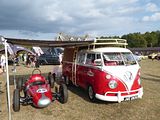
Conceived as a replacement for the popular Beetle Cabrio, and at the time unique in the market place, a convertible version of the Golf was presented to Volkswagen’s management by coachbuilder Wilhelm Karmann GmbH as early as 1976. This early prototype lacked the roll-over bar of the later version, and had a flat body line in the rear, where the soft top folded down below the sill level. The production version of the convertible Golf was designated Type 155. In Europe and Canada it was called the Golf Cabriolet, while in the United States it was sold as the Rabbit Convertible until 1985, when it was also renamed “Cabriolet”. The Cabriolet was sold from 1980 to 1993. It had a reinforced body, a transverse roll-over bar, and a high level of trim. From stamping to final assembly the Mk1 Cabriolet was built entirely at the Karmann factory. Volkswagen supplied engines, suspension, and interior trim for Karmann to install. The tops, of vinyl or cloth, were heavily insulated, with a heated glass rear window. The top was raised and lowered manually until 1991, when it became electrically operated. The body of the Cabriolet did not change through the entire production run except for a larger fuel tank. It kept the pre-1980 style of rear lamp clusters. A space saver spare wheel was fitted from the outset, including 1978 pre-production models, unlike the saloon which did not adopt this until 1984. All Cabriolets from 1988 on left the factory fitted with a “Clipper” bodykit that featured smooth body-coloured bumpers, wheel-arch extensions, and side skirts. Prior to the 1984 model year the highest standard specification Cabriolet was the GLI, which was essentially a GTI in all but name. It was only in late 1983 with the introduction of the 1984 model that an officially badged GTI version of the cabriolet finally became available.

The Volkswagen Golf Mk3 Cabrio (or Type 1E) was introduced in 1994 for the 1995 model year, replacing the previous MK1 Rabbit based Cabriolet. It was facelifted in 1998 (mid-1999 for non-euro markets) with the front, rear, and steering wheel styling inspired by the Golf Mk4 while still maintaining the body from the Mk3 Cabrio. These Cabrios are often referred to as the Mk3.5 Cabrios. The Volkswagen Golf Cabrio was discontinued in 2002 with a special edition called “Last Edition”

VOLVO
Many would doubtless walk by this car without realising that it is rather rare, as the V8 badge on the grille would evidence. The second generation S80 was unveiled at the 2006 Geneva Motor Show on 28 February, with sales beginning in June 2006. It was offered with newly-designed 3.2-litre straight-six or 4.4-litre V8 engine options, in combination with available four-wheel drive. The second-generation S80 is the first Volvo saloon model to become available with Volvo’s compact, transversely fitted B8444S V8 with a power output of 315 PS and 440 Nm (325 lb/ft) of torque developed jointly by Volvo Cars engine unit Skövde and Yamaha, but built by Yamaha of Japan. The engine features four catalytic converters and advanced electronics. Designed primarily for markets outside Europe, the V8 engine was not particular popular and was only offered for a couple of years, making it very rare.

The number of cars that turned up to this event clearly suggests that the concept of a QS Evening meet and this venue resonate strongly among the many who enjoy the events put on by Dan and his team. I would not be surprised to see more QS events taking place here in the future.