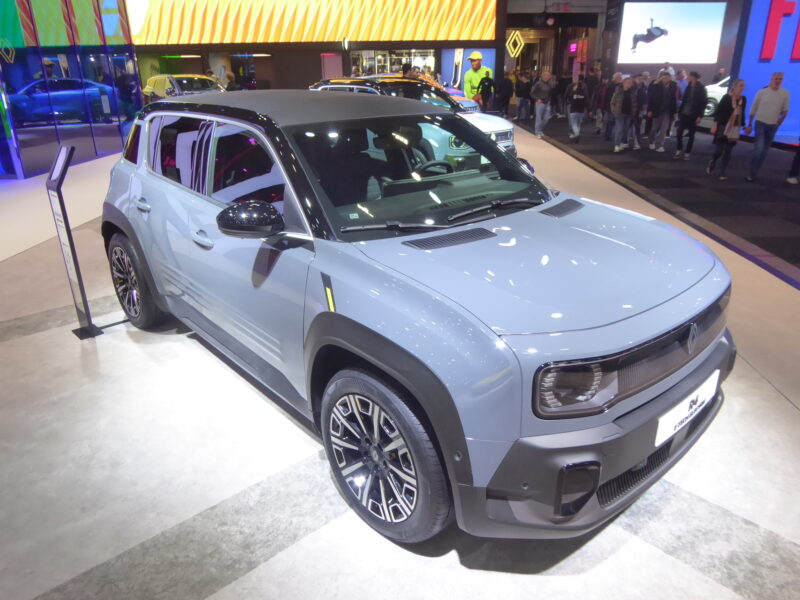
Most will probably not realise it, but the Brussels Motor Show has a long history, stretching back over 100 years. Held in one of the smaller Western European countries, for most of that time, it has had to play very much second fiddle to the Shows held in Paris, Frankfurt and Geneva. But in recent times, things have changed. The first two of those are held bi-annually and the Geneva Show has, as far as we can tell, been killed off altogether after a couple of failed attempts to relaunch it in the post-Covid era. So Brussels is now a much more significant Show than ever before. It is held in Brussels’ Heysel Expo area to the north of the city, just off the Brussels Ring, and lasts over a week. For 2025, the 101th edition of the event, the show occupies four major halls and a few auxiliary rooms. This is one hall less than in 2023 and did not feature such a prominent spectacle as the Bond in Brussels exhibition in the neighbouring grand hall of the Expo. This year’s edition has fewer “add-ons” but is just as much focused on business. There was an incredible offering from car brands, even compared to the pre-COVID IAA levels. Several dozen stages await visitors, as the organisers promised 63 brands, covering both passenger and commercial sectors. That is a significantly higher total than the last Paris Show (which was already a significant improvement to its 2022 form). Not only that, but there were a number of world debuts and several cars making their European premiere here, and it was also the venue where the winner of the European Car of the Year would be announced.
Having made a last minute decision to go to the Paris Show back in October 2024, and finding that – huge crowds aside – it was well worth the trip, I decided to give Brussels 2025 a go, with a plan to take in a couple more car events (reports for which will ensure) over a three day period attending this event on a Friday in the hope it would be a little less busy. Three friends liked the idea so much that they decided to come along as well.
There was certainly plenty to see. Factory exhibitors ranged from mainstream conglomerates to some of the high-end manufacturers. In recent years the Brussels Motor Show hasn’t been packed with new metal, but 2025 shaped up to be much different. There were seven world premieres and a further 14 European debuts, 56 Belgian premiers, 7 concept cars plus two Formula One cars and 45 ‘exclusive dream cars and sports cars’ on show for attendees to enjoy, mainly thanks to a display by Turismo who had cars spread across various stands around the event. The new cars on display this year weren’t hewn from rare earth metals, nor were they the sort of things that’ll break the bank. Yes, the 2,107bhp Rimac Nevera R was in attendance, alongside the 10,000rpm Lamborghini Temerario, but the Belgian capital went on to feature more everyday cars from the likes of Skoda, Alfa Romeo, Vauxhall, Toyota, Hyundai, and more besides. The cars on show offered a mix of practicality, luxury, style, ruggedness and smartness. They also showcased a range of powertrains, and while battery-electric vehicles were very much the order of the day, Brussels 2025 showed that there’s still some life in fossil fuels yet – admittedly hybridized.
ABARTH
With the long-running 500/595/695 cars now having ceased production, Abarth has become an all-electric brand, much to the chagrin of the Scorpion-badged marque’s many fans. The 500e was launched at the end of 2022 and has been on sale for a couple of years now, but it remains a very rare sighting, even at Abarth or Italian car gatherings. Everyone who has driven one has praised it, but the car is expensive and the range is quite limited (in reality 120 – 150 miles is all you will get) which means that it is not a shoe-in as a replacement for older 595s when they reach the end of their finance deals.


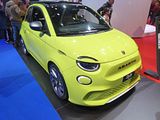


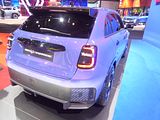
Joining the range now is the a larger 600e. Abarth has long said they wanted a larger car so they have something to offer to those for whom the 500-based car is too small, though there are plenty of detractors who say a car this big can never be a true Abarth. You can’t win! Visually, the 600e looks appealing, especially in this launch edition purple paint. I await with interest to learn what it is like on the road.



ALFA ROMEO
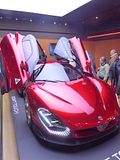
Making another appearance, having been seen at the Paris Show back in October, was the gorgeous new 33 Stradale. One of just 33 custom-made examples, this is a supercar is available with either a 620 bhp V6 twin-turbo engine or an electric 750 bhp alternative. As a reincarnation of the 1960s 33 Stradale, this new model was designed in collaboration with the 33 enthusiast owners.




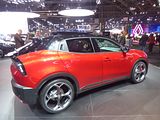
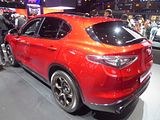
Of course the 33 Stradale is a halo model, but the car which really counts and which needs to sell in volume to help Alfa sales build up in the way we keep being promised they will, and then which they never do, is the Junior. It did not get off to the best of starts, as the car was launched back in April as the Milano, but an outcry including, allegedly, from Italian authorities, saw a quick renaming and within days it became the Junior. This is the brand’s highly anticipated subcompact SUV. Marking the brand’s first foray into the electric vehicle segment, the Junior becomes its smallest offering, joining the Giulia sedan and the larger Stelvio and Tonale crossovers in the Alfa Romeo lineup. The Milano presents Alfa’s spin on a familiar approach adopted by various Stellantis brands and models such as the Opel/Vauxhall Mokka, Fiat 600, Peugeot 2008, and Jeep Avenger, all of which utilize the same CMP2 platform. The sub-compact (B-segment in Europe) crossover will be available in a choice of two electric powertrains or a 48-volt mild-hybrid gasoline option. The Junior aims to be the sportiest model in its highly-competitive class, especially in the flagship Ellettrica Veloce trim. This top-of-the-line variant boasts a 237 hp electric motor and a sharper chassis setup for enhanced handling. Beyond the fully electric versions available at launch, the Junior will also be offered in Ibrida form. This variant features a mild-hybrid powertrain paired to an automatic gearbox, and the option for all-wheel drive. Alfa Romeo’s objective with the Junior was to captivate a new generation of consumers by embracing the latest design ethos of the Biscione brand. Though perhaps not as striking as its larger counterpart, the Tonale, the Milano boasts a visually compelling aesthetic characterized by intricate forms and bold detailing. The front end is rather busy-looking due to the elongated matrix LED headlights which are interconnected with slim intakes via dark trim. The new scudetto grille is partly covered in the fully electric version, signalling the start of a new era. The front bumper is inspired by the Quadrifoglio versions of the Giulia and Stelvio, featuring large intakes and an integrated splitter. The profile of the Junior is distinguished by its toned-up rear shoulders, large wheels, and greenhouse that seamlessly connects with the rear glass. While the latter boasts a steeper angle compared to traditional SUVs, it falls short of entering the coupe-SUV realm. Moving to the back, Alfa Romeo designers have chosen a “kamm tail” finish, reminiscent of the Giulia TZ. The black trim surrounding the taillights evokes elements of the 2025 Nissan Kicks, albeit with more “Italian” curves. Measuring 4,170 mm (164.2 inches) long, 1,780 mm (70.1 inches) wide, and 1,500 mm (59.1 inches) tall, the Alfa Romeo Junior perfectly fits within the European B-SUV segment. It surpasses the Jeep Avenger by 86 mm (3.4 inches) in length, matches the length of the Fiat 600, and falls 134 mm (5.3 inches) shorter than the Peugeot 2008. The interior, while less visually striking than the exterior, boasts a digital cockpit equipped with dual 10.25-inch displays. Alfa Romeo-specific touches, such as the distinctive graphics of the infotainment system and the Cannocchiale digital instrument cluster, try to set apart. The optional sports package includes Sabelt seats upholstered in Alcantara, while other trims offer Spiga vinyl and fabric upholstery paired with a leather steering wheel. Alfa Romeo brags about the 400 lt (14 cubic feet) of boot space in the Junior, complemented by a convenient cable storage compartment under the hood of the Ellettrica variant. In terms of safety features, the Milano offers Level 2 ADAS, akin to its competitors in the subcompact SUV segment. The Junior lineup will include the Ellettrica, Ellettrica Veloce, and Ibrida versions. The Milano Ellettrica Veloce stands as the flagship model, equipped with a single electric motor with 237 hp (240 PS / 177 kW), matching the upcoming Abarth 600e and Lancia Ypsilon HF. Power is delivered to the front axle, aided by a Torsen mechanical self-locking differential and a set of high-performance 20-inch tyres. The Veloce-specific chassis setup boasts “the most direct steering in the segment” with a ratio of 14.6. The sports suspension, lowered by 25 mm (1 inch) compared to other Milano models, is complemented by front and rear anti-roll bars. Additionally, the front brakes feature larger 380 mm (15 inches) discs and four-piston monobloc calipers. Alfa Romeo asserts that the top-tier Milano will deliver class-leading driving dynamics akin to the discontinued Giulietta and Mito hatchbacks. The entry-level Ellettrica produces a more restrained 154 hp (115 kW / 156 PS), with a 54 kWh lithium-ion battery offering 255 miles (410 km) of WLTP range and supporting up to 100 kW of charging speeds. These specs are identical to the army of similarly-sized EVs by nearly every Stellantis brand. The combustion-powered Junior Ibrida will arrive in 2025 featuring a turbocharged 1.2-liter gasoline engine with a not so Alfa Romeo-worthy, 134 hp (100 kW / 136 PS) mated to a 48-volt battery and a 28 hp (21 kW / 28 PS) electric motor integrated within the six-speed dual-clutch automatic gearbox. Power will be transmitted to the front or all four wheels, similar to the upcoming Jeep Avenger 4Xe. Unlike other Stellantis models, the Alfa Romeo Junior won’t be offered solely with an internal combustion engine (ICE), meaning it won’t come with a manual gearbox. The company also mentioned the availability of the Alfa DNA driving mode selector, but didn’t specify which Junior models will feature it. The Alfa Romeo Junior will be priced starting from under €30,000 ($32,200), with leasing options beginning at under €200 ($215) per month across all European markets. Moreover, special incentives will be available for owners of the MiTo and Giulietta looking to upgrade to the Junior. Alfa Romeo also unveiled the Junior Speciale trim, featuring 18-inch wheels and an extensive list of standard equipment, which will be available at launch. Orders for both the Ellettrica Speciale and Ibrida Speciale versions of the Junior commenced in April in Italy, with other European markets following soon after.




Also on the stand were examples of the Tonale and the long-running but still appealing Giulia and Stelvio.

ALPINE
An all-electric Alpine A110 is coming in a few years time, but for now we keep getting special edition versions of the current car. Last summer, Alpine showed us the A110 R Ultime, the most hardcore iteration of this sports car yet. The 1.8-litre engine is putting out 345hp, a 45hp increase over the standard R, and 0-60ph is dealt with in 3.8 seconds. It also has uprated brakes, stiffer suspension, a sports exhaust and a new gearbox to handle the extra power. Just 110 of these cars will ever be made, and they wear an eye-watering price tag of £220,000 – £130,000 more than a standard A110 R. Previously, the top of the A110 range was the A110R. What started off as a single, and rather costly uplift over the “regular” A110 models has now become a more complicated set of offerings. By all accounts, the Alpine A110 R is really rather good (though I am personally not a fan of all the added carbon fibre). Rewarding on circuit, joyously deft on road, and a visual treat as well, it’s everything a flagship French sports car ought to be. But there’s a price to pay for that panache, and it’s very nearly £100,000 – £96,990 for the just-announced 2024 Model Year. Seemingly aware of the price (and usability) reservations buyers may have, at the end of 2023, Alpine launched a new A110 R – the Turini. It’s £5,000 cheaper than the regular R, which would pay for a whole lot of track days, and goes without the stunning carbon fibre wheels. They’re replaced by 18-inch GT Race Matte Black aluminium wheels; Alpine says the swap offers ‘greater versatility on the road’, and it will certainly make parallel parking less terrifying. But there’s a concern, surely, that reintroducing some of the unsprung mass back into the R might rob it of some of that magical delicacy found on the carbon rims. Let’s see. As far as can be told, everything else about the R package is unchanged for the Turini. A Le Mans still sits above the R in the 2024 A110 range, at a mighty £121,990. Speaking of specials, the A110 S Enstone Edition – Union Jack roof, carbon trim, special seats – continues into the new year as well, presumably as the planned 300-unit production run hasn’t yet all been spoken for. It costs £73,990. Seen here is the A110 R Turini.


Commercially more significant is the production version of this which Alpine was teasing. This is the marque’s first-ever crossover—the A390_β concept—though they refuse to use the “C” word, opting for the much cooler “sport fastback.” With dual motors and active torque vectoring, this five-seater promises to deliver the razor-sharp handling of the A110, all while doubling as a practical family car. It’s got scissor doors and an interior that screams sci-fi, though don’t get too excited as the production version will tone down the space-age vibes for daily driving. Built on the same platform as the Renault Megane E-Tech, the A390 is the second entry in Alpine’s “Dream Garage,” following the A290 hot hatch. The production version is set to drop next year, serving as a rival to the Porsche Macan EV.

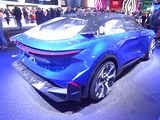
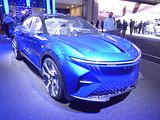

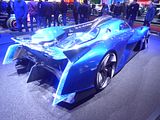
Also a concept, but potential production is rather further away is this, the Alpine HY6 Alpenglow concept, an evolution of the brand’s hydrogen-powered supercar concept, originally unveiled in 2022. The new iteration swaps the original model’s four-cylinder engine for a more powerful V6 with 730 ponies, again running on hydrogen. The Alpenglow might be a rolling lab for new technologies, but Alpine hinted there is a chance it evolves into a production offering by 2028.
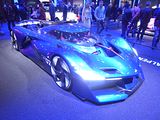

Alpine has committed to launching seven EVs by 2030, including an electric replacement for the A110, plus crossover SUVs. But first to arrive is the A290, a hot-hatch version of the new all-electric, retro-styled Renault 5 E-Tech. The fastest Renault 5 gets a 148 hp (110 kW / 150 PS) electric motor that drives the front wheels, and while the A290, which was unveiled today at the Le Mans 24 Hour race in France, sticks with the two-wheel drive layout, it ups the pony count considerably. Alpine’s version makes 217 hp (220 PS / 160 kW) and 221 lb-ft (300 Nm) in its most potent GT Performance form, which drops the zero to 62 mph (100 kmh) time from the 5 E-Tech’s 8 seconds to 6.4 seconds. A less powerful model, badged simply A290 GT, generates 178 hp (180 PS / 130 kW) and 210 lb-ft (285 Nm), and takes a second longer to reach 62 mph. The two-tier lineup puts the Alpine pair in direct competition with the new electric Mini Cooper E and Cooper SE, which make 181 hp (184 PS / 134 kW) and the same 217 hp as the Frenchies, and need 7.3 seconds and 6.7 seconds to achieve 62 mph. Adding to the impression of speed is a choice of two digital soundtracks that claim to be based on the natural harmonics of the A290’s electric motor. Though the extra grunt, and the temptation to use it, was always going to put a strain on the driving range, Alpine has stuck with the same 52 kWh battery offered in higher-spec 5 E-Techs for both A290 variants. And while that, plus some aluminium parts, has helped keep the curb weight down to 1,479 kg (3,260 lbs), it does mean the range suffers. Renault quotes a 249-mile (400 km) range for the 5, which drops to 236 miles (380 km) for the Alpines. That figure also matches what Mini claims for the Cooper SE, but the Cooper E gets a smaller battery and is only good for 190 miles (306 km). An unimpressive 100 kW DC charge rate means a 15-80 percent fill in the A290 takes 30 minutes. The stock 5 already looks fairly purposeful thanks to its chiselled lines and angular bulging fenders that tip a hat to the bonkers mid-engined Renault 5 Turbos of the early 1980s, but the A290’s track is 2.4 inches (60 mm wider), 19-inch wheels available in two different designs, filling the wheelarches. Both cars get Brembo four-pot brakes up front. Alpine has also applied its own styling details to A290, including X-shaped driving lights set into the grille, X-motifs in the headlights, a deep front bumper and three strakes ahead of the rear wheels. Like the Renault 5 it’s based on, the A290 is a five-door hatch, but it does a good job of looking like a two-door hatch by hiding the rear door handle in the corner of the window by the C-pillar. Inside, the basic dash architecture, including a 10.1-inch infotainment screen, is carried over from the Renault 5, but Alpine adds its own sports pedals and even a set of transmission selector buttons on the lower console, just like the ones you get in the A110 sports car. There’s a bespoke steering wheel too, whose ‘OV’ overtake button delivers the maximum 217 hp instantly, and which sounds like a pure gimmick since you can unleash the exact same thing with your right foot. More useful to our mind is the button to toggle between the A290’s four regen levels. The 178 hp A290 comes in either GT or GT Premium trim, the fancier one adding a black roof, Alpine Blue calipers, Nappa leather and premium hifi, while the 217 hp car offers red calipers and special Michelin Pilot Sport 5 tires in stock GT Performance trim, or can be ordered as a GTS, which bundles in the GT Premium goodies. Alpine hasn’t revealed full pricing but says the A290 will cost from €38,000 ($41k / £32k), which would make it more expensive than the Mini Cooper E/SE, which starts €34,000 in France ($37k / £ 29k). It’s available to order from this summer with left-hand drive deliveries scheduled for the end of the year. Right-hand drive markets won’t get their cars until early 2025, and, sadly, the US won’t get any at all. Of course no new-car reveal would be complete without the announcement of launch-edition model. In the A290’s case it’s the GTS Premiere Edition, which gets its own livery, extra equipment and a commemorative dashboard plaque, and is limited to 1,955 units, that number a reference to the year Alpine was founded.


Final car on this large, and always seemingly busy stand was an example of the Formula E race car that Alpine will campaign in 2025.

ASTON MARTIN
Aston Martin did not have a stand of their own, but there were a couple of examples of their cars to be found in the show. The very first car we saw was this, the Vantage Roadster.


Also here was the GT3 race version of the Vantage.


AUDI
Audi had a large stand in a hall which was more or less given over to the VAG marques. It was very busy until very late in the day at which point it became possible to see the cars, even to sit in some of them and to get some photos. Actually, I rather wish I had not sat in them, as all recent Audi models have left me very disappointed. The superlative quality interiors which used to epitomise the marque, from the smallest A1 to costliest S8 are being replaced by trendy, gimmicky features and some decidedly cheap and nasty materials. Such a shame!
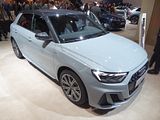
The A1 and A3 were the first to undergo the cheapening of their interiors, and it does not seem to have hurt sales that much, so I guess Audi concluded that they could get away with it. Both were here.


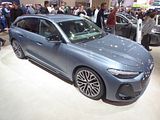
Back in July, Audi introduced a new family of A5 and S5 models, featuring a range of mildly electrified powertrains. Unlike the outgoing two-door Coupe and Cabriolet with the same name, the new A5/S5 succeeds the ICE-powered A4/S4, offered in Sedan and Avant bodystyles. This strategic shift streamlines Audi’s naming convention, reserving odd numbers for gasoline models and even numbers for EVs. Alongside the A4 Sedan and Avant, the new model effectively displaces the A5 Sportback, as the A5 Sedan now features five doors including a practical tailgate. The adoption of the A5 moniker has ushered in more dynamic styling, characterized by sharper details and better proportions. The discontinued A4 faced criticism for its bland appearance in comparison to rivals like the BMW 3-Series and Mercedes-Benz C-Class, pushing Audi designers to up their game. Highlights include a more aggressive stance thanks to widened fenders, sleeker LED headlights flanking a slimmer grille, and oh-so-satisfyingly large bumper intakes that wouldn’t look out of place on a high-performance Audi Sport model. Plus, the taillights get a tech upgrade with fancy OLEDs. The new Audi A5 is the first production model to ride on the new PPC (Premium Platform Combustion) architecture, an updated version of the MLB Evo (Modular Longitudinal Matrix) platform. It boasts an increased wheelbase compared to its predecessor, stretching to 2,900 mm (114.2 inches). This translates to an additional 68 mm (2.7 inches) of space between the axles. While specific details on the overall length and width haven’t been revealed yet, we can expect them to be larger based on the extended wheelbase. Step inside the new A5, and you’re greeted by a thoroughly modern overhaul. Audi’s ditching the button clutter in favour of a clean, sophisticated design packed with standard features that push the A5 further into premium territory. Taking center stage is a curved panoramic display, a technological marvel that combines an 11.9-inch digital instrument cluster with a massive 14.5-inch touchscreen for the Audi MMI infotainment system. An enhanced head-up display keeps your eyes on the road, while an optional 10.9-inch screen for the front passenger adds a touch of extravagance (and maybe keeps them occupied on long journeys). Comfort takes priority too, with Audi promising more cabin space than before. The A5 avoids the all-electric shuffle, at least for now, and kicks things off with a tried-and-true 2.0-liter turbocharged TFSI four-cylinder. This workhorse gets a makeover, though, with a variable-geometry turbocharger (VTG) and a tweaked combustion process to squeeze out more efficiency. In Europe, power comes in two flavors: 148 hp (110 kW / 150 PS) for the front-wheel-drive version, or 201 hp (150 kW / 204 PS) for the quattro. The second option in Europe and other select markets is an updated 2.0-liter TDI turbodiesel, featuring the new 48-Volt MHEV plus system. This oil-burner benefits from a new 48-volt mild-hybrid system (MHEV plus) to keep emissions in check. The base engine delivers a healthy 201 hp (150 kW / 204 PS) and 400 Nm (295 lb-ft) of torque, but the electric motor throws in an extra 24 hp (18 kW / 24 PS) for a welcome boost. That translates to sprightlier acceleration and, of course, better fuel economy. The mild-hybrid TDI pairs with a dual-clutch automatic transmission, with the option of front-wheel drive or Audi’s legendary quattro all-wheel drive. For those craving serious thrills, the S5 ups the ante with an updated 3.0-liter V6 TFSI engine. This powerhouse gets the MHEV plus mild-hybrid treatment as well, packing a punch with 362 hp (270 kW / 367 PS) – that’s 13 hp more muscle than the S4 and S5 previously offered. All that grunt gets channelled to all four wheels via a slick-shifting S tronic dual-clutch automatic transmission, and Audi’s quattro sport differential with torque vectoring ensures you hug the corners with confidence. Audi claims the reworked suspension and steering setup result in “more precise” and “largely neutral handling”. For enthusiasts seeking more, the optional adaptive suspension purportedly provides a broader range from comfort to sportiness. The new Audi A5 and S5 family will be available to order in Europe later this month, ahead of the first deliveries in November. In Germany, the Audi A5 Sedan will be priced from €45,200 ($49,279). I have to say I was very disappointed in this car…. the outside is a mess, like all recent Audi models, and the interior seems to have thrown out the superlative quality you used to get with that gimmicky double screen set up that does not match and lots of cheap gloss black plastic. Give me my B8 generation car any day!


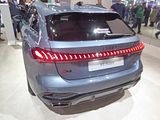
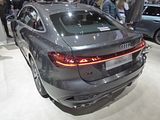


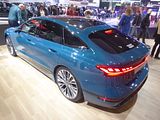
Audi has now officially introduced the all-new 2025 A6 e-tron, marking a significant step forward in its electric vehicle lineup. Available in both Sportback and Avant body styles, the A6 e-tron takes direct aim at the Mercedes EQE and BMW i5. Unlike its predecessor, this generation will be exclusively electric, offering customers a pure electric driving experience. Following the imminent launch of the fully electric A6 e-tron, Audi is poised to revamp its traditional lineup. The current ICE-powered A6 is slated for a facelift and subsequent renaming to A7, aligning with the automaker’s new strategy of designating even numbers for electric models. The production A6 e-tron closely mirrors its 2021 (Sportback) and 2022 (Avant) concept predecessors. Subtle refinements include slightly adjusted split headlights, a more prominent black grille surround, traditional door handles, and broadened full-width taillights. Audi states that the high-tech Matrix LEDs at the front and the second-gen OLEDs at the back offer eight different digital lightning signatures, and can be combined with an illuminated emblem on the tailgate. Unfortunately, due to US regulations, some high-tech features such as the adaptive matrix LED headlights, the active digital light signatures, the car-to-X communication, and the virtual mirrors, won’t make it across the Atlantic. Audi has prioritized aerodynamics in the development of the A6 e-tron, conducting over 1,300 simulations and extensive wind tunnel testing. The result is the most aerodynamic Audi ever made, and the most aerodynamic vehicle on offer by the VW Group. The Sportback variant boasts a drag coefficient of 0.21 Cd, edging out its direct rivals but falling slightly short of the larger Mercedes-Benz EQS’s 0.20 Cd. Furthermore, the A6 Avant e-tron claims the title of most aerodynamic estate in its class with a drag coefficient of 0.24 Cd. The dashboard and center console are largely carried over from the Audi Q6 e-tron. Dominating the dashboard is a triple-screen setup comprising a 11.9-inch digital instrument cluster, a 14.5-inch infotainment display, and a 10.9-inch passenger touchscreen. Complementing this digital extravaganza are two additional screens serving as virtual mirrors, and a generous suite of ADAS systems. Among the optional features there is a panoramic glass roof that turns opaque at the touch of a button, a four-zone automatic AC system with fragrance dispenser and ionizer, plus a Bang & Olufsen Premium Sound System with 20 speakers and 830 watts. The Audi A6 e-tron is based on the PPE architecture, just like the Q6 e-tron and the Porsche Macan EV. At launch, the lineup includes three powertrains, with more RWD and AWD options following at a later date, depending on the market. The base Audi A6 e-tron Performance is rear-wheel driven, propelled by a single electric motor generating 362 hp (270 kW / 367 PS). For those demanding more, Audi offers the A6 e-tron quattro, equipped with a dual-motor setup and all-wheel drive, boosting output to 422 hp (315 kW / 428 PS). Audi has also unveiled the performance-oriented S6 e-tron, set for global release. The rear-biased AWD system produces a combined 496 hp (370 kW / 503 PS), which increases to 543 hp (405 kW / 551 PS) when launch control is activated. The 0-100 km/h (0-62 mph) acceleration is completed in 3.7 seconds, while top speed is electronically limited at 240 km/h (149 mph). Spy shots confirm Audi Sport is already developing an RS6 e-tron flagship. Expect a more aggressive design and significantly boosted performance compared to the S6 e-tron. Both the A6 e-tron and S6 e-tron feature a floor-mounted battery pack with a capacity of 100 kWh (94.4 kWh net), while the 800V architecture supports 270 kW DC charging. Range figures are impressive, with over 720-750 km (447-466 miles) for the A6 e-tron, and over 640-670 km (398-416 miles) for the S6 e-tron depending on the bodystyle. Audi also confirmed that a smaller 83 kWh battery option will be offered in the future, hinting at more affordable variants. Regarding the chassis setup, the optional adaptive air suspension offers four ride height levels. When efficiency mode is activated from the Audi drive select menu, ground clearance is automatically reduced by 20 mm (0.8 inches) at higher speeds to enhance aerodynamics. The base A6 e-tron comes with 19-inch aero-optimized wheels, while the S line and S6 e-tron feature 20-inch alloys, with an option for 21-inch wheels. The Audi A6 e-tron will be available to order in Europe starting September 2024. Prices in Germany begin at €75,600 ($81,928) for the A6 Sportback e-tron Performance, and €99,500 ($107,829) for the S6 Sportback e-tron. In both cases, the Avant body style adds a premium of €1,650 ($1,788). Pricing for the US lineup, including the A6 e-tron (RWD), A6 e-tron quattro (AWD), and S6 e-tron (AWD), will be announced at a later date.


Making what will probably be one of its last appearances at a Motor Show was this RS6 Avant Performance. In November 2022, Audi announced new performance versions of the RS6 Avant and RS7 models. The twin-turbocharged 4.0-litre V-8 engine now produces 630 PS ( 621 bhp) at 6,000 rpm and 850 Nm (627 lb/ft) from 2,300 rpm to 4,500 rpm, increases of 30 PS (30 bhp) and 50 Nm (37 lb/ft) compared with non-performance versions. These cars have proved popular over the years, despite a hefty price tag and very high running costs.


Audi have now filled in all the numbers in the Q series of SUVs, from the established (and now the oldest model in the range) Q2 up to the Q8. The Q3 is due for replacement later this year, but for now continues in both regular and Sportback form, and there were examples of both here as well as the older and slightly smaller Q2.


The Q4 models, also available in regular and Sportback guise, are all-electric and they were both here, too. These models are now selling strongly, and in many markets are among the marque’s best-sellers.

This is the latest Audi Q5, which was premiered in the middle of 2024 and is now reaching its first buyers. The Q5 has been a staple of its segment for over 15 years, so Audi has left no stone unturned in updating it, completely transforming the exterior design, and installing new and more economical petrol and diesel engines. Underpinning the new Q5 is Audi’s Premium Platform Combustion (PPC), and in the U.S., it will initially be sold in standard and SQ5 guises. Powering entry-level models is a 2.0-liter TFSI four-cylinder producing 268 hp and mated to a seven-speed S-tronic dual-clutch transmission, complete with Quattro All-Wheel Drive. The 2025 SQ5 rocks a 3.0-liter TFSI six-cylinder with 362 hp, the same seven-speed dual-clutch, and all-wheel drive. Things are a little different in Europe where the Q5 will be launched with three engine versions, all of which include a mild-hybrid system with a 1.7 kWh battery and an electric motor with 24 hp and 170 lb-ft (230 Nm) of torque. Found at the base of the range is a 2.0-liter TFSI with 201 hp, 251 lb-ft (340 Nm), and front-wheel drive, although all-wheel drive is an option. Audi is also launching the 2025 Q5 in Europe with a 2.0-liter TDI rated at 201 hp and 295 lb-ft (400 Nm). The European-spec SQ5 has the same 3.0-liter TFSI six-cylinder as the U.S. model, producing 362 hp and 406 lb-ft (550 Nm). Thanks to the new platform, as well as revised suspension and steering systems, Audi says the 2025 Q5 is noticeably more comfortable than the model it replaces. Standard models include Frequency Selective Dampers, while air suspension with adaptive damper controls is an option. SQ5 models ship with a sportier suspension setup. A new interior concept has been adopted for the latest-gen Q5, although it’s not a radical departure from other existing Audi models. A curved display houses the 11.9-inch digital instrument cluster and a 14.5-inch MMI infotainment display, while a 10.9-inch display is also available on the passenger side. A simple, flat-bottomed steering wheel is standard, but sadly, there are no physical controls, buttons, or switches for the HVAC, as they’re all housed within the screen. Interestingly, the infotainment system runs on the Android Automotive OS and includes access to apps, including YouTube. A head-up display is optional. Audi says the cabin of the new Q5 is more spacious than ever before. The rear seats also offer plenty of adjustment, including a tilt function. Other important features of the interior include a wireless and cooled phone charger, two USB-C ports up front, and two at the rear. Those at the rear can charge at up to 100 watts, enough for a laptop. Designing an SUV that looks sleek rather than cumbersome is no small feat, yet Audi has done just that. Thanks to clever styling touches, including the lovely curves and creases, the Q5 looks smaller than it actually is, and it’s nice to see a new car that isn’t dominated by sharp lines and dramatic angles. Among the key external elements include second-generation digital OLED taillights that can warn other traffic of accidents and breakdowns by displaying custom taillight graphics. Up front, you will find standard Matrix LED headlights with eight adjustable light signatures for the DRLs. Audi has not announced U.S. pricing for the new Q5. However, we know the standard model will start at €52,300 (~$57,800) while prices for the new SQ5 kick off from €82,900 (~$91,600).


The Q6 E-Tron lineup expands with the addition of the sleeker Sportback variant. While it shares many features with the standard model, including sculpted fenders and LED taillights, the Sportback introduces a reworked greenhouse and a ducktail spoiler for a more streamlined look. Powertrain options match those of the Q6 E-Tron, with both single and dual-motor setups. Audi has also confirmed that the Sportback retains the Q6 E-Tron’s five-star Euro NCAP safety rating.


The Audi e-tron GT and RS e-tron GT, on sale since 2021, are both very powerful, extremely comfortable, and widely praised for being elegant. In mid 2024 they received a mid-cycle update, which applied to the base model and the RS and also brought us a new RS Performance flagship. Underpinning the new e-tron GT family is a 97 kWh battery pack, which is 19.8 lbs (9 kg) lighter than the 84 kWh pack of the outgoing model. The regenerative braking system has also been improved, increasing from 290 kW to 400 kW and adjustable through paddle shifters behind the steering wheel. The new model can travel up to 378 miles (609 km) on a single charge under ideal conditions. Peak charging speeds have also been lifted from 270 kW to 320 kW, meaning the battery can charge from 10-80% in just 18 minutes, while a 10-minute top-up can add 174 miles (280 km) of range. Improvements made to the battery also mean it can maintain a charge speed of over 280 kW for far longer than the old model. The battery can also be cooled or warmed for quick charging. Significant changes have also been made to the electric motors of the e-tron GT. The base model, now known as the S e-tron GT, features a pair of motors that combine to produce 670 hp (500 kW), more than the old RS e-tron GT. Meanwhile, power for the 2025 RS e-tron GT has been upped to 845 hp (630 kW) and the new flagship RS e-tron GT Performance delivers 912 hp (680 kW), making it the most powerful Audi ever. With this extra power comes extra speed. The 2025 S e-tron GT demolishes the sprint to 62 mph (100 km/h) in just 3.4 seconds, just 0.1 seconds behind the outgoing RS version. Meanwhile, the new RS e-tron GT can hit 62 mph in 2.8 seconds, while the RS e-tron GT Performance does the same sprint in 2.5 seconds. The S e-tron GT will continue to pull through to 152 mph (245 km/h) while the RS models top out at 155 mph (250 km/h). Audi has also fitted new brakes. The S e-tron GT comes standard with steel discs and the RS models have tungsten carbide-coated discs as standard. All 2025 models can be optioned with carbon-fibre-ceramic discs and 10-piston front calipers. Significant upgrades have been made to the standard air suspension and the optional active suspension. The new setup promises to keep the car “nearly horizontal during dynamic braking, steering, and acceleration,” and features adjustable ride height. All-wheel steering is also an option. Several small changes have been made to the cabin of the 2025 e-tron GT family. These include new seats, a different steering wheel, and an optional panoramic glass roof that can turn opaque with the touch of a button. The Audi virtual cockpit has also been updated and there’s a new mix of materials, including wooden inlays, Dinamica microfiber, and optional 18-way adjustable seats. European prices for the new S e-tron GT start at €126,000 (~$135,000) and increase to €147,500 (~$158,000) for the RS e-tron GT and €160,500 (~$172,000) for the RS e-tron GT Performance.

BAIC


BENTLEY
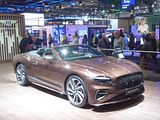
Two models here: the newly updated Continental GTC and the established Bentayga seen in EWB form.




BMW
Like everyone else, I want to be impressed by the new M5. But it is hardly a thing beauty and the thing weights 2.5 tonnes…… press reports say that there is only so far that BMW can go in disguising all that weight.


If you think the M5 has challenging looks, that is nothing compared to the vulgar XM, a car which has been universally criticised for desecration of the M badge, a massive price tag, being not that good to drive and just crass and vulgar. Sales have been very poor even in those countries for whom it was primarily designed, such as the US and the Middle East.

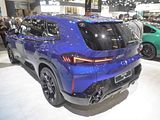

If you do like the looks of the XM, but can’t afford one, then BMW will sell you the latest X3 which copies its most unfortunate styling features rather too well.


Not that the other cars on this stand were exactly elegant, either. The 1 series was update sufficiently at the end of last year to be given a new development code number and also here were the 2 Active Tourer and the X1 and X2.



Final BMW model I photographed on a stand which was nowhere near large enough to allow for representation of the massive range of cars on offer was the Z4 sports car.

BUGATTI and RIMAC
A combined stand for Bugatti and Rimac, since the former is now owned by the latter. The Rimac Nevera is an electric supercar that kicked the door to the ICE world. This car has the specs to beat even the pure race-bred hypercars, like the Ferrari FXX-K Evo. The drivetrain produces a total of 1,427 kW (1,914 hp) and 2,360 Nm of torque through four electric motors driving each wheel. Rimac claims a 0–60 mph acceleration in 1.85 seconds, making it the fastest-accelerating production car in the entire world. The Nevera production is limited to 150 vehicles, but the platform is now shared with other brands, and the Rimac factory is also assembling the Pininfarina Battista.


The Bugatti Bolide is the absolute pinnacle of internal combustion technology. It is a track-only limited production sports car using the W16 engine with a weight-to-power-ratio of 0.91 kg/kW (0.67 kg/PS; 1.50 lb/hp). The Bolide’s name comes from the term le bolide, meaning “race car” in French.


BYD
It’s not even been two years since BYD launched in the UK, but its line-up includes five very different models – and there’s plenty more still to come. The latest addition will be the new Atto 2: a city-focused, all-electric crossover to sit below the numerically grander Atto 3 family SUV – the first car BYD sold here. The standard model is powered by a 45.1kWh battery that offers an official range of up to 194 miles, or 288 miles if you drive it in town, but we’ve been told a long-range version is on its way. BYD’s design language is clear and present, so you shouldn’t mistake it for any other small SUVs, while inside there’s lots of tech and a 400-litre boot. The Atto 2 is due to go on sale in the summer, with prices expected to start well under £30,000.


Other models on display here included the Atto 3, the Seal and related Seal U as well as the new Sealion 7.


CITROEN
The Citroen C5 Aircross Concept made its world debut at the 2024 Paris Motor Show, but we got a second chance to admire it at Brussels. The striking and rather stylish show car gave us a good impression of what the next-generation C5 Aircross will look like before it’s unveiling later this year – ‘winged’ rear lights included. It takes the design language used for the latest Citroen C3 and C3 Aircross, and adds more eye-catching flair. The production car will use the same STLA Medium platform that underpins the Peugeot 3008 and Vauxhall Grandland. Not only does that mean we know what the Citroen will be directly competing against, but also that it’ll be available with both hybrid and pure-electric power.


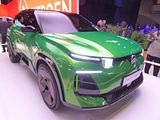
Citroen has now unveiled the ICE versions of its new C3 supermini, available with both standard and mild hybrid powertrains, six months after the debut of the otherwise identical, fully electric e-C3. The fourth-generation of the C3 inherits stronger crossover styling cues and emphasizes affordability, with prices starting from €14,990 ($16,275), making it cheaper than its predecessor. The entry-level version of the Citroen C3 is equipped with a non-electrified turbocharged 1.2-liter three-cylinder gasoline engine that produces 100 hp (75 kW / 102 PS). Power is exclusively transmitted to the front wheels through a six-speed manual gearbox. The more efficient “Hybrid 100” version utilizes the same gasoline engine as its base, albeit enhanced with a 48-volt lithium-ion battery and an electric motor integrated within the six-speed dual-clutch automatic gearbox. The electric motor alone produces 28 hp (21 kW / 28 PS), although only 12 hp (9 kW / 12 PS) of those can be utilized for acceleration when required. It’s worth noting that the same setup can be found on the Jeep Avenger Hybrid. Citroen claims that the mild-hybrid version can run on electric mode for up to 50 percent of journeys in urban environments, while reducing emissions and fuel consumption by nearly 10 percent compared to the non-electrified equivalent. From the outside, it’s hard to tell the C3 apart from its e-C3 sibling, as the models share the same bodywork. The only difference is the absence of the “e” emblem on the profile, and the C3 badge on the tailgate. The model is available in two trim levels as part of Citroen’s efforts to streamline its range. The minimalist dashboard showcases a 10.25-inch infotainment display on the flagship “Max” trim, while buyers of the entry-level “You” will have to settle for a smartphone holder. The new Citroen Head Up Display compensates for the absence of a traditional instrument cluster and comes standard in both trims. Additionally, there are plenty of storage compartments that enhance the practicality credentials of the supermini. Equipment options include automatic A/C, wireless charging, and smartphone mirroring, while ADAS features are primarily limited to the essentials. Despite measuring 4,015 mm (158.1 inches) long, the new Citroen C3 is claimed to offer more interior space and easier ingress compared to the previous generation. This is largely attributed to the higher ground clearance of 197 mm (7.8 inches) and the taller body. Additionally, the boot has grown by 10 liters (0.35 cubic feet) to a more generous 310 liters (10.9 cubic feet). Similar to its predecessor, the new C3 prioritizes comfort, with plush seats that utilize a generous amount of foam. Additionally, the model comes standard with Citroen Advanced Comfort suspension, featuring progressive hydraulic cushions to efficiently absorb bumps. It’s worth noting that the EU-spec C3 is based on the new Smart Car architecture, featuring region-specific modifications compared to the mechanically-related New C3 that is on sale in India and South America. Deliveries of the 2024 Citroen C3 are expected to commence in Europe this summer. In France, pricing starts from €14,990 ($16,275) for the C3 You with the non-electrified 1.2-liter engine and a manual gearbox. For comparison, the outgoing C3 which was originally introduced in 2016 and received a facelift in 2020, is currently priced from €16,590 ($18,014) in the same market. As for the fully electric 2024 Citroen e-C3, it starts from €23,300 ($25,301) although a more affordable version will follow in 2025 with a €19,990 ($21,708) price tag. The primary rival of the Citroen C3 is the Dacia Sandero Stepway, which is the only other crossover-style contender in the supermini segment. Another potential threat is the closely-related next-gen Fiat Panda, set to debut in summer 2024, likely mirroring the specs of its French sibling.

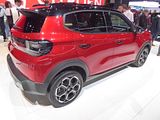


As indicated by the teasers and the speculative renderings, the C3 Aircross draws inspiration from the 2022 Citroen Oli concept, presenting a beefier rendition of the e-C3 supermini. Notable design features include Citroen’s fresh oval-shaped double-chevron badge, a prominent front fascia devoid of a traditional grille, contemporary LED headlights, and substantial cladding resembling oversized skid plates encircling the bumper intakes. The side profile and greenhouse are expected to be identical to those of the New C3 Aircross, with the goal of reducing production and development costs. Consequently, the new generation is likely to grow in size, potentially aligning with the 4.32 meters (170.1 inches) length of its South American counterpart, which surpasses its predecessor’s length by 170 mm (6.7 inches). Additionally, distinctive futuristic aerodynamic wheels and revamped LED taillights will serve to distinguish the two models, rendering the C3 Aircross more in line with European preferences. The roomy and practical interior is poised to be a key selling feature of the 2024 Citroen C3 Aircross. Despite belonging to the sub-compact SUV (B-SUV) category, Citroen has affirmed that the model will offer a spacious three-row, 7-seater configuration. It’s worth noting that the only other option in this price range with a similar number of seats is the Dacia Jogger. The larger footprint compared to the outgoing model will translate to more space for passengers and their luggage, bringing the C3 Aircross closer to the larger C5 Aircross. Citroen’s reputation for emphasizing comfort over sportiness suggests that the sub-compact SUV will likely get the plushy Advanced Comfort seats and a brand-specific suspension setup giving it a pillow-y ride.


Citroen has given its compact-sized 2025 C4 and C4 X a facelift, but don’t expect any drastic changes. The bolder front end, with sleek new headlights and a redesigned grille, feels more aggressive—likely a move to help them stand out in a saturated market. Inside, the updates stay subtle with a new 10-inch display and upgraded tech. Powertrain options are mostly the same, though an electric e-C4 variant is available for those ready to ditch petrol. If you weren’t already convinced, this refresh probably won’t change your mind.

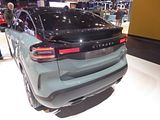
Citroen’s quirky little electric quadricycle, the Ami, just got a facelift for 2025. With a refreshed front end and headlights that look like they’ve been given a set of eyelids, the Ami continues to embrace its oddball personality. Citroen also threw in a nod to its heritage, with fake 2CV-inspired gills on the front and rear fenders. Joining it in Paris is the Buggy Vision concept—think of it as the Ami’s beach-bum cousin, sporting rugged off-road tyres, no doors, and a roof-mounted LED bar. While the mechanicals remain unchanged (still rocking 8 hp), Citroen is clearly leaning into playful design, and it works.


CUPRA
With the recent addition to the range of the Tavascan and Terramar, Cupra now has quite an extensive range and sales are increasing accordingly.
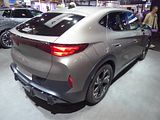


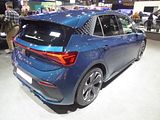
They were joined by the longer-running models, from the Formentor and Leon, to the all-electric Born.


DACIA
The Sandrider is a prototype to compete in the Dakar Rally and the World Rally-Raid Championship (W2RC) in 2025. The car resembles their Manifesto show car, a concept car that was never intended for production in any way but is used as a testing ground on wheels for new ideas. Among them, the most spartan (or shall we say Dacian?) was the Romanian brand’s implementation of the BYOD principle (that you have to use your phone as a dashboard screen).


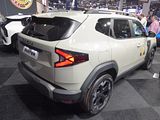
Recently on sale is the new generation Duster and there were several of them on the stand here.

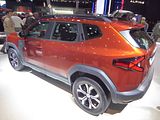
The Dacia Bigster marks the Romanian brand’s foray into the compact SUV segment, aiming to deliver a blend of practicality and rugged styling at an affordable price point. Based on the 2021 concept, the production model is a longer version of the Dacia Duster, sharing its CMF-B platform and powertrain options. The Bigster measures 4.57 m (179.9 inches) in length, 1.81 m (71.3 inches) in width, and 1.71 m (67.3 inches) in height—making it about 230 mm (9 inches) longer than the Duster and the longest model Dacia has produced to date.

The Spring is an all-electric city car which went on sale in the UK a couple of weeks ago. With a low price, it could do well, like all other Dacia models seem to do.


Completing the stand were the existing models including the recently released Jogger.

DR MOTORI
This is an Italian brand which has been operating for quite some time now, offering locally assembled cars that were designed in China. Seen here was one of their recent offerings, the 5.0.

DS AUTOMOBILES
Citroen’s better dressed sibling, DS, brought its new take on EV luxury to Brussels. The No 8 (‘No’ as in number, not the opposite of ‘yes’) is a flagship for the great and the good. Boasting a uniquely French design inside and out, this is a car you won’t miss when it hits the roads later this year. Its interior, boasting a 16-inch touchscreen, features an abundance of shapes, angles, materials and tech, which should keep aesthetes happy. Outside, special attention has been paid not only to its distinctive look, but also to aerodynamics. The DS No 8 is based on the same platform as the Peugeot e-3008, yet can go 466 miles on a charge (with the right spec) – over 30 miles more than the Peugeot. It’ll be available with front or all-wheel drive, with the choice of either a 74kWh or 97.2kWh battery.
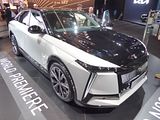


Examples of the models you can buy now (although, to their maker’s chagrin, few people do) were the DS3, DS4 and DS7.


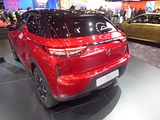


EUROPEAN CAR OF THE YEAR
The winner of this award – which has run every year since 1964 – is now announced at this Show. Before that happens, a short list of seven cars is selected by the panel of 60 jurors, who then get the chance to distribute 25 points between the finalists. All 7 cars were on a special display stand here.
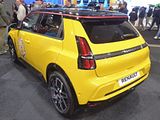
Some years, the winner is impossible close to call, but this year, I think everyone expected the Renault R5 E-tech to win, and it duly did so, pretty convincingly, amassing a total of 353 points.


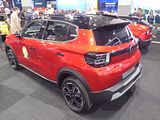
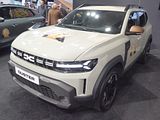
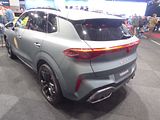
Second place went to the Kia EV3 with 291 points and the Citroën C3 was third on 215 points. After that, things got much closer with the fourth place Dacia Duster, on 172 points only just beating the Hyundai Inster on 168 and Cupra Terramar on 165. Sole Italian finalist on the short list, the Alfa Romeo Junior, came seventh with 136 votes.




FERRARI
There was no Ferrari stand, so the only example of the marque was this car, displayed by Turismo, an F8 Tributo.



FIAT
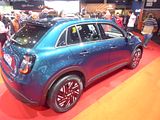
Star here, of course, was the Grande Panda. As I found out when I first saw one, the word Grande is not mis-placed as this is quite a bit bigger than previous generations of the Panda. There are lots of appealing styling details here, and the consensus is that could just the car to “save” Fiat, whose sales have really fallen away in recent years.


Because the Grande Panda is so large, Fiat have decided to modernise the third generation Panda and keep it in production a while longer. It is now called the Pandina, and features the styling features of the old Panda Cross. Well, that’s what I thought, but little research reveals that it is more complicated (or confusing) than that. The Pandina is not a model in its own right but the richer and better equipped version of the Panda we are used to. So if you want a Pandina you will find yourself with a classic Fiat Panda, simply with those features that over the years have found a place on the various competitors. Even if the weight of the years makes itself felt (a 7-inch screen is now clearly undersized). All this at a starting price of €18,900, €3,000 more than the basic Panda.


Other models on show here were the diminutive Topolino, a Fiat-ised version of the Citroen Ami, and the all-electric 500e and the much larger 600.



FORD
When Ford announced that they were going to dip into their archive of classic badges to help generate a buzz around a new EV, and they had selected the Capri name, there was far from universal approbation. Indeed most people expressed strong disapproval, which can’t have given this car an easy start in life. Capri EV is an electric coupe-SUV based on Europe’s new compact Explorer.
Both cars use the same VW MEB platform found under EVs like the ID.4 and ID.5 and share a 2,770 mm (109 inch) wheelbase. But whereas the boxy Explorer appeals to families looking for practicality, the sportier Capri sacrifices some space with a sloping fastback tail. VW did something similar to turn the ID.4 into the ID.5, but Ford’s attempt to coupe-ify the Explorer didn’t stop with a sloping rear hatch. To justify the Capri badge Ford’s design team threw in some design cues inspired by the 1969-86 Capri coupe, which was Ford’s attempt to replicate the success of the Mustang for a European audience. So there’s a black band across the nose mimicking the look of the original’s grille, and the lights at each corner have DRLs arranged in pairs to evoke the Mk1 Capri’s quad-headlight setup. Other retro-inspired details include the subtle fender peaks and oval rear side window, a flicked-up tail that tips a hat to the RS3100’s ducktail spoiler and rear DRLs that evoke memories of the Mk3 Capri’s taillights. But even if potential buyers don’t remember the Capri – and there’s a good chance they won’t, seeing as it was axed almost 40 years ago – the design still works. It kind of looks like a Polestar 2 after two rounds of P90X and some leg-lengthening surgery. Inside, it’s mostly carried over from the Explorer, down to the 14.6-inch portrait infotainment screen and secret, lockable stash hole behind it. But there is one fun retro detail: the bottom spoke of the steering wheel riffs on the look of classic sports steering wheels with their drilled metal spokes, like the one fitted to some of the Capri RS2600 homologation specials. But the only similarity between the new Capri and old under the skin is that the base version of the SUV is rear-wheel drive. Thankfully it doesn’t have a live rear axle, instead getting a modern multi-link setup, and even the entry-level single-motor Capri’s 282 hp (286 PS / 210 kW) output is almost double what the most powerful naturally-aspirated production V6 Capri could deliver. None of the vintage coupes could touch this one’s 6.4-second zero to 62 mph (100 kmh) time, either. Drivers looking for even more muscle, or just all-wheel-drive security, have the option of upgrading to the 335 hp (340 PS / 250 kW) dual-motor Capri, though its 5.3-second 0-62 mph capability means giving up on some driving range miles. The bi-motor car gets a 79 kWh battery instead of the base version’s 77 kWh pack, but its curb weight is up, too, from 2,098 kg (4,625 lbs) to 2,174 kg (4,793 lbs) in its lightest form. Ford says you’ll get up to 390 miles (627 km) out of a 282 hp model but only 368 miles (592 km) from the 335 hp, twin-motor EV. The dually does charge slightly faster because it can accept 185 kW instead of the base model’s 135 kW, though two minutes (10- 80 percent in 26 versus 28 minutes) is hardly a deal breaker. All Capris come with dual-zone climate; heated, 12-way massage seats; heated and folding door door mirrors that project an image of a Capri onto the ground; keyless entry and start; wireless phone charging and wireless Apple CarPlay and Android Auto. Going Premium adds a 10-speaker B&O sound system with subwoofer, ambient interior lighting, Matrix LED lights, and a hands-free rear hatch, but the extra weight and rolling resistance that comes with it costs up to 20 miles (32 km) of range. Premium models also get an upgrade from 19- to 20-inch wheels, though both versions can upgrade to 21s and improve on the standard safety features with a driver assist pack that includes a head-up display, active park assist, assisted lane change, and a 360-degree camera. Ford hasn’t announced prices yet but they’re likely to be very close to the Explorer’s. That starts at £45,875 ($58,750) in the UK for a single-motor 282 hp SUV, jumps to £49,975 ($64,000) for the same thing in Premium trim, and £53,975 ($69,100) for the AWD, which comes only in Premium guise. As far as we know Ford has no plans to export the Capri to North America from its Cologne, Germany, plant. The Capri coupe the new SUV wants us to believe it carries on from was actually sold in the US between 1970 and 1978, but the latest EV tax credit rules mean it doesn’t make sense for Ford to import the modern version or the Explorer.


The Explorer EV was here, as was Ford’s first EV, the Mustang Mach E.


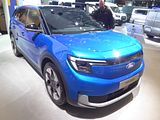

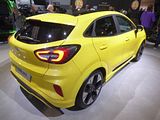
With the Fiesta killed off and the Focus shortly to follow suit, the Puma is now the most important passenger car in Ford’s European line-up. A new all electric version, the Gen E is being added to the range.




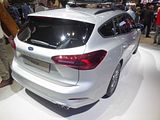
The Focus has not quite gone yet, and so there was an example of the Estate version here.

The Escape remains in the line-up for now, but Ford have suggested that this is the next one to get the bullet.


With so few passenger cars left in the range, Ford is increasingly focusing on commercial vehicles, some of which are adapted for passenger use, such as the Tourneo Connect.


Also on show were the Ranger pickup and the familiar Transit van.



FORTHING


HONDA
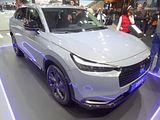
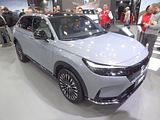
Lots of familiar cars here, with the progression of the range from the Jazz to the Civic, seen here in regular and Type R forms, and the trio of crossovers, the HR-V slightly larger ZR-V and the family-sized CR-V as well as the all-electric e:Ny1.





HONQI


HYUNDAI
One of few concept cars on display was this, the Initium. previewing the successor of the hydrogen-powered Nexo that will arrive in the first half of 2025. The Hyundai Initium introduces a new styling language, and is fitted with an FCEV powertrain, promising over 650 km (404 miles) of range. Initium means “beginning” or “first” in Latin, communicating Hyundai’s intent to become a “hydrogen energy pioneer”. This is also a fitting name for a concept that showcases Hyundai’s new “Art of Steel” design language, before it gets applied to production vehicles. The exterior of the SUV blends elements from the fully electric Ioniq 5 and the ICE-powered Santa Fe. Highlights include the boxy LED graphics, the pronounced skid plates, the horizontal stampings on the profile, the strong C-pillar, and the inclined rear glass. The concept rides on 21-inch aero-optimised wheels, covered by wide fender extensions. It also features a rugged roof rack with integrated lights. Recent spy shots suggest that the production version will feature much smaller wheels, regular roof rails, and more conventional lighting units. Hyundai didn’t show the interior, but promises a spacious cabin designed for families. Second-row passengers will have access to plenty of room, and a large reclining angle for the seatbacks. Furthermore, the large rear door opening angle is said to improve ingress-egress. In terms of safety, the SUV will have nine airbags, and feature a strong chassis with a “multi-skeleton structure” at the front and additional reinforcements on the sides. The Hyundai Initium is powered by an electric motor producing 201 hp (150 kW / 204 PS), with large hydrogen tanks allowing over 650 km (404 miles) of range. For comparison, the outgoing Nexo produces 161 hp (120 kW / 162 PS) of power and has 612 km (380 miles) of EPA range. According to the company, the improved figures were achieved by increasing the output of the fuel cell stack, and enhancing the battery capacity. The Initium will also be able to use its fuel cell to power household appliances and personal devices through the V2L feature. The biggest challenge for FCEV owners is refuelling, due to the limited network. For this reason, Hyundai created a new route planner that helps the driver find hydrogen stations along the away, checking their availability and operating status. Furthermore, the system can also detect how many vehicles are waiting in line at the hydrogen station of interest. Hyundai’s FCEV development started 27 years ago, although the first dedicated hydrogen fuel cell model – the Nexo – didn’t appear until 2018. When it arrives in the first half of 2025, the production version of the Initium will signal the next chapter.
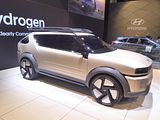

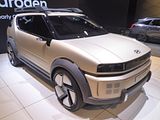
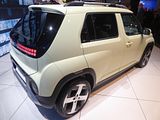
The Inster is a diminutive city-car that is available in two forms, the regular Inster and the slightly tougher looking Inster Cross. Both are exclusively powered by electricity and they are being launched across Europe around now. Cute looks, decent performance and a low price should lead to decent sales, though they will have to persuade buyers that they want one of these and not to go to their Renault dealer instead. That might just prove a difficult temptation to avoid.




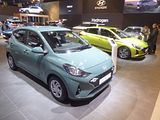
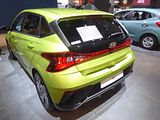
There were plenty of familiar models here with the I10, i20 and i30 joined by the Bayon and Tucson SUVs.




The latest, much larger and very boxy Santa Fe is starting to become a reasonably common sight on European roads.


Hyundai has a number more electric models in the range and these were all represented here: the Kona, Ioniq 5 and Ioniq 6 all being well established in the market.


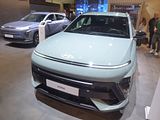


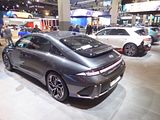

Latest addition to the range of electric vehicles is the Ioniq 9. It serves as the brand’s equivalent to the Kia EV9 and is underpinned by the familiar E-GMP architecture beneath the skin of several Hyundai, Kia, and Genesis models. All versions of the Ioniq 9 come equipped with a massive 110.3 kWh battery and it will be sold in three different configurations. Entry-level Long Range models are equipped with a single electric motor at the rear, producing 214 hp (160 kW) and 258 lb-ft (350 Nm) of torque. Hyundai says this model can travel up to 385 miles (620 km) on the WLTP testing cycle when equipped with 19-inch wheels. Those seeking some additional performance can opt for the Long Range AWD. It adds a 94 hp (70 kW) motor to the front axle, with an extra 188 lb-ft (255 Nm) of torque. Sitting at the top of the range is the Ioniq 9 Performance, rocking a pair of 214 hp (160 kW) motors at the front and rear. This model can hit 62 mph (100 km/h) in 5.2 seconds, whereas the Long Range AWD needs 6.7 seconds to hit the same mark, and the Long Range RWD takes 9.4 seconds. All models top out at 124 mph (200 km/h). Regardless of what variant customers choose, all Ioniq 9’s support can be charged from 10-80% in just 24 minutes through a 350 kW charger. It also features a vehicle-to-load charging function. Visually, the Hyundai Ioniq 9 shares a lot in common with the SEVEN Concept from a couple of years ago. It sports the same Parametric Pixel lights as other Ioniq models and, despite its size, has a drag coefficient of just 0.259 Cd with the optional digital wing mirrors. It’s also the first Hyundai to ditch a roof antenna and instead uses the windshield for GPS and satellite radio, the instrument panel for connected car services, and the tailgate glass for FM/AM radio. Buyers will be offered 19-, 20-, and 21-inch wheels, including a set of flagship 21-inch ‘Calligraphy’ shoes. No less than 16 exterior colours are available. The Ioniq 9’s huge 123.2-inch (3,130 mm) wheelbase results in an expansive cabin clad in plush materials that looks like a great place for long road trips. A steering wheel similar to the one of the latest-generation Santa Fe comes standard and includes small green LEDs to allow drivers to keep track of remaining battery charge. A single curved screen houses a 12-inch digital instrument cluster and a 12-inch infotainment display. As standard, the Ioniq 9 is equipped with eight speakers, although an optional 14-speaker array from Bose is optional. Other key features include several 100-watt high-output USB-C ports that receive power directly from the 110.3 kWh pack rather than the 12-volt battery. Plenty of the interior surfaces are clad in eco-friendly materials, including recycled PET fabric, wool fabric, and eco-process leather, underlining the car’s environmental credentials. The Ioniq 9 will be sold in six- and seven-seat configurations and the second-row seats include a swivelling function, like the EV9. Hyundai’s latest suite of safety features is standard. This includes Forward Collision-Avoidance Assist 2, Lane Keeping Assist, Blind-Spot Collision-Avoidance Assist, Safe Exit Warning, Rear Cross-Traffic Collision-Avoidance Assist, and High Beam Assist. It’s also fitted with 10 airbags. The Hyundai Ioniq 9 will first launch in Korea and the United States in the first half of 2025 before expanding to Europe and other markets later in the year. Market-specific specifications and pricing will be announced at a later date.


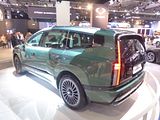
The Hyundai i20 N Rally1 is a Rally1 car built by Hyundai’s Motorsport division and entered in the World Rally Championship from 2022 onwards. The Rally1 prototype is based on the Hyundai i20 N production model, and the race car has scored contractors’ silver every year ever since (mind you, out of three or four contenders). Last year, Belgian rally ace Thierry Neuville finally drove it to the drivers’ champion title. As a local hero, he personally attended the show, posing for fans next to his car.


HUMMER
The Hummer H1 is a full-size four-wheel-drive utility vehicle based on the M998 Humvee, which was developed by AM General when it was a subsidiary of American Motors Corporation (AMC).[2] Originally designed strictly for military use, the off-road vehicle was released to the civilian market. The civilian version was produced from 1992 through 2006 and was the first of what became the Hummer line. AM General built both the H1 and the Humvee in its Mishawaka, Indiana, facility. GM stopped marketing the H1 in the 2006 model year, but AM General continued production of the military Humvee versions through 2018. On March 22, 1983, AM General Corporation was awarded a production contract for 55,000 High Mobility Multipurpose Wheeled Vehicles (HMMWV). Nicknamed the Humvee, the vehicles were used by the U.S. military and featured in photographs from the Persian Gulf War during the early 1990s. The vehicle was also promoted by actor Arnold Schwarzenegger, who was so interested in the Humvee design that he specifically advocated for AM General to produce a civilian version of the vehicle. After the Gulf War was over, AM General modified the M998 Humvee military version for the civilian marketplace powered by 6.2 L GM Diesel V8 engine. The civilian version of the Humvee, marketed as the Hummer, went on sale in 1992. The interior was largely influenced by semi-trucks. Under a 1999 deal, General Motors bought marketing rights to the Hummer name, began marketing Hummer-branded vehicles designed by GM, and rebadged the original version built by AM General as the Hummer H1. At the time, GM began marketing the Hummer H2 that was also assembled by AM General on a modified GMC Sierra 2500HD chassis. General Motors announced that 2006 would be the last model year for the Hummer H1, with civilian market production winding down in June 2006 due to new emission regulations for diesel-engined vehicles that were to take effect in 2007. The final 2006 models had the most powerful engine and also improved fuel efficiency—about 10 mpg‑US (24 L/100 km; 12 mpg‑imp). AM General continued the production of military Humvee versions until 2018. The Hummer H1 was available in three major variants: a convertible-like soft top, a four-door hard top Sport Utility Truck, and an “Alpha Wagon” body version. Less known variants were a two-door pickup truck and a four-door slantback, which shares the same body style as the Humvee employed by the U.S. military. The convertible/soft top and the station SUV versions were the last types available to individual consumers. There were five engine types and three automatic transmission types available. Typical engine/automatic transmission combinations included: 5.7 L (350 ci) L05 gasoline V8 TBI/GM 4L80-E 4-speed; 6.2 L GM Diesel V8/GM TH400/3L80 3-speed; 6.5 L GM Diesel V8/GM 4L80-E 4-speed; 6.5 L turbo GM Diesel V8/GM 4L80-E 4-speed; 6.6 L turbo Duramax LLY V8 turbo Diesel/Allison 1000 5-speed (2006 only). The Hummer H1 shares some common driveline parts with the HMMWV. These include brakes, axles, and frame, as well as major body panels (hood, tailgate, and quarter panels) that are shared between the HMMWV and Hummer H1. All H1s and HMMWVs were produced on the same assembly line; of which the civilian H1s were painted and finished in a separate building. The H1 models feature a wide track and 86.5 in width due to the original Humvees necessity to be able to drive in the tracks left by military tanks. They can ford 30 inches (762 mm) of water and climb a 22-inch (559 mm) step. The standard 16-inch (406 mm) ground clearance is achieved by positioning driveline components high inside a wide channel in the center of the passenger compartment, meaning that despite the large interior volume, the H1 only had seating for four. Approach and departure angles are 72 and 37.5 degrees. A Central Tire Inflation System (CTIS) controls the tire air pressure allowing lower tire pressures for off-road and higher tire pressures on-road. Other features include inboard brakes and portal gears to position drivetrain’s half shafts higher for greater ground clearance. The radiator is mounted high, sloping over the engine on a forward-hinged hood. The air intake is high, enabling the H1 to ford waist-level water. Options included magnesium-aluminum alloy or rubber inserts for run-flat tire ability. Other options include leather seats, a winch kit, and running boards. The “Alpha” was a re-engineered H1 equipped with GM’s 6.6 L Duramax Diesel and 5-speed Allison transmission. This replaced the previous GM 6.5 L diesel engine. The update program commenced in late 2002 with a production launch in the fall of 2004. To fit into the H1 engine bay, 23 engine component changes were incorporated as well as a 2.0 in (51 mm) body lift to accommodate the taller engine and its turbo housing (a prior 0.5 in (13 mm) lift had been done for MY96 to accommodate the turbo on the 6.5 L engine). The 8th digit of the VIN is 3, setting this version of the 6.6L Duramax apart from the versions used in pickup trucks. The GMT560 engine output was 300 hp and 520 lb/ft (705 Nm) of torque. The engine was equipped with cooled exhaust gas recirculation and an internal engine oil cooler, thus, requiring a 40% heat rejection increase to engine coolant. Because space was limited between the air-lift brackets that protruded from the hood, the fan system was modified by putting it directly under the cool pack and driving it through a special gearbox directly off the crankshaft damper pulley. Several other cooling system modifications were required to assist with cold starting from −30 °F (−34 °C). Other major modifications included the use of special high-strength steel in the chassis frame, a more powerful steering gear; quieter axle differentials, redesign of the geared hubs to use quieter helical gears, new induction, exhaust, and electrical power systems; and re-engineering of the fuel supply and filtration system. The Duramax engine delivered more torque at lower engine speeds than the 6.5 L, combined with a lower gearing ratio (about 44.5 to 1 in the low lock) made the vehicle more powerful. Other changes included centralized tire inflation and a new interior. Production launch was early in 2005 with vehicles built classified as model year 2006 – the 10th digit in VIN is a 6. The program was cancelled in May 2006, because sales of the nearly $129,000 vehicle had not improved, with production ending in June 2006.


ICH-X
Yet another brand I’d not heard of. It turns out that it is part of the DR Automobili Group who have now got a total of 7 sub-brands. DR Automobili themselves were set up to assemble Chery models locally in Italy. In 2020 they created the EBO brand, and since that time have added 5 more. In 2022, DR added a more “premium” brand called Sportequipe, which are also rebranded Chery vehicles. It also introduced the ICKX brand (later renamed to ICH-X due to a legal dispute with former motorsport driver Jacky Ickx), initially with one model in offer, the ICH-X K2, based on the first-generation Beijing BJ40; at the same year, the company acquired the OSCA brand from the Maserati family. Three are currently three ICH-X models available: the ICH-X K2, launched in 2023 and based on the first-generation Beijing BJ40; the ICH-X K3 launched in 2024 and based on the Jetour T2 and the ICH-X K4, also launched in 2024 and based on the JAC Hunter. Seen here is an ICH-X K2.

JAECOO and OMODA


JEEP
Jeep is currently the star performer in the former FCA part of the massive Stellantis organisation. Reminder of the pedigree of this brand came from the display of a Wrangler Rubicon.

If you’re the type who enjoys being at one with nature, chances are you’ll have a jacket from The North Face somewhere in your wardrobe. Naturally, Jeep, purveyors of rugged cars, has teamed up with the adventure clothing brand to create a special edition of its new Avenger 4xe. It uses the same powertrain as the Alfa Romeo Junior Ibrida Q4 mentioned above, but also features specific drive modes for Sand & Mud and Snow. This isn’t a plug-in hybrid system, like you get in other Jeep models that wear the 4xe badge; instead it’s a mild-hybrid with a much smaller lithium-ion battery pack, so you don’t have to charge it yourself. Only 4,806 examples of The North Face edition are to be built, one for each metre of Mont Blanc, which is a fun fact to tell your friends in the pub. They’ll come with The North Face logo on the bonnet, ‘Summit Gold’ details, topographic lines on the dash, a silhouette of Mont Blanc and exclusive floor mats.
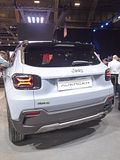


The Avenger EV was winner of the European Car of Year award last year, and there were several more examples of the model on the stand.

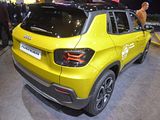
When things are going well, there’s no shame in giving yourself a little treat, which is exactly what the North Star edition of the Jeep Renegade and Compass are. Celebrating over a million sales of Jeep’s Renegade and Compass models in Europe, the North Star editions come with a raft of upgrades to honour the milestone. North Star cars come with ‘high resistance’ seat upholstery – good for adventurers and their dogs who enjoy a muddy trail – and a two-tone green and black exterior treatment. They also feature special North Star badges, a dual-pane sunroof, roof rails, LED fog lights, tinted windows and 18-inch wheels on the Compass – or 17-inchers on the Renegade. Prices kick off at £32,699 for the smaller Renegade, rising to £36,605 for the Compass.
KGM
KGM is the new name of Ssangyong and we are told that the new owners will be investing heavily in new models. They will take time to appear, so most of what was on this stand has been available in the market for a while, though with such low sales volumes, few of us could know that for sure or even be confident of identifying the cars and what has changed. The Tivoli is the entry level model and above this come the Korando and the one car that is new, the Torres.
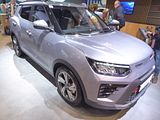

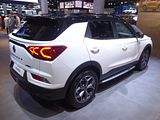

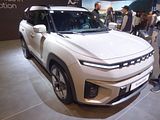


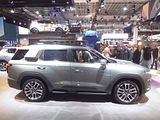


Completing the 2025 range is the Actyon.


KIA
There have been PV5 Concept vehicles at the last two shows I’ve attended (Paris and Los Angeles) and there was one here, and all three have been different. The production PV5 is about a year away and will be offered in the form seen here – a traditional mid-sized van, but offered solely with electrical power, and styled very much to the moment.


Kis is forging ahead with adding a complete family of electric vehicles to their range. During last year, Kia unveiled the all-new EV3, the latest member of its fully electric lineup that will be offered in global markets including Europe and the U.S. The sub-compact SUV with modern styling, promises a WLTP driving range of up to 600 km (373 miles) in the Long Range version and comes packed with technology. The production-spec Kia EV3 looks closely resembles last year’s concept, adopting modern styling cues originally introduced by the EV9 flagship. Toned-down features include slightly tweaked LEDs, revised bumpers, conventional mirrors, and thicker pillars. Besides the base version, Kia also showed us the GT-Line trim, featuring sportier bumpers and different alloy wheels. The sleek body and a 3D underbody cover contributes to a drag coefficient of 0.267 cd. The EV3 measures 4,300 mm (169.3 inches) long, 1,850 mm (72.8 inches) wide, and 1,560 mm (61.4 inches) tall, with a wheelbase of 2,680 mm (105.5 inches). Compared to other Kia products, the EV3 is 105 mm (4 inches) longer than the e-Soul, and 120 mm (4.7 inches) shorter than the e-Niro. This footprint places it in the heart of Europe’s B-SUV (subcompact) segment, against the likes of the Peugeot E-2008, the Volvo EX30, the Mini Aceman, and the Smart #1. The interior boasts a minimalist and futuristic design, incorporating technology typically seen in larger segments. It features a digital panel consisting of a 12.3-inch instrument cluster, a 12.3-inch infotainment display, and a separate 5-inch touchscreen for climate controls, positioned between them. Most buttons are conveniently placed on the steering wheel, with only a handful of physical controls and shortcuts on the dashboard. The centre console features practical storage compartments and a sliding table that can be utilized when the vehicle is stationary, complementing the “fold-back relaxation mode” of the front seats. The EV accommodates five passengers in its cabin, along with a 460-liter (16.2 cubic feet) boot and a 25-liter (0.9 cubic feet) frunk. Staying true to current trends, Kia employs sustainable materials for the upholstery, including recycled fabric and recycled plastic (PET). Riding on the widely used E-GMP platform, albeit with a 400-Volt architecture, the Kia EV3 offers a single electric motor and two battery options at launch. The standard model features a 58.3 kWh battery capacity, while the Long Range variant upgrades to a larger 81.4 kWh unit. The latter delivers an estimated WLTP range of 600 km (373 miles), surpassing similarly-sized EV rivals. Moreover, when connected to a rapid charger, the larger battery can charge from 10 to 80 percent in just 31 minutes (at a 128 kW charging rate). The single electric motor generates 201 hp (150 kW / 204 PS) and 283 Nm (209 lb-ft) of torque. Kia states that the EV3 accelerates from 0-100 km/h (0-62 mph) in 7.5 seconds and boasts a top speed of 170 km/h (106 mph). Looking ahead, the lineup will expand with the introduction of a performance-focused Kia EV3 GT, featuring power enhancements and chassis upgrades. The Kia EV3 will debut in its home market of Korea this July, followed by launches in Europe and the UK in the second half of 2024. It’s also confirmed for release in North America, where it’s anticipated to arrive in late 2025 or early 2026, starting from around $30,000 to $35,000. Following its launch, Kia plans to introduce the EV4 sedan and a smaller EV2 crossover for the European market.


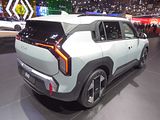
The facelifted Kia EV6 was unveiled in South Korea last May, and it looks even more eye-catching than the model it replaces. Alongside various interior modifications, the electric crossover also introduces a new battery. The front end of the new EV6 has received the most significant changes. Kia has ditched the conventional headlights of the outgoing model in favor of angular LED daytime running lights and headlamps that are more similar to the EV3 and EV4 Concepts and the EV6 and EV9 production models. Kia’s designers have also altered the rest of the crossover’s front fascia, including the bumper and the lower grille area. The rest of the EV6’s exterior has remained largely unchanged, except for newly designed black and silver wheels available in 19-inch and 20-inch sizes. At the rear, the signature single LED light bar extends across the entire width of the EV, maintaining its distinctive appearance. Several changes have been made to the interior of the 2025 EV6. The most significant is the fitment of a revised curved panoramic screen housing the digital instrument cluster and the infotainment display. Kia has also redesigned the two-spoke steering wheel and added a fingerprint reader to allow registered drivers to start the EV without the key. Shoppers will also be pleased to know that wireless Apple CarPlay and Android Auto have been added. The new Kia EV6 continues to support over-the-air updates, but while these were previously limited to navigation updates, the EV now supports over-the-air updates for major electronic control systems, too. There is also a digital rear-view mirror and an improved head-up display. Kia has also installed the same augmented reality navigation system found on current Genesis models, which uses the front camera with graphic overlays. The Hyundai Motor Group’s latest 84 kWh battery is found beneath the Kia’s new skin, replacing the 77.4 kWh pack of the old model. Kia says rear-wheel drive models with 19-inch wheels will be good for 494 km (307 miles) in Korea, up from the 475 km (295 miles) of the outgoing EV6. Range details for other markets haven’t been announced. The enlarged battery supports 350 kW DC charging and can charge 10-80% in 18 minutes. Standard rear-wheel drive models produce 225 hp (168 kW) and 258 lb-ft (350 Nm) of torque, while the dual-motor versions pack 320 hp (239 kW) and 446 lb-ft (605 Nm). Kia says it has modified the EV6’s frequency-selective dampers to improve ride comfort, made the motors quieter, and strengthened the body to improve safety. I drove a pre-facelift model in the US a few months back and was suitably impressed. This is a good car and these changes doubtless make it even better.

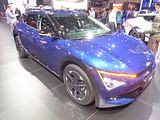

Completing the range of electric-only models is the massive EV9.


There were examples of all the rest of the range here, too: Picanto, Stonic, Ceed, Sportage, Sorento and Niro.


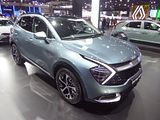


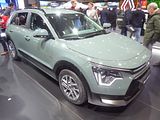

LAMBORGHINI
As with all the other supercar brands, Lamborghini themselves did not have their own stand, but there were examples of the marque here. Perhaps of most interest was the new Temerario, the recently revealed replacement for the long-lived Huracan.
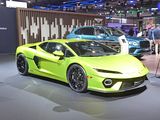

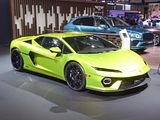
Elsewhere I came across the big-selling Urus and an Aventador SV-J


LANCIA
Those of a certain age (or who spend a lot of time watching old rally videos on YouTube) will go all misty-eyed at the mere mention of Lancia. The brand is famed for its prowess in rallying, and its new junior competition car, the Ypsilon Rally4 HF, is based on the same platform as the Peugeot 208. It comes with a 209hp 1.2-litre turbocharged motor, a five-speed manual transmission, a limited-slip differential, and a price tag just shy of 75,000 Euros (about £62k). It’s not going to tackle the top flight of the rally scene, but it looks like it’ll come with a decent turn of pace. Hitting the rally stages means Lancia needs some sort of homologation (or tie-in) car to mark the occasion – in this case that means the 280hp Ypsilon HF EV capable of dashing off the 0-62mph sprint in 5.8 seconds.

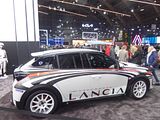


The regular Ypsilon was also on show here.


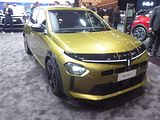

LEAP MOTOR
Leapmotor is the latest Chinese automaker testing its luck in Europe, seemingly unfazed by looming EU tariffs. Backed by Stellantis, which currently holds a 21 percent stake in the company, the new B10 compact SUV will offer both all-electric and range-extended versions, the latter powered by a 1.5-litre petrol engine. While the company is tight-lipped on the finer details, it has confirmed that sales of the B10 will begin across Europe during 2025.
The Leapmotor T03 isn’t exactly new, having first hit the streets in China back in 2020. Now in Europe, it’s set to face off against budget EVs like the Dacia Spring, Citroen e-C3, and Fiat Panda— all of which are expected to stay below the psychological €20k ($22k) barrier in their base trims. Despite its Chinese origins, the T03 will roll off the assembly line at Stellantis’ Tychy plant in Poland, adding a European touch to its credentials. Measuring 3,620 mm (142.5 inches) in length, the T03 packs a single electric motor delivering 94 hp (70 kW / 95 PS) and 158 Nm (116.5 lb-ft) of torque. The EU-spec model comes equipped with a 37.3 kWh battery, offering a WLTP range of 265 km (165 miles)—enough for urban commutes, but you’ll be planning those longer trips carefully. Standard equipment in the single available trim includes an 8-inch digital instrument cluster, a 10.1-inch infotainment touchscreen, a panoramic sunroof, a rearview camera, and a host of ADAS features.

The Leapmotor C10 is a newer addition to the lineup, having debuted in 2023. At 4,740 mm (186.6 inches) long, it’s roughly the same size as the Tesla Model Y, but with a more budget-friendly price tag—despite the added cost of import taxes from China. For its size, specs, and features, the C10 still manages to be considered relatively affordable. The SUV is powered by a single electric motor delivering 215 hp (160 kW / 218 PS) and 320 Nm (236 lb-ft) of torque. Stellantis claims the 69.9 kWh battery provides up to 420 km (261 miles) of range on the WLTP cycle, making it more than capable for everyday use and longer journeys. At launch, Stellantis will offer two different trims, called Style and Design. Both versions come well-equipped, boasting a digital cockpit with 10.25-inch and 14.6-inch displays, wireless charging, ambient lighting, a panoramic sunroof, and sustainable upholstery materials. Up to 17 ADAS features provide Level 2 autonomy. The first European deliveries of the Polish-made Leapmotor T03 hatchback are set to begin before the end of September, with the Chinese-built Leapmotor C10 SUV following in mid-October. The automaker has ambitious plans, aiming to launch a new model each year for the next three years, gradually expanding its lineup across Europe.


LEXUS
Lexus sales are rising slowly across Europe, with some of the latest models finding their own niche in a market that still favours the German brands. There was nothing that was brand new here, but there were examples of some of the range including the small LBX and the larger RX and all-electric RZ450e models.



LIVAN
I confess I’d never heard of this brand, let alone seen one. The car here is an X3 Pro, a subcompact SUV from Chinese automaker Livan (a Geely brand), known for being an affordable, economy-focused vehicle, often rebadged from the Geely Yuanjing X3 Pro, offering options like a 1.5L naturally aspirated engine with 113 bhp and 143 Nm of torque, available with a 5 speed manual or CVT transmissions, and featuring a 5-seat, 5-door body style. It has front wheel drive and measures just over 4m long. It has primarily been sold in Asia, the Middle East, and Africa.


LOTUS
Lotus now has a three car range, with the Emira sports car having been in production for a couple of years, and last year sales started of the all-electric Eletre SUV and the Emeya saloon.



LUCID


MASERATI
No Maserati stand here, but there was one example of the brand, and it was the oldest car in the show, dating back to the 1930s. This was on a stand from the AutoWorld Brussels museum, as a reminder that they currently have a special exhibition that marks 110 years of Maserati. The plan is to visit that during this trip to Belgium! The car shown here is a 6CM. These were built between 1936 and 1939, specially designed for the “voiturette” class, featuring a six-cylinder engine with innovative suspension.



MAXUS
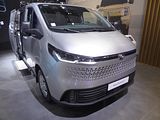


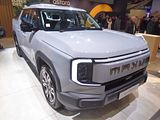
MAZDA
SUVs make up most of Mazda’s line-up these days, but the brand hasn’t given up on the executive saloon, as it’s about to go after the hugely successful Tesla Model 3 with this: the all-new Mazda 6e. The Mazda6e was developed through a collaboration between Mazda and Changan Automobile and it boasts Mazda’s signature design, craftsmanship and driving performance, combined with the latest Chinese technology. This is only the second EV Mazda has launched, following on from the quirky MX-30 crossover, and isn’t due to arrive in UK showrooms until 2026. However we know two versions will be available, with the base 6e offering 254bhp and a 297-mile range, while the 6e Long Range will do 342 miles on one charge. Both are rear-wheel drive. Inside, Mazda has done away with its usual array of physical controls on the dashboard, and instead there’s a simply huge 14.6-inch touchscreen.

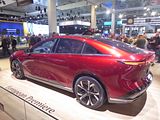


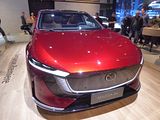
Those SUVs were here, with the familiar CX-30 now joined by the three-row CX-80.


This might look like a Toyota Yaris but in fact it is a Mazda 2 Hybrid. This is not the first time that there has been badge-sharing between Toyota and Mazda but this time it is Mazda doing the borrowing, whereas the last time round it was Mazda who supplied a car to Scion which quickly became a Toyota. Slightly confusingly, this one is badged as a Mazda 2 but it shares nothing with the existing Mazda 2 which continues, in non-hybrid form.

Completing the range is the ever-popular MX-5 sports car.

MERCEDES-BENZ
In a separate pavilion area all of their own was a large Mercedes display. Star billing was given to the all- electric G580 EQ. Hugely expensive, it will be interesting to see how this fares in the market.


Even more costly is this, the Maybach SL680 Monogram Series. Part of the R232 generation of SL cars, the Mercedes-Maybach SL 680 Monogram Series, the first Maybach-branded SL, is an ultra-luxurious, limited-edition, two-seater roadster for 2026, blending AMG SL performance with exclusive Maybach comfort, featuring a 577-hp V8, 4MATIC+ AWD, unique two-tone paint options (red/white), rose gold accents, exclusive wheels, and bespoke interior stitching, offering extreme opulence in an SL body for high-end cruising, a first for the SL line. It’s designed for ultimate luxury and comfort over raw sportiness, with a higher focus on plushness and Maybach refinement. It features a handcrafted 4.0L V8 Biturbo from the SL63, and puts out 577 hp / 590 lb-ft torque. It has 4MATIC+ Fully Variable All-Wheel Drive and a 9G-TRONId C 9-speed automatic. This gives it a 0-60 mph time of around 4.0s and a top speed limited to 161 mph top speed. As the car is focused on luxury, it has softened suspension, increased sound deadening, Maybach-specific MBUX displays, unique stitching. It comes with two-tone concepts (Red/White Ambiance), rose gold details in headlamps, Maybach grille, and steering wheel and exclusive 21-inch forged Maybach wheels.
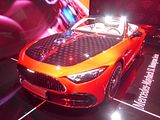


A bit of a teaser for a commercially much more significant car was this CLA EV prototype. We should see the production version in the middle of the year.


Other electric cars here were the Maybach version of the EQS SUV, and the much smaller EQA and EQB.


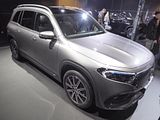
From the top end of the range were the S Class saloon and the latest SL and GT which are essentially now the same car, one with an open top and the other a fixed roof.


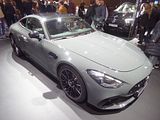
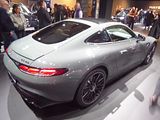
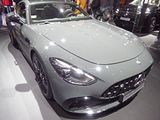
MG
Star billing was given here to the Cyberster, an all-electric open-topped two-seater sports car that went on sale last year. At present it has a market niche to itself, though competition from Porsche is on the way.


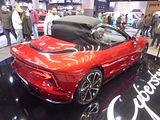


The rest of the range shows how quickly this brand is evolving with the MG5 EV SW being the oldest model here, but even this has only been on sale for 3 years. The MG3 and ZS have just been refreshed and the HS entered a second generation in the middle of 2024.


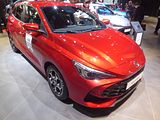


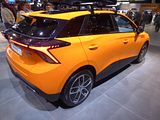


There will be more new cars during 2025, including a replacement for the popular ZS EV. The outgoing version was on show here.

MICROLINO
Microlino has unveiled the production version of its Spiaggina EV, a beach-ready bubble car inspired by the classic BMW Isetta. With a 17-horsepower motor and a 10.5 kWh battery, it offers up to 110 miles of range and a top speed of 56 mph. The open-air design, complete with no side windows and a roll-back fabric roof, screams retro fun. Prices start at $27,300 in Europe for the First Edition, with deliveries expected to begin in spring 2025.


MINI
In the last few months, MINI has completely refreshed their range with a new generation Countryman, based on the BMW X1 platform, the all-electric Aceman and new Cooper models where the petrol and electric cars look similar but are more different thank you think under the skin as the petrol cars are based on the previous generation chassis whilst the electric cars have a new platform. All were represented here.


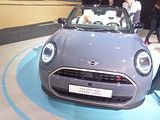


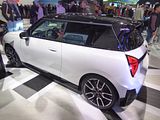


MINI cranked up the heat on its EV lineup with full-blown John Cooper Works (JCW) versions of the Cooper Electric and Aceman EV, packing 255 bhp and an attitude upgrade. The Aceman JCW Electric blasts from 0-62 mph (100 km/h) in 5.2 seconds, while the Cooper JCW EV shaves it down to 5.9 seconds. Both get aggressive body kits, upgraded brakes, and MINI’s go-kart handling. Sure, the 221- to 231-mile range won’t blow anyone’s mind, but these versions are about performance, not distance. Production kicks off in China, with UK manufacturing set to follow in 2026.


MOBILIZE
Renault’s Twizy is back, reborn as the Mobilize Duo with a more refined design and a cargo-focused Bento variant. The Duo comes in two versions: one limited to 28 mph, legal for non-licensed drivers in some European countries, and a punchier 50 mph version for licensed drivers. It features scissor doors, a heated seat, air conditioning, and even an airbag—something its rival, the Citroen Ami, lacks. The Bento van variant swaps the back seat for a cargo box, catering to urban delivery needs. Starting prices are competitive, with the Duo 45 Neo at €9,090 ($9,950), while the Bento is priced at €10,000 ($10,940), making both models attractive for city dwellers and businesses alike.



OPEL
The Corsa recently underwent a mid-life update with the most obvious visual change being the adoption of the “vizor” style front grille. Trim and equipment were also tweaked with the model range simplified and there are revisions to the electric model to improve the range and reduce the charging time.

The Opel (and corresponding Vauxhall) Mokka has been given a nip, a tuck. Styling changes for the facelifted models are relatively subtle, although the interior now features dual 10-inch displays, a new infotainment system and some other fresh tech, such as a 180-degree rear-view camera. With this tech comes new ways to interact with it, which means fewer real buttons and a heavier reliance on touchscreens. The new Mokka went on sale at the tail end of 2024, with prices in the UK starting from £24,705, while the Mokka Electric starts from £33,245 and now comes with a larger 54kWh battery as standard.


Although launched a while back, the latest Astra is still not a particularly familiar sight on our roads, largely due to the fact that the market has moved over to crossover style cars. Even so, Opel had the practical estate version on show here.


Opel announced a second generation Grandland last autumn and the car went on sale almost immediately. Larger than its predecessor, it shares pretty much everything under the skin with the Peugeot 3008/5008 cars, though it does look very different. Some of the latest styling fads, such as an illuminated badge in the middle of a light bar across the back feature here.

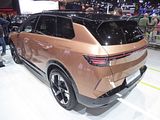


Announced after the new Grandland, but yet to go on sale is the new Frontera. When it was revealed at the end of August 2024, Vauxhall announced that it would be hitting the market at an identical price for the electric and hybrid versions. Yes, you read that right – no more burning a hole in your wallet just because you want to go green. Both versions of the SUV will roll out with a starting price of £23,495, making Vauxhall possibly the first to level the playing field between electric and petrol hybrids in the UK car market. Typically, drivers opting for an electric vehicle are used to seeing a hefty 31 per cent price hike compared to their petrol-powered counterparts. But Vauxhall, in a refreshing break from tradition, has decided to ditch that old formula. Starting this autumn, drivers can choose between a petrol hybrid or a fully electric Frontera without worrying about paying a premium for either. “Vauxhall is leading the way in democratising access to electric vehicles, whether through our Electric Streets campaign to accelerate on-street charging infrastructure, our latest PCP offers with equivalent monthly payments between electric and petrol models, or our affordable new special editions – the Corsa Electric YES Edition, Mokka Electric Griffin, and Astra Electric Griffin. With the launch of the new Frontera, Vauxhall has eliminated the list price premium that often applies to electric vehicles, with both electric and petrol hybrid versions offered for an identical list price,” James Taylor, managing director at Vauxhall, comments. As to what’s under the bonnet – or rather, under the bonnets, since we’re dealing with two different machines here. The Frontera Hybrid marries a 1.2-litre turbocharged petrol engine with a 28 PS electric motor. Depending on how much pep you want, you can choose between a 100 PS engine or a 136 PS engine, zipping from 0 to 62 mph in as little as nine seconds. On the electric side, the new Frontera Electric offers 113 PS, a smooth, quiet ride, and a range of 186 miles on a single charge – plenty to get you to the office, the supermarket, and that weekend getaway without breaking a sweat. And for those long road trips? A quick 26-minute charge will get you back up to 80 per cent battery, which means less time sipping bad coffee at service stations. And if you’ve got serious range anxiety, Vauxhall has you covered: a Long Range version of the Frontera Electric, offering up to 248 miles on a single charge, is set to debut next year.


PEUGEOT
Nothing new on the Peugeot stand, after the updates to the 3008 and 5008 a year ago, and the addition of the fastback 408 model to offers something for those who want a more stylish mid-sized hatch than the 308. And at the bottom of the range are the 208 hatch and 2008 crossover. All are now available with ICE engines or as fully electric vehicles.

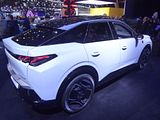

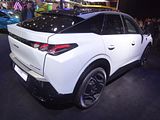


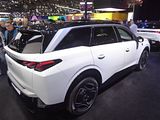


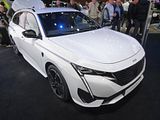

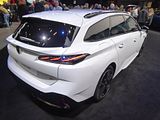
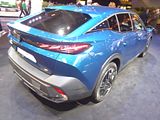


PORSCHE
Porsche did have their own stand, and they did restrict the numbers of people on it, so there were queues at times. I was able to get in pretty quickly and could see cars from close up, though the layout of the stand was such that you could see most of them from the perimeter, too. There were examples of most models in the range. The one few will have seen yet is the all-electric Macan which was announced last summer and deliveries of which are now starting.


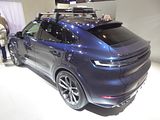




If you want a large saloon, Porsche offer the choice of the petrol-engined Panamera or the all-electric Taycan, though only the latter is now available in an estate like body, which Porsche call the Sport Turismo.


The evergreen 911 was here, of course, with the new hybridised GTS version being a car that intrigues many. Will be as good as the regular 911s with its added complexity and weight?


RAM


RED BULL
This is the RB8 which competed in the 2012 F1 season, winning the Constructors’ and Drivers’ Championships. It was driven by Sebastian Vettel and Mark Webber. The car was designed by Adrian Newey.

RENAULT
This was definitely one the busiest stands at the show, and for good reason. There is a lot that is fresh here. And by common consent, Renault is on something of a roll at present, with some interesting production cars as well as some retro-inspired concepts which also look rather good.
The all-new, all-electric Renault Twingo is still on track to hit the streets in 2026, which considering the car was only shown as a concept in late 2023, is lightning-fast pace for a traditional manufacturer. It’s one step closer to reality as well now, as Renault gave us a sneak peak to what the interior of the Twingo may very well look like at Brussels. Even though the Twingo will cost less than 20,000 Euros (£16,700), there’s still a 10.1-inch central infotainment screen and a seven-inch instrument display, plus physical climate controls – hallelujah – and a sliding rear bench to boost versatility for the little city car.


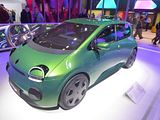
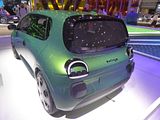


The Retro theme is clearly occupying lots of thoughts at Renault at present. There is a rather fabulous R17-inspired concept that has been produced, which was on the stand here. Unlike in Paris where it proved impossible to photograph, the car was much better sited on this stand and so whilst the colour combined with the light was not ideal, at least there are some images this time.


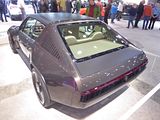

Also clearly retro-inspired is the new R5 E-Tech, newly announced as European Car of the Year, and now on sale. There were several examples on show and they were attracting lots of interest. Visually, Renault have absolutely nailed it, with the design combining the right elements of retro and modern, both inside and out. it’s even priced attractively. I predict that Renault will struggle to build them fast enough to meet demand.
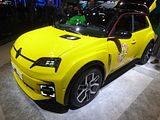


Renault’s new 4 E-Tech brings back the spirit of the classic ‘60s Renault 4 with a modern, all-electric twist. This subcompact SUV sports retro-inspired looks and a cabin designed with practicality in mind. Sharing 68% of its components with the smaller R5 E-Tech hatch, the 4 E-Tech stretches longer and taller, providing more room for passengers and cargo. Available with two electric powertrains, it offers up to 250 miles of range in its top-spec version. Inside, the SUV features a 10-inch digital display and Google-powered infotainment, blending old-school charm with modern tech.


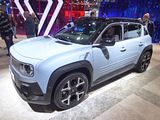

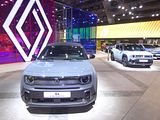


The other all-electric cars are the Megane and Scenic – similarly sized and really quite hard to tell apart.


Earlier in the year, Renault announced another mid-sized crossover, meaning there are quite a lot in the range now. This one is called the Symbioz and is likely to be biggest seller of them all. Renault is returning to its practical, family-friendly roots with the new Symbioz hybrid, a Nissan Qashqai-sized SUV the firm says recalls roomy, versatile past masters like the Renault 16 and original Scenic and Espace. Which seems like a rather generous assessment to us. From what we can see, the Symbioz is nothing like as innovative as those old timers. It’s just a reasonably handsome, but entirely conventional C-segment SUV with an impressively large cargo bay. But maybe that’s enough. The small SUV segment is booming in Europe, and though Renault’s electric Scenic E-Tech is the right size to take on competitors like the newly-faclifted Nissan Qashqai, it has the wrong powertrain for many buyers. Most of them still want combustion power, but efficient combustion power, so the Symbioz’s sole powertrain at launch is a full-hybrid inline four. The 1.6-liter petrol engine only makes 94 hp (95 PS) on its own, but combined with a 52 hp (53 PS / 39 kW) main electric motor and a 24 hp (25 PS / 18 kW) starter generator, delivers a total of 143 hp (145 PS) through an automatic transmission and out to the front wheels. Strangely, the gearbox has four ratios for the petrol engine and two for the electric motor. The 4,413-mm (173.7 inches) Symbioz slots between the brand’s existing – and also-ICE-powered – SUVs, the smaller Captur and bigger Austral, and rides on the same CMF-B platform used by the Captur and the Clio supermini. There’s a clear visual link between the Symbioz and Captur at the front, but elsewhere, the design is stronger and more angular. A sliding rear bench flexes the cargo space from a so-so 492 liters (17.4 cu-ft) to an impressive 624 (22 cu-ft), and Renault says there’s 24.7 liters (0.9 cu-ft) of storage room inside the cabin, including a massive 7 liters (0.25 cu-ft) in the glovebox – even Wreck-it-Ralph could find space for his mitts in there. Symbioz buyers can option the same darken-on-demand Solarbay glass roof that we’ve already seen on the Scenic E-Tech, and whose lack of a conventional blind improves headroom by 30 mm (1.2 inches). It’s dimmed either by pressing a switch, or by voice command, using the standard Google Assistant tech built into the 10.4-inch vertical touchscreen. Given Renault’s commitment to safety over the past 25 years, it’s no surprise to learn the Symbioz comes crammed with safety software gizmos, too. There are 24 of them, to be precise, but much like drivers of performance cars can often save their favorite steering, transmission and ESP modes, so can a Symbioz driver use the My Safety Switch to deactivate up to six of his most hated ADAS functions with one press of a button.

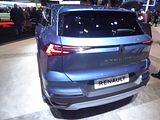


Sitting below the Symbioz in the ICE range are the Clio, Captur and the fastback Arkana, whilst above it are the Austral and the Rafale. All were on display here.


The Rafale is the top of the range, and a more potent version was announced in the summer. This is the Rafale E-Tech 4×4 300 hp, the first AWD and first PHEV version of Renault’s flagship high-riding coupe, and if you go for the Atelier Alpine version you get a chassis tune from the brand behind the A110. The Rafale was revealed last summer, but the only model available at launch was a front-wheel drive, 1.2-liter regular hybrid that made 197 hp (200 PS) with the help of a two electric motors: one starter generator, and a second, bigger motor inside the transmission. Adding a third motor producing 134 hp (136 PS / 100 kW) at the rear axle gives the new range-topper all-wheel drive capability and a total of 297 hp, which equates to the nice round 300 PS – or European hp – in the name. Zero to 62 mph (100 kmh) drops from 8.9 to 6.4 seconds compared with the FWD hybrid, and a 22 kWH battery provides an electric range of 62 miles (100 kmh) while also contributing to a bladder-testing 621-mile (1,000 km) overall range. The battery can be charged to 80 percent in 130 mins, or fully revitalized in 2 hrs 55 mins. Buyers get a choice of two trim levels. Base models, badged Esprit Alpine get a smattering of performance-themed Alpine styling cues including branded mats and 20-inch wheels, while Atelier Alpine versions feature Satin Summit Blue bodywork, a Starry Black floating spoiler, and 21-inch ‘Chicane’ wheels. But the Atelier Alpine goes further with an adaptive suspension that uses a camera to scan the road ahead and tell the dampers what to get ready for. These top-grade cars also come with a ‘Chassis Control’ menu on the media screen that can be used to switch between three settings (Comfort, Dynamic and Sport) to tweak the dampers and rear-wheel steering angle. Renault hasn’t revealed prices for the 4×4 but says it will be available to buy run Europe this autumn.


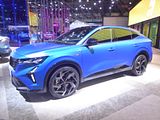
There was a comprehensive display of Renault vans here, ranging from the small Kangoo through the larger Trafic to the very big Master. Electric versions are now available.


SEAT
Seat continues, even though all the focus and indeed all the new models seem to have shifted to Cupra where the Spanish company can charge higher prices and make more profit. So the cars here are all very familiar having been on the market for some time. They are the Ibiza, Arona, Leon and Ateca. All look good to my eyes at least.


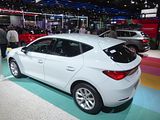


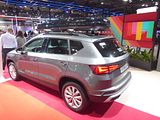

SKODA
Skoda has taken the wraps off the all-new Elroq, which is billed as the “most affordable EV in its segment, taking into account its battery size and extensive standard equipment.” While pricing varies by market, the model starts at £31,500 in the United Kingdom and will cost around €33,000 in mainland Europe. When it arrives early next year, customers will find a Modern Solid design that sports a so-called “Tech-Deck Face.” The latter replaces the traditional grille and is effectively a gloss black panel that’s used to hide sensors and a front-mounted camera. Besides the black filler plate, designers gave the model split lighting units and a contoured hood. The latter is notable for using lettering rather than a badge, which is a first for a production Skoda. Other highlights include split lighting units, vertical air curtains, and active cooling vents. They’re joined by plastic body cladding and an aerodynamically optimized design that allows for a drag coefficient as low as 0.26. Buyers will also find dark chrome accents as well as 19- to 21-inch wheels. In terms of size, the crossover measures 176.7 inches (4,488 mm) long, 74.2 inches (1,884 mm) wide, and 64 inches (1,625 mm) tall with a wheelbase that spans 108.9 inches (2,765 mm). This means the model is 3.9 inches (98 mm) longer than the Karoq and has an extra 5 inches (127 mm) between the wheels. The interior embraces a minimalist aesthetic as drivers will find a small digital instrument cluster and a steering wheel with Skoda lettering. They’re joined by a freestanding 13-inch infotainment system and an available augmented reality head-up display. The tech features don’t end there as the Laura voice assistant features ChatGPT integration. This enables the digital companion to “answer general knowledge questions in addition to controlling vehicle infotainment, navigation and climate control systems.” While most features are controlled via the infotainment system, Skoda included a handful of physical buttons as well as a minimalist shifter. We can also see a floating center console as well as an ambient lighting system. Customers can also get sustainable materials such as RecyTitan fabric and TechnoFil. Being a Skoda, there’s a number of “Simply Clever” details. These include a door-mounted umbrella, a storage box for rear passengers, and an ice scraper with a tire tread depth gauge. While those are mostly gimmicks, everyone can appreciate the largest boot in its class. It holds 16.6 cubic feet (470 liters) of luggage, but that can be expanded to 55.8 cubic feet (1,580 liters) by folding the rear seats down. The crossover rides on the MEB platform and will be offered with an assortment of different powertrains. The entry-level Elroq 50 has a 55 kWh battery pack and a rear-mounted motor producing 168 hp (125 kW / 170 PS) and 229 lb-ft (310 Nm) of torque. This enables the model to accelerate from 0-62 mph (0-100 km/h) in 9 seconds, hit a top speed of 99 mph (160 km/h), and have a WLTP range of 233 miles (375 km). The Elroq 60 has a larger 63 kWh battery pack and this increases the range to more than 249 miles (400 km). Buyers will also find a beefier motor producing 201 hp (150 kW / 204 PS) and 229 lb-ft (310 Nm) of torque. While the top speed remains unchanged, the 0-62 mph (0-100 km/h) time falls to 8.5 seconds. Last but not least, there’s the range-topping Elroq 85. The rear-wheel drive variant features an 82 kWh battery pack, which promises to provide a WLTP range of 361 miles (581 km). Its motor produces 282 hp (210 kW / 286 PS) and 402 lb-ft (545 Nm) of torque, allowing for a 0-62 mph (0-100 km/h) time of 6.6 seconds and a top speed of 112 mph (180 km/h). Skoda also confirmed plans for an Elroq 85x, which features a dual-motor all-wheel drive system. However, the company didn’t have much else to say about it at this point. Charging times and technology vary by model, but the crossover supports DC fast charging rates of 145 kW, 165 kW and 175 kW. The latter can take the 82 kWh battery from a 10-80% charge in as little as 28 minutes.


The Skoda Enyaq is one of the best-selling EVs in Europe, and more than 200,000 have been sold since it launched in 2020. Hoping to stoke the family SUV’s rising popularity, and keep it looking fresh amongst a busy segment, the Enyaq has adopted the brand’s latest ‘Modern Solid’ styling language and elements seen on the new Skoda Elroq. The heavily revised front end incorporates a much slimmer and illuminated Tech-Deck grille panel, plus a refreshed bumper. Standard equipment has also increased across the Enyaq range, while the interior has benefited from new software and material combinations. The facelifted Skoda Enyaq SUV and Enyaq Coupe both made their public debut at Brussels.


2024 has seen the launch of both a new Superb and a new Kodiaq, and these were both represented here.


Familiar models from the range include the Kamiq and Karoq crossovers as well as the Fabia and Scala hatchbacks and the ever-popular Octavia hatch and estate.


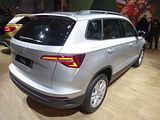


SMART
Smart has tried to reinvent itself with the emergence of some new cars that are far from the diminutive models that were the very essence of the brand. Now they are all-electric SUVs that, quite honestly, would probably pass unnoticed in a crowd. Giving them the trendy #1 and #3 names (pronounced “hashtag one” and “hashtag three”) is probably not enough for anyone to pay much attention. They’ve been on sale for several months now and I cannot recall ever seeing one out on the road.


More, and larger models are coming, and there was a concept version of the forthcoming #5 here to give us a clue of what to expect.

SUBARU
Very much a market minnow in all parts of Europe except Switzerland, there were examples of each of the current Subaru models here: the Crosstrek, Outback and all-electric Solterra will be familiar whilst the latest generation Forester, launched in the US at the 2023 LA Auto Show is just now reaching European markets.


SUZUKI
Suzuki Belgium delivered a great show centred around the company’s century-long history. They found an ageing 1969 Fronte LC50 with a three-cylinder, two-stroke rear engine and decided to nurture it back to a showroom shine condition. Half a century ago, the four-seater saloon was one of only 1000 of this model imported into Europe, with fewer than 300 sold in Belgium. Neglected for years, the engine no longer worked, and sections of the chassis were completely corroded. Cheap rustbuckets are the most challenging project cars, as replacement parts are hard to come by.


From the current range of cars, the display show-cased the recently updated Swift, as well as the much more established Vitara and S-Cross.


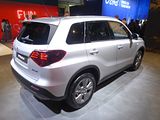

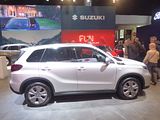


It’s taken Suzuki longer than most other mainstream car brands to launch an electric car, but 2025 is finally the year it happens. Sadly, we’re not getting an electric version of the heart-warming little Jimny 4×4 – the company’s CEO poured cold water on that idea – but the all-new Suzuki e Vitara will be hitting showrooms this summer. It sits on a newly developed, EV-dedicated platform called ‘Heartect-e’ and will be offered with a choice of two batteries, the larger of which is expected to offer just under 250 miles of range. There’ll be a dual-motor, all-wheel-drive version too, which comes with a Trail mode for rough terrain and slippery conditions. If you’re not a fan of the e Vitara’s rugged looks, the Toyota Urban Cruiser shares its platform and interior, and was also on display at Brussels.


SWM
SWM (Speedy Working Motors/Start Win More) cars are a Sino-Italian brand owned by China’s Shineray Group, blending Italian design (Milan centre) with Chinese manufacturing (Chongqing). Known for affordable SUVs like the G01, G05, and the new Tiger EDi (a range-extender EV), SWM offers competitive, feature-rich vehicles with evolving tech, targeting global markets with European styling and smart features. SWM started as an Italian motorcycle brand in 1971. In 2014, Chinese conglomerate Shineray Group bought the brand, launching SWM Automobiles in 2016 and since that time the company has announced a series of SUVs. This is the SWM Tiger, a 7-seater mid-size crossover SUV that is manufactured by the Chinese manufacturer SWM (automobiles) of Brilliance Shineray. The SWM Tiger was launched in August 2022 in China as a more rugged model compared to the SWM X3 riding on the same platform. In October 2024, it was announced for sale in Italy under the name SWM G03F, and the SWM Tiger EDi version will be marketed under the name XL30 EV. The SWM Tiger is a 7-seater vehicle with a 7-seat layout of 2+2+3. The power of the SWM Tiger comes from 3 engine options including the 1.5 litre DG15 engine with a maximum power of 116 bhp, and the fuel consumption of the engine declared by the Ministry of Industry and Information Technology is 6.90L/100km. Prices of the SWM Tiger range from 59,900 yuan to 78,900 yuan. The SWM Tiger EDi is the extended-range electric vehicle version of the regular SWM Tiger. The powertrain of the SWM Tiger EDi was jointly developed by SWM and FinDreams, a company under BYD. The Tiger EDi is equipped with a 1.5-liter four-cylinder petrol engine that only powers the battery. The actual power that drives the front wheel comes from an electric motor with 105 kW (143 hp) and 210 Nm. The battery of the SWM Tiger EDi is LFP supporting an all-electric range of 51 km. The combined range of the Tiger EDi with the range-extender exceeds 1,000 km.


TESLA
The Tesla Cybercab is an upcoming, purpose-built, two-passenger electric robotaxi designed for fully autonomous (Level 4/5) rides, featuring no steering wheel or pedals in its purest form, aiming for ultra-low cost-per-mile operation, with production slated for April 2026 at Gigafactory Texas, though regulatory hurdles and potential design changes for manual driving controls (steering wheel/pedals) are anticipated for wider US release. It’s envisioned as a mass-market, affordable EV (under $30k) with a revolutionary, electronics-style manufacturing process for high volume, potentially millions annually. Key Features & Design include the fact that it is fully autonomous, built from the ground up for unsupervised self-driving. Prototypes lack steering wheels and pedals, relying on the app for summoning and control. This two-door hatchback design seats two and has been optimized for low operating costs, even dropping side mirrors in early concepts. Tesla are talking about a “Consumer Electronics” Manufacturing with a new production line aims for a <10-second cycle time per unit, enabling massive scale. Production is targeted for April 2026 at Gigafactory Texas and they are aiming for 2-3 million units annually, making them “everywhere in the future”. Tesla needs approval from NHTSA and state DMVs for widespread driverless deployment, requiring traditional controls for manual driving in many cases.


Also on show here, and also a vehicle you cannot buy, at least in Europe, thanks to its inability to meet European safety standards, is the Cybertruck. People remain intrigued by it, though and it proved to be a crowd-puller here.


TOYOTA
Making its debut here was the Urban Cruiser. Anticipated some time ago with a concept and awaited by many, the Toyota Urban Cruiser is the Japanese manufacturer’s new compact SUV has a resurrected name already seen in the UK between 2009 and 2012 fits into an increasingly crowded segment and does so by offering only electric powertrains. In spite of the scepticism repeatedly expressed by top management, in fact, the Japanese company is also betting on electric power. The Toyota Urban Cruiser is just one of the pieces that will make up the company’s battery-powered range, which by 2026 will have a total of 15 models. It is scheduled to arrive in dealerships in 2026. With a length of 4.28 metres, a width of 1.8 metres, a height of 1.64 metres and a wheelbase of 2.7 metres, the Toyota Urban Cruiser is slightly larger than the Yaris Cross, with which it shares neither aesthetics nor mechanical base. The design is in fact more angular and muscular, with square lines. The front end is partly reminiscent of the Suzuki e-Vitara – the platform is the same – while the rear, with its light clusters joined by the classic light bar, with its arched shape seems reminiscent of the Alfa Romeo Junior. The Toyota Urban Cruiser will only be available with electric motors. The interior of the Toyota Urban Cruiser does not differ much from that of its ‘cousin’ Suzuki, with digital instrumentation and central infotainment monitor (10.25 and 10.1 inches) set in a glossy black panel. The system echoes that of other Toyotas, is always connected and benefits from OTA updates. The central tunnel is large and integrates various physical controls such as the rotor for the transmission and buttons to manage regenerative braking and the different driving modes. The press release does not mention the boot and its capacity, limiting itself to showing pictures and mentioning the possibility of folding down the rear seatbacks in a 40:20:40 layout. The interior of the Toyota Urban Cruiser features 10.25-inch digital instrumentation and a 10.1-inch central monitor. The Toyota Urban Cruiser’s rear seat backs fold down in a 40:20:40 pattern. Based on a new platform dedicated to electric cars, the Toyota Urban Cruiser will be available with two different powertrains: the first with a 49 kWh battery, the second with a 61 kWh battery. The first is coupled exclusively to a 144 PS front motor, the second can be chosen with a 174 PS front motor or with 184 PS all-wheel drive, with a 65 PS motor on the rear axle. Unfortunately, the all-wheel drive model is unconfirmed for the UK market. The latter version includes dedicated systems such as Downhill Assist Control and a specific driving mode called Trail, which distributes torque between the wheels, directing it to the one with the most traction. The front-wheel-drive Urban Cruiser, on the other hand, has the Snow mode, which reduces wheel spin on snowy roads. All versions of the Toyota Urban Cruiser will feature a heat pump as standard. No word yet on charging power or range. In terms of technological equipment, the Urban Cruiser will be equipped with various driver assistance systems as standard, such as pre-collision system, adaptive cruise control, active lane keepers, 360° cameras and more. Of course, it is still too early to talk about prices for the Toyota Urban Cruiser, which will arrive in the UK in third quarter of 2025.



Toyota’s other all-electric model is the rather awkwardly named bZ4X. I sampled one of these last autumn and was not very impressed. In particular, the range was poor and charging was slow. A revamp is scheduled for later in the year which may address both of these shortcomings.
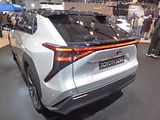
The rest of the stand contained vehicles which are mostly familiar. The range starts with the diminutive Aygo X and then sees cars in increasing size such as the Yaris and Yaris Cross before getting to the Corolla. As well as the hatch and estate models seen in the UK, some European markets see a Corolla Cross and there was an example of that here and also from the SUV part of the range there were the second generation C-HR and the popular RAV4.


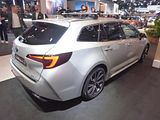


VOLKSWAGEN
The ID. GTI Concept, first seen in Paris last October, was making another appearance here. This is the first electric car to wear the legendary GTI badge, and VW has already confirmed that a production version is in development. The new GTI is based on the ID.2all concept revealed earlier this year, and while VW isn’t talking power figures just yet, we do know that there’s a single, electric motor up front, driving the front wheels through a LSD, just on the current ICE GTI. This time around though, the ‘I’ stands for intelligence, and you don’t need to expend much brain power to know that the hot hatch should serve up more than the 228 hp (170 kW / 231 PS) promised by the original ID.2, which VW said could reach 62 mph (100 km/h) in under 7 seconds. And that’s not the only reason the GTI will be even better to punt down a twisty road than the stock EV. Drivers can use the new GTI Experience Control on the centre console to give their electric hot hatch a synthesized version of the steering, sound and engine characteristics found in historic hot hatches like the 1976 Mk1 GTI or 1986’s rev-hungry 16-valver. It’ll even throw in some fake upshifts. The ID.2all’s designer, VW styling boss Andreas Mindt, says he already had the GTI in mind when he penned the base model. That shows in the strong lines and muscular stance of the ordinary ID2.all, which are enhanced for the GTI by a large hexagon-pattern lower grille in the front bumper, side skirts that twist to replicate the shape of door pressings, arch extensions, a rear spoiler at the trailing edge of the roof and a bigger diffuser section in the rear bumper. There are GTI badges on the nose, doors, skirts, wheels and below the VW roundel on the rear hatch, but there are other more subliminal references to classic GTIs, such as the black section in the lower portion of the front bumper that is meant to recall the bolt-on chin spoiler on the original hot Golf. The arch spats, skirts, rear window surround and lower rear bumper sections are all also picked out in black, and together with the segmented stripe below the taillights evoke memories of the black plastic bumpers and trim on Mk1 and early Mk2 Golf GTIs. The nose, meanwhile, gets a tell-tale red stripe on the grille and the 20-inch wheels were clearly inspired by the rims fitted to Golfs and Sciroccos more than 40 years ago. But there are subtle nods to more recent GTi heroes, too: the rear spoiler’s single, centre mounting rib echoes the one on the current GTI Clubsport. Inside, it’s a similar blend of old and new influences. The seat fabric is cheekily named Jack-e, a reference to the plaid Jacky upholstery found in the Mk6 GTI, and the driver’s seat backrest features a pulsing LED heartbeat to let you know when the car is locked. The steering wheel looks even further back, to 1976 and the first Golf GTI, for inspiration for its low-set airbag centre, though what buyers back then would have made of the new rim’s flat top and bottom, or the ‘key’ socket in the base of the vertical spoke, we can’t say. The classic golfball shifter also gets another outing, though because the shift control has moved to the column stalk, like on the ID.7 and new Passat, the golf ball now functions as the GTI Experience Control dial in the centre console from which the driver can adjust the driving modes and the look of the digital displays. Select Vintage mode, for instance, and the 10.9-inch digital gauge pack takes on the look of post-facelift Mk1 GTI dash, and the 12.9-inch tablet display – which VW says is close to production-ready, menus and all – gets a visual makeover, too. The concept also comes with an advanced augmented reality head-up display that can project information onto the windshield for both driver and passenger to see. Switch to GTI mode and the interior lighting shifts to moody red and, if you happen to be on a racetrack, you’ll get a map of the course, plus your lap data. We’re as gutted as you to hear that VW has dropped the manual transmission in the Golf GTI, but this concept does at least prove that’s committed to the GTI brand, having previously resurrected the GTX tag for its hotter EVs. Whether it will be able to push the envelope further by adding an R version to the ID.2 lineup is unclear, because unlike the older platform used by the ID.3, which can accommodate a bi-motor setup, the ID.2’s was engineered for front-wheel drive to maximize interior space. The result is a car with a 102.4-inch (2,600 mm) wheelbase that’s as roomy as a Golf while taking up less asphalt than a Polo. That platform – which will also be used in Skoda and Cupra models – can handle 38 kWh or 56 kWh batteries, neither of which sound that big, but VW says the base ID2.all with the 56 kWh pack is good for 280 WLTP miles (450 km) of electric driving and can draw on 125 kW to charge from 10-80 percent in 20 minutes. Expect the GTI to cover fewer miles between top ups, and also to cost significantly more than the roughly €25,000 ($27k / £22k) VW is talking about for an entry-level non-GTI ID.2. We’ve got a while to go before either car goes on sale, though. Think 2025 for the production ID.2 and 2026 for the GTI.


The existing ID all-electric models were all here, with new GTX versions of the ID3 and ID7 recently added to the range, joining the regular versions as well as the ID4 and ID5.

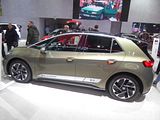


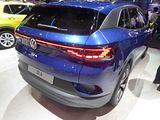
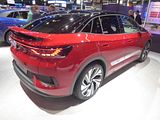

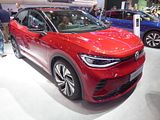
Among the ICE powered cars, there were familiar models such as the latest eight generation Golf, the T-Cross, Taigo and T-ROC crossovers, the largely forgotten Touran minvan, as well as more recent models such as the latest Passat Estate (no saloon is offered with the new generation) and the three-row Tayron.


There was a comprehensive display of VW’s commercial range here, too, ranging from the Caddy to the latest mid-sized Caravelle and California and the larger Crafter as well as the retro-inspired ID Buzz.
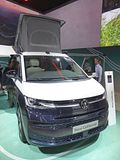


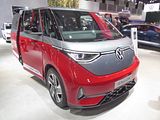
XPENG
XPeng is keen to highlight its use of Artificial Intelligence (AI) in its cars to enhance safety systems and enable more personalisation. XPeng claims its new P7+ – an electric saloon like the Tesla Model 3 or Hyundai Ioniq 6 – is the world’s first AI-defined vehicle using a ‘Hawkeye Visual Solution’ combining camera and radars to map out its surroundings. It says the car will also learn individual preferences and user behaviour, adapting everything from the infotainment to the driving set up. While this all sounds very impressive, we can’t help thinking this sounds a lot like the technology BMW and Mercedes announced at the Consumer Electronic Show (CES) in Las Vegas. XPeng has already launch three other vehicles in Europe and we believe it intends to come to the UK soon, so we will have to wait to see how intelligent the P7+ is in practice.


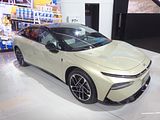

Also here were the G6 which has just gone on sale in the UK, looking like a cross between a Tesla and a Taycan and the larger G9.


Something rather different was this XPeng X2 electric vertical take-off and landing (eVTOL) flying car. It is a two-seater, fully electric aircraft designed for low-altitude urban flights. The vehicle features vertical take-off and landing capabilities, eliminating the need for a traditional runway. It has completed over 3,000 experiments and test flights since its debut. The X2 is the fifth-generation model from XPeng AeroHT, a subsidiary of the Chinese EV manufacturer XPeng .


YANGWANG
The Yangwang U9 is a battery-electric hypercar manufactured by BYD Auto and marketed under its upcoming luxury car brand Yangwang. The U9 is the second vehicle from the Yangwang brand after the U8 SUV, unveiled at the Auto Shanghai 2023. While the U8 delivered quite a show in rolling around using its four motors independently, the U9 takes this even further with an actual dance routine with its suspension, though according to press reports, Chinese police did not seem to like it. We did not get to see that fabulous show with the dance moves, but the BYD hosts opened the car up during the day. First impressions are that BYD took a lot of inspiration from existing manufacturers (especially McLaren), but seeing the current lineup, we are sure that they will take this further in their future generation halo cars.
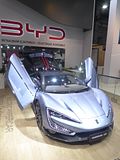

I was glad I came. Whilst the latest models are perhaps less exciting than they used to be, the chance to see so much of what is on sale across Europe, quite a lot of from unfamiliar brands that are popping up on a regular basis, was most welcome. I’d not been sure quite to what to expect of the show, but I left feeling that this is not just a pretty decent replacement for the much missed Geneva event but also pleased to see that the traditional Motor Show is not quite as dead as we all feared. This one was open to the public for 9 days an attracted over 360,000 visitors, which must count as a big success. Let’s hope that this encourages manufacturers to sign up for the 2026 event. I will certainly plan to attend it.