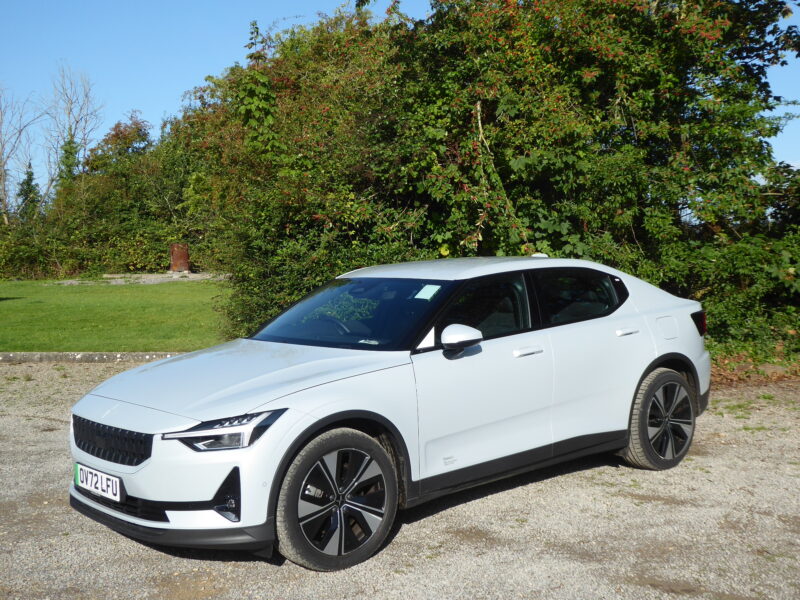



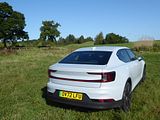




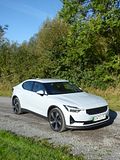




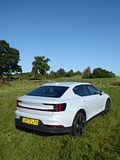



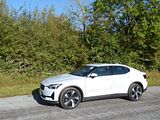


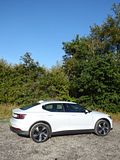

Just as Cupra is to SEAT, so Polestar is to Volvo. That is, initially these were the names given to the top performance models in the SEAT and Volvo ranges, respectively. But now, both of them have become brands in their own right. In the case of Swedish brand Polestar, the name actually goes back to 1996 and Flash Engineering, a Swedish motorsport team established to compete in the Scandinavian Touring Car Championship. In 2005, the team was sold then rebranded to Polestar Racing, which later operated a production car tuning division called Polestar Performance AB. In 2009, the brand became the official Volvo partner to modify existing models, under the brand Polestar Performance and then in July 2015, the Polestar brand was acquired by Volvo Cars, which then decided to reposition the brand as their electric vehicle company. The racing team was then rebranded to Cyan Racing, while still maintaining close ties to Volvo. Principally owned by Li Shufu’s PSD Investment, Geely Holding and Volvo Cars, the company is headquartered in Torslanda, outside Gothenburg, Sweden. With an “asset-light” approach in development and manufacturing, Polestar does not have its own manufacturing facility. Instead it produces cars in facilities controlled by Volvo or Geely in several countries, including China, the United States, and South Korea. The brand introduced the Polestar 1 on 17 October 2017, a 2+2 coupé inspired by Volvo’s Concept Coupé introduced in 2013, which includes influences from the Volvo P1800. The Polestar 1 was built between 2019 and 2021, in a new purpose-built Polestar Production Centre in Chengdu, China, from 2019 at a rate of up to 500 per year. In 2019, Polestar announced their second car, the Polestar 2 electric car. It was unveiled on 27 February 2019, in an online unveiling which was broadcast from the Polestar headquarters in Gothenburg, Sweden. Directly after, it had its public debut at the 2019 Geneva Motor Show. Production started in early 2020, with sales starting in a locked-down world in mid 2020. At the time of its launch, it had few rivals, though that has changed now as the whole vehicle electrification program accelerates. To try to encourage more widespread adoption, Polestar signed a global agreement with Hertz mot off the back of that company’s deal with Tesla, as part of plans to move to 25% of their rental fleet being electric vehicles. In the US, the deal included a small number of the Polestar 1 cars, and I was lucky enough to get the chance to drive one for a day. I was mightily impressed by it, but clearly this is a low volume halo car and it is the Polestar 2 that is the commercially significant one. Having seen large numbers of them at Hertz facilities, I figured I ought to be able to source one quite easily, but uncertainty about the public charging infrastructure always gave me the easy opt out. Hertz in the UK kind of forced my hand when they ”upgraded” me into a Polestar 2, and rather than ask for a different car, I decided it really was high time I tried not just this model it indeed my first EV. With some apprehensions, I did the vehicle check and adjusted all the things you need to, and set off from Heathrow for what was clearly going to be a new experience.

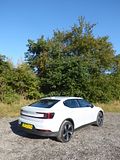






In effect there are four levels of fully electric power available to Polestar 2 buyers, although the differences between the first two are relatively modest. Whichever version you choose its top speed is electronically governed to 127mph to avoid unnecessary wasting of the battery’s energy reserves. Entry-point to the Polestar 2 range is the Standard Range Single Motor which, as the name suggests, has one electric drive unit, which is nestled under the boot floor driving the rear wheels. It’s no slouch thanks to power and torque outputs of 272PS and 490Nm, resulting in a 6.2-second 0-60mph acceleration time. While the Long Range Single Motor model primarily benefits from a larger battery pack, there’s also a slight increase in power to 299PS although torque remains unchanged. Despite hauling around an additional 39kg of lithium-ion battery beneath its floor, it’s quicker from a standstill to 60mph at 5.9 seconds. Faster yet is the Long Range Dual Motor which benefits from a second electric drive unit up front providing all-wheel drive traction. Here the ante is upped sizably, with power now at 421PS and torque rated at 740Nm — together with amplified levels of grip this Polestar’s 0-60mph time drops to 4.3 seconds. Should you wish you can dial-up the Polestar 2’s credentials further still with the optional Performance Pack for the Long Range Dual Motor. Once more torque remains unaltered but power is eked-out to 476PS, the overall result being a 4.0-second 0-60mph time. There was no doubt as to which of these four I had received, as there is labelling on the lower part of he front doors to tell you. My car was a Long Range Single Motor.




When you are ready to go, you simply press the Start button, and engage drive,. There is no sound, but there are lights on the dash to tell you that power is on, and so off you go. The driving experience is very much as you would expect. There is an overall feeling of quiet and smooth. Pickup is very rapid indeed, with rapid acceleration available immediately no matter what speed you are doing. There is a little evidence of the motor, but not much, so this proved to be a very restful car on the motorway. As I drove home I could see why people are immediately impressed by an EV. But then I looked at the state of the battery and I started to wonder just how things would pan out. As received, the Polestar had 83% charge and it showed me a range of 240 miles. Theoretically, that would allow me to drive home, do a few miles from there and get back to Heathrow without needing to charge it. When I got home, having one 110 miles, it was down to 43%. The following morning, which was a cold-ish autumnal start, I wanted to do a few local miles to get the photos you see here and I found that within 2 miles, I’d depleted the battery a further 3%. Clearly, I was going need to charge the battery to be able to get back to Heathrow. And so began my fist experience with the public charging network. I knew there was a bank of them at the local Sainsbury’s, so headed there and downloaded the app, added money to it, and plugged in. Nothing seemed to be happening, and after trying several of the chargers and feeling somewhat bemused, a more experienced EV owner arrived and told me that all bar one of them did not work. Plugged into the one that did, I found that this relatively long established charging point could only deliver charge at a very slow rate, but apparently it was free. I went into the store, did some shopping, and came out to find that the battery was only very slowly gaining charge. I was there for well over two hours. Talking to people who had learned a lot, it was clear that I needed to find higher speed chargers, of which there are a few a little further from home. I took due note for future EV rentals.






Polestar clearly decided to focus on making this car easy to drive, quiet and comfortable rather than a true sports saloon. Against that brief, they have succeeded. The steering is light, rather too light for my tastes, lacking much in the way of feel, but it does mean that the car is easy to place on the road. Single Motor cars are currently front wheel drive, whilst the Dual Motor cars have standard all-wheel drive. There is plenty of grip and the car took corners in its stride and there is not much in the way of body roll. The ride on the standard suspension and 215/45 ZR19 wheels is quite firm nut smooth and comfortable even on the rougher surfaces that are so common these days. Much has been written about the feel of the brakes in an EV, but I thought these little different from those in a petrol-powered car, with a nice progressive feel to the pedal. Visibility was not the best. Despite the relatively high window line and thick pillars, the view forwards and to the sign generally presents no problems, but the rear window is small, so the standard camera system as well as the parking sensors are pretty much essential. There is a whole slew of ADAS features and these range from useful to annoying as is the case with pretty much all new cars these days.



The Polestar 2 is nicely finished inside but don’t go looking for lashings of leather, as there is none. Matt wood inlays are used, and the rest of the trim is from high quality plastics that look expensive. It is very Volvo like in overall ambience but that is definitely a Good Thing, as this is a company who offer among the most tasteful and quality feeling interiors, without restoring to the sort of tacky and cheap feeling materials that the Germans are increasingly using. The dash itself is pretty high tech, and all digital, as you would expect. The instruments are in the 12.3” digital display area, for which there is little in the way of customisation offered. The speedo is in the bottom left a battery charge reading in the bottom right and the centre of the display contains a projection of the navigation map. There are two column stalks which also operate the lights and there are some cruise and audio repeater buttons on the steering wheel boss. Pretty much everything else is controlled through the 11.2” touch screen. This is portrait style, and is Android Automotive powered. Not to be confused with Android Auto smartphone mirroring, this package essentially operates as though it’s an Android tablet computer and includes integrated Google Assistant and Maps. It all works quickly with sharply rendered graphics, although enlarged icons would be welcome. That the climate control settings are also adjusted without physical switches or dials is less welcome, although the voice control system can perform that task for you. The first Polestar 2s weren’t compatible with Apple CarPlay and while that’s long since been remedied, with a neat on-screen interface, it’s disappointing that neither it nor Android Auto can connect to the multimedia system wirelessly. Audiophiles have cottoned-on to the fact that Polestars often have enviable sound systems and the Polestar 2 is no exception. Its standard 250-Watt eight-speaker package has two potential upgrades available. Within the Plus Pack is a Harman Kardon package with a 600-Watt amplifier and 13 speakers or, available as a standalone option, is a 1350-Watt, 14-speaker Bowers & Wilkins alternative. Not that the standard package is in any way disappointing. My general feeling is that, like most such systems now, the overall ensemble is too complex, with too many things needlessly difficult to use whilst on the move. So yes, it does lend the cabin a certain style and simplicity, but at the price of some usability.
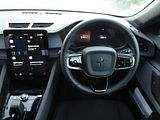


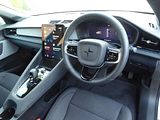
Seat upholstery is a nice quality cloth. There is a mix of manual and electric adjustment. Surprisingly, perhaps it is the backrest rake which is the manual thing. There are height-adjustable belts and the steering wheel telescopes in/out as well as up/down. You can sit nice and low in the car, so there is plenty of headroom. I found the seat, in true Volvo style, to be supremely comfortable.

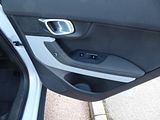


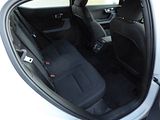
Those sitting in the back may find that they have to duck their a little as they get in, but in fact once through the door opening, there is ample headroom. Even with the front seats set well back, leg room is more than sufficient. Accommodation here is best thought of as designed for two, and that means that they will feel they have plenty of space. Matters are somewhat less successful when a third passenger is introduced to the centre of the rear bench. Although the position itself is wide enough for average-sized adults, the cushion is elevated relative to the outer positions, forcing the incumbent to sit higher, their head closer to the roof lining. There’s also a high central tunnel on the floor, with the back of the front centre console above it, meaning the centre passenger has no option but to straddle it, their feet vying for space in the footwell with those of the people sat either side. Due to the way the rear of the Polestar 2 tapers, both vertically and horizontally, shoulder and elbow room is also at a premium with three abreast on the back seat. Best to think of it as an occasional five-seater if you regularly plan to ferry adult passengers around. There is a drop-down central armrest with cupholders in the upper surface but no map pockets on the back of the front seats. These are available in one of the option packs.


Although you might not be expecting it, the Polestar 2 is actually a hatchback. The tailgate is large and quite heavy but thankfully there is an electric closing system. Surprisingly, there is no rear wiper. Space offered here is a generous 407 litres and there is a bit more room under the floor for odds and ends or even the charging cables. There is something of a lip over which items would have to be lifted. The rear seat backrests are asymmetrically split and simply drop down to give a much longer load bay, and there is also a useful ski flap. There is also a “frunk” which is large enough not just to house the charging cables but also for you to put a few other smallish items. Inside the cabin there is a good-sized glovebox, door pockets and an armrest cubby, so ample space for odds and ends. There’s further space beneath the centre console for small items, although access is awkward and best reserved for things you’re unlikely to require until your journey’s over.


Across the Polestar 2 range there is a single, unnamed trim level regardless of battery size or electric motor number. Instead of the usual specification hierarchy, Polestar instead offers option pack bundles. Even the standard specification is decently generous and includes: 19-inch Aero diamond cut and gloss black finish alloy wheels, Automatic LED daytime-running, head and tail lights with automatic main beam and automatic windscreen wipers; Frameless, heated, electrically adjustable and folding door mirrors; Ground lighting in all four exterior door handles; Keyless un/locking and starting/stopping; Electrically operated tailgate; Front, side and rear parking sensors with a rear-view camera; 12.3-inch driver’s display screen and an 11.2-inch multimedia touchscreen interface with integral Google Play apps including Google Assistant, Google Maps and Spotify, DAB digital radio, Bluetooth and Wi-Fi device connectivity, Wired Android Auto and Apple CarPlay smartphone mirroring and a high-performance audio system with 250-Watt amplifier and eight speakers; 15-Watt wireless smartphone charging pad; 4x USB-C sockets, two each front and rear; Heated, partially electrically adjustable front seats with lumbar adjustment. You get embossed textile upholstery in Charcoal, black seatbelts, 3D Etched deco interior theme and there is dual-zone climate control with air filtration system, Adaptive Cruise Control and a suite of ADAS features which include Lane Departure Warning, Lane Keeping Aid, Driver Alert Control and Rear Collision Warning and Mitigation. There are then a whole load of option packs. Solely available for the Polestar 2 Long Range Dual Motor is the Performance Pack which gives you 20-inch Performance alloy wheels, Continental SportContact 6 tyre upgrade, Swedish gold tyre valve caps, Brembo brake upgrade with Swedish gold-painted calipers, Ohlins Dual Flow Valve manually adjustable suspension dampers, a power output increase to 476PS, a performance software upgrade and Swedish gold seatbelts. Extra features of the Pro Pack include 20-inch Pro graphite alloy wheels, Swedish gold tyre valve caps and Black seatbelts with Swedish gold stripe. Opting for the Climate Pack adds an efficiency boosting heat pump for the high-voltage battery and heated d windscreen washer nozzles, outer rear seats and steering wheel. Choose the Plus Pack if you fancy: LED front foglights with cornering function; Digital key hardware which allows designated smartphones to be used as a key; Hands-free opening and soft-closing electrically powered tailgate; Full-length panoramic glazed roof with projected Polestar logo; Fully electrically adjustable front seats; Bio-attributed MicroTech upholstery in Charcoal; Black Ash deco interior theme; Harman Kardon premium sound system; High level interior illumination; CleanZone air quality system with particulate filters and a Liftable boot floor with bag hook. Go for the Pilot Pack to add: Auto-dimming door mirrors, 360-degree parking camera system, Pilot Assist, Driver Awareness monitor. Emergency Stop Assist, Blind Spot Information System with Steer Assist, Cross Traffic Alert with Brake Support. For further convenience, the Prime Pack comprises: Dark-tinted rear privacy windows as well as the Climate Pack, Plus Pack and Pilot Pack. With additional comfort in mind is the Nappa Upgrade consisting of: Ventilated front seats, Bridge of Weir Nappa leather upholstery in Zinc or Charcoal, Light Ash deco interior theme and Storage nets on front seatbacks.
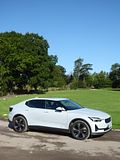



Despite my concerns about range and charging, some of which I think were attributable more to me than the car, I rather liked the Polestar 2. Although the Volvo association is still quite evident in some of the styling details, such as the Thor-hammer headlights, this is definitely a car with its own character. It proved relaxing and comfortable to drive, is spacious for a family of four and their luggage and is beautifully finished inside. Whilst the entry level car is priced quite attractively, going up the range and adding some of those tempting option packs does see the cost increase quite markedly, but then that’s true for so many cars these days. Install a charger at home, and of course running costs would be much lower than an equivalent petrol-powered car. So, even in 2023, when there is more competition, I can really see the case for the Polestar 2, and were I in the market for an EV, it would make my short list. In that regard, then, the placement of large numbers of these cars in the rental fleet has worked, as it got me to try one. Whilst it did not yet convince me that EV is the way forward for me (yet!), it did also prove to me that even without home charging, an EV is perfectly viable in the UK, though a bit of thought is needed around when and where to charge. That opens up the possibility of trying more EVs, and with increasing numbers of them on the market and in the rental fleets, I am sure it will not be long before I get to have another EV experience.