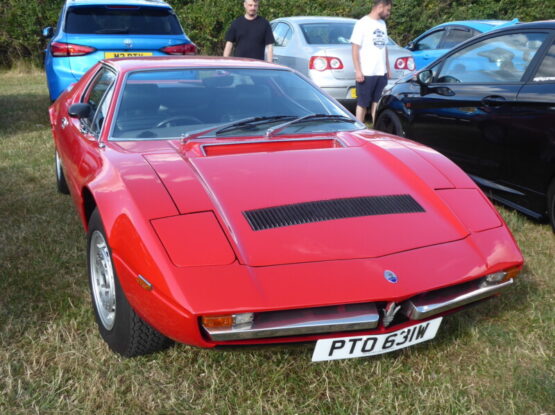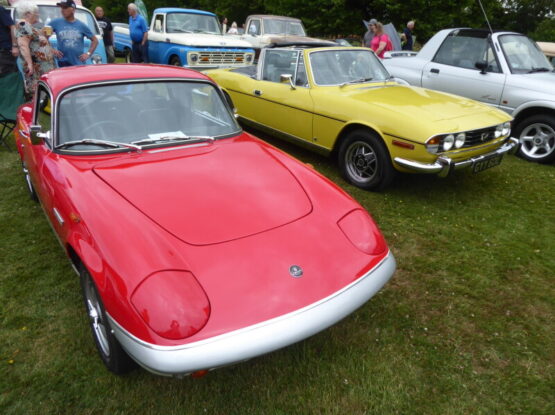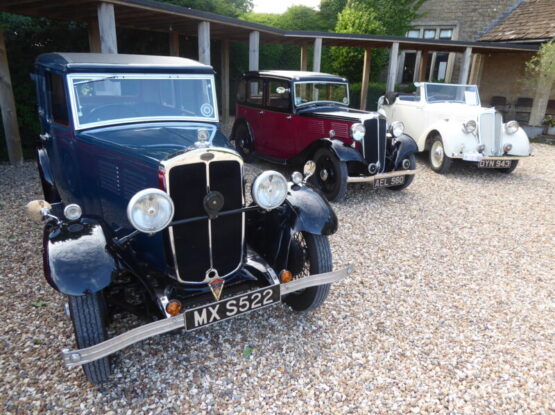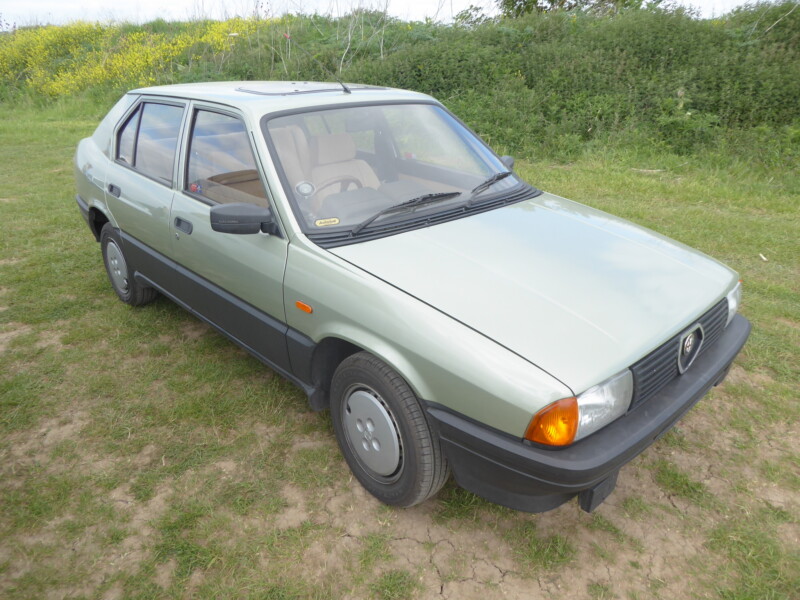
Just one month after visiting The Motorist, a renowned location for car and bike enthusiasts situated just off the A63, A1M and M62 in Sherburn in Elmet to the east of Leeds, here I am back again. The April visit was because we had chosen this venue to host Northern Abarth Day, and the May return was because the venue had chosen to hold an Italian car day which they had christened “Viva Italia”. Having now been to the site a few times, I know that the venue is good, and there is always plenty to see in the car park, with my hope being that I would see some Italian cars that don’t venture as far south as the Italian themed events that take place nearer to home. I was not disappointed with a huge and varied turnout, indeed with several rarities on show. Here is what caught my eye and my camera.
THE VENUE
Conceptually, The Motorist is not unlike Caffeine & Machine and other such venues in that it was conceived as a place where people, predominantly car and bike enthusiasts, could meet, with ready access to coffee and a bite to eat. The site that was acquired by the founder and owner, Simon Spinks chairman of North Yorkshire-based Harrison Spinks Events Limited adjoins an airfield which these days is used by a private flying club, and has loads of space, something that many other similar venues often lack. During 2022 the decision was taken to expand with a purpose-built main building to act as the focal point of the site. Other buildings are used for car storage and repair services and there are plans in development eventually to add some hotel accommodation. At present, in addition to the main building, there is a sizeable tarmac area available for car parking that backs onto the building, then a much larger gravelled area and an adjoining grassy area that needs care in the winter months. There’s space for several hundred cars here, and on a busy day, it all gets filled up. It’s all quite informal, so there are no tickets required, and over the years, the site has become well-known not just for cars and bikes, but also as place to drop in to for a good coffee and a tasty breakfast. The main building is quite expansive. At the back is a café area which offers coffee and tea, breakfasts and a tempting looking array of cakes and pastries. In front of this, there is a large shop area which has all manner of temptations from model cars, to stickers and clothing. Among the displays are a number of complete vehicles.


The central part of the building connects the bar and downstairs dining area to the shop and café and there are loan cars in the corners of this L shaped area.

ITALIAN CARS
ABARTH


The vast majority of Abarth cars here were the 500-based models which have been on sale now since the end of 2008, following a launch at the Paris Show that year. Since that time there have been a number of detailed changes to the standard cars and a lot of limited editions. Those who really know the marque can spot most of them, but some are so subtle that unless there is a badge you can see, you will not be quite sure which version you are looking at. It used to be relatively easy, when the model was first launched, as there was only one version as shipped ex works called the 500. It had a 135 bhp 1.4 litre turbo-charged engine coupled to a five speed manual gearbox, with 16″ alloys as standard, and the option of 17″ wheels, and a colour palette comprising of two whites (BossaNova White, the standard colour, or the pearlescent Funk White), Red (Pasadoble), Pale Grey (Campovolo) or Black. If you wanted more power – 160 bhp – then you could order an Esseesse kit, which came in a large wooden crate, containing new wheels, springs, an ECU upgrade, the Monza exhaust system and badging. It was dealer fitted and could be applied at any time within the first 12 months or 10,000 miles from registration. Needless to say, it proved popular. As were many of the optional extras, with stickers for the sides, a large scorpion for the bonnet and even a chequered pattern for the roof among the personalisation options offered. Whilst a sliding glass sunroof (Skydome in Fiat/Abarth parlance) was an option from inception, fans of open air motoring had to wait until Geneva 2010 for the launch of the 500C models, with a roll-back roof which provided the best of open-topped motoring and yet still with the rigidity of the regular body style. For the first few months these cars only came with the robotised manual gearbox, which limited the appeal in the eyes of some, but they also introduced us to the “bi-colore”, a series of two tone cars, with upper and lower halves of the body painted in different colours. It took us a while to get used to this, as no other production road cars had been painted like this for some time, but now this is seen as yet another of those marque defining attributes, and (perhaps with the exception of the rarely seen Rally Beige and Officina Red combination that would come for 2014) in the eyes of many this distinctive look enhances the appeal of the cars still further.


Having used the legendary 695 badging from the 1960s on the Tributo cars, at the 2012 Geneva Show, Abarth dusted off the 595 name that had been used on the less powerful of the Nuova 500 based cars of the same generation, and created two new versions which we should think of as Series 2 cars, the 595 Turismo and Competizione, both of which could be bought in either closed or open top C guise, with either the 5 speed manual or robotised automated gearshifts. Both models had the 160 bhp engine as standard. Effectively they were a replacement for the Esseesse kit, and it meant that the cars were produced complete at the factory, rather than needing the dealer to undertake the upgrade (and the associated paperwork), though Abarth did not withdraw the Esseesse kits from the market for some while. Turismo, as the name suggests was aimed slightly less extreme in intent, featuring standard leather upholstery, upgraded dampers and climate control, Xenon headlights and Alutex interior details. The sportier Abarth 595 Competizione replaced the leather seats with Sabelt cloth sport seats and Alutex with aluminium, while adding p-cross-drilled brakes and the Record Monza dual-mode exhaust.

What is known as the Series 4 version of the familiar 595 reached the markets in the middle of 2016. After rumours had circulated all winter following the launch of the facelifted Fiat 500 last year, Abarth finally unveiled the Series 4 at the end of May 2016. Initially, we were told that the cars would not be available in the UK until September, but that came forward somewhat, with dealers all receiving demo cars in June, and the first customers taking delivery in July. Three regular production versions of both the closed car and the open-topped C were initially available, all badged 595, and called Custom, Turismo and Competizione, as before, though numerous limited edition models have since appeared and in most case disappeared. The most significant changes with the Series 4 are visual, with a couple of new colours, including the much asked for Modena Yellow and a different red, called Abarth Red, which replaces both the non-metallic Officina and – slightly surprisingly – the tri-coat pearlescent Cordolo Red. as well as styling changes front and rear. The jury is still out on these, with many, me included, remaining to be convinced. At the front, the new air intake does apparently allow around 15 – 20 % more air in and out, which will be welcome, as these cars do generate quite a lot of heat under the bonnet. Competizione models for the UK retain the old style headlights, as they have Xenon lights as standard, whereas the Custom and Turismo cars have reshaped units. At the back, there are new light clusters and a new rear bumper and diffuser. Inside, the most notable change is the replacement of the Blue & Me system with a more modern uConnect Audio set up, which brings a new colour screen to the dash. Mechanically, there is an additional 5 bhp on the Custom (now 145) and Turismo (now 165 bhp) and the option of a Limited Slip Diff for the Competizione, which is likely to prove a popular option. Details of the interior trim have changed, with a filled-in glovebox like the US market cars have always had, and electric windows switches that are like the US ones, as well as a part Alcantara trim to the steering wheel in Competizione cars. These cars were on offer for over eight years so it was no surprise that they were particularly well represented here.


The 695 Anniversario was launched at the brand’s 70th anniversary celebrations in Milan in October 2019, and deliveries of which started around the turn of the year. The Anniversario is in a choice of 5 colours: White, Black, Podium Blue, Grey and 1958 Green, and there were examples of some but not all of these here, including a couple of cars in the 1958 Green which was selected to evoke memories of the 1958 record-breaking 500, though I can advise that the two shades of green are quite different, the older car being much lighter. Online verdicts of the new car at launch were not entirely positive, with many challenging the appearance, others the spec and yet more the price (£29,995 in the UK), but in the metal, it looks far better than those first web pictures portrayed, and there is no doubt that the 1949 buyers of the car are getting something quite distinctive, with the Campovolo Grey accents around the wheelarches and lower body skirts. What they aren’t getting is more than 180 bhp, as it would seem that to get Euro 6d compliance from the T-Jet engine, 180 bhp is the limit. But the Abarth 695 70° Anniversario does have an ace up its sleeve. Look at the back and you’ll notice a rather large roof-mounted spoiler serving as the special edition’s party piece. Manually adjustable in literally a dozen of positions, the spoiler was developed in the wind tunnel to achieve maximum aero efficiency regardless of speed. Its inclination varies from 0 to 60 degrees and helps increase aerodynamic load by 42 kilograms when the car is travelling at speeds of 124 mph (200 km/h) provided the spoiler is at its maximum inclination. Abarth has done the maths and it claims the new aero component will reduce steering corrections by as much as 40% based on the testing they’ve done at FCA’s wind tunnel in the Orbassano municipality located southwest of Turin. Power is provided by the familiar 1.4-litre turbocharged engine with 180 hp and 250 Nm (184 lb-ft) of torque, good enough for a sprint from 0 to 62 mph (100 km/h) in 6.7 seconds before topping out at 140 mph (225 km/h) if the spoiler is in the 0° position. Those 17-inch SuperSport wheels are paired to a Brembo braking system with four-piston aluminium calipers finished in red, hugging the 305-mm front and 240-mm rear self-ventilated discs. Rounding off the changes on the outside is the newly developed Record Monza exhaust with active valve for a better soundtrack. Abarth also spruced up the cabin a bit where the body-hugging seats are exclusive to this special edition, just like the individually numbered plaque reminding you this isn’t an ordinary 695. Onboard tech includes support for both Apple CarPlay and Android Auto, DAB digital radio and a navigation system for that seven-inch touchscreen display. Additional standard equipment includes automatic climate control, daytime running lights, LED fog lights, unique mats, and the Abarth telemetry system if you plan on taking the hot hatch to the track.

The 595 Scorpioneoro is another model which takes its inspiration from a history which few in the Uk will be familiar with, there will be just 2000 units of this distinctive model available globally. The 595 Scorpioneoro was born to continue the legacy of the famous A112 Abarth “Gold Ring” of 1979, better known as the A112 Abarth “Targa Oro”, of which only 150 models produced and, as with the new Abarth 595 Scorpioneoro, what made it so special were its stylistic details. These details included black livery, gold-coloured decorative line contouring the bodywork and the alloy wheels, also painted in the distinctive gold colour. This car is liveried in the same way, marked out by its black livery, decorative gold bodywork lining and gold-painted alloy wheels. It also boasts a matt black chessboard roof and grey finish on the door handles and mirror caps. And to mirror the ‘Gold Scorpion’ name, the car is adorned with gold scorpions on the bonnet and the wheel centres. Inside the cabin of this new exciting new model, you’ll be greeted with a black dashboard which is home to the new gold finished 500 logo. Leather detailing on the seats introduces the original “scorpionflage”. The seats are further embellished with dedicated stitching and personalised headrests with the word “Scorpioneoro”, the Italian flag and Abarth embroidered on them. An additional touch of exclusivity comes from the numbered, gold coloured plaque, available solely on this model. The Scorpioneoro also comes with Abarth’s top-of-the-range seven-inch touchscreen infotainment system, complete with Apple CarPlay and Android Auto, as well as a Beats Audio sound system. Mechanically, there is nothing new, as the car has the 165 bhp version of the familiar T-Jet engine and the other features you get in the regular production Trofeo cars.


Many owners modify their cars. Some of the changes are concentrated on mechanical things with the appearance remaining standard whereas others change the look of the car, with everything from additional spoilers and splitters to a full body wrap, resulting in some distinctive looing and unique cars. There were a number of examples of this here.


The Abarth Grande Punto debuted at the 2007 Frankfurt IAA Show, going on sale in the UK in late summer of 2008. Offering 155 bhp from its 1.4 litre T-Jet engine, coupled to a six speed gearbox, and riding on 45 profile 17″ alloys, the standard car got rave reviews from the journalists when they first tried it, and they were even more impressed by the changes wrought by the optional Esseesse kit. This increased power to 177 bhp, brought 18″ OZ lower profile wheels, whilst new springs lowered the ride height by 15-20mm, and high-performance front brake pads and cross-drilled front disc brakes helped the car to stop more quickly. The most distinctive feature of the car were the white alloy wheels, though, as owners found, keeping these clean is not a job for the uncommitted, and many have a second set of wheels that they use fro grubbier conditions. Despite the positive press at launch, the car entered a very competitive sector of the market, and the combination of being relatively unknown, a limited number of dealers and the existence of established rivals from Renault and others meant that this always remained a left-field choice. The owners loved them, though, and they still do. The oldest cars have now had their 15th birthdays, and some have amassed relatively big mileages, but they are still a car for the cognoscenti.


The Punto Evo was launched at the 2010 Geneva Show, with the cars reaching UK buyers in the summer of that year, and it incorporated many of the changes which had been seen a few months earlier on the associated Fiat models, the visual alterations being the most obvious, with the car taking on the nose of the associated Fiat, but adapted to make it distinctively Abarth, new rear lights and new badging. There was more to it than this, though, as under the bonnet, the T-Jet unit was swapped for the 1.4 litre Multi-Air, coupled to a 6 speed gearbox, which meant that the car now had 165 bhp at its disposal. Eventually, Abarth offered an Esseesse kit for these cars, though these are exceedingly rare. For those in the know – which never seemed to be that many people – this was a really capable and desirable car, and the owners love them, lamenting the fact that the model had quite a short production life and has not been replaced. The final Punto model was the SuperSport. Easily identified by the distinctive black bonnet, just 199 of the SuperSport versions were built, of which around 120 are registered on UK roads. These cars had many of the options from the Punto Evo included as standard. Power came from the the 1.4-litre MultiAir turbo engine, tuned to produce 178bhp and 199lb ft of torque, up from 165 of the standard Punto Evo, giving the SuperSport a 0-62 time of 7.5 seconds and a top speed of over 132mph. To help put the power down, the SuperSport was fitted with wider 18″ wheels and optional Koni FSD dampers. Standard equipment included the Blue&Me infotainment system with steering wheel controls, automatic climate control and a popular option was the ‘Abarth Corsa by Sabelt’ sports leather seats. The SuperSport was available in the same colours as the regular Punto Evo, which means white, grey, black and red.


Representing the future of Abarth was this recently launched 600e model, which Ben Au had borrowed from BS Marsons, so that the car could be shown off here for people to look at it. It certainly generated plenty of interest during the day.


Most Abarths of the 1960s were based on regular Fiat models, and there were some of these on show as well. Smallest of these were those based on the Nuova 500, and there were a couple of them here. For the 595 SS, Abarth increased the engine capacity to 594 cc, just under the limit for the European 600cc racing sedan class. High compression 10:1 pistons were used together with a special camshaft, a specific alloy sump, Abarth valve covers and air filter, propped up engine lid and wheels were fitted and of course the exhaust system was a special in house model. This package together with lowered suspension, flared arches and 10 inch rims amounted to what was known as the Assetto Corsa SS model. These cars have become very rare as many were crashed in competition or simply rotted away due to bad rust protection in the 70s A number of recreations have been built, and these are likely such. So, not original, but still nice and still a lot of fun.


ALFA ROMEO
The Series 3 Spider was previewed in North America for the 1982 model year with the introduction of 2.0 litre Bosch electronic fuel injection to replace the SPICA mechanical injection. The Spider underwent a major styling revamp in 1983, which saw the introduction of black rubber front and rear bumpers. The front bumper incorporated the grille and a small soft rubber spoiler was added to the trunk lid. The change altered the exterior appearance of the car considerably and was not universally praised by enthusiasts. Various other minor mechanical and aesthetic modifications were also made, and the 1600 car (never available in North America) dropped the “Junior” name. The Quadrifoglio Verde (Green Cloverleaf) model was introduced in 1986, with many aesthetic tweaks, including sideskirts, mirrors, new front and rear spoilers, hard rubber boot mounted spoilers with integral 3rd stoplight, unique 15″ alloys and optional removable hardtop. Different interior trim included blood red carpets and grey leather seats with red stitching. The QV was offered in only 3 colours: red, silver and black. It was otherwise mechanically identical to the standard Spider Veloce model, with a 1962 cc double overhead cam, four-cylinder engine (twin two-barrel carburettors in Europe; North American models retained the Bosch L-Jetronic fuel injection introduced for the 1982 model year except that the VVT mechanism was now L-Jet activated) and five-speed manual transmission. The interior was revised with a new centre console, lower dash panels (to meet U.S. regulations) and a single monopod gauge cluster (with electronic gauges). For the North American market a model dubbed the Graduate was added in tribute to the car’s famous appearance in the 1967 film, The Graduate, starring Dustin Hoffman. The Graduate was intended as a less expensive “entry-level” Alfa. While it had the same engine and transmission as the Quadrifoglio and Veloce, it lacked the alloy wheels and luxury features of the other two models. The Graduate model had manual windows, basic vinyl seats, a vinyl top, and steel wheels as standard. Air conditioning and a dealer-installed radio were the only options. It first appeared in 1985 in North America and continued until 1990. Minor changes occurred from 1986 to 89, including new paint colours, a centre high mount stop lamp midway through 1986 for North American models, a move away from the fade-prone brown carpet and new turn signal levers. Some 1988 models featured automatic seatbelts that extended from a large device between the front seats.


There was a much longer wait for a Coupe version of the AlfaSud than there had been for the larger Alfetta, the Alfasud Sprint being presented to the press in September 1976 in Baia Domizia and shown at the Turin Motor Show in November some five years after the launch of the saloon. Designed by Giorgetto Giugiaro like the AlfaSud, whose mechanicals it was based on, it had a lower, more angular design, featuring a hatchback, although there were no folding rear seats. The AlfaSud Sprint was assembled together with the AlfaSud in the Pomigliano d’Arco plant, located in southern Italy—hence the original “Sud” moniker. Under the Alfasud Sprint’s bonnet there was a new version of the AlfaSud’s 1186 cc four-cylinder boxer engine, stroked to displace 1,286 cc, fed by a twin-choke carburettor and developing 75 hp at 6,000 rpm. Mated to the flat-four was a five-speed, all-synchromesh gearbox. The interior was upholstered in dark brown Texalfa leatherette and tartan cloth. Options were limited to alloy wheels, a quartz clock and metallic paint. In May 1978 the AlfaSud Sprint underwent its first updates, both cosmetic and technical. Engine choice was enlarged to two boxers, shared with the renewed AlfaSud ti, a 78 hp 1.3 (1,350 cc) and a 84 hp 1.5 (1,490 cc); the earlier 1286 cc unit was not offered anymore, remaining exclusive to the AlfaSud. Outside many exterior details were changed from chrome to matte black stainless steel or plastic, such as the wing mirrors, window surrounds and C-pillar ornaments; the B-pillar also received a black finish, the side repeaters changed position and became square, and the front turn signals switched from white to amber lenses. In the cabin the seats had more pronounced bolsters and were upholstered in a new camel-coloured fabric. Just one year later, in June 1979, another engine update arrived and the AlfaSud Sprint became the AlfaSud Sprint Veloce. Thanks to double twin-choke carburettors (each choke feeding a single cylinder) and a higher compression ratio engine output increased to 85 hp and 94 hp, respectively for the 1.3 and 1.5. In February 1983 Alfa Romeo updated all of its sports cars; the Sprint received a major facelift. Thereafter the AlfaSud prefix and Veloce suffix were abandoned, and the car was known as Alfa Romeo Sprint; this also in view of the release of the Alfa Romeo 33, which a few months later replaced the AlfaSud family hatchback. The Sprint also received a platform upgrade, which was now the same as that of the Alfa Romeo 33; this entailed modified front suspension, brakes mounted in the wheels instead of inboard like on the AlfaSud, and drum brakes at the rear end. Three models made up the Sprint range: 1.3 and 1.5, with engines and performance unchanged from the AlfaSud Sprint Veloce, and the new 1.5 Quadrifoglio Verde—1.5 Cloverleaf in the UK. A multitude of changes were involved in the stylistic refresh; there were a new grille, headlamps, wing mirrors, window surrounds and C-pillar ornaments. Bumpers went from chrome to plastic, and large plastic protective strips were added to the body sides; both sported coloured piping, which was grey for 1.3 cars, red for the 1.5 and green for the 1.5 Quadrifoglio. At the rear new trapezoidal tail light assemblies were pieced together with the license plate holder by a black plastic fascia, topped by an Alfa Romeo badge—never present on the AlfaSud Sprint. In the cabin there were new seats with cloth seating surfaces and Texalfa backs, a new steering wheel and changes to elements of the dashboard and door panels. Sprint 1.3 and 1.5 came with steel wheels with black hubcaps from the AlfaSud ti. The newly introduced 1.5 Quadrifoglio Verde sport variant was shown at the March 1983 Geneva Motor Show. Its engine was the 1,490 cc boxer, revised to put out 104 hp at 6,000 rpm; front brake discs were vented and the gearing shorter. In addition to the green bumper piping, also specific to the Quadrifoglio were a green instead of chrome scudetto in the front grille, a rear spoiler and 8-hole grey painted alloy wheels with metric Michelin TRX 190/55 tyres. Inside a three-spoke leather-covered steering wheel, green carpets and sport seats in black cloth with green embroidery. In November 1987 the Sprint was updated for the last time; the 1.3 variant was carried over, while the 1.5 engine was phased out and the 1.5 QV was superseded by the 116 hp Sprint 1.7 Quadrifoglio Verde. The 1,286 cc engine was directly derived from the 33 1.7 Quadrifoglio Verde, and could propel the Sprint from 0 to 100 km/h in 9.3 seconds; to cope with the increased engine power, the 1.7 QV adopted vented brake discs upfront. the coloured piping and side plastic strips were deleted, and the Quadrifoglio had alloy wheels of a new design. A fuel injected and 3-way Catalytic converter-equipped 1.7 variant, with an engine again derived from a 33, was added later for sale in specific markets. There were a total of 116,552 Sprints produced during its lifespan, which lasted from 1976 to 1989. 15 of these formed the basis of the Australian-built Giocattolo sports car, which used a mid-mounted Holden 5.0 group A V8 engine. The Sprint had no direct predecessor or successor.


Follow on to the much-loved AlfaSud was the Alfa 33. Despite the low survival rate, believe it or not, the 33 is actually the best selling Alfa in history, with just under a million of them sold between 1983 and 1994. One reason why precious few seem to have survived is that the 33 struggled even new to gain the affections of the enthusiasts in the way that the model’s predecessor, the AlfaSud, did, so when rust and old age came on, the vast majority of the cars were simply scrapped. There were two distinct generations of the 33. The first ran from 1983 until 1990 and then a major facelift was applied with new front and rear styling to bring the looks more into line with the new 164. A mild facelift was applied to the first 905 series cars in late 1986. Exterior alterations were limited to clear indicator lens, wheel covers and alloy wheels of new design, the adoption of side skirts on all models, and a new front grille. Two-tone paint schemes were discontinued. There were more significant changes inside, with a more conventionally designed dashboard and steering wheel, which superseded the innovative moveable instrument binnacle. All 1.5 variants now had the 105 PS engine from the now discontinued 1.5 QV; a TI (Turismo Internazionale) trim level was exclusive to the front-wheel drive 1.5 hatchback. Changes were made to the suspension, brakes and gearbox, with closer-spaced ratios. A new 1,712 cc 116 bhp engine was introduced on the 1.7 Quadrifoglio Verde, which replaced the 1.5 QV. The 1.7 engine was developed from the 1.5 by enlarging bore and stroke; it also used new cylinder heads, incorporating hydraulic tappets. To cope with the increased power the new QV was equipped with vented front brake discs. The 1.7 QV looked close to its predecessor, but had lost the grey mid-body stripe and gained new alloy wheels, wind deflectors on the front windows, more pronounced side skirts and a rear body-colour spoiler on the boot lid. Inside it featured a leather-covered steering wheel, red carpets, and leatherette-backed sport seats upholstered in a grey/black/red chequered cloth. Diesel models were offered in some continental markets, but these were not sold in the UK, where only 1.5 and 1.7 Green Cloverleaf hatchback models were sold, as well as a market-specific 1.7 Sportwagon estate; all three were also available in “Veloce” versions, outfitted by Alfa Romeo GB with a colour-matching Zender body kit.


There were a couple of examples of the Alfa 75 here, the last Alfa model to be developed before the company was bought by Fiat. It was introduced in May 1985, to replace the 116 Series Giulietta with which it shared many components. It was named to celebrate Alfa’s 75th year of production. The body, designed by head of Alfa Romeo Centro Stile Ermanno Cressoni, was styled in a striking wedge shape, tapering at the front with square headlights and a matching grille. The 75 was only ever sold as a four door saloon, though at the 1986 Turin Auto Salon, a prototype 75 estate was to be seen, an attractive forerunner of the later 156 Sportwagon. This version was, however, never listed for sale, being cancelled after Fiat took control of Alfa Romeo. The car, dubbed the 75 Turbo Wagon, was made by Italian coachbuilder Rayton Fissore using a 75 Turbo as the basis. Two estate versions were to be found at the later 1987 Geneva Motor Show; one was this Turbo Wagon and the other was a 2.0 litre version named the Sportwagon. The 75 featured some unusual technical features, most notably the fact that it was almost perfectly balanced from front to rear. This was achieved by using transaxle schema — mounting the standard five-speed gearbox in the rear connected to the rear differential (rear-wheel drive). The front suspension was a torsion bar and shock absorber combination and the rear an expensive de Dion tube assembled with shock absorbers; these designs were intended to optimize the car’s handling; moreover the rear brake discs were fitted at the centre of the rear axle, near the gearbox-differential group. The engine crankshaft was bolted directly to the two-segment driveshaft which ran the length of the underside from the engine block to the gearbox, and rotated at the speed of the engine. The shaft segments were joined with elastomeric ‘doughnuts’ to prevent vibration and engine/gearbox damage. The 2.0 litre Twin Spark and the 3.0 Litre V6 were equipped with a limited slip differential. The 75 featured a then-advanced dashboard-mounted diagnostic computer, called Alfa Romeo Control, capable of monitoring the engine systems and alerting the drivers of potential faults. The 75 engine range at launch featured four-cylinder 1.6, 1.8 and 2.0 litre petrol carburettor engines, a 2.0 litre intercooled turbodiesel made by VM Motori, and a 2.5 litre fuel injected V6. In 1986, the 75 Turbo was introduced, which featured a fuel-injected 1779 cc twin-cam engine using Garrett T3 turbocharger, intercooler and oil cooler. In 1987, a 3.0 litre V6 was added to the range and the 2.0 lire Alfa Romeo Twin Cam engine was redesigned to have now two spark plugs per cylinder, the engine was named as Twin Spark. With fuel injection and variable valve timing this engine produced 146 hp. This was the first production engine to use variable valve timing. In North America, where the car was known as the Milano, only the 2.5 and 3.0 V6s were available, from 1987 to 1989. The North American 2.5-litres were fundamentally different from their European counterparts. Due to federal regulations, some modifications were required. Most noticeable from the outside were the ‘America’ bumpers, with the typical rubber accordions in them. Furthermore, these bumpers had thick (and heavy) shock-absorbing material inside them and in addition, they were mounted to the vehicle on shock absorbers. To accommodate these shock absorbers, the ‘America’-bodies were slightly different from the European ones. The North American cars also had different equipment levels (depending on the version: Milano Silver, Milano Gold or Milano Platinum). electrically adjustable outside mirrors, electrically reclining seats and cruise control were usually optional in Europe. The car was also available with a 3-speed ZF automatic gearbox option for the 2.5 V6. Other, more common options such as electrically operated rear windows and an A/C system were standard in the USA. The USA-cars also had different upholstery styles and of course different dashboard panels also indicating speed in mph, oil pressure in psi and coolant temperature in degrees F, and as a final touch the AR control was different, including a seat belt warning light. The European-spec 2.5 V6 (2.5 6V Iniezione or 2.5QV) was officially sold only between 1985 and 1987, although some of them were not registered until 1989. Relatively few of them were sold (about 2800 units), especially when the 155 PS 1.8 Turbo was launched, which in some countries was cheaper in taxes because of its lower displacement. To create a bigger space between the V6 and the inline fours, the 2.5 was bored out to 2959 cc’s to deliver 188 PS and this new engine was introduced as the 3.0 America in 1987. As its type designation suggests, the 3.0 only came in the US-specification, with the impact-bumpers and in-boot fuel tank. However, the European ‘America’s’ were not equipped with side-markers or the door, bonnet and boot lid fortifications. Depending on the country of delivery, the 3.0 America could be equipped with a catalytic converter. In 1988 engines were updated again, the 1.8 litre carburettor version was replaced with fuel injected 1.8 i.e. and new bigger diesel engine was added to the range. In the end of 1989 the 1.6 litre carburettor version was updated to have fuel injection and 1990 the 1.8 Turbo and 3.0i V6 got some more power and updated suspension. The 3.0 V6 was now equipped with a Motronic system instead of an L-Jetronic. The 1.8 Turbo was now also available in ‘America’-spec, but strangely enough not available for the USA market. The 3.0 V6 did make it to the United States, and was sold as Milano Verde. The UK never particularly warmed to the 75 when it was new, but its reputation has got ever stronger as the car ages.


The 916 Series cars were conceived to replace two very different models in the Alfa range. First of these was the open topped 105 Series Spider which had been in production since 1966 and by the 1990s was long overdue a replacement. Alfa decided to combine a follow on to the Alfetta GTV, long out of production, with a new Spider model, and first work started in the late 1980s. The task was handed to Pininfarina, and Enrico Fumia’s initial renderings were produced in September 1987, with the first clay models to complete 1:1 scale model made in July 1988. Fumia produced something rather special. Clearly an Italian design, with the Alfa Romeo grille with dual round headlights, recalling the Audi-based Pininfarina Quartz, another design produced by Enrico Fumia back in 1981, the proposal was for a car that was low-slung, wedge-shaped with a low nose and high kicked up tail. The back of the car is “cut-off” with a “Kamm tail” giving improved aerodynamics. The Spider would share these traits with the GTV except that the rear is rounded, and would feature a folding soft-top with five hoop frame, which would completely disappear from sight under a flush fitting cover. An electric folding mechanism would be fitted as an option. Details included a one-piece rear lamp/foglamp/indicator strip across the rear of the body, the minor instruments in the centre console angled towards the driver. The exterior design was finished in July 1988. After Vittorio Ghidella, Fiat’s CEO, accepted the design, Alfa Romeo Centro Stile under Walter de Silva was made responsible for the completion of the detail work and also for the design of the interiors, as Pininfarina’s proposal was not accepted. The Spider and GTV were to be based on the then-current Fiat Group platform, called Tipo Due, in this case a heavily modified version with an all new multilink rear suspension. The front suspension and drivetrain was based on the 1992 Alfa Romeo 155 saloon. Chief engineer at that time was Bruno Cena. Drag coefficient was 0.33 for the GTV and 0.38 for the Spider. Production began in late 1993 with four cars, all 3.0 V6 Spiders, assembled at the Alfa Romeo Arese Plant in Milan. In early 1994 the first GTV was produced, with 2.0 Twin Spark engine. The first premiere was then held at the Paris Motor Show in 1994. The GTV and Spider were officially launched at the Geneva Motor Show in March 1995 and sales began the same year. The cars were well received. At launch, many journalists commented that Alfa had improved overall build quality considerably and that it came very close to equalling its German rivals. I can vouch for that, as I owned an early GTV for eighteen months, and it was a well built and reliable car. In 1997 a new engine, a 24-valve 3.0 litre V6, was available for the GTV along with bigger, 12.0 inch brakes and red four-pot calipers from Brembo. The console knobs were changed from round central to rectangle ones and to a three-spoke steering wheel. Some versions were upgraded with different front bumper mesh to bring the wind noise down to 74 dBA. In May 1998 the cars were revamped for the first time, creating the Phase 2 models. Most of the alterations were inside. The interior was changed with new centre console, painted letters on skirt seals, changed controls and switches arrangement and different instrument cluster. Outside, the main changes included chrome frame around the grille and colour-coded side skirts and bumpers. A new engine was introduced, the 142 hp 1.8 Twin Spark, and others were changed: the 2.0 Twin Spark was updated with a modular intake manifold with different length intakes and a different plastic cover. Power output of the 2.0 TS was raised to 153 hp. Engines changed engine management units and have a nomenclature of CF2. The dashboard was available in two new colours in addition to the standard black: Red Style and Blue Style, and with it new colour-coded upholstery and carpets. The 3.0 24V got a six-speed manual gearbox as standard and the 2.0 V6 TB engine was now also available for the Spider. August 2000 saw the revamp of engines to comply with new emission regulations, Euro3. The new engines were slightly detuned, and have a new identification code: CF3. 3.0 V6 12V was discontinued for the Spider and replaced with 24V Euro3 version from the GTV. 2.0 V6 Turbo and 1.8 T.Spark were discontinued as they did not comply with Euro3 emissions. By the 2001-2002 model year, only 2 engines were left, the 2.0 Twin.Spark and 3.0 V6 24V, until the Phase 3 engine range arrived. The Arese plant, where the cars had been built, was closing and, in October 2000, the production of GTV/Spider was transferred to Pininfarina Plant in San Giorgio Canavese in Turin. In 2003 there was another and final revamp, creating the Phase 3, also designed in Pininfarina but not by Enrico Fumia. The main changes were focused on the front with new 147-style grille and different front bumpers with offset numberplate holder. Change to the interior was minimal with different centre console and upholstery pattern and colours available. Instrument illumination colour was changed from green to red. Main specification change is an ASR traction control, not available for 2.0 TS Base model. New engines were introduced: 163 hp 2.0 JTS with direct petrol injection and 237 hp 3.2 V6 24V allowing a 158 mph top speed. Production ceased in late 2004, though some cars were still available for purchase till 2006. A total of 80,747 cars were made, and sales of the GTV and Spider were roughly equal. More V6 engined GTVs than Spiders were made, but in 2.0 guise, it was the other way round with the open model proving marginally more popular.


The 156 GTA cars were launched at the Frankfurt Motor Show in September 2001. Named after the Alfa Romeo GTA from the 1960s, the letters GTA meaning Gran Turismo Alleggerita (English: lightened Grand Tourer). 2,973 berlinas and 1,678 Sportwagons were built until the GTA production stopped in October 2005 as the 156 gave way to the Alfa Romeo 159. The GTA came with the 3.2 litre Bussone V6 engine (The big Busso, so called after legendary Ferrari engineer Giuseppe Busso), the largest capacity version of the much loved V6 engine. With a 93 mm bore and a 78 mm stroke giving it a capacity of 3,179 cc, it generated 250 PS (247 hp) and 220 lb/ft of torque. After market Alfa Romeo specialist Autodelta produced performance versions up to 3.7 litres and 400 PS. The European Touring Car Championship winning 156 GTA was however running a 2.0 litre 4-cylinder 300 PS engine due to class regulations. The GTA variants were equipped with either a six-speed manual transmission or six-speed Selespeed (paddles in steering wheel, hydraulically operated robotised) gearbox, had a lowered and stiffened suspension, a distinctive body kit, wider rear arches and leather interior. The suspension was specifically made for the GTA by Fiat Research Centre and Fiat Auto Design and Development Department. Steering was also made faster, only 1.7 turns from lock to lock compared to 2.1 in normal models. The GTA had also larger brakes (Brembo), with 12″ front discs and 10.8″ at the rear. The front discs were later upgraded to 13 ” to cope with the performance potential. Even though the name suggests a light car, the GTA isn’t any lighter than other 156s, as it was actually 91 kilograms (201 lb) heavier than the 2.5 litre V6 engined version. The GTA did not get the Giugiaro designed facelift introduced to the 156 in 2002, but continued with the acclaimed Walter de Silva design to the very end of production.


The 166 may have failed to hit the jackpot, but the next Alfa certainly did. This was the 147, launched at the 2000 Turin Motor Show as a replacement for the 145 and 146 hatchbacks, and based on the running gear of the larger 156 saloon. Designed by Walter de’Silva and Wolfgang Egger, the 147 received considerable praise for its styling on launch, later it was awarded with some styling awards. It was available initially with 1.6, 2.0, petrol engines and a 1.9-litre diesel engine. A sequential, paddle operated ‘Selespeed’ transmission was available from launch. Two trim levels were available, Turismo and Lusso. The 147 was the first Alfa Romeo to feature dual-zone climate control and electronic traction control. Although some thought the car had lost of some of the Alfa magic, it was well received and was awarded the Car of the Year trophy a few weeks after launch. The entire 147 range was revamped in 2004, with the exterior styling changed considerably to be more reminiscent of the new 159 and Brera models, and Alfa Romeo Visconti concept car, most notably for its more aggressive look, with a new front grille, new headlights, new rear lights and the interior was updated on all models besides the GTA version. A new more powerful diesel engine arrived and suspension was also tweaked. In 2006, the 147 1.9 JTD Q2 version was launched, which featured a front Torsen limited slip differential. Alfa Romeo presented a new limited edition 147 called Ducati Corse at the 2007 Bologna Motor Show. The car came equipped with a 170 PS (68 hp) JTD diesel engine and Q2, a front Torsen limited slip differential. The 147 was in production for ten years, making it one of the oldest small family cars on sale in Europe at the time of its replacement by the Alfa Romeo Giulietta in late May 2010. In total around 580,000 cars were made.


Having a rather short production life was the GTA version of the 147. Launched in 2002. this car was intended to compete with the most sporting Golf and Focus models of the day. as well as injecting more potency into a range which always seemed like it needed more power. Fitted with a 3.2 V6 engine which produced 247 bhp, the 147GTA was the most powerful hot hatch available at the time, and the modifications to the body, including lower sills and wider wheel arches, if anything, made it look even better rather than endowing it with the sort of “after market look” that can afflict some high end performance versions of regular family cars. Performance figures were impressive, with the car able to achieve a top speed of 153 mph. It had a widened body by 15 mm at each side to accommodate the 225/45R17 tyres. Most models had a 6-speed manual transmissions; whilst a smaller number of other models used the semi automatic Selespeed system. Production ran through to 2004 and in total 5,029 147 GTAs were built, 1004 of which were Selespeeds. Only around 300 came to the UK, so this was never a common sighting on British roads.


Replacement for the much loved 156 was the 159. The Alfa Romeo 159 had a troubled development, being designed in the midst of the Fiat-General Motors joint venture which was terminated in 2005. Originally, the 159 was intended to use GM’s Epsilon platform; however, late during its development it was changed to the GM/Fiat Premium platform. The Premium platform was more refined and expensive, being intended for E-segment executive cars such as an Alfa Romeo 166 successor but that never materialised, so Alfa Romeo attempted to recoup some of the platform development costs with the 159. General Motors originally planned Cadillac, Buick and Saab models for this platform but ending up discarded them over cost concerns. Unfortunately, the 159’s late transition to what was fundamentally made as an E-segment platform resulted in the 159 having excessive weight, a problem shared by its sisters, the Alfa Romeo Brera coupe and Spider convertible. The 159 was designed by Giorgetto Giugiaro in collaboration with the Centro Stile Alfa Romeo. The nose featured a traditional Alfa Romeo V-shaped grille and bonnet, and cylindrical head light clusters. Similar to its coupé counterpart, front of the car was influenced by the Giugiaro designed 2002 Brera Concept. Several exterior design cues were intended to make the car appear larger, supposedly to appeal to potential buyers in the United States; however, the 159 was never exported to that region. The interior featured styling treatments familiar from earlier cars, including the 156, such as deeply recessed instruments which are angled towards the driver. Alfa Romeo intended for the 159 to compete more directly with BMW, Mercedes-Benz and Audi by using higher quality interior materials; however, it has been said that Alfa Romeo misjudged their brand’s positioning relative to the more well-known German luxury automakers. Several levels of trim were available, depending on market. Four trim levels: Progression, Distinctive, Exclusive and Turismo Internazionale (TI) featured across Europe. In the UK there were three levels of trim: Turismo, Lusso and Turismo Internazionale (TI). A Sportwagon variant was introduced at the Geneva Motor Show in 2006. The 159’s size made it considerably more comfortable than the 156 due to its larger, roomy interior. However, the considerable growth in dimensions deterred many 156 owners from considering the 159 as a direct replacement model, and something seemed to be lost in the character of the new car. Initially offered with a choice of 1.9 and 2,2 litre 4 cylinder and 3.2 litre V6 petrol engines and 1.9 and 2.4 litre diesel units, and an optional four wheel drive system. An automatic gearbox option for the 2.4 JTDM diesel model was also launched in late 2006, and later extended to other versions. In 2007 a four-wheel drive diesel model was released and the 2.4-litre diesel engines’ power output increased to 210 hp, with a newly reintroduced TI trim level also available as an option. For model year 2008 the mechanics and interiors of the 159 were further developed. The 3.2 litre V6 model was offered in front wheel drive configuration, achieving a top speed of 160 mph. All model variants came with Alfa’s electronic “Q2” limited slip differential. As a result of newly introduced aluminium components, a 45 kilograms (99 lb) weight reduction was achieved. For 2009, Alfa introduced a new turbocharged petrol engine badged as “TBi”. This 1742 cc unit had direct injection and variable valve timing in both inlet and exhaust cams. This new engine had 200 PS (197 hp) and would eventually replace the GM-derived 2.2 and 1.9 JTS units. In 2010, all petrol engines except for the 1750 TBi were retired, ending the use of General Motors-based engines in the 159. The only remaining diesel engines were the 136 PS and 170 PS 2.0 JTDm engines. In 2011, the 159 was powered only by diesel engines. In the UK, Alfa Romeo stopped taking orders for the 159 on 8 July 2011. Production for all markets ceased at the end of 2011, after 240,000 had been built.


Rather than replacing the 916 Series GTV with a single model, Alfa elected to produce two successors., The more commodious of the two, the GT, was the first to appear, making its debut in March 2003 at the Geneva Motor Show, finally going on sale in early 2004. It was built at the Pomigliano plant, alongside the 147 and 159. The GT was based on the Alfa 156 platform, which was also used for the 147, providing the 2-door coupé with genuine five-passenger capacity. It was styled by Bertone. Most mechanicals were taken directly from the 156/147 using the same double wishbone front suspension and MacPherson rear setup. The interior was derived from the smaller hatchback 147 and shared many common parts. The GT shared the same dash layout and functions, the climate control system as well as having a similar electrical system. Some exterior parts were taken from 147 with the same bonnet, wing mirrors and front wings (from 147 GTA). The engine range included both a 1.8 TS, and 2.0 JTS petrol engine, a 1.9 MultiJet turbodiesel, and a top-of-the-range 240 bhp 3.2 V6 petrol. There were few changes during the GT’s production life. In 2006 Alfa introduced a 1.9 JTD Q2 version with a limited slip differential, and also added a new trim level called Black Line. In 2008 Alfa introduced the cloverleaf model as a limited edition complete with new trim levels, lowered suspension, body kit, 18 inch alloy wheels and was only available in the colours black, Alfa red, or blue. with 1.8 and 2.0 litre petrol engines as well as the 1.9 litre Multijet turbo diesel. The GT was acclaimed for its attractive styling and purposeful good looks, in 2004 being voted the world’s most beautiful coupe in the annual ‘World’s Most Beautiful Automobile’ (L’Automobile più Bella del Mondo) awards. The car sold reasonably well, with 80,832 units being produced before the model was deleted in 2010.

The other 916 series replacement cars were the Brera and Spider models, and there were a lot of them here. Visually similar to the 159 models at the front, the Brera and Spider boasted unique styling from the A pillars rearwards. They were offered with the same range of engines as the 159, and thanks to that strong, but rather heavy platform on which they were built, even the 3.2 litre V6 cars were more Grand Tourer than rapid sports car. Pininfarina was responsible for both models. The Brera was first to market, in 2005, with the Spider following in 2006. Production of both ceased in late 2010, by which time 12,488 units of the Spider and 21,786 units of the Brera had been built. It will be very surprising if these do not attain classic status, and the consequent rise in values, though that has not happened yet.


The Alfa Romeo MiTo (Type 955) is a front-wheel drive, three-door supermini designed by Centro Stile Alfa Romeo and presented in 2008 at Castello Sforzesco in Milan with an international introduction at the British Motor Show in 2008. The new car was provisionally named the “Junior”. In November 2007, Alfa Romeo launched a European public naming competition; the winner from each country to win an Alfa Romeo Spider or an Alfa Romeo mountain bike. The winning name was “Furiosa”, which scored well in Italy, France, United Kingdom and Germany, but not in Spain. In 2008, Alfa Romeo announced “MiTo” as the official name, a portmanteau of Milano (Milan) & Torino (Turin), because it was designed in the former and was assembled in the latter. The name is also a play on the Italian word “mito”, meaning “myth” or “legend”. The MiTo is front-wheel drive, with a system allowing the driver to choose three driving settings: Dynamic, Normal, and All-Weather. The system, marketed as “Alfa DNA,” tunes the behaviour of the engine, brakes, steering, suspension and gearbox. The MiTo also features LED tail lights and 250-litre (8.8 cu ft) of luggage space. The MiTo also features a Q2 electronic differential on the front wheels, which is active with the DNA switch in Dynamic position, and allows for faster and tighter cornering without loss of traction. In 2010 a new transmission for the MiTo was unveiled at the 2010 Geneva Motor Show, the six-speed TCT which is produced by Fiat Powertrain Technologies in Verrone (TCT Dual Dry Clutch Transmission). Magneti Marelli delivers the control system which integrates BorgWarner’s hydraulic actuation module into its own power and transmission control units. It can handle torque inputs of up to 350 N⋅m (258 lbf⋅ft) In Geneva was also unveiled Blue&Me–TomTom, this new system integrates TomTom navigation to the Blue&Me infotelematic system. At its launch the MiTo featured low-displacement turbocharged petrol and diesel engines. Also, a power limited 78 bhp naturally aspirated engine variant is produced to meet the new Italian legislation for young people. MiTo got new electro-hydraulic valve control system Multiair engines from September 2009. MultiAir engines will increase power (up to 10%) and torque (up to 15%), as well as a considerable reduction in consumption levels (up to 10%) and CO2 emissions (up to 10%), of particulates (up to 40%) and NOx (up to 60%). This new engine is available with 104 bhp,133 bhp and 168 bhp power ratings. All multiair versions have start-stop system as standard. In October 2009 was unveiled a dual fuel MiTo version, this version can run with LPG (Liquefied petroleum gas) or petrol, with this engine MiTo has range of 1,200 km (750 miles). The LPG version is made in collaboration with Landi Renzo. In Summer 2010 Alfa introduced the Dual Dry Clutch Transmission called Alfa TCT ( i.e. Twin Clutch Transmission ). From model year 2011 the start-stop system came as standard on all versions. At the 2011 Frankfurt Motor Show, AR introduced two new engines for the MiTo – The 0.9 L I2 TwinAir and a new low emission 85 PS version of the 1.3 JTD diesel engine. The Quadrifoglio Verde (green four-leaf clover) has traditionally been the highest line of Alfa Romeo models. The car (see Alfa Romeo in motorsport article for the history of this emblem) version of Mito was presented at the 2009 Frankfurt Motor Show. The QV version has the new 1.4 litres (1,368 cc) Turbo Multiair inline-four engine 168 bhp at 5500 rpm and 250 Nm (184 lb/ft) of torque at 2500 rpm, with newly engineered suspension, steering and new six-speed C635 gearbox developed by Fiat Powertrain Technologies (FPT). Its specific output of 124 PS per litre was highest in its segment at that time. The new multiair technology allows fuel consumption of 6 l/100 km (47 mpg) in EU combined driving and CO2 emissions of 139 g/km. QV had bigger 305 mm front brake discs and exclusive 18″ alloy wheels as standard and Sabelt carbon fibre backed bucket seats as an option. From 2014 QV was now available with TCT robotised gearbox which brought down the 0–100 km/h time to 7.3 s. With the 2016 facelift, the QV was renamed as the Veloce. For model year 2014, the MiTo got a new 105 PS 0.9 L Turbo TwinAir engine, new chrome-plated grille, new Anthracite grey colour and new burnished front light clusters. The car interior was also updated with new upholsteries, three new dashboards looks, as well as the new Uconnect 5.0 infotainment systems. The engine range now consists two turbo diesel engines (the updated E5+ 85 PS 1.3 L JTDM and the 120 PS 1.6 L JTDM) and five petrol engines: the 70 PS 1.4, the 78 PS 1.4, the 135 PS 1.4 MultiAir Turbo (with manual or Alfa TCT Dual Dry Clutch Transmission) and the 170 PS 1.4 MultiAir Turbo. The range has also 120 HP 1.4 LPG Turbo option. Debuting at the 2016 2016 Geneva Motor Show, the revised Mito featured a facelifted front fascia with a new updated brand logo and new lettering. Trim line up was changed to Mito, Super and Veloce. A new body colour and new rims designs also became available. The previous MiTo QV became the Mito Veloce, available with 170 PS engine and TCT transmission. The MiTo was marketed across a single generation from 2008 to 2018, sharing the Fiat Small platform with the Fiat Grande Punto. Production reached 293,428 at FCA’s Mirafiori plant.


Replacing the 147, the Alfa Romeo Giulietta (Type 940) is a five door hatchback positioned as a sporty and luxury car. Production started near the end of 2009 and the model was introduced at the March 2010 Geneva Motor Show. The Giulietta was placed second in the 2011 European Car of the Year awards. The platform used in the Fiat Group’s Compact, successor of the C-platform (base for Fiat Stilo, Fiat Bravo and Lancia Delta). Practically this was an all-new modular platform, only the central front part coming from the previous C-platform, but that part is modified also. Fiat Group used around 100 million euros to developing it. Mistakenly the journalists called the C-Evo platform, but Fiat never called on this name. It has a longer wheelbase, shorter overhangs and an advanced new type of MacPherson strut front suspension and multi-link rear suspension. Depending on the market and trim level, 16, 17, or 18-inch wheels are available. Available tire sizes are 205/55 R16, 225/45 R17, and 225/40 R18. The wheels use a 5-hole pattern with a 110 mm bolt circle. The length of the Giulietta is around 4.3 metres (14 ft). Only a five-door body is available for sale. In a viability plan forwarded to the US Government in February 2009, Chrysler (a partner of Alfa Romeo parent company Fiat) reported that the 147 replacement would come to market as the Milano and that it could be built in the USA. However, as of early 2010 Fiat was instead planning to concentrate on bringing larger models to the US, such as the Giulia. At the 2013 Frankfurt International Motor Show Alfa Romeo presented an updated Giulietta. Trim changes include a new Uconnect infotainment system with 5″ or 6.5″ Radionav touchscreen, a new front grille, a chrome-plated frame for the fog lights, a new and more supportive seat design, new wheels (16, 17 and 18-inch), as well as new exterior colours: Moonlight Pearl, Anodizzato Blue and Bronze. A new diesel engine variant has also arrived, the two-litre JTDM 2, developing 150 PS (148 bhp) and 380 Nm (280 lb/ft). In the 2014 range, all engines comply with Euro 5+ (Euro 6-ready) emission standards. Debuting at 2016 Geneva Motor Show, New Giulietta with facelifted front resembling Giulia and with new updated brand logo and new lettering. Trim line up will be changed to Giulietta, Giulietta Super and Giulietta Veloce. New body colour, new rims designs. Previous Giulietta QV will now be changed into sporty Veloce trim available with 240 PS (237 bhp) engine and TCT transmission. Also debuting was a new 1.6 JTDm 120 PS (118 bhp) TCT diesel engine. For 2019, the Giulietta had updated engines, all Euro 6 D: a 1.4-litre 120 PS turbo petrol, a 1.6-litre 120 PS Multijet with manual or Alfa TCT automatic transmission, and a 2.0-litre 170 PS Multijet with Alfa TCT. The top of the range model was a version with 1,742 cc turbocharged TBi engine rated 235 PS (232 bhp), lowered ride height (15 mm (0.6 in) at the front and 10 mm (0.4 in) at the rear), 18-inch Spoke design alloy wheels with dark titanium finish and 225/40 R18 tyres plus 18-inch 5 hole design alloy wheels as an option; an enhanced braking system (330 mm (13.0 in) front, 278 mm (10.9 in) rear) with calipers painted Alfa red; dark tinted windows, sports kick plates, cloverleaf badges, leather and microfibre seats plus sports leather seats as an option; dark brushed aluminium dashboard. 1750 is an engine size which has its roots in Alfa Romeo’s history, with 1.75 L engines being used to power some of Alfa Romeo’s first cars. The UK version was originally marketed as the Giulietta Cloverleaf, then Quadrifoglio Verde through ’14-’15 before finally being renamed to the Veloce in 2016 until the end of production. At the 2014 Geneva Motor Show, Alfa Romeo introduced a new Quadrifoglio Verde, it has new 1,742 cc Turbo direct injection aluminium-block Inline-four engine now upgraded to 240 PS (237 bhp) at 5750 rpm and 340 Nm (251 lb/ft) at 2000 rpm of torque and Alfa TCT 6-speed twin dry clutch transmission borrowed from the Alfa Romeo 4C. With new engine the Giulietta’s flagship can exceed 240 km/h (149 mph) and accelerate from 0 to 100 km/h (62 mph) in only 6.0 seconds. This new facelifted version was premiered with a limited ‘Launch Edition’, recognizable by the black-finish on the sills all round. Available in new matt Grigio Magnesio Opaco along with Rosso Alfa and Rosso Competizione. Each car has its own numbered plaque. Around 700 units were made. Between 2010 and 2019, production reached over 400,000. In 2020, Alfa Romeo announced that they were going to axe the Giulietta and production ended on 22 December 2020 spanning 10 years of sales from a period of 2010 to 2020. In total 469,067 examples were produced until 2020.

The Alfa Romeo 4C is a two-seater, rear-wheel drive coupé with technology and materials derived from the Alfa Romeo 8C Competizione, with a 1750 cc turbo petrol engine with direct injection, the “Alfa TCT” twin dry clutch transmission, and the Alfa DNA dynamic control selector. The 4C concept version was unveiled in the 81st Geneva Motor Show in March 2011, followed by the Mille Miglia 2011 parade, Goodwood Festival of Speed 2011,2011 Frankfurt Motor Show. It was displayed for the first time outside in Concorso d’Eleganza Villa d’Este in 2012. Compared to the production version, it is very similar, with the biggest differences being front lights, side vents and mirrors. The Alfa Romeo 4C Concept was voted the ‘Most Beautiful Concept Car of the Year’ award by the readers of German magazine Auto Bild, and won the Auto Bild Design Award 2011. It was awarded the “Design Award for Concept Cars & Prototypes” by referendum of the public in Villa d’Este. The production car was unveiled at the 2013 Geneva Motor Show, followed by 2013 Essen ‘Techno Classica’, Goodwood Festival of Speed 2013, Moscow Raceway, 2013 Frankfurt Motor Show. The bare ‘4C000’ chassis was also shown at the 2013 Geneva Motor Show. Ordering of European models began in October 2013 at Alfa Romeo dealerships in Europe. As part of the Alfa Romeo 4C launch, Alfa Romeo Style Centre and Compagnia Ducale designed a 4C IFD (Innovative Frame Design) Bicycle, inspired by the Alfa Romeo 4C coupé. The vehicle went on sale in December 2013 and marketed in Europe, Asia and America. Production of the 4C began May 2013 at Maserati’s plant in Modena, with an expected production of up to 2500 units per year. It was the first mass-produced Alfa Romeo model to be sold in the US market since 1995 when the 164 sedan stopped being sold in the US. Production of the Alfa Romeo 4C was originally estimated to be over 1000 units per year, with an upper limit of 3500 units per year, depending on the quantity of carbon fibre chassis that can be built by the supplier Adler Plastic.Within the 3,500-unit quota, 1,000 units are earmarked for Europe. Delivery of the European Alfa Romeo 4C Launch Edition took place at Balocco (Vercelli, Italy) Test Centre. In 2018, the 4C coupe was discontinued for the North American market. The 4C Spider, however continued to be sold there for model year 2019 and model year 2020. In other markets, such as Australia and Japan, both the coupe and Spider continued. In late 2020, a new tribute-edition named the 4C Spider 33 Stradale Tributo was announced. The car was designed by Centro Stile Alfa Romeo (Style Centre) and developed by Alfa Romeo. The chassis is composed of a central carbon fibre tub, with aluminium subframes front and rear. The carbon fibre tub is produced by TTA (Tecno Tessile Adler) in Airola, as a joint venture between Adler Plastic and Lavorazione Materiali Compositi. The carbon fibre components that make up the chassis are cut using CNC technology. The entire carbon-fibre monocoque chassis (“tub”) of the car weighs 143 pounds (65 kg). Front and rear aluminium subframes combine with the tub, roof reinforcements and engine mounting to comprise the 4C chassis giving the vehicle a total chassis weight of 236 lb (107 kg) and a total vehicle curb weight of just 2,465 lb (1,118 kg). The 4C has a single carbon fibre body, similar to the body of many supercars. The outer body is made of a composite material (SMC for Sheet Moulding Compound) which is 20% lighter than steel. The stability is comparable to steel and better than aluminium. The 4C employs double wishbone suspensions at the front and MacPherson struts at the rear. The resultant weight distribution is 38% on the front and 62% on the rear axle. Wheels and tyres have different diameters and widths front and rear: 205/45 R17 front and 235/40 R18 back as standard, with optional 205/40 R18 and 235/35 R19. Both wheel options come equipped with Pirelli P Zero tyres. The 4C uses vented disc brakes on all wheels; Brembo 305 millimetres (12.0 in) on the front and 292 millimetres (11.5 in) on the rear. The car can stop from 100 km/h (62 mph) in 36 metres. To save weight and increase steering feel, the 4C has no power steering. Its centre of gravity height, at 40 centimetres (16 in) off the ground, is 7 centimetres (2.8 in) lower than that of the Lotus Elise. The 4C uses a new all-aluminium 1,742 cc inline 4 cylinder turbocharged engine producing 240 PS at 6000 rpm. The engine has been designed for minimum weight. The engine’s combined fuel consumption 6.8 l/100 km (42 mpg‑imp; 35 mpg‑US). 0–62 mph (0–100 km/h) acceleration is achieved in 4.5 seconds and the top speed is 258 km/h (160 mph), the power-to-weight-ratio being just 0.267 hp/kg (8.22 lb/hp) A journalist from Quattroruote car magazine demonstrated how the 4C accelerates from 0–100 km/h (0–62 mph) faster than 4.5 seconds. In race mode, with left foot on the brake pedal, if you pull the right shift paddle the engine will rev to 3500 rpm, but if you also pull the left paddle the engine will rev to 6000 rpm and 0–100 km/h (0–62 mph) time will go down to 4.2 seconds. Italian car magazine Quattroruote published the lap time of 4C around Nürburgring. It lapped the ring in 8:04. The 4C is equipped with a six speed Alfa TCT Dual Dry Clutch Transmission, and can be operated via gearshift paddles on the steering wheel. It also has an Alfa ‘DNA’ dynamic control selector which controls the behaviour of engine, brakes, throttle response, suspension and gearbox. In addition to the modes already seen in Giulietta, the 4C has a new “Race” mode. The U.S. version of the 4C was introduced in the 2014 New York International Auto Show with the first 100 4C’s being shipped to the U.S. early July, with a total of 850 being shipped by the end of 2014. The U.S. model includes extra bracing and strengthening required to meet U.S. crash regulations (including aluminium inserts in the carbon fibre chassis), resulting in 100 kg (220 lb) of weight increase. This version also has new headlamps similar to those seen before in the 4C Spider version. In 2018, the 4C coupe was discontinued for the North American market due to US DOT NHTSA FMVSS 226 Ejection Mitigation. The regulation called for a progressive compliance date based on volume and, due to low volume, the 4C was allowed to continue until the last compliance date of 9/1/2017, thus all 2018 4C coupes in North America have build dates of 8/2017 or earlier. The 4C Spider, however continued to be sold in North America for model year 2019 and model year 2020. The Spider version of the 4C was previewed showing a pre-production prototype at the 2014 Geneva Motor Show. Sharing its engine with the Coupé version, the 4C Spider has different external parts such as the headlights, exhaust and engine hood, as well as a different roof section that features a removable roof panel. The North American spec 4C reflects a weight difference of only 22 lb (10 kg) (2,465 lbs vs. 2,487 lbs) for the Spider variant. Top speed is quoted at 257 km/h (160 mph) and acceleration from 0 to 100 km/h (62 mph) at 4.5 seconds. The 4C Launch Edition was a limited and numbered edition, unveiled at the vehicle’s launch at the 2013 Geneva Motor Show. The vehicle came in a choice of four paint colours (Rosso Alfa, Rosso Competizione tri-coat, Madreperla White tri-coat or Carrara White matte). 500 examples were reserved for Europe/ROW, 500 for North America, 88 for Australia (Rosso Alfa and Madreperla White only), 200 to Japan and 100 for the Middle East. Note that the original press release cited 500 for North America, 400 Europe, and 100 ROW; however, the plaques on actual cars suggest that more were built and are the numbers referenced above. Distinguishing features of the Launch Edition were carbon fiber trim (including headlight housings, spoiler and door mirror caps), rear aluminium extractor with dark finishing, Bi-LED headlights, dark painted 18-inch front and 19-inch rear alloy wheels, additional air intakes on the front fascia, red brake calipers, racing exhaust system, BMC air cleaner, specific calibration for shock absorbers and rear anti-roll bar, leather/fabric sports seats with parts in Alcantara and a numbered plaque. Alfa Red coloured cars got matching red stitching on the steering wheel, handbrake, mats, handles and sports seats. In Europe the vehicle went on sale for 60,000 euros including VAT. The 4C Competizione is a limited edition version of the 4C introduced in the 2018 Geneva Motor Show, finished in matte Vesuvio Grey, with carbon details on the roof, rear spoiler, mirror caps, side air vents and headlight moulding. The run reportedly consisted of 108 units. The Japanese market received 25 units, and 10 units were assigned to Australia. The US-market received no Competizione editions. The car had a very mixed reaction. The UK press hated it at launch, but owners generally disagreed and loved it. A total of 9117 were built before production ceased in 2020.


The Giulia – long-awaited – finally reached UK buyers at the start of 2017, so with a few years of registrations now on our roads, the car is reasonably evident to those who travel around the country. Not surprisingly, there were quite a few of them here. Many of them were the top of the range Quadrifoglio, which was not entirely a surprise, as this version has claimed a slightly surprisingly high percentage of the sales, following press reviews which declared it to be “better” than its German rivals, and also because this is an event for enthusiasts and therefore more likely to own this version


Preceded by Alfa Romeo’s first off-roader, the Matta, in the 1950s and the Kamal concept car in March 2003, the Stelvio is Alfa Romeo’s first production SUV. The high-performance trim of the Stelvio, the Quadrifoglio, was unveiled on 16 November 2016 at the Los Angeles Auto Show. The European versions of the Stelvio were presented at the Geneva Motor Show in March 2017. On January 18, 2017, Alfa Romeo began accepting orders for the Stelvio First Edition in the EMEA region. On November 2, 2017, the Stelvio Quadrifoglio went on sale in Italy. The Stelvio uses the same Giorgio platform already used by the Giulia, but slightly modified and raised by 22 cm (8.7 in). The Stelvio also shares the same engines and most of the mechanics, including a carbon-fibre driveshaft. In addition, its track width has increased by 2.9 cm (1.1 in) in the rear and 5.4 cm (2.1 in) in the front. It has a boot capacity of 525 L (18.5 cu ft). The boot sill is aligned with the rear bumper and cargo does not need to be lifted over a lip when being removed. There are large vehicle blind spots behind the car’s pillars. It has a 50/50 weight distribution and a drag coefficient of 0.32 (Cd). Euro NCAP classify it as a large off-road car. In order to reduce the weight of the car, aluminium is used for body panels, as well as for mechanical parts such as the suspension, brakes, and engine. The suspension, called AlfaLink, implements double wishbones in the front, and an aluminium multi-link configuration in the rear. The springs are longer than those in the Giulia, but stiffer to account for the extra weight and ride height. The driver sits nearly 20 cm (7.9 in) higher from the road than in the Giulia. The suspension is tuned for improved handling and driving dynamics, which can compromise ride quality if optional larger-diameter wheels are fitted. Rear-wheel drive as standard, the Stelvio can be optioned with an Alfa Romeo “Q4” all-wheel drive system, which can send up to 50% of power to the front in low-grip conditions. The Stelvio weighs 1,660 kg (3,660 lb) with all fluids, 145 kg (320 lb) less than an equivalent BMW X3 and 110 kg (243 lb) less than a four-cylinder Porsche Macan. The car’s braking system is designed to be less-susceptible to brake fade, which can take time for unfamiliar drivers to get used to. All models feature an 8.8-inch infotainment system with Apple Car Play and Android Auto as standard, while small tweaks have been made throughout the ranges. The car’s engine lineup is similar to that of the Giulia’s, with a turbocharged 2.0-litre inline-four and a 2.2-litre diesel inline-four. The Quadrifoglio trim level offers a 2.9 litre 690T twin-turbo 90° V6 rated at 510 PS (503 bhp), developed for Alfa Romeo by Ferrari. In Europe, consumption standards use the WLTP measuring system, which increases accuracy for consumption and emission figures. On 29 September 2017, a Quadrifoglio model set a Nürburgring lap time of 7 minutes, 51.7 seconds, the fastest for a production SUV. For the 2019 model year, diesel engines of the Stelvio were updated to meet the Euro 6d emissions standards, with AdBlue technology introduced to tackle particulates in the exhaust. Both the 150 PS (148 bhp) and 180 PS (178 bhp) versions got 10 PS (10 bhp) more from this change. In addition, Alfa Romeo introduced a new trim level for Europe: the Ti (Turismo Internazionale). Slightly different than the similarly named Stelvio Ti on sale in the United States, the Euro-spec Ti is fitted with the TBI-M 2.0-litre inline-four, mated to an eight-speed automatic transmission, with power sent to all four wheels through Alfa Romeo’s Q4 all-wheel drive system. In 2020, Alfa Romeo introduced the newly updated Stelvio in China, with both the Giulia and the Stelvio featuring updated interiors, a new 8.8-inch touchscreen for the infotainment system, which now offers a WiFi hotspot, over-the-air software upgrades, integrated emergency call function, and call assistant function. There is the new leather-wrapped multi-function steering wheel and gear lever, with revised dashboard materials. The debut for North America was in the 2019 LA Auto Show. As of 2022 in North America, the Stelvio has four distinct models. Starting with the base model Sprint, the Ti, the Veloce and the top-of-the-line Quadrifoglio. In light of the Alfa Romeo Tonale’s release, Stelvio’s range of models was condensed from seven to four. The Stelvio has been Alfa’s best-selling model in Europe for the past few years though in the UK, the Giulia has done slightly better.


FERRARI

Still seen by many as the most beautiful Ferrari ever built was the 246 GT Dino and this time there was just one example here. The Ferrari Dino was created to honour Alfredo ‘Dino’ Ferrari, Enzo Ferrari’s only legitimate son, who sadly died of muscular dystrophy in 1956. Unlike any previous road-going Ferrari, the Dino utilised a V6 engine, the Tipo 156, which Alfredo himself had helped develop and strongly advocated during his working life. Following continued motor racing success and in order to homologate Ferrari’s 1966 Formula Two campaign, a new line of mid-engined production V6 coupés with Fiat running gear went on sale in 1967 in two litre 206 GT form. However, in 1969 a larger 2.4 litre Dino was introduced, named the 246 GT or GTS in the case of the Spider. Only 3,913 definitive Dinos were built before the introduction of the completely restyled V8 engined 308 in 1973. The voluptuous bodywork of the 246, which many regard as the prettiest ever to grace a road-going Ferrari, was designed by Pininfarina and built by Scaglietti. It clothed a tubular chassis which carried wishbone independent suspension at each corner. The compact four-cam, 190bhp. engine was mounted transversely above the five-speed gearbox and just ahead of the rear axle, allowing for both a comfortable cockpit and some usable boot space.


The Dino 308 GT4 was introduced at the Paris Motor Show in 1973. It only gained the “Prancing Horse” badge in May 1976, which replaced the Dino badges on the front, wheels, rear panel and the steering wheel. This has caused major confusion over the years by owners, enthusiasts and judges. During the energy crisis at that time many prospective owners were hesitant to buy such an expensive automobile not badged “Ferrari” being confused at the significance of the Dino name. The GT4 was a groundbreaking model for Ferrari in several ways: it was the first production Ferrari to feature the mid-engined V8 layout that would become the bulk of the company’s business in the succeeding decades, and was the first production Ferrari with Bertone (rather than Pininfarina) designed bodywork. Pininfarina was upset by the decision to give cross-town rival Bertone the design, considering all they had done for Ferrari. The styling featured angular lines entirely different from its curvaceous 2-seater brother, the Dino 246, and was controversial at the time. Some journalists compared it to the Bertone-designed Lancia Stratos and Lamborghini Urraco, also penned by Marcello Gandini. From the cockpit the driver sees only the road. It has perfect 360 degree visibility, no blind spots, upright and comfortable seating position, a real boot, a back seat for soft luggage, and very easy engine access. Enzo Ferrari himself took a major role in its design, even having a mock-up made where he could sit in the car to test different steering, pedals and cockpit seating positioning. The chassis was a tubular spaceframe based on the Dino 246, but was stretched for a 115.2 in wheelbase to make room for the second row of seats. The suspension was fully independent, with double wishbones, anti-roll bars, coaxial telescopic shock absorbers and coil springs on both axles. Niki Lauda helped set up the chassis. The 2927 cc V8 was mounted transversally integrally joined with the 5-speed transaxle gearbox. The engine had an aluminium alloy block and heads, 16-valves and dual overhead camshafts driven by toothed belts; it produced 255 hp in the European version and 240 hp in the American. The induction system used four Weber 40 DCNF carburettors. The GT4 was replaced by the Mondial 8 in 1980 after a production run of 2,826 308s and 840 208s.


The 308 GTB was launched at the Paris Motor Show in 1975 as a direct replacement for the Dino 246. Designed by Pininfarina with sweeping curves and aggressive lines, the 308 has gone on to become one of the most recognised Ferraris of all time. Fitted with a 2.9 litre DOHC V8 engine fed by four Webber 40DCNF Carburettors, the power output of 255bhp was sufficient to propel the 308 from 0 to 60mph in 6.5 seconds and on to a top speed of 159 mph. Tougher emissions standards in the 1980s challenged Ferrari more than many other marques. In 1980, fuel injection was adopted for the first time on the 308 GTB and GTS models, and power dropped quite noticeably from 240 bhp to 214bhp. Two years later, at the 1982 Paris Motor Show, Ferrari launched the 308 quattrovalvole, in GTB and GTS form. The main change from the 308 GTBi/GTSi it succeeded were the 4-valves per cylinder—hence its name, which pushed output back up to 240 hp restoring some of the performance lost to the emission control equipment. The new model could be recognised by the addition of a slim louvred panel in the front lid to aid radiator exhaust air exit, power operated mirrors carrying a small enamel Ferrari badge, a redesigned radiator grille with rectangular driving lights on each side, and rectangular (in place of round) side repeaters. The interior also received some minor updates, such as a satin black three spoke steering wheel with triangular centre; cloth seat centres became available as an option to the standard full leather. Available included metallic paint, a deep front spoiler, air conditioning, wider wheels, 16-inch Speedline wheels with Pirelli P7 tyres, and a satin black roof aerofoil (standard on Japanese market models). Apart from the 32-valve cylinder heads, the V8 engine was essentially of the same design as that used in the 308 GTSi model. The gear and final drive ratios were altered to suit the revised characteristics of the four valves per cylinder engine. One other significant benefit of the QV four valve heads was the replacement of the non-QV models sodium valves which have been known to fail at the joint between the head and the stem. Bosch K-Jetronic fuel injection and Marelli Digiplex electronic ignition were carried over from the GTBi/GTSi. The car was produced in this form until the launch of the 328 models in the autumn of 1985 which had larger 3.2 litre engines and a number of styling changes. 308 GTB models are becoming increasingly sought after, with prices rising steadily and quite steeply.


The 400 was an evolution of the 365 GT4 2+2, which was first seen at the 1976 Paris Motor Show. It proved quite controversial, as this was the first Ferrari to be offered with an automatic gearbox, a Borg Warner 3-speed unit, though a five speed manual was also offered. The 365’s V12 engine had been stroked to a displacement of 4.8 litres and given six 38 DCOE 110-111 Webers, and now produced 340 PS. 0-60 mph took 7.1 seconds. Other changes compared to the 365 GT4 included five-stud wheels to replace the knock-off hubs (Borrani wheels weren’t offered anymore), a revised interior, the addition of a lip to the front spoiler, and double circular tail light assemblies instead of triple. A total of 502 examples were produced, 355 of which were Automatics and 147 GTs before a further upgrade in 1979 which saw the addition of fuel injection. It was replaced by the visually similar 412i in 1985. which had a larger 5 litre engine. Production of this version ran for 4 years, meaning that by the time the model was deleted from the range, this elegant Pininfarina design had been produced for 17 years, the longest run of any Ferrari bodystyle ever. It was some years before another 4 seater V12 Ferrari would join the range, the 456 GT in 1994.


With styling that had a close link to the Testarossa, the next V8 Ferrari to be launched, in 1989, was the 348, as a replacement for the 328 GTB/GTS models, and there were several examples of this model here. At launch, the 348 series were not that enthusiastically received by the press who found much to complain about. The 348’s styling differed from previous models with straked side air intakes and rectangular taillights resembling the Testarossa. Launched in two models, a coupe badged 348 tb (Trasversale Berlinetta) and targa roofed 348 ts (Targa), these were soon joined by a fully open car, the 348 Spider. All featured a normally aspirated 3.4-litre version of the quad-cam, four-valve-per-cylinder V8 engine. As with its predecessors, the model number was derived from this configuration, with the first two digits being the displacement and the third being the number of cylinders. The engine, which produced 300 hp was mounted longitudinally and coupled to a transverse manual gearbox, like the Mondial t with which the 348 shared many components. This was a significant change for Ferrari, with most previous small Ferraris using a transverse engine with longitudinal transmission. The “T” in the model name 348 tb and ts refers to the transverse position of the gearbox. The 348 was fitted with dual-computer engine management using twin Bosch Motronic ECUs, double-redundant anti-lock brakes, and self-diagnosing air conditioning and heating systems. Late versions (1993 and beyond) have Japanese-made starter motors and Nippondenso power generators to improve reliability, as well as the battery located within the front left fender for better weight distribution. Similar to the Testarossa but departing from the BB 512 and 308/328, the oil and coolant radiators were relocated from the nose to the sides, widening the waist of the car substantially, but making the cabin much easier to cool since hoses routing warm water no longer ran underneath the cabin as in the older front-radiator cars. This also had the side effect of making the doors very wide. The 348 was equipped with a dry-sump oil system to prevent oil starvation at high speeds and during hard cornering. The oil level can only be accurately checked on the dipstick when the motor is running due to this setup. The 348 was fitted with adjustable ride-height suspension and a removable rear sub-frame to speed up the removal of the engine for maintenance. Despite trenchant criticism of the car, especially its handling, 2,895 examples of the 348 tb and 4,230 of the 348 ts were produced.


Launched in May 1994 as an evolution of the Ferrari 348, just about everything was changed, and improved for the F355, seen here in Berlinetta and Targa formats. Design emphasis for the F355 was placed on significantly improved performance, but driveability across a wider range of speeds and in different environments such as low-speed city traffic was also addressed, as the Honda NS-X had proved that you could make a supercar that could be lived with every day. Apart from the displacement increase from 3.4 to 3.5 litres, the major difference between the V8 engine in the 348 and F355 was the introduction of a 5-valve cylinder head. This new head design allowed for better intake permeability and resulted in an engine that was considerably more powerful, producing 375 hp. The longitudinal 90° V8 engine was bored 2mm over the 348’s engine, resulting in the small increase in displacement. The F355 had a Motronic system controlling the electronic fuel injection and ignition systems, with a single spark plug per cylinder, resulting in an unusual 5 valves per cylinder configuration. This was reflected in the name, which did not follow the formula from the previous decades of engine capacity in litres followed by number of cylinders such as the 246 = 2.4 litres and 6 cylinders and the 308 of 3.0 litres and 8 cylinders. For the F355, Ferrari used engine capacity followed by the number of valves per cylinder (355 = 3.5 litres engine capacity and 5 valves per cylinder) to bring the performance advances introduced by a 5 valve per cylinder configuration into the forefront. 5. The frame was a steel monocoque with tubular steel rear sub-frame with front and rear suspensions using independent, unequal-length wishbones, coil springs over gas-filled telescopic shock absorbers with electronic control servos and anti-roll bars. The car allows selection between two damper settings, “Comfort” and “Sport”. Ferrari fitted all road-going F355 models with Pirelli tires, size 225/40ZR 18 in front and 265/40 ZR 18 in the rear. Although the F355 was equipped with power-assisted steering (intended to improve low-speed driveability relative to the outgoing 348), this could optionally be replaced with a manual steering rack setup by special order. Aerodynamic designs for the car included over 1,300 hours of wind tunnel analysis. The car incorporates a Nolder profile on the upper portion of the tail, and a fairing on the underbody that generates downforce when the car is at speed. These changes not only made the car faster but also much better to drive, restoring Ferrari to the top of the tree among its rivals. At launch, two models were available: the coupe Berlinetta and the targa topped GTS, which was identical to the Berlinetta apart from the fact that the removable “targa-style” hard top roof could be stored behind the seats. The F355 would prove to be last in the series of mid-engined Ferraris with the Flying Buttress rear window, a lineage going back to the 1965 Dino 206 GT, unveiled at the Paris Auto Show. The Spider (convertible) version came later in the year. In 1997 the Formula One style paddle gear shift electrohydraulic manual transmission was introduced with the Ferrari 355 F1 adding £6,000 to the dealer asking price. This system promised faster gearchanges and allowed the driver to keep both hands on the steering wheel, It proved to be very popular and was the beginning of the end for the manual-transmission Ferrari. Ferrari produced 4,871 road-going Berlinetta models, of which 3,829 were 6-speed and 1,042 were F1 transmissions. The Spider proved to be the second-most popular F355 model, with a total production of 3,717 units, of which 2,664 were produced with the 6-speed transmission and another 1,053 produced with the F1 transmission. A total of 2,577 GTS models were produced, with 2,048 delivered with the 6-speed transmission and another 529 with the F1 transmission. This was the last GTS targa style model produced by Ferrari. This made a total production run of 11,273 units making the F355 the most-produced Ferrari at the time, though this sales record would be surpassed by the next generation 360 and later, the F430.


A front-engined grand tourer, the 456 was produced from 1992 until 2003, as an overdue replacement for the long-defunct front-engined 412 as the company’s V12 four seater. Pietro Camardella and Lorenzo Ramaciotti at Pininfarina designed the original 456 which was available in GT and from 1996 in GTA forms. The difference in name signifies the transmission: the former has a six-speed manual and the latter has a four-speed automatic developed in partnership with FF Developments, in Livonia, MI (which was later purchased by Ricardo Engineering in the UK). This was only the fourth automatic transmission ever offered by Ferrari. The 5473 cc 65° V12 engine was derived from the Dino V6 rather than the more conventional 60° V12s used in the 412 and Daytona. It produced 442 PS with 4 valves per cylinder and Bosch Motronic M2.7 engine management. It could push the 1690 kg car and four passengers to 302 km/h (188 mph) making it the world’s fastest production four-seater. Acceleration to 100 km/h was just 5.2 seconds, with a 13.4 second quarter-mile time. At the time of its development it was the most powerful road car ever developed by Ferrari (aside from the F40). In 1996 engine was changed with Motronic M5.2 management and typed as F116C. The name 456, as was Ferrari practice, came from the fact that each cylinder displaces 456 cubic centimeters. This was the last Ferrari to use this naming convention. Despite its supercar performance, the 456 has a relatively unstressed engine, which has proven to be a very reliable unit. The chassis is a tubular steel spaceframe construction with a one-piece composite bonnet and body panels of aluminium. The body panels are welded to the chassis by using a special “sandwich filler” called feran that, when laid between, allows steel and aluminium to be welded. The Modificata 456M appeared in 1998, starting with chassis number 109589. Many changes were made to improve aerodynamics and cooling, and the interior – still featuring Connolly Leather – was freshened with new seats and other conveniences (fewer gauges on dash, and a new Becker stereo fitted in front of gear stick rather than behind as in the very shallow and special Sony head unit in the 456 GT). The 456 has a smaller grille with fog lights outside the grille, and lacked the bonnet-mounted air scoops. The undercarriage spoiler on the 456M is fixed, where the older 456 had a motorised spoiler that began its deployment above 105 km/h (65 mph). Power remained unchanged on the Modificata using Bosch Motronic M5.2 engine management at 442 PS; the cylinder firing order was changed for smoother running, and the torque remained the same for later versions of the 456 GT. The Tour de France Blue with Daytona Seats was the most desirable colour and leather combination. Approximately 3,289 of all versions were built, consisting of: 456 GT: 1,548; 456 GTA: 403; 456M GT: 688; 456M GTA: 650.

Effectively a mid-life update to the 360 Modena, the F430 debuted at the 2004 Paris Motor Show. Designed by Pininfarina, under the guidance of Frank Stephenson, the body styling of the F430 was revised from the 360 Modena, to improve its aerodynamic efficiency. Although the drag coefficient remained the same, downforce was greatly enhanced. Despite sharing the same basic Alcoa Aluminium chassis, roof line, doors and glass, the car looked significantly different from the 360. A great deal of Ferrari heritage was included in the exterior design. At the rear, the Enzo’s tail lights and interior vents were added. The car’s name was etched into the Testarossa-styled driver’s side mirror. The large oval openings in the front bumper are reminiscent of Ferrari racing models from the 60s, specifically the 156 “sharknose” Formula One car and 250 TR61 Le Mans cars of Phil Hill. Designed with soft-top-convertible. The F430 featured a 4.3 litre V8 petrol engine of the “Ferrari-Maserati” F136 family. This new power plant was a significant departure for Ferrari, as all previous Ferrari V8’s were descendants of the Dino racing program of the 1950s. This fifty-year development cycle came to an end with the entirely new unit. The engine’s output was 490 hp at 8500 rpm and 343 lb/ft of torque at 5250 rpm, 80% of which was available below 3500rpm. Despite a 20% increase in displacement, engine weight grew by only 4 kg and engine dimensions were decreased, for easier packaging. The connecting rods, pistons and crankshaft were all entirely new, while the four-valve cylinder head, valves and intake trumpets were copied directly from Formula 1 engines, for ideal volumetric efficiency. The F430 has a top speed in excess of 196 mph and could accelerate from 0 to 100 km/h in 3.9 seconds, 0.6 seconds quicker than the old model. The brakes on the F430 were designed in close cooperation with Brembo (who did the calipers and discs) and Bosch (who did the electronics package),resulting in a new cast-iron alloy for the discs. The new alloy includes molybdenum which has better heat dissipation performance. The F430 was also available with the optional Carbon fibre-reinforced Silicon Carbide (C/SiC) ceramic composite brake package. Ferrari claims the carbon ceramic brakes will not fade even after 300-360 laps at their test track. The F430 featured the E-Diff, a computer-controlled limited slip active differential which can vary the distribution of torque based on inputs such as steering angle and lateral acceleration. Other notable features include the first application of Ferrari’s manettino steering wheel-mounted control knob. Drivers can select from five different settings which modify the vehicle’s ESC system, “Skyhook” electronic suspension, transmission behaviour, throttle response, and E-Diff. The feature is similar to Land Rover’s “Terrain Response” system. The Ferrari F430 was also released with exclusive Goodyear Eagle F1 GSD3 EMT tyres, which have a V-shaped tread design, run-flat capability, and OneTRED technology. The F430 Spider, Ferrari’s 21st road going convertible, made its world premiere at the 2005 Geneva Motor Show. The car was designed by Pininfarina with aerodynamic simulation programs also used for Formula 1 cars. The roof panel automatically folds away inside a space above the engine bay. The conversion from a closed top to an open-air convertible is a two-stage folding-action. The interior of the Spider is identical to that of the coupé. Serving as the successor to the Challenge Stradale, the 430 Scuderia was unveiled by Michael Schumacher at the 2007 Frankfurt Auto Show. Aimed to compete with cars like the Porsche RS-models and the Lamborghini Gallardo Superleggera it was lighter by 100 kg/220 lb and more powerful (510 PS) than the standard F430. Increased power came from a revised intake, exhaust, and an ion-sensing knock-detection system that allows for a higher compression ratio. Thus the weight-to-power ratio was reduced from 2.96 kg/hp to 2.5 kg/hp. In addition to the weight saving measures, the Scuderia semi-automatic transmission gained improved “Superfast”, known as “Superfast2”, software for faster 60 millisecond shift-times. A new traction control system combined the F1-Trac traction and stability control with the E-Diff electronic differential. The Ferrari 430 Scuderia accelerates from 0-100 km/h in 3.6 seconds, with a top speed of 202 miles per hour. Ferrari claimed that around their test track, Fiorano Circuit, it matched the Ferrari Enzo, and the Ferrari F430’s successor, the Ferrari 458. To commemorate Ferrari’s 16th victory in the Formula 1 Constructor’s World Championship in 2008, Ferrari unveiled the Scuderia Spider 16M at World Finals in Mugello. It is effectively a convertible version of the 430 Scuderia. The engine produces 510 PS at 8500 rpm. The car has a dry weight of 1,340 kg, making it 80 kg lighter than the F430 Spider, at a curb weight of 1,440 kg (3,175 lb). The chassis was stiffened to cope with the extra performance available and the car featured many carbon fibre parts as standard. Specially lightened front and rear bumpers (compared to the 430 Scuderia) were a further sign of the efforts Ferrari was putting into this convertible track car for the road. Unique 5-spoke forged wheels were produced for the 16M’s launch and helped to considerably reduce unsprung weight with larger front brakes and callipers added for extra stopping power (also featured on 430 Scuderia). It accelerates from 0-100 km/h in 3.7 seconds, with a top speed of 315 km/h (196 mph). 499 vehicles were released beginning early 2009 and all were pre-sold to select clients


After a gap of some years, Ferrari added a 4 seater V8 model to the range at the 2008 Paris Motor Show, with the California. According to industry rumours, the California originally started as a concept for a new Maserati, but the resulting expense to produce the car led the Fiat Group to badge it as a Ferrari in order to justify the high cost of purchase; the company denies this, however. The California heralded a number of firsts for Ferrari: the first front engined Ferrari with a V8; te first to feature a 7-speed dual-clutch transmission; the first with a folding metal roof; the first with multi-link rear suspension; and the first with direct petrol injection. Bosch produced the direct injection system. The engine displaces 4,297 cc, and used direct injection. It delivered 453 bhp at 7,750 rpm; its maximum torque produced was 358 lb/ft at 5,000 rpm. The resulting 106 bhp per litre of engine displacement is one of the highest for a naturally aspirated engine, as other manufacturers have used supercharging or turbocharging to reach similar power levels. Ferrari spent over 1,000 hours in the wind tunnel with a one-third-scale model of the California perfecting its aerodynamics. With the top up, the California has a drag coefficient of Cd=0.32, making it the most aerodynamic Ferrari ever made until the introduction of the Ferrari F12 Berlinetta. Throughout the California’s production, only 3 cars were built with manual transmission, including one order from the UK. On 15 February 2012, Ferrari announced an upgrade, which was lighter and more powerful. Changes include reducing body weight by 30 kg (66 lb), increased power by output of 30 PS and 11 lbf·ft, acceleration from 0–100 km/h (62 mph) time reduced to 3.8 seconds, introduction of Handling Speciale package and elimination of the manual transmission option. The car was released at the 2012 Geneva Motor Show as a 2012 model in Europe. To give the clients a more dynamic driving experience, an optional HS (Handling Speciale) package was developed as part of the update. It can be recognised by a silver coloured grille and ventilation blisters behind the front wheel wells. The HS package includes Delphi MagneRide magnetorheological dampers controlled by an ECU with 50% faster response time running patented Ferrari software, stiffer springs for more precise body control and a steering rack with a 9 per cent quicker steering ratio (2.3 turns lock to lock as opposed to the standard rack’s 2.5). A more substantive update came in 2014, with the launch of the California T, which remains in production. It featured new sheetmetal, a new interior, a revised chassis and a new turbocharged powertrain.


The Ferrari California T (Type 149M) is an updated design of the California model featuring new sheetmetal and revised body features; a new interior, a revised chassis and a new turbocharged powertrain. First unveiled on the web on February 12, 2014, subsequently, the car debuted at the Geneva Motor Show. The T in the moniker stands for Turbo, a technology Ferrari last used on the F40 roadcar. The car utilizes a new 3,855 cc twin-turbocharged V8 engine that produces 560 PS (553 bhp) at 7,500 rpm and 755 Nm (557 lb/ft) at 4,750 rpm as well as a 7-speed dual clutch transmission with different gear ratios, a revised MagneRide adaptive suspension, as well as a new F1 Trac system. The car can accelerate from 0–100 km/h (0–62 mph) in 3.6 seconds and attain a top speed of 315 km/h (196 mph). The car also features a new front fascia that was influenced by the F12, a revised rear section and a revised interior. The revised rear end replaced the two sets of two vertically stacked exhaust pipes with four horizontally aligned pipes. Another improvement to the car is the reduction of emission pollution by 15% compared to its naturally aspirated predecessor. The car also utilises small turbo chargers and a variable boost management system to reduce turbo lag. It is also the first Ferrari road car debuting the new Apple CarPlay functionality into its built-in infotainment system – Apple confirmed at the launch of the Geneva Motor Show that Ferrari, Mercedes-Benz and Volvo would be among the first car manufacturers to bring CarPlay compatible models to the market. Similarly to the previous generation, a Handling Speciale (HS) package was made available for the California T, providing sportier handling at the expense of a stiffer ride. The Handling Speciale includes stiffer springs front and aft, retuned magnetorheological dampers, faster gear shifts when in Sport mode, a reprogrammed F1-Trac stability control, and a new sport exhaust system. Visually, the HS package-equipped cars are distinguished by a matte grey grille and rear diffuser, matte black diffuser fences and matte black exhaust tips.The California T Handling Speciale was unveiled at the March 2016 Geneva Motor Show. Through the Tailor Made programme, the California T was produced in several special editions and could also be customised to suit individual customers. For Ferrari’s 70th anniversary in 2017, this included 70 liveries inspired by the company’s iconic cars of the past such as the 250 GT Berlinetta SWB and Steve McQueen’s 1963 250 GT Berlinetta lusso. The California T Tailor Made liveries were unveiled at the March 2016 Geneva Motor Show and also shown at other subsequent motor shows such as the October 2016 Paris Motor Show. Production ceased in 2019 when the car was replaced by the Portofino.


Next up was the 458, of which there were examples of both the closed Coupe and the later Spider model. An all new design, the 458 Italia was first officially unveiled at the 2009 Frankfurt Motor Show. Once more, Ferrari advised that the model incorporated technologies developed from the company’s experience in Formula 1. The body computer system was developed by Magneti Marelli Automotive Lighting. The 458 came with a 4,499 cc V8 engine of the “Ferrari/Maserati” F136 engine family, producing 570 PS ( 562 hp) at 9,000 rpm and 540 N·m (398 lb/ft) at 6,000 rpm with 80% torque available at 3,250 rpm. The engine featured direct fuel injection, a first for Ferrari mid-engine setups in its road cars. The only transmission available was a dual-clutch 7-speed Getrag gearbox, in a different state of tune shared with the Mercedes-Benz SLS AMG. There was no traditional manual option, making this the fourth road-car after the Enzo, Challenge Stradale and 430 Scuderia not to be offered with Ferrari’s classic gated manual. The car’s suspension featured double wishbones at the front and a multi-link setup at the rear, coupled with E-Diff and F1-Trac traction control systems, designed to improve the car’s cornering and longitudinal acceleration by 32% when compared with its predecessors. The brakes included a prefill function whereby the pistons in the calipers move the pads into contact with the discs on lift off to minimise delay in the brakes being applied. This combined with the ABS and standard Carbon Ceramic brakes caused a reduction in stopping distance from 100–0 km/h (62-0 mph) to 32.5 metres. Ferrari’s official 0–100 km/h (62 mph) acceleration time was quoted as 2.9–3.0 seconds with a top speed of 340 km/h (210 mph). In keeping with Ferrari tradition the body was designed by Pininfarina under the leadership of Donato Coco, the Ferrari design director. The interior design of Ferrari 458 Italia was designed by Bertrand Rapatel, a French automobile designer. The car’s exterior styling and features were designed for aerodynamic efficiency, producing a downforce of 140 kg (309 lb) at 200 km/h. In particular, the front grille features deformable winglets that lower at high speeds, in order to offer reduced drag. The car’s interior was designed using input from former Ferrari Formula 1 driver Michael Schumacher; in a layout common to racing cars, the new steering wheel incorporates many controls normally located on the dashboard or on stalks, such as turning signals or high beams. At launch the car was widely praised as being pretty much near perfect in every regard. It did lack a fresh air version, though, but that was addressed with the launch of the 458 Spider at the 2011 Frankfurt Motor Show. This convertible variant of the 458 Italia featured an aluminium retractable hardtop which, according to Ferrari, weighs 25 kilograms (55 lb) less than a soft roof such as the one found on the Ferrari F430 Spider, and can be opened in 14 seconds The engine cover was redesigned to accommodate the retractable roof system. It had the same 0–100 km/h time as the hard-top but a lower top speed of 199 mph. It quickly became the better seller of the two versions.


The Ferrari F12berlinetta (Type F152) is a front mid-engine, rear-wheel-drive grand tourer which debuted at the 2012 Geneva Motor Show, and replaces the 599 grand tourer. The naturally aspirated 6.3 litre Ferrari V12 engine used in the F12berlinetta has won the 2013 International Engine of the Year Award in the Best Performance category and Best Engine above 4.0 litres. The F12berlinetta was named “The Supercar of the Year 2012” by car magazine Top Gear. The F12berlinetta was replaced by the 812 Superfast in 2017.


The Ferrari FF (FF meaning “Ferrari Four”, for four seats and four-wheel drive, the Type F151) is a grand tourer presented by Ferrari on March 1, 2011 at the Geneva Motor Show as a successor to the 612 Scaglietti and is Ferrari’s first production four-wheel drive model. The body style has been described as a shooting-brake, a type of sporting hatchback/estate car with two doors. With a top speed of f 335 km/h (208 mph) and it accelerates from 0 to 100 km/h (62 mph) in 3.7 seconds, Ferrari stated that the FF was the world’s fastest four-seat automobile upon its release to the public. At the time of its reveal, the Ferrari FF had the largest road-going Ferrari engine ever produced: an F140 EB 6,262 cc naturally aspirated direct injected 65° V12, which produced 660 PS (485 kW; 651 hp) at 8,000 rpm and 683 N⋅m (504 lb⋅ft) of torque at 6000 rpm. The FF is equipped with a 7-speed dual-clutch transmission and paddle shift system similar to the California, the 458 Italia, and the Ferrari F12berlinetta. The new four-wheel drive system, engineered and patented by Ferrari, is called 4RM: it is around 50% lighter than a conventional system, and provides power intelligently to each of the four wheels as needed. It functions only when the manettino dial on the steering wheel is in the “comfort” or “snow” positions, leaving the car most often in the traditional rear wheel drive layout. Ferrari’s first use of 4RM was in a prototype created in the end of the 80s, called 408 4RM (abbreviation of “4.0 litre, 8 cylinder, 4 Ruote Motrici”, meaning “four-wheel drive”). This system is based around a second, simple, gearbox (gears and other components built by Carraro Engineering), taking power from the front of the engine. This gearbox (designated “power take off unit”, or PTU) has only two forward gears (2nd and 4th) plus reverse (with gear ratios 6% taller than the corresponding ratios in the main gearbox), so the system is only active in 1st to 4th gears. The connection between this gearbox and each front wheel is via independent Haldex-type clutches, without a differential. Due to the difference in ratios “the clutches continually slip” and only transmit, at most, 20% of the engine’s torque. A detailed description of the system (based on a conversation with Roberto Fedeli, Ferrari’s technical director) has been published. The FF shares the design language of contemporary Ferraris, including the pulled-back headlights of the 458 Italia, and the twin circular taillights seen on the 458 as well as the 599 GTB Fiorano. Designed under the direction of Lowie Vermeersch, former Design Director at Pininfarina, and Flavio Manzoni, Ferrari’s Styling Centre, work on the shooting brake concept initially started following the creation of the Sintesi show car of 2007. Distinctive styling elements inclubde a large egg-crate grille, defined side skirts, and four exhaust tips. The shooting brake configuration is a departure from the conventional wedge shape of modern Ferraris, and the FF has been likened to the similarly-shaped 1962 Ferrari 250 GT SWB Drogo race car. The combination of hatchback-like shooting-brake design and collapsible rear seats gives the Ferrari FF a boot capacity of between 16 and 28 cu ft. Luxury is the main element of the interior and the use of Leather is incorporated throughout, just like the predecessors of the FF. Creature comforts like premium air conditioning, GPS navigation system, carpeting and sound system are also used. An updated version. called the GTC4 Lusso was launched in 2016 by which 2291 examples had been built.

Launched at the 2015 Geneva Show, the 488GTB followed the lead set by the California T in bringing turbocharging into a modern-day, mid-engined V8 Ferrari supercar for the first time. The engine is completely new when compared with its V8 stablemate, not only in components but also in feel and character. It is a twin-turbocharged 3902cc unit whilst that in the California T is 3855cc. In the 488 GTB, it produces 660bhp at 8000rpm and 560lb ft at 3000rpm. Both outputs are significant increases over the normally aspirated 4.5-litre V8 used in the 562 bhp 458 Italia and 597 bhp 458 Speciale, and also greater than the car’s biggest rival, the McLaren 650S. The torque figure of the 488 GTB is such that it also exceeds the 509lb ft at 6000rpm of the normally aspirated V12 used in the range-topping Ferrari F12 Berlinetta. The mighty new engine in the 488 GTB drives the rear wheels through a revised seven-speed dual-clutch automatic gearbox derived from the 458. It features a new ‘Variable Torque Management’ system which, Ferrari says, “unleashes the engine’s massive torque smoothly and powerfully right across the rev range”. The gear ratios are also tuned to “deliver incredibly progressive acceleration when the driver floors the throttle”. The 488 GTB can crack 0-62mph in just 3.0sec, 0-124mph in 8.4sec and reach a top speed of 205mph. Its 0-62mph and 0-124mph times match the McLaren 650S’s, but the Woking car’s top speed is slightly higher at 207mph. The engine also accounts for the ‘488’ element of the car’s name, because each of the engine’s eight cylinders is 488cc in capacity when rounded up. The GTB suffix, standing for Gran Turismo Berlinetta, is a hallmark of previous mid-engined V8 Ferraris such as the 308 GTB. Not only is the new turbo engine more potent than the 4.5-litre V8 from the 458 Italia, but it is also more economical. Combined fuel economy is rated at 24.8mpg, compared with 21.2mpg in the 458 Italia, and CO2 emissions are 260g/km – a 47g/km improvement. Ferrari’s HELE engine stop-start system features on the 488 GTB. Developments on the dynamic side include a second generation of the Side Slip Angle Control system, called SSC2. This allows the driver to oversteer without intruding, unless it detects a loss of control. The SSC2 now controls the active dampers, in addition to the F1-Trac traction control system and E-Diff electronic differential. Ferrari says the result is “more precise and less invasive, providing greater longitudinal acceleration out of corners” and flatter, more stable behaviour during “complex manoeuvres”. Learnings from the Ferrari XX programme have also been incorporated into the 488 GTB, something that Ferrari says allows all drivers and not just professionals, to make the most of its electronic and vehicle control systems. It also claims the 488 GTB is “the most responsive production model there is”, with responses comparable to a track car. The 488 GTB has lapped Ferrari’s Fiorano test track in 1min 23sec – two seconds faster than the 458 Italia, and half a second quicker than the 458 Speciale. The dimensions of the 488 GTB – it is 4568mm in length, 1952mm in width and 1213mm in height – closely match the 458 Italia from which it has evolved. Its dry weight is 1370kg when equipped with lightweight options – 40kg more than the McLaren 650S. The new look, styled at the Ferrari Styling Centre, features several new aerodynamic features that improve downforce and reduce drag. Most notable is the addition of active aerodynamics at the rear through a ‘blown’ rear spoiler, where air is channelled from the base of the glass engine cover under the spoiler. This contributes to the 50% increase in downforce over the 458 Italia. Also new is a double front spoiler, an aerodynamic underbody, a large air intake at the front that references the 308 GTB, a diffuser with active flaps, new positioning for the exhaust flaps and new-look lights. The interior has been redesigned to be made more usable, including new switchgear, air vents and instrument panel. The multi-function steering wheel remains, while the infotainment system gets a new interface and graphics. The Spider followed the closed coupe model six months later.


Compared to the regular Ferrari 488 GTB, the 488 Pista is 90 kg lighter at 1280kg dry, features a 20 percent improved aerodynamic efficiency and makes 49hp more from its twin-turbo V8 that now produces 711hp (720PS). These are some stunning specs to be honest, especially when you consider just how good the car it’s based upon is. Ferrari claims a 0-62mph (100km/h) in 2.85 seconds, 0-124mph (200km/h) in 7.6 seconds and a top speed of over 211mph (340km/h). Ferrari has opted to call the new special series sports car “Pista”, which is Italian for ‘track’, joining a celebrated lineup of hardcore models that includes the Challenge Stradale, the 430 Scuderia and the 458 Speciale. The whole bodywork has been reshaped, with the designers using innovations such as the S-Duct at the front and the unique edges of the front bumper and side sills that guide the air flow in -apparently- all the right places. The 3.9-litre V8 engine is essentially the same unit found in the Challenge race car and features specific valves and springs, a new cam profile, strengthened pistons and cylinder heads shorter inlet ducts, radiators with an inverted rake, a larger intercooler and more. It’s also 18kg lighter than the standard engine. For the first time ever in a Ferrari, the new 488 Pista can be fitted with a set of optional single-piece carbon-fibre wheels that are around 40 percent lighter than the GTB’s standard rims. A new generation of Ferrari’s Side Slip Control System is also present (SSC 6.0) because who doesn’t like to slide around a Ferrari with some help from the gods of Maranello. The 488 Pista is not a limited production model and was offered alongside the regular 488 GTB until it went out of production.


Unveiled in September 2019, the Ferrari 812 GTS is the open top version of the 812 Superfast. This marks the first front-engine V12 series production convertible model offered by Ferrari in 50 years, as the convertible variants of the 550, the 575 and the 599 were limited edition models meant for special customers only. The large rear buttresses present at the rear hold the folding hard top roof under a tonneau cover present between them when not in use. The electronically operated hard top takes 14 seconds for operation and is operable at speeds up to 45 km/h (28 mph). The GTS weighs 75 kg (165 lb) more than the Superfast due to chassis reinforcing components but maintains equal performance. The mechanical components including the engine remain the same as the Superfast except for the transmission which has shorter gear ratios to improve the car’s response to throttle inputs. The engine’s high-pressure injection system reduces the number of particles that are emitted before the catalytic converter warms up. There is also a new gasoline particulate filter and a stop-start system to improve fuel economy. Other features shared with the Superfast include the Manettino dial, side-slip angle control and variable steering weight. The car has been aerodynamically refined in order to eliminate any turbulence arising from the loss of a fixed roof.


The F8 Tributo was a surprise newcomer at the 2019 Geneva Show, and the successor to the 488 GTB and the most powerful mid-engined V8 berlinetta in the history of the brand. The new Ferrari F8 Tributo is powered by the company’s twin-turbo 3.9-litre V8 engine, here tuned to produce 710 bhp and 568lb/ft (770Nm) of peak torque. The numbers are the exact same with the special 488 Pista. Ferrari claims that the new F8 Tributo is capable of a 0-62mph (100km/h) in 2.9 seconds, with 0-124mph (200km/h) in 7.8 seconds before hitting a top speed of 211mph (340km/h). It’s not a secret that the new F8 Tributo is the latest evolution of the aluminium 458 platform, with Ferrari saying that their latest mid-engine berlinetta is “a bridge to a new design language”. The new supercar blends in new design elements with aero features such as an S-Duct at the front, which on its own increases downforce by 15 percent compared to a standard 488 GTB. The rear end of Ferrari’s McLaren 720S rival marks the return of the classic Ferrari twin light clusters, while the engine cover is now made out of Lexan and features louvres to extract hot air and remind us of the iconic F40. The chassis of the new F8 Tributo employs Ferrari’s latest version of the Side Slip Angle Control traction management system, which aims to make sliding the car around manageable even for the less experienced drivers. The changes over the 488 GTB are less prominent once you look inside the cabin; the layout of the redesigned dashboard remains the same as before, only now there are completely new door panels and a centre console, as well as a new steering wheel design. The passenger gets a 7-inch touchscreen display. First deliveries of the new Ferrari F8 Tributo started earlier in 2020 and production ceased in 2022.

There were examples of both the coupe and spider versions of the Roma, Ferrari’s entry level car, and one critically acclaimed for its good looks.


The Ferrari 296 (Type F171)is a sports car built since 2022 by the Italian company Ferrari. The 296 is a two-seater, offered as a GTB coupé and a GTS folding hard-top convertible. It is a plug-in hybrid with a rear mid-engine, rear-wheel-drive layout and its power train combines a twin-turbocharged 120-degree block-angle V6 with an electric drive fitted in between the engine and gearbox. The 296 can be driven in electric-only mode for short distances, to comply with use in urban zero-emission zones. Unveiled on 24 June 2021, the 296 is Ferrari’s first stock model with 6-cylinders other than the Dino 206 GT, 246 GT and 246 GTS cars produced by Ferrari but sold under the Dino marque. Its power pack puts out a combined 830 PS, giving the 296 a power-to-weight ratio of 560 hp/ton. The 296 GTB was presented as the first “real Ferrari with just six cylinders on it” on 24 June 2021. Previously, such models were both designed and built by Ferrari, but marketed as a new, entry-level Dino brand, below Ferrari’s exclusively V12-model policy, until 1974. The new car went on sale in 2022. The 296 in the model name reprises the original Dino’s naming scheme, indicating the engine’s displacement and the number of cylinders. GTB stands for Gran Turismo Berlinetta. It remains a current model.


FIAT
The first 124 Spider made its debut at the Turin Show in 1966, and continued in production until the mid 1980s, bearing the badge of its desginer, Pininfarina, in later years when it remained popular in the American market. Early cars had 1400 and 1600cc engines, and these were gradually enlarged first 1800cc and then 2 litre, with fuel injection being added for more power and emissions compliance during the 1970s. Fiat spotted the potential of the car for more than just boulevard cruising, though, so in November 1972 they announced the Fiat Abarth 124 Rally, an overtly sporting version. Its main purpose was to receive FIA homologation in the special grand touring cars (Group 4) racing class, and replaced the 1.6-litre Fiat Sport Spider rally car which had been campaigned. At the time, the 124 had already won the 1972 European Rally Championship at the hands of Raffaele Pinto and Gino Macaluso. The 124 Rally was added to the Sport Spider range, which included the 1600 and 1800 models; the first 500 examples produced were earmarked for the domestic Italian market. Amongst the most notable modifications over the standard spider there were independent rear suspension, engine upgrades, lightweight body panels, and a fixed hard top. In place of the usual rear solid axle, there was a Chapman-type McPherson strut independent suspension, supplemented by a longitudinal torque arm. At the front a radius rod on each side was added to the standard double wishbones. The Abarth-tuned type 132 AC 4.000 1.8-litre, twin-cam engine was brought from the standard 118 to 128 PS DIN by replacing the standard twin-choke carburettor with double vertical twin-choke Weber 44 IDF ones, and by fitting an Abarth exhaust with a dual exit exhaust The 9.8:1 compression ratio was left unchanged. The transmission was the all-synchronised 5-speed optional on the other Sport Spider models, and brakes were discs on all four corners. Despite the 20 kg (44 lb) 4-point roll bar fitted, kerb weight was 938 kg (2,068 lb), roughly 25 kg (55 lb) less than the regular 1.8-litre Sport Spider. The bonnet, boot lid and the fixed hard top were fibreglass, painted matt black, the rear window was perspex and the doors aluminium. Front and rear bumpers were deleted and replaced by simple rubber bumperettes. A single matte black wing mirror was fitted. Matte black wheel arch extensions housed 185/70 VR 13 Pirelli CN 36 tyres on 5.5 J × 13″ 4-spoke alloy wheels. Inside, the centre console, rear occasional seats, and glovebox lid were eliminated; while new features were anodised aluminium dashboard trim, a small three-spoke leather-covered Abarth steering wheel, and Recaro corduroy-and-leather bucket seats as an extra-cost option. The car carried Fiat badging front and rear, Abarth badges and “Fiat Abarth” scripts on the front wings, and Abarth wheel centre caps. Only three paint colours were available: Corsa red, white, and light blue.


The X1/9 followed a 1969 show concept car called the Autobianchi Runabout, with styling by Bertone under chief designer Marcello Gandini. The Runabout was powered by the same engine as the Autobianchi A112. Designed around the all-new 128 SOHC engine and with the gearbox (transmission) from the front wheel drive Fiat 128, the X1/9 relocated the transverse drive train and suspension assembly from the front of the 128 to the rear of the passenger cabin, directly in front of the rear axle, giving a mid-engined layout. The layout also located the fuel tank and spare wheel side by side ahead of the engine, directly behind the seats — optimising the proportion of the car’s weight falling within its wheelbase for more effective handling and also enabling cargo areas front and rear. Unlike Fiat’s marketing nomenclature at the time which used a numerical system (e.g., 127, 128, 124, 131) denoting relative position in the model range, the X1/9 retained its prototype code as its marketing name. Fiat’s prototype coding used X0 for engines, X1 for passenger vehicles and X2 for commercial vehicles. The X1/9 was thus the ninth passenger car developed using the nomenclature. The prototype car featured a distinctive wedge shape and took many styling cues from contemporary power-boat design. Though the more extreme features of the Runabout such as the C pillar mounted headlights and the small wind-deflector windscreen were lost for the production car, many aesthetic features of the Autobianchi Runabout are readily identifiable on the X1/9. The long flat bonnet with central indentation, the large front obbbbbbverhang, the wedge shape with prominent C pillar roll-over hoop and the car-length indented plimsoll-line all made the successful transition to the X1/9, giving it a highly distinctive appearance. Once developed for production, the two-seater featured sharp-edged styling with a wedge shape, pop-up headlights and a removable hard top roof panel (targa top). The removable hardtop stores in the front luggage compartment, below the front hood, only slightly reducing the space available for cargo. An aftermarket company offered a top made of lightweight clear-smoked polycarbonate. The car was developed for release for European sales in 1972 to replace the 850 spider by Bertone. It was not intended as a replacement for the 124 Sport spider and production of the 124 spider and X1/9 continued in parallel for much of the X1/9’s life. The car’s monocoque body was produced at the Bertone factory in Torino and then transported to the Fiat’s Lingotto factory for final assembly. In 1982, shortly after the introduction of the 1500 model, complete production was assumed by Bertone with models subsequently badged as the “Bertone” X1/9. Bertone models featured revised footwells redesigned to enhance legroom and sitting comfort for persons taller than the original design’s target. The first models featured a 75 bhp 1290 cc single overhead cam engine with an aluminium head. In 1978 the more powerful 85bhp 1500cc unit found its way into the engine bay which necessitated a raised engine cover to provide the clearance. Larger bumpers were fitted at this time. Fiat made few other changes for many years, as if they lost interest in the car. The last production models were named the Gran Finale and sold over the 1989/1990 period. They were a dealer modification of the special edition (commonly abbreviated to SE) of 1988/1989, with the addition of a rear spoiler and “gran finale” badges.


Fiat started work on the Ritmo in 1972, at a time when the hatchback bodystyle for small family cars was still relatively uncommon in Europe, although Fiat had utilised it for its 127 supermini. In the intervening years, however, rival European manufacturers began launching small family hatchbacks, the most notable being the Volkswagen Golf in 1974. Prior to its launch, the press speculated that the project codename 138 would be the final production name, however, Fiat resolved to follow the precedent set by the Fiat Mirafiori by giving its new car the Ritmo name, rather than another three digit number. Technologically, the biggest innovation of the Ritmo was not the car itself (since it was mechanically based on its predecessor, the Fiat 128) but the way in which it was manufactured at the Cassino plant. Fiat, in conjunction with its subsidiary Comau, developed the pioneering “Robogate” system which automated the entire bodyshell assembly and welding process using robots, earning the car the advertising slogan “Handbuilt by robots”, immortalised in a memorable television advertising campaign showing the robots assembling the Ritmo bodyshells to the strains of Rossini’s The Barber of Seville. The avant-garde nature of its exterior design is highlighted by large plastic bumper bars integrated into the styling (a trend that became an industry standard, thanks to this plastic’s ability to absorb small impacts without damage, unlike the then more prevalent metal bumper bars), the manner in which these intersected the front round headlights and incorporated the rear taillights plus licence plates, and how round shapes (such as the headlights, door handles and the rear edge of the roof ending in an upward sweep) were combined within overall sharp lines (e.g. from those of the sloping rear hatch and slanted rear window corners to the badges and shape of the side indicators and rear view mirrors). Its aerodynamic design resulted in an excellent — for its era — drag coefficient of Cd=0.38, The initial 4-cylinder engine range included 1.1-Litre 60 PS 1.3-litre 65 PS and 1.5-litre 75 PS petrol engines, which were reasonably refined and economical. Suspension was independent all-round, the braking system comprised front discs and rear drums and the wheels measured 13-inch in diameter. Gearboxes ranged from a standard 4-speed manual (5-speed optional on CL models) and an optional 3-speed Volkswagen-derived automatic. The Ritmo finished second in the European Car of the Year awards, finishing narrowly behind the winning car, the Simca-Chrysler Horizon – which was similar in concept. The CL range was the better-equipped model (with the 60 CL comprising 80% of total initial sales in Italy) and the whole range also distinguished itself by having numerous optional accessories unseen in past Fiat cars. These included: larger tyres; a rev counter; stereo system; safety seatbelts and headrests; passenger-side rear view mirror; split-fold rear seat; tinted windows; rear window wiper; heated rear window; metallic paint; sunroof . The instrumentation was incorporated in a rectangular pod with modular slots that could house various gauges and switches, either standard depending on the model or optional (e.g. digital clock and switches for hazard lights or adjustable-speed ventilation fan). Whilst well received in the key Italian and German markets, the first series of the Ritmo was criticised for its basic interior trim (e.g. no fabric on door panels) and other assembly shortfalls. As a consequence, Fiat quickly responded in 1979 with various revisions and the introduction of the Targa Oro (“Gold plate”) range. The latter was based on the Ritmo 65 (or 75 for export markets) and was distinguished by, among other things: a mink paint (or black for the 3-door version), gold striping plus accents in the alloy wheels, foglights, dark bumper bars and velour trim interiors. That same year, the 65 CL range could also be had with a VW-derived automatic transmission, and a 1,049 cc petrol engine built by Fiat of Brazil that had the same power and torque figures as those of the 128-derived 1.1-litre engine, was also introduced to power the “60 L” models available in some markets. At the 1980 Geneva Motor Show, a 5-door only diesel version — marketed as the Ritmo D and available in both L and CL trim — was introduced with a 1,714 cc 55PS engine.To accommodate this considerably heavier engine, the steering rack was slowed down (from 3.5 to 4 turns) and the suspension adjusted. Nonetheless, a 65.5% forward weight distribution was hard to mask and both handling and braking suffered when compared to petrol-powered Ritmos. In 1981, the Targa Oro and 75 models were replaced by the 5-door only Ritmo Super (or Superstrada in some export markets). They brought higher specification and fittings (from chrome trimmings to a more complete instrumentation and optional central locking), larger 14-inch wheels and, most significantly, revised engines with 75 PS (1300) and 85 PS (1500). This extra power was gained through slight alterations to the camshaft profile, a twin carburettor, and a twin exhaust system. Other differences included lower profile tyres (Pirelli P8) and a close-ratio 5-speed manual gearbox. The steering was also somewhat faster. By this time, the Ritmo range in Italy also included 3- and 5-door manual versions of the 75 CL and 3-door 75 CL Automatica, with the price of the popular 60CL now ranging from ₤6,868,000 to 7,180,000 for the 3- and 5-door versions, respectively. In May 1981, the first sports version, the Ritmo 105 TC, was launched. Available only as a 3-door, it was powered by a 105 PS Fiat DOHC engine with a displacement of 1,585 cc, which was derived from that used in the 131 and 132 models. This car had the same 14-inch wheels as the Ritmo Super, but with black centre hubcaps. British and Irish models had black and silver Speedline alloy wheels (5.5 x 14) as standard. Other distinguishing features relative to the normal range included: front fog lights integrated into the front bumper; integrated front spoiler combined with wheel arch extensions; black lower door paint; black mesh air intake; rear spoiler at the base of the rear window. Series 2 cars would be introduced in 1982, with more conventional frontal styling. In 1983, Fiat completed the range with the Ritmo ES (“energy saving”) models and the hot hatch, Ritmo Abarth 130 TC. The latter was based on the 125 TC (which had not been sold in the UK) but was powered by a 1,995 cc engine with power output increased to 130 PS. This was achieved by replacing the single Weber carb used in the 125 TC with twin Solex/Weber carburettors on a side-draught manifold, and via improved cam profiles. The 130 TC had a top speed of 195 km/h (121 mph) and accelerated from 0 to100 km/h (62 mph) in 7.8 seconds. It was fitted with Recaro bucket seats in Britain and it remained the only 1980s European hot hatch to continue utilise carburettors instead of fuel injection. Ignition timing was controlled electronically. Although appearing outwardly similar to the restyled 105 TC with its lower door and wheelarch trims, the 130 TC could be distinguished by its polished four-spoke alloy wheels (continued from the earlier 125 TC), aerodynamic perspex front door wind deflectors, and lower hatchback spoiler. The powerful twin-cam was mated to a close ratio five-speed ZF manual gearbox and had superior performance to its contemporary rivals, which included the Volkswagen Golf GTI, Ford Escort XR3i, Vauxhall Astra GTE and the MG Maestro. In its day, it was faster than all of them, but it found relatively few buyers.


Introduced at the 1980 Geneva Show, the Panda (Tipo 141) was designed as a cheap, easy to use and maintain, no-frills utility vehicle, positioned in Fiat’s range between the 126 and 127. It can be seen as a then-modern approach to the same niche which the Citroën 2CV and Renault 4 were designed to serve. The first Panda was designed by Giorgetto Giugiaro of Italdesign. In an interview to Turinese newspaper La Stampa published in February 1980, Giugiaro likened the Panda to a pair of jeans, because of its practicality and simplicity, and he has often said that this is his favourite of all the cars he designed. Mechanically the first Pandas borrowed heavily from the Fiat parts bin. Engines and transmissions came from the Fiat 127 and, in certain territories, the air-cooled 652 cc two-cylinder powerplant from the Fiat 126. The plan for a mechanically simple car was also evident in the rear suspension, which used a solid axle suspended on leaf springs. Later versions of the car added various mechanical improvements but this spirit of robust simplicity was adhered to throughout the life of the model. Many design features reflect the Panda’s utilitarian practicality. Examples include a seven-position adjustable rear seat which could be folded flat to make an improvised bed, or folded into a V shape to support awkward loads, or easily and quickly removed altogether to increase the overall load space. The first Pandas also featured removable, washable seat covers, door trims and dashboard cover, and all the glass panels were flat making them cheap to produce, easy to replace and interchangeable between left and right door. Much like its earlier French counterparts the Panda could be specified with a two piece roll forward canvas roof. At launch two models were available: the Panda 30, powered by a longitudinally-mounted air cooled 652 cc straight-two-cylinder engine derived from the 126, or the Panda 45, with a transversely-mounted water cooled 903 cc four-cylinder from the 127. As a consequence of the different drivetrain layout the 45 had the radiator grille to the right side, the 30 to the left. In September 1982 Fiat added another engine to the line-up: the Panda 34 used an 843 cc water-cooled unit, derived from that in the 850. It was originally reserved for export to France, Belgium, Germany, and the Netherlands. Fiat launched the Panda 45 Super at the Paris Motor Show later in 1982, with previous specification models continuing as the “Comfort” trim. The Super offered numerous improvements, most significant being the availability of a five-speed gearbox as well as improved trim. There were minor styling changes to the Super including the introduction of Fiat’s new black plastic “corporate” grille with five diagonal silver bars. The earlier grille design (metal with slots on the left for ventilation) continued on the Comfort models until the next major revision of the line-up. A 30 Super was added to the range in February 1983, offering the Super trim combined with the smaller engine. The Panda 4×4 was launched in June 1983, it was powered by a 965 cc engine with 48 bhp derived from that in the Autobianchi A112. Known simply as the Panda 4×4, this model was the first small, transverse-engined production car to have a 4WD system. The system itself was manually selectable, with an ultra-low first gear. Under normal (on-road) conditions starting was from second, with the fifth gear having the same ratio as fourth in the normal Panda. Austrian company Steyr-Puch supplied the entire drivetrain (clutch, gearbox, power take-off, three-piece propshaft, rear live axle including differential and brakes) to the plant at Termini Imerese where it was fitted to the reinforced bodyshell. Minor revisions in November 1984 saw the range renamed “L”, “CL”, and “S”. Specifications and detailing were modified across the range including the adoption of the Fiat corporate grille across all versions. Mechanically, however, the cars remained largely unchanged. In January 1986, the Panda received a substantial overhaul and a series of significant mechanical improvements. Most of these changes resulted in the majority of parts being changed and redesigned, making many of the pre-facelift and post-facelift Panda parts incompatible between models. The 652 cc air-cooled 2-cyl engine was replaced by a 769 cc (34 bhp) water-cooled 4-cyl unit, and the 903/965cc by a 999cc (45 bhp, 50 bhp in the 4×4) unit. Both new engines were from Fiat’s new FIRE family of 4-cylinder water-cooled powerplants with a single overhead camshaft. The rear suspension was also upgraded, the solid axle with leaf springs being replaced by a more modern dependent suspension system using a non-straight rigid axle (known as the ‘Omega’ axle) with a central mounting and coil springs (first seen on the Lancia Y10, which used the same platform). The 4×4 retained the old leaf sprung live axle set-up, presumably to avoid having to redesign the entire 4WD system. Improvements were also made to the interior and the structure. The body was strengthened and fully galvanised on later models, virtually eliminating the earlier car’s strong tendency to rust. The rear panel design was also revamped to include flared arches that mirrored those of the front wings, replacing the un-sculpted style seen on earlier models, and the doors received a slight redesign with the earlier car’s quarter light windows being removed and replaced by a full width roll-down window. The bottom seam of the facelifted model’s doors unfortunately retained much the earlier car’s susceptibility to rust. In ascending order of specification and cost, the revised range was as follows: 750L, 750CL, 750S, 1000CL, 1000S, 4×4. April 1986 saw the introduction of a 1,301 cc diesel engine with 37 bhp (a detuned 127/Uno unit). Fitted as standard with a five-speed gearbox it was only available in the basic “L” trim. A van variant of the Panda was also introduced, with both petrol and diesel engines. The van was basically a standard Panda without rear seats. The rear windows were replaced with plastic blanking panels and a small (always black) steel extension with side hinged doors was fitted instead of the usual hatchback tailgate. Neither the van nor the diesel were available in right hand drive markets. In 1987, a new entry-level model badged “Panda Young” was added to the range. This was essentially an L spec car with a 769 cc OHV engine based on the old 903 cc push-rod FIAT 100 engine and producing the same 34 bhp as the more sophisticated 769 cc FIRE unit. The Panda 4×4 Sisley limited edition was also released; this was based on the standard 4×4, but came with metallic paint, inclinometer, white painted wheels, roof rack, headlamp washers, bonnet scoop, “Sisley” badging and trim. Although originally limited to the production of only 500, in 1989 the Sisley model became a permanent model due to its popularity. In 1991, a facelift was introduced. This entailed a new front grille with a smaller five-bar corporate badge, plus revisions to trim and specifications across the range. New arrivals included the ‘Selecta’, which had a continuously variable transmission with an electromagnetic clutch. This advanced transmission was available either with the normal 999 cc FIRE engine (revised with single-point fuel injection and a catalytic converter) or an all new 1108 cc FIRE unit, fitted with electronic fuel injection and a three-way catalytic converter and producing 51 bhp. The new CLX trim also featured a five-speed gearbox as standard. The range now comprised the 750 Young (769 cc ohv), 750 and 750 CLX (both 769 cc FIRE sohc), 900 Dance (903 cc ohv), 1000 Shopping, CLX, CL Selecta and S (all with 999 cc sohc, available with or without SPI and catalytic converter depending on the market), 1100 CL Selecta (1108 cc sohc with SPI and cat) and the 4×4 Trekking (999 cc, again available with and without a cat depending on the market). The Elettra concluded the range. In 1992, the 1108 cc engine, complete with SPI and catalytic converter, replaced the 999 cc unit in the 4×4 (with 50 bhp) and also in 1992 an 899 cc (with injection and catalyst) became available, in the ‘Cafe’ special edition. This was a reduced capacity 903 cc unit, designed to meet tax requirements in some markets. From 1996 onwards, the Panda was gradually phased out across Europe, due to tightening emissions and safety legislation. The car remained in production in Italy until May 2003. Its total production run of 23 years makes the Panda one of Europe’s longest-lived small cars. Over 4,5 million were built and the car is still popular in Italy.

Follow on to the Cinquecento was the Seicento, and that was represented here by the Sporting version, debuting in 1997. It did not differ much from its predecessor, retaining the same engines, chassis and general dimensions, although it did gain a minor 9 cm in length (total length of 3.34 m). At launch, the Seicento was available with three trim levels; a basic ‘S’ with black bumpers and spartan equipment and initially the 899 cc 39 PS FIAT 100 series engine; an ‘SX’ model, a slight upgrade over the ‘S’ with colour-coded bumpers, electric windows, central locking and a sunroof – which was also available as a ‘Citymatic’ with a clutchless manual gearchange – and a ‘Sporting’ with the larger FIAT FIRE series 1108 cc 55 PS engine, 20 mm (0.8 in) lower suspension and anti-roll bars added. Cosmetically, this version gained 13″ alloy wheels, sports seats. An Abarth styling kit was also available with a body kit with optional Abarth 14″ wheels a close-ratio gearbox, sill kick plates, embroidered headrests, leather gear stick and steering wheel, colour highlighted trim in the bumpers, side skirts and a spoiler also available. Both the sporting and the Abarths were available with ABS, air-conditioning and power steering but due to cost not very many owners took up the options. In 1999, the FIRE engine was used in the special ‘Suite’ version, which came with air-conditioning. A special edition ‘Soleil’ model was available in some markets, which was based on the ‘SX’ model but came with a full-length electrically-folding fabric roof. In 2001, after the update, all cars were given clear indicator lenses, with the Sporting model getting a restyled bodykit. Power steering was still an option, in lower end Seicentos. A ‘Michael Schumacher’ edition of the Sporting, with ABS and the Abarth styling kit, was also launched at this time to celebrate the Ferrari driver’s Formula One success, This model was almost identical to the Abarth kit with the exception of chrome gear stick surrounds and Michael’s signature on the boot lid and side skirt. A limited edition plate and number was also on the passenger door. In 2004, the model was withdrawn from the UK market, and production of RHD models ceased, following the arrival of the new and more practical Panda. The LHD model was facelifted, gaining a new design for the wheel rims and the introduction of the new Fiat logo to the rear. In 2005, the name Seicento was replaced by 600 (on the occasion of the 50th anniversary of the first edition, in 1955) together with some changes in the front and in versions donations: now the name Fiat is written on the seats. The new versions now were named “Class” and “50 anniversary”, thus reminding the strict relationship between this model and the previous one. Production continued until 2010 by which time over 1.33 million units had been built.


After the 124 Spider ended production, there was a wait of over 10 years before Fiat would produce another open-topped car. Developed between 1990 and 1994 under the project name Tipo B Spider 176, the Barchetta, a small open topped rival to the Mazda MX5 was designed by Andreas Zapatinas and Alessandro Cavazza under the supervision of Peter Barrett Davis and other car designers at the Fiat Centro Stile, and prototyping was carried out by Stola. Production began in February 1995 and lasted until June 2005, with a brief pause due to the bankruptcy of coachbuilder Maggiora. The Barchetta was based on the chassis of the Mark 1 Fiat Punto. The Barchetta has 1,747 cc DOHC petrol engine fitted with variable camshaft timing, used for the first time in a Fiat production car, after being patented in 1970. The engine has 132 PS, and with a weight of 1056 kg (2328 lb) without air conditioning can accelerate to 100 km/h in 8.9 seconds and on to a top speed of 200 km/h (124 mph). It came in various trim levels which offered different features, for example, diamond cross stitch – patterned red leather instead of the standard black leather or fabric seats, alloy wheels instead of steel wheels, or fog-lights as an option. Arguably one of the biggest external cosmetic changes was made by the addition of the third brake light, first introduced by Fiat on the Lido and Riviera in 2000, and on sub models thereafter. The bodies were welded at ILCAS in Sparone Canavese, and final assembly was done in Chivasso by the coachbuilder Maggiora. After Maggiora’s bankruptcy in 2002, Fiat relocated production of the Barchetta to its Mirafiori plant and resumed production two years later. The most notable changes were the revised front spoiler and rear bumper. Production of the car eventually stopped in June 2005, with around 57,700 cars having been built. Production of the Barchetta was limited to LHD cars only, even though the car was marketed and sold in two RHD markets, the United Kingdom and Japan.

The Fiat Marea (Type 185) is a small family car available as a saloon and an estate. Launched in September 1996, the Marea models were essentially different body styles of Fiat’s hatchback offerings, the Bravo and Brava. The Marea replaced the earlier Tipo based Fiat Tempra, as well as the larger Croma. While the Fiat Stilo Multiwagon was the successor of the wagon version, the Marea Weekend, the Fiat Linea replaced the saloon version in 2007. The car became officially available from 11 September 1996. The Marea was originally manufactured in Fiat’s Cassino and Mirafiori plants in Italy. Later the Marea also superseded the Tempra in Brazilian (Betim) and Turkish (in Bursa, with Tofaş) plants, which make vehicles mostly for local and other developing markets. In the UK, the Marea saloon was offered in SX, ELX, and HLX trim levels. The SX could be ordered with the choice of 1.6-litre petrol engine with 103 PS, as well as the choice of 1.9-litre turbo diesel engine with 75 or 100 PS. There were 4 different engines for the ELX, they were the 1.6, 1.8, and 2.0-litre 20 valve petrol engine, or 100 PS 1.9-litre turbo diesel engine. Engine for the top-of-the-line HLX was either the higher performance 2.0-litre 20 valve petrol with 147 PS, or 124 PS 2.4-litre turbo diesel engine. In Europe, production and sales of the Marea ceased in August 2002, one year after the Bravo and Brava were replaced with the Fiat Stilo. The Marea Weekend was replaced by the Stilo Multiwagon unveiled in January 2003, while the saloon’s successor, the Fiat Linea, was unveiled in 2007. Nevertheless, the Marea (in both body styles) was still manufactured in Turkey and Brazil for local (and other Latin American) markets. The Brazilian version was facelifted in 2001, when it gained a redesigned rear end with taillights taken from the Lancia Lybra. For 2006, the Marea was mildly revised again, gaining a new rear end, and a new grille, similar in style to other current Fiat models. In mid 2007, Brazilian production of the Marea and Marea Weekend ceased.


The second generation Panda, codenamed Tipo 169, first appeared in 2003. In its development phase, the new Panda was originally intended to be called “Gingo”. However, this name was considered to be too similar to the Renault Twingo, so Fiat decided to continue with the Panda name, although it has almost no direct engineering link to the original 1980 car. Successor to the Fiat Seicento, the new model also effectively replaced the old Panda after 23 years of production, although the Seicento itself proved still popular and remained in production. Like the Seicento, the Panda was manufactured only in Tychy, Poland, by Fiat Auto Poland. The high-bodied Panda took clear styling cues from mini MPVs and mini SUVs, especially the second generation Fiat Multipla. Its long high positioned vertical tail lights are in particular reminiscent of much larger cars (especially estate cars) from the likes of Volvo, although Fiat started using smaller versions of this style of lights on the 1994 Italdesign Giugiaro Fiat Punto. The Panda won the European Car of the Year award in 2004. The financially troubled Fiat needed the new Panda to be a success, and indeed it was, selling half a million units by October 2005. It sold particularly well in Italy (over half of the cars produced were sold in Italy), being seen as closer to a spiritual successor to the Fiat 500 than a replacement for either the Seicento or the old Panda. Fiat expanded the range with diesel and 4X4 versions, and the decided to add a sporting model. It is widely believed that this sporting version was going to be the car to reintroduce the Abarth brand, but a last minute declaration (unbroken for now, but rumours suggest it may well be rescinded) that Abarth models do not have 4 or 5 doors meant that it was branded the 100HP instead. The Panda 100 HP was launched in 2004, a few months after the debut of the second generation Panda, and it was the sporty model in the range, with its 1.4-litre 16-valve FIRE petrol engine tuned to develop 100 PS (99 bhp) through a six-speed manual transmission. It differs from other Pandas by being equipped with 4-wheel disc brakes, tinted windows, and sports styled front and rear bumpers. The Panda 100 HP features a unique suspension setup with modified springs, dampers, bushes and compliance giving a considerably firmer ride. Performance was far livelier than the other models in the range, with 0–100 km/h acceleration in 9.5 secs and a maximum speed of 185 km/h (115 mph), fuel consumption at 6.5 L/100 km (43.5 mpg) in the EU combined cycle and 154 g/km of CO2 emissions. It was available in black, white, red, metallic blue, and metallic grey while a “Pandamonium Pack” which added red disc brakes, decals and colour-coded wing mirrors was an optional extra. Due to tightening emissions regulations, Fiat halted all Panda 100HP production in July 2010.

Also here was the third generation car.
Not surprisingly there were a number of examples of the modern 500 here.


LAMBORGHINI
Which small boy (and perhaps car loving girl) did not lust after a Countach back in the 1970s and 1980s. A dramatic looking car, this was the stuff of dreams that you would only ever see at the London or NEC Motor Shows. Countach first made an appearance, as a concept in 1971, but it was 1973 before the production car made its debut, and despite unfortunate timing with fuel shortages and a recession, and a number of financial problems for its maker, the car sold well throughout its production life. The Countach entered production as the LP400 with a 3929 cc engine delivering 370 hp. The first production Countach was delivered to an Australian in 1974. Externally, little had altered from the final form of the prototype except at the rear, where conventional lights replaced the futuristic light clusters of the prototype. The styling had become rather more aggressive than Gandini’s original conception, with the required large air scoops and vents to keep the car from overheating, but the overall shape was still very sleek. The original LP400 rode on the quite narrow tyres of the time, but their narrowness and the slick styling meant that this version had the lowest drag coefficient of any Countach model. The emblems at the rear simply read “Lamborghini” and “Countach”, with no engine displacement or valve arrangement markings as is found on later cars. By the end of 1977, the company had produced 158 Countach LP400s. In 1978, a new LP400 S model was introduced. Though the engine was slightly downgraded from the LP400 model (350 bhp), the most radical changes were in the exterior, where the tyres were replaced with 345/35R15 Pirelli P7 tyres; the widest tyres available on a production car at the time, and fibreglass wheel arch extensions were added, giving the car the fundamental look it kept until the end of its production run. An optional V-shaped spoiler was available over the rear deck, which, while improving high-speed stability, reduced the top speed by at least 16 km/h (10 mph). Most owners ordered the wing. The LP400 S handling was improved by the wider tyres, which made the car more stable in cornering. Aesthetically, some prefer the slick lines of the original, while others prefer the more aggressive lines of the later models, beginning with the LP400 S. The standard emblems (“Lamborghini” and “Countach”) were kept at the rear, but an angular “S” emblem was added after the “Countach” on the right side. 1982 saw another improvement, this time giving a bigger, more powerful 4754 cc engine. The bodywork was unaltered, however the interior was given a refresh. This version of the car is sometimes called the 5000 S, which may cause confusion with the later 5000 QV. 321 of these cars were built. Two prototypes of the 1984 Countach Turbo S were built by Lamborghini, of which one is known to exist. The Turbo S weighed 1,515 kg (3,340 lb), while its 4.8 litre twin-turbo V12 had a claimed maximum power output of 758 PS and a torque output of 876 N·m (646 lb·ft), giving the car an acceleration of 0–100 km/h (0–62 mph) in 3.7 seconds and a top speed of 335 km/h (208 mph). A turbo adjuster, located beneath the steering wheel, could be used to adjust the boost pressure from 0.7 bar to 1.5 bar at which the engine performed its maximum power output. The Turbo S has 15″ wheels with 255/45 tyres on the front and 345/35 on the rear. In 1985 the engine design evolved again, as it was bored and stroked to 5167 cc and given four valves per cylinder—quattrovalvole in Italian, hence the model’s name, Countach 5000 Quattrovalvole or 5000 QV in short. The carburettors were moved from the sides to the top of the engine for better breathing—unfortunately this created a hump on the engine deck, reducing the already poor rear visibility to almost nothing. Some body panels were also replaced by Kevlar. In later versions of the engine, the carburettors were replaced with fuel injection. Although this change was the most notable on the exterior, the most prominent change under the engine cover was the introduction of fuel injection, with the Bosch K-Jetronic fuel injection, providing 414 bhp, rather than the six Weber carburettors providing 455 bhp. As for other markets, 1987 and 1988 model Quattrovalvoles received straked sideskirts. 610 cars were built.

In its turn, the Diablo gave way to the Murcielago in 2001. Taking its name from the Spanish for “bat”, this was Lamborghini’s first new design in eleven years and more importantly, the brand’s first new model under the ownership of German parent company Audi, which was manifest in a much higher level of quality and reliability. The Murcielago was styled by Peruvian-born Belgian Luc Donckerwolke, Lamborghini’s head of design from 1998 to 2005. Initially it was only available as a Coupe. The Murciélago was an all-wheel drive, mid-engined supersports car. With an angular design and an exceptionally low slung body, the highest point of the roof is just under 4 feet above the ground. One of the vehicle’s most distinguishing features are its scissor doors. which lends to the extreme image. First-generation Murciélagos, produced between 2001 and 2006, were powered by a Lamborghini V12 that traces its roots back to the company’s beginnings in the 1960s. The rear differential is integrated with the engine itself, with a viscous coupling centre differential providing drive to the front wheels. Power is delivered through a 6-speed manual transmission. The Murciélago suspension uses an independent double-wishbone design, and bodywork features carbon fiber, steel and aluminium parts. The rear spoiler and the active air intakes integrated into the car’s shoulders are electromechanically controlled, deploying automatically only at high speeds in an effort to maximise both aerodynamic and cooling efficiency. The first generation cars were produced between 2001 and 2006, and known simply as Murciélago, sometimes Murciélago VT. Their V12 engines produced just under 580 PS (572 hp), and powered the car to 100 km/h (62 mph) in 3.8 seconds. Subsequent versions incorporated an alphanumeric designation to the name Murciélago, which indicated their engine configuration and output. However, the original cars are never referred to as “LP 580s”. The Murciélago Roadster was introduced in 2004. Primarily designed to be an open top car, it employed a manually attached soft roof as cover from adverse weather, but a warning on the windshield header advised the driver not to exceed 100 mph (160 km/h) with the top in place. The designer used the B-2 stealth bomber, the Wally 118 WallyPower yacht, and architect Santiago Calatrava’s Ciutat de les Arts i les Ciències in Valencia, Spain as his inspiration for the roadster’s revised rear pillars and engine cover. In March 2006, Lamborghini unveiled a new version of its halo car at the Geneva Motor Show: the Murciélago LP 640. The new title incorporated the car’s name, along with an alphanumeric designation which indicated the engine’s orientation (Longitudinale Posteriore), along with the newly updated power output. With displacement now increased to 6.5 litres, the new car made 640 PS ( 631 hp) at 8000 rpm. The Murciélago’s exterior received a minor facelift. Front and rear details were revised, and side air intakes were now asymmetrical with the left side feeding an oil cooler. A new single outlet exhaust system incorporated into the rear diffuser, modified suspension tuning, revised programming and upgraded clutch for the 6-speed “e-Gear” automated sequential transmission with launch control rounded out the performance modifications. Interior seating was also re-shaped to provide greater headroom, and a new stereo system formed part of the updated dashboard. Optional equipment included Carbon fibre-reinforced Silicon Carbide (C/SiC) ceramic composite brakes, chrome paddle shifters and a glass engine cover. At the 2006 Los Angeles Auto Show, Lamborghini announced that the roadster version of the Murciélago would also be updated to LP 640 status. At the 2009 Geneva Motor Show, Lamborghini unveiled the ultimate version of the Murciélago, the LP 670–4 SuperVeloce. The SV moniker had previously appeared on the Diablo SV, and Miura. SV variants are more extreme and track-oriented, and are released at the end of each model’s production run. The SuperVeloce’s V12 produced 670 PS (661 hp) at 8000 rpm and 660 N·m (490 lbf·ft) of torque at 6500 rpm, thanks to revised valve timing and upgraded intake system. The car’s weight was also reduced by 100 kg (220 lb) through extensive use of carbon fibre inside and out. A new lighter exhaust system was also used. As a result of the extensive weight loss, the SV had a power-to-weight ratio of 429 bhp/ton. Also standard were the LP 640’s optional 15-inch carbon-ceramic disc brakes with 6 piston calipers. The original production plan for the SV was limited to 350 cars, but in fact only 186 LP 670-4s were produced before the factory had to make room for the new Aventador production line. Numbered cars 1–350 do not represent the order in which cars were manufactured. Only 5-6 were made with manual transmission. Production of the Murciélago ended on November 5, 2010, with a total run of 4,099 cars. Its successor, the Aventador, was released at the 2011 Geneva Motor Show.


The Lamborghini Huracán (Spanish for “hurricane”; [uɾaˈkan]) is a sports car replacing the previous V10 offering, the Gallardo. The Huracán was revealed online in December 2013, making its worldwide debut at the 2014 Geneva Auto Show, and was released in the market in the second quarter of 2014. The Huracán’s name (huracán being the Spanish word for hurricane) is inspired by a Spanish fighting bull. Historic Spanish fighting bulls have traditionally provided the names of most Lamborghini car models. Huracán was a bull known for its courage that fought in 1879. The Huracán maintains the 5.2-litre naturally aspirated Audi/Lamborghini V10 engine with an additional 0.2 litres, compared to the Gallardo, tuned to generate a maximum power output of 602 bhp/610 PS. To ensure its balance and performance, the car is mid-engined. The engine has both direct fuel injection and multi-point fuel injection. It combines the benefits of both of these systems; it is the first time this combination is used in a V10 engine. To increase its efficiency, the Huracán’s engine also includes a start-stop system. The firing order of the engine is 1, 6, 5, 10, 2, 7, 3, 8, 4, 9. This is printed on a metal plate on the top of the engine, as with all other Lamborghini models. The drag coefficient of Cd=0.39 was undisclosed until 2021. The LP 610-4 designation comes from the car having 610 PS and four-wheel drive, while LP stands for “Longitudinale Posteriore”, which refers to the longitudinal mid-rear engine position. Changes from the Gallardo include full LED illumination, a 12.3 inch full-colour TFT instrument panel, fine napa leather and Alcantara interior upholstery, redesigned dashboard and central tunnel, Iniezione Diretta Stratificata (IDS, essentially an adapted version of parent Audi’s Fuel Stratified Injection) direct and indirect gasoline injections, engine Stop & Start technology, EU6 emissions regulation compliance, Lamborghini Doppia Frizione (LDF) 7-speed dual-clutch transmission with 3 modes (STRADA, SPORT and CORSA), 20-inch wheels, carbon-ceramic braking system, optional Lamborghini Dynamic Steering variable steering system and MagneRide electromagnetic damper control. The main competitors of the Huracán include the McLaren 650S (as well as the 720S), the Audi R8, the Ferrari 458 Speciale and the 488 GTB. Extra options that increase the price of the car include interior enhancements, special paint schemes, improved suspension, and a lifting system, as well as multiple components optionally available in carbon fibre, rather than aluminium. The convertible variant of the Huracán LP 610-4 was revealed at the Frankfurt Motor Show on 14 September 2015. The 5.2-litre naturally-aspirated V10 engine is the same as the coupé and generates a maximum power output of 602 bhp/610 PS. Acceleration from 0 to 100 km/h (62 mph) takes 3.4 seconds and the top speed is 323 km/h (201 mph). It has the same 7-speed Lamborghini Doppia Frizione (LDF) dual-clutch transmission as that of the coupé. The Spyder has a dry weight of 1,542 kg (3,400 lb) which is 120 kg (265 lb) more than the coupé due to chassis reinforcing components. The Spyder has a CO2 emission of about 280 g/km. Unveiled at the 2016 Geneva Motor Show, the Huracán LP 580-2 is a lower cost derivative of the Huracán LP 610-4 that differs mostly in having the 5.2 L V10 engine detuned to 572 bhp/580 PS and 533 Nm (393 lb/ft) of torque along with having a rear wheel drive drivetrain instead of the all-wheel drive drivetrain found in the standard Huracán. Lamborghini claims the car will accelerate from 0–100 km/h (0–62 mph) in 3.4 seconds and 0–200 km/h (0–124 mph) in 10.1 seconds. The top speed is claimed to be as high as 320 km/h (199 mph). It also features slight visual differences to the standard variant of the car – with a different front fascia and larger air vents at the rear of the car for improved brake cooling. The seven-speed dual-clutch transmission is the same as used in the standard LP 610–4. The base level LP 580-2 costs US$201,100, about US$40,000 less than the base level LP 610–4. A convertible variant of the Huracán LP 580-2 was unveiled at the Los Angeles Auto Show on 16 November 2016. The 5.2-litre naturally-aspirated V10 engine is the same as in the coupé, and generates a maximum power output of 572 bhp/580 PS. 0 to 100 km/h (62 mph) takes 3.6 seconds and the top speed is 320 km/h (199 mph). A track oriented variant of the Huracán, called the Performante, was unveiled at the 2017 Geneva Motor Show. The Performante underwent various exterior changes with the most noticeable being the front and rear bumpers. Carbon fibre is used for the bumpers and the side skirts. An adjustable carbon fibre rear wing has been added to increase downforce. The position of the exhaust has also been changed, and is now just a bit above the rear diffuser. The interior also underwent noticeable changes, now sporting new seats and a new digital speedometer (similar to that of the Aventador SV’s speedometer). The Performante’s 5.2-litre V10 has been tuned to have a power output of 631 bhp/640 PS at 8,000 rpm and 601 Nm (443 lb/ft) of torque at 6,500 rpm. The weight has also decreased by 40 kg (88 lb), courtesy of the forged aluminium and forged carbon fibre body components (first used in the construction of the Sesto Elemento). All the new aero components on the car have active aerodynamic capability and help keep the car stable at high speeds. The Performante is capable of accelerating from 0–100 km/h (0–62 mph) in 2.9 seconds, 0–200 km/h (0–124 mph) in 8.9 seconds. It also has a theoretical top speed of 325 km/h (200 mph). The car has been stiffened by 10% with new springs, roll bars, and radial axial arm bushings. The magnetorheological suspension has been reworked to give a driver a serious track experience. The Lamborghini Dynamic Steering has been re-calibrated. The Performante utilises Lamborghini’s new ALA (Aerodinamica Lamborghini Attiva) system, which is said to be 80% lighter than regular sports car hydraulic systems. According to Lamborghini, ALA is also said to provide 750% more downforce than the standard Huracán. The Lamborghini Huracán Performante Spyder was unveiled at the 2018 Geneva Motor Show. It takes much of the styling inspiration from the coupé and the outgoing LP 610-4 Spyder. The Spyder is identical to the coupé from performance and technological standpoint, but the acceleration time from 0–60 mph has risen by one-tenth of a second and stands at 3.1 seconds while the 0–200 km/h (0–124 mph) has risen by four-tenths of a second and stands at 9.3 seconds. Due to the loss of the roof, the Spyder weighs 125 kg (276 lb) more than the coupé due to chassis reinforcing components. Top speed remains the same as well and stands at 325 km/h (202 mph). Deliveries of the Spyder began in the fourth quarter of 2018. The Huracán received a mid-cycle update in 2019, now being called the Huracán Evo. It now shares its engine and some of the technology with the Performante variant. The updated version of the Huracán has a more aggressive design language, the new front bumper has integrated aeroblades for improved downforce along with the rear styling inspired by the Performante variant, having the same rear diffuser, exhaust pipe position and radiators. A new ducktail spoiler improves downforce by 5 times as compared to the outgoing model. The engine is shared with the Performante and generates 631 bhp/640 PS at 8,000 rpm and 601 Nm (443 lb/ft) of torque at 6,500 rpm. The exhaust system is more refined and has titanium intake valves. This allows the car to achieve a 0–60 mph) acceleration time of 2.9 seconds, 0–200 km/h (0–124 mph) acceleration time of 9 seconds and a top speed of 325 km/h (202 mph). The car has a braking distance from 100–0 km/h (62–0 mph) of 104 ft (32 m). The Huracán Evo has a rear-wheel steering system for improved handling and a torque vectoring system. A new central processing unit controls the various functions of the car and monitors various settings. The control system is controlled by the new infotainment system (via an 8.4 inch touchscreen) dubbed the Lamborghini Dinamica Veicolo Integrata which has integrated both Apple CarPlay and Android Auto. The infotainment system predicts the driving modes by a feed forward logic. The feed forward logic works by sensors monitoring the lateral, longitudinal and vertical accelerations, as well as roll, pitch and yaw rate to predict the best possible driving mode for the driver. The magnetorheological suspension is also revised and now uses electromagnetic current to adjust the suspension system in accordance with the driving mode. The transmission system from the outgoing model is retained which transfers power to all four wheels. A new Ego mode allows the driver to change driving settings to their own preference. The Huracán Evo Spyder was introduced online in February 2019. The Spyder has the same enhancements as the coupé but is 100 kg (220 lb) heavier due to the addition of chassis reinforcement components owing to the loss of the roof. The car has the same canvas folding soft top as the outgoing model which takes 17 seconds for operation and is operable at speeds up to 50 km/h (31 mph). The Spyder can accelerate to 100 km/h (62 mph) in 3.1 seconds from a standstill, to 200 km/h (124 mph) in 9.3 seconds and can attain a top speed of 325 km/h (202 mph). A rear-wheel drive variant of the Evo debuted in January 2020, replacing the LP 580–2. The front splitter has been reshaped and generates more airflow, which is directed to the revised diffuser. Unique to the RWD model is P-TCS (Performance Traction Control System) that ensures that torque is not cut off abruptly; Lamborghini claims this increases oversteer by 30 percent compared to the LP 580–2. The engine is detuned and is now rated at 602 bhp/610 PS. Due to the detuned engine, the car is slower than the standard Huracán Evo accelerating to 100 km/h (62 mph) in 3.3 seconds while having the same top speed. The car also receives a unique paint option, Giallo Belenus, along with a matching interior upholstered in leather and microsuede. A convertible version of the rear-wheel drive variant of the Evo was showcased in May 2020, replacing the LP 580-2 Spyder. Like the Coupé variant, the convertible has a power output of 602 bhp/610 PS. The convertible has a 0– 60 mph acceleration time of 3.5 seconds and has a claimed top speed of 323 km/h (201 mph). Unveiled on April 12, 2022, The Huracán Tecnica sits between the EVO RWD and the track-focused STO. It is 6.1 cm (2.4 in) longer than the EVO, but is the same height and width. It uses the naturally-aspirated V10 engine from the STO and has a top speed of 325 km/h (202 mph) and an acceleration time of 0–100 km/h (0–62 mph) in 3.2 seconds. According to Lamborghini, the Tecnica’s aerodynamic changes increase downforce 35 percent and reduce drag by 20 percent compared to the EVO. It is expected that production will end in 2024.

The Lamborghini Urus is a high performance luxury SUV. It was introduced in December 2017 as a 2018 model year production vehicle. The Urus is the first Lamborghini SUV and five-door vehicle in the modern era (under the ownership of Volkswagen Group), and the second SUV in the brand’s history after the LM002, which was produced between 1986 and 1993. Built on the Volkswagen Group MLB Evo platform, the Urus shares many components with other Volkswagen Group luxury SUVs, such as the Audi Q7, Bentley Bentayga, Porsche Cayenne, and Volkswagen Touareg. With a top speed of 312 km/h (194 mph), the Urus SE is the fastest production SUV in the world. The name comes from the urus, the ancestor of modern domestic cattle, also known as the aurochs. The Lamborghini Urus concept was unveiled at the 2012 Beijing Auto Show on 23 April 2012. Later, the SUV was also shown at Pebble Beach in 2012. Powered by a 5.2-litre V10 engine shared with the Gallardo, the engine generated a theoretical maximum power output of 600 PS (592 bhp) and was accompanied with an all-wheel-drive system. The sharp-lined exterior design of the SUV takes heavy influence from the company’s V12 flagship, the Aventador. Previously, Lamborghini had trademarked the name “Urus” before the introduction of the Lamborghini Estoque at the 2008 Paris Motor Show, and automotive news blogs Jalopnik and Autoblog believed that the name would be applied to what was eventually found to be the Estoque. On 4 December 2017, the Urus was unveiled at Lamborghini’s Sant’Agata Bolognese headquarters, making it the brand’s first SUV since the LM002. The production version of the SUV received major changes to the exterior and featured a different powertrain than that of the concept. Production of the new Urus started at Lamborghini’s refreshed Sant’Agata facility, ahead of first deliveries in early 2018 with a targeted sales volume of around 3,500 a year. However, Lamborghini had to expand their factory in Sant’Agata Bolognese to meet the higher demand. In July 2020, the company announced the 10,000th unit of the Urus. In 2022, Lamborghini hit a major milestone by producing 20,000 of these SUVs, making the Urus the company’s best-selling model in the shortest time.


LANCIA
The Fulvia Coupé was a compact two-door, three-box coupé introduced in 1965. Like the saloon it was designed in-house by Piero Castagnero, using a wheelbase 150 mm (5.9 in) shorter than its sedan counterpart. As the last Fulvia model to be discontinued, the coupe was ultimately replaced in 1977 by a 1.3-litre version of the Beta Coupé. The 1965–67 cars were equipped with a 1,216 cc 818.100 engine—from 1967 enlarged to 1,231 cc—producing 79 hp at 6,000 rpm. The same engines were subsequently used on the Berlina GT. The Coupé HF of 1966–67 was the competition version of the coupé, introduced later in 1965. It carried a tuned version of the 1,216 cc engine producing 87 hp at 6,000 rpm. Bodywork was lightened by removing the bumpers, using an aluminium bonnet, doors and boot lid, Plexiglas side and rear windows, and bare steel wheels without hubcaps. The Rallye 1.3 HF of 1967–69 had a new 1,298 cc engine with 100 hp at 6,400 rpm. The Rallye 1.3 of 1967–68 was an updated coupé with the 818.302 1,298 cc engine with 86 hp at 6,000 rpm. The Rallye 1.3 S of 1968–70 was an updated, more powerful Rallye 1.3 with a new 818.303 1,298 cc engine producing 91 hp at 6,000 rpm. There was also the Rallye 1.6 HF of 1969–70. Known as Fanalone (“big lamps”) because of the characteristic upsized inner pair of headlamps. The evolution of Rallye 1.3 HF, equipped with an all-new 818.540 1,584 cc engine producing 113 hp at 6,500 rpm. Other changes included negative camber front suspension geometry, with light alloy 13 inch 6J wheels; and a close ratio 5-speed gearbox and wheel arch extensions. The easiest way to distinguish this version is by the triangular holes between headlamps and grille. The Rallye 1.6 HF of 1969–70 was a works rally-spec Fanalone, produced in very limited numbers. The most powerful Fulvia with a 1,584 cc engine producing up to 130 hp depending on tune. This was the version used by the works rally team until 1974 when it was superseded in competition by the Stratos HF. 45 mm bore Solex carburettors were used that were later replaced by 45 DCOE Webers. The cam cover had a special blue stripe over the yellow paint job (HF cars had just a yellow paint job). The Series II cars first appeared in 1970. For the Coupé 1.3 S of 1970–73, there was a face-lifted body and new 5 speed gearbox with 1298 cc (818.303) engine producing 89 hp at 6000 rpm. Larger Girling callipers and pads replaced the Dunlop system fitted to 1st series cars. The Coupé 1.3 S Montecarlo of 1972–73 was a special edition based on the 1.3 S, commemorating Lancia’s victory at the 1972 Monte Carlo Rally. The livery resembled the works car, with matte black bonnet and boot lid bearing Monte Carlo rally plate-style stickers. This version used his own bodyshell with flared wheel arches, similar to the 1.6 HF bodyshell. Other accoutrements included 1.6 HF Lusso interior fittings such as bucket seats with headrests, rectangular front fog lamps, no bumpers and black single wing mirror; 4.5J steel wheels of the standard Coupé were fitted. The Coupé 1600 HF of 1970 had the face-lifted all steel body with 1,584 cc engine with Solex C42DDHF carb producing 113 hp at 6,000 rpm. The bodywork was changed from the standard 1.3 Coupé to incorporate flared wheel arches (replacing the extensions used on 1st series HFs). There was a further update creating the Coupé Series 3. This was introduced in 1974 and was mechanically the same as the earlier Series 2 1.3 S except for the addition of emission control on the Solex carburettors. Other than for “Fulvia 3” badges, it is easily recognized by its matte black grilled and headlight frame. It featured a new design of seats incorporating headrests and new white-faced instrument dials with an updated range of trim colours, materials and options. There was a Coupé 3 Montecarlo between 1974–76 which was as the earlier Montecarlo, but with Coupé 3 accoutrements. And finally there was the Safari between 1974–76. A limited edition based on the standard Coupé 3 with simplified trim and equipment, celebrating Fulvia’s participation in the Safari Rally. It came without bumpers, with matte black exterior trim, seats upholstered in denim cloth and leatherette, exterior badges on the bonnet and on the boot lid and also a special numbered plaque on the dashboard.


The Fulvia Sport was a fastback two-seater based on Coupé mechanicals, built for Lancia by Zagato — where it had also been designed, by Ercole Spada. The Sport was commissioned by Lancia to Zagato as more aerodynamic and sportier version of the coupé, which could be used in road and track competitions. Three peculiarities of the Sport body were the engine bonnet, which was hinged to the right-hand side, the rear hatch, which could be lifted electrically by a handful of centimetres to aid cabin ventilation, and the spare wheel, which was housed in a separate compartment and accessed from a rotating panel which held the rear number plate. The tail lights were sourced from the NSU Prinz 4. Introduced at the 1965 Turin Motor Show, the first Sport had an all-aluminium alloy bodyshell and used the coupé’s 1.2-litre (1,216 cc) engine. Inside it reprised the wood-trimmed dashboard of the coupé, and featured two small bucket seats of Zagato’s own design. Just 202 were made in total. In 1966 the Sport was upgraded to an 818.302 1,298 cc engine from the Rallye 1.3, producing 87 hp at 6,000 rpm. Early versions still had all aluminium bodyshells (700 were produced with both 1,216 cc & 1,298 cc engines), but later ones were fitted with steel bodyshells with aluminium bonnet, doors, and spare wheel hatch. Whereas the first Sport was homologated as a two-seater, the car was now classified as a three-seater—or 2+1. The 1.3 can be distinguished from the 1.2 for its silver- instead of ivory-painted steel wheels, and the side mirror on the driver’s side front wing. An updated Sport 1.3 with 1,298 cc engine producing 92 hp at 6,000 rpm. These Sports were normally fitted with brake servos. It is recognizable by its larger hubcaps, decorated with Lancia flag logos instead of being plain. The second series Fulvia Sport was launched at the 1970 Turin Motor Show. Changes included a 5-speed gearbox, revised suspension geometry, taller ride height, an alternator in place of the previous dynamo, a taller final drive compared to coupés, and wider tyres. The body was now all-steel, and seated 2+2 passengers. Some of the Zagato’s most unusual features were lost: the bonnet was now hinged at the front, and the spare wheel compartment hatch was deleted. Several other changes set the second series apart from the first: new driving lights, a side mirror moved from the wing to the door, larger bullet-shaped tail lights from the Peugeot 204, and stamped steel wheels without hubcaps. There was also a Lancia Fulvia Sport 1600 Zagato produced in 1971–72. This the top of the range, with 1,584 cc engine from the HF, producing 115 hp. With a top speed of 118 mph (190 km/h), this version was the fastest production Fulvia ever produced. The 1600 was distinguished by a matte black radiator grille with chrome edges, black rubber over-riders on the bumpers, a matte black band on the engine bonnet, and new flush door handles. Some of these new fixtures—like the black grille and door handles—found their way on late 1.3 S examples. Inside the 1600 had an oil temperature gauge, bucket seats with headrests and electric front windows as standard. Cromodora alloy wheels like those found on the 1600 HF were optional.


The Flavia model was updated further in 1971, an evolution of the Series II Flavia Coupé and a stable mate to the 2000 Berlina model The car’s bodyshell was designed and made by Pininfarina. The interior was also designed by Pininfarina and bears a striking resemblance to that of the Ferrari 330 GT. The cosmetic changes to the 2000 Coupé were largely confined to a new grille (matte black instead of chrome) with headlamps incorporated into the now wider intake, new bumpers (with rubber strips on the HF), and the tail was shorn of its vestigial tailfins, with a raised and squared decklid. The interior did not undergo significant changes, merely refinement of the previous design. The powerplant was adopted from the 2000 sedan and available in two states of tune: carburettors on the 2000 Coupé, Bosch electronic fuel injection and engine management on the 2000 HF which raised its output to 123 bhp, which was the same as contemporary BMW and Alfa Romeo models. This improvement, however, was never publicised by Lancia because the marketing department believed that their targeted customers would less favourably respond to a campaign that emphasised power and performance rather than quality, technical sophistication and riding comfort. The HF was recognizable by the body-side rub-strip, wooden Nardi steering wheel, and magnesium alloy wheels by Cromodora. Both versions had a 5-speed manual transmission with a dog-leg gearbox arrangement. The Lancia 2000 and 2000 HF coupé were technologically advanced for the day with features such as 5 speed transmission, power assisted steering and electronic fuel injection on the 2000 HF. The cars offer sporty but also very refined and comfortable transport and are very capable in modern traffic and motorway cruising. They are very well appointed with polished stainless steel brightwork, as opposed to chromed mild steel. The 2000 and 2000 HF Coupé are considered to be some of the last true Lancia cars, designed before Fiat took control of the company in 1969. The cars do not suffer the corrosion problems associated with later generation Lancias and are generally regarded as being more resistant than contemporary rivals from other manufacturers. The cars were expensive when new and hence only sold in small numbers, and they are particularly rare now, so seeing one of these elegant machines was a real treat.


In 1973 the second style to appear in the Beta family was a 2+2 two-door coupé with a 93″ wheelbase, although due to the fuel crisis it did not become available to the public until early 1974. It was launched with 1.6 and 1.8 engines. New 1.6 and 2.0 engines replaced the original units in late 1975 followed by a 1.3 in early 1976, at which point the Fulvia Coupe was deleted. In 1978 automatic transmission and power steering became available. In 1981 the car received a minor facelift and at the same time the 2.0 became available with fuel Bosch electronic fuel injection. In 1983 a 2.0 VX supercharged engine became available with an output of 135 bhp. The bodywork was developed in-house by a Lancia team led by Aldo Castagno, with Pietro Castagnero acting as styling consultant. Castagnero had also styled the Beta’s predecessor, the Lancia Fulvia saloon and coupé. The car was popular in the mid 1970s with 111,801 examples being built, though they are quite rare now


Lancia launched the Delta in 1979, as what we would now think of as a “premium hatch”. Offered in 1300 and 1500cc engines, this car, which collected the prestigious “Car of the year” award a few months later, brought Italian style and an expensive feeling interior to a new and lower price point in the market than Lancia had occupied since the early days of the Fulvia some 15 years earlier. The range grew first when a model was offered using the 4 speed AP automatic transmission and then in late 1982, more powerful models started to appear, with first a 1600cc engine, and then one with fuel injection, before the introduction of the HF Turbo. All these cars kept the same appearance and were quite hard to tell apart. These were the volume models of the range, but now they are very definitely the rare ones, as it is the performance versions which have survived and are now much loved classics, even though relatively were sold when they were new, thanks to a combination of the fact that they were quite costly and that they only ever came with left hand drive. The Integrale evolved over several years, starting off as the HF Turbo 4WD that was launched in April 1986, to homologate a new rally car for Lancia who needed something to fill the void left by the cancellation of Group B from the end of 1986. The Delta HF 4X4 had a four-wheel drive system with an in-built torque-splitting action. Three differentials were used. Drive to the front wheels was linked through a free-floating differential; drive to the rear wheels was transmitted via a 56/44 front/rear torque-splitting Ferguson viscous-coupling-controlled epicyclic central differential. At the rear wheels was a Torsen (torque sensing) rear differential. It divided the torque between the wheels according to the available grip, with a maximum lockup of 70%. The basic suspension layout of the Delta 4WD remained the same as in the rest of the two-wheel drive Delta range: MacPherson strut–type independent suspension with dual-rate dampers and helicoidal springs, with the struts and springs set slightly off-centre. The suspension mounting provided more isolation by incorporating flexible rubber links. Progressive rebound bumpers were adopted, while the damper rates, front and rear toe-in and the relative angle between springs and dampers were all altered. The steering was power-assisted rack and pinion. The car looked little different from the front wheel drive models. In September 1987, Lancia showed a more sophisticated version of the car, the Lancia Delta HF Integrale 8V. This version incorporated some of the features of the Delta HF 4WD into a road car. The engine was an 8-valve 2 litre fuel injected 4-cylinder, with balancing shafts. The HF version featured new valves, valve seats and water pump, larger water and oil radiators, more powerful cooling fan and bigger air cleaner. A larger capacity Garrett T3 turbocharger with improved air flow and bigger inter-cooler, revised settings for the electronic injection/ignition control unit and a knock sensor, boosting power output to 185 bhp at 5300 rpm and maximum torque of 224 lb/ft at 3500 rpm. The HF Integrale had permanent 4-wheel drive, a front transversely mounted engine and five-speed gearbox. An epicyclic centre differential normally split the torque 56 per cent to the front axle, 44 per cent to the rear. A Ferguson viscous coupling balanced the torque split between front and rear axles depending on road conditions and tyre grip. The Torsen rear differential further divided the torque delivered to each rear wheel according to grip available. A shorter final drive ratio (3.111 instead of 2.944 on the HF 4WD) matched the larger 6.5×15 wheels to give 24 mph/1000 rpm in fifth gear. Braking and suspension were uprated to 284 mm ventilated front discs, a larger brake master cylinder and servo, as well as revised front springs, dampers, and front struts. Next update was to change the engine from 8 valves to 16. The 16v Integrale was introduced at the 1989 Geneva Motorshow, and made a winning debut on the 1989 San Remo Rally. It featured a raised centre of the bonnet to accommodate the new 16 valve engine, as well as wider wheels and tyres and new identity badges front and rear. The torque split was changed to 47% front and 53% rear. The turbocharged 2-litre Lancia 16v engine now produced 200 bhp at 5500 rpm, for a maximum speed of 137 mph and 0–100 km/h in 5.5 seconds. Changes included larger injectors, a more responsive Garrett T3 turbocharger, a more efficient intercooler, and the ability to run on unleaded fuel without modification. The first Evoluzione cars were built at the end of 1991 and through 1992. These were to be the final homologation cars for the Lancia Rally Team; the Catalytic Evoluzione II was never rallied by the factory. The Evoluzione I had a wider track front and rear than earlier Deltas. The bodyside arches were extended and became more rounded. The wings were now made in a single pressing. The front strut top mounts were also raised, which necessitated a front strut brace. The new Integrale retained the four wheel drive layout. The engine was modified to produce 210 bhp at 5750 rpm. External changes included: new grilles in the front bumper to improve the air intake for engine compartment cooling; a redesigned bonnet with new lateral air slats to further assist underbonnet ventilation; an adjustable roof spoiler above the tailgate; new five-bolt wheels with the same design of the rally cars; and a new single exhaust pipe. Interior trim was now grey Alcantara on the Recaro seats, as fitted to the earlier 16V cars; leather and air conditioning were offered as options, as well as a leather-covered Momo steering wheel. Presented in June 1993, the second Evolution version of the Delta HF Integrale featured an updated version of the 2-litre 16-valve turbo engine to produce more power, as well as a three-way catalyst and Lambda probe. A Marelli integrated engine control system with an 8 MHz clock frequency which incorporates: timed sequential multipoint injection; self-adapting injection times; automatic idling control; engine protection strategies depending on the temperature of intaken air; Mapped ignition with two double outlet coils; Three-way catalyst and pre-catalyst with lambda probe (oxygen sensor) on the turbine outlet link; anti-evaporation system with air line for canister flushing optimised for the turbo engine; new Garrett turbocharger: water-cooled with boost-drive management i.e. boost controlled by feedback from the central control unit on the basis of revs/throttle angle; Knock control by engine block sensor and new signal handling software for spark park advance, fuel quantity injected, and turbocharging. The engine now developed 215 PS as against 210 PS on the earlier uncatalysed version and marginally more torque. The 1993 Integrale received a cosmetic and functional facelift that included. new 16″ light alloy rims with 205/45 ZR 16 tyres; body colour roof moulding to underline the connection between the roof and the Solar control windows; aluminium fuel cap and air-intake grilles on the front mudguards; red-painted cylinder head; new leather-covered three-spoke MOMO steering wheel; standard Recaro seats upholstered in beige Alcantara with diagonal stitching. In its latter years the Delta HF gave birth to a number of limited and numbered editions, differing mainly in colour, trim and equipment; some were put on general sale, while others were reserved to specific markets, clubs or selected customers.

The Lancia Dedra (Type 835) is a compact executive car produced from 1989 to 1999. It was initially designed to support, and went on to replace, the Prisma which, six years after its launch, was having difficulty remaining competitive in the market. It was based on a stretched version of the platform underpinning the second generation of the Delta (which launched in 1993) and is often considered a saloon variant of the Delta. The task of the Dedra was demanding, it had to continue the legacy of the Prisma, which relaunched the Lancia brand in the field of compact executive cars, and to expand its market share if possible. Being larger than its predecessor, the Dedra was positioned as the second flagship car of Lancia that could satisfy those looking for an elegant medium-sized sedan but did not want to buy an executive car, such as the Thema. The Dedra was designed by Ercole Spada of the I.DE.A Institute and produced an excellent drag coefficient of only 0.29. The core concept of the Dedra was prestige, exclusivity, personality and comfort, achieved through a high level of equipment and use of materials (e.g. Alcantara) as well as details such as configurable colours, alloy wheels and an attention given to soundproofing, ventilation and other creature comforts. The ability to obtain the perfect driving position was helped by the adjustable seats, steering wheel and electrically adjustable mirrors. Safety, both passive with a structure designed to minimize injury in an accident, and active, such as ABS and airbag, was also near the top of the Dedra’s agenda. In order to help the Fiat Group achieve economies of scale, the Dedra was based on the Fiat Tipo Tre platform. This single floorpan thus formed the basis for three different cars with three different product themes: elegance for the Lancia Dedra (1989), convenience at a competitive price for the large-booted Fiat Tempra (1990), and sportsmanship for the Alfa Romeo 155 (1992). In 1991, a performance focused variant called the Dedra Integrale was launched. It used a similar engine and transmission to the Delta Integrale 8v. The engine was touted at the time as one of the world’s most competition proven units. It is a 2-litre four-cylinder fuel injected twin cam engine, fitted with contra-rotating balancing shafts, a Garrett T3 turbocharger and an associated inter-cooler to aid volumetric efficiency that boosts power output to 169 PS in the catalyzed version. The Dedra Integrale was also fitted with the new Visco Drive 2000 traction control system, as well as the electronically controlled suspension which was available as option in the 2.0 and upper models. The equipment was largely equivalent to that of the Dedra LX, with some modifications such as more bolstered seats and a sporty steering wheel. The Integrale retained a front-wheel bias, with 56 percent of the power going to the front axle. The Integrale was equipped with a standard rear spoiler for improved high-speed stability. A front-wheel drive model with a turbocharged engine called the Dedra 2000 turbo was released simultaneously with the Integrale; it had slightly less power so as to not overwhelm the chassis. This model also benefitted from the Visco Drive 2000 system, a necessity to avoid wheelspin. Aside from being lighter, the model was also somewhat lower. The Integrale’s spoiler was an option on the turbo. When the Dedra was launched, it was a good time for Lancia: The Thema had been facelifted a year earlier, and despite being on the market for five years was selling well, the Delta launched initially in 1979, due to its continued success in rally competition was living a second youth, and the Y10 had a slight restyling and good sales. However, the Dedra was not a strong success outside Italy. A major facelift in 1993 did little to boost the car’s sales success and the whole Lancia range including the Dedra was withdrawn from right hand drive markets a year later. From 1994 the car was also sold as a station wagon, developed by French coachbuilders Heuliez. The Dedra remained reasonably popular in the Italian market until it was replaced by the all-new Lybra in 1999. A total of 418,084 Dedras were manufactured during its production run.


MASERATI
After producing BiTurbo based cars for 17 years, Maserati replaced their entire range with a new model in July 1998, the 3200 GT. This very elegant 2+2 grand tourer was styled by Italdesign, whose founder and head Giorgetto Giugiaro had previously designed, among others, the Ghibli, Bora and Merak. The interior design was commissioned to Enrico Fumia. Its name honoured the Maserati 3500 GT, the Trident’s first series production grand tourer. Sold mainly in Europe, the 3200 GT was powered by the twin-turbo, 32-valve, dual overhead cam 3.2-litre V8 engine featured in the Quattroporte Evoluzione, set up to develop 370 PS (365 hp). The car was praised for its styling, with the distinctive array of tail-lights, consisting of LEDs, arranged in the shape of boomerang being particularly worthy of comment. The outer layer of the ‘boomerang’ provided the brake light, with the inner layer providing the directional indicator. The car was also reviewed quite well by the press when they got to drive it in early 1999, though it was clear that they expected more power and excitement. That came after 4,795 cars had been produced, in 2001, with the launch of the 4200 models. Officially called the Coupé and joined by an open-topped Spyder (Tipo M138 in Maserati speak), these models had larger 4.2 litre engines and had been engineered so the cars could be sold in America, marking the return to that market for Maserati after an 11 year gap. There were some detailed styling changes, most notable of which were the replacement of the boomerang rear lights with conventional rectangular units. Few felt that this was an improvement. The cars proved popular, though, selling strongly up until 2007 when they were replaced by the next generation of Maserati. Minor changes were made to the model during its six year production, but more significant was the launch at the 2004 Geneva Show of the GranSport which sported aerodynamic body cladding, a chrome mesh grille, carbon fibre interior trim, and special 19-inch wheels. It used the Skyhook active suspension, with a 0.4 inch lower ride height, and the Cambiocorsa transmission recalibrated for quicker shifts. The exhaust was specially tuned to “growl” on start-up and full throttle. The GranSport was powered by the same 4244 cc, 90° V8 petrol engine used on the Coupé and Spyder, but developing 400 PS (395 hp) at 7000 rpm due primarily to a different exhaust system and improvements on the intake manifolds and valve seats. A six-speed paddle shift transmission came as standard. The GranSport has a claimed top speed of 180 mph (290 km/h) and a 0–62 mph (0–100 km/h) time of 4.8 seconds.


The Maserati GranTurismo and GranCabrio (Tipo M145) are a series of a grand tourers produced from 2007 to 2019. They succeeded the 2-door V8 grand tourers offered by the company, the Maserati Coupé, and Spyder. The GranTurismo set a record for the most quickly developed car in the auto industry, going from design to production stage in just nine months. The reason being that Ferrari, after selling off Maserati to the Fiat Chrysler Group, took the designs of the proposed replacement of the Maserati Coupé and after some modifications, launched it as the Ferrari California. Unveiled at the 2007 Geneva Motor Show, the GranTurismo has a drag coefficient of 0.33. The model was initially equipped with a 4.2-litre V8 engine developed in conjunction with Ferrari. The engine generates a maximum power output of 405 PS and is equipped with a 6-speed ZF automatic transmission. The 2+2 body was derived from the Maserati M139 platform, also shared with the Maserati Quattroporte V, with double-wishbone front suspension and a multilink rear suspension. The grand tourer emphasises comfort in harmony with speed and driver-enjoyment. The better equipped S variant was unveiled at the 2008 Geneva Motor Show and features the enlarged 4.7-litre V8 engine shared with the Alfa Romeo 8C Competizione, rated at 440 PS at 7,000 rpm and 490 Nm (361 lb/ft) of torque at 4,750 rpm. At the time of its introduction, it was the most powerful road-legal Maserati offered for sale (excluding the homologation special MC12). The engine is mated to the 6-speed automated manual shared with the Ferrari F430. With the transaxle layout weight distribution improved to 47% front and 53% rear. The standard suspension set-up is fixed-setting steel dampers, with the Skyhook adaptive suspension available as an option along with a new exhaust system, and upgraded Brembo brakes. The seats were also offered with various leather and Alcantara trim options. The upgrades were made to make the car more powerful and more appealing to the buyers while increasing performance, with acceleration from 0–100 km/h (0–62 mph) happening in 4.9 seconds and a maximum speed of 295 km/h (183 mph). Aside from the power upgrades, the car featured new side skirts, unique 20-inch wheels unavailable on the standard car, a small boot lip spoiler, and black headlight clusters in place of the original silver. The variant was available in the North American market only for MY2009 with only 300 units offered for sale. The GranTurismo MC is the racing version of the GranTurismo S developed to compete in the FIA GT4 European Cup and is based on the Maserati MC concept. The car included a 6-point racing harness, 120 litre fuel tank, 380 mm (15.0 in) front and 326 mm (12.8 in) rear brake discs with 6-piston calipers at the front and 4-piston calipers at the rear, 18-inch racing wheels with 305/645/18 front and 305/680/18 rear tyres, carbon fibre bodywork and lexan windows throughout along with a race interior. All the weight-saving measures lower the weight to about 3,000 lb (1,361 kg). The car shares the 4.7-litre V8 engine from the GranTurismo S but is tuned to generate a maximum power output of 450 PS along with the 6-speed automated manual transmission. The GranTurismo MC was unveiled at the Paul Ricard Circuit in France. It went on sale in October, 2009 through the Maserati Corse programme. 15 GranTurismo MC racecars were developed, homologated for the European Cup and National Endurance Series, one of which was taken to be raced by GT motorsport organization Cool Victory in Dubai in January, 2010. Introduced in 2008, the GranTurismo MC Sport Line is a customisation programme based on the GranTurismo MC concept. Changes include front and rear carbon-fibre spoilers, carbon-fibre mirror housings and door handles, 20-inch wheels, carbon-fibre interior (steering wheel rim, paddle shifters, instrument panel, dashboard, door panels), stiffer springs, shock absorbers and anti-roll bars with custom Maserati Stability Programme software and 10 mm (0.4 in) lower height than GranTurismo S. The programme was initially offered for the GranTurismo S only, with the product line expanded to all GranTurismo variants and eventually all Maserati vehicles in 2009. Replacing both the GranTurismo S and S Automatic, the Granturismo Sport was unveiled in March 2012 at the Geneva Motor Show. The revised 4.7L engine is rated at 460 PS. The Sport features a unique MC Stradale-inspired front fascia, new headlights and new, sportier steering wheel and seats. The ZF six-speed automatic gearbox is now standard, while the six-speed automated manual transaxle is available as an option. The latter has steering column-mounted paddle-shifters, a feature that’s optional with the automatic gearbox. New redesigned front bumper and air splitter lowers drag coefficient from Cd=0.33 to 0.32. In September 2010, Maserati announced plans to unveil a new version of the GranTurismo – the MC Stradale – at the 2010 Paris Motor Show. The strictly two-seat MC Stradale is more powerful than the GranTurismo at 450 PS, friction reduction accounts for the increase, says Maserati, due to the strategic use of “diamond-like coating”, an antifriction technology derived from Formula 1, on wear parts such as the cams and followers. It is also 110 kg lighter (1,670 kg dry weight) from the GranTurismo, and more aerodynamic than any previous GranTurismo model – all with the same fuel consumption as the regular GranTurismo. In addition to two air intakes in the bonnet, the MC Stradale also receives a new front splitter and rear air dam for better aerodynamics, downforce, and improved cooling of carbon-ceramic brakes and engine. The body modifications make the car 48 mm (2 in) longer. The MC Race Shift 6-speed robotised manual gearbox (which shares its electronics and some of its hardware from the Ferrari 599 GTO) usually operates in an “auto” mode, but the driver can switch this to ‘sport’ or ‘race’ (shifting happening in 60 milliseconds in ‘race’ mode), which affects gearbox operations, suspension, traction control, and even the sound of the engine. The MC Stradale is the first GranTurismo to break the 300 km/h (186 mph) barrier, with a claimed top speed of 303 km/h (188 mph). The push for the Maserati GranTurismo MC Stradale came from existing Maserati customers who wanted a road-legal super sports car that looked and felt like the GT4, GTD, and Trofeo race cars. It has been confirmed by the Maserati head office that only 497 units of 2-seater MC Stradales were built in total from 2011 to 2013 in the world, Europe: 225 units, China: 45 units, Hong Kong: 12, Taiwan: 23 units, Japan: 33 units, Oceania: 15 units and 144 units in other countries. US market MC’s do not have the “Stradale” part of the name, and they are sold with a fully automatic six-speed transmission rather than the one available in the rest of the world. US market cars also do not come with carbon fibre lightweight seats like the rest of the world. The MC Stradale’s suspension is 8% stiffer and the car rides slightly lower than the GranTurismo S following feedback from racing drivers who appreciated the better grip and intuitive driving feel of the lower profile. Pirelli has custom-designed extra-wide 20-inch P Zero Corsa tyres to fit new flow-formed alloy wheels. The Brembo braking system with carbon-ceramic discs weighs around 60% less than the traditional system with steel discs. The front is equipped with 380 x 34 mm ventilated discs, operated by a 6 piston caliper. The rear discs measure 360 x 32 mm with four-piston calipers. The stopping distance is 33 m at 100 km/h (62 mph) with an average deceleration of 1.2g. At the 2013 Geneva Motor Show, an update to the GranTurismo MC Stradale was unveiled. It features an updated 4.7 litre V8 engine rated at 460 PS at 7,000 rpm and 520 Nm (384 lb/ft) of torque at 4,750 rpm, as well as the MC Race Shift 6-speed robotized manual gearbox which shifts in 60 milliseconds in ‘race’ mode. The top speed is 303 km/h (188 mph). All models were built at the historic factory in viale Ciro Menotti in Modena. A total of 28,805 GranTurismos and 11,715 units of the convertible were produced. The final production example of the GranTurismo, called Zéda, was presented painted in a gradient of blue, black and white colours.


As a former owner of the Ghibli, I was pleased to see a couple of examples here. The Ghibli marked Maserati’s comeback in the mid-size luxury car segment after two decades of absence, since the last of the Biturbo family saloons went out of production in 1994; it served as a key model in Maserati’s plan of expanding its lineup to cover all segments in the luxury car market. Assembly of the Ghibli took place alongside that of the Quattroporte VI at the new Giovanni Agnelli Plant in Grugliasco near Turin, Italy. On September 24, 2019, the 100,000th Ghibli rolled off the production line as announced by Maserati. The Ghibli was introduced at the 2013 Shanghai Auto Show and marked Maserati’s entry into the mid-size executive car market as being positioned below the Quattroporte. The Ghibli is the first car to be underpinned by the Maserati M156 platform and was the company’s best seller until the Levante crossover SUV was launched. The company sold 6,000 units of the car in its first year into the market, which alone exceeded the best sales figures for Maserati for 2008, which was 9,000 cars sold in total consisting of different models. The number increased to 22,500 in 2013 and 36,448 in 2014. It continued to increase in 2015 due to the delay in the Levante’s launch. The Ghibli also marks the return of the name in the US market as the Biturbo based Ghibli (AM336) was not available for sale there. The Ghibli, which is based on a shorter wheelbase than the flagship Quattroporte, uses a steel monocoque chassis with additional subframes with the front subframe made of aluminium. Tested weight distribution for the diesel version stands at 51/49 front/rear. The diesel engine in the Ghibli, developed under Ferrari engine specialist Paulo Martinelli, is based on the V6 diesel unit found in the Jeep Grand Cherokee. The engine is exclusive to the European market only. A ZF 8HP transmission powers the rear wheels as used by all the major competition except Mercedes-Benz. Both the Ghibli and the Quattroporte share the same suspension although the Skyhook suspension is optional on the former. An optional Koni adaptive sport suspension is also available. From the 2018 model year, the Ghibli can be optioned with one of two new trims, namely GranSport and GranLusso, all of which relate to the interior of the car with the GranSport trim featuring an aggressive front bumper. A facelifted Maserati Ghibli and new, hybrid version were unveiled online on 16 July 2020. Production was phased out in 2024.


As well as my Grecale and a second example which arrived later in the day, there was a Levante from the Maserati range of SUV models.


NON-ITALIAN CARS
There were plenty of non-Italian cars here, too, of course. Some of the more notable or unusual ones are featured in this section of this report.
ALPINE
The Alpine A110 is a rear mid-engine, rear-wheel-drive sports car introduced by French car manufacturer Alpine at the 87th Geneva International Motor Show in March 2017. Deliveries began in late 2017 for Continental European markets and in 2018 for the UK, Japan and Australia. Both its name and design refer back to the original Alpine A110 that was produced from 1961 to 1977. Based on an all-aluminium construction, the A110 is powered by a Nissan-derived 1.8-litre turbocharged gasoline direct injection 4 valves per cylinder inline-four engine mated to a 7-speed dual-clutch transmission manufactured by Getrag. Developed by Renault–Nissan and reworked by Alpine engineers, the engine has an output of 252 PS at 6,000 rpm and 320 Nm (236 lb/ft) of torque at 2,000–5,000 rpm. According to Alpine, the A110 can accelerate from 0 to 100 km/h (0 to 62 mph) in 4.5 seconds, and has an electronically limited top speed of 250 km/h (155 mph). The A110 was initially available in three trims: Pure, Première, and Legende. The Pure cars, the base trim, have 17-inch alloy wheels. The Première trim cars are technically the launch edition models limited to 1,955 units and were equipped with amenities such as forged alloy wheels, quilted leather Sabelt bucket sports seats, a reversing camera, and metallic blue exterior colour as standard. The Legende trim cars come with six-way adjustable sports seats, black or brown leather interior upholstery, an upgraded hi-fi sound system, and specially designed wheels exclusive to this trim. All of the three trims share the same powertrain and transmission. For the 2020 model year, The Pure trim level was replaced by the Alpine A110, with no other badging. The Légende was replaced by the Alpine A110 GT which employed the same engine as the A110 S.

ASTON MARTIN
The Aston Martin Rapide is a sports saloon car, built from 2010 to 2020. It has four doors and four seats. It was first presented as a concept car at the North American International Auto Show in 2006 and the production version was shown at the 2009 Frankfurt Motor Show. The Rapide name is a reference to the Lagonda Rapide, a four-door, four-seater saloon produced by Lagonda, now a part of Aston Martin. The new Rapide is the company’s first 4-door fastback saloon since the Lagonda which was discontinued in 1990. The Rapide is based on the DB9 and is underpinned by the Aston Martin VH platform. The first cars rolled off the production line in May 2010, initially built at a dedicated plant at the Magna Steyr facility in Graz, Austria. The factory initially planned to build 2,000 cars per year, but production was relocated to England in 2012 after sales did not meet production targets. The Rapide is powered by a 5,935 cc V12 engine, generating a maximum power output 477 PS and torque of 600 Nm (443 lb/ft). The car is rear-wheel drive and has a 6-speed Touchtronic II automatic transmission. The Rapide can attain a top speed of 303 km/h (188 mph), and can accelerate from 0 to 100 km/h (62 mph) in 5.2 seconds. The Rapide’s standard features include a tilt-telescoping steering wheel, bi-xenon headlamps and LED taillamps. Leather and walnut wood trim with metallic accents; power front seats with memory, cooling and heating systems; Bluetooth; satellite radio (US version only); with USB and iPod connectivity. Other standard features include a Bang & Olufsen 16-speaker sound system with two tweeters that rise from the dashboard on activation of the system. The Rapide was designed by stretching the design of the DB9 in order to accommodate an extra set of doors. Aston Martin design director, Marek Reichman has described a thoroughbred race horse as an inspiration, stating that he wanted muscles in the design to be visible through the skin. The side windows of the car were made to appear like a single unit by using a black B pillar. The roof was designed to be as low as possible so it would mimic the design language of Aston Martin’s model lineup. Due to the usage of swan doors and a low roof, the car is difficult for the accommodation of tall people. By comparison, the Porsche Panamera, a competitor of the Rapide, is 2.3 inches taller. The rear flanks of the car are wider than those on the DB9, thus smoothening the extended roof design. The rear fenders and a curvaceous design language prevent the car as being perceived as stretched. The car makes use of rear lights and diffusers from the Vantage while the front headlamps are unique to the model. Although they would find use on the later Vanquish and the facelift DB9. The Rapide S succeeded the standard Rapide in 2013. The AM11 V12 engine is upgraded and now has a power output of 558 PS and torque of 620 Nm (457 lb/ft). Performance improvements include a top speed of 306 km/h (190 mph) and acceleration from 0 to 100 km/h (62 mph) reduced to 4.9 seconds. Carbon dioxide emissions are reduced by 23g/km to 332g/km. The Rapide S received further revisions in 2014, with a new 8-speed Touchtronic III automatic transmission. It also used the AM29 V12 engine, with a power output of 560 PS and 630 Nm (465 lb/ft) of torque, resulting in an acceleration of 0 to 100 km/h (62 mph) in 4.4 seconds and an increased top speed of 327 km/h (203 mph).n June 2018, Aston Martin unveiled the high-performance iteration of the Rapide called the Rapide AMR. The 5.9-litre naturally aspirated AM29 V12 engine produces 603 PS and 630 Nm (465 lb/ft) of torque, courtesy of better air flow to the engine and new calibration software. The 8-speed automatic transmission has also received recalibration for better shift timing. The car now comes standard with Michelin Pilot Supersport tyres and 21-inch alloy wheels, the biggest wheels ever fitted to an Aston Martin. The new model features carbon ceramic braking system with six piston calipers at the front and four piston calipers at the rear featuring 400 mm and 360 mm brake rotors front and aft. The car features a new front grille, “sprout” fog lamps and side sills, rear diffuser and bootlid made from carbon fibre. The Rapide AMR can accelerate from 0–100 km/h (0–62 mph) in 4.4 seconds and can reach a claimed top speed of 330 km/h (205 mph). Interior options include a One-77 steering wheel, a personalised plaque along with logos and a variety of colour schemes. Production was limited to 210 examples only. Aston Martin opted to end its production by sub-contractor Magna Steyr in the middle of 2012, six years earlier than expected. Production of the car was also halted temporarily in May 2011. In the face of a diminishing market for luxury saloons, and to match output to shrinking sales, Aston Martin had to cut annual production from 2,000 to 1,250 in June 2011 – and was prepared to go as low as 500 annually. Rapide sales were a fraction of Aston Martin’s more popular Vantage and Vanquish nameplates. Production of the Rapide ended in 2020 with the Rapide AMR as the final variant.

AUDI
This is the second generation R8. Launched at the 2015 Geneva Motor Show and is based on the Modular Sports System platform shared with the Lamborghini Huracan. The development of the Type 4S commenced in late 2013 and was completed in late 2014. Initial models included the all-electric e-Tron and the V10 5.2 FSI along with the V10 plus. Unlike its predecessor, there was no manual transmission available and the entry-level V8 trim was also dropped. In 2016, the convertible (Spyder) variant was added to the line up which was initially available in the base V10 trim. In mid-2017, the high performance V10 plus Spyder was added to the range. A rear-wheel-drive model called the R8 RWS was introduced. In 2018, the R8 received a mid-cycle refresh with mechanical and exterior changes. The newer and more aggressive design language carried over from famous Audi models of the past and its appearance is slightly more angular up front. Some of the aerodynamic features such as the front aeroblades are shared with the Lamborghini Huracàn. The refreshed model had substantial performance improvements over its predecessor. The base R8 got a power boost from 532 hp to 562 hp, while the V10 Plus was renamed V10 Performance Quattro and the engine saw a power increase by 10 hp, now up to 612 hp.

BMW
The M3 version of the E46 3 Series was produced in coupé and convertible body styles. The E46 M3 is powered by the S54 straight-six engine and has a 0-100 km/h (62 mph) acceleration time of 5.1 seconds for the coupe, with either the manual or SMG-II transmission. The skid pad cornering results are 0.89 g for the coupe and 0.81 g for the convertible.The top speed is electronically limited to 250 km/h (155 mph). The available transmissions were a Getrag 420G 6-speed manual transmission or a SMG-II 6-speed automated manual transmission, which was based on the Getrag 420G. The SMG-II used an electrohydraulically actuated clutch and gearshifts could be selected via the gear knob or paddles mounted on the steering wheel. The SMG-II was praised for its fast shift times and racetrack performance, but some people found its shifts to be delayed and lurching in stop-start traffic. In 2005, a special edition was introduced which used several parts from the CSL. This model was called the M3 Competition Package (ZCP) in the United States and mainland Europe, and the M3 CS in the United Kingdom. Compared to the regular M3, the Competition Package includes: 19-inch BBS alloy wheels- 19″x 8″ at the front and 19″x 9.5″ at the rear; Stiffer springs (which were carried over to the regular M3 from 12/04); Faster ratio steering rack of 14.5:1 (compared with the regular M3’s ratio of 15.4:1) as per the CSL; Steering wheel from the CSL; M-track mode for the electronic stability control, as per the CSL; The CSL’s larger front brake discs (but with the regular M3 front calipers) and rear brake calipers with larger pistons; Alcantara steering wheel and handbrake covers; The engine, gearbox and other drivetrain components are the same as the standard M3. Total production of the E46 M3 was 56,133 coupes and 29,633 convertibles. The cars were assembled at the BMW Regensburg factory in Germany and production was from September 2000 until August 2006, production totalled 85,766.

On 25 September 2013, BMW released the technical specifications of the M4. It is powered by the S55B30 engine, which is developed and engineered by BMW M GmbH. This 3.0-litre inline-6 engine has been built specifically for the new M4/M3, having a redline of 7,600 rpm with the rev limiter actuated at 7,300 rpm. The engine uses two mono-scroll turbochargers with a peak boost pressure of 18.1 psi (1.2 bar). The power is rated at 431 PS/425 hp, however this is achieved not at a specific engine speed, but is instead rated throughout the range of 5,500–7,300 rpm. The engine’s torque is rated at 550 Nm (406 lb/ft) throughout the range of 1,850–5,500. Two transmission choices are available, the 6-speed manual and the 7-speed M-DCT transmissions. The 7-speed M-DCT transmission accelerates the car from 0 to 100 km/h (62 mph) in 4.1 seconds) and the 6-speed manual transmission from 0 to 100 km/h (62 mph) in 4.3 seconds. The weight of the European specification M4 equipped with a manual transmission is 1,572 kg (3,466 lb) and with the M-DCT dual-clutch transmission, the car is some 40 kg (88 lb) heavier, losing some 80 kg (176 lb) as compared to the E92 M3. As per its E92 predecessor, the roof of the coupe model is constructed from carbon fibre (except if the optional sunroof is fitted). Carbon fibre is also used for the bootlid and engine brace. For the first time in a M3/M4 model, an electric power steering unit is used. The steering system is specifically tuned for both the M3 and M4, however it has been criticized for lacking in feel. The 18 inches (460 mm) and 19 inches (480 mm) wheel options are available with lightweight forged alloy wheels being standard. The M compound brakes come standard (with blue brake calipers), while carbon ceramic brakes (with gold brake calipers) are available as an option. The M4 features Active Sound, live amplification of the engine’s natural sound inducted into the passenger cabin via speakers in the car. BMW claims this technology has been used so that the well insulated cabin can reduce road/wind noise but still provide the driver with the sporty sound of the M powered engine. There are no artificial sound or any pre-recorded track in the system. This system was first implemented in the M5. The M4 is based on the F32 4 Series however 50 percent of its components are unique as compared to the 4 Series. The convertible variant of the M4 was announced along with its coupe sibling, also internally known as F82 or F83 M4. It shares almost everything with the coupé version, but weighs more due to its folding metal roof. The convertible weighs 1,750 kg (3,858 lb) (manual), 1,691 kg (3,728 lb) (M-DCT). The three-piece retractable hardtop folds in 20 seconds. The only significant difference between the two is the weight due to its retractable hardtop. Like its hardtop counterpart, the F83 M4 uses carbon fibre reinforced plastic to lighten and stiffen the car. Because of its extra weight it accelerates slower, taking it 0.3 seconds longer to 100 km/h (62 mph); 4.6 seconds with the manual and 4.3 seconds with the M-DCT transmission. The dynamic differences between the two variants are marginally small. Starting from the 2019 model year (production from 07/2018 onward) BMW removed the carbon fibre driveshaft so as to be able to fit an Otto Particulate Filter (OPF), necessary to comply with WLTP emissions regulations and this also meant that the M Performance Exhaust was no longer able to be offered on these cars by BMW. In February 2016, BMW announced the M4 Competition Package. The M4 Competition Package increases power output by 19 PS to 450 PS/444 hp and has a revised suspension for better handling. New springs, dampers and anti-roll bars complement the included Adaptive M Suspension. BMW also re-tuned the electronic differential and the Dynamic Stability Control to match the upgraded hardware. The interior remains largely unchanged, but Competition Package cars get new lightweight sport seats along with the M-striped woven seat belts. The exterior includes the M Sport exhaust with black chrome tailpipes and high gloss Shadow Line exterior trim. Gloss black trim is added to the kidney grille, side gills, and model badge on the trunk. With the Competition Package, the coupe version accelerates from standstill to 100 km/h (62 mph) in 4.0 seconds. There is a convertible version, and that does the run in 4.2 seconds, both coupe and convertible forms using the dual-clutch transmission.

Among the many other recent BMW models was this examples of the latest M2.

CADILLAC
The Seville, introduced in May 1975 as an early 1976 model, was Cadillac’s answer to the rising popularity of European luxury imports as Mercedes-Benz, Audi and BMW. GM planners were becoming concerned that the division’s once-vaunted image as the “standard of the world” was fading, especially among younger generations of car buyers. Over time, European luxury cars had become quite luxurious and even more expensive than the much larger Cadillacs. As market share of these imports continued to climb, it became obvious that the traditional American automotive paradigm of “bigger equals better” had begun to falter. The Seville became the smallest and most expensive model in the lineup, turning Cadillac’s traditional marketing and pricing strategy upside down. Full size design prototypes were created as early as winter of 1972–73 (wearing the tentative name LaSalle, reviving the Cadillac junior brand from 1927 to 1940). Subsequent design prototypes looked edgier (specifically a 1973 named LaScala which forwardly hinted at the 1992 Seville). Styling took strong cues from the Rolls-Royce Silver Shadow. Cadillac stylists added a crisp, angular body that set the tone for GM styling for the next decade, along with a wide track stance, giving the car a substantial, premium appearance. A wide chrome grille flanked by quadruple rectangular headlamps with narrow parking and signal lamps just below the header panel, while small wrap-around rectangular tail lamps placed at the outermost corners of the rear gave the appearance of a lower, leaner, and wider car. The taillight design was similar to that used on a rejected Coupe DeVille concept. Unibody construction included a bolt-on subframe with a rear suspension based on the rear-wheel drive 1968–74 X-body platform that underpinned a range of intermediate GM autos. It also featured a rear differential with thicker front subframe bushings similar to the second generation F platform used in the Camaro, Firebird, and the 1975–79 X-body platform. Substantial re-engineering and upgrades from these humble origins earned it the unique designation “K-body” (rather than “X-special” following the format of the A-special Chevrolet Monte Carlo/Pontiac Grand Prix and B-special Buick Riviera). Also shared with the X-body platform was part of the roof stamping and trunk floor pan (for 1973 and newer vehicles). Seville engineers chose the X-body platform instead of the originally-intended to be used German Opel Diplomat in response to GM’s budget restrictions—executives felt re-engineering an Opel would be more costly. Another proposal during development was a front-wheel drive layout similar to the Cadillac Eldorado. This proposal was also rejected because of budget concerns since the transaxle used for the Eldorado was produced on a limited basis solely for the E-body (Eldorado/Toronado) and the GMC motorhome of the mid-1970s. Introduced in mid-1975 and billed as the new “internationally-sized” Cadillac, the Seville was almost 1,000 pounds (450 kg) lighter than the full-sized Deville. The Seville was thus more nimble and easy to park, as well as retaining a full complement of Cadillac features. More expensive than any other Cadillac (except the Series 75 Fleetwood factory limousines) at US$12,479, the Seville was modestly successful. It spawned several imitators including the Lincoln Versailles and the Chrysler LeBaron (Fifth Avenue after 1982). To ensure the quality of the initial production run, the first 2,000 units produced were identical in colour (Georgian silver) and options. This enabled workers to “ramp up” to building different configurations. Total 1976 Seville production was 43,772 vehicles. Early Sevilles produced between April 1975 (a total of 16,355) to the close of the 1976 model year were the first Cadillacs to use the smaller GM wheel bolt pattern (5 lugs with a 4.75 in (121 mm) bolt circle; the 2003–2009 XLR also uses this pattern). The first Sevilles shared a minority of components with the X-Body. The rear drums measured 11 in (280 mm) and were similar to the ones used with the Nova 9C1 (police option) and A-body (Chevelle, Cutlass, Regal, LeMans) intermediate station wagons. Starting with the 1977 model year, production Sevilles used the larger 5-lug bolt circle common to full-size Chevrolet passenger cars (1971–76), Cadillacs, Buicks, Oldsmobiles, Pontiacs, and half-ton Chevrolet/GMC light trucks and vans. It also received rear disc brakes, a design which would surface a year later as an option on the F-body Pontiac Trans Am. 1975–76 models included a vinyl roof, to less expensively cover the roof’s two part construction, the rear section around the C-pillar was pressed especially for Cadillac and X-body pressing was used for the forward section. Due to customer demand, a painted steel roof was offered in 1977, requiring a new full roof stamping. 1977 Seville production increased slightly to 45,060 vehicles. The last year, production increased to the first generation’s peak production, at 56,985. The engine was an Oldsmobile-sourced 350 cu in (5.7 L) V8, fitted with a Bendix analog port fuel injection system. This system gave the Seville smooth driveability and performance that was usually lacking in domestic cars of this early emissions control era. Power output was 180 hp, fuel economy was 15 MPG in the city and 21 MPG on the highway. While standard on Seville, this EFI system was optional on the full size models starting in 1975. Performance was considered good for the era, with zero-to-60 mph taking 11.5 seconds. A diesel 350 cu in (5.7 L) LF9 V8 was added in 1978. For the 1978 and 1979 model years, the Seville offered a trip computer, marketed as Tripmaster at an extra cost of $920. The fuel gauge, speedometer and clock were replaced with digital readouts. Gas-discharge display technology was selected due to greater visibility in daylight conditions. A small panel of 12 buttons allowed selection of data to be displayed, such as coolant temp, battery voltage, or fuel range. The driver could also enter initial trip data and the computer would estimate arrival time based on speed and miles remaining. The computer itself was designed around the M6800 architecture and included self-diagnostics. For the 1979 model year, Tripmaster’s hardware was improved, and the option was made available on the newly downsized Eldorado, which shared the same engine and EFI system as the Seville. Though preceded by the British 1976 Aston Martin Lagonda sedan, the Seville was the first American automobile to offer full electronic instrumentation. Although the 1978 Continental Mark V was available with a “Miles-To-Empty” feature (i.e., an LED readout of miles left to travel based on the fuel remaining), Lincoln did not offer full electronic instrumentation until 1980. The Tripmaster proved unpopular due to its high price, but it served successfully as an engineering test bed for future embedded electronics in GM vehicles. For 1980, an integrated LED-based MPG Sentinel display panel became standard equipment, and a VFD digital speedometer cluster was offered as optional starting in 1981. A number of custom coach builders made modifications to the 1975–1979 Seville, including shortened 2-seat 2-door convertibles, a 2-door convertible with a back seat, a 2-door pickup truck, 2-door coupes, 2- and 4-door lengthened-hood Sevilles with a fake spare tire in each front fender, and a lengthened-wheelbase standard 4-door Seville. In the late 1970s, Florida coachbuilder, Grandeur Motor Car Company, offered converted Sevilles with neoclassical 1930s styling cues. These sedans were converted mostly into 2-door coupes with an elongated hood, fake spare tire covers on both sides, a small portal window in the rear right section of the vinyl-covered roof, and an upright Lincoln Mark series-like grille. An estimated 600 Seville Opera Coupes were produced. The Seville was manufactured in Iran under the brand name of “Cadillac Iran” from 1978 to 1987 by Pars Khodro, which was known as “Iran General Motors” before the Islamic Revolution. A total of 2,653 Cadillacs were made in Iran during this period. This made Iran the only country assembling Cadillacs outside the US until 1997 when the Opel Omega-based Catera was built in Germany for US sale. The Cadillac BLS, built in Sweden exclusively for European market, was introduced in 2006. Although the Allanté had an Italian-sourced body and interior, its final assembly was done in the US. From 1978, through the third generation in 1988, the Seville was available with the Elegante package. It added a unique black/silver two-tone exterior paint combination and perforated leather seats in light gray only. Real wire wheels were standard as were a host of other features which were optional or unavailable on the base Seville. In 1979, a second colour combination was added, a two-tone copper shade with a matching leather interior. For the second generation Elegante in 1985, a monotone paint combination became available; however, dual-shade combinations, later available in various colors, remained more popular. The price for this package increased over time from $2,600 in 1978 to $4,005 in 1987 in addition to the base price.


CHEVROLET
The third generation Corvette, which was patterned after the Mako Shark II concept car, and made its debut for the 1968 model year, then staying in production until 1982. C3 coupes featured the first use of T-top removable roof panels. The C3 introduced monikers that were later revived, such as LT-1, ZR-1, Z07 and Collector Edition. In 1978, the Corvette’s 25th anniversary was celebrated with a two-tone Silver Anniversary Edition and an Indy Pace Car replica edition of the C3. This was also the first time that a Corvette was used as a Pace Car for the Indianapolis 500. Engines and chassis components were mostly carried over from the C2, but the body and interior were new. The 350 cu in (5.7 litre) engine replaced the old 327 cu in (5.36 litre) as the base engine in 1969, but power remained at 300 bhp. 1969 was the only year for a C3 to optionally offer either a factory installed side exhaust or normal rear exit with chrome tips. The all-aluminium ZL1 engine was also new for 1969; the special big-block engine was listed at 430-hp but was reported to produce 560 hp and propelled a ZL1 through the 1/4 mile in 10.89 seconds. There was an extended production run for the 1969 model year due a lengthy labour strike, which meant sales were down on the 1970 models, to 17,316. 1970 small-block power peaked with the optional high compression, high-revving LT-1 that produced 370 bhp. The 427 big-block was enlarged to 454 cu in (7.44 litre) with a 390 bhp rating. The ZR-1 special package was an option available on the 1970 through 1972 model years, and included the LT-1 engine combined with special racing equipment. Only 53 ZR-1’s were built. In 1971, to accommodate regular low-lead fuel with lower anti-knock properties, the engine compression ratios were lowered which resulted in reduced power ratings. The power rating for the 350 cu in (5.7 litre) L48 base engine decreased from 300 to 270 hp and the optional special high performance LT1 engine decreased from 370 to 330 hp. The big-block LS6 454 was reduced from 450 to 425 bhp, though it was not used in Corvettes for 1970; it was used in the Chevelle SS. For the 1972 model year, GM moved to the SAE Net measurement which resulted in further reduced, but more realistic, power ratings than the previous SAE Gross standard. Although the 1972 model’s 350 cu in horsepower was actually the same as that for the 1971 model year, the lower net horsepower numbers were used instead of gross horsepower. The L48 base engine was now rated at 200 bhp and the optional LT1 engine was now rated at 270 bhp. 1974 models had the last true dual exhaust system that was dropped on the 1975 models with the introduction of catalytic converters requiring the use of no-lead fuel. Engine power decreased with the base ZQ3 engine producing 165 bhp, the optional L82’s output 250 bhp, while the 454 big-block engine was discontinued. Gradual power increases after 1975 peaked with the 1980 model’s optional L82 producing 230 bhp. Styling changed subtly throughout the generation until 1978 for the car’s 25th anniversary. The Sting Ray nameplate was not used on the 1968 model, but Chevrolet still referred to the Corvette as a Sting Ray; however, the 1969 (through 1976) models used the “Stingray” name as one word, without the space. In 1970, the body design was updated including fender flares, and interiors were refined, which included redesigned seats, and indication lights near the gear shift that were an early use of fibre optics . Due to government regulation, the 1973 Corvette’s chrome front bumper was changed to a 5 mph system with a urethane bumper cover. 1973 Corvettes are unique in that sense, as they are the only year where the front bumper was polyurethane and the rear retained the chrome two-piece bumper set. 1973 was also the last year chrome bumpers were used. The optional wire-spoked wheel covers were offered for the last time in 1973. Only 45 Z07 were built in 1973. From 1974 onwards both the front and rear bumpers were polyurethane. In 1974, a 5-mph rear bumper system with a two-piece, tapering urethane bumper cover replaced the Kamm-tail and chrome bumper blades, and matched the new front design from the previous year. 1975 was the last year for the convertible, (which did not return for 11 years). For the 1976 models the fibreglass floor was replaced with steel panels to provide protection from the catalytic converter’s high operating temperature. 1977 was last year the tunnelled roof treatment with vertical back window was used, in addition leather seats were available at no additional cost for the first time. The 1978 25th Anniversary model introduced the fastback glass rear window and featured a new interior and dashboard. Corvette’s 25th anniversary was celebrated with the Indy 500 Pace Car limited edition and a Silver Anniversary model featuring silver over gray lower body paint. All 1979 models featured the previous year’s pace car seats and offered the front and rear spoilers as optional equipment. 53,807 were produced for the model year, making 1979 the peak production year for all versions of the Corvette. Sales have trended downward since then. In 1980, the Corvette received an integrated aerodynamic redesign that resulted in a significant reduction in drag. After several years of weight increases, 1980 Corvettes were lighter as engineers trimmed both body and chassis weight. In mid-1981, production shifted from St. Louis, Missouri to Bowling Green, Kentucky, and several two-tone paint options were offered. The 1981 models were the last available with a manual transmission until well into the 1984 production run. In 1982, a fuel-injected engine returned, and a final C3 tribute Collectors Edition featured an exclusive, opening rear window hatch.


FISHER
The Sylva Fury was launched in 1991 and had an original, 1960s-inspired design, reminiscent of a number of British sports cars of that period. The rights to the design were sold to Fisher Sportscars in 1994; the Fury is currently owned by Fury Sportscars who purchased the rights from BGH Geartech, based in Kent UK. The Fury has been successful in competition with cars racing in many championships, including the 750 Motor Club’s RGB (Road-Going Bike-Engined Kitcar) and Kitcar series. The original model has a tube frame with a rocker arm front suspension, and uses the transmission, rear axle, steering rack, and certain other parts from the Escort Mark II. There have since been two versions of rear suspension developed for the Fury: the Live Axle version uses the Ford Escort rear axle, located using two trailing links in conjunction with a Panhard rod. Coil over shock absorbers are used to give ride comfort combined with handling and grip. The Independent Rear Suspension version uses the Ford Sierra rear hub assembly in conjunction with purpose built hub carriers forming the uprights between upper and lower wishbones. Once again, coil over shock absorbers are used. The original model with an Crossflow engine weighed in at 1,270 lb (576 kg) and was 128 inches (3,250 mm) long, 54 inches (1,370 mm) wide. The wheelbase is 86 inches (2,180 mm). Many different engines can be fitted to the Fury, including all manner of car engines from the Ford Crossflow to Rover V8 and Cosworth Turbo. Customers in the United States favored Fiat’s Twin Cam engine or the Toyota 4A-GE, as these were already federalized for emissions. Motorbike engines have also been fitted and are popular for track cars due to the low weight, high power, and built-in sequential gearbox.

FORD
This Hot Rod is based in a 1930s Ford.

A sporting version of Ford’s front wheel drive Escort was announced at the same time as the “cooking” 1.1, 1.,3 and 1,6 litre cars in October 1980. This was the XR3, and it came initially with a carb fed 1.6 litre engine generating 105 bhp and had a four speed gearbox. Fuel injection finally arrived in October 1982 (creating the XR3i), eight months behind the limited edition (8,659 examples), racetrack-influenced RS 1600i. The Cologne-developed RS received a more powerful engine with 115 PS, thanks to computerised ignition and a modified head as well as the fuel injection. For 1983, the XR3i was upgraded to 115bhp thanks to the use of fuel injection and a five speed transmission had been standardised. Both variants proved very popular, getting a significant percentage of Escort sales and also as a slightly more affordable alternative to a Golf GTi. For those for whom the performance was not quite enough, Ford had an answer, with the the RS Turbo. This 132 PS car was shown in October 1984, as a top of the range car, offering more power than the big-selling XR3i and the limited production RS1600i. Going on sale in the spring of 1985, it proved to be somewhat of a disappointment, with the chassis coming in for severe criticism. The RS Turbo Series 1 was only marketed in a few European nations as production was limited to 5,000 examples, all in white. They were well equipped, with the alloy wheels from the limited production RS 1600i, Recaro seats, and a limited slip differential.


A completely new Fiesta, codenamed BE-13 was unveiled at the end of 1988 and officially went on sale in February 1989. The car was based on a new platform ditching the old car’s rear beam axle for a semi-independent torsion beam arrangement and looked radically different, addressing the principal weakness of the previous generation – the lack of a 5-door derivative, something that was by then available in its major rivals such as the Fiat Uno, Peugeot 205 and 106 and Opel Corsa/Vauxhall Nova. The other main change was to the running gear – the improved HCS (High Compression Swirl) version of the Kent/Valencia powerplant. The CVH units from the second generation were carried over largely unmodified. The diesel engine was enlarged to a 1.8L capacity. As for sports models, the XR2i was launched in August 1989 with an eight-valve CVH (standing for “compound valve-angle hemispherical combustion chamber”) engine with 104 PS. This was the first Fiesta to have a fuel-injected engine. This was then replaced by a Zetec 16 valve version in 1992, which also saw the RS Turbo being supplanted by the RS1800 as the CVH engine was being phased out. The RS1800 shared its 1.8 litre Zetec fuel-injected engine with the 130 bhp version of the then current Ford Escort XR3i and had a top speed of 125 mph. The XR2i name was also dropped in early 1994, and the insurance-friendly “Si” badge appeared in its place on a slightly less sporty-looking model with either the 1.4 L PTE (a development of the CVH) or the 1.6 L Zetec engine. The sporting Fiesta models of this generation were not well regarded so survivors are relatively few, which means it was good to see this XR2i here.


HONDA
In 1992, Honda replaced the CR-X with a new, targa topped, Civic-based model called the Honda CR-X del Sol. The CR-X del Sol was badged as the Civic del Sol and later the del Sol in some markets, and known simply as the CR-X in others. It is because of this that the del Sol is considered by some enthusiasts to be the “third-generation CR-X”. The del Sol came in three trim lines: S in the US / VXi in Japan, later VGi), Si in the US / ESi in Europe, and VTEC in the US / VTi in Europe; the equivalent JDM SiR model which featured a 1.6-litre 170 PS B16 SiR-II DOHC VTEC four-cylinder engine. Production of the del Sol ended in 1997 in North America, elsewhere in 1998 and thus, the CR-X line was retired.


JAGUAR
The F Type was acclaimed at launch both for its looks and how it drove and the car has proved popular ever since. Sales recently ended and there is no direct successor as Jaguar refocuses on other market segments.


LEXUS
The Lexus RC is a compact executive two-door coupé manufactured by Lexus, Toyota’s luxury division. The RC which according to Lexus stands for “Radical Coupe” is a two-door coupé version of the Lexus IS (XE30). The RC is designated as the XC10 series. The RC borrowed styling from the LF-LC concept and was previewed by the LF-CC concept, being designed as a proposal by Pansoo Kwon from 2010 to early 2012 and approved by supervising designers Yasuo Kajino and Tatsuya Takei. The RC was unveiled at the 2013 Tokyo Motor Show. The RC has a shorter wheelbase than the Lexus IS (XE30) though it is longer overall. The platform shares the front end of the Lexus GS (L10), midsection from the Lexus IS (XE20) convertible, while the rear componentry is from the XE30 series IS. The RC has three LED lamps in the triangular headlights and 18-inch five-spoke alloy wheels as standard, or 19-inch ten-spoke wheels as option. Japan models were set to go on sale in the second half of 2014. Early models include RC 350 and RC 300h. US sales began in November 2014. In Japan, ownership of the version with the 5.0 litre engine is expensive due to the annual Japanese road tax obligation. Initially, the RC was available with a choice of three engines: the RC 300h with the 2.5-liter 2AR-FSE inline-four engine mated to a continuously variable transmission, the RC 350 with the 3.5-liter 2GR-FSE V6 (which was later replaced with the 2GR-FKS from model year 2018 on), and the RC F with 5.0-liter 2UR-GSE V8. The RC 200t (now called RC 300), featuring a 2.0-liter 8AR-FTS I4 turbocharged petrol engine, was added to the range in late 2015. All-wheel drive is offered for the RC 300h and RC 350. Lexus RC AWD versions use a full-time all-wheel drive system that utilizes a planetary gearset center differential coupled with a multi-disc clutch to act as the slip limiting device. The planetary gearset provides a 30:70 front-to-rear torque split under normal conditions for handling agility, however the system can allow for a torque split of up to 50:50 to control wheel slip. Variants of the RC series have all-wheel steering, 2 piece brake rotors, variable suspension dampers, and a Torsen limited slip differential. The RC F is a high performance version of the RC. The vehicle was unveiled in the 2014 North American International Auto Show. It went on sale in the United States in November 2014 as a 2015 model year vehicle. It was set to go on sale in Japan in the second half of 2014. The RC F features a 5.0 L (4,969 cc) 2UR-GSE V8 engine with Atkinson cycle at cruising speeds, developing a maximum output of 473 PS (467 bhp) at 7100 rpm and 389 lb/ft (527 Nm) of torque at 4800–5600 rpm. It is coupled to a Toyota AA80E 8-speed transmission built by Aisin AW. The RC F has Brembo four-wheel power assisted disc brakes with anti-lock braking system (ABS), electronic brake force distribution (EBD) and brake assist (BA), and 255/35R19 front and 275/35R19 rear tyres. The RC F is equipped with vertical G-sensor for VDIM, rear Torsen or Torque Vectoring Differential (TVD) with three operating modes (Standard, Slalom, or Track), monotube gas-filled shock absorbers and ball-jointed stabilizer bars, new 19-inch BBS forged aluminum wheels, spindle grille with F-mesh pattern on the lower half, unique front hood which raises the peak of the vehicle, hood air vent from the LFA, front cooling ducts, front fender ducts in the L shape, exclusive combination meters from LFA (a large centrally mounted tachometer that alters according to drive mode, digital and analog speedometer, differential torque vectoring monitor, G-force meter, oil and water temperature gauges, mileage information and a stopwatch), and an elliptical cross-section thick grip steering wheel. The aerodynamic package includes an active rear spoiler, tuning of the underbody, the intakes in the grille and the front fender vents and aero stabilizing fins. The carbon fiber optional package, known in Japan as Carbon Exterior Package, includes a clear coated carbon fiber roof, active rear spoiler, and carbon fiber engine hood. The carbon fiber package parts for the RC F were made at the Aichi plant after the end of the LFA production. To celebrate the 10th-anniversary of Lexus F high performance models, a limited edition RC F was released for the 2018 model year US market. All of the limited edition RC F come in matte-finished Nebula Gray paint with gloss black wheels and bright blue brake calipers. Inside they are equipped with blue leather seats, steering wheel and shift knob, blue Ultrasuede dashboard cover above the instrument cluster, and blue-silver carbon fiber power window switch panel.

LOTUS
It is now over 20 years since Lotus launched the Elise, a model which showed a return to the core values of simplicity and light-weight which were cornerstones of Colin Chapman’s philosophy when he founded the marque in 1955. The first generation Elise was produced for just over 4 years, with a replacement model, the Series 2 arriving in October 2000. It came about as the Series 1 could not be produced beyond the 2000 model production year due to new European crash sustainability regulations. Lacking the funding to produce a replacement, Lotus needed a development partner to take a share of investment required for the new car. General Motors offered to fund the project, in return for a badged and GM-engined version of the car for their European brands, Opel and Vauxhall. The result was therefore two cars, which although looking quite different, shared much under the skin: a Series 2 Elise and the Vauxhall VX220 and Opel Speedster duo. The Series 2 Elise was a redesigned Series 1 using a slightly modified version of the Series 1 chassis to meet the new regulations, and the same K-series engine with a brand new Lotus-developed ECU. The design of the body paid homage to the earlier M250 concept, and was the first Lotus to be designed by computer. Both the Series 2 Elise and the Opel Speedster/Vauxhall VX220 were built on the same production line, in a new facility at Hethel. Both cars shared many parts, including the chassis, although they had different drive-trains and power-plants. The VX220 carried the Lotus internal model identification Lotus 116, with the code name Skipton for the launch 2.2 normally aspirated version and Tornado for the 2 litre Turbo which came out in 2004. Fitted with 17 inch over the Elise’s 16 inch front wheels, the Vauxhall/Opel version ceased production in late 2005 and was replaced by the Opel GT for February 2007, with no RHD version for the United Kingdom. Whilst the first of the Series 2 cars came with the Rover K-Series engine, and that included the 111S model which had the VVC engine technology producing 160 hp, a change came about in 2005 when Lotus started to use Toyota engines. This was initially due to Lotus’ plans to introduce the Elise to the US market, meaning that an engine was needed which would comply with US emissions regulations. The selected 1.8 litre (and later 1.6 litre) Toyota units did, and the K-series did not. that MG-Rover went out of business in 2005 and engine production ceased confirmed the need for the change. Since then, Lotus have offered us track focused Elise models like the 135R and Sport 190, with 135 bhp and 192 bhp respectively, as well as the 111R, the Sport Racer, the Elise S and Elise R. In 2008 an even more potent SC model, with 218 bhp thanks to a non-intercooled supercharger was added to the range. In February 2010, Lotus unveiled a facelifted version of the second generation Elise. The new headlights are now single units; triangular in shape they are somewhat larger than the earlier lights. The cheapest version in Europe now has a 1.6 litre engine to comply with Euro 5 emissions, with the same power output as the earlier 1.8 136bhp car. Lotus has been through some difficult times in recent years, but things are looking more optimistic again, with production numbers having risen significantly in the last couple of years, after a period when next to no cars were made.

A third Series Elise was debuted in 2010 and the car has undergone almost constant enhancements ever since, with power outputs boosted considerably on the way. Revealed in November 2015, the Lotus Elise Sport and Sport 220 joined the two-seater sports car’s line-up, with the two models replacing the outgoing Elise and Elise S. The models mark a return for the ‘Sport’ name to a Lotus, with the badge last appearing on the Lotus Esprit. The two cars get a weight reduction of 10kg, with the Elise Sport now down to 866kg and the Sport 220 now 914kg. The reduced weight doesn’t improve performance but it does bring a marginal boost in claimed economy, with the Sport now managing 45.0mpg the Sport 220 improving to 37.5mpg. The changes are marginal enough that the CO2 emissions remain unchanged. Both cars also come with lightweight sports seats, which are available with optional tartan trim that harks back to the 1970s Esprit S1. Other visual upgrades and options include lightweight silver or black cast wheels, which are 16 inch at the front and 17 inch at the rear. Optional lightweight wheels can shave another 5kg off the car’s weight. A black rear diffuser is standard, along with a choice of 10 different colours. Other options include a hard roof, air conditioning, cruise control and an upgraded Clarion stereo system. The engines remained unchanged. The Sport comes with a 1.6-litre petrol engine with 134 bhp and 160 Nm (118 lb/ft) of torque. It can go 0-62mph in 6.5 seconds, and has a top speed of 127mph. The Sport 220’s 1.8-litre engine can develop 217 bhp (220 PS) and 250 Nm (184 lb/ft) of torque. It can go 0-62mph in 4.6 seconds and has a 145mph of top speed. Both come with a six-speed manual transmission. The pricing has also been trimmed, with the Elise Sport model starting at £29,900 and the Elise Sport 220 priced at £36,500. Both cars will go on sale from December 2015 in Europe and the rest of the world from January 2016. At the 2016 Geneva Motor Show, Lotus revealed the high performance version of the Elise called the Cup 250. The Cup 250 is a more track focused and hardcore version of the standard Elise. It has a 1.8 litre supercharged Toyota 2ZR-FE Inline-4 engine with a 6-speed Toyota EC60 manual gearbox with sport ratios, developing 243 bhp at 7200 rpm, giving a 0-60 mph time of 3.9 seconds and a Top speed of 154 mph. In October 2017, Lotus unveiled a hardcore version of the Elise called the Elise Cup 260. It is inspired by the two hardcore variants of the Evora and Exige line up, the Sport 380 and the GT430 respectively. It features the double taillight units and rear wing from the Exige Sport 380 and the Lotus 3-Eleven respectively. Power has also been uprated and is now 250 hp thanks to a revised supercharger. Other changes include increased top speed, acceleration, low weight and high downforce due to added aero elements. Performance was marginally improved over the 220 version. In March 2017, Lotus announced the special edition ‘Sprint’ models of the Elise. For the Elise Sprint, Lotus used several weight-saving techniques to cut the car’s weight down to 798 kg (1,759 lb). To achieve the 40 kg (88 lb) weight saving, some body parts are made in carbon, as well as the seats. The backlight glass is made of polycarbonate, and the lightweight battery is a Lithium-ion model. Wheels are the usual size, but forged instead of cast alloy. The Sprint can be had with either a 1.6-litre naturally aspirated engine, or a 1.8-litre supercharged engine, available for the Sprint 220 version. The former has a 0–60 mph of 5.9 seconds, while the Sprint 220 can accelerate from 0–60 mph in 4.1 seconds. Dampers are uprated, as on the Elise Cup models. On 9 February 2021, Lotus unveiled two final editions line-up models of Elise on online platforms. Opening the range is the Elise Sport 240 Final Edition, which sees the existing Sport 220’s 1.8-litre supercharged four-cylinder engine uprated to develop 240 bhp and 244 Nm (180 lb/ft), permitting a zero to 100km/h time of 4.5 seconds. When fully specified with weight-saving options – namely carbon-fibre sill and engine covers, a lithium-ion starter battery and a polycarbonate rear window – the Sport 240 is the lightest car on offer, tipping the scales in at just 898kg. A set of 10-spoke forged alloy wheels fill the arches, measuring 16 inches in diameter up front and 17 inches at the rear, wrapped in Yokohama Y105 tyres. Lotus claims the new wheels are 0.5kg lighter than the examples fitted to the outgoing Sport 220. The Elise Cup 250 Final Edition features a variant of the Sport 240’s 1.8-litre four-cylinder, now tuned to produce 245 bhp and 244 Nm (180 lb/ft). Lotus claims a 4.3-second 0-100km/h sprint time. This model gets an optimised aerodynamic package allowing for 155kg of downforce at its top speed of 248km/h, along with 10-spoke M Sport forged alloy wheels, Yokohama A052 tyres, Bilstein dampers and adjustable anti-roll bars. A lightweight lithium-ion battery and polycarbonate rear window are also fitted as standard for increased weight saving, and, in top spec layout, the car weighs 931kg. The Elise story came to an end in late 2021 when production of the model ceased after 25 years.


At the Frankfurt 2011 Show, the 2012 version of the Exige S was announced. It features a supercharged 3.5 litre V6 engine (from the Evora S) rated at 345 hp. In 2013, a roadster version was introduced with only minor changes to the design for the removable top. The engine and performance were virtually unchanged from the coupe. To accommodate the V6 engine, the new model is approximately 25 cm (9.8 inches) longer and 5 cm (2.0 in) wider (exterior bodywise) than the model with the inline-four engine, being 4,052 mm (159.5 inches) long, 1,802 mm (70.9 in) wide (not counting the mirrors) and 1,153 mm (45.4 in) tall. The drag coefficient is 0.433. Since that time there have been a bewildering array of different versions and you need to be a real marque expert to tell them all apart. The policy has worked, though, as sales have remained steady whilst Lotus try to amass the finances to develop any all new models. The Exige V6 Cup is a track oriented version of the Exige S while the Exige CupR is the track-only version of Exige V6 Cup. The Exige V6 Cup is offered for sale in the United States as a track only car. If purchased, US Lotus Dealers will only provide a bill of sale instead of a title. The vehicles were unveiled at the 2013 Autosport International motor show. Limited to 50 examples, the Lotus Exige 360 Cup was revealed on 14 August 2015. The car is powered by a 3.5-liter supercharged Toyota V6 delivering 355 hp. The Lotus Exige Sport 380 is a track focused and more powerful version of the Lotus Exige lineup. It was unveiled on 23 November 2016. Lotus’ CEO, Jean-Marc Gales describes it as, “The Exige Sport 380 is so good, that it is no longer the best in class, it’s now in a class of its own”, and it fulfills this statement by taking on some of the powerful and expensive super cars both on the track and the streets. The 3.5-litre, super-charged V6 engine is now uprated and produces 375 hp and 410 Nm (302 lb/ft) of torque with a 6500 rpm red line achieved by revised supercharger and ECU. It can accelerate from 0 to 60 mph in 3.5 seconds and has a top speed of 178 mph (286 km/h). The interior is also stripped out and features necessary driver aids. The Exige Sport 380 weighs 1,076 kg (2,372 lb), thanks to the extensive use of carbon fibre on the exterior as well as the interior, the application of polycarbonate windows instead of traditional glass windows and a newly designed rear transom panel which features two rear lights instead of four.The Lotus Exige Cup 380 is a more hardcore variant of the Exige Sport 380. Performance of the car remains the same as the Sport 380 but it features more aero components and a larger rear wing to produce more downforce at high speeds. The Exige Cup 380 generates 200 kg (441 lb) of downforce at its maximum speed of 175 mph (282 km/h); the top speed is reduced due to excess downforce and more drag. It features a more stripped out interior in order to save weight and other light weight carbon fiber components, Lotus states a lowest possible dry weight of only 1,057 kg (2,330 lb). On 9 November 2017, Lotus unveiled the most powerful version of the Exige to date called the Exige Cup 430, producing 430 PS (424 hp) and using the Evora GT430’s powertrain, modified to fit in the smaller Exige. The car body can produce 220 kg (485 lb) of downforce. The Cup 430 is 19 kg (42 lb) lighter than the Sport 380 due to the use of carbon fibre in body panels and interior and a titanium exhaust. The gearbox allows quicker gearshifts than the previous model. The Cup 430 is not offered with an automatic gearbox. The Lotus Exige Cup 430 is capable of covering the Hethel circuit in 1 minute 24.8 seconds – the fastest production car to lap the circuit – 1.2 seconds faster than the road going Lotus 3-Eleven. Production ceased at the end of 2021 as Lotus looked to replace all their long-running cars with the new Emira.

McLAREN
The 570S along with its slightly cheaper and less powerful brother, the 540C, was revealed at the 2015 New York Auto Show, going on sale towards the end of that year. These were labelled as part of McLaren’s Sports Series. This mid-engine sportscar features the lightweight carbon fibre MonoCell II chassis, and a highly efficient 3.8-litre twin turbo V8 engine generating 562bhp and 443lb/ft of torque. Although the model has been conceived with a greater focus on day-to-day usability and refinement, it is still very much a pure McLaren, boasting a class-leading power-to-weight ratio of 434PS per tonne, and electrifying performance. The 570S Coupé accelerates from 0 to 100km/h in just 3.2 seconds, reaches 200km/h (124mph) in 9.5 seconds, and on to a top speed of 204mph. Pricing for the 570S Coupé started at £143,250, though like all cars of this type, that figure can quickly rise once you raid the options list.

In June 2018, McLaren unveiled the top-of-the-line sports series variant online. The car, called the 600LT is based on the 570S and is the third McLaren production car to receive the longtail treatment. Inspired by the 675LT and the F1 GTR Longtail, the body of the car has been extended by 73.7 mm (2.9 in). The car also features enhanced aerodynamic elements such as an extended front splitter and rear diffuser, new side sills, and an aero-enhancing fixed rear wing for increased downforce. McLaren claims that 23% parts on the 600LT are new as compared to the 570S. The carbon fibre monocoque utilised in the 600LT is modified and this combined with the extensive use of carbon fibre in the roof along with the cantrails and front wings, results in a weight saving of 96 kg (212 lb) over the 570S, with the total weight amounting to 1,247 kg (2,749 lb). Another distinguishing feature of the 600LT is the lightweight titanium exhaust system which is mounted on top of the rear of the car which harks back to its original application in the Senna. The interior features sports bucket seats from the P1 and Alcantara trim but can be optioned with the much lighter bucket seats found in the Senna. The 3.8-litre twin-turbocharged V8 engine utilised in the 600LT is tuned to produce a maximum power output of 600 PS (592 bhp) (hence the 600 in the name) and 620 N⋅m (457 lb⋅ft) of torque, achieving a power-to-weight ratio of 479 PS per tonne. Performance figures and production numbers of the car remain unknown. Production of the 600LT started in October 2018. In January 2019, McLaren unveiled the convertible variant of the 600LT at the Detroit Auto Show. Due to the use of the same carbon monocoque as the other models in the 570S lineage the 600LT Spider required did not need any extra modifications to incorporate a folding hardtop roof. As a result, the Spider weighs 50 kg (110 lb) more than the coupé while maintaining the same performance statistics. The Spider has the same engine and aerodynamic components as the coupé and share the roof folding mechanism with the standard 570S Spider which can be operated at speeds upto 40 km/h (25 mph). The car can accelerate to 100 km/h (62 mph) in 2.9 seconds, to 200 km/h (124 mph) in 8.4 seconds (0.2 seconds more than the coupé) and can attain a top speed of 315 km/h (196 mph) with the roof retracted and 323 km/h (201 mph) with the roof closed. The car can achieve a dry weight of 1,297 kg (2,859 lb) when equipped with the MSO ClubSport package which includes the removal of air-conditioning and radio, titanium wheel nuts and the replacement of the standard seats with the carbon fibre seats from the Senna. The car has received rave reviews.


MERCEDES-BENZ
The third generation of Mercedes-Benz SLK-Class (SLC-Class) (series R172) was launched in Stuttgart in January 2011, with a subsequent public launch at the 2011 Geneva Motor Show, with international sales starting spring 2011. It is the successor of R171 series of roadsters which was originally launched in 2004. The SLC (as it was renamed during its mid cycle facelift) was discontinued after the 2020 model year. The design follows the themes of both the first and second generation SLKs, but incorporates a radiator air intake design inspired by the 190 SL roadster from the 1950s, and front end inspired by the Mercedes-Benz SLS AMG Coupé and Mercedes-Benz CLS-Class (W218). “Edition 1” models includes special paint finish SHAPE in glacier grey, panoramic vario-roof, Dynamic Handling package, AMG bodystyling, two-tone designo nappa leather with contrasting topstitching, AIRSCARF, ambient lighting and more. Orders began in from 17 January 2011, and arrived to dealer showrooms on 26 March 2011. Early models include the SLK 200 BlueEFFICIENCY, SLK 250 BlueEFFICIENCY, SLK 350 BlueEFFICIENCY. US models went on sale in 2011 as 2012 model year vehicles. For the 2014 model year, minor changes were made to standard equipment, and the AMG Sports package was renamed to AMG Line. The Roadster Pure is a version of the SLK 200 BlueEFFICIENCY with the 7-speed automatic transmission, panoramic vario-roof, and the COMAND Online multimedia system. It also features 18-inch light-alloy wheels in 5-twin-spoke design, lowered sports suspension by 10 mm (0.4 in), LED daytime running lights, metallic paint and leather heated seats. The SLK 250 CDI is the first version of the SLK-class a with diesel engine. Ordering began on 13 September 2011. Early models include the 7G-TRONIC PLUS automatic transmission, followed by six-speed manual transmission models in the second quarter of 2012. A BlueEFFICIENCY version of the SLK 250 CDI with the 6-speed manual transmission was added to the range in the spring of 2012. The SLK 250 CDI BlueEFFICIENCY with 7-speed automatic transmission is sold in Germany and the UK. The SLK 55 AMG was unveiled at the 2011 Frankfurt Motor Show, and went on sale in January 2012. It is powered by the M152 V8 engine, rated at 422 PS at 6,800 rpm and 540 Nm (398 lb/ft) at 4,500 rpm, and equipped with AMG cylinder management, start/stop function, sports exhaust system with integrated exhaust flaps, AMG SPEEDSHIFT PLUS 7G-TRONIC automatic transmission, AMG sports suspension with torque vectoring brakes and AMG direct-steer system, 3-stage ESP, and ventilated and perforated brake discs on all wheels with 360 x 36 mm front and 330 x 22 mm rear brake discs. The third generation continues with the two-piece metal folding roof known as a Vario Roof, which includes a choice of a roof painted in the vehicle colour, a panoramic vario-roof with dark-tinted windows, or the panoramic vario-roof with MAGIC SKY CONTROL, which features a glass roof that can be switched from fully transparent to tinted using a type of smart glass technology.

MITSUBISHI
This is a Lancer Evo VI, of the type which was produced between January 1999 and February 2001. Based on the Lancer saloon, the Evo kept pace with changes to that model, so the Evo IV, seen in 1996 had been a new model compared to the first three Evo generations. Evo IV, V and VI were all broadly similar with detailed changes coming with each new iteration. The Evolution VI’s changes mainly focused on cooling and engine durability. It received a larger intercooler, larger oil cooler, and new pistons, along with a titanium-aluminide turbine wheel for the RS model, which was a first in a production car. The Evolution VI received new bodywork yet again, with the most easily noticeable change being within the front bumper where the huge fog lights were reduced in size and moved to the corners for better airflow. A new model was added to the GSR and RS lineup; known as the RS2, it was an RS with a few of the GSR’s options. Another limited-edition RS was known as the RS Sprint, an RS tuned by Ralliart in the UK to be lighter and more powerful with 330 hp. Yet another special edition Evolution VI was released in December 1999: the Tommi Mäkinen Edition, named after Finnish rally driver Tommi Mäkinen who had won Mitsubishi four WRC drivers championships. It featured a different front bumper, Red/Black Recaro seats (with embossed T. Mäkinen logo), 17″ Enkei white wheels, a leather Momo steering wheel and shift knob, a titanium turbine that spooled up more quickly, front upper strut brace, lowered ride height (with tarmac stages in mind), and a quicker steering ratio. Amongst other colours, the Evo VI came in either red (Tommi Mäkinen Edition only), white, blue, black or silver with optional special decals, replicating Tommi Mäkinen’s rally car’s colour scheme. This car is also sometimes referred to as an Evolution 6½, Evolution 6.5, or TME for short. There were two “standard” models. The RS – “rally sport” had a close-ratio 5-speed, minimal interior, rally suspension, Rear 1.5 Way LSD as opposed to AYC, (Shortened close-ratio 5-speed transmission, Optional Enkei Wheels, Optional Recaro Seats, Optional Air Conditioner, Optional Brembo brakes, Optional power windows). The GSR came with a 5-speed, gauge pack, AYC (Active Yaw Control), Anti-Lock Braking System, Recaro front bucket and rear seat, auto air-conditioner, double-din audio, power windows, Brembo brakes. The Tommi Mäkinen Edition Models also came in RS and GSR guise. The RS was the same as the standard RS with close-ratio 5-speed, lowered ride height, Tommi Mäkinen Edition front bumper, and titanium turbine (same option with standard RS) and the GSR was the same as the standard GSR with lowered ride height, Tommi Mäkinen Edition front bumper, Red/Black Recaro seats (with embossed T. Mäkinen logo), 17″ Enkei white wheels and titanium turbine. These cars were fearsomely expensive to run, and as such, you don’t see them very often any more.

MORRIS
Beginning in 1922, the tiny Austin Seven had brought motoring to a new public and broadened the market. Against that Morris’s Oxfords and Cowleys had taken 41 per cent of the entire 1925 British private car market. Morris sales had begun to slow in 1926. They were revived by a new face for the Morris Oxford and Cowley and an expansion of Morris’s range both up and down the scale. The same year William Morris realised millions from the sale and stock market listing of preference shares in his business and he privately bought Wolseley, founded by Herbert Austin, which up to a few years earlier had been Britain’s largest car manufacturer. This gave Morris ample wherewithal to go after Herbert Austin’s little car with his own small Morris. With a surplus of production facilities, and Wolseley’s design engineers added to his own at Morris Commercial Cars, little time was taken for development of the Morris Minor. A more complex design than Austin’s Seven the all-new car was revealed in 1928. The launch was on 11 October 1928 at the opening of London’s 22nd Olympia Motor Show. A 4-seated tourer was displayed and a 4-seated saloon with sliding windows. Both had two doors. The Times’ motoring correspondent tested the fabric saloon and reported at length in December finishing with “I liked the general control and one does not get the impression that one is driving a very small car”. The fabric covered bodies used so much wadding to smooth their corners birds learned to peck through the fabric for the felt to build their nests. Coachbuilt, steel-panelled cars with a folding “sunshine” roof, for £9 more than the fabric car, were announced in August 1929 and all three cars were given rear-hinged doors with their forward ends sloping towards the front at the bottom. A 5-cwt van was added to the Minor range for 1930. It was displayed as Morris’s smallest van offering at the 1929 Motor Transport Show. The following year, in August 1930, a new 2-seater semi-sports joined the range with a hood and side screens. It was designed for two adults and their luggage and was cheapest in the range by £5. The tourer and two saloons, fabric and steel-panelled, remained in production. Advertisements referred to improved coachwork comfort and finish and improved lubrication and electrical systems. Tyres were now 19 x 4.00-inches. The coachbuilt saloon might now be had in black as well as blue. This last saloon came with automatic windscreen wiper, rear-vision mirror, safety glass and the new chromium finish. Morris’s stand at Olympia displayed just a chassis of the Minor. Just before Christmas 1930 Sir William Morris released a statement saying that he would put on the market very soon a new car to sell at £100 and it would be known as the Morris Minor S.V. two-seater. The body, he said, is to be coach built—steel panels on a wood frame—has as few bright parts as possible “to reduce polishing” and is finished in naval grey with red upholstery. Decarbonisation and valve adjustment were very simple and contributed to the new car’s low running costs.Within a few months 2-door saloon models with the S.V. type engine were also in production. A 4-seater S.V. tourer was announced in April.The overhead valve engine was proving to be expensive to make and Wolseley’s design—the six-cylinder version powered their successful Hornet saloon, and racing MGs—suffered from oil getting into the dynamo. So in 1931 a version with valve gear re-designed by staff of Morris Engines using side-valves and giving nearly the same power output, 19 bhp was introduced. On the road, the tester advised, the new Morris Minor S.V. exceeded 50 mph. A certain amount of wheel-bounce consumed a lot of power when testing standing-start times. The tappets could have been adjusted more finely, the accelerator needs a steadier spring and there should be a rest pedal beside it. Speed and brake levers were rather distant, top speed was apt to jump out when the load came off, some wheel bounce and movement with such a short wheelbase is acceptable, the foot brakes pulled to the near-side. The lower cost of the new engine allowed the Minor to be sold for the magic £100 as a stripped-down two-seater. The S.V. 2-seater cars were priced exactly 25 per cent cheaper than the SOHC cars had been. For a while both overhead and side valve versions were produced. The overhead-camshaft unit survived until 1932 in the four-door model, which also gained hydraulic brakes. In August 1931 a new radiator shape was revealed. The overhead valve version was renamed Morris Family Eight and was given a 7 ft 7 inches wheelbase, an extra 13 inches. The Family Eight was placed within the range between the Minor and Cowley. This saloon has four doors and has enough room for four grown persons. 17 x 4.50-inch tyres were fitted to the new Magna type wire wheels. Magna wheels were now fitted throughout the entire Morris range. The saloon bodies were slightly restyled with a more rounded look being given an “eddyfree” front, the standard size was roomier, their front seats could be adjusted and their doors were widened and fitted with safety glass winding instead of sliding windows. New colour schemes were made available. The fuel tank moved from the scuttle area below the windscreen to the rear of the car. An electric fuel pump or “automatic petrol-lift” was fitted. These Morris Family Eight cars were fitted with hydraulic brakes. Their new smooth sloping screen and rounded front allowed smooth passage of air and less resistance. The use of hydraulics distinguished the Morris from the competing Austin 7 with its less reliable cable brakes. The S.V. cars continued now known as Morris Minors in contrast to the Morris Family Eight cars. Morris displayed at the next Motor Show in October 1932 a Minor chassis for £87.10.0. For £90 the same chassis came equipped with a four-speed twin-top gearbox (“silent” third), cam steering and deep radiator. The 2-door Minor coachbuilt saloon was £125 or with fixed head £122.10.0. By the end of August 1933 all Morris cars had synchromesh four-speed gearboxes, dipping headlights, hydraulic shock absorbers, leather upholstery, hydraulic brakes, rear petrol tank, direction indicators and safety glass. The Family Saloon and Minor added to that illuminated direction indicators and pneumatic upholstery. The Minor and Family Saloon were replaced by the Morris Eight in August 1934 with an entirely new body and a slightly larger 918 cc engine.


For 1959, the Oxford, announced on Lady Day 25 March 1959, was merged into the mid-sized Pinin Farina-designed BMC Farina range along with a half-dozen other previously announced models, including the 1958 Wolseley 15/60 and 1959 Riley 4/68, Austin A55 Cambridge Mark II, and MG Magnette Mark III. The Austin and Morris cars were nearly identical but were produced in separate factories. Differences in the Morris included some of the chrome and interior trim, and the rear lights. Inside, a front bench seat and special dashboard fitted with speedometer, oil pressure gauge, coolant temperature gauge, fuel gauge and clock (optional) were used. A choice of floor or column gear change was available. The handbrake was floor-mounted to the side of the seat. The 1.5 L B-Series engine continued. Drum brakes of 9 in (230 mm) diameter were fitted front and rear and the steering used a cam and peg system. The suspension was independent at the front using coil springs and had a live axle and semi-elliptic leaf springs at the rear. The Series IV Traveller was still listed till September 1960, by which time a Series V Traveller had been introduced. Tested by The Motor magazine the car had a top speed of 78 mph (126 km/h) and could accelerate from 0–60 mph in 25.4 seconds. A “touring” fuel consumption of 29.8 miles per imperial gallon (9.5 L/100 km; 24.8 mpg‑US) was recorded. Both standard and de-luxe versions were offered. The de-luxe package included a heater, manual screen washer, twin sun visors, twin horns, bumper over-riders, a clock and leather-covered seat. A two-tone paint scheme and a radio were available as options. On the home market the Standard version cost £815 and the de-luxe £844 including taxes. A Traveller estate car version of the Series V Farina body was announced 28 September 1960. The new body now provided a double bed size sleeping compartment about 6 ft long and 4 ft wide. The back of the car had a tail-board hinged at the bottom and an upper panel hinged at the top. The Morris version had a single bench front seat and cost £10 more than the equivalent Austin Countryman. In all, 87,432 Series V Oxfords were built.


PORSCHE
The 911 traces its roots to sketches drawn by Ferdinand “Butzi” Porsche in 1959. The Porsche 911 was developed as a more powerful, larger and a more comfortable replacement for the 356, the company’s first model. The new car made its public debut at the 1963 Frankfurt Motor Show. The car was developed with the proof-of-concept twin-fan Type 745 flat-six engine, but the car presented at the auto show had a non-operational mockup of the single-fan 901 engine, receiving a working unit in February 1964. It originally was designated as the “Porsche 901” (901 being its internal project number). A total of 82 cars were built as which were badges as 901s. However, French automobile manufacturer Peugeot protested on the grounds that in France it had exclusive rights to car names formed by three numbers with a zero in the middle. Instead of selling the new model with a different name in France, Porsche changed the name to 911. Internally, the cars’ part numbers carried on the prefix 901 for years. Production began in September 1964, with the first 911s exported to the US in February 1965. The first models of the 911 had a rear-mounted 130 hp Type 901/01 flat-6 engine, in the “boxer” configuration like the 356, the engine is air-cooled and displaces 1,991 cc as compared to the 356’s four-cylinder, 1,582 cc unit. The car had four seats although the rear seats were small, thus it is usually called a 2+2 rather than a four-seater (the 356 was also a 2+2). A four or five-speed “Type 901” manual transmission was available. The styling was largely penned by Ferdinand “Butzi” Porsche, son of Ferdinand “Ferry” Porsche. Butzi Porsche initially came up with a notchback design with proper space for seating two rear passengers but Ferry Porsche insisted that the 356’s successor was to use its fastback styling. 7 prototypes were built based on Butzi Porsche’s original design and were internally called the Porsche 754 T7. Erwin Komenda, the leader of the Porsche car body construction department who initially objected, was also involved later in the design. In 1966, Porsche introduced the more powerful 911S with Type 901/02 engine having a power output of 160 PS. Forged aluminum alloy wheels from Fuchsfelge, with a 5-spoke design, were offered for the first time. In motorsport at the same time, the engine was developed into the Type 901/20 and was installed in the mid-engine 904 and 906 with an increased power output of 210 PS, as well as fuel injected Type 901/21 installed in later variants of the 906 and 910 with a power output of 220 PS. In August 1967, the A series went into production with dual brake circuits and widened (5.5J-15) wheels still fitted with Pirelli Cinturato 165HR15 CA67 tyres. and the previously standard gasoline-burning heater became optional. The Targa version was introduced. The Targa had a stainless steel-clad roll bar, as automakers believed that proposed rollover safety requirements by the US National Highway Traffic Safety Administration (NHTSA) would make it difficult for fully open convertibles to meet regulations for sale in the US, an important market for the 911. The name “Targa” came from the Targa Florio sports car road race in Sicily, Italy in which Porsche had several victories until 1973. The last win in the subsequently discontinued event was scored with a 911 Carrera RS against prototypes entered by Ferrari and Alfa Romeo. The road going Targa was equipped with a removable roof panel and a removable plastic rear window (although a fixed glass version was offered from 1968). The 110 PS 911T was also launched in 1967 with Type 901/03 engine. The 130 PS model was renamed the 911L with Type 901/06 engine and ventilated front disc brakes. The brakes had been introduced on the previous 911S. The 911R with 901/22 engine had a limited production (20 in all), as this was a lightweight racing version with thin fibreglass reinforced plastic doors, a magnesium crankcase, twin overhead camshafts, and a power output of 210 PS. A clutchless semi-automatic Sportomatic model, composed of a torque converter, an automatic clutch, and the four-speed transmission was added in Autumn 1967. It was cancelled after the 1980 model year partly because of the elimination of a forward gear to make it a three-speed. The B series went into production in August 1968, replacing the 911L model with 911E with fuel injection. It remained in production until July 1969. The 911E gained 185/70VR15 Pirelli Cinturato CN36. and 6J-15 wheels. The C series was introduced in August 1969 with an enlarged 2.2-litre engine. The wheelbase for all 911 and 912 models was increased from 2,211–2,268 mm (87.0–89.3 in), to help as a remedy to the car’s nervous handling at the limit. The overall length of the car did not change, but the rear wheels were relocated further back. Fuel injection arrived for the 911S (901/10 engine) and for a new middle model, 911E (901/09 engine). The D series was produced from Aug. 1970 to July 1971. The 2.2-litre 911E (C and D series) had lower power output of the 911/01 engine (155 PS) compared to the 911S’s Type 911/02 (180 PS, but 911E was quicker in acceleration up to 160 km/h. The E series for 1972–1973 model years (August 1971 to July 1972 production) consisted of the same models, but with a new, larger 2,341 cc engine. This is known as the “2.4 L” engine, despite its displacement being closer to 2.3 litres. The 911E (Type 911/52 engine) and 911S (Type 911/53) used Bosch mechanical fuel injection (MFI) in all markets. For 1972 the 911T (Type 911/57) was carbureted, except in the US and some Asian markets where the 911T also came with (MFI) mechanical fuel injection (Type 911/51 engine) with power increase over European models (130 hp) to 140 hp commonly known as a 911T/E. With power and torque increase, the 2.4-litre cars also got a newer, stronger transmission, identified by its Porsche type number 915. Derived from the transmission in the 908 race car, the 915 did away with the 901 transmission’s “dog-leg” style first gear arrangement, opting for a traditional H pattern with first gear up to the left, second gear underneath first, etc. The E series had the unusual oil filler behind the right side door, with the dry sump oil tank relocated from behind the right rear wheel to the front of it in an attempt to move the center of gravity slightly forward for better handling. An extra oil filler/inspection flap was located on the rear wing, for this reason it became known as an “Oil Klapper”, “Ölklappe” or “Vierte Tür (4th door)”. The F series (August 1972 to July 1973 production) moved the oil tank back to the original behind-the-wheel location. This change was in response to complaints that gas-station attendants often filled gasoline into the oil tank. In January 1973, US 911Ts were switched to the new K-Jetronic CIS (Continuous Fuel Injection) system from Bosch on Type 911/91 engine. 911S models also gained a small spoiler under the front bumper to improve high-speed stability. The cars weighed 1,050 kg (2,310 lb). The 911 ST was produced in small numbers for racing (the production run for the ST lasted from 1970 to 1971). The cars were available with engines of either 1,987 cc or 2,404 cc, having a power output of 270 PS at 8,000 rpm. Weight was down to 960 kg (2,120 lb). The cars had success at the Daytona 6 Hours, the Sebring 12 Hours, the 1000 km Nürburgring, and the Targa Florio. The G Series cars, with revised bodies and larger impact-absorbing bumpers arrived in the autumn of 1973 and would continue in production with few visual changes but plenty of mechanical ones for a further 16 years.

It was only really with the launch in 1989 of the 964 that a truly “new” model would appear. Designed by Benjamin Dimson in 1986, it featured significant styling revisions over previous 911 models, most prominently the more integrated bumpers. The 964 was considered to be 85% new as compared to its predecessor. The first 964s available in 1989 were all wheel drive equipped “Carrera 4” models; Porsche added the rear wheel drive Carrera 2 variant to the range in 1990. Both variants were available as a coupe, Targa or Cabriolet. The 964 Carrera was the last generation sold with the traditional removable Targa roof until the 2011 991. A new naturally aspirated engine called the M64 was used for 964 models, with a flat-6 displacement of 3.6 litres. Porsche substantially revised the suspension, replacing torsion bars with coil springs and shock absorbers. Power steering and ABS brakes were added to the 911 for the first time; both were standard. The exterior bumpers and fog lamps became flush with the car for better aerodynamics. A new electric rear spoiler raised at speeds above 50 mph and lowered down flush with the rear engine lid at lower speeds. A revised interior featured standard dual airbags beginning in 1990 for all North American production cars. A new automatic climate control system provided improved heating and cooling. Revised instrumentation housed a large set of warning lights that were tied into the car’s central warning system, alerting the driver to a possible problem or malfunction.


In August 2022, Porsche unveiled the 992 GT3 RS. A further evolution of other GT3 Porsches, it represents the highest track performance of their road-legal 911 lineup. It features a dramatically improved aerodynamic profile compared to the 992 GT3, resulting in 860 kilograms-force (8.4 kN) of downforce at 285 km/h, a two-fold increase over the 991.2 GT3 RS, and 409 kilograms-force (4.01 kN) of downforce at 200 km/h. The rear wing features a static portion and an active portion, which can open and close automatically based on vehicle data, or manually with a button fitted to the steering wheel, inspired by Formula 1’s Drag Reduction Systems (DRS). Its engine produces 525 PS at 8500 rpm and 465 of Nm torque at 6300 rpm. The car has a redline of 9000 rpm (same as the GT3 done by its naturally aspirated flat-six engine). The curb weight of the car in European specification is 1450 kg, and it’s capable of achieving 100 km/h in 3.2 seconds, and 200 km/h in 10.6 seconds. The top speed stated by Porsche is 296 km/h (184 mph).[36] The GT3 RS set a 20,600m Nürburgring Nordschleife lap time of 6:44:848 minutes and a 20,832m lap time of 6:49:328 minutes. In February 2023, Porsche revealed 911 GT3 RS Carrera RS Tribute Edition. This edition is a tribute to 1973 911 Carrera RS 2.7. The car has white exterior with Python Green rims, decals and badges. Behind the RS badges on the rear wing there is a tiny green American flag. The interior is also stitched in Python Green. These were only made for US market, 150 units were produced.


Also here was a GTS version from the 992 generation of 911 car.

The second generation of the Boxster debuted at the 2004 Paris Motor Show with the (997) 911 and became available for sale in 2005. Revised styling included modified headlights, larger side intake vents and enlarged wheel arches to allow wheels up to 19 inches in diameter. Interior revisions included a more prominent circular theme for the instrument cluster and cooling vents. The base engine is a 2.7-litre 176 kW (239 PS; 236 hp) flat-six boxer engine, with the Boxster S getting a 3.2-litre 206 kW (280 PS; 276 hp) engine. For 2007, the base Boxster received a revised engine featuring VarioCam Plus and the Boxster S engine was upgraded from 3.2-litre to 3.4-litre. These upgrades made the Boxster series and the Cayman series equivalent in terms of power. The 987 is the last generation of the Boxster and Cayman series with hydraulic steering. The Cayman S fastback coupé (987c) was first unveiled and went on sale in late 2005. The base Cayman followed in July 2006. Both the Cayman and second generation Boxster roadster share their mid-engine platform and many components, including the front fenders and trunk lid, doors, headlights, taillights, and forward portion of the interior. Styling incorporates cues from the 356/1, the 550 Coupé and the 904 Coupé. The Cayman’s hatchback enables access to luggage areas on top of and in the back of the engine cover. The suspension design is fundamentally the same as that of the Boxster with revised settings due to the stiffer chassis with the car’s fixed roof. The Cayman S was powered by a 3.4-litre flat-six mated to a 6-speed manual transaxle, a 2.7-litre engine with a 5-speed transmission was standard for the base model. An electronically controlled 5-speed automatic (Tiptronic) was also available on the S and base models. The Boxster and Boxster S models received a facelift in 2008. Changes included an increase in engine displacement to 2.9-litre for the Boxster, incorporation of Direct Fuel Injection (DFI) for the Boxster S. Both models now came standard with a new 6-speed manual gearbox and were available with a 7-speed Porsche Doppelkupplungsgetriebe (PDK) dual clutch gearbox. Cosmetic changes included new head and tail lights, larger front air intakes with incorporated day time running lights, and an altered lower rear end flanked by twin diffusers. A facelift of the Porsche Cayman followed in February 2009. As with the Boxster, the base Cayman’s engine displacement was increased to 2.9-litre while the Cayman S gained direct injection. Both the Cayman and Cayman S maintained a 10 PS (9 hp) power advantage over their roadster sibling, the Boxster. A limited slip differential was now a factory option. The third generation, 981 series, cars arrived in March 2012.


Also here was an example of the latest 718 Boxster.

ROLLS ROYCE
This splendid machine is a 1928 Phantom I. The Rolls-Royce Phantom was Rolls-Royce’s replacement for the original Silver Ghost. Introduced as the New Phantom in 1925, the Phantom had a larger engine than the Silver Ghost and used pushrod-operated overhead valves instead of the Silver Ghost’s side valves. The Phantom was built in Derby, England, and Springfield, Massachusetts, in the United States. There were several differences in specification between the English and American Phantoms. The Phantom was replaced by the Phantom II in 1929. The designation Phantom I was never used by Rolls-Royce; it is a construct of enthusiasts applied to help distinguish it from other generations with the same model name. Introduced in 1925, the New Phantom was Rolls-Royce’s second 40/50 hp model. To differentiate between the 40/50 hp models, Rolls-Royce named the new model “New Phantom” and renamed the old model “Silver Ghost”, which was the name given to their demonstration example, Registration No. AX201. The name Phantom was a nod to the previous “Silver Ghost”, remarking on the vehicles “extraordinary stealth” and quietness in comparison to other vehicles offered at the time. When the New Phantom was replaced by another 40/50 hp model in 1929, the replacement was named Phantom II and the New Phantom was commonly referred to as Phantom I to this day. While Rolls-Royce themselves did not use the term “Phantom I” until their recent acquisition by BMW Group, New Phantoms were referred to as such in period and are commonly called Phantom I by enthusiasts, concours events, and owner’s clubs. One major improvement over the Silver Ghost was the new pushrod-OHV straight-6 engine. Constructed as two groups of three cylinders with a single detachable head, the engine was described by Rolls-Royce as producing “sufficient” power. The engine used a 4+1⁄4 in (108.0 mm) bore and undersquare 5+1⁄2 in (139.7 mm) stroke for a total of 7.7 L (7,668 cc) of displacement. In 1928, the cylinder heads were upgraded from cast iron to aluminium; this caused corrosion problems. The separate gearbox connected through a rubberised fabric flexible coupling to the clutch and through a torque tube enclosed drive to the differential at rear, as in the Silver Ghost. The New Phantom used the same frame as the Silver Ghost, with semi-elliptical springs suspending the front axle and cantilever springs suspending the rear axle. Four-wheel brakes with a servo-assistance system licensed from Hispano-Suiza were also specified, though some early US models lacked front brakes. Like the Silver Ghost, the New Phantom was constructed both at Rolls-Royce’s Derby factory in the United Kingdom and at a factory in Springfield, Massachusetts in the United States. The US factory produced New Phantoms from 1926 to 1931. Principal differences between the US and UK models included wheelbases and transmissions. Both versions were specified with the same standard 143+1⁄2 in (3,645 mm) wheelbase; the long-wheelbase U.S. model was 146+1⁄2 in (3,721 mm) and the UK 150+1⁄2 in (3,823 mm).[citation needed] Both versions used a single dry-plate clutch, with US models equipped with a centre change 3-speed transmission and UK a 4-speed. Other minor differences include fuel gauge placement, with the UK New Phantom’s at the tank but some US models having one on the dash, and manual central lubrication systems. The UK Phantom employed Enots nipples, some times as many as 50, which required attachment of a special Enots oil pressure gun and needed time-consuming service at 500, 1000 and 2000 mile intervals; the US model used a centralized Bijur system which lubricated all the oiling points with a stroke of a single pump. Only the chassis and mechanical parts were produced by Rolls-Royce. The body was made and fitted by a coachbuilder selected by the owner. British coachbuilders who produced bodies for New Phantoms included Barker, Park Ward, [Windovers], Thrupp & Maberly, Mulliner, Hooper. Continental houses such as Saoutchik, Henry Binder and Kellner in Paris, Erdmann and Rossi in Berlin, Baltasar Fiol in Spain, Nordberg in Sweden and the Italian coachbuilder Zagato also produced coachwork for the New Phantom, just to name a few. Despite the availability of a US-built chassis, a handful of British-made Phantoms were outfitted with American coachwork. American Phantoms could be bought with standardized bodies from Brewster & Co., which was owned by Rolls-Royce after 1926, and additional coachwork choices were available from Fleetwood. Several coachwork choices were listed, or just a plain chassis could be provided for US$13,335. A fendered chassis was also available, while coachwork choices were listed by different city names in England: These include the Derby Touring Sedan, Ascot Phaeton, York Roadster, Huntington Limousine, Henley Convertible, Avon Sedan, Newmarket Convertible Sedan, Chatsworth Town Car, and the French city of Trouville Town Car. A convertible sedan with coachwork from Hibbard & Darrin was also offered, as were other French-made bodies by the same coachbuilder. They were shipped to the United States and subsequently mounted on Springfield Phantom chassis. Total production was 2,269 in the UK and 1240 in the US.


The Rolls-Royce Wraith is a full-size ultra-luxury car/grand tourer based on the chassis of the Rolls-Royce Ghost sedan, which is also shared with the Rolls-Royce Dawn convertible. The Wraith shares its nameplate with the 1938 model by the original Rolls-Royce company. The body style is a two-door pillar-less coupe with suicide doors. This body style was most popular in cars during the 1950s and 1960s, and was known as the hardtop body style, not used by Rolls-Royce since 1955. The Wraith was built in order to replace the earlier 2-door car model, the Phantom Coupé, built on the basis of the Ghost, unlike the earlier model which was based on the 7th Generation Phantom, the flagship car model of Rolls-Royce Motor cars until the arrival of the 8th generation. The vehicle was announced in January 2013 and unveiled at the 2013 Geneva Motor Show. Deliveries began from the fourth quarter of 2013.

SAAB
The Saab 900 is a mid-sized automobile which was produced by Saab from 1978 until 1998 in two generations. The first generation from 1978 to 1993 is known as the “classic” or “OG”, and the 2nd generation from 1994 to 1998 is known as the “new generation”. The “classic” or “OG” Saab 900 was based on the Saab 99 chassis, though with a longer front end to meet U.S. frontal crash regulations. The 900 was produced in 2- and 4-door sedan, and 3- and 5-door hatchback configurations and, from 1986, as a cabriolet (convertible) model. There were single- and twin-Zenith carburettor, fuel injected, and turbocharged engines, including both Full Pressure Turbo (FPT), and, in European models during the early 1990s, Low Pressure Turbos (LPT). The Saab 900 is a front-engine, front-wheel-drive mid-size car with a longitudinally mounted, 45-degree slanted, inline four-cylinder engine, double wishbone front suspension and beam-axle rear suspension. It was originally introduced on 12 May 1978, for the 1979 model year. Sales commenced in the fall of 1978. Like its predecessor the 99, the 900 contained a number of unusual design features that distinguish it from most other cars. First, the B-engine, that was installed “backwards”, with power delivered from the crank at the front of the car. Second, the transmission, technically a transaxle, bolted directly to the bottom of the engine to form the oil pan (albeit with separate oil lubrication). Thus, power from the crank would be delivered out of the engine at the front, then transferred down and back to the transmission below, via a set of chain-driven primary gears. In similar fashion, Mini’s also had their gearbox mounted directly below the engine; however, the Mini gearbox and engine shared the same oil, whereas the Saab 900 (and 99) gearboxes contained a separate sump for engine oil. Refined over several decades of two-digit Saab models, the 900’s double wishbone suspension design provided excellent handling and road feel. The rear suspension comprised a typical beam axle design, stabilized with a Panhard rod. However, the attachment points between the axle and chassis made up an unusual configuration that, in essence, consists of two Watt’s linkages at either end of the axle: A lower control arm attaches the axle to the bottom of the vehicle, while an upper link attaches at the top but faces towards the rear, unlike a typical four-link design with both lower and upper links facing forward. Early models did not have sway bars; they began appearing on certain models in 1985, and, in U.S. and possibly other markets, became standard on all trim levels by the late 1980s. The sway bars decreased body roll, but at the expense of some ride comfort and when driven aggressively, increased inside wheel spin. The front and rear bars’ diameters were unchanged throughout the model’s run. The 900 utilized a deeply curved front windshield, providing the best driver visibility, calling attention to the marque’s aircraft legacy. Also underscoring their aircraft lineage, the 900’s dashboard was curved to enable easy reach of all controls and featured gauges lit up from the front. Saab engineers placed all controls and gauges in the dashboard according to their frequency of use and/or importance so that the driver need only divert his gaze from the road for the shortest possible time and by the smallest angle. This is why, for example, the oft-used radio is placed so high in the dashboard. In keeping with the paradigm of its predecessor, the 99 model, the 900 employed a door design unique in automotive manufacturing, with an undercutting sweep to meet the undercarriage, forming a tight, solid unit when the door was closed. This feature also eliminated the stoop in the cabin at the footing of the door, as seen in automobiles of other manufacturers, thereby preventing water and debris from collecting and possibly entering the cabin or initiating corrosion, as well as enabling passengers to enter and exit the cabin without need to step over several inches of ledge. The 900 underwent minor cosmetic design changes for 1987, including restyled front-end and bumpers that went from a vertical to a more sloped design; sheet metal body parts were unchanged. Being a small car factory, for economic reasons, Saab kept the basic undercarriage more or less unchanged throughout the 900’s production run. The Saab 900 could be ordered with different options. One highly sought-after option was called the Aero or, as it was known in the U.S. “Special Performance Group” (SPG). The Aero/SPG incorporated (depending on the market and model year) a body skirt; a sport-suspension (1987+) that included shorter, stiffer springs, stiffer shocks, and sway bars; leather seats; premium stereo; and air conditioning. Each of these features could, of course, be ordered independently from Saab’s Accessories Catalog for fitment to standard models. Another desirable UK option at this time was the fitment of very distinctive Minilite alloy wheels. Initially these had the words ‘Minilite’ and ‘Saab’ cast in raised lettering (later Saabs had a remarkably similar copy but made by Ronal). Power output varied by model year and market, but 900S and 900 Turbo models produced from 1985 and onward were fitted with a 16-valve engine, while the basic 900 kept the earlier 8-valve engine. A 1989 Saab 900 SPG, owned by Peter Gilbert of Wisconsin, was driven over a million miles before being donated to The Wisconsin Automotive Museum. Peter Gilbert claimed a million miles out of the turbocharging unit in addition to the engine itself. Saab gave Mr Gilbert a Saab 9-5 Aero. The typical Saab windshield shape is visible. The 1979 900 was available in three versions of the B-engine: The GL had the single-carb 100 PS engine, the GLs had twin carburettors for 108 PS, the EMS and GLE had Bosch jetronic fuel injection for 118 PS and the 900 Turbo produced 145 PS. The only bodywork originally available was the three or five-door hatchback style, which was seen as more modern at the time. The EMS was only available with three doors while the automatic-equipped GLE was only offered with five. Saab’s model years were generally introduced in August/September of the preceding year. The Turbo had a different grille from the naturally aspirated models, which received a design with a hexagonal central element. For the 1980 model year, all versions received the sleeker turbo-style grille. The 1980 900 also received larger taillights rather than the earlier 99 units, as well as lower, adjustable headrests up front. 1980 was also the first year for a five-speed gearbox, originally only available in the EMS and the Turbo. The four-door 900 sedan was introduced in Geneva 1980, as a result of dealer pressure. This introduction corresponded with the phase-out of the old Saab B engine in favor of the lighter Saab H engine. With the introduction of the H-engine, Saab simplified the model designation on the international markets outside Scandinavia: GL for the model with the single carburettor, GLs for the models with the twin carburettor engine, GLi as designation for the models with fuel injection without turbo, and correspondingly “Turbo” for the top models with the corresponding engine. The GLE was now offered only as a better equipped four-door Sedan. Model designations in the USA becoming just 900 for the base model and 900S for the models with 8V i. The EMS designation was dropped. In the early 1980s, most 900s were produced in Trollhättan. However, coinciding with the introduction of the 9000, more of the 900 production took place elsewhere. The Valmet plant in Finland, referenced below under the 900c, also produced regular 900s, a total of 238,898 examples. The plant in Arlöv (now closed), near Malmö, also produced some 900s. For 1981 all models except for the GL three-door received a considerable boost in equipment, as well as broader side trims, larger luggage compartments and fuel tanks. The spare tire was moved to underneath the floor, rather than standing upright in the luggage compartment. A big change for 1982 was the introduction of Saab’s Automatic Performance Control (APC), a.k.a. boost controller for the Turbo models. The APC employed a knock sensor, allowing the engine to use different grades of gasoline without engine damage. Another new feature that year was the introduction of central locking doors (on the GLE and Turbo). The long-wheelbase 900 CD was also introduced. Asbestos-free brakes were introduced in 1983, an industry first. The front pads were semi-metallic while the rears were made from silica. The GLE model gained a new central console, while the decor strips on the bumpers of all models were made wider (necessitating wider trim pieces on the flanks as well). A new luxury package was made available on Turbo cars. Model year 1984 saw the introduction of the 16-valve DOHC B202 engine in Europe. With a turbocharger and intercooler, it could produce 175 hp in the Turbo 16 model (less for catalyst-equipped engines). The Turbo 16 Aero [designated SPG, Special Performance Group in North American Markets] had a body kit allowing the car to reach 210 km/h (130 mph). A different grille and three-spoke steering wheel appeared across all models. The connection between the side strips and the bumpers was changed, Turbo hatchbacks received a black trim piece between the taillights, and the GLi began replacing the twin-carburetted GLs. At the 1983 Frankfurt Motor Show a two-door sedan was shown; it went on sale in January 1984, initially only as a GLi. The two-door sedan was only ever built at the Valmet plant in Finland. The dual-carb model (and “GL” nomenclature) was gone for 1985. Now, the base 900 had the single-carburetor engine, while the 900i added fuel injection. Two turbocharged models were offered: The 900 Turbo had the 8-valve engine, while the Turbo 16 (also Aero) had the 16-valve intercooled unit. Wheel trims (naturally aspirated cars) and alloys (turbos) were redesigned, and the Turbos also received chromed grilles. The 8-valve turbo received an intercooler for 1986, bringing up power to 155 PS, while the 16-valve cars had hydraulic engine mounts. The eight-valve Turbo was also available as a two-door. Side marker lights at the rear of the front fenders were also added, while the 900i gained new interior fabrics. The new Saab-Scania badge was introduced, placed in the steering wheel, on the bonnet, and on the bootlid. 1986 also marked the introduction of the 16-valve 900i 16 and 900 convertible, both only for North America initially. A new grille, headlights, front sidelights and so-called “integrated” bumpers freshened the 900’s look for 1987, though the sheet metal was largely unchanged. Several common parts for the 900 and 9000 were introduced for 1988 model year, including brakes and wheel hubs. This also meant that Saab finally abandoned the use of parking brakes which acted on the front wheels. Power steering was added on the 900i. The base 900, available with two or four doors, kept the pre-facelift appearance for 1987. Also new was the carburetted 900c. The Aero model received slightly bigger fender extensions so as to accommodate larger wheels, while the window trim was blacked out on all models. For 1988 catalyzed models of all fuel injected engines became available to European buyers, all with cruise control as standard to further help lower emissions. A water and oil cooled turbocharger (replacing the older oil-cooled unit) was also introduced to improve the unit’s durability. In each of the seasons 1987 and 1988, there was a special ‘one-make’ race series, in the UK, called the Saab Turbo Mobil Challenge, sponsored by Saab Great Britain and Mobil. It was run by the BARC. The eight-valve engines were phased out in 1989 and 1990, with the turbo versions having been removed in North American markets by the end of 1984; North American 900S models received the non-turbo 16-valve engine for 1986. A non-turbo 16-valve engine replaced the 8-valve FI unit in the 900i (900S in North America) as well, while the carbureted engines were dropped. In Europe the eight-valve Turbo dropped out with the 1989 model year, with the limited production 900 T8 Special built to celebrate this. 805 were built for Sweden, featuring Aero trim and equipment. The 900i 16 arrived in Europe, with 128 PS. Anti-lock brakes were introduced as well, and were standard on Turbo models. High-mounted rear brake lights appeared during 1988, and power of the catalyzed Turbo 16 Aero jumped from 160 to 175 PS. Larger pinion bearings were fitted to manual gearboxes for 1989 to improve their strength and reliability. For 1990 eight-valve engine were taken out of production while a low pressure turbo engine with 145 PS was available in European markets. ABS brakes and driver’s side airbags were standardized for all North American market cars beginning with the 1990 model year. In the spring of 1990 the naturally aspirated 900i 16 Cabriolet was added. A 2.1 litre engine was introduced for 1991. This engine was available in the United States until the end of the original 900, but in most of Europe, this engine was replaced a year later with the earlier B202 because of tax regulations in many European countries for engines with a displacement of more than 2000 cc. Front seats from the 9000 were standard from 1991 on and electronically adjustable ones were available as an option. Airbags became available as an option in Europe as well, while there was also an Aero version of the Cabriolet. The Saab 900 no longer offered the mesh wheels. There was also a change in the door locks, which carried over to the 900NG.For 1992 there were mostly equipment adjustments, with ABS brakes finding their way into most of the lineup everywhere. 1993 brought no changes, and “classic” 900 production ended on 26 March 1993, with a new GM2900 platform-based 900 entering production shortly afterwards. The final classic convertibles were still sold as 1994 models, with the Special Edition commanding top dollar in the resale market even today. In all, 908,817 Saab 900s were built, including 48,888 convertibles.

VOLKSWAGEN
A heavily redesigned “Type 2” Scirocco (internally designated Typ 53B) went on sale in 1981, although it remained on the A1 platform. The second generation Scirocco, still assembled on behalf of Volkswagen by Karmann of Osnabrück (in the same factory as the first generation Scirocco), was first shown at the 1981 Geneva Motor Show in March that year. Designed by Volkswagen’s own internal design team, the new car featured increased front and rear headroom, increased luggage space and a reduction in the coefficient of drag. One feature of the Type 2 was the location of the rear spoiler midway up the glass on the rear hatch. A mid-cycle update occurred in 1984, which included minor changes over the 1982 model: removal of the outlined “SCIROCCO” script from the rear hatch (below the spoiler), a redesigned air conditioning compressor, and a different brake master cylinder with in-line proportioning valves and a brake light switch mounted to the pedal instead of on the master cylinder. Halfway through the 1984 model year, a new space-saver spare wheel was added, that provided room for a larger fuel tank (with a second “transfer” fuel pump). Leather interior, power windows and mirrors, air conditioning, and a manual sunroof were options for all years. The 1984 model year saw the return of two windshield wipers (vs the large single wiper), absent since the 1976 models. Eleven different engines were offered in the Type 2 Scirocco over the production run, although not all engines were available in all markets. These engines included both carburettor and fuel injection engines. Initially all models had eight-valve engines. A 16-valve head was developed by tuner Oettinger in 1981, with the modification adopted by Volkswagen when they showed a multi-valve Scirocco at the 1983 Frankfurt Motor Show. It went on sale in Germany and a few other markets in July 1985, with a catalysed model arriving in 1986. Displacements ranged from 1.3 litres up to 1.8 litres. Power ranged from 60 PS to 112 PS for the 8 valve engines and either 129 PS or 139 PS for the 16 valve engines. Numerous trim levels existed, depending on the model year and market, and included the L, CL, GL, LS, GLS, GLI, GT, GTI, GTL, GTS, GTX, GT II, Scala, GT 16V and GTX 16V. Special limited edition models including the White Cat (Europe), Tropic (Europe), Storm (UK), Slegato (Canada), and Wolfsburg Edition (USA and Canada) were also produced. These special models typically featured unique interior/exterior colour combinations, special alloy wheels and had special combinations of options such as leather, multi-function trip computer and/or power windows as standard. Scirocco sales continued until 1992 in Germany, the UK, and some other European markets. The Scirocco was briefly joined but effectively replaced by the Corrado in the VW line-up.


FOOD
Although fortified by an excellent bacon and sausage bap as well as a welcome cup of coffee on arrival, that was never going to last all day. Along with a number of the other Abarth owners present, we reserved a table for lunch and I got the chance to taste the pizza cooked in the recently installed pizza over and excellent it was, too.


This really was an excellent day which ticked every proverbial box for me. I really do like this as a venue, and the food is both excellent and sensibly priced and there were plenty of cars for me to enjoy, with not just the Italian themed ones (which did include several rarities) but some other makes as well, and of course there were lots of people to chat to. It might be 210 miles from him, but each time I have been up here, I have felt it well worth the trip. I am sure I will be back again before long.