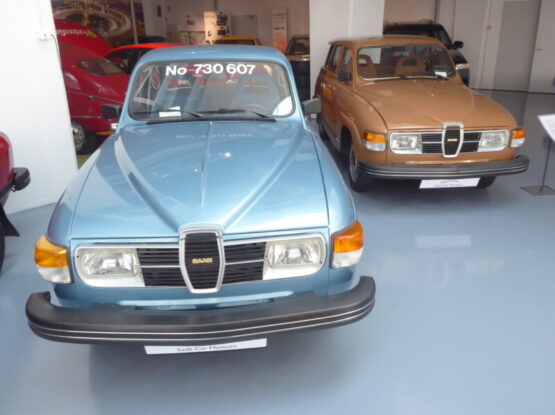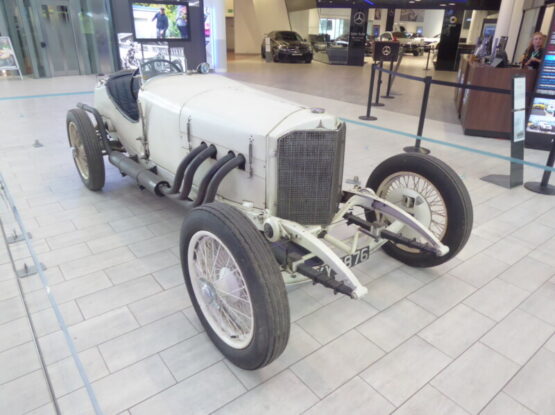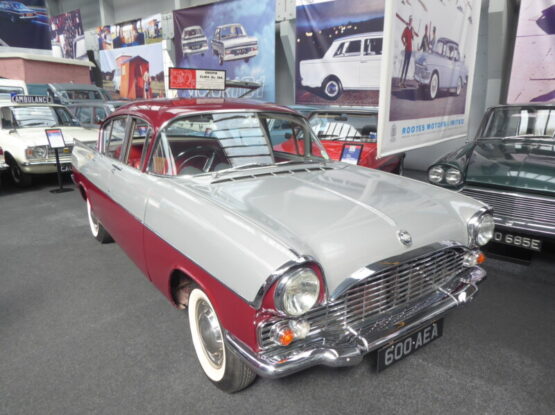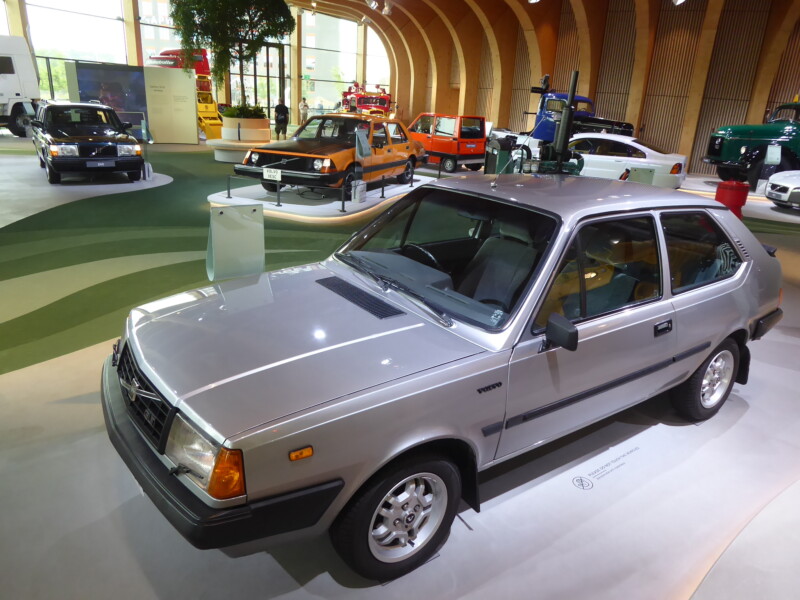
Almost all of the established automotive brands have figured out that their heritage is important and as most of them had been quietly amassing a collection of their most important production and concept vehicles over time, opening a museum so that the public could come and see them was an obvious next step. Some are more established and better known than others. Swedish brand Volvo’s original museum opened in 1995 The original museum opened in 1995 and was located in the area of Arendal on Hisingen island, approximately 10 km west of central Gothenburg. Originally started as the project of a Volvo factory employee, the museum was housed in a complex of industrial buildings near Volvo’s factory. Owned by Volvo Cars and Volvo Group, it showcased Volvo’s development from its founding in 1927 to modern times, displaying a range of vehicles, engines, and prototypes. The museum also featured historical artefacts, including the shared desk of company founders Assar Gabrielsson and Gustaf Larson. Exhibitions included Volvo’s early production models, including the Volvo ÖV 4, as well as notable prototypes such as the Volvo Philip and Volvo VESC. The museum also displayed Volvo Aero, Volvo Penta, and Volvo Ocean Race designs. The museum was located near to the Arendal Cruise Terminal, which accounted for a fairly large share of visitors. In the late 2010s, Volvo announced its ambition to create a new public facility located in central Gothenburg. In January 2020, the European Commission approved the plans by Volvo Cars and AB Volvo for what was then described as an “experience park”. Later that year, Volvo confirmed that the new facility, named World of Volvo, would replace the Volvo Museum in Arendal. Positioned in Gothenburg’s events district near Liseberg, the facility aimed to attract a larger audience than the previous museum, offering interactive exhibitions, conferences, and cultural events in addition to vehicle displays. Designed by Danish architecture firm Henning Larsen, construction of the 22,000-square-metre building began in early 2022, with materials sourced from Sweden and Austria. The original Volvo Museum closed December 2023, in preparation for exhibits to be moved to the new centre. The new centre was completed in early 2024. On 14 April 2024, Volvo’s 97th anniversary, the centre was inaugurated. It was an obvious choice to include in my week’s vacation in the area. Here is what I found.

World of Volvo hosts permanent and temporary exhibitions on various aspects of the brand’s history, including its automotive innovations and contributions to transport safety. It also features interactive displays and multimedia installations that explore the company’s role in mobility.
IN THE FOYER
Entry is on the ground level, and there is an expansive foyer where as well as the ticket desk you will find a few historically significant models and an area to showcase the very latest models, After all, heritage is important but for the manufacturer, it is really just another way of generating interest in the latest products. Access to this part of the building is free of charge
Volvo PV655 Cabriolet: One of the most spectacular and also one the rarest vehicles in the collection is this 655 from 1933/1934—a true one-off. This beautiful Volvo was equipped with a six-cylinder engine that was normally used in trucks and buses at the time and offers a healthy 65 horsepower. The engine is mated to a three-speed manual transmission. The deep blue roadster with red pinstripes, a white top, and whitewalls was built by Norrmalm of Stockholm, a convertible coachbuilder. The exclusive car was renovated in the 1970s and looks almost new today.


Volvo 780 Coupe: The Volvo 780 coupé debuted at the International Auto Show in Geneva, Switzerland in 1985, marking Volvo’s return to the two-door coupé market following the departure of the 262C in 1981. The 780 became available in Europe in 1986 and in United States a year later. Like its predecessor, the 780 was designed and built by Carrozzeria Bertone in Turin, Italy. The hood, trunk, and roof lines were all slightly lower than the standard 700 series profile, and the C-pillar was wider and had a more gradual slope down to the trunk. Headroom was improved over the 262C because of Bertone’s 1 cm lowering of the roofline. Window frames all had black matte trim, and were accented with chrome. Chrome also highlighted the door handles, bumpers, and side mouldings. Originally, it had been planned to use a smaller, 2,458 cc turbocharged, version of the PRV V6 (as seen in the Renault 25 and Alpine), which had been successfully tested in 740s and 760s. In the smaller engine compartment of the 780, however, the engine overheated and the PRV V6 Turbo never appeared in a Volvo. In the first 2 years that the 780 was available worldwide (1986 and 1987) it received the B280F V6 engine and a solid (live) rear axle. In the Italian market, originally only the Volkswagen built D24TIC was to be offered, with 129 PS but soon the V6 also became available and a 155 PS 2.0-litre turbo (B200ET) Italian tax special was also added later in 1986. In August 1987, the 780 came equipped with Volvo’s independent rear suspension, which used self-levelling Nivomat shocks, to keep ride height correct. An improved climate control unit (ECC) was also fitted. The B280F at this point had roughly 150 PS, but the car itself weighed nearly 3,400 lb (1,500 kg). To address concerns about performance, Volvo introduced the B230FT+; a B230FT with Volvo’s Turbo+ boost controller, increasing the engine output to 175 PS. The following model year saw it increase to 188 PS. In Italy, later 780s were available with the B204GT. This was a 16 valve turbo motor producing 200 PS. A mere 165 examples of the 780 were built with this engine. In the car’s final year, 1991, it was rebadged simply as “Coupé”. At this point, the car came only in turbo guise. Volvo’s official production total for the 780 is 8518 cars built between 1986 and 1991. From 1986 to 1995, Volvo offered a small, sporty coupé, the front-wheel drive Volvo 480, but a successor to the 780 would only be introduced in 1997 when the C70 became available.


Volvo 480ES: This was a car produced in Born, Netherlands, at the factory that built DAF cars, including the DAF 66 based Volvo 66, and later, the Volvo 300 Series. It was the first front-wheel drive car made by the automaker. The 480 was available in only one body style on an automobile platform related to the Volvo 440/460 five door hatchback and four door sedan models. It featured an unusual four seat, three door hatchback body, somewhere between liftback and estate in form, the first Volvo of its style since the P1800ES, and the last until the unveiling of the C30. All of these models featured a frameless glass hatch for cargo access.. Volvo took six years from the time the 480 was conceived, through its development, and finally brought to production readiness. Designed by Volvo’s Dutch subsidiary, the “sporty 480 ES coupe” was introduced to change the automaker’s “frumpy image” and into the “yuppie” market segment. The concept was to market a modern, compact front wheel drive car with a unique low slung design targeting buyers “between 25 and 40, probably with a higher than average education and with a career.” The press launch was on October 15, 1985, but the 480 was first put on public show at Geneva in March 1986, becoming available to the buyers in 1987. It was initially well received, with the press describing it as having a “sleek hatch body” in contrast to Volvo’s traditional “boxcar look”. Because the 480 was originally planned for the North American market (evidenced by its front and rear side markers, not used on European automobiles). it was, Volvo claimed, one of the first cars sold in Europe featuring bumpers designed to comply with United States National Highway Traffic Safety Administration (NHTSA) regulations to withstand a 5 mph front rear impact without damage to the engine, lights, and safety equipment. This was the only Volvo to feature pop up headlamps for better aerodynamics. Volvo highlighted that the car was “well-endowed with advanced electronics” and the automaker’s press release described in detail the numerous features, though some of these would prove to be the cause of the reliability problems that plagued early cars. The 480 had good handling, due in part to its Lotus designed suspension. The normally aspirated Renault engines were reliable. The 1987 models were available with ABS as an optional extra. In 1988, a Turbo version was introduced, the Garrett AiResearch turbocharger increasing the power from 108 bhp to 118 bhp. Maximum torque was 129 lb-ft compared to 103 lb-ft for the naturally aspirated engine. In 1993 new legislation meant that catalytic converters had to be fitted to unleaded petrol engines, power dropped and so the 2.0 litre engine was developed; it was rated at 108 bhp and 122 lb-ft. A four-speed automatic transmission was also offered. In 1991, the 480 received new mirrors, headrests for the back seats, as well as subtle modifications to the trim and body colour bumpers. The 2.0 naturally aspirated engine was also introduced, again based on the Renault F3 engine. Changes between the CEM (Central Electronic Module) are externally apparent with the introduction of a total closure system whereby the key can be held in the lock position to close the windows and (where fitted) sunroof. Earlier CEM modules feature a “passing” function for the wipers, whereby fully depressing the accelerator pedal will switch intermittent wipers to full. Early 1992 saw the first release of special editions such as the “TwoTone”. 1994 saw the United Kingdom release of the “Celebration” limited edition of 480 specially equipped and numbered cars. In 1994, the 480 also received its last light update, and now sported clear front turn signals. Production ended on 7 September 1995. According to the Volvo Museum, 76,375 cars in ES and Turbo versions were made between 1986 and 1995.

Volvo FH16 Aero 780: In September 2012, Volvo Trucks re-launched the Volvo FH with major technology upgrades, a new design, and more. The company also introduced the first of its Euro VI engines, the D13K which is available as an option on the new Volvo FH and compulsory for new trucks in Europe from January 2014. Other quotable new features are the I-torque driveline and the I-see fuel-saving technology. With the new thirteen-litre engine, the name has changed to FH13. In India Volvo FH was introduced as FH520 Puller 6×4 with a company fitted ballast box due to new Automotive Research Association of India regulations for ballast tractors used to tow hydraulic modular trailers. Later in 2021 FH520 was discontinued in India replaced by FM500 Puller 6×4 which is also sold with a company fitted ballast box. Volvo Trucks has demonstrated the new Autonomous Emergency Braking system that combines radar and a camera that works together to identify and monitor vehicles in front. The system is designed to deal with both stationary and moving vehicles and can prevent a collision with a moving target at relative speeds of up to 70 km/h. When the system detects a vehicle that the truck will hit at its current speed, the warning system activates a constant red light in the windscreen in order to bring the driver’s attention back to the road. The truck received a facelift in 2020, with most notably a new headlight design, an updated interior, new safety features, and efficiency improvements. The pre-facelift model continues to be offered in selected markets where the facelifted model was introduced, now marketed as Volvo FH Classic for models with 13-litre engines and Volvo FH16 Classic for models with 16-litre engines. Volvo also launched an electric truck in 2021. The FH received a minor update in 2024, featuring new LED roof lights, revised logo and badging, updated I-See, updated aerodynamics, updated infotainment, new Volvo Camera Monitoring System, the replacement of the D16K with the D17 with 3 outputs (600 PS and 3,000 Nm, 700 PS and 3,400 Nm, and 780 PS and 3,800 Nm), and improved efficiency. Volvo Trucks introduced the FH Aero in 2024, which has an extended and sleeker cab design, equipped with digital mirrors and a more powerful, new 17.3-litre engine, producing up to 780 PS and 3,800 Nm (2,803 lb/ft) of torque. This model will be gradually introduced to markets between 2024 and 2025, and offered in four variants: FH Aero, FH Aero Electric, FH Aero gas-powered, and FH16 Aero.


NEW CARS
A trio of new cars were displayed in a separate room, and visitors could look at these as if they were in a showroom. The three were the EC40, XC60 and EX90.


In the main foyer was the new ES90, a large all-electric saloon model recently unveiled.

THE MAIN EXHIBITION
This is located on the third floor and is carefully designed around a curve so you cannot see all of what lies in store when you enter. You do need to have bought a ticket for these exhibits. When you have passed through the ticket check, your museum journey doesn’t start with the car display, but with a series of interactive features – many of which focus, naturally, on safety and sustainability. There’s really quite a lot here, but if you are like me, you want to get to the cars. And when you do, you start at the beginning with the first Volvo car from 1926. All told there are around 30 principal exhibits, including not just cars but also commercial vehicles and even boats, reflecting the acquisitions that were made to create the Volvo Group. There are plenty of artefacts to complement the larger display items and there are several interactive displays. You can even climb into a truck cab. Everything is neatly signed with information about each exhibit.

Volvo OV4: The Volvo ÖV 4 was the first car built by Volvo. The designation ÖV 4 stands for “Öppen Vagn 4 cylindrar” in Swedish, which means Open Carriage, 4 cylinders. The model ÖV 4 has later often been referred to as “Jakob” but that was just a name for one of the 10 pre-series ÖV 4 that was ready on 25 July 1926, Jakob’s name day. All 10 prototypes were assembled in Stockholm at the company AB Galco, Hälsingegatan 41 where Gustaf Larson worked at that time. The engine was designed by Gustav Larson and its main chassis components by Jan G. Smith, a designer who had worked many years in the American automobile industry and returned to Sweden in 1924. Many of Smith’s original drawings for the ÖV4 and other technical papers that he collected in America are saved in the archive of the National Museum of Science and Technology in Stockholm, Sweden. When the first series produced ÖV4 was about to drive out of the factory and engineer Eric Carlberg put it into first gear, the car went backwards, where the car was actually in reverse gear. The explanation was that the differential gear in the rear axle had been fitted incorrectly. This mistake delayed the introduction by one day and the official introduction day for the ÖV4 was then adjusted to 14 April 1927, the day AB Volvo officially says the automobile company Volvo was “born”— this is from a marketing point of view. The company as an automobile company was born as a subsidiary company to SKF on 10 August 1926. The cabriolet was not very successful in the Swedish climate; the covered version, PV 4, was introduced in the summer of 1927. This had a Weymann body and the original design was considered rather ungainly. Helmer MasOlle, who had been inspired by his personal Voisin C5 when he designed the original ÖV 4, was reportedly furious about the PV 4 and would not be associated with it. By 1928, a more balanced design was introduced, with a longer bonnet and thinner pillars. The oval rear window of the original PV 4 was gradually replaced by a rectangular unit. Between 1927 and 1929, a total of 996 cars were manufactured. Of these 694 were PV 4 and 302 ÖV 4. 251 of the covered cars were of the “PV 4 Special” model. The ÖV 4 production includes 27 naked chassis and 70 small pickup trucks (ÖV 4 TV) developed for Telegrafverket, the royal telecommunications company. Some of these light trucks were sold to other customers. The TV model has a small convertible top mounted just behind the front seats, with a cargo area behind. One of the 10 pre-series cars manufactured during 1926 was saved for posterity and is displayed here.


Volvo LV4 Truck: Volvo introduced its first truck, LV Series 1, in early 1928. The truck shared many components with Volvos passenger cars ÖV4 and PV4, including powertrain, but the truck had a more powerful chassis which was built on two different wheelbases: 3.3 and 3.7 m. Despite the small four-cylinder side-valve engine the truck was a sales success, unlike the passenger cars. After an initial series of 500 Series 1 trucks, Volvo presented the stronger LV Series 2 in the fall of 1928. Many components had been strengthened to better fit a truck and the axle track had been widened.

Volvo LV4 Bus


Volvo B513: The Volvo B513 is a vintage bus chassis produced by Volvo starting in the mid-1940s (around 1945–1946). Many Volvo B513 chassis were delivered to SJ (the Swedish State Railways / Statens Järnvägar) and regional transit networks operating across Sweden during the 1940s and 1950s. Because Volvo primarily manufactured the mechanical chassis, the bodies were typically custom-crafted by prominent coachbuilders of the era, such as Aktiebolaget Svenska Järnvägsverkstäderna (ASJ) in Linköping or Svenska Karosseri Verkstäderna (SKV) in Katrineholm. This is a well-known surviving historical unit—delivered in 1945, originally operated as SJ 850 in northwest Stockholm and later forgotten in a remote garage for over 20 years before being rescued and restored by enthusiasts.


Volvo PV654: The Volvo PV650 Series were made between 1929 and 1937. The model name stand for PersonVagn (“passenger car”), 6 cylinders, 5 seats; the third digit indicates the version.Volvo had started planning for a larger successor for its first car, the ÖV4 in 1926, even before the little four-cylinder car was introduced. The Swedish car market was dominated by American manufacturers and Volvo needed a large six-cylinder car to be competitive. The first car was the PV651 of 1929. In the autumn of 1933 the six-cylinder Volvo cars were updated with a new, stronger chassis with an X-shaped cross member support, smaller 17-inch rims and an all-steel body, without the wooden frame. The centre roof section was still covered with a leatherette insertion. The body had new fenders and the windshield and radiator grille were slightly tilted to improve the aerodynamics. The mechanical parts were left unchanged. Volvo offered two versions: the PV653 base model and the PV654 de luxe model. The PV654 luxury equipment included an uprated interior, twin fender mounted spare tyres, twin chrome plated horns and twin rear lights. Built between 1933 and 1934, there were 230 of the PV653 built and 361 examples of the PV654. The PV655 lasted until 1935 and there were 62 cars built on a commercial chassis


Volvo PV444: The Volvo PV is a series of two-door, four-passenger car models — the PV444 and the PV544 — made by Volvo from 1947 to 1965. During World War II’s early stages, Volvo decided that a new, smaller car that could deliver good fuel economy would assure the company’s future. A raw materials shortage during the war drove home the point that an automobile should be smaller, and also complicated Volvo’s ability to mass-produce the product. In 1944, when the car was finally introduced to a car-hungry public, response was very positive and orders poured in from the Swedish population. It was another three years though, until 1947, before series production began. The PV quickly earned a reputation for being strong and rugged, although the design was considered outdated from early on. The PV also competed successfully, in the American SCCA class but also internationally, with a second-hand PV544 memorably winning the Safari Rally in 1965. No PV 544 were produced in 1966. Last production was October 1965, some were sold in 1966 and titled as such, but last model year is 1965. The PV444 was Volvo’s first unibody car. Its body structure was influenced by the 1939 Hanomag 1.3 litre, which was purchased and studied by Volvo engineers. It was also the first Volvo in almost 20 years to come with a four-cylinder engine (earlier models had used side-valve straight sixes). The first PV444s were powered by 40 PS 1.4 L inline-four engines designated B4B, with three main bearings, overhead valves, and a single downdraft carburettor. The power of this engine increased to 44 PS in October 1950, and to 51 PS in October 1955. US models, beginning to appear in early 1956, received an up-rated version called the B14A, which was given twin side-draft 1½ in SU carburetors for a total of 70 hp. Most early US sales were limited to Texas and southern California. American customers also had the option of European delivery, in which case they could also get a cheaper model with the basic B4B engine. By the 1957 model year, engine displacement was increased to 1.6 L and both single downdraft- B16A and twin side-draught carburetted B16B versions were offered. In 1958, the PV544 was phased in


Volvo PV445 Duet: The PV544 was also made as an estate (wagon), the Duett, initially designated the P445 and later the P210. The 544 received incremental mechanical revisions and trim changes until its final production year of 1965. Exactly 440,000 units were built during the 18-year run. The car had so endeared itself to its owners that Volvo ran self-deprecating advertisements in late 1965 and early 1966 imploring PV owners not to be angry with the company. The Duett’s utility allowed Volvo to continue the wagon’s production through the 1969 model year. These were then replaced in some markets by a high-roof version of the Volvo 145, called the Express.


Volvo Amazon: There was a single example of the “Amazon” Volvo here. Although costly when new, thanks to the UK’s Import Duty which applied to foreign car imports at the time, the Volvo of this era was surprisingly popular with UK buyers. The cars were tough, as strong success in rallying evidenced, but not that many have survived. There’s a complex history to this model, with lots of different numbers applied to the car during a 13 year production run. When introduced, the car was named the Amason (with an ‘s’), deriving from the fierce female warriors of Greek mythology, the Amazons. German motorcycle manufacturer Kreidler had already registered the name, and the two companies finally agreed that Volvo could only use the name domestically (i.e., within Sweden), modifying the spelling to Amazon. Subsequently, Volvo began its tri-digit nomenclature and the line became known as the 120 Series. Under prototype designation 1200, following the PV444’s internal designation as the 1100, the Amazon was released in the press in February 1956, with production initially set to begin in July of the same year, and deliveries commenced in August 1956 — under the now modified internal designation 120 series. The Amazon sedan’s ponton genre, three-box styling was inspired by US cars of the early 1950s, strongly resembling the Chrysler New Yorker sedan and the Chrysler 300C hardtop Coupe. According to designer Jan Wilsgaard, the Amazon’s styling was inspired by a Kaiser he saw at the Gothenburg harbour. The Amazon featured strong articulation front to rear, pronounced “shoulders”, and slight but visible tailfins. These features became inspiration for Peter Horbury when reconceiving Volvo’s design direction with the V70 after decades of rectilinear, slab-sided, boxy designs. The Amazon’s bodywork was constructed of phosphate-treated steel (to improve paint adhesion) and with heavy use of undercoating and anti-corrosive oil treatment. The Amazon shared the wheelbase, tall posture and high H-point seating of its predecessor, the PV. In 1959 Volvo became the world’s first manufacturer to provide front seat belts as standard equipment — by providing them on all Amazon models, including the export models — and later becoming the first car featuring three-point seat belts as standard equipment. The Amazon’s handbrake location, outboard of the driver’s seat, was intended to accommodate subsequent bench seat models with column shift transmissions — which never materialised. Buyers began to receive the first cars in February 1957, and initial models were two-tone red and black with light grey roof, light grey with a black roof, followed by a dark blue with grey roof in 1958. Further iterations included the 121, the base model with a single carburettor 66 bhp engine, the 122S introduced in 1958 as a performance model equipped with a dual carburettor 85 bhp engine. The estate version was introduced at the 1962 Stockholm Auto Show, and Volvo manufactured 73,000 examples between 1962 and 1969. The Amazon estate featured a two-piece tailgate, with the lower section folding down to provide a load surface and the upper section that hinged overhead. The vehicle’s rear licence plate, attached to the lower tailgate, could fold “up” such that when the tailgate was lowered and the vehicle in use, the plate was still visible. This idea was used by the original 1959 Mini. In recent years a similar arrangement was used on the tailgate of the Subaru Baja. In 1966 the Volvo PV ended production, replaced by the Amazon Favorit, a less expensive version of the Amazon, without exterior chrome trim, a passenger-side sun visor or cigarette lighter, and with a three-speed rather than four-speed transmission — available in black with red interior and later white or black with red interior. The newer Volvo 140 was becoming the company’s mainstream model, and the last of the four-door 120 saloons were produced in 1967, the year which saw the launch of the 123GT, which was a Model 130 with high-compression four-cylinder B18B engine (from the Volvo P1800), M41 gearbox, fully reclining seats, front fog and driving lights (on some markets), alternator, fender mounted mirrors, special steering wheel, dash with a shelf and tachometer, and other cosmetic upgrades. In 1969 the displacement of the old B18 engine was increased and the engine was called the B20. The last Amazon was manufactured on 3 July 1970. By the end of production, 234,653 four-door models, 359,917 two-door models and 73,220 station wagons had been produced, of which 60% were exported; a total of 667,791 vehicles.


Volvo T43: The Volvo T 41-43 was a tractor produced in 1943-1950 by Volvo in Gothenburg. The model came about through a collaboration with Bolinder-Munktell and it was partly identical to the Bolinder-Munktell BM 20. The biggest difference was the engine, where Volvo used different variants of its own A 4- engine. It was a four-cylinder four-stroke engine developed from the six-cylinder truck engine Volvo FA. The first version of the tractor was T 41 with a gene-powered motor. After the end of World War II in 1945, T 42 was launched with kerosene drive. The following year came the final version, T 43, with hessel man engine for crude oil (the then name for diesel oil). A total of 2 500 of these models were produced until 1950. Volvo then had no tractor in this size until the T 55 was launched in 1953.


Volvo 1800S: This was a sports car that was manufactured by Volvo Cars between 1961 and 1973. The car was a one-time venture by the usually sober Swedish Volvo, who already had a reputation for building sensible sedans. The project was originally started in 1957 because Volvo wanted a sports car to compete in the US and European markets, despite the fact that their previous attempt, the P1900, had failed to take off with only 68 cars sold. The man behind the project was an engineering consultant to Volvo, Helmer Petterson, who in the 1940s was responsible for the Volvo PV444. The design work was done by Helmer’s son Pelle Petterson, who worked at Pietro Frua at that time. Volvo insisted it was an Italian design by Frua and only officially recognised that it was by Pelle Petterson many years later. The Italian Carrozzeria Pietro Frua design firm (then a recently acquired subsidiary of Ghia) built the first three prototypes between September 1957 and early 1958, later designated by Volvo in September 1958: P958-X1, P958-X2 and P958-X3. In December 1957 Helmer Petterson drove X1, the first hand-built P1800 prototype to Osnabrück, West Germany, headquarters of Karmann. Petterson hoped that Karmann would be able to take on the tooling and building of the P1800. Karmann’s engineers had already been preparing working drawings from the wooden styling buck at Frua. Petterson and Volvo chief engineer Thor Berthelius met there, tested the car and discussed the construction with Karmann. They were ready to build it and this meant that the first cars could hit the market as early as December 1958. But in February, Karmann’s most important customer, Volkswagen forbade Karmann to take on the job, as they feared that the P1800 would compete with the sales of their own cars, and threatened to cancel all their contracts with Karmann if they took on this car. This setback almost caused the project to be abandoned. Other German firms, NSU, Drautz and Hanomag, were contacted but none was chosen because Volvo did not believe they met Volvo’s manufacturing quality-control standards. It began to appear that Volvo might never produce the P1800. This motivated Helmer Petterson to obtain financial backing from two financial firms with the intention of buying the components directly from Volvo and marketing the car himself. At this point Volvo had made no mention of the P1800 and the factory would not comment. Then a press release surfaced with a photo of the car, putting Volvo in a position where they had to acknowledge its existence. These events influenced the company to renew its efforts: the car was presented to the public for the first time at the Brussels Motor Show in January 1960 and Volvo turned to Jensen Motors, whose production lines were under-utilised, and they agreed a contract for 10,000 cars. The Linwood, Scotland, body plant of manufacturer Pressed Steel was in turn sub-contracted by Jensen to create the unibody shells, which were then taken by rail to be assembled at Jensen in West Bromwich. In September 1960, the first production P1800 left Jensen for an eager public. The engine was the B18, an 1800cc petrol engine, with dual SU carburettors, producing 100 hp. This variant (named B18B) had a higher compression ratio than the slightly less powerful twin-carb B18D used in the contemporary Amazon 122S, as well as a different camshaft. The ‘new’ B18 was actually developed from the existing B36 V8 engine used in Volvo trucks at the time. This cut production costs, as well as furnishing the P1800 with a strong engine boasting five main crankshaft bearings. The B18 was matched with the new and more robust M40 manual gearbox through 1963. From 1963 to 1972 the M41 gearbox with electrically actuated overdrive was a popular option. Two overdrive types were used, the D-Type through 1969, and the J-type through 1973. The J-type had a slightly shorter ratio of 0.797:1 as opposed to 0.756:1 for the D-type. The overdrive effectively gave the 1800 series a fifth gear, for improved fuel efficiency and decreased drivetrain wear. Cars without overdrive had a numerically lower-ratio differential, which had the interesting effect of giving them a somewhat higher top speed of just under 120 mph, than the more popular overdrive models. This was because the non-overdrive cars could reach the engine’s redline in top gear, while the overdrive-equipped cars could not, giving them a top speed of roughly 110 mph. As time progressed, Jensen had problems with quality control, so the contract was ended early after 6,000 cars had been built. In 1963 production was moved to Volvo’s Lundby Plant in Gothenburg and the car’s name was changed to 1800S (S standing for Sverige, or in English : Sweden). The engine was improved with an additional 8 hp. In 1966 the four-cylinder engine was updated to 115 PS, which meant the top speed increased to 109 mph. In 1969 the B18 engine was replaced with the 2-litre B20B variant of the B20 giving 118 bhp, though it kept the designation 1800S. For 1970 numerous changes came with the fuel-injected 1800E, which had the B20E engine with Bosch D-Jetronic fuel injection and a revised camshaft, and produced 130 bhp without sacrificing fuel economy. Top speed was around 118 mph and acceleration from 0–62 took 9.5 seconds. In addition, the 1970 model was the first 1800 with four-wheel disc brakes; till then the 1800 series had front discs and rear drums. Volvo introduced its final P1800 variant, the 1800ES, in 1972 as a two-door station wagon with a frameless, all-glass tailgate. The final design was chosen after two prototypes had been built by Sergio Coggiola and Pietro Frua. Frua’s prototype, Raketen (“the Rocket”), is located in the Volvo Museum. Both Italian prototypes were considered too futuristic, and instead in-house designer Jan Wilsgaard’s proposal was accepted. The ES engine was downgraded to 125 bhp by reducing the compression ratio with a thicker head gasket (engine variant B20F); although maximum power was slightly down the engine was less “peaky” and the car’s on-the-road performance was actually improved. The ES’s rear backrest folded down to create a long flat loading area. As an alternative to the usual four-speed plus overdrive manual transmission, a Borg-Warner three-speed automatic was available in the 1800ES. With stricter American safety and emissions standards looming for 1974, Volvo did not see fit to spend the considerable amount that would be necessary to redesign the small-volume 1800 ES. Only 8,077 examples of the ES were built in its two model years. This car is quite remarkable, as it has done more than 3.2 million miles. When its only owner passed away, the car was made available to the museum.


Volvo 145: Volvo Cars began manufacturing the Volvo 144 at Torslandaverken in the late summer of 1966, the first Volvo to use a tri-digit nomenclature, indicating series, number of cylinders and number of doors. Thus, a “144” was a 1st series, 4-cylinder, 4-door sedan. The 144 was the first Volvo to feature a more rectilinear or boxy styling. Compared to the Volvo Amazon, the 140 was a radical departure with minimal exterior and interior carryover, notably a stylised version of the front split grille. The car’s basic shape would survive into the 1990s as the 200 series. Mechanically, the car used many of the same drivetrain components as the Amazon, but also showcased many improvements, including disc brakes on all four wheels. It was named car of the year in 1966 by Swedish magazine Teknikens Värld. The engine in the standard 144 was the same as found in the standard Amazon (121), the 1.8l B18A, but the 144S was given the more powerful B18B from the 123GT and 1800S. Late in the 1967 model year production of the Volvo 142 (2-door sedan) began, in time to build 1500 units for the first year. In 1968 production of the Volvo 145 5-door station wagon began, completing the three body styles used in the 140 range. For the 1969 model year Volvo enlarged the B18 to become the 2.0 litre B20 and replaced the generator with a more modern alternator. It was also in 1969 that Volvo introduced the 164, which shared much of the 140 series structure and styling aft of the windshield while incorporating a 6-cylinder engine, the B30 which was simply a B20 with 2 more cylinders and a few strengthened and enlarged components. In 1970 a flow-through ventilation system, where vents were added towards the rear of the car (on the exterior under the rear window on the 142 and 144 and as a grille next to the right side taillight of the 145) and electrically defrosted rear windows, were introduced. The split rear side window on the 145 became one piece which was no longer possible to open. In 1971 the first of several styling changes were introduced, including a revised black grille which saw the now ubiquitous Volvo diagonal line introduced as well as new wheels. 1971 also saw the introduction of the B20E, which was a high compression version of the B20 which introduced Bosch D-Jetronic electronic fuel injection. These new cars were either given the designation E (the German word Einspritzer, or “injection”) or GL (for Grand Luxe), which was a more upmarket version of the car. A console on the transmission tunnel with a clock was now standard. The styling changes continued in 1972 with the introduction of flush mounted door handles and a slightly revised dashboard with fake woodgrain trim, newly designed switches and a small central panel with a clock. The transmission tunnel was taken from the 164 as was the same short-shifter gear stick and the automatic transmission became controlled by a T-bar mounted on the floor at the same place. The outer 2 rear seats now had the mounting points for retractable seatbelts. A low compression fuel injected engine, the B20F was introduced for the US and certain other markets. In 1973 the 140 series received a major facelift, with a new plastic grille, new larger indicators and a completely revised tail end. Also, the S designation was dropped and the range consisted of 3 trim levels, standard (with no designation, known as L, or “luxe”) de Luxe and the most upmarket, Grand Luxe. The interior also had a completely revised dashboard with a new instrument cluster consisting of dials rather than the strip speedometer previously used, rocker switches replacing the push-pull switches (with the exception of the headlight switch), and vents to direct air towards the person augmenting the defrost and floor vents. In 1974, the B20E/F engine switched from using the Bosch D-Jetronic to the K-Jetronic mechanical fuel injection system. Also, several safety changes were introduced including a fuel tank that was located close to the axle to protect it in the case of a rear-end collision, and larger bumpers that protruded more from the body. The quarter-light windows in the front doors were removed as a result of the improvements in ventilation inside the car, and small anodised aluminium strips were added to the bottom of the side windows. Total Production was 412,986 2-doors sedans, 523,808 4-doors sedans and 268,317 station wagons


Volvo F83: Volvo introduced its first forward control truck L420 Snabbe (“Fast”) at the end of 1956. It had a payload of approx. 3 tonnes. The truck’s V8 engine had been developed by Volvo for a planned luxury automobile called Volvo Philip in the early 1950s. A V8 engine in the lightweight vehicle meant impressive performance for a truck. The downside was the gruesome fuel consumption and from 1964 onwards the Snabbe was offered with a diesel engine as an alternative. In early 1957 the program was supplemented with the larger L430 Trygge (“Safe”). With sturdier chassis and suspension the payload was increased to approx. 5 tonnes. From 1963 onwards the Trygge was offered with a more economical diesel engine as an alternative. Since Volvo didn’t have the resources to develop an engine of their own, they chose to buy the 3.6-litre “Dorset” tractor engine from Ford. With only 65 PS, performance was rather mundane. Volvo introduced its “System 8” in 1965. Changes for the smallest trucks were restricted to new names. Snabbe became F82 and Trygge became F83. Production of the B36 V8 engine halted in 1966, and thus disappeared the last petrol engine Volvo truck. In 1967 Volvo replaced the Ford diesel with the more powerful Perkins 4.236 from Perkins Engines; Volvo called it the D39. 1972 saw the last modernization of the model series. The engine was moved forward in the chassis to provide better space inside the cab. The main exterior change was a new radiator grille in black plastic. The trucks were now called F82S and F83S respectively.


Volvo Aquamatic: The Volvo Aquamatic is a pioneering sterndrive marine propulsion system developed by Volvo Penta that combines inboard engine performance with outboard manoeuverability. Introduced in 1959 at the New York Boat Show, it revolutionized leisure boating. At its debut, it used a modified 80-hp B16 engine source. The name was coined after a nearby bottle of aquavit during a naming discussion in the late 1950s. It is widely considered one of the most important engineering innovations in 20th-century recreational boating. In essence, it mounts an engine inside the hull coupled to an external drive unit with steering and trimming capabilities. Later innovations included counter-rotating twin propellers for enhanced grip and efficiency. It has more recently evolved to feature electronic vessel control and joystick manoeuverability.


Volvo F10: Volvo F10, F12, and F16 are a series of trucks manufactured by Volvo Trucks between 1977 and 1993. Volvo manufactured about 200,000 trucks in this series between 1977 and 1993. Introduced in 1977 as a replacement to the F88/89 which were the flagship tractors of the company. The new names were given based on the engine capacity of the units F10 for the 10 litres engine unit F12 for the 12 litres unit, although the F10 had a 9.6 litres engine and F12 had 12 litres. Powered by TD100 and TD120 engines, they produced 280 and 320hp, respectively. F10 and F12 provided more comfort, power, style and safety compared to the outgoing F88/89. The basic chassis components and also the driveline components of the trucks, when launched in 1977, were to a large extent based on the ones introduced in 1973 for the Volvo N-series trucks. All engines are straight six-cylinder turbocharged diesel engines of Volvo’s own make. In 1979 Volvo introduced Globetrotter models for the long distance transportation, these models had upgraded cabins which were higher than the normal cabin so that the operators could stand and sleep well in the cabin. This model was only available in the F12 model. The series got two major upgrades during its production. The first one arrived in 1983: it included major changes to the cabin, including a larger windscreen and taller roof, and a new chassis with decreased weight and parabolic springs. The engines also got an upgrade, but the power outputs were unchanged. The Globetrotter received a taller windscreen, reaching the top of the higher roof. This model (F10) won the International Truck of the Year Award in 1984. The F16 was introduced in 1987 with a 16-litre engine. As with the F10 and F12, the name was derived from the engine size, and became Volvo’s flagship model. In addition, it was also the most powerful tractor of Europe beating MAN 19462, Mercedes-Benz 1644, Iveco turbostar 190.42 and Scania 2-series producing 460hp from its TD162F engine. This engine, like the TD100 and TD120, was an inline six-cylinder engines. In 1993 the F10, F12, and F16 were replaced with the FH series. The first models introduced under FH series were FH12 and FH16.


Volvo BM H10: The Volvo BM H10 was the world’s first mass-produced backhoe/wheel loader, introduced in 1954 by Bolinder-Munktell (a Volvo subsidiary) in collaboration with Bröderna Lundbergs Mekaniska. Released in 1954 as an innovative “back-loader” (baklastare) where the steering was managed by the rear wheels. It was built originally using the chassis and components of the Bolinder-Munktell agricultural tractor model BM 35, and later the BM 55. It established Volvo as a prominent global pioneer in heavy construction equipment and wheel loaders. Unlike modern wheel loaders with centre articulation, the H10’s bucket mechanism sat over the heavy drive axle while smaller wheels steered from behind. It paved the way for later iconic Volvo BM loader models throughout the 1960s and 1970s before modern articulated frame designs became standard.


Volvo 240 Polar: The Volvo 200 series replaced the 140 and 160 series and was produced by Volvo Cars from 1974 to 1993, with more than 2.8 million units sold worldwide. Like the Volvo 140, it was designed by Jan Wilsgaard. It overlapped production of the Volvo 700 series introduced in 1982. As the 240 remained popular, only the 260 was displaced by the 700 series — which Volvo marketed alongside the 240 for another decade. The 700 series was replaced a year before the 240 was discontinued. Production of the 240 ended on 14 May 1993 after nearly 20 years. The Volvo 240 and 260 series were introduced in the autumn of 1974, and was initially available as six variations of the 240 Series (242L, 242DL, 242GT, 244DL, 244GL, 245L and 245DL) and two variations of the 260 Series (264DL and 264GL). The 240 Series was available in sedan (with two or four doors) or station wagon, however the 260 Series was available as a coupé (262C Bertone), four-door sedan, or station wagon. The 200 looked much like the earlier 140 and 164 Series, for they shared the same body shell and were largely the same from the cowl rearward. However, the 200 incorporated many of the features and design elements tried in the Volvo VESC ESV in 1972, which was a prototype experiment in car safety. The overall safety of the driver and passengers in the event of a crash was greatly improved with very large front and rear end crumple zones. Another main change was to the engines, which were now of an overhead-cam design. The 260 series also received a V6 engine in lieu of the 164’s inline-six. The 200 Series had MacPherson strut type front suspension, which increased room around the engine bay, while the rear suspension was a modified version of that fitted to the 140 Series. The steering was greatly improved with the installation of rack-and-pinion steering, with power steering fitted as standard to the 244GL, 264DL and 264GL, and there were some modifications made to the braking system. The front end of the car was also completely restyled – that being the most obvious change which made the 200 Series distinguishable from the earlier 140 and 160 Series. Other than all the changes mentioned above, the 200 Series was almost identical to the 140 and 160 Series from the bulkhead to the very rear end. In 1978, a facelift meant a redesigned rear end for sedans, with wraparound taillights and a trunk opening with a lower lip. The dashboard was derived from the safety fascia introduced for the 1973 140-series – but was changed again for the 1981 model year with the instrument pod made considerably larger and the radio repositioned near the top of the dashboard. All models were available with a choice of four-speed manual or a three-speed automatic transmission. Overdrive was also optional on the manual 244GL, while a five-speed manual gearbox was optional on the 264GL and 265GL. In the autumn of 1975 (for the 1976 model year in America), the 265 DL estate became available alongside the existing range, and this was the first production Volvo estate to be powered by a six-cylinder engine. The choice of gearbox was also greatly improved, with overdrive now available as an option in all manual models except the base-model 242L and 245L. As before, the 3-speed automatic was optional in every model. The B21A engine gained three horsepower; a new steering wheel and gearknob were also introduced. At the 1976 Paris Motor Show Bertone first showed the stretched 264 TE, a seven-seater limousine on a 3,430 mm (135 in) wheelbase, although it had entered production earlier. The raw bodies were sent from Sweden to Grugliasco for lengthening, reinforcing, and finishing. Carl XVI Gustav of Sweden used one, as did much of East Germany’s political leadership. For 1977 the B19A engine with 90 PS replaced the old B20A in most markets, although it soldiered on for another two years in some places. This is also when the sportier 242 GT arrived. In 1978 the grille was altered, now with a chrome surround. Rear view mirrors were now black, while the front seats were changed as were the emblems, while interval wipers were introduced. 1978s were also the first 240s to receive new paint, unlike the earlier model years which rusted very badly. 1979 brought a full facelift front and rear. The GLE was added while the L was cancelled, and the six-cylinder diesel arrived late in the year. For 1980, the sporty GLT arrived, replacing the GT. For 1981 there was yet another new grille, while the station wagons received new, wraparound taillights. The B21A gained some four horsepower, now 106 PS, while the carburetted B23A with 112 PS was introduced in some markets. The Turbo arrived, while six-cylinder models now had a more powerful 2.8-litre engine. Incremental improvements were made almost every year of the production run. One of the major improvements was the introduction of the oxygen sensor in North America in late 1976, which Volvo called Lambda Sond and developed in conjunction with Bosch. It added a feedback loop to the K-Jetronic fuel injection system already in use, which allowed fine-tuning of the air and fuel mixture and therefore produced superior emissions, driveability and fuel economy. For the 1983 model year, Volvo dropped the DL and GLE labels, selling the cars simply as 240s. Buyers protested and the grades returned for 1984. A new manual gearbox also arrived for 1984, while a four-speed automatic option was available in the GL. GLT and Turbo versions received a taller grille. About one-third of all 240s sold were estate models, which featured very large cargo space of 41 cubic feet. They could be outfitted with a rear-facing foldable jumpseat in the passenger area, making them a seven-passenger vehicle. The last 200 produced was a blue station wagon built to the Italian specification and named the “Polar Italia”, currently displayed at the Volvo World Museum.


Volvo FH16: The Volvo FH is a heavy truck range manufactured by the Swedish company Volvo Trucks. It was originally introduced in late 1993 as the FH12 and FH16. FH stands for Forward control High entry, where numbers denominate engine capacity in litres. The FH range is one of the most successful truck series ever having sold more than 400,000 units worldwide. On September 1, 1993, Volvo unveiled its replacement for the F cabover series, which had been in production for almost 15 years.[4] The development of the Volvo FH took seven years. The development of the all-new 12-litre engine with its overhead camshaft and electronic unit injector technology placed Volvo among the world’s leading engine designers. The launch of the FH12 and FH16 marked the concomitant beginning of Volvo’s new Global programme. One expressed goal of the FH and its new engine was moving towards the meeting of the Euro 6 Emission Standard. It is believed that one feature that set the FH apart from the competition at launch was the comfort; the FH met the standards of the time for engine power and wheel layouts, and paired with a level of comfort still appreciated today. There were two models, FH12 and FH16 which shared common cabs and chassis. The FH12 won “Truck of the year” award in 1994. The 16-litre engine, gearboxes, and the driveline were carried over from the previous generation, albeit with improvements and additional features including all-new Volvo engine management and its diagnostics for the D12A engine. The cab produced at Umeå from hot-dip galvanized, high tensile steel allowed for greater strength at thinner panels and box sections while reducing overall weight. The new FH cab was more aerodynamically efficient, with improved ergonomics and seating while reducing the overall weight of the cab by almost 30%. The cabin was extensively tested in a wind tunnel to confirm shape aerodynamics properties to reduce air-drag thus improving fuel efficiency. The cab featured a more sharply raked windscreen while wedge-shaped sides rounded into the front panel at much wider radius corners and the rear vision mirrors were also streamlined. The cabin was subject to the toughest cab impact test where procedure involved placing a 15-tonne static weight on the roof and one-tonne pendulum striking at the cab rear wall and at the windscreen pillars, at the end of which the cab doors must be able to be opened. In 1995 Volvo FH series became first heavy-duty truck to be fitted with an SRS airbag to further improve passive safety. In September 2012, Volvo Trucks re-launched the Volvo FH with significant technology upgrades.


Volvo FH Aero Electric: This is the is the Volvo FH Aero Electric, a high-efficiency heavy-duty truck designed for sustainable long-haul transport. It features an aerodynamic, extended cab shape and an integrated e-axle that frees up chassis space for maximum battery capacity. Standard configurations can achieve up to 470 km, while the Extended Range model delivers up to 700 km (435 miles) on a single charge. The truck is outfitted with large configurations ranging from 360 kWh up to an extensive 780 kWh gross capacity across 8 battery packs. It is equipped with 2 electric motors producing up to 460 kW (623 hp), paired with a specialized 6-speed electric powershift transmission.

Volvo 850 BTCC: Volvo joined forces with Tom Walkinshaw Racing (TWR) in 1994 to build an 850 Estate Super Touring Car to compete in the British Touring Car Championship (BTCC). Despite much criticism, the 850 Estate performed well, with a best qualifying placing of third and a best race finish of fifth. The 850 Estates were driven by Rickard Rydell and Jan Lammers and Volvo finished eighth in the Manufacturers’ standings of the 1994 championship. For 1995, TWR built a Saloon version, with the switch from Estate to Saloon being made mainly due to changes in BTCC regulations regarding aerodynamic aids which effectively ended any chance of the Estate being competitive. With Rickard Rydell and Tim Harvey driving, the 850 Saloons qualified on pole position 12 times and won six races, with Volvo placing third in the Manufacturers Championship. In 1996, an improved 850 Saloon competed in the championship with Rickard Rydell and Kelvin Burt driving, achieving five race wins. Volvo again finishing third in the Manufacturers’ Championship. Volvo also competed in the Super Touring category with the 850 across Europe and in Australia in this era. In Australia Volvo Dealer Racing entered an 850 T-5 for Peter Brock and Tony Scott in the 1994 James Hardie 12 Hour production car race at Bathurst, finishing 25th. It entered the Australian Super Touring Championship with an estate version driven by Scott in 1995, a saloon version driven by Brock in 1996 and Jim Richards in 1997. Two cars were entered in the 1997 Bathurst 1000.


Volvo PV36 Carioca: The Volvo PV 36 Carioca is a luxury car manufactured by Volvo Cars between 1935 and 1938. The word Carioca describes someone from Rio de Janeiro, Brazil, and was also the name of a dance that was fashionable in Sweden at the time when the car was introduced. Visually the car was styled similarly to the then strikingly modern Chrysler Airflow and Hupmobile Model J Aero-dynamic. Volvo styling was heavily influenced by North American auto-design trends in the 1930s and 1940s, many of the company’s senior engineers having previously worked in the US Auto-industry. The PV36 was the first Volvo to offer an independent front suspension, but the car used the same side-valve engine as the traditional Volvo cars that were still produced alongside the modern Carioca. The PV36 was an expensive car, with a price at 8,500 kronor and Volvo didn’t build more than 500 cars. The last one wasn’t sold until 1938.


Volvo LV290 DS: The Volvo LV180/190 and 290-series, or the Longnose was a truck produced by Swedish automaker Volvo between 1937 and 1951. The “Longnose” LV290 was Volvo’s largest truck so far. With trailing axle the gross weight could reach 13 tonnes. It had a new overhead valve engine, designed by Gotthard Österberg who had come to Volvo when Tidaholm ceased production in 1933. To cover the engine the LV290 had an even longer bonnet than the LV180/190 trucks. During the Second World War many of these trucks had their engines converted to run on wood gas. From 1947 onwards the LV290 series could be delivered with Volvo’s pre-chamber diesel engine VDB. On these trucks the bonnet had been extended even further to accommodate the large engine. A few trucks were fitted with the larger direct injected VDF engine in 1951 before the Longnose was succeeded by Volvo Titan.


Volvo L248: The Volvo LV120/130/140/150-series, or the Roundnose was a medium-size truck produced by Swedish automaker Volvo between 1939 and 1954. The “Roundnose” was introduced in the autumn of 1939, in conjunction with the outbreak of the Second World War. The truck was originally built in three versions. The smallest LV120-series had the same side-valve engine as the Sharpnose. The larger LV125-series and the sturdier LV130-series had the same overhead valve engine as its predecessor LV90. During the war, many of these trucks were equipped with wood gas generators. 1944 saw the introduction of the LV140-series with the big FE engine which replaced the LV180/190-series. In 1946 the Roundnose became the first Volvo truck offered with a diesel engine. The LV150-series was equipped with Volvo’s VDA pre-chamber diesel engine. All versions were updated in the early 1950s. The LV120-series became the L220-series with a stronger ED engine. The LV140-series became the L230-series, with an improved A6 engine and the LV150-series became the L245-series with a direct injected VDC diesel engine.

Volvo VESC: The Volvo VESC, the Volvo Experimental Safety Car, was a concept car made by Volvo to showcase a number of innovative passenger safety features. It was unveiled in 1972 at the Geneva Motor Show. In the late 1960s, Volvo had a first project with a focus on passenger safety called P1560, which resulted in a few different prototype models being made. The project was cancelled in 1971, partly because of uncertainties about future safety rules – especially in the United States. The following project was oriented along the contemporary Experimental Safety Vehicle (ESV) projects of US car companies. Using a V8 engine, it would be significantly larger than previous Volvo models. The plan called for ten prototypes, as a number had already been built into a new car model that would complement the 140 Series and become a replacement for Volvo 164. This project was also cancelled, but a lot of the design and the already finished prototypes were used for the VESC project. The 5,520 mm (217 in) long car was designed for surviving a frontal collision at 80 km/h (50 mph): The front bumper area was made particularly long; in the case of a collision, the engine would be forced down under the cabin floor by a suitably shaped and reinforced firewall; a spring would pull the steering column into the dashboard (this has since become standard, but in those times it was still common for the driver to be injured getting caught between the wheel and the seat); at the back of the front seats were large cushions to protect rear seat passengers. For resilience against a side collision, the car had strong reinforcements and crumple zones in the doors. The VESC roof would not be pushed in more than 75 mm in an inverted 2.4 m fall. The headrests were folded into the seats and would automatically extend in a collision. Other features of the Volvo VESC were anti-lock brakes, back-up warning signal, integrated roll cage, three-point seatbelts which pulled tight during a crash, front and rear airbags, headlamp washers and wipers, automatic ride height control, centre mounted fuel tank, automatic fuel shutoff mechanism, warning lights in the doors and an early rear-view camera provided by Mitsubishi Electric that used a 6.5-mm Cosmicar lens mounted between the rear taillights sending footage to a television screen in the cabin. Much of the car – especially the front – heavily influenced the upcoming 200 series, launched in 1974.


Volvo 360 GLT: Popular in its day. but certainly rare now was this Volvo 360, a model introduced in 1976 as the 343. DAF had already begun development of this car as a replacement for the Volvo (previously DAF) 66. It was fitted with a 1.4 litre Renault engine in the front and DAF’s radical Variomatic continuously variable transmission unusually mounted in the rear, helping weight distribution. To add to the appeal of the car and boost its sales, Volvo adapted the M45 manual transmission from the 200 series to fit in place of the CVT, and was sold alongside the CVT models from 1979. The CVT continued to be offered but sold in ever more marginal numbers; down to 200 per year in Sweden in the late 1980s. A five-door model, the 345, was added in August 1979. The extra doors added 30 kg (66 lb); other modifications included better brakes, a slightly larger track due to wider rims, and interval wipers. During 1980 larger wrap around bumpers were introduced. In 1981 another engine option was added to the range, the Volvo designed B19, only available with the manual transmission. A revised bonnet, grille and front lamp arrangement and slightly different wings signalled a facelift in summer 1981, which also gave the car a new dashboard and revised interior. From having been mostly a DAF design, the dashboard gradually became more aligned with the design of other Volvos over the years. The overall length crept up to 4,300 mm (169 in). The third digit designating the number of doors was dropped from model designations in 1983. The more powerful 360 arrived that year with two 2.0 litre engine choices, the 95 PS B19A and the 115 PS B19E, also from Volvo. These were four-cylinders and not sixes as implied by the name; it was used to “give the new model a stronger profile in the Volvo range.” This 2-litre 360 model was available in five-door and three-door hatchback form, with four-door saloon models added in 1984. Trim levels were GL, GLE, or GLT, depending on output and specifications. In 1985, the 300 Series received a major facelift. Amongst other small changes, (optionally body coloured) wrap-around bumpers with the indicator repeaters attached to them were fitted. The taillights were also redesigned. Instrumentation changed from Smiths units to VDO. The older Volvo redblock engines in the 360 were upgraded to the low friction B200 unit. Capacities and outputs remained much the same. The carburettor version was designated B200K and the Bosch LE-Jet fuel injected version is known as the B200E. From 1987 on, incremental improvements in features and emissions control were made. The newly designed power steering from the new Volvo 480 became available as an option for the 1988 model year, while rust protection was improved with increased use of galvanized steel. Production of the 360 came to an end in 1990, while the 340 was discontinued in 1991, despite the fact it had supposedly been replaced by the Volvo 440 in 1987. The last ever car of the Volvo 300 series (a white Volvo 340) rolled off the production line on 13 March 1991, three years after the launch of the 400-series. Sales began at a low level, not helped by the absence of a manual transmission option, but gradually increased as the lineup expanded. 300-series cumulative production broke the 100,000 barrier on 12 December 1983, with the total reaching 102,000 before the end of the year. The 100,000th car, finished in white, was donated to the Dutch Red Cross. 66,207 360 sedans were built in total, along with 79,964 340 sedans, for a total of 146,171 four-door sedans in the 300-series.


Volvo BM DR860: The BM-Volvo DR 860 is a historic articulated hauler (or articulated dump truck) introduced by Bolinder-Munktell (later Volvo BM, now part of Volvo Construction Equipment). Produced roughly from 1967 through 1979, the DR 860 was a landmark vehicle in the evolution of off-road earthmoving and heavy transport.Development and HistoryFollowing the commercial success of the world’s first serial-produced articulated dumper—the DR 631 (“Gravel Charlie” / Grus-Kalle) introduced in 1966—Volvo sought to expand its payload capacity and market reach. The DR 860 was developed using key powertrain components from the LM 840 loader, upgrading the concept into a more robust 15-tonne payload capacity machine equipped with a bogie axle arrangement. There is an articulated frame with hydraulic steering (45° articulation to each side), providing exceptional off-road maneuverability and a tight turning radius. The drivetrain features a bogie rear axle design and permanent/selectable four-wheel drive capabilities designed to maintain traction in deep mud, loose gravel, and steep terrain. Typically it is powered by a turbocharged inline-six diesel engine (such as the Volvo TD 50 B producing around 150 hp in later/T variants), paired with a robust torque converter that automatically scales tractive effort as ground resistance rises. Volvo prioritized operator safety early on, incorporating crash-tested cabins with integrated rollover protection (ROPS), heavy-duty window mesh guards, and rubber-cushioned cab suspension to reduce fatigue.


1976 Volvo Electric Prototype: Consider this a distant predecessor of the EX30. Actually, this was a project part-funded by Swedish phone firm Televerket to devise an emission-free mail delivery van (a four-seat car version was also developed). It is just 2680mm long, although it’s weighed down by 300kg of batteries and offers just 13bhp. Another issue: the battery took 10 hours to charge and had a range of 30 miles.


Volvo ECC: The Volvo ECC (Environmental Concept Car) was an executive luxury concept car built by Volvo in 1992. It was a design exercise in using recycled material and hybrid technology. It was powered by a hybrid electric and gas turbine engine. Many of its lines and general styling were used as inspiration for the first generation Volvo S80. The ECC set a new design language for future Volvo models from the S80 onwards, the most obvious styling feature being the stepped waistline, which was inspired by the similar feature on the 200 Series, whilst retaining some of the angular elements from the 700/900 ranges. The Volvo ECC was built on the Volvo P80 platform. In contrast to most production hybrids, which use a gasoline piston engine to provide additional acceleration and to recharge the battery storage, the Volvo ECC used a gas turbine engine to drive the generator for recharging. This type of engine has a higher thermodynamic efficiency than the conventional internal combustion engine with pistons. Also in Volvo’s design, the fuel is evaporated and mixed with air before ignition. This provides a very low NOx emission. The driver can also switch between gas turbine electric and hybrid by switches on the dashboard. The maximum power available was 95 bhp, with 76 available for continuous use. It had a drag coefficient of 0.23. With the vehicle weighing approximately 1,580 kg (3,483 lb) more than a conventional Volvo 850, acceleration from 0-60 mph (97 km/h) took 23 seconds in EV mode and 12.5 seconds with the turbine engaged. Top speed was 109 mph (175 km/h). The vehicle’s range on batteries alone was 90 mi (145 km), and when combined with a full tank of fuel for the turbine, about 415 mi (668 km). The Volvo ECC was debuted at a time when California was seeking Zero Pollution Vehicles (ZPV). With its gas turbine, the Volvo ECC was not a zero-emissions vehicle, and hence did not meet the needs of the time. With the focus now shifted away from true zero-emissions vehicles, many of the concepts tested in the ECC may prove of value in future concept and production vehicles.


Volvo YCC: The Volvo YCC (“Your Concept Car”) is a concept car made by Volvo Cars presented at the 2004 Geneva Motor Show, with the stated goal of meeting the particular needs of female drivers. In order to do so, Volvo assembled a design team entirely made up of women, around October 2001. It was an exercise in ergonomics from the perspective of a female driver. Those who were involved during the several stages of the project were: Maria Widell Christiansen, Eva-Lisa Andersson, Elna Holmberg, Maria Uggla, Camilla Palmertz, Cynthia Charwick, Anna Rosén, Lena Ekelund, and Tatiana Butovitsch Temm. The concept is a three-door, four-seat coupe design, with two gull-wing doors for entry into the car. It also has an upwards-opening hatchback door giving access to the trunk and cargo area. All three doors are motorized for a sensor-based “keyless” entry. Pressing on a single button on the keychain automatically opens the nearest door, making it easy for somebody holding bags of groceries or other sundries to get the things in the car without putting anything down. The interior was designed for easy storage and good looks. All of the textile panels or textile parts such as the seat pads or the door sides can be removed easily to change the colour schemes and vary textures. The headrests have indentations to accommodate ponytails. The shifting column and the hand brake were removed from the centre console to give the front-seat passengers easier access to the large storage compartments located within the dashboard. The rear seat can fold up, making it easy for the driver to get a fairly big item in the car without opening the hatchback. The bumpers and body cladding were made from tough, dent-resistant materials. The low-emission 215 bhp five-cylinder PZEV engine features an Integrated Starter-Generator (ISG), “[complying] with the toughest emission standards in certain American ‘green’ states such as California.” The car featured run-flat tires in order to be able to drive all the way to a garage after a puncture and thus avoid having to change a tire by the side of the road. Unlike most cars, the YCC features no hood or openable access panel permitting access to the car’s engine. Engine maintenance requires taking out the whole front end of the car body, preferably in some establishment with the required space and equipment. This was not supposed to happen often, as the engine was designed to need an oil change only after 50,000 km (31,000 mi) and to automatically send a radio message to a garage a short time before any required maintenance. Filling the windshield washer tank is done by a capless ball valve, right next to the capless gas tank ball valve. Volvo surveys had found (among many other things) that female drivers considered caps to be a major nuisance.


Volvo Titan Turbo: The Volvo Titan was a heavy duty truck produced by Swedish automaker Volvo between 1951 and 1973. In the autumn of 1951 Volvo introduced its largest truck L395 Titan, with a payload capacity of up to 10 tonnes. The large VDF engine was replaced in 1953 with the further developed D96 engine. The following year, the Titan became the first Volvo truck to be offered with a turbodiesel. In 1956 the truck was equipped with air brakes. 1959 saw the introduction of the refined L495 Titan. In 1964 Volvo introduced the forward control L4951 Titan Tiptop with a tilting cab.


Volvo 760: The 760 marked a new strategy for Volvo, as they introduced the executive six-cylinder model first with the four-cylinder 740 only following a few years later. Jan Wilsgaard, head of Volvo’s Design and Styling Team, proposed over 50 new designs for the new car. It was introduced to the U.S. in 1982 for the 1983 model year as the 760 GLE saloon, having been launched in Sweden in February 1982 and in Britain from July 1982. In February 1985 the 760 Station Wagon (“765” in internal parlance) was introduced, going on sale in US and Canada a few months later. European markets only received the wagons beginning in the autumn, for the 1986 model year. This new design was criticized by the media when released: Gordon Murray of Autocar Magazine said, “to me it’s obscene. That goes right against the grain of what everybody else is trying to do. To me it looks like a European version of a North American car. It produces the same amount of power as a 2600 or 3500 — in this day and age it disgusts me to see something about like that. It’s a definite step backwards.” All that changed however when Autocar and Car & Driver got their hands on a turbo intercooled 760; they said it was one of the best handling and fastest accelerating cars they had seen in a while, going from 0-60 mph in under 8 seconds. The Turbodiesel, while presented alongside the V6 model, was not immediately available in all markets, with Volvo focusing on markets where diesels had a high market penetration. In Sweden, for instance, it only went on sale for the 1983 model year. Contrarily, in Italy the 740 and 760 diesels sold more than the Mercedes-Benz W123 diesels and the BMW 524d combined in the first half of 1984. 1983 also brought air conditioning and power windows as standard equipment in Sweden, while a bigger 82-litre fuel tank was gradually introduced. Turbocharged and intercooled variants were added in 1984, while the 740 (the 760’s lower-specification sibling) was introduced for the 1985 model year. In 1985, an electronic traction control system was introduced. Unlike the lesser 740, the 760 received standard anti-lock brakes in many models. For the 1988 model year, the 760 received numerous updates. From the outside, the most noticeable of the over 2000 changes were the revised front sheet metal, including an aluminium hood, recessed windscreen wipers, and new aerodynamic headlights. Inside, all 760s received a revised dashboard which was angled towards the driver, 3-position tilt steering, and a new stereo system. The top versions (standard in the US) were equipped with a new electronic climate control (ECC). Underneath, saloons received the same multi-link independent rear suspension which was also introduced on the 780. The new 4-link rear axle also required a new fuel tank, which was in the form of a saddle, sitting atop the driveshaft. The volume of the tank shrunk by 2 litres, to 80. Along with the revised dash, the interior saw the addition of a revised dome light and many fabric accent pieces. The 760 Estate received the same changes, except it continued to use the live rear axle. This was due to the weight increase: the new rear suspension weighed about 40 kg (88 lb) more than the old one, and Volvo determined that the loss of payload would not be worth the comfort improvements. East German leader Erich Honecker often used this Volvo in his governmental car pool. For 1990, its final year of production, Volvo 760 saloons received taillights in the style of the Volvo 780 and minor interior changes. The 760 was discontinued after the 1990 model year (with production ending on 27 June 1990), replaced by the Volvo 960, an update of the 760 chassis. The Volvo 740 outlived the 760, remaining for another two years, finally being discontinued in 1992 after the 850 was launched.


Volvo F88: The Volvo F88/F89 was a series of heavy-duty trucks produced by Swedish automaker Volvo between 1965 and 1977. Volvo presented the forward control F88 in 1965. The truck was the first part of the company’s export-oriented “System 8”, which served as basis for the truck giant Volvo is today. The F88 sold well internationally and began a reputation for durable cab-over trucks. The F88 cab had already been introduced on the predecessor Titan Tiptop in 1964, but the rest of the truck was redesigned. This included a new engine, a new eight-speed gear box and stronger chassis and suspension. A derivative was the G88 introduced in 1970, which was basically the same vehicle but with the front axle fitted 300 mm (11.8 in) further forward to allow greater axle spread. This was necessary to increase the GCWR up to 52.5 tonnes (51.7 long tons). The engine is a 9.6-liter TD100 turbocharged inline-6 diesel engine with the specification of: 260 bhp at 2,200 rpm and 940 NMat 1,300 rpm (rpms based on the TD120 engine, can also be applied to the TD100 engine). In 1971 the larger ‘F89’ was introduced,


Volvo 850 T-5R: The Volvo 850 is a compact executive car that was produced from 1991 until 1997. Designed by Jan Wilsgaard, the car was introduced in a saloon body style; an estate style was introduced in 1993. The Volvo 850 was shown for the first time in June 1991, and the car marked a departure for Volvo, featuring multiple unprecedented features for the company; these included a transverse 5-cylinder engine driving the front wheels, a Delta-link rear axle, a side impact protection system, and a self-adjusting front seat belt mechanism. The Volvo 850 was succeeded by the Volvo S70 and Volvo V70. For 1995, the special limited edition 850 T-5R was offered, and was a commercial success, leading Volvo to produce a second run in 1996. Originally, it was to be called 850 Plus 5. The vehicle was based on the 850 Turbo, utilizing the B5234T5 engine with a special ECU (Bosch #628 in U.S and #629 in EU) that added an additional 2 psi (0.1 bar) of turbocharger boost pressure, giving the engine an extra 18 hp for a total of 243 hp and 250 lb/ft (340 Nm) of torque. The engine was mated to a 4-speed automatic transmission or 5-speed manual transmission, the latter of which was not available in the United States. The T-5R was renowned as a sleeper car; despite its boxy, understated appearance, it boasted a drag coefficient of 0.29 and was capable of accelerating from 0 to 60 mph in 5.8 – 6.0 seconds (depending on transmission and body type). The top speed was electronically limited to 152.2 mph (244.9 km/h). The vehicle came standard with Pirelli P-Zero tyres, providing lateral grip of 0.88 g. The engine tuning was co-developed with Porsche, as was the transmission and other powertrain components. Porsche also aided in designing some of the interior, such as the Alcantara seat inserts. These cars came as standard with nearly every feature available, only a handful of options – such as heated rear seats – were available. On the North American market only two options could be chosen, a trunk-mounted Alpine 6-CD changer and no-cost 16″ wheels for a smoother, more comfortable ride and driveability in snow when using all-season tyres. Also included in the 1995 T-5R package was a front bumper with a lip, rear spoiler, side skirts, polished aluminum door sills, special graphite leather and Alcantara seats, and a black interior with deep walnut wood grain accents. Both yellow and black versions came with the same black interior as the only choice. The T-5R has an additional badge to the left of the “850” on the trunk, referred to as “The Motorsport badge”. The standard road wheel was the titanium-gray 5-spoke 17×7 “Titan”. 1995 was the only year that the model was badged as a “T-5R”; the following year, as Volvo recognized the vehicle’s popularity, the model was renewed with the designation “850R”. The T-5R featured side airbags installed in the seat cushions. The side airbags were integrated into the rest of the Volvo model line the following year as an option, and became standard a year after that; other manufacturers soon followed suit. The car was also fitted with an early example of daytime running lamps. Also, just like the 940, it had three-point seatbelts at all five seating positions (previously, cars had only a lap belt for the centre rear seat). The T-5R also used the OBDII diagnostics system, a year before OBDII was made an automotive standard. 6964 T-5Rs were produced worldwide, of which the largest market was Germany (1,433), Italy (914; 2.0 turbo), United States (876), Japan (749), Netherlands (489), UK (440), Sweden (321), Spain (185), and Canada (103).


Volvo XC90: In January 2001, Volvo debuted its Adventure Concept Car at the North American International Auto Show, to gauge reaction to the styling and features of its upcoming SUV. In November 2001, Volvo released a teaser image showing the frontal styling of the production version, named the XC90. Notable as Volvo’s first SUV model, the styling of the XC90 recalled the concept. In January 2002, the full XC90 unveiling occurred, at the North American International Auto Show. Production began in August 2002, after Volvo’s traditional mid-year shutdown, with the first XC90s coming out of the Torslanda factory in Sweden. At its North American launch for the 2003 model year, the XC90 was presented with a choice of two trim levels, the 2.5 T and the T6. The 2.5 T was the entry level version and offered a 2.5-litre B5254T2 “T5” turbocharged inline-five engine, producing 208 hp and 236 lb/ft (320 Nm) mated to an Aisin co-developed five-speed AW55-50/51 automatic. The T6 offered a 2.9-litre B6294T twin-turbocharged inline-six with 268 hp and 280 lb/ft (380 Nm) mated to a GM-sourced, Volvo-modified four-speed 4T65EV/GT automatic. While the 2.5T came standard with front-wheel drive, a Haldex Traction all-wheel drive (AWD) system was optional. The T6 was offered only with the AWD system. A Yamaha V8 engine was added in 2005, whose 4.4-litre Volvo B8444S engine produced 311 hp and 325 lb/ft (441 Nm) of torque. Volvo sold just over 40,000 XC90 units in North America that year. The XC90 won the North American Car of the Year award and Motor Trend magazine’s Sport/Utility of the Year for 2003. Jeremy Clarkson, ex-host of Top Gear, has previously owned three XC90s, and claims they were designed by “someone who must’ve had children due to its practicality.” The XC90 was freshened for 2007 with a facelifted front and rear and a revised interior. The 235 hp 3.2 L SI6 straight-6 engine replaced the 208 hp B524T2 straight-5 in the base model for the US market. The 2007 XC90 debuted in April 2006 at the New York Auto Show. For model year (MY) 2009, the XC90 received a new rear logo, featuring larger lettering with wider spaces between the “VOLVO” letters. In 2010, all XC90 models received painted wheel arches (previously they were optional). In addition, a new, larger, circular Volvo logo appeared on the front grille. For MY 2012, new LED tail-lights became available on certain models, although entry-level models retain the previous style. For MY 2013, the XC90 received a cosmetic refresh that included standard LED daytime running lights and taillights, and exterior revisions including body colour bumpers, rocker panels and silver trim replacing black plastic trim. A second generation model was launched in 2014.


Volvo P1900: The Volvo Sport (also known as P1900) is a Swedish fiberglass-bodied roadster of which sixty-eight units were built, first 19 by Glasspar Company in California, between 1956 and 1957 by Volvo Cars. Assar Gabrielsson, Volvo’s president and founder, got the idea for the car when he saw a Chevrolet Corvette in the United States and wanted to make something similar. He asked Bill Tritt of Glasspar, an American boatbuilder in Santa Ana, California, to design and tool a fibreglass/reinforced polyester body, which was later produced in Sweden. Glasspar was a pioneer in building fiberglass auto bodies from 1951 to 1957. Erik Quistgaard was appointed as development team leader. The car was built on a tubular-steel chassis and used the Volvo PV444’s 1414 cc engine producing 70 hp. The engines (B14A and B16B) were fitted with twin SU carburettors, driving through a three-speed manual gearbox. Many other parts were taken also from the Volvo PV444. Demand was low, and the build quality was not up to Volvo standards. Gunnar Engellau, who replaced Gabrielsson as president in 1956, took one for a drive on a holiday weekend and was dissatisfied enough that on returning to his office the following week cancelled the remaining production. “I thought it would fall apart!” is the legendary quote. The Volvo chassis design was far too flexible to accommodate a fiberglass body, and that Volvo resisted recommendations by Glasspar to alter the frame to address their concerns. The total “Volvo Sport” production was sixty-eight cars, plus four or five prototypes. Forty-four were built in 1956, mostly for the Swedish market, and most still survive. The bulk of 1957’s production went to the U.S. and elsewhere, and fewer of these are still in existence. The development of the P1900 led to the tuning of the B-16 engine however, which was later put into the PV 444 series, making this car powerful enough to enter the US market.


TEMPORARY EXHIBITION – IN CASE OF EMERGENCY
Part of the display space is reserved for a temporary exhibition. These are changed on a regular basis, so there is always likely to be something fresh for visitors to see. At the time of my June 2025 visit, the theme was around Emergency Service and Rescue Vehicles.


Volvo has a long tradition of supplying cars for use by the Police, not just in Sweden, but elsewhere in the world and there were a number of different police vehicles here. The PV56 from 1939 was one of the first patrol cars equipped with radios, which transformed police work forever. The Volvo Duett, Volvo’s first estate car, was a popular choice as it had room for the police force’s four-legged colleagues. More recently, the V70 Estate cars have been used by a good number of police forces.


Fire and Ambulance services are also covered.


This car is one of a small fleet which is sent out to gather detailed data from road accidents in Sweden to provide input into make the next generation of cars safer.

THE MEZZANINE FLOOR CARS
After leaving the main display floor, you get to a mezzanine floor where there are a few more display car as well as a café/restaurant. I can certainly vouch for the quality of this, which offered a tasty lunchtime buffet for a sensible price.


Volvo 66: The Volvo 66 was developed from the DAF 66, which was originally styled by Giovanni Michelotti. The compact car was introduced in August 1975, almost exactly a year after Volvo bought DAF, and before production of the Volvo 300 Series began. The Volvo 66 was known for its continuously variable transmission, the Variomatic. The Volvo version of the car was slightly restyled and given larger bumpers compared with those of the original DAF model. Although this was in keeping with Volvo’s emphasis on safety, it also increased its cost of production. The Volvo 66 was available as a two-door saloon and three-door estate, whilst the two-door Coupé bodystyle available on the DAF 66 was dropped. The other major features in which the Volvo 66 differs from the DAF 66 are also mostly safety-related. It has different seats featuring headrests, a safety steering wheel, steel side-impact bars in the doors, and a de-clutching servo which enabled the driver to change gear with the choke engaged (In the older DAF models this was not possible, because the increased idle caused the centrifugal clutch to engage). The Volvo 66 also has a ‘park’ mode in the CVT, which locks the driveline. From 1977 the estate version featured a window wiper on the bootlid. Volvo produced roughly 106,000 units of both the saloon and estate 66, and no more than 14,000 were sold in the United Kingdom. The majority were sold in continental Europe rather than in Sweden, where the car was never accepted by traditional Volvo buyers.


Volvo 264: Based on the earlier 164 model, the 264 and later 265 Estate and 262 Coupe were the flagship cars of the range from their 1974 introduction until production ceased in the early 1980s. Similar to the 240 series cars from the windscreen rearwards, the front was extended to accommodate the V6 “Douvrin” engine that was shared with the Renault R30 and Peugeot 604.


Volvo 740: Introduced in early 1984 (in the U.S. and Australia for the 1985 model year), the 740 arrived nearly two years after the luxurious 760. It was the lower-end version of the original 760, intended to be a mid-size car that offered more style, performance, and luxury than the 200 series. The ‘4’ in the middle of the Volvo model name had once signified a four-cylinder engine, but by the time of the introduction of the 740 it simply meant less luxurious equipment as four- and six-cylinder engines were fitted across both ranges. The 740 was available as a four-door sedan (sometimes referred to as the 744) and a five-door station wagon (also known as the 745). The station wagon premiered simultaneously at the 1985 Toronto and Chicago auto shows in early February 1985. The wagon was aimed squarely at the North American markets and only went on sale in Europe several months later, in the fall of 1985. The Volvo 740 was a popular choice as a police car in several parts of Europe, especially so with the police in Scandinavian countries. For 1985, an intercooled version of the 2-litre turbo engine (B200ET) was introduced for markets such as Italy, where larger engines were heavily taxed. This unit produces 160 PS at 5500 rpm, ten horsepower more than the preceding non-intercooled B19ET variant, enough for a claimed 200 km/h (124 mph) top speed. Model year 1986 marked the worldwide introduction of the station wagon; other differences were limited to a new font for the “740” badging and new hubcap designs. First shown at the 1988 Geneva Motor Show with tentative specifications but only going on sale with the introduction of the 1989 model year cars, a 16-valve version of the larger B230 engine was introduced (B234). This model has nearly as much peak power as the turbo version and was Volvo’s first multi-valve engine. In 1990, the 740 received a minor facelift with new, smaller, composite headlamps and 780-style tail lights. In 1991, both the 740 and the newly introduced 940 received an updated dashboard, similar in appearance to the ones found in the 760. The 740 remained mostly unchanged for the 1992 model year, and sales ended in 1994. Production of the 740 ceased on 2 October 1992, though the engine, transmission, chassis, and other details continued in the Volvo 940 (introduced in September 1990), which was essentially identical to the 740 with the exception of the rear of the sedans. Aside from styling, 1990 also marked a number of mechanical improvements to the 740 series. The B200 and B230 motors received larger 13 mm (0.5 in) connecting rods. The 740 Turbo switched from the Garrett T3-series turbocharger to the Mitsubishi TD04 series, which offers quicker spool-up and better boost at low engine speeds, albeit at the expense of top-end performance. The electronic fuel injection system was upgraded from Bosch LH-Jetronic 2.2 to 2.4 (in 1988 for naturally aspirated cars, in 1990 for turbocharged cars). The newer fuel system offers onboard diagnostics, which are accessible from the engine compartment and require no special equipment. For 1992, the final model year for the 740, the mechanical engine cooling fan was replaced with an electric fan. Trim levels were 740, 740 GL, 740 GLE, 740 SE, 740 GLT and 740 Turbo, worldwide. Continental markets had some exceptions to this rule. The 740 Turbo 16V (most markets received the 2.3 litre eight-valve turbo engine) was sold mainly in Italy, but also in Portugal and Belgium, and used the 2-litre B204FT engine found also in the 780 for these same markets. The 740 Turbo 16V was equipped with the ECC from the 780 as standard. Late in 1991, Volvo offered a sedan and wagon badged the 740 SE, standing for “special equipment”. The 740 SE came in three colours; red, black, and white. Mechanically, the 740 SE was the same as a normal 740 Turbo, but with many features, such as a power sunroof and leather seats, as standard equipment. The SE also had a special factory colour-keyed body kit, including front and rear bumpers, side skirts, and a spoiler for the sedan. The 740 SE, along with the 740 Turbo sedan, was discontinued for 1992.


Volvo C70 Convertible: The Volvo C70 is a two-door, four-passenger sports GT manufactured and marketed by Volvo Cars from 1996 to 2013 across two generations. The first generation (1996–2005) was available as both a coupé (1996–2002) and softtop convertible (1997–2005). The second generation (2006–2013) was available as a retractable hardtop convertible. Volvo debuted the first generation C70 at the 1996 Paris Motor Show, and introduced it in Europe as a 1997 model, and a year later as a 1998 model in North America — with 2.0 (sold mostly in Italy), a low-pressure turbo (2.4L) and a high-pressure turbo (2.0L and 2.3L), 5-cylinder, turbocharged petrol engines and manual and automatic transmissions. Ian Callum designed the exterior and Mexican designer Jose Diaz de la Vega led the interior design team. The C70 broke Volvo’s decades-long styling tradition of boxy, rectilinear designs and was Volvo’s first luxury coupe since the 780. According to a tongue-in-check remark made by Peter Horbury, Volvo’s design chief from 1991 to 2002, with the C70, Volvo “kept the toy, and threw away the box!” “Our vision was to design a convertible that would meet the needs of a family of four looking for comfortable blue-sky motoring in a vehicle also providing stylish looks, performance and faultless driving and road-holding.” In a development program of 30 months and working with a Volvo 850-derived platform, Britain’s TWR (Tom Walkinshaw Racing) co-designed the car’s basic design and suspension tuning with Volvo. Manufacture of the C70 was a joint venture until the two companies experienced disputes that threatened to interrupt production; TWR did not contribute to the second generation C70. Volvo’s first modern convertible, the C70 was manufactured in Uddevalla, Sweden on an assembly line separate from the 70-series sedan and station wagon. The four-passenger convertible featured an electrically heated glass rear window; automatic (pop-up) rollover hoops system, marketed as ROPS; seat belt pre-tensioners; A-pillars reinforced with boron steel; front and side airbags; and a safety cage — a horseshoe-like structure around the passenger compartment. The cloth convertible top, initially available in four colours, was fully automatic, operated by a single, dashboard-mounted control. The top stored automatically under an integral rigid tonneau cover, using a system pioneered in modern convertibles with the fourth generation Mercedes SL. The C70 convertible exhibited two negative traits endemic to convertibles: poor rear visibility and pronounced scuttle shake, a characteristic where the structural design of the bulkhead between the engine and passenger compartments of a convertible suffers sufficiently poor rigidity to negatively impact ride and handling — and allow noticeable vibration, shudder or chassis-flexing into the passenger compartment. Early special editions featured two-tone leather interior with wood trim and a SC-901 (1998) Dolby Pro Logic I stereo with 3-disc integrated changer unit (via a cartridge) 400 watts of power and 11 high end Dynaudio speakers. The C70, was introduced to the press in a signature colour (saffron pearl metallic) and for the debut marketing, the 1997 film The Saint featured a C70 — recalling the notable connection of the Volvo P1800 and the television series from the early 1960s, The Saint with Roger Moore as Simon Templar. The total number of cars produced with the signature saffron pearl metallic paint was reportedly 145. There was no 2005 model C70 in North America, the 2004 left over models were sold into 2005 there. 72,000 first generation C70s were produced in the seven years up to 2006, fewer than 50,000 were convertibles.


More details are available on the museum’s own website: www.worldofvolvo.com